Asparagus markets across the globe are navigating varying weather conditions, supply fluctuations, and shifting consumer preferences. This overview captures the key developments in North America, the Netherlands, Italy, Spain, Germany, Switzerland, Austria, and South Africa during the current season.In North America, tight supply is keeping prices firm, with strong demand outpacing available product for several weeks. Imports from Peru and upcoming Canadian and U.S. harvests are expected to ease the pressure.
In the Netherlands, asparagus sales peaked before Easter, supported by lower supply and strong retail demand. Quality is reportedly good, with prices staying high due to production constraints across Northwest Europe. In Belgium, there was a strong demand for asparagus during Easter.
Italy reports a delayed but productive season, with consistent yields in Sicily and Sardinia and strong demand despite weather challenges. In northern Italy, demand was solid ahead of Easter, though harvest volumes were slightly delayed.

In Spain, rain delayed the start of both green and white asparagus harvesting, though volumes and quality are expected to improve. Granada has reached peak season, and Guadalajara is beginning its harvest with high hopes despite the late start.
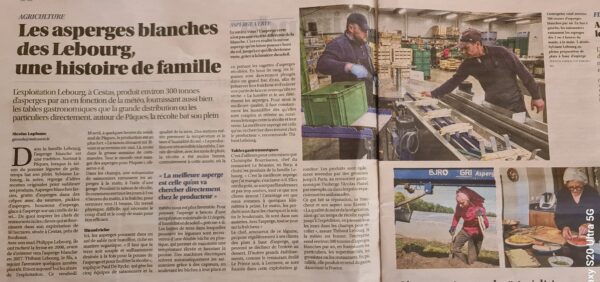
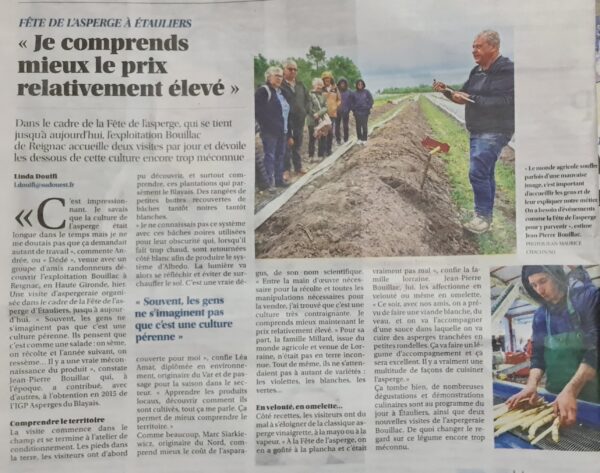
In France, the 2025 asparagus season began later than usual due to cool spring temperatures. Despite the delay, quality is high, prices have remained firm, and grower interest is increasing.
In Germany, the asparagus season began around Easter, but trade remains slow due to high prices and limited demand. Cold nights and localized drought have affected harvest pace and product quality.
Switzerland has significantly increased its domestic asparagus production, yet it still relies heavily on imports. Consumption remains steady at around 1 kilogram per capita.
In Austria, the season started later than last year, but initial demand was so strong that supply briefly lagged. The situation has since stabilized, with sufficient volume for Easter sales.
South Africa has seen a major decline in domestic asparagus production, now largely dependent on imports during the off-season. The market favors green asparagus, with high retail prices driven by limited availability.
North America: Tight supply supports firm asparagus prices
Asparagus supply in North America remains limited. The northern Mexico region of Sonora is winding down its season. On the import side, Peruvian asparagus is arriving both by air and sea, primarily destined for the East Coast. This will help supplement the regional supply until Canada’s local crop becomes available following a delayed start.
Domestically, Washington state is also producing asparagus, though this supply mainly serves markets west of the Rocky Mountains, with some reaching the Midwest. California has limited production as well, which largely remains within the state. Meanwhile, New Jersey is about to begin its harvest, and Michigan will start its season in May.
Demand has exceeded supply for nearly three weeks, if not longer. This imbalance is keeping prices firm, currently ranging from approximately €6.80–€7.80 per kg, with organic asparagus priced around 20 percent higher. The market is expected to remain strong throughout May.
Netherlands: Lower supply keeps asparagus prices firm
Asparagus sales peaked last week in the run-up to Easter. “We started the week with a reasonable supply, but initially, I found the prices somewhat disappointing. However, as the week progressed, it seemed that the whole of the Netherlands was once again in the mood for asparagus, which caused prices to rise and resulted in a very nice clock price on Friday, with a price level above €10,” says a Dutch asparagus seller.
He is also optimistic about the coming weeks. “The demand from retail is strong enough. The first batches of heated asparagus have now been harvested, and the late asparagus is now coming into production. Hopefully, the balance between supply and demand will remain favorable,” Rick continues. “The quality of the season is also looking good. We have certainly received fewer complaints than last year; the rust problem, in particular, is much less of an issue this year, which is reassuring.”
Lower production across Northwest Europe is contributing to reduced supply on the market overall. “The supply is still slightly below last year’s levels due to fields that have been cleared or are not producing the expected quantities. This is happening not only in the Netherlands but also in Germany and France. For instance, the area in Nordrhein-Westfalen has decreased significantly, which increases the demand for our asparagus. This is why prices are generally remaining at a higher level,” the trader explains.
What stands out to him is that people are now seeking alternatives in other varieties. “In the past, the focus was mainly on the Double-A white asparagus, but now other varieties are becoming increasingly popular. Additionally, the thickness of the stems this year is noticeably greater than usual.”
Belgium: Strong Demand for Asparagus During Easter
In Belgium, the asparagus season is in full swing, with strong sales already observed around Easter, according to a Belgian grower. “It was really hectic. We’re almost glad it’s over now because if it had continued like that for entire weeks, I’m not sure we could have handled it,” he explains. “We started harvesting on April 7th, which is quite a bit earlier than last year, but the quality is excellent this season. Last year, we had a lot of thin asparagus, especially towards the end of the season, but thanks to a productive summer, we now have nice, thick spears. The prices have also been quite good from the start of the season. Last week, there was a slight dip, but it was still decent. We expected prices to drop on Monday, but they were even higher than on Friday. So, I’m not sure if many of my colleagues celebrated Easter, but it seems to me the supply was a bit lower, which helped keep the prices stable. It may dip a bit now, but I still expect we will continue to work smoothly.”
Italy: Regional updates from key green asparagus producers
The harvesting campaign for Green Asparagus of Canino PGI began in the final days of January, with moderate volumes from the forcing fields using geothermal hot water. “Daily quantities have been rather low on average due to unfavorable weather conditions. At the end of March, the quantities harvested per hectare were around 15–20 kg, while on the fields under protected cultivation, which benefit from geothermal heating, yields exceeded 100 kg,” reports a cooperative managing over 300 hectares with around 100 farms involved and more than 1,500 tons of asparagus marketed.
In Sicily, the green asparagus season began in early February and will conclude in early May. Despite suboptimal weather conditions, the 2025 campaign has been satisfactory in both yield and quality. The average production per hectare ranged between 3 and 5 tons. The primary market remains domestic, especially in northern Italy, with exports becoming increasingly marginal due to strong international competition. Chile and Peru are the main competing exporters, while emerging markets like Thailand continue to exert downward pressure on prices. So far, average prices for Sicilian asparagus have ranged between €4 and €6 per kilogram, with peak prices reaching €7 for top-quality produce.
The green asparagus campaign in Sardinia, involving about 40 hectares, is nearing its conclusion, with harvesting expected to finish around May 10. “It has been a very satisfactory campaign, especially in March when we recorded double the volume compared to last year. Demand has remained steady, and the market has remained balanced with stable prices throughout the season,” reports a partner of the company. Notably, even during the typically more difficult post-Easter period, prices remained stable. A key trend in the 2025 campaign was the unexpected rise in demand for smaller calibres. “It was a surprise because historically, the market favored larger sizes. This year, however, we received marked demand for sizes 6–12, from both wholesale markets and large retailers.”
In northern Italy, a major asparagus producer reported a harvest delay of about ten days due to weather conditions. Nevertheless, product quality has not been affected. Sales leading up to Easter were strong, supported by high demand and consistent prices. The company supplies asparagus in several packaging formats, including 500-gram bundles and 400-gram trays of asparagus tips. The harvest will continue through June, although prices typically decline as production volumes increase.
Spain: Rain delays start of green and white asparagus harvest
Rain has played a key role in the start of this year’s asparagus campaign across Spain. In the case of white asparagus grown along the banks of the Ebro, the season began slightly later than in previous years. “In our case, we began harvesting about 20 days ago, but we are fortunate, as 95% of the area under the PGI Navarra Asparagus has only just begun harvesting due to rainfall,” explains one operator.
“We were fortunate to be able to shape the ridges and prepare the asparagus beds before the rain made fieldwork impossible, and those 20 days of head start have been very useful for marketing our asparagus,” he adds.
“This year, in principle, looks similar to last year in terms of production, with fairly good sizes expected to improve as the season progresses. This is a positive development, as size is one of the most valued factors for fresh produce, especially by customers and the restaurant industry.”
Green asparagus harvesting is in full swing in Granada, which is currently at the peak of the season. This year’s production forecast is 35 million kilos, representing a 10–15% increase compared to the previous season. “This year, the campaign started a bit later due to low temperatures, which delayed the harvest by two to three weeks. However, the recent rainfall has improved growing conditions, boosting the quality, freshness, and shelf life of the product,” says a grower in Granada.
In Guadalajara, the harvest is just now beginning, also delayed by rain and cold weather. “We are very excited about this new campaign, during which we will market our asparagus under the Green Asparagus of Guadalajara PGI seal,” says the President of the Guadalajara Green Asparagus Producers Association. “All our asparagus is grown outdoors, and the cold plateau temperatures make the shoots grow more slowly, which concentrates their flavor and enhances their firmness. Despite the late start, we expect a good season, with around 2.5 million kilos and high-quality produce.”
France: Late campaign offset by strong quality and firm prices
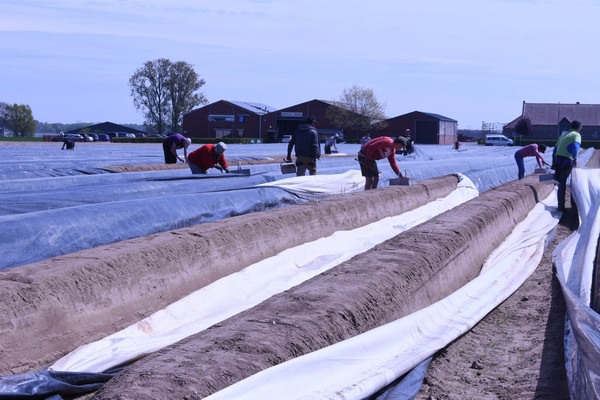
This year’s asparagus campaign in France began two to three weeks later than usual due to unstable weather, particularly cool night-time temperatures, which kept the mounds from warming and delayed crop growth. Typically, the South-East starts harvesting one to two weeks before the South-West, but this season, the South-West took the lead due to the unusual weather patterns.
Despite the slow arrival of volumes, the market has remained relatively balanced, with satisfactory product quality. “Quality-wise, there’s nothing to complain about. We’re also in the midst of a large-calibre year.” Prices started off very high due to the initial lack of supply, but later settled at a level considered acceptable for both producers and consumers. The limited volume early in the season helped maintain stable pricing. Stocks were nearly depleted over Easter and remain tight.
With a strong market and slightly limited supply, more growers are now considering starting asparagus cultivation or expanding their current production areas.
Germany: Asparagus harvest begins, but demand remains subdued
The asparagus harvest began in nearly all of Germany’s major growing regions just in time for Easter. Although deliveries increased with a wide variety of products and origins, trade remained sluggish due to generally restrained demand and persistently high prices. Domestic volumes continued to expand, and the first field-grown batches also began arriving. However, there was still a lack of strong momentum and sufficient volumes to make prices more attractive in the week leading up to Easter.
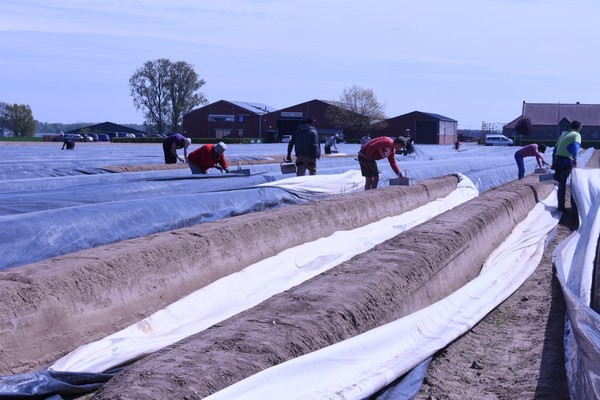
Despite cold night-time temperatures and widespread ground frost, harvest volumes under single and multi-covered systems continued to rise thanks to sunny weather. However, quality issues were reported in some cases due to extremely high temperatures beneath the covering films. According to the BLE, drought conditions in many areas also slowed harvest progress.
Switzerland: Asparagus production expands, but imports remain high
Swiss vegetable producers have significantly expanded asparagus cultivation in recent years, leading to a marked increase in domestic supply. According to the Agricultural Information Service (LID), the area under white asparagus has quadrupled and the area under green asparagus has tripled over the past 20 years. Around 180 vegetable producers are currently growing asparagus in Switzerland, with most located in Eastern Switzerland, followed by the Central Plateau and Western Switzerland.
Despite this growth in domestic production, Switzerland continues to rely heavily on imports. In 2024, the country imported approximately 3,600 tonnes of white asparagus and 5,700 tonnes of green asparagus. Total consumption of both green and white asparagus, including imports, stands at around 1 kilogram per capita.
Austria: Delayed start to asparagus season followed by strong demand
The 2025 asparagus season in Austria has begun, although slightly later than in the previous year. While the 2024 harvest had started unusually early, this year’s delay was caused by weather conditions. “Everyone wants the first kilo,” says a producer in Lower Austria. In the first few days of the harvest, there was a significant surge in demand, and at times, there was not enough asparagus available at short notice.
However, the situation has since stabilised. “We currently have enough — even for Easter. Demand is high, but supply is sufficient,” the producer adds.
South Africa: Local asparagus production declines, market reliant on imports
South Africa’s asparagus production is now a fraction of what it once was. In the 1990s and early 2000s, there were dozens of asparagus growers, mainly cultivating white asparagus, and a number of canning factories located in the eastern Free State. These facilities were among the early casualties of free trade, particularly due to competition from Chinese tinned white asparagus, which entered the market at significantly lower prices than the local product.
Asparagus is still grown in Namibia, the eastern Free State, and the Western Cape, though the country’s largest green asparagus producer ceased operations in recent years. At the Johannesburg municipal market, where volumes remain low due to much of the crop being sold directly to processors or retailers, the average price for a 200-gram punnet equates to approximately €13.40 per kilogram.
The local asparagus season runs from late August to March, with peak production occurring between the end of September and October. From approximately May to August, asparagus is imported from Peru and Mexico to meet local demand.
The market for white asparagus in South Africa is significantly smaller than that for green asparagus.
Next Topic: Mangoes Publication date: Fri 25 Apr 2025
© FreshPlaza.com / Stefan Jansen van Nieuwenhuizen