
https://www.lanouvellerepublique.fr/indre-et-loire/commune/richelieu/indre-et-loire-la-saison-des-asperges-bat-son-plein
Archive
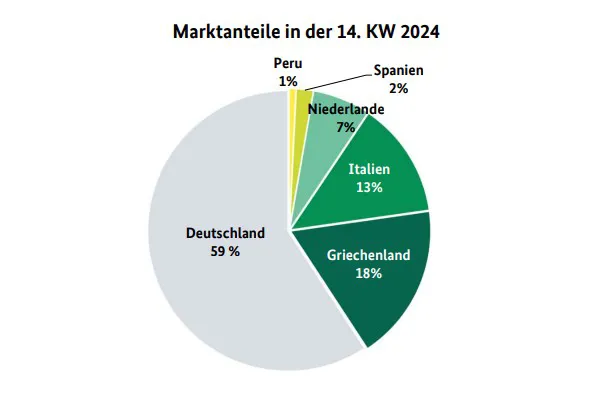
Après Pâques, l’intérêt pour les asperges s’est considérablement réduit en Allemagne par FreshPlaza
Rapport BLE, semaine14 (Allemagne)
« Après Pâques, l’intérêt pour les asperges s’est considérablement réduit »
Au cours de la semaine suivant Pâques, l’intérêt s’était sensiblement réduit. Le temps pluvieux a également restreint les possibilités de conservation. Mercredi en particulier, le business a été extrêmement calme. Ce n’est qu’en fin de semaine que la demande a repris un peu de vigueur. Les cotations se sont adaptées : elles baissent le mardi pour parfois remonter à partir du jeudi. Mais en général, elles se sont maintenues au même niveau jusqu’au week-end, car un renchérissement aurait entraîné des excédents plus importants. On s’attend à une nouvelle augmentation des volumes dans les semaines à venir, car les récoltes de plein champ seront alors disponibles.
Cliquez ici pour accéder directement au rapport complet sur le marché et les prix.
Pommes
Pas de changements importants par rapport à la semaine passée : les produits allemands continuent de dominer, suivis de loin par les apports italiens. Les flux en provenance de France, des Pays-Bas, de Pologne et de Belgique restent annexes.
Poires
Les cotations sont plutôt orientées à la baisse. Pour les arrivages d’outre-mer, cela s’explique par des quantités trop importantes, et pour les autres offres, par une qualité faiblissante.
Raisins de table
Les chargements en provenance d’Afrique du Sud ont visiblement dominé la scène. Les arrivages indiens ont certes augmenté, mais les Thompson Seedless ont été trop faibles, sucitant peu d’intérêt.
Fraises
Les fruits grecs ont supplanté les espagnols en tête de l’offre : les pluies qui se sont abattues sur les régions de production ont sensiblement réduit les arrivages d’Espagne à plusieurs reprises.
Citrons
Les Primofiori espagnols ont visiblement dominé la scène, avec des affaires se déroulant par ailleurs de manière assez calme.
Bananes
La disponibilité s’est suffisamment harmonisée avec les capacités d’entreposage. Les commerçants n’ont donc que très rarement dû modifier leurs demandes antérieures.
Choux-fleurs
Les besoins ont pu être satisfaits sans difficulté, bien que les arrivages français notamment se soient restreints. Les cotations ont été presque systématiquement orientées à la hausse.
Salades
Pour l’iceberg, les arrivages espagnols, habituellement monopolisés, se sont manifestement imposé. Les commerçants ont essayé d’éviter les stocks, car la saison allemande est dans les starting-blocks, les premiers lots étant attendus dans les prochaines semaines.
Concombres
L’assortiment de concombres était composé d’offres néerlandaises, belges et locales. Après des réductions initiales, les cotations ont augmenté sur presque tous les marchés en fin de semaine.
Tomates
En fin de saison, les fruits marocains ne sont plus toujours qualitatifs et sont même retirés des magasins à certains endroits. Les importations turques étaient par ailleurs trop peu colorées.
Poivrons
Les arrivages espagnols se sont sensiblement réduits, parfois même de façon massive. La demande n’a donc pas toujours été totalement satisfaite. Les cotations ont augmenté de manière significative.
Source : BLE
Excelente calidad para esta campaña de espárrago en Navarra Según la IGP Espárrago de Navarra, aunque la campaña 2024 ha empezado de manera irregular, “promete una excelente calidad”por Valencia Fruits
Buenas expectativas para la campaña del espárrago en Guadalajara en Espana pese a los robos por FreshPlaza
Buenas expectativas para la campaña del espárrago en Guadalajara pese a los robos
Fuente: europapress.es
La récolte des asperges débute en Alsace avec l’interview de Jean Charles Jost président d’Asperge d’Alsace par BMF tele
For Asparagus, the PGI label really makes a difference during campaigns like this one! by FreshPlaza
Danielle Chambaraud, Asperges du Blayais
“The PGI label really makes a difference during campaigns like this one!”

Prices struggle to hold up
The demand for asparagus increased at Easter, but there was a noticeable drop in the volumes sold compared to previous years. “There was no particular pressure at Easter time. Volumes were not very high, so supply adapted to the demand, and it was difficult to maintain prices. Sales were lower at Easter than in previous years, maybe due to the higher prices. Easter also came early this year, while it is usually celebrated at the heart of the asparagus season, so we were not able to offer the same prices as if Easter fell a couple weeks later.”

Consumers want the PGI label
It is precisely in this rather limited context of production that the PGI can make the difference. “In the past, with or without PGI, we have had to lower our prices when the market was saturated and volumes were considerable in all basins. But in the current context, the PGI can make all the difference. It reassures consumers and helps maintain prices. People are willing to pay the price as long as they get a quality product. Asparagus are now produced almost everywhere in France, so the PGI label is fundamental to the trade and to the promotion of asparagus. It is a guarantee of a particular identity and an asparagus with very little bitterness and a slightly sweeter taste.”

Expansion in line with the market
The asparagus from the Blayais region appeals to consumers thanks to its taste qualities, but it is also attracting growing interest from producers. “Our region is a wine-growing area. It is the region’s core business. Today, the wine industry is in crisis, especially in the Bordeaux region. And with over 70% of sand in the soil, asparagus has become the crop of choice for diversification in northern Gironde. As a result, over the last 3-4 years, we have been integrating more and more producers, although the volumes produced have not increased significantly, given the fragmented nature of our geographical area.”
Production growth must nevertheless be in line with the market situation. “We must not fall into the same trap as the wine industry. In other words, we must not over-plant and over-produce without taking into account the market’s capacity to absorb these volumes. We need to be reasonable and consistent with marketing. It is imperative that we respect all the rules of production and quality, to pay attention to the distribution circuit, to pricing and, of course, we must work together and stay united.”

For more information:
Danielle Chambaraud
Association IGP Asperges du Blayais
Danielle.chambaraud@asperges-blandine.fr
Buen comienzo para la campaña del espárrago verde en Castilla La Mancha pero con robos por Revista Mercados
Lent démarrage pour les asperges des Pouilles en Italie par FreshPlaza
Démarrage lent mais accélération en vue pour l’asperge des Pouilles
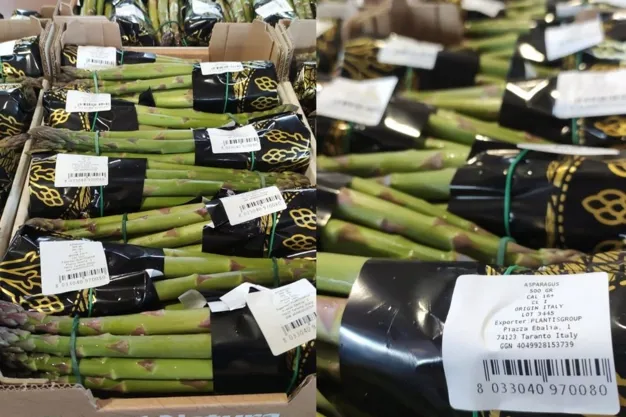
« Il est encore tôt pour nous » , a déclaré Claudio D’Alba. « Il n’y a qu’une poignée de turions disponibles et prêts à être récoltés. Ce qui déstabilise le marché et ne favorise pas les ventes, c’est la présence de produits importés d’outre-mer (principalement du Mexique), encore largement disponibles sur les étals européens et vendus à des prix nettement inférieurs de l’ordre d’environ 35 à 40 %. En outre, les récoltes espagnoles sont disponibles quelques jours plus tôt que les nôtres. Par rapport à la même période en 2023, nous constatons une baisse des volumes d’exportation d’environ 10 %, avec une baisse similaire des prix. »
L’asperge est 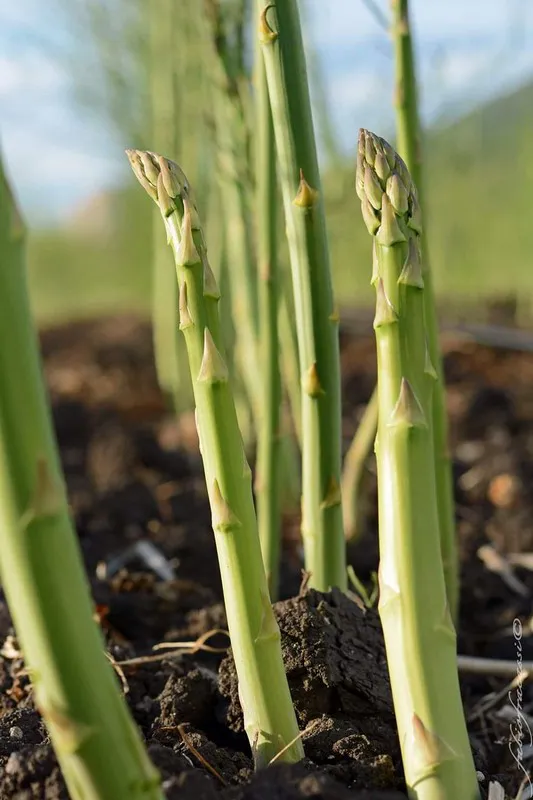 une culture saisonnière importante que le groupe Plantis vend en grandes quantités, généralement entre les dix premiers jours d’avril et la fin du mois de mai, conditionnée en bottes de 250 g et 500 g dans des cagettes de bois ou de carton.
« Nous envoyons la plupart de nos commandes vers les pays baltes et scandinaves », poursuit le directeur, « mais nous sommes encore loin des 15 palettes par semaine que nous expédiions à la même période l’année dernière. Nous attendons avec impatience le pic de la campagne 2024 dans environ deux semaines. Bien que le produit italien soit encore très apprécié, les opérateurs attendent des prix plus compétitifs, une réduction des importations en provenance des pays tiers et un ralentissement de l’offre espagnole pour augmenter les livraisons. Cela améliorera la compétitivité du produit italien, surtout dans un contexte socio-économique très difficile où les fruits et légumes sont encore sous-traités en raison de la réduction du pouvoir d’achat des ménages. »
 Pour plus d’informations :
Groupe Plantis
Tél. : +39 99 4521842
info@plantis.it
www.plantis.it
« C’est lors de campagnes comme celle-ci que l’IGP fait la différence ! » chez Asperge du Blayais par FreshPlaza
« C’est lors de campagnes comme celle-ci que l’IGP fait la différence ! »
Des cours qui se maintiennent difficilement
Même si la demande a augmenté à Pâques, l’asparagicultrice a constaté une baisse du volume vendu par rapport aux années précédentes : « Nous n’avons pas senti une tension folle au moment de Pâques. N’ayant pas trop de volumes, l’offre s’est adaptée à la demande et nous avons difficilement maintenu les prix. J’ai constaté moins de ventes à Pâques que les autres années, dû je pense à des prix plus élevés que ce qui se pratique habituellement ce week-end. Mais les fêtes de Pâques ayant eu lieu de bonne heure cette année, alors qu’elles se célèbrent en général en plein dans notre cœur de saison, nous n’avons pas pu faire les prix que l’on aurait pu proposer si Pâques avait été 15 jours plus tard ».
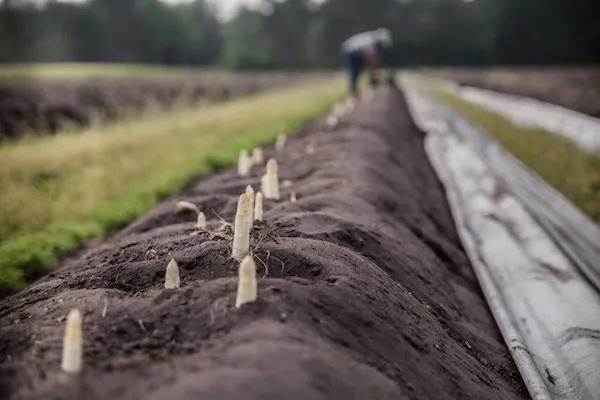
« Le consommateur veut de l’IGP »
C’est justement dans ce contexte de production plutôt limité, que l’IGP peut faire la différence : « Nous avons bien vu par le passé qu’IGP ou pas, lorsque le marché est saturé et que les volumes sont considérables dans tous les bassins, nous sommes obligés de baisser le prix pour vendre. Mais dans un marché comme celui-ci, l’IGP peut faire la différence. Elle rassure le consommateur qui en est friand et aide à maintenir les cours. Les gens sont ainsi prêts à mettre le prix à condition d’avoir un produit de qualité. Dans un contexte où l’asperge s’est plantée un peu partout en France, avoir l’IGP est fondamental pour le commerce et la valorisation de l’asperge. Elle est gage d’une identité particulière et garantit une asperge avec très peu d’amertume et un goût légèrement sucré ».
Se développer oui, mais en cohérence avec le marché
Si l’asperge du Blayais séduit le consommateur par ses qualités gustatives, elle suscite de plus en plus l’intérêt du producteur : « Dans notre secteur, nous sommes en zone viticole qui est le cœur de métier de la région. Aujourd’hui, le vin est un secteur en crise surtout dans la région de Bordeaux. Et avec plus de 70 % de sable dans les sols, l’asperge est devenue la culture de la diversification dans le Nord de la Gironde. Ainsi, depuis 3-4 ans, nous intégrons de plus en plus de producteurs, bien que les volumes produits n’augmentent pas significativement compte tenu du parcellaire atomisé de notre zone géographique ». Un développement de la production qui doit néanmoins s’effectuer de manière cohérente avec la situation du marché : « C’est là mon cheval de bataille actuel. Nous développer oui, mais il ne faut pas tomber dans les travers du vin, à savoir planter et produire à outrance sans tenir compte de la capacité du marché à absorber ces volumes. Il faut être raisonnable et en cohérence avec la commercialisation. Il est impératif de respecter toutes les règles de production et de qualité, de faire attention au circuit de distribution, aux tarifs et bien sûr, de travailler ensemble et de rester unis ».
Pour plus d’informations :
Danielle Chambaraud
Association IGP Asperges du Blayais
Danielle.chambaraud@asperges-blandine.fr
15 coopératives de Grenade en Espagne démarrent la saison de l’asperge verte avec des prévisions à la hausse par FreshPlaza
15 coopératives de Grenade démarrent la saison de l’asperge verte avec des prévisions à la hausse
Ces jours-ci, les marchands de légumes et les rayons des supermarchés proposent déjà ce produit, dont la récolte et la manipulation sont synonymes d’activité et d’emploi pour les coopératives de Grenade, après la baisse d’activité de l’été.
Les coopératives agroalimentaires de Grenade rappellent que 80 % des asperges vertes récoltées dans la province proviennent des coopératives et que la province représente 70 % de la production nationale d’asperges vertes.
Le représentant du secteur de l’asperge au sein de la Fédération des coopératives, José Ángel Delgado, directeur commercial de Los Gallombares, signale que les produits commencent à arriver et que l’on s’attend à ce que les coopératives tournent à plein régime au cours des premières semaines d’avril.