Archive

« Les prix des asperges de serre sont intéressants, mais Pâques tombe trop tôt » par FreshPlaza
Walter Gubbels (Pays-Bas) :
« Les prix des asperges de serre sont intéressants, mais Pâques tombe trop tôt »
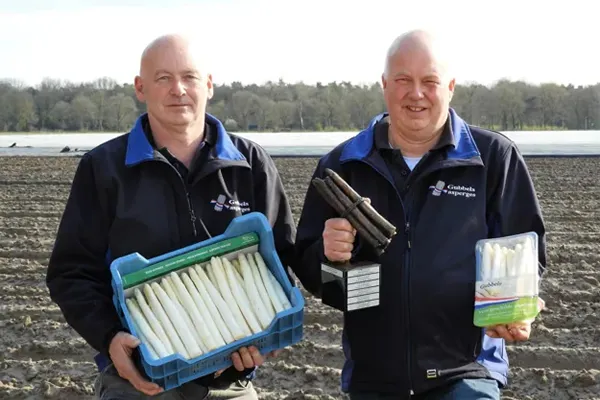
Ton et Walter Gubbels
« Pâques arrive en fait trop tôt pour les cultures sous serre, ce qui engendrerait des prix particulièrement élevés. C’est bien, mais dans l’ensemble, nous ne parlons que d’un très petit volume, ce qui n’est au final pas vraiment significatif. Nous aurions préféré avoir un peu plus de produits provenant des mini-tunnels. Si vous disposez alors d’un volume décent avec tous les hectares pour des prix légèrement inférieurs, c’est beaucoup plus avantageux », déclare le producteur.
Les prix de l’asperge AA se situent aujourd’hui autour de 12,50 €. « Ce qui est également remarquable, c’est que le segment inférieur du marché est bien rémunéré. C’est vraiment un bon signe, car il s’agit aussi d’une part importante du total. Je m’attends donc à un niveau de prix élevé cette semaine, qui ne fera qu’augmenter vers Pâques », a déclaré le producteur, membre de The Greenery.
Cette année, le producteur n’a pas lésiné sur l’utilisation d’un tracteur à portique équipé d’un pulvérisateur en hauteur pour maintenir les chemins propres. « Notre objectif est de maintenir le contrôle des mauvaises herbes à zéro. Je ne veux pas passer à la culture biologique, car si c’est vraiment nécessaire, je veux pouvoir intervenir, mais nous nous attendons à ne plus devoir pulvériser. Le nombre d’agents disponibles diminue de plus en plus et les consommateurs deviennent de plus en plus critiques. C’est pourquoi nous misons sur cette méthode de durabilité », explique Grubbels.
Outre les asperges blanches, l’entreprise cultive les asperges vertes et violettes. « Nous avons encore beaucoup de clients qui viennent chez nous et s’attendent à pouvoir acheter les trois couleurs. C’est pourquoi nous continuerons à y cultiver quelques milliers de m2 d’asperges violettes et quelques hectares d’asperges vertes, mais les blanches constituent notre activité principale, l’épluchage constituant également une activité importante. »
Pour plus d’informations :
Walter et Ton Gubbels
Aspergekwekerij Gubbels
Tél. : +31 411641283
gubbels-asperges@hetnet.nl
www.gubbels-asperges.nl
La campaña de espárrago verde español avanza ya con más volumen y chocando aún con México por FreshPlaza
La campaña de espárrago verde español avanza ya con más volumen y chocando aún con México
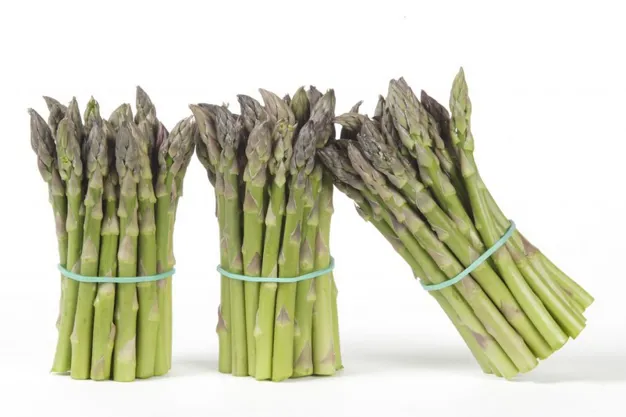
“Aunque empezamos con muy pocos kilos en febrero, llevamos desde el pasado fin de semana trabajando con cantidades más importantes que permiten abrir líneas con la gran distribución europea”, cuenta José Antonio Gómez Aguilera, presidente de la cooperativa Espárrago de Granada. “No obstante, se prevé que la próxima semana haga más frío y que vuelva a ralentizarse la producción”, avisa.
La campaña del espárrago verde empezó con precios inferiores a los del año pasado. “Todavía queda bastante espárrago de México en los lineales europeos, que ha sido más barato este año. Aunque son más bajos, se trata, de momento, de precios aceptables que permiten cubrir el aumento de los costes de manipulación y mano de obra. Esperamos que aquellas cadenas europeas que todavía no lo han hecho puedan dar pronto el paso a la producción española”, afirma José Antonio Gómez.
Las recientes lluvias han dado un notable alivio a las producciones de espárrago verde en Granada, donde se acusa una importante sequía que mantiene las reservas de agua a niveles preocupantemente bajos que suponen también un gran limitante para que la superficie de este cultivo siga expandiéndose. “Las lluvias de marzo han sido un gran alivio”, manifiesta el presidente de esta cooperativa. “Gracias a ello podremos contar con un producto de mejor calidad y calibres”.
“Aunque esperamos volúmenes algo mayores que en la campaña pasada, a priori no se prevén picos de producción, sino una cosecha escalonada, siguiendo la tendencia de los últimos años”, sostiene José Antonio Gómez. La producción de Granada se complementa en España con el producto procedente de Antequera, Sevilla, Córdoba o Guadalajara. Si bien Italia también compite en fechas similares, su producción bajó bastante el año pasado, de acuerdo con el representante de esta cooperativa granadina.
Espárrago de Granada destina su producción principalmente a la exportación, especialmente en Alemania, Suiza, Países Bajos y Dinamarca, donde, de acuerdo con José Antonio, “se valora y se paga algo más por el espárrago español respecto al mexicano, por su mayor frescura y calidad y la menor huella de carbono dada su cercanía. Esperamos que en unos 10 o 15 días se agote la producción mexicana”.
Para más información:
José Antonio Gómez Aguilera
Espárrago de Granada, S.C.A.
T: +34 958513061
M:+34 658770678
joseantonio@esparragodegranada.es
esparragodegranada.eu/
Asperge des sables : récolte en route à la Ferme du Pont par Presse Lib
Talsa Agroexport mira nuevos mercados para el espárrago ante mayor exigencia de Europa por Gestion
“Asparagus prices are expected to be similar to those of last year” in Germany by FreshPlaza
Asparagus Update Weeks 10-11:
“Asparagus prices are expected to be similar to those of last year”
Baden-Württemberg:
This week, a few operations might already harvest some asparagus. By the end of March, the first significant quantities of regional asparagus will be available. Simon Schumacher, CEO of the Association of South German Asparagus and Strawberry Growers e.V., is optimistic about the season: “Growers have removed unprofitable and old asparagus plants from production to offset rising production costs. We expect asparagus prices to be similar to last year. As always, direct marketing offers asparagus at various price points to suit every budget.”
Hesse:
Rolf Meinhardt from Tannenhof has been an asparagus farmer for over 40 years. Yet, he has never started harvesting asparagus this early. New cultivation techniques and the mild winter make it possible, he says. The farmer from Weiterstadt has already harvested several hundred kilos of the vegetable. Top-quality asparagus is currently priced at 17 to 18 EUR.
Bavaria:
In Bavaria, some asparagus is expected to be harvested in week 11. However, larger quantities are not anticipated until April. “Of course, we need the sun,” says asparagus farmer Christian Schiebel from Pörnbach. Hans Gänger from Lower Bavaria expects larger volumes only by the beginning of April, which is also when distribution to larger markets is set to start.
NRW:
Bernd Hesseling from Bauernmarkt Lindchen uses waste heat to warm a portion of his asparagus fields in the Kleve region. Hesseling has observed the trend towards a longer and especially earlier asparagus season for some time. Many farmers now regulate the temperature in the asparagus mounds through tunnels or foils, and with pre-warmed fields, this idea is expected to be intensified. “I believe this is the innovation step for Asparagus 2.0,” Hesseling stated. It’s a great opportunity and a “promising matter” for farmers in the Lower Rhine region to stand out against imported goods.
For asparagus farmers in the Voreifel and foothills, Easter comes too early this year. It’s impossible to predict the yield, as the weather’s cooperation remains uncertain. “We can now start the upcoming season with sufficient soil moisture,” says one farmer.
Brandenburg:
In the state of Brandenburg, the first asparagus of this season has already been harvested on the fields of the Gut Herrenhölzer in Bensdorf. (Potsdam-Mittelmark).
« Une saison positive d’asperges en perspective » « 2024 sera une année de gros calibres » selon Maxime Gervasoni du Tresquois par FreshPlaza
Maxime Gervasoni, Le Tresquois : « Une saison positive d’asperges en perspective »
« 2024 sera une année de gros calibres »
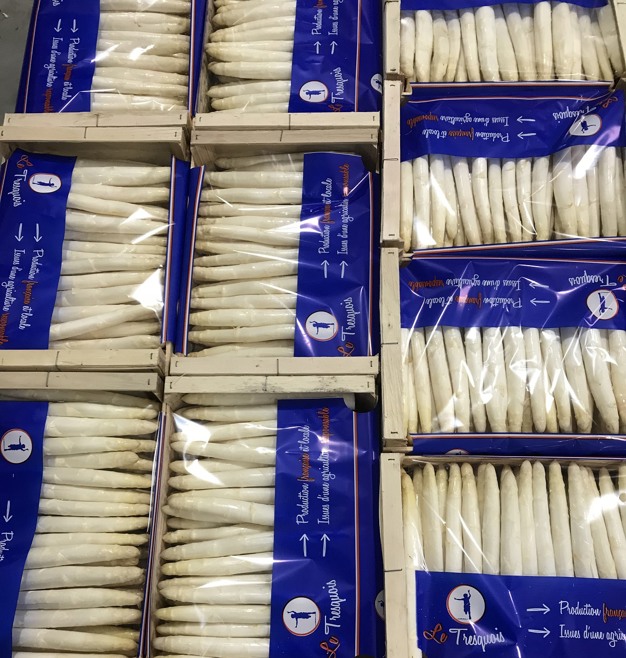
Des volumes qui s’intensifient dès cette semaine
C’est cette semaine que les volumes d’asperges vont vraiment s’intensifier. « Nous prévoyons d’avoir des volumes plutôt normaux pour Pâques avec des niveaux de prix plutôt élevés, étant donné que les fêtes sont situées tôt dans le calendrier cette année. Je pense également que nous devrions avoir une bonne fin de campagne avec l’augmentation de la consommation que l’on risque d’avoir sur la période estivale avec les Jeux Olympiques. C’est donc une saison positive que nous avons en perspective ».
Un marché qui commence à se mettre en place
Une intensification de la production allant de pair avec une augmentation de la demande : « Le marché se met en place à partir de maintenant. Bien que nous soyons arrivés trop tôt pour la consommation, nous avons de bons niveaux de prix depuis le début de la campagne. On sent désormais que les clients sont au rendez-vous. Les gens ont envie de nouveaux produits de saison tels que les fraises et les asperges ».
Des opportunités commerciales favorisées par la loi AGEC
 La commercialisation cette année devrait également être facilitée par le nouveau positionnement de la loi AGEC : « Nous sommes vraiment contents de pouvoir encore vendre nos asperges dans du flow pack plutôt que du papier kraft. Il s’agit d’un réel atout lorsque l’on travaille avec les GMS et les centrales d’achat, nous permettant ainsi de faire du volume tout en garantissant la fraîcheur de nos produits ».
Une augmentation de la production d’asperges vertes
Si l’entreprise il y a trois ans proposait exclusivement de l’asperge blanche, elle consacre désormais chaque année un peu plus de parcelles à l’asperge verte : « L’objectif est d’arriver à 30 % d’asperges vertes. Chaque saison nous en commercialisons 10 % de plus ». Une décision qui reflète l’augmentation de la consommation d’asperges vertes.
Pour plus d’informations :
SARL Tresacois
208 ancienne route de Lyon
30330 Connaux
Tél. : 04.66.82.47.46
Port. : 06.48.81.85.00