
Los Gallombares seguirá afianzando su liderazgo en espárrago verde sostenible
La firma granadina acude a la feria germana con el objetivo mostrar su potencial productivo y fortalecer la internacionalización

En espárrago verde, Los Gallombares ocupa el primer puesto como productor en Europa y el segundo a nivel mundial. / LG
Valencia Fruits. Redacción.
Los Gallombares vuelve a Fruit Logistica para seguir afianzando la internacionalización de su espárrago verde en los mercados. El liderazgo de la compañía en el sector nace de la pasión por un vegetal de calidad superior y potente sabor con el que “no solo te llevas lo mejor de la naturaleza al plato, sino que además te conviertes en parte de un movimiento por un mundo más verde y saludable”, resaltan desde la compañía.
El primer productor y operador de espárrago verde de Europa y segundo del mundo, lidera la innovación mundial en el sector con una estrategia centrada en ofrecer la máxima calidad y la mejor experiencia de consumo. Unas premisas constantes durante sus treinta años de trayectoria empresarial, comprometida con la sostenibilidad, la salud de las personas y el entorno en el que opera.
Galardonada con el Premio Andalucía de Agricultura, Pesca y Agua 2023, en la modalidad de Comunicación y Mundo Rural, Los Gallombares cuenta con 700 productores y 2.500 hectáreas de cultivos de espárrago verde, superficie que aumenta gracias al apoyo de sus agricultores y a su capacidad para satisfacer la creciente demanda de este vegetal. Con una producción que ronda los 8 millones de kilos, sus zonas de cultivo se ubican en el Poniente Granadino, además de las plantaciones en las provincias de Málaga, Jaén, Córdoba y Huelva.
Su color, textura, sabor y fibrosidad aporta al espárrago de Los Gallombares un diferencial organoléptico característico, diferente al resto de las zonas, todo ello favorecido por los microclimas existentes y los diferentes tipos de suelo. Las exigencias en calidad cada año con mayores, para ello la cooperativa cuenta con las certificaciones Global GAP e IFS Food. La investigación e inversión constante en maquinaria, equipos e infraestructura apoyan su propósito de conseguir una mejor calidad y logística.
En Fruit Logistica, Los Gallombares compartirá estos avances y el potencial de sus innovadoras instalaciones ubicadas en Loja, las más modernas del sector, totalmente automatizadas y con capacidad para suministrar más de cien mil kilos de producto diarios.
“Los consumidores europeos exigen productos cada vez más frescos y de mejor calidad. Van cambiando los formatos hacia un esparrago más corto con menos parte leñosa y aprovechable 100%”, destaca su director comercial, José Ángel Delgado, quien añade que “para atender estas demandas, fusionamos experiencia, innovación, tecnología y visión de consumidor”.
Estrategias sostenibles
Los Gallombares está centrada en seguir reforzando estrategias respetuosas con el medioambiente, además de realizar inversiones sostenibles. Prueba de ello son sus acciones en materia de ahorro hídrico, ya que con el 80% de sus cultivos de secano, riegan únicamente con agua de lluvia. También han modernizado sus regadíos, incorporando sistemas más eficientes y respetuosos con el medio ambiente.
Por otro lado, la cooperativa ha implementado un sistema de energía solar renovable con placas solares para autoconsumo, avanzando en su propósito de ser totalmente autosuficientes en un plazo de tres años. Ha eliminado el 100% del plástico en su material auxiliar de envasado, utilizando actualmente papel reciclable y biodegradable, además de reciclar tanto materiales como orgánicos.
Los Gallombares también desarrolla un proyecto de instalación de invernaderos dotados de calefacción a partir de fuentes sostenibles, placas solares y pellets. Con esta iniciativa, la empresa podría ampliar el periodo de producción, adelantando la temporalidad de la campaña con una repercusión muy positiva en la rentabilidad de sus agricultores y la generación de empleo.
Estas innovadoras acciones revelan el carácter de una empresa con impecable trayectoria en los mercados internacionales y afán de mejora constante. En Fruit Logistica (Pabellón 18, stand B-17), su equipo comercial encabezado por Pedro Sillero, presidente de Los Gallombares y Francisco Delgado, gerente, compartirán estas novedades y las excelencias de sus espárragos verdes y judías con marca propia: Luxe, Luxor y La Joya, que comercializan con todo tipo de confecciones (manojos, granel y puntas de espárrago) en más de 25 países.
“Se acerca la cita europea del sector hortofrutícola y Los Gallombares tiene muy buenas expectativas de negocio”, concluyen en la compañía.
Acceso al artículo en la página 16 del dossier de Fruit Logistica 2024 en el ejemplar de Valencia Fruits.
Acceso íntegro al último ejemplar de Valencia Fruits.
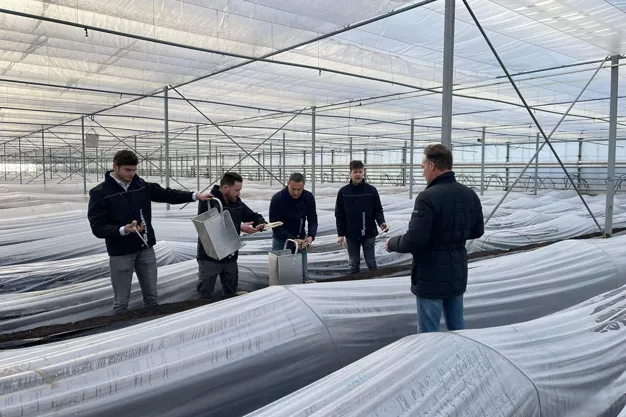
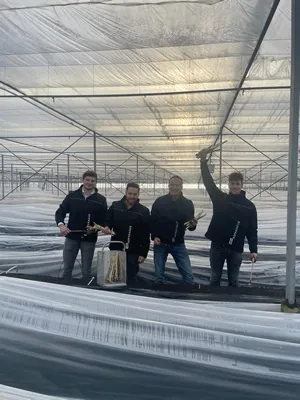 Dans l’ensemble, les superficies d’asperges néerlandaises sont sous pression. « Et si ce n’est pas le nombre d’hectares qui est en cause, ça en est la qualité. En raison des conditions météorologiques inhabituelles, de nombreuses parcelles ont perdu de leur vigueur. Ce n’est pas seulement le cas aux Pays-Bas, mais aussi en Allemagne, en Belgique et dans le nord de la France. Parallèlement, dans un pays comme l’Espagne, où nous cultivons des asperges vertes, nous constatons que c’est la sécheresse qui a un impact important. Les choses ne se passent pas comme prévu dans tous les pays et cela affectera certainement l’approvisionnement », prévoit Teeuwen. En Espagne, Teboza a connu une belle croissance et devrait doubler sa superficie d’ici deux ans. Le producteur a également considérablement étendu ses cultures en Belgique ces dernières années afin d’approvisionner le marché belge. Enfin, le producteur néerlandais d’asperges a également un partenariat en Italie, où il s’approvisionne en asperges blanches précoces entre les semaines 9 et 18.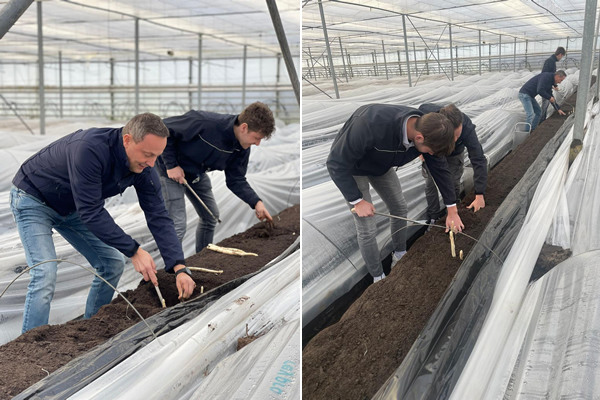

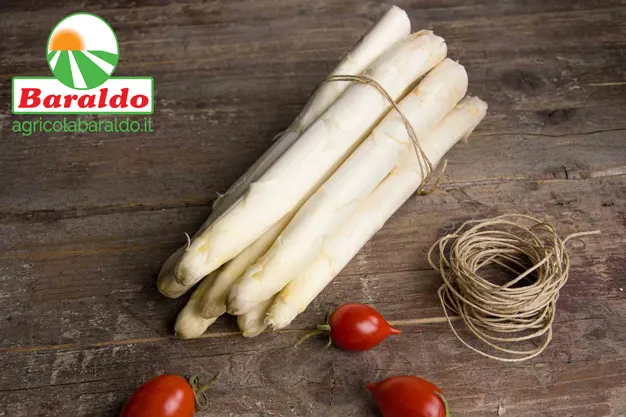
 “During the 2023 campaign, we processed on average the same quantities as in the previous campaign, i.e. approximately 230 tons of asparagus, of which 60% was white and 40% green. In 2023, the average sales increased compared to 2022, in a context in which, however, the cost of production also increased, which led to a reduction in the profit margin. The 2024 production campaign will start late, because the incessant rains in December and January have stopped the preparation of the soil; therefore, there will be a concentration of production starting in March 2024”, says Michele Baraldo, who, with his brothers Fabio and Andrea, owns the Agricola Baraldo company, located in the province of Padua, in Pernumia, an area at the foot of the Euganean Hills of volcanic origin, ideal for the production of asparagus and vegetables in general.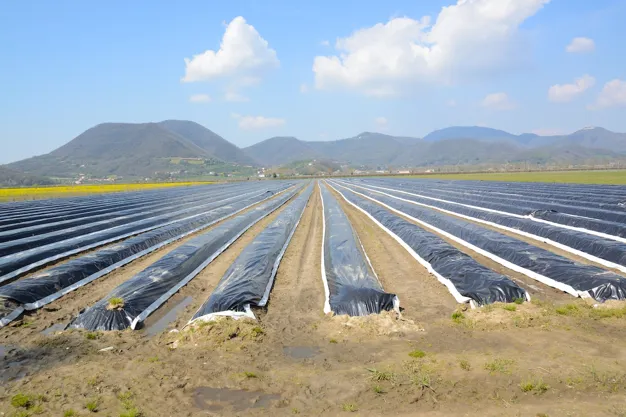


 Para más información:


 For more information: