Archive
Walter Gubbels (Pays-Bas) : « Le pari de l’asperge de serre a porté ses fruits cette année » par FreshPlaza
Walter Gubbels (Pays-Bas) :
« Le pari de l’asperge de serre a porté ses fruits cette année »
 Walter Gubbels
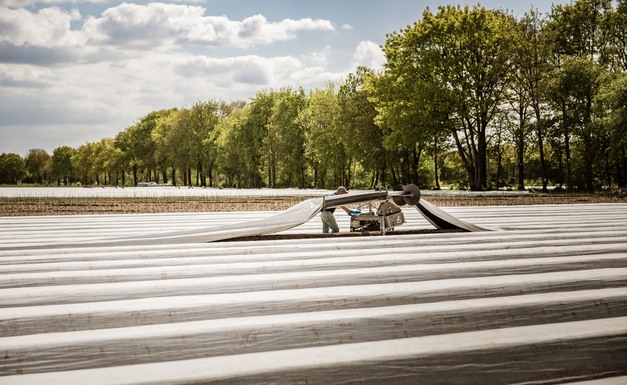
Cette saison est terminée et les mini-tunnels tournent à plein régime. Walter ne craint pas une baisse des prix. “Nous pensions que les prix de l’année dernière étaient bons, mais il semble qu’ils peuvent encore s’améliorer. Et avec les fêtes qui se profilent à l’horizon, les prix ne baisseront certainement pas.” C’est pourquoi il n’a ouvert son magasin que le week-end du 5 avril. “D’habitude, il est ouvert plus tôt, mais les prix de plus de 20 euros ne justifiaient pas la vente d’asperges dans le magasin. Nous avons tout vendu par l’intermédiaire de The Greenery”, explique M. Walter.
Il doute qu’une offre abondante soit bientôt disponible. “L’année dernière, des champs entiers ont été inondés. Cela a entraîné une mauvaise saison de croissance, et même les grandes parcelles n’ont produit que des rendements modérés. La production totale sera donc nettement inférieure. La variété Prius, en particulier, s’est avérée totalement incapable de résister aux inondations. La différence avec cette année est sans précédent. L’année dernière, la pluie avait fait beaucoup de dégâts ; cette année, c’est exactement le contraire. Tout le monde irrigue.
Pas de pénurie de personnel
Gubbels n’a pas non plus de problème de pénurie de personnel. “Le salaire minimum a augmenté, ce qui attire les gens. Les Polonais veulent venir récolter les asperges. Dernièrement, l’industrie automobile allemande a fait une forte concurrence en offrant des emplois à plus long terme. Mais l’économie allemande stagne terriblement, si bien que tous ces travailleurs reviennent”, explique-t-il.
“La demande est également bonne. La production totale d’asperges en Europe diminue alors que la demande ne fait qu’augmenter. La force de l’asperge reste qu’il s’agit d’un produit saisonnier avec lequel les détaillants et l’industrie hôtelière aiment travailler. Si j’étais un jeune entrepreneur, je me lancerais à corps perdu. Mais je sais que c’est plus facile à dire qu’à faire. C’est coûteux. Un bon sol à lui seul est extrêmement coûteux et difficile à trouver”.
Walter se concentre principalement sur les asperges blanches. “Nous cultivons encore une petite quantité d’asperges violettes, mais plus d’asperges vertes. Nous avions de grands espoirs dans ce domaine, mais nous ne pouvons tout simplement pas concurrencer les asperges vertes importées à bas prix. La vente d’asperges blanches est plus rentable. Le 7 avril, les asperges blanches se sont vendues à environ 12 euros. C’est déjà moins que la semaine dernière”, conclut-il.
Cet article a été publié dans le Primeur de mai 2025. Cliquez ici pour accéder à l’intégralité de l’édition
Pour plus d’informations Aspergekwekerij Gubbels
gubbels-asperges@hetnet.nl
www.gubbels-asperges.nl
Walter Gubbels
Cette saison est terminée et les mini-tunnels tournent à plein régime. Walter ne craint pas une baisse des prix. “Nous pensions que les prix de l’année dernière étaient bons, mais il semble qu’ils peuvent encore s’améliorer. Et avec les fêtes qui se profilent à l’horizon, les prix ne baisseront certainement pas.” C’est pourquoi il n’a ouvert son magasin que le week-end du 5 avril. “D’habitude, il est ouvert plus tôt, mais les prix de plus de 20 euros ne justifiaient pas la vente d’asperges dans le magasin. Nous avons tout vendu par l’intermédiaire de The Greenery”, explique M. Walter.
Il doute qu’une offre abondante soit bientôt disponible. “L’année dernière, des champs entiers ont été inondés. Cela a entraîné une mauvaise saison de croissance, et même les grandes parcelles n’ont produit que des rendements modérés. La production totale sera donc nettement inférieure. La variété Prius, en particulier, s’est avérée totalement incapable de résister aux inondations. La différence avec cette année est sans précédent. L’année dernière, la pluie avait fait beaucoup de dégâts ; cette année, c’est exactement le contraire. Tout le monde irrigue.
Pas de pénurie de personnel
Gubbels n’a pas non plus de problème de pénurie de personnel. “Le salaire minimum a augmenté, ce qui attire les gens. Les Polonais veulent venir récolter les asperges. Dernièrement, l’industrie automobile allemande a fait une forte concurrence en offrant des emplois à plus long terme. Mais l’économie allemande stagne terriblement, si bien que tous ces travailleurs reviennent”, explique-t-il.
“La demande est également bonne. La production totale d’asperges en Europe diminue alors que la demande ne fait qu’augmenter. La force de l’asperge reste qu’il s’agit d’un produit saisonnier avec lequel les détaillants et l’industrie hôtelière aiment travailler. Si j’étais un jeune entrepreneur, je me lancerais à corps perdu. Mais je sais que c’est plus facile à dire qu’à faire. C’est coûteux. Un bon sol à lui seul est extrêmement coûteux et difficile à trouver”.
Walter se concentre principalement sur les asperges blanches. “Nous cultivons encore une petite quantité d’asperges violettes, mais plus d’asperges vertes. Nous avions de grands espoirs dans ce domaine, mais nous ne pouvons tout simplement pas concurrencer les asperges vertes importées à bas prix. La vente d’asperges blanches est plus rentable. Le 7 avril, les asperges blanches se sont vendues à environ 12 euros. C’est déjà moins que la semaine dernière”, conclut-il.
Cet article a été publié dans le Primeur de mai 2025. Cliquez ici pour accéder à l’intégralité de l’édition
Pour plus d’informationsAspergekwekerij Gubbels
gubbels-asperges@hetnet.nl
www.gubbels-asperges.nl
Although Prices Remained Stable, They Didn’t Make Up for the Lack of Asparagus Volumes – by FreshPlaza
Karel Kaptein, SARL Bigoud:
“Although prices remained stable, they didn’t make up for the lack of volumes”
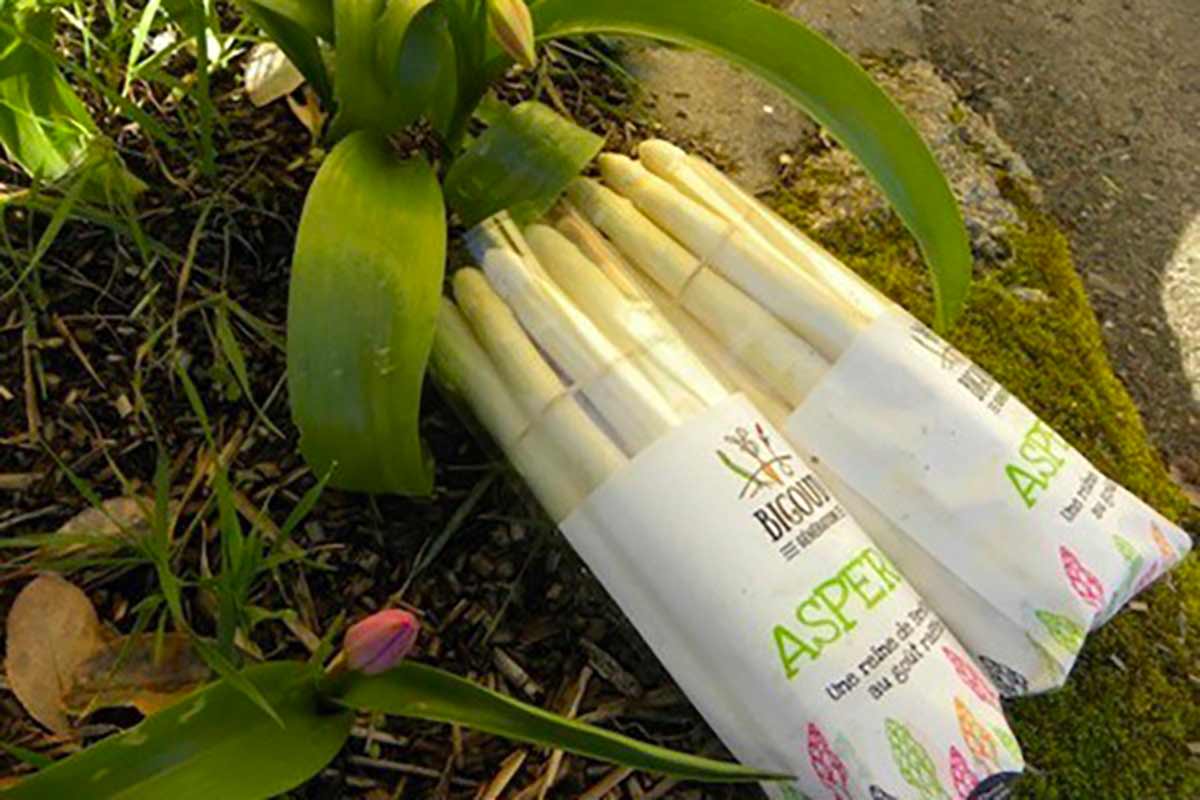
SARL Bigoud, located in Brittany in Plomeur on the Pointe de la Torche, ended its asparagus season on May 15. It was a decent season thanks to stable and reasonable prices throughout, but overall not as good as last year’s:
“We started in early March, about a week late, and overall yields were lower than in previous years because the cold weather slowed down asparagus growth,” explains Karel Kaptein, manager of the company.
There was, however, a production peak around Easter:
“That was the only time during the season when we had a surge in growth. To avoid being stuck with excess volumes, we ran promotions and lowered prices to around €6 for the 22+ calibers, which were particularly abundant this year. It was a winning strategy since sales remained steady, even though it’s always harder to raise prices afterward. For the other calibers—12–16 and 16–22—sold in bunches, we maintained prices at around €8 until the end of the season.”
Although prices remained stable and reasonable, they weren’t enough this year to offset the lack of volume.
Currently, alongside leeks, sand-grown carrots, and flower bulbs, asparagus is grown on 20 hectares at SARL Bigoud. This surface could be doubled by the future buyer of the farm, as Karel Kaptein plans to sell the operation this year.
For more information:
Karel Kaptein
SARL Bigoud génération
sarlbigoud@gmail.com
Publication date: Thursday, June 5, 2025
© FreshPlaza.fr / Aurélie Pintat
Asparagus Harvest – Agricultural Equipment – Leboncoin Leboncoin Asparagus Harvest Assistance Solid Brand With Battery €2500.

Wholesale fruit and vegetable prices UK – Week 21 Strawberry prices fall 47%, asparagus up 30% by FreshPlaza
Wholesale fruit and vegetable prices UK – Week 21
Strawberry prices fall 47%, asparagus up 30%
Click here to enlarge
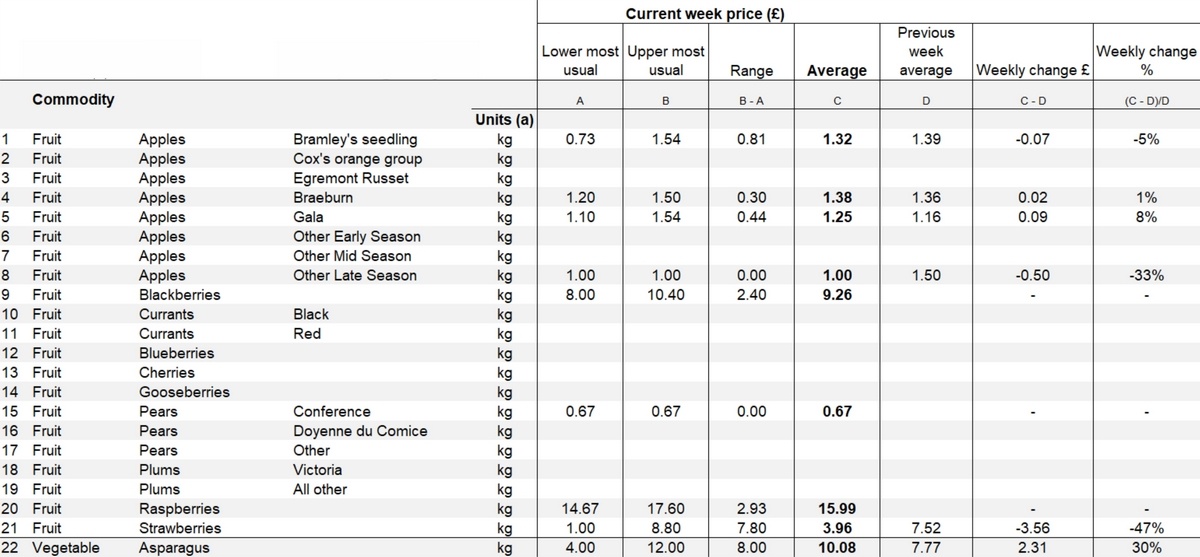
Strawberries also experienced a major price decline. This week’s average stands at £3.96 per kg, a notable decrease from last week’s average of £7.52 per kg. This results in a weekly price reduction of £3.56 per kg, which translates to a 47% drop. Such a sharp decline in a single week significantly impacts the overall pricing trend in the fruit category.
In contrast, asparagus showed a positive movement in pricing. The current average price is £10.08 per kg, compared to a previous week average of £7.77. This represents an increase of £2.31 per kg, equating to a 30% rise. Among the products compared, asparagus is the only one to show a price increase this week.
To view the full report, click here.
For more information:
GOV.UK
Tel: +44 (0) 7920 073612
Email: prices@defra.gsi.gov.uk
www.gov.uk
Asparagus Season Wraps Up in California by FreshPlaza
California has wrapped up a particularly good asparagus season. “Although California doesn’t produce large volumes, it serves many premium clients,” says James Paul of Greg Paul Produce Sales Inc., which distributes the product as part of a program with The Giumarra Companies.
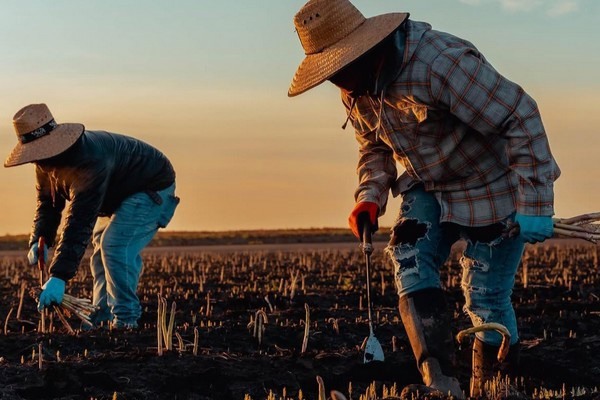
This season, volume out of California increased, and while the state usually begins shipping asparagus in mid-March, this year production started nearly a month earlier, in mid-February. “We had a very mild winter that gradually warmed up, allowing us to extend the season. We didn’t experience any major heat waves,” explains Paul, who notes that the season ended at the usual time, between mid and late May.
Meanwhile, all local asparagus programs are underway in the states of Washington and Michigan, covering West Coast volumes, as well as in New Jersey, Indiana, and Quebec, which has a considerable quantity of asparagus it is trying to export to the U.S. Peru is also continuing to export asparagus, while Mexico is currently supplying product from Baja California. Paul adds that “in the near future, larger volumes will begin to come from Central Mexico, but currently, Mexican supply is among the lowest in the country.”
Strong Demand for California Asparagus
On the demand side, California’s planted acreage is at a level that keeps demand high. “Local consumers are very aware of the timing and seasonality of California asparagus. It’s one of the first fresh local products our region can really enjoy,” says Paul. He adds that pricing negotiations also peaked during the California season. “This led some buyers to seek out local product rather than letting the dollar’s value drive their decision. It’s been a very good year for local growers, and I hope it continues.”
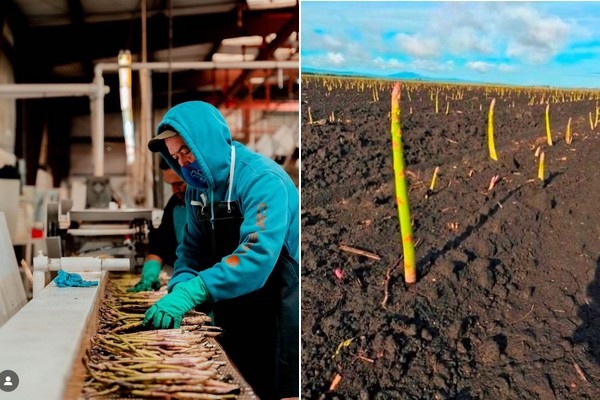
As a result, prices remained high. “We’re a bit of a special case because our volumes are so small that prices are independently set, rather than directly compared to the import markets from Mexico or Peru, for example. We have our own market, a bit more premium than the import one during the season,” explains Paul, who notes that import prices have also been higher in recent months.

For more information:
James Paul
Greg Paul Produce Sales, Inc.
Tel: +1 (209) 952-0580
Email: james@gregpaulproduce.com
www.gregpaulproduce.com
Publication date: Monday, May 26, 2025
© FreshPlaza.co.uk / Astrid van den Broek
La campagne d’asperges française n’est pas finie par FreshPlaza
Olivier Thomas, Ferme du Pont d’Achelles :
« La campagne d’asperges française n’est pas finie »
Un gain en précocité qui décale le pic de consommation
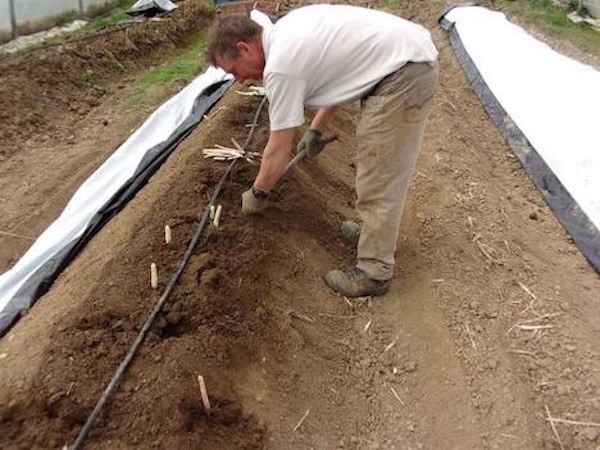
Une situation qui ressemble à celle de l’année 2022 qui avait fait face à des difficultés similaires en termes de manque de consommation. « Lorsque nous nous sommes lancés dans la culture de l’asperge il y a 20 ans, nous commencions la saison en mai et la fête des mères correspondait à notre pic de production. Aujourd’hui, grâce aux techniques de production qui ont évolué, nous pouvons commencer dès le début du mois d’avril. Les gros bassins de production du Sud ont elles aussi gagné en précocité, commençant même pour certaines exploitations leur campagne en février. Cela a pour conséquence de décaler la consommation. Les gens sont ravis de retrouver de l’asperge en amont du printemps, mais fin mai, ils sont lassés et veulent d’autres produits. Si la fête des mères était un moment phare de la campagne d’asperges il y a 20 ans, cette année la consommation a été atone ».
Belgique et Pays-Bas : des asperges à des prix défiant toute concurrence
Une triste réalité qui, outre par ce gain en précocité d’année en année, peut être expliquée par d’autres facteurs : « L’année dernière, la consommation était encore dynamique fin mai grâce à une météo pluvieuse qui n’incitait pas à faire la transition vers des produits plus estivaux. Ce qui n’est pas le cas cette année. Ce printemps 2025 est plus ensoleillé et plus chaud, les gens n’ont donc plus envie fin mai de consommer de l’asperge sachant qu’ils ont commencé pour la plupart en mars. Ils veulent passer à des produits plus estivaux. Le manque de consommation d’asperges françaises est aggravé par le fait que l’on retrouve actuellement sur le MIN de Lomme de la marchandise hollandaise et belge à 2 euros le kilo. Cela fait partie de leur stratégie, lorsque les Belges et les Hollandais ont trop de production, pour assainir leur marché intérieur ils envoient de la marchandise à des prix défiant toute concurrence sur les marchés étrangers. Ce qui a inévitablement une incidence sur les producteurs français ».

Une campagne qui risque de se terminer prématurément
Face à ce manque de consommation, la campagne tend à s’écourter : « Nous avions le potentiel de récolter encore pendant un petit mois, mais allons devoir écourter la campagne. Cela ne sert à rien de continuer à récolter les asperges si nous ne pouvons pas les vendre. Nous en avons encore dans les frigos et la main d’œuvre pour la récolte est très onéreuse. Nous avons déjà arrêté 3 hectares pour éviter de jeter de la marchandise ».
Si le consommateur semble avoir envie de clôturer le chapitre 2025 de la saison de l’asperge, baisse de consommation qui coïnciderait avec la fin de la campagne des gros bassins de production du Sud, la production est loin d’être terminée dans les autres bassins de production : « Il y a encore des asperges dans le Nord, la Bretagne, le bassin parisien ou même dans la région Centre. En Alsace également, bien qu’ils aient leur propre marché local. Il n’y a même plus de cotations RNM pour notre région, alors qu’il y a encore de la marchandise. On a la sensation qu’une fois que les gros bassins de production ont fini leur campagne, la saison est pliée. Or, il y a encore beaucoup de petits producteurs indépendants et cela donne la sensation d’être laissés pour compte car pour nous, la saison d’asperges n’est pas encore finie… ».
Pour plus d’informations :
Olivier Thomas et Françoise Thomas
La Ferme du Pont d’Achelles
Tél. : 03 20 48 60 43
Laferme-dupontdachelles@orange.fr
https://www.lafermedupontdachelles.fr
Global market overview blueberries by FreshPlaza
Global market overview blueberries
The global blueberry market is experiencing a dynamic 2025 season marked by regional challenges and shifting supply patterns. In Spain, Huelva’s role as a key supplier to the UK has been disrupted by a lack of production peaks and the wettest start to the year in 150 years, prompting a shift in sourcing toward Eastern Europe. Meanwhile, Italy has seen a 20% increase in blueberry sales between January and April, driven by early domestic production and growing consumer interest, with retailers preparing for summer promotions as new varieties extend the season.In Poland, early frost impacted green fruit on some farms, but the widespread distribution of plantations helped stabilise the national crop, which was only slightly lower than in 2023. Exports rose by 17%, while imports from Ukraine remain relatively modest. In Serbia, harvesting is expected to begin around week 24, with the Duke variety quickly increasing in volume within a week to ten days. About three weeks later, supply from Romania will follow, ahead of volumes from Germany, the Netherlands, and, cautiously, Poland. The late June to mid-August window (weeks 25 to 32/33) is expected to be ideal for promotions and larger pack formats.

Germany reported strong winter demand supported by consistent quality from Peruvian and Chilean supplies, and a smooth transition to spring is expected, with domestic and Dutch volumes arriving in mid to late June.
French markets are seeing lower prices this May compared to last year, due to higher volumes from Spain and Morocco and a mix of quality levels. Demand remains strong as the local harvest is set to begin within two weeks. In North America, Florida and Georgia have seen significant yield reductions from hurricanes and pollination issues, but later-season regions like North Carolina and California are now ramping up, with more areas coming into production through July.
Southern Africa is also entering the season with cautious optimism. Zimbabwe’s harvest is picking up pace, and South African exporters expect similar volumes to last year despite past frost damage. However, with a large crop expected from Peru, strong marketing efforts will be essential to secure competitive pricing, especially as demand in Far East markets grows for larger berries in premium packaging.
Spain: Unstable supply challenges UK blueberry sourcing
Huelva, Spain, is a major supplier of blueberries to the UK, but this year has proven challenging. There have been none of the usual production peaks that retailers depend on for promotions. Morocco has indicated larger volumes, but these have not materialised in the UK market; however, the quality of Moroccan blueberries remains good.
Spain and Portugal have experienced the wettest start to a year in 150 years.
“There is now an interesting dynamic—pre-season, no one was willing to commit to volumes. We are selling now and transitioning to Eastern European supply,” said one trader.
Poland experienced very cold weather around ten days ago, with a similar situation reported in Romania. As a result, blueberries will need to be sourced from other countries such as Serbia, Bulgaria, Georgia, and even Ukraine to ensure a strong supply.
Demand for blueberries remains stable throughout the year, as they have become a commodity and are widely consumed as a snack.
In the UK, consumer demand is present, but retailers must achieve the right price point before launching promotions. Currently, growers are not under pressure to move large volumes at low prices.
Italy: Sales rise and production expands
From January to April 2025, blueberry sales increased by 20% compared to the same period the previous year. This consumption trend was observed in a major retail chain in central Italy with over 200 stores. According to the fruit and vegetable purchasing manager, blueberries are experiencing a growth trend similar to that of avocados a few years ago. Currently, the blueberries on sale are both imported and domestic, as the first domestic production has begun. The most common packaging is the 125-gram tray. During the summer, when full Italian production begins, they will also be available in 250-gram trays or 400-gram cups. This week, the 125-gram tray is selling for €2.19. Retail stores are able to run promotions to increase consumption during the summer months.
Meanwhile, a major nursery company in northern Italy has announced new collaborations with top international breeders and the launch of new high-performing varieties that can extend the production calendar. This demonstrates continued interest in the crop.
The blueberry production and marketing campaign began about 15 days ago in Campania with small quantities. The market is responding well in terms of demand and prices.
According to YouGov data, investments in blueberry research and development have paid off in recent years. More than 2.5 million Italian households consume these fruits at least once a month between March and July, peaking at over 3 million households in May 2024. The consumption season is therefore extensive, allowing for an average of more than six purchases per household per year. Each purchase averages more than €3.30 for packages of just over 250 grams, demonstrating the value attributed to this small fruit.
Poland: Blueberry supply steady despite frost
For blueberries, the acreage is no longer expanding at a very fast pace, but varietal changeover is gaining momentum at existing plantations. Due to growing demand for off-season fruit, many producers and exporters have also started importing berries to ensure a year-round supply. This availability is further boosting demand, as it makes it easier for consumers to develop the habit of eating soft fruit regularly throughout the year.
The main challenge of the 2024 season was the very early and rapid start of the growing cycle, which meant that on some farms, the May frost affected green fruit instead of flowers. This led to heavy losses, as green fruit is much more vulnerable to frost damage. However, the frost was localised and impacted growers to varying degrees. Overall, thanks to the widespread distribution of Polish farms across nearly all regions of the country, the total blueberry crop was only slightly lower than in 2023.
According to data from Agronometrics, blueberry exports actually exceeded those of 2023 by 17%, reaching nearly 26,000 tons. It is also worth noting that imports of blueberries from Ukraine—and therefore re-exports of Ukrainian fruit from Poland—are significantly lower than often assumed. The Polish State Plant Health and Seed Inspection Service reported that 1.7 thousand tons of blueberries crossed the Ukrainian-Polish border in 2023, while in 2024 that figure rose to 3.1 thousand tons.
At this point, a similar blueberry harvest to 2024 is expected, as potential crop losses due to frost are offset by recent plantings reaching full production. The harvest of other berries for the fresh market is expected to be higher than last year, due to increasing acreage and the fact that most of this fruit is now grown under covers.
Netherlands: Strong prices and quality for Moroccan blueberries; volumes fell short
“We are now rapidly approaching the end of the Moroccan blueberry season. From both a quality and pricing standpoint, it has been an excellent season, although the volumes have fallen short of expectations. Yields in the fields were significantly lower than anticipated. Nevertheless, consumer demand has been exceptionally strong. Volumes moved swiftly with no buildup or surplus. The entire market focused exclusively on fresh sales, which ultimately benefited the consumer,” explained a Dutch importer.
“In contrast, the Spanish blueberry season has failed to gain momentum, and it is unlikely to do so now, as we are already well advanced in the season. This is truly regrettable for the Spanish growers.”
“Looking ahead, Serbia is expected to commence harvesting around week 24. Once picking begins, substantial volumes should become available within 7 to 10 days. The Duke variety, which constitutes the majority of the Serbian crop, will quickly ramp up production. Approximately three weeks later, blueberries from Romania, Germany, the Netherlands, and, cautiously, from Poland will start to appear on the market. From weeks 25 to 32/33, it will be an ideal time to focus on larger pack sizes and promotional activities. Consumers will have the opportunity to enjoy high-quality blueberries,” the berry trader added.
Germany: Strong winter demand and smooth transition to spring supply
There was pleasing demand for blueberries throughout the winter, says a wholesaler. “The quality of the overseas produce, whether of Peruvian or Chilean origin, was also convincing and stable. At the start of the Moroccan season at the end of February, followed by Spain from mid-March, there were also no abundant surpluses from overseas, so we had a fairly seamless seasonal transition this year.”
The first arrivals from German and Dutch cultivation are expected in mid to late June. “However, it has to be said that there are generally fewer German blueberries available for the free market, i.e., the wholesale markets.”
France: Market sees lower prices ahead of local harvest
On the French market, blueberries come mainly from Spain, but also from Morocco, Portugal, and, in small quantities, from Peru. In May 2025, blueberry prices in France are generally lower than in May 2024, due in particular to more abundant production in Spain and Morocco, as well as the presence of batches of variable quality and cheaper imported blueberries. These factors have forced distributors to adjust their prices downward. Demand is strong, particularly with the return of fine weather. Harvesting of French blueberries is set to begin in about two weeks.
North America: Tight supply and strong demand mark early season
Blueberry volume is increasing in the Southeast. Florida is finishing production on its limited crop, which was down approximately 30–50 percent due to Hurricane Milton and other weather events.
Hurricane Helene and pollination issues have also impacted the first half of Georgia’s blueberry crop. Estimates suggest the crop is down between 30–40 percent in the early part of the season, which is also running late. However, recent rains are helping, and the remainder of the season is expected to see more traditional volume.
“North Carolina will begin harvesting its projected above-average to excellent crop next week.”
Mexico is finishing production, so volume is limited. Additionally, the California blueberry season began about two weeks ago, with peak volume expected over the next three weeks, though the state is slightly behind its original projections.
Demand is strong amid limited supply, so pricing is higher than usual.
Looking ahead, other regions will begin production soon: New Jersey (June 15), Michigan (first week of July), and the Pacific Northwest, including British Columbia (end of June to early July). Peru is expected to begin imports in mid-August.
South Africa: Growers eye global competition
Zimbabwe’s blueberry harvest is gaining momentum, and the South African industry is not expecting significant changes compared to last season, when 25,000 tons were exported from South Africa. Last year, around 2,000 tons were lost due to severe frost in July. By mid-June, the Limpopo crop will be in full swing.
The industry is approaching the new season with optimism, but they are aware, an insider says, that they must not take their eyes off Peru: a large crop is expected from the South American country, and “razor-sharp marketing” will be required from South African exporters to secure good prices for their fruit.
While the established blueberry brands remain focused mainly on European and UK retail, newer players are supplying Zimbabwean and South African blueberries to the Middle and Far East. Demand for larger-sized berries in the Far East is increasing—much more so than in Europe, particularly for tube packaging.
On the South African market, which is currently consuming Zimbabwean berries, volumes have been higher so far than in recent years, with prices lower than in 2023 in particular. Blueberries are trading at approximately €9.80 to €10.80 per kilogram at wholesale markets.
Next Topic: Avocados Publication date: Fri 23 May 2025
© HortiDaily.com / Stefan Jansen van Nieuwenhuizen
Romain Benard, La Benarderie : “More than a farm, we wanted to make La Benarderie a real place to live”by FreshPlaza
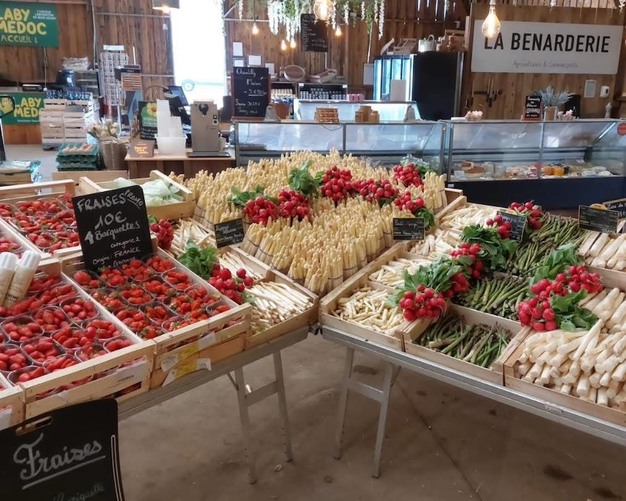
A “real place to live” — that’s what Romain Benard aimed to create on his family farm located in Hourtin, in the Médoc region. A place where people can enjoy nature over lunch at a shaded picnic area, pick their own fruits and vegetables grown on the farm, or enjoy family-friendly activities like getting lost in a giant corn maze, playing mini-golf, or riding pedal go-karts.
“The idea is for everyone to find a reason to spend the day at La Benarderie. We wanted to create a place that appeals to children, teenagers, and adults alike,” says Romain Benard.
The farm grows around fifteen products, including apples (with 8 varieties), berries (blackcurrants, blueberries, redcurrants, strawberries, etc.), summer vegetables (peppers, tomatoes, eggplants, zucchinis, etc.), squashes, and of course, the farm’s star product: asparagus.
“We mainly grow white asparagus over 40 hectares, with a potential harvest of around 270 tonnes. I work alongside my parents on the farm, and we have 10 full-time employees. During asparagus harvest, around 40 seasonal workers from Andalusia come to help us. We’ve had the same team for seven years, and we house them at the campsite opposite the farm.”
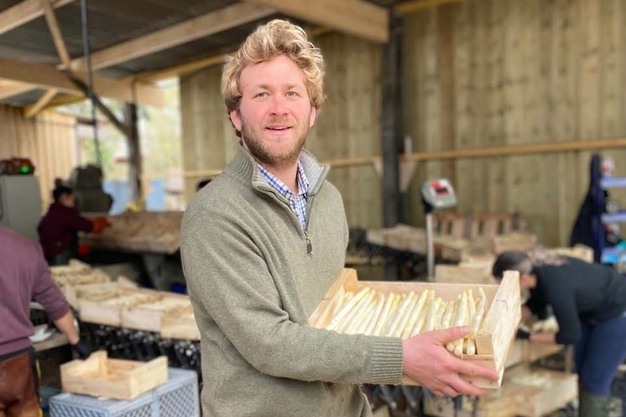 Romain Benard
Diversifying sales channels to reduce risk
To market the 270 tonnes of harvested asparagus, the Benard family uses three distribution channels:
“We sell 200 tonnes directly — either from the farm shop, where customers can also find our other vegetables as well as grocery and dairy products from neighboring farms, or at the nine markets we attend weekly. Then we sell 70 tonnes to the cooperative. We chose to diversify our sales channels to reduce risk. Direct sales are more profitable and rewarding, but also much more labor-intensive. Selling through a cooperative allows us to move larger volumes, though at a lower value. The two channels complement each other well.”

Higher volumes this year but lower average prices than last season
While the asparagus season began on February 17, the Benard family is wrapping it up this week.
“Unlike the 2024 campaign, we had more volume this year, but it was slightly less well-valued, even though the quality and sizes were good. Overall, though, we’re quite satisfied with this season. The biggest challenge in asparagus production is that volumes are highly weather-dependent. And in tough years, if the small quantities harvested don’t bring good prices, the season can be a disaster. Once again, having multiple distribution channels helps us reduce that risk.”

For more information:
Romain Benard
La Benarderie
Romain.benard94@gmail.com
Asparagus supports the Benard projects through F&L