Archive

The green asparagus harvest is progressing well in Granada Hoy

The green asparagus harvest is progressing well

The green asparagus harvest in Granada and Spain is progressing well. In at least eight provinces, including Granada, cooperatives and agricultural entities are operating at full capacity, and Spanish green asparagus is reaching both the national and international markets.

In Granada, a harvest of 35 million kilos is anticipated, an estimated increase of between 10 and 15% compared to the previous year. The province is consolidating its position as a national and European leader in this crop, with 6,500 hectares representing more than 65% of the total green asparagus area in Spain, contributing nearly 60% of national production.

Antonio Zamora, president of the Spanish Green Asparagus Interprofessional Association, emphasized that “this is the ideal time to consume asparagus grown in Spain.”

The Spanish Green Asparagus Interprofessional Association represents 96% of national production and 90% of sales. Its role is essential in channeling sector demands, fostering synergies, and optimizing sales, promoting a balanced value chain.

This organization includes the Granada Association of Cooperatives, the Agri-Food Cooperatives of Andalusia-Granada, UPA, COAG, ASAJA, the Guadalajara Green Asparagus Association, Aproa, Asociafruit, ES Andalucía, and the Regulatory Council of the Protected Geographical Indication (PGI) Huétor Tájar Asparagus.

This structure includes farmers, production companies, and marketing companies, many of them cooperatives, distributed throughout the Andalusian provinces of Granada, Malaga, Seville, Cadiz, Jaén, and Córdoba, as well as in Castilla-La Mancha, mainly in Guadalajara, and Extremadura.

A balanced asparagus market – Christian Befve: “We must start planning plantings for 2026 now”by FreshPlaza
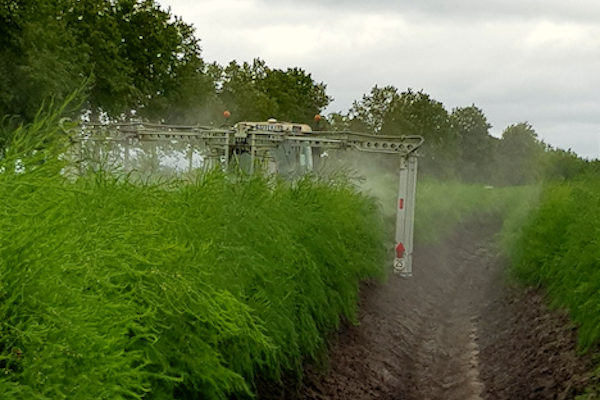
This year, the asparagus season began with a general delay of 2 to 3 weeks. The reason? Unstable weather, with especially cool nights that have prevented the warming of the soil ridges and thus slowed asparagus growth. “The season started slowly across the country. The Southeast usually comes in a week to 15 days ahead of the Southwest, but this year it was the opposite. In fact, under these late-start conditions, the Southwest had the best campaign launch,” says Christian Befve, internationally recognized asparagus production expert.

“We nearly ran out of volume for Easter”

Despite delayed volumes, the market is fairly balanced, with good-quality asparagus:
“In terms of quality, there’s nothing to complain about. We’re also seeing larger calibers this year. As for prices, the initial lack of supply pushed them very high at the start of the season, before settling at a more acceptable level for both producers and consumers. The fact that we’re not overwhelmed with volumes helps keep prices decent. We nearly ran out of stock for Easter this year, and we’re still short now.”

A minor “Dutch offensive” last week with little impact

In this market setup—reasonable volumes, fair prices, and limited foreign competition—consumer demand remains strong:
“We’re facing very little European competition this year due to poor weather affecting all producer countries, which favors French asparagus demand. The week before Easter, high-quality asparagus from the Netherlands entered the market at €3.50/kg (delivered to Rungis).
The Dutch are known for selling their surplus at very low prices abroad to ease their local market when supply exceeds demand. Last year, this lasted about two weeks and heavily disrupted the market. But this year, that small offensive had little effect. Buyers now recognize how short-lived such operations are.”

Renewed interest in asparagus planting

With a slightly under-supplied but promising market, more producers are showing interest in growing asparagus or expanding their acreage:
“I’ve been saying for two years now that the difficult seasons are behind us and it’s time to replant. We’re seeing renewed momentum. We should be in a stable cycle for the next ten years.
Still, growers must plan their 2026 planting needs now and communicate them to nurseries that sow in April. For years, nurseries have had to throw away crowns. To avoid economic losses, they now only grow to order.
It’s crucial for producers to send their planting requests now to secure the varieties they want.”

For more information:
Christian Befve
Christian Befve & Co
christian@befve.com
www.befve.com

Publication date: Wed, April 23, 2025
© FreshPlaza.fr / Aurélie Pintat

Switzerland: White asparagus cultivation has quadrupled in twenty years
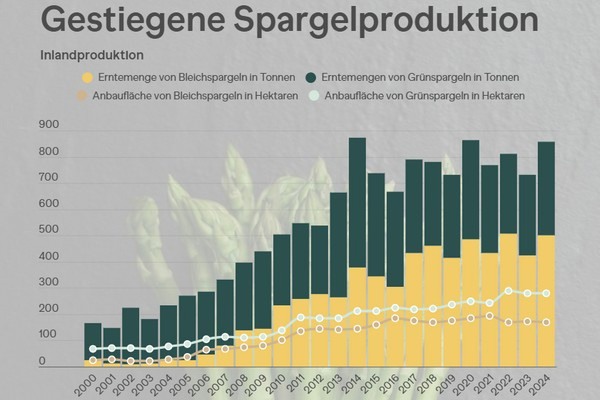
In recent years, Swiss vegetable growers have significantly expanded asparagus cultivation, boosting the supply of locally produced crops. Over the past twenty years, the surface area dedicated to white asparagus has quadrupled, while green asparagus has tripled. Today, around 180 farms grow asparagus in Switzerland, mainly in Eastern Switzerland, followed by the Plateau and the French-speaking part of the country.

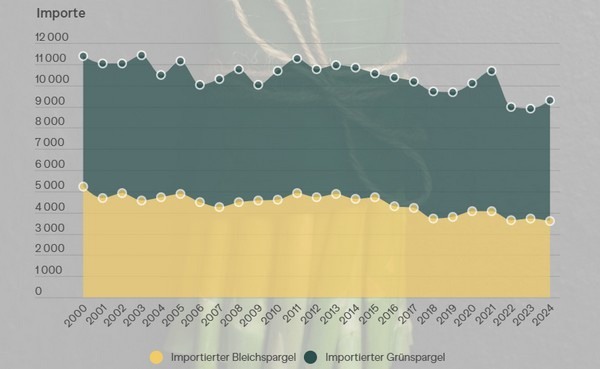
Despite this growth, domestic production still does not meet demand. In 2024, Switzerland imported nearly 3,600 tonnes of white asparagus and around 5,700 tonnes of green asparagus. Total consumption – both white and green – amounts to nearly 1 kilogram per person.
Significant growth potential remains untapped

Asparagus cultivation is demanding: it requires substantial investment, a long waiting period before the first harvest, and a short production window of just two good months per year. “Asparagus remains on the same plot for about ten years, but it can only be harvested starting in the third year,” explains Markus Waber, Deputy Director of the Swiss Vegetable Growers’ Association (UMS). This long-term type of cultivation therefore requires patience, discipline, and expertise.

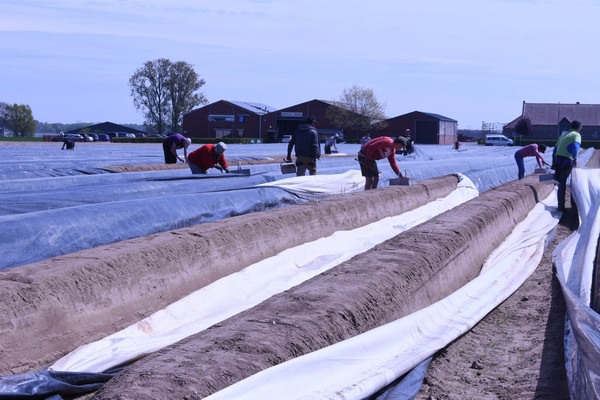
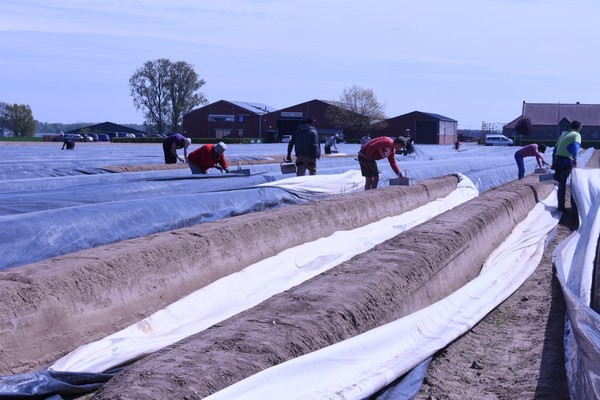
The work is intensive: from building the characteristic ridges to laying plastic films and harvesting daily, every step requires commitment. Even after harvesting, plants must be properly maintained to stay healthy. “Before starting out, a farm must ask itself several questions: Am I truly interested in this crop? Do I have the right outlets? The infrastructure, land, and staff required?” adds Waber. “Swiss asparagus is highly appreciated by consumers. Unlike imports, it is available in limited quantities. There is real potential here: local production has its place on the market and is in high demand.”

Source : lid

Asparagus – Week 15 Summary (Germany): Persistent drought worries many asparagus growers by FreshPlaza

Local asparagus supply is now increasing week by week. However, price disparities between regions remain significant. In some cities, consumers have to pay high prices: in Munich, white asparagus reaches €31.80 per kilo. In Berlin and Cologne, prices are almost half that: “We charge €17.90 per kilo,” says Christian Fuchs, 46, a grower in Cologne-Rheindorf. On Berlin’s weekly markets, prices start at €18 per kilo.

Lower Saxony: reduced acreage and harvest volumes

The first asparagus has already been harvested in some fields. While demand was moderate in 2022 due to the Covid-19 pandemic, interest surged again in 2023. This year, rising minimum wages and energy costs continue to strain farms, leading many to reduce their growing areas.

According to the regional statistics office, Lower Saxony remains Germany’s leading asparagus-producing state in 2024. However, cultivated area and yields are clearly declining. Figures for 2025 are not yet available. Last year, 21,700 tonnes were harvested from 3,900 ha (compared to 22,800 t from 4,400 ha in 2023), marking a 4.8% decrease in volume and 11.6% in area. On the other hand, average yield per hectare improved to 56.2 dt/ha (+7.9% from 2023).

Lower Saxony accounted for about 20.3% of Germany’s total asparagus-growing area in 2024 (around 20,000 ha nationwide), with 223 active farms, including 23 organic ones.

“The big boom during the Covid years is unfortunately behind us. Still, we’ve managed to maintain stable prices, similar to last year,” says Heiko Stolle, a producer in Klein-Bümmerstede (Oldenburg). He notes that persistent drought is a major worry: “We’ve already started irrigating the fields,” he adds.

Schleswig-Holstein: producers remain optimistic

In Schleswig-Holstein, the season was officially launched by Ute Volquardsen, president of the Chamber of Agriculture, along with representatives from the Asparagus Working Group and growers from across the region. Farmer Schümann, based in Hasenmoor, remains optimistic: “Asparagus doesn’t need rain for now—what it needs is warmth,” he explains. His beds are covered with plastic film and ventilated to speed up harvest. Around 450 ha of asparagus are grown by 40 farms in the region.

Hesse: a difficult start due to harsh conditions

On April 3, Hesse’s Minister-President Boris Rhein officially kicked off the season at Steinbrücker Hof in Weiterstadt. His message: “Hessian asparagus is climate protection in action and deserves support!” He also emphasized the sector’s challenges, especially the potential impact of raising the minimum wage to €15, which would affect foreign seasonal workers as well.

This increase, he warned, would seriously undermine the competitiveness of local farms, already grappling with low self-sufficiency in fruit and vegetables. It may force some growers to abandon costly crops like asparagus. The Hessian Farmers’ Association (HBV) is calling for specific wage regulations to help safeguard the region’s agricultural base.

North Rhine-Westphalia: historically low harvest

In North Rhine-Westphalia, the 2024 harvest was the lowest in years. Just 18.5 tonnes were harvested—an 11.1% drop from 2023 and the lowest since 2016, according to the state statistics office.

Cold weather last year is blamed for hampering growth and reducing spear size. This year, harvesting has already begun at several sites. The recent sunny weather is promising. By season’s end, on June 24 (St. John’s Day), around 18,000 tonnes are expected. About 70% of production is sold through short supply chains: directly at farms, markets, or roadside stands.

Thuringia: season starts at the largest farm

Harvesting is starting this week in Thuringia’s main growing region, the Unstrut-Hainich district. In Kutzleben, the state’s largest farm is cultivating 110 ha of asparagus—20 less than last year. The Herbsleben agricultural cooperative maintains its 80 ha, unchanged from 2023.

“The start is going as expected. Mid-April is a usual starting point,” says Jan Niclas Imholze from Kutzleben.

Saxony-Anhalt: slow growth due to cold

In Saxony-Anhalt, the season is starting slowly due to cold nights. “There will be asparagus for Easter,” assures Patrick Wolter, farm manager at the Hohenseeden agricultural cooperative. However, depending on the weather, meeting full demand may be challenging.

In 2023, the region harvested about 1,820 tonnes from 360.7 ha, according to the regional stats office in Halle. This marked a rise from 1,400 t in 2022 and 1,500 t in 2021.

Rhineland-Palatinate: sufficient supply for Easter

Thanks to good sunshine, Rhineland-Palatinate confirms there will be enough asparagus for Easter. “Harvest has started in all growing areas,” says Andreas Köhr from the regional farmers’ and winegrowers’ association.

Brandenburg: early but slow start to the season

According to a spokesperson from Syringshof farm interviewed by BERLIN LIVE, the season began earlier than usual but is progressing slowly—a good sign for quality harvests.

Prices should remain stable compared to 2023, ranging from €9/kg for broken or soup-grade asparagus to €16/kg for top-quality spears.

Austria: slightly lower harvest expected

After a historically early start in 2023, Austrian consumers will have to wait a bit longer this year due to cooler temperatures. According to Josef Moosbrugger, president of the Chamber of Agriculture, the first local asparagus should hit supermarket shelves by mid-April.

Production is centered in the Marchfeld region (Lower Austria). In 2023, 762 ha were planted: 498 for white asparagus and 264 for green/purple. Total output reached 2,723 tonnes. A slight decline is expected this year.

Austria’s annual consumption is estimated at 5,000 tonnes. In 2023, around 3,000 tonnes were imported, mainly from Spain (35%), Italy (31%), Hungary (14%), Germany (8%) and Peru (5%).

Switzerland: cold snap threatens harvest

In Switzerland, night frost is threatening asparagus crops. Farmers are applying protective measures. Cold weather is slowing growth, although the first white Swiss asparagus is already available. Green asparagus, however, is still awaited.

Jorge Sofín, de Espárragos de Novillas (Espagne) : « La pluie a retardé les récoltes d’asperge blanche » par FreshPlaza

Rain has been a key factor this year in the start of the white asparagus season along the banks of the Ebro River, which began a bit later than in previous years. “In our case, we started the season with the first harvests about twenty days ago, but we’re a lucky company — 95% of the area under the PGI ‘Asparagus of Navarre’ is only just beginning to be harvested today due to the rainfall.”

“We were fortunate enough to be able to ridge the beds and prepare the asparagus before the rain prevented us from working the soil, and these 20 days of early harvesting have been very beneficial for the marketing of our asparagus.”

“This year, production should be similar to last year, with fairly good calibres that will continue to improve as the season progresses. This is very positive, since size is one of the most important and valued factors for both customers and chefs when it comes to fresh asparagus.”

“In terms of demand, we’re seeing another relatively good year. Easter is usually a bit tricky for fresh products because many shops are closed during the holidays, and with the current economic situation, it’s difficult to sell asparagus at the price we would like. Nevertheless, we’re quite satisfied with our current position and, once again this year, we are able to defend the price of our high-quality product against the pricing strategies of large supermarket chains.”

Espárrago de Novillas sells its production in Spain “to fruit and vegetable wholesalers and high-end restaurants, including several Michelin-starred ones. However, each year at the beginning of the season, we receive many calls from people interested in importing our asparagus, as demand in Europe is more than promising.”

It’s worth noting that Germany is the largest importer of asparagus in the EU-27, with a high level of consumption. “We are a family-run business, and so far we’ve focused on the Spanish market, but we’re growing year by year and we’re not ruling out exporting in the future.”

“We grow Grolim and Herkolim varieties, which allow us to harvest very large, high-quality asparagus throughout the season. We also market under two labels, Reyno Gourmet and Aragon Alimentos Nobles, both of which guarantee the superior quality of our products and give us strong market prospects. Moreover, although we started earlier than other growers this year, the season overall began later, which could allow us to extend our production into June.”

For more information:
Espárragos de Novillas
C/ Francisco de Goya 24, CP50530 Novillas (Zaragoza)
Tel.: +34 676 257 389
esparragodenovillas@gmail.com
https://esparragodenovillas.com/ 

Nicolás Chica, director of Agroláchar (Spain): “A period of very strong demand for green asparagus in Europe is approaching” by FreshPlaza

The green asparagus harvest is going very well in Granada. “This year, we are doing much better than in recent years. We are coming out of two bad weather years, 2023 and 2024, marked by extreme drought that prevented asparagus spears from developing properly. Now we’re finally facing a normal harvest,” says Nicolás Chica from Agroláchar.

“Fortunately, in 2024 we had a rainy autumn and a cold winter, which were very beneficial. Although we started a bit late due to the rains in March, we are now at the optimal point for harvesting,” he adds.

Although climate is often the green asparagus’ worst enemy, it’s currently working in its favor. “Here in Granada, minimum temperatures are around 10–11°C and maximums reach 22°C, which is very good for asparagus because it allows us to harvest spears of extraordinary quality just as volumes are increasing,” Nicolás explains.

“We are maintaining excellent production, which is recognized by all the markets where we export our asparagus,” he emphasizes. “In fact, 72% of the green asparagus grown in Granada is consumed by clients in Central Europe and Nordic countries, who eagerly await the start of our campaign each year.”

“However, even though this season is better in terms of production, one thing is missing, and it applies to all agricultural sectors: labor,” Nicolás notes. “There’s a lack of workers for agricultural tasks and harvesting. During the three-month campaign from March to June, we need staff every day to carry out harvesting and post-harvest handling for marketing. This labor shortage is growing, and I know companies are trying to find ways to mechanize the harvest to reduce reliance on labor.”

“Still, the good news is that prices have been favorable so far. For us, Easter and the days leading up to it are a great time because demand for green asparagus is very high, and we are already in a strong price period. By the end of the season, prices will drop, but we hope the weather conditions remain good enough to extend the season as long as possible, maintain excellent product quality, and sell as much as we can.”

For more information:
Agroláchar S.C.A.
Adresse Av. Andalucía, s/n
18327, Láchar, Grenade (Espagne)
Tél. : +34 692 043 375
comercial@agrolachar.com
https://agrolachar.com/


Could Michigan’s asparagus growing benefit from tariffs? by FreshPlaza

Could Michigan’s asparagus growing benefit from tariffs?

Michigan is expecting an upcoming asparagus crop that will likely be similar to its historical crops. What is expected to vary is the start time this year. “We’ve had a typical winter and it’s still cold, so production looks to start in May,” says Trish Taylor, marketing manager for Riveridge Produce Marketing, Inc.

Asparagus is the first commercial crop in Michigan annually.

The asparagus growing in Michigan–the top asparagus-growing state in the U.S.– benefits largely from its proximity to Lake Michigan. “Most of the asparagus is grown in the Western part of the state, and asparagus likes sandy, loam soil,” she says, adding that there is a bit grown in southern Michigan as well. In fact, production starts in southwest Michigan. “With the lake, the climate lends to natural irrigation/rain. That’s the difference between us and imported asparagus. Other countries grow in more of a desert-like condition where they provide irrigation and in some areas grow a crop twice a year. Here, asparagus is the first commercial crop of the season.”

Typically, the crop runs approximately six to eight weeks out of the state.

How Michigan harvests
While Michigan only produces asparagus in the spring (the state still hand-snaps its product at its natural breaking point rather than having farm workers walk fields and cut down asparagus), imports stretch the season to year-round supply now. In turn, Taylor says that pressures pricing on Michigan’s season. “That means when we’re able to ship, the price isn’t necessarily where we’d like it to be,” says Taylor.

Michigan still hand-snaps its product at its natural breaking point rather than having farm workers walk fields and cut down asparagus.

So, does that mean Michigan will benefit from the recently announced tariffs from the U.S. administration on asparagus-growing countries such as Peru?

“It will be a wait and see. If asparagus outside of the domestic season is more than they’re used to paying, will they back away from buying it all year long?” asks Taylor, adding that Michigan growers encourage domestic buyers to freeze and can Michigan’s spring production. “It’s a big deal to us because there are not that many growers that just grow asparagus in the state. Typically, growers grow asparagus and are fruit tree growers. Their income from the asparagus crop sets them up for the rest of the year. That’s why pricing and movement is so important to our growers because that money gets invested right back into more produce output from Michigan.”

For more information:
Trish Taylor
Riveridge Produce
Tel: +1 (616) 887-6873
trish.taylor@riveridge.com


Danielle Chambaraud, Asperges du Blayais – Des volumes d’asperges qui peinent à arriver par FreshPlaza

« Les prix sont rémunérateurs mais commencent cette semaine à chuter »

C’est avec du retard que les asperges du Blayais pointent cette année le bout de leur nez. En cause ? Des températures trop fraîches et une terre qui ne parvient pas à se réchauffer. « Cela fait deux semaines que nous avons tout doucement commencé la récolte. Mais les nuits sont toujours fraîches, il nous manque quelques degrés pour lancer pleinement la campagne. Il y a quand même de la production bien sûr, mais nous n’atteignons pas les volumes que nous devrions avoir au temps T. Nous sommes situés au Nord des Landes et la différence de température avec le Sud se fait finalement bien sentir », rapporte Danielle Chambaraud, présidente de l’Association Asperges du Blayais.

De gros calibres qui commencent à arriver
Malgré les risques qu’un démarrage tardif comporte et une année une fois de plus « particulière », les volumes devraient être présents pour Pâques, temps fort de la campagne : « Le problème lorsque la campagne peine à démarrer, c’est que l’on risque de se retrouver subitement avec de gros volumes sur le marché. Néanmoins, Pâques étant dans une vingtaine de jours, nous devrions avoir les volumes nécessaires pour approvisionner nos clients, que nous sommes aujourd’hui obliger de restreindre. Quant à la qualité, elle est belle, mais les calibres jusqu’à présent étaient plutôt fins. On commence à voir désormais les gros calibres arriver ».

80T d’asperges attendues pour cette saison
Bien qu’un démarrage tardif puisse engendrer un décalage de la saison et donc une fin de campagne également plus tardive, la date de clôture de la campagne sera comme chaque année dictée par l’état du marché : « Nous sommes encore sur une année particulière. On se dit qu’en démarrant plus tardivement, on ira plus loin dans le temps, mais c’est comme toujours le commerce qui le déterminera. S’il y a encore de la demande, on pourra pousser la saison jusqu’à début juin, sinon, nous serons contraints de nous arrêter avant. L’asperge est souvent chassée par l’arrivée des produits estivaux comme le melon, mais on peut espérer qu’avec un démarrage plus tardif, le consommateur ait envie d’en profiter plus longtemps. Nous en attendons cette année 80T. Nous pensions en effet qu’après une petite récolte l’an passé (65T), les aspergeraies seraient plus productives cette année, mais pour le moment ce n’est pas le cas. A voir comment la saison évolue ».

Face à des volumes encore limités, les prix sont eux relativement intéressants : « Bien que l’on sente une baisse des prix cette semaine, c’est sûr qu’en ce moment, l’asperge est plutôt rémunératrice. Nous bénéficions d’une bonne demande et l’on sent vraiment que les clients sont impatients de retrouver les asperges ».

Pour plus d’informations :
Danielle Chambaraud
Association IGP Asperges du Blayais
Danielle.chambaraud@asperges-blandine.fr