Archive

Coopérative C.O.P.A. (Italie) « L’asperge verte de Canino IGP reste l’une des plus précoces » par FreshPlaza
Coopérative C.O.P.A. (Italie)
« L’asperge verte de Canino IGP reste l’une des plus précoces »

 « L’Asparago Verde di Canino IGP reste l’une des plus précoces d’Italie », affirme Sergio Marcoaldi, agronome de la coopérative, en soulignant que les terres riches en eau chaude permettent cet avantage compétitif. Actuellement, la récolte, y compris celle des asperges en plein champ, se déroule conformément à la moyenne saisonnière.

Après la reconnaissance obtenue en mai dernier, la production et la commercialisation ont démarré avec enthousiasme. « Nous avons augmenté le nombre d’exploitations enregistrées et certifiées, ce qui nous permet de garantir une plus grande disponibilité des produits de l’Indication Géographique Protégée. Contrairement à la situation nationale, où l’on constate une diminution constante des surfaces plantées, les membres de notre coopérative sont déjà en train de créer de nouvelles exploitations d’asperges ce printemps et nous prévoyons une superficie importante de nouvelles plantations l’année prochaine. »
Les conditions météorologiques n’ont cependant pas toujours été favorables. « Ces derniers jours, les quantités récoltées ont fluctué et sont principalement influencées par les fortes précipitations et les vagues de froid sporadiques, mais toujours dangereuses. Par conséquent, les quantités journalières tendent à être assez faibles. »
 |
 |
Sur le plan commercial, le directeur Giancarlo Benella indique que « les quantités sont de l’ordre de 15-20 kg par hectare ces jours-ci, alors que dans les champs en culture protégée, facilitée donc par la chaleur de l’eau chaude, elles dépassent les 100 kg. » Le marché, bien qu’attentif à la révision des prix à la baisse, maintient des niveaux de vente au détail entre 13 et 15 €/kg. » Les marchés de référence de la coopérative restent le marché national, avec la grande distribution organisée, et celui de l’Union européenne (France, Allemagne et pays scandinaves), malgré la concurrence des produits espagnols moins chers.

« Les prix actuels reflètent les quantités limitées de la production et sont assez soutenus et satisfaisants pour les agriculteurs. Toutefois, à l’approche des fêtes pascales, on s’attend à une possible baisse des prix, en raison des promotions prévues par la grande distribution. Malgré l’arrivée de volumes sur le marché, les prix pourraient cependant rester plus élevés que ceux de l’année dernière à la même époque », commente Benella, qui ne s’engage pas sur les prévisions pour l’après-Pâques.

Fête de l’asperge verte de Canino IGP
Enfin, Giovanni Pettinari, président de la coopérative, annonce avec fierté la 23ème Sagra dell’Asparago Verde di Canino IGP (Fête de l’asperge verte de Canino IGP), prévue du 28 au 30 mars 2025. « Un événement local qui représente une opportunité de valoriser un produit qui est le cœur de métier de la coopérative avec plus de 300 hectares, 100 exploitations et de plus de 1 500 tonnes d’asperges commercialisées. »
Cliquezici pour en savoir plus sur l’événement.
Pour plus d’informations :
 Società Agricola C.O.P.A. soc. coop.
Tél. : +39 761438207
info@copacanino.it
« Les prix des produits dont les asperges sont un peu plus élevés, mais tous ceux qui entrent ici sont des amoureux » par FreshPlaza
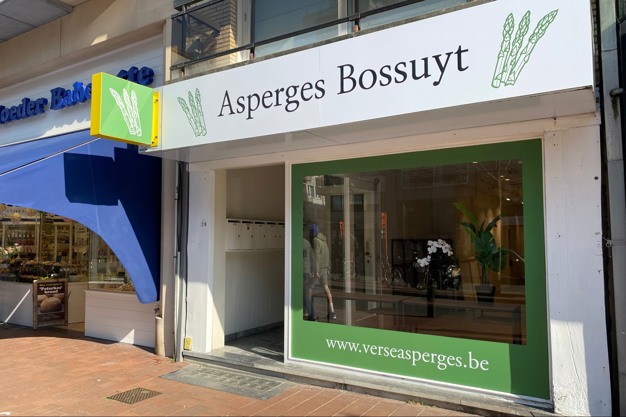
Aspergehoeve Bossuyt ouvre son propre pop-up shop à Knokke (Belgique)
« Les prix sont un peu plus élevés, mais tous ceux qui entrent ici sont des amoureux »

Depuis 2001, l’entreprise cultive des asperges dans un sol chauffé, sous des serres en plastique. « Par conséquent, nous sommes un peu plus précoces que les asperges cultivées à froid et nous avons pu couper la première jeudi dernier. En fait, je gère moi-même mes ventes depuis le début. Ma vision est de vendre tout ce que je cultive moi-même. Ainsi, je sais ce qu’il advient de mon produit et à qui je le vends. De plus, j’aime avoir un contact avec le client. Seulement, le magasin s’est développé au point que nous avons besoin d’un autre emplacement temporaire supplémentaire. »
L’idée avait germé dans l’esprit de Bossuyt depuis un certain temps. « J’avais vu une fois une vidéo d’une entreprise qui faisait cela aux Pays-Bas, et je me suis presque immédiatement dit qu’un jour, je ferai la même chose. Et ce jour est arrivé. J’ai rapidement choisi l’emplacement. Si je devais mettre sur papier l’endroit idéal, j’ai rapidement pensé à Knokke-Heist. Là-bas, les gens profitent un peu plus de la vie et sont prêts à payer pour ce qu’ils aiment. »

Le producteur est donc satisfait du déroulement de la journée d’ouverture. « Nous avons tout de suite pris un bon départ. Il faisait un peu frais, mais cela n’a pas empêché les passants de s’arrêter. En outre, nous sommes idéalement situés : tous les habitués de Knokke passent devant notre pop-up shop. Ce n’est que le quatrième jour que nous sommes ouverts, mais j’y suis retourné hier pour réapprovisionner le stock et, en fait, les gens n’arrêtaient pas d’entrer et de sortir. On voit qu’íls attendent avec impatience la reprise de la saison. Tout le monde arrive avec le sourire. »
Ainsi, même les prix plus élevés en ce début de saison ne dissuadent pas. « Les volumes sont encore assez limités, c’est le début de la saison, et tout le monde le sait. Tous ceux qui entrent dans le magasin sont des amateurs, et ils sont donc rapidement prêts à débourser un euro de plus pour la qualité. En outre, si vous achetez directement au producteur, vous savez que c’est toujours bon. Les meilleures asperges sont les fraîches. »

Si Bossuyt envisage de transformer son magasin temporaire en magasin permanent ? « Je ne sais pas encore. Nous ne vendons que des asperges, donc l’idée est d’être ouvert pendant la saison, de mi-mars à mi-juin. C’est aussi la première fois, donc nous tâtonnons encore un peu. Si le succès est au rendez-vous, nous pourrons commencer à réfléchir à la suite. C’est difficile à dire pour l’instant, car nous venons juste de commencer. Attendons d’abord de voir comment se dérouleront les prochains mois. Quoi qu’il en soit, nous sommes impatients d’en découdre. »
Pour plus d’informations :
Kris Bossuyt
Aspergehoeve Bossuyt
Tél. : +32 472801140
info@verseasperges.be
Asparagus expansion into Mexico and Peru enables year-round supply by FreshPlaza
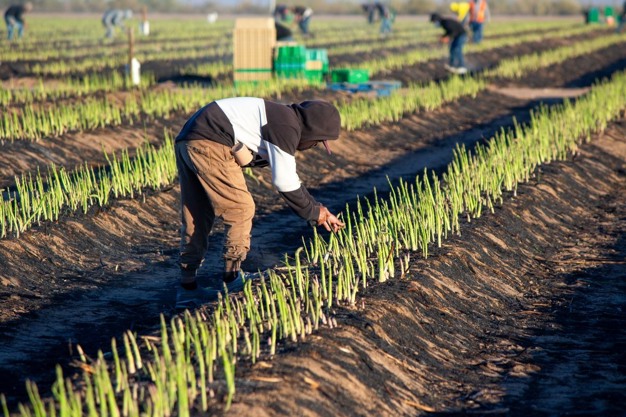
Asparagus expansion into Mexico and Peru enables year-round supply

Expansion into Central Mexico
Today, the company manages over 25,000 acres of asparagus across various regions in Mexico and a strategic alliance has been made in Peru. Most recently, Altar has expanded in Ciudad Constitución, Baja California Sur, the Bajío region in Central Mexico. Strong summer production is expected from this region as well as from Peru and Altar feels confident it will be able to supply commitments and have volume available for promotional programs. “The expansion in Central Mexico in combination with our strategic alliance in Peru have allowed us to consolidate our offering and position ourselves as a year-round supplier,” shared Torres. “Upcoming plantation projects will further solidify our role as the leading provider of fresh asparagus year-round.”
Product offering
In the past years, Altar has successfully diversified its product portfolio. While green asparagus and green onions are the two year-round core items for the company, production has expanded into other products. “We now also have Brussels sprouts year-round as well as offer some seasonal items, including Medjool dates, broccoli, bell peppers, and others.” In addition, the company is expanding into Individually Quick Frozen (IQF) and florets, aiming to broaden their range of product presentations.
During a time of expansion, sustainability and social responsibility remain core values for Altar and all employees. Sustainability initiatives include energy-saving programs, solar panel installations, a carbon footprint reduction plan, and regenerative agriculture practices. “We also hold certifications such as SMETA and Fairtrade, validating our commitment.”

New hires to drive expansion
Over the past five months, Altar Produce has welcomed new executives to the team. “They will play a key role in our strategic plan for the coming years,” commented Torres. “Our growth and diversification strategies are highly ambitious, and to support these, we have appointed three new executives in operations, sales, and procurement.” Together, they bring over 40 years of experience in the produce industry and Altar is confident they will be instrumental in driving expansion forward.

Next month, Altar Produce will be exhibiting at CPMA’s trade show in Montreal. Interested in meeting the team and learning more about their offerings? Stop by booth #1500.
 For more information:
Manuel Ochoa
Marketing
Altar Produce
Tel: +1 (661) 866-8175
marketing@altarproduce.com
4 500 tonnes attendues cette année pour l’asperge des Sables des Landes par FreshPlaza

4 500 tonnes attendues cette année pour l’asperge des Sables des Landes

© IGP Asperges des Sables des Landes
La typicité de l’Asperge des Sables des Landes se caractérise par la combinaison de deux éléments majeurs : le terroir qui présente des sols sablonneux et le climat océanique doux avec des températures clémentes. « La conjonction de ces deux éléments est favorable au développement de l’Asperge des Sables dans le département des Landes ». Depuis 2005, l’Indication Géographique Protégée (I.G.P.) labellise l’Asperge des Sables des Landes. Une labellisation du produit, mais aussi une garantie pour les consommateurs sur l’origine, la traçabilité de l’aspergeraie jusqu’au point de vente. En 2024, la filière obtient le précieux Label Rouge, gage de qualité gustative supérieure et d’un produit haut de gamme
L’Asperge des Sables des Landes est vendue principalement sur le marché Français, mais aussi sur la Suisse, l’Allemagne, la Scandinavie.
Pour plus d’informations :
Asperges des Sables des Landes
aspergelandes.com
« Il faut absolument rendre l’asperge accessible pour anticiper l’arrivée des volumes » par FreshPlaza
Christian Befve, Befve&Co :
« Il faut absolument rendre l’asperge accessible pour anticiper l’arrivée des volumes »
Pour plus d’informations :
Christian Befve
Christian Befve & Co
christian@befve.com
www.befve.com
(Grèce) « L’augmentation de l’offre d’asperges rattrape la forte demande » par FreshPlaza
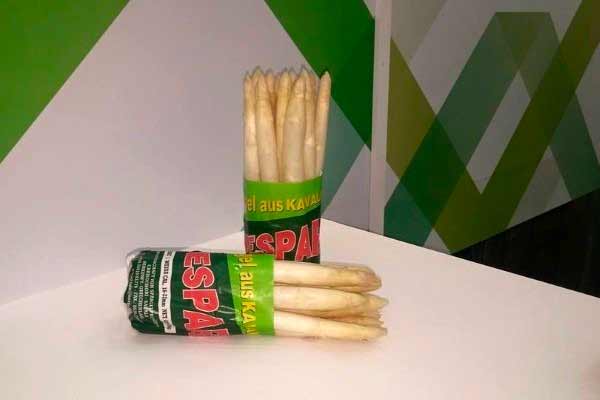
(Grèce)
« L’augmentation de l’offre d’asperges rattrape la forte demande »

Selon M. Maragozis, la demande du marché est élevée. “En ce moment, tout le monde demande des asperges. Nous sommes satisfaits. La question est de savoir quand la production allemande entrera sur le marché et combien de temps les prix élevés se maintiendront. Les coûts de production ont beaucoup augmenté. A.C. Nespar est également conscient des nouvelles tendances du marché. “Nous cultivons l’asperge blanche, qui est plus productive que l’asperge verte et qui est de loin la plus recherchée. Cependant, nous avons constaté une augmentation de la demande d’asperges vertes en Allemagne et sur d’autres marchés”.
Comme l’explique l’agronome de la coopérative grecque : “L’asperge verte est plus facile à cuisiner. Les restaurants gastronomiques la préfèrent nettement. Nous avons l’intention d’inclure l’asperge verte dans notre portefeuille. La difficulté de la culture de l’asperge verte réside dans le fait que la main-d’œuvre est limitée au moment où le produit en a besoin. Les travailleurs préfèrent travailler dans la culture des kiwis, un autre produit proposé par notre coopérative.”

“Nous cultivons également des kiwis Hayward et sommes assez satisfaits de la saison actuelle. Nous prévoyons de terminer nos stocks en avril et nous ne craignons pas de problèmes particuliers avec nos derniers fruits dans les chambres de refroidissement. Nos membres continuent à développer la culture du kiwi Hayward et nous prévoyons également d’augmenter notre capacité de refroidissement”.
Pour plus d’informations :
Kostas Maragozis
A.C. Nespar
Tél. : +30 259 106 1779
info@nespar.gr
https://nespar.gr/
Pasquino De Vuyst, de Square Melon (Belgique) : « La disponibilité des asperges s’est améliorée mais les prix restent élevés » par FreshPlaza

Pasquino De Vuyst, de Square Melon (Belgique) :
« La disponibilité des asperges s’est améliorée mais les prix restent élevés »

Le printemps est donc de retour chez Square Melon. « Nous avons bien travaillé tout au long du mois de février et ne pouvons pas nous plaindre, mais aujourd’hui, les transactions commencent vraiment à s’accélérer. Notre premier producteur est à pleine capacité de production d’asperges. La semaine dernière, c’était encore un peu difficile, mais là, ça va vraiment décoller. La demande d’asperges pelées est bonne. On peut voir que les restaurateurs qui font attention à leurs achats ne les proposent pas encore, mais beaucoup veulent d’ores et déjà mettre l’asperge au menu et sont prêts à payer pour cela. Nous sommes donc satisfaits de la fréquentation actuelle. »
Cela signifie-t-il que les prix baissent ? « Non, ce n’est pas encore le cas. Ils oscillent toujours autour de 20 €. Aujourd’hui, le kilo a même atteint 22 € sur le cadran. Même si l’offre augmente petit à petit, elle reste encore limitée. Ce matin, il faisait 3 degrés. Cela demande donc beaucoup de chauffage. Notre producteur m’a dit que les volumes rendus disponibles ces derniers jours provenaient principalement de la récolte quasi printanière de la semaine dernière. Maintenant, avec le temps plus froid, les volumes rediminuent. »

Pasquino De Vuyst
Les volumes plus importants seront donc issus des cultures de plein air. Mais pour De Vuyst, rien ne presse. « Nous travaillons toujours très bien avec des volumes limités. Mes deux producteurs habituels ont des asperges précoces et me les livrent. Et ce qui reste est vendu sur le marché. C’est donc une situation très confortable pour moi en ce moment, car j’en ai toujours assez et cela me permet aussi de jouer un peu sur les prix. Si elles sont moins chères aux Pays-Bas qu’en Belgique, je peux les vendre aux acheteurs belges qui se rendent normalement au cadran. Ce n’est que lorsque le gros volume arrive et que les différences entre les Pays-Bas et la Belgique s’atténuent qu’on a un peu moins le contrôle. »
« Outre les asperges, il y a une bonne demande d’ail sauvage, que nous importons directement. En outre, les légumes d’hiver continuent de bien se porter. Nous n’avons jamais vendu de champignons sauvages aussi tard dans l’année. L’offre a beau être limitée, ils se vendent. Nous avons également commencé avec les morilles fraîches de Chine, qui sont toujours très demandées. Nous sommes très occupés et c’est tant mieux comme ça ! »
Pour plus d’informations :
Pasquino De Vuyst
Square Melon
Tél. : +32 92233416
info@square-melon.be
www.square-melon.be
Lancement de la saison des asperges allemandes au centre de produits frais de Francfort « Un début de saison précoce et coûteux » par FreshPlaza
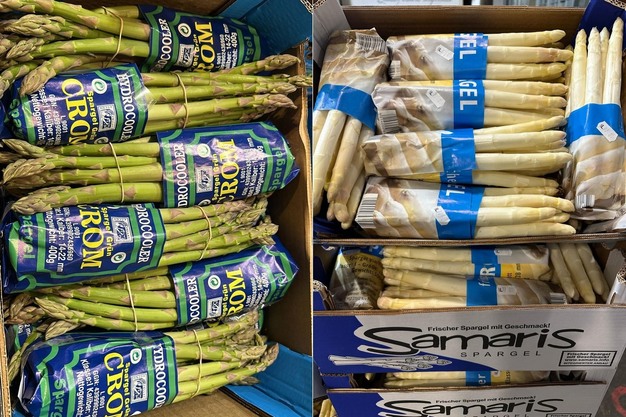
Lancement de la saison des asperges allemandes au centre de produits frais de Francfort
« Un début de saison précoce et coûteux »

Asperges blanches et vertes en provenance des jardins d’Italie
Les premières quantités, encore modestes, sont principalement destinées aux marchés hebdomadaires régionaux et aux commerces de détail spécialisés. « Nous parlons ici de 50 à 60 caisses, proposées à des prix relativement élevés. En moyenne, les premières asperges chauffées coûtent 5 €/kg de plus que l’année dernière. Les tarifs s’alignent sur ceux des asperges néerlandaises, actuellement commercialisées à des prix également particulièrement élevés », précise Römer.

Asperges chauffées de la ferme Janßen
En plus des premières asperges locales, Josef Stapf GmbH propose également des produits importés d’Italie et de Grèce. Römer poursuit : « Nous avons reçu les premières livraisons d’Italie dès la semaine 8, et nous sommes extrêmement satisfaits de la qualité jusqu’à présent. Selon le calibre, ces asperges sont environ 4 €/kg moins chères que les asperges néerlandaises. Nous commercialisons également des asperges blanches grecques, qui sont encore légèrement plus abordables. » Concernant les asperges vertes, le marché est actuellement dominé par les arrivages de Grèce et du Pérou. « Nous commençons également, progressivement, la saison des asperges vertes espagnoles. Cependant, la dynamique du marché des asperges vertes diffère considérablement de celle des asperges blanches, car elles sont désormais disponibles toute l’année. »

Asperges vertes et blanches d’origine grecque
L’humidité perturbe l’approvisionnement espagnol
Outre les asperges, une large gamme de produits, dont les fruits rouges et les légumes-fruits, provient actuellement d’Espagne. Cependant, les conditions humides dans les régions productrices clés, comme Huelva et Almeria, exercent une pression accrue sur l’approvisionnement. « Certains champs sont totalement inondés, et les volumes exacts de récolte restent incertains. Cette situation nous confronte à des défis majeurs en matière de commercialisation », explique Römer. Ces perturbations se traduisent également par une hausse significative des prix. « Les prix des baies et des poivrons sont actuellement remarquablement élevés. En seulement deux semaines, ils ont pratiquement doublé », observe-t-il.
Pour pallier ces difficultés, l’entreprise explore déjà des sources d’approvisionnement alternatives. « Nous nous tournons principalement vers les fraises grecques et italiennes. Mais là aussi, la concurrence est vive et les prix augmentent. Pour les poivrons, les options alternatives à l’Espagne sont limitées : la saison marocaine touche à sa fin, tandis que les Pays-Bas et la Belgique ne seront pleinement opérationnels qu’à la fin du mois. Il existe donc un réel déficit d’offre », conclut Römer.

À gauche : les conditions humides affectent gravement la culture des fruits et légumes dans de nombreuses régions d’Espagne
À droite : des fruits exotiques inhabituels, comme les mangoustans et les citrons, connaissent un engouement ponctuel, en grande partie alimenté par des tendances éphémères sur les réseaux sociaux tels que TikTok
Images : Josef Stapf Großmarkt GmbH
Pour plus d’informations :
Chris Römer
Josef Stapf Großmarkt GmbH
Frischezentrum Frankfurt (Centre de produits frais de Francfort)
Tél. : +49 (0)69 400502200
office@josef-stapf.de
www.josef-stapf.de
Le secret pour réussir une campagne d’asperge ? par FreshPlaza
Thibaut Lebourg – Le secret pour réussir une campagne d’asperge ?
« Il faut être exigeant mais pas trop gourmand tout en adoptant une vision long-terme »

Favoriser le travail en équipe
Si les belles années se sont enchaînées, c’est avant tout grâce à ce travail d’équipe, cher à l’entreprise : « Nous avons vraiment l’envie de travailler en équipe. Chaque membre de notre famille, nos 10 employés permanents mais aussi nos 68 saisonniers fidèles… Tous sont indispensables pour avoir de bons résultats au niveau de la production ». Un travail d’équipe qui permet de répondre avec réactivité aux demandes des clients : « Lorsque des commandes non prévues arrivent, nous nous mobilisons tous pour y répondre. Pendant la saison, mon bureau se trouve au sein de la station, c’est donc avec aisance que je peux prêter main forte lorsqu’il le faut à nos équipes. Ma compagne et mes parents se mobilisent également si nécessaire pour pouvoir honorer toutes les commandes afin de satisfaire nos clients. Nous faisons confiance aux équipes que nous avons formées à la même exigence que nous. Parfois, certains saisonniers deviennent même plus stricts que nous sur le tri ! Toute l’équipe a compris l’intérêt de produire des asperges haut-de-gamme ».
Faire de la qualité son cheval de bataille

Depuis le début de l’aventure, la famille Lebourg a décidé de mettre la qualité au cœur de sa stratégie, quitte à faire passer le rendement/hectare au second plan : « Notre objectif n’étant pas de faire du volume mais de la qualité. Nous avons privilégié des variétés gustatives douces, agréables à manger et non filandreuses, afin que l’on puisse les déguster dans leur intégralité. Un choix qui s’est fait au détriment du rendement mais que nous ne regrettons pas. Le fait de laver, trier, emballer nos produits dans notre propre station de conditionnement nous permet de maîtriser la qualité de nos asperges du début à la fin. Nous sommes particulièrement exigeants sur la qualité que nous fournissons à nos clients, et vérifions toujours à l’œil nu le travail du trieur optique. Au premier jour comme au dernier, nous tenons à offrir une qualité identique, avec des asperges parfaitement blanches. Dès lorsqu’un tout petit point violet apparait sur l’asperge, elle est déclassée et considérée comme violette. Si bien que notre catégorie II, au final très belle, est de plus en plus demandée. Nous rangeons nos asperges une par une à la main dans des caisses pourvues de paille de bois afin de protéger les pointes. ».
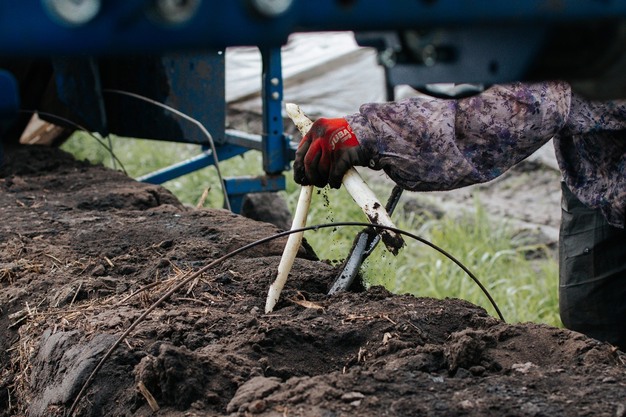
Pour obtenir cette blancheur intégrale, une récolte quotidienne est indispensable : « Il ne faut pas laisser le temps aux asperges de se colorer. Pour cela, il est impératif de passer tous les jours dans les champs pour les récolter. Cela nous coûte certes plus cher, mais nous gagnons en qualité et avons beaucoup moins d’asperges déclassées ».
Adapter sa logistique : vendre moins plus souvent plutôt que plus moins souvent
Toujours dans cette optique de proposer une qualité d’asperge constante et optimale, la famille Lebourg a adapté sa logistique pour garantir la meilleure fraîcheur qui soit à ses clients : « Nous conseillons à nos clients de préférer commander de petites quantités plus régulièrement plutôt qu’une grosse quantité d’un coup. Certes nous ne faisons pas d’économies en termes de logistique, mais cela permet d’obtenir une bonne rotation en magasin et donc de garantir la fraîcheur du produit. On évite ainsi de décevoir le client qui se sentirait lésé d’avoir payé cher un produit qui manque de fraîcheur, ce qui risque par la suite de le freiner dans son acte d’achat. Finalement avec cette vision, on y gagne sur le long-terme ».
Diversifier les canaux de distribution
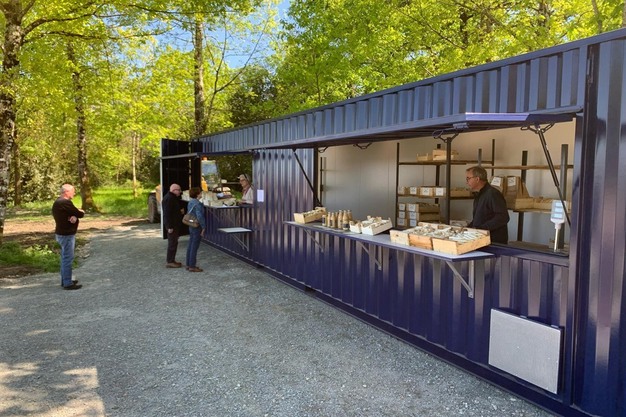
Toujours avec ce même objectif de fournir de la qualité, la famille Lebourg a souhaité exploiter tous les canaux de distribution : « Nous faisons de la vente directe sur la ferme et servons aussi bien les grossistes que la grande distribution, les restaurants locaux, les étoilés de Bordeaux à Paris ainsi que les primeurs. Nous faisons également de l’export – Etats-Unis, Japon, Dubaï, Singapour, Hong-Kong, Suisse, Allemagne et Danemark –, et certains pays comme les Etats-Unis sont très demandeurs ».
Alors que tout le monde veut de l’asperge en ce début de saison, la famille Lebourg préfère restreindre les clients afin de pouvoir tous les servir : « Nous faisons de plus petits volumes, ce qui nous permet de satisfaire tout le monde. Cela a également l’avantage de permettre à nos clients d’écouler facilement ces produits haut-de-gamme qui sont proposés à des prix relativement conséquents en début de saison ».
Penser la saison dans sa globalité en gardant des prix raisonnables
Selon la famille Lebourg, une saison réussie est une saison qui s’appréhende sur le long-terme : « Il faut penser à la saison de manière globale. Ceux qui veulent de l’asperge en début de saison se doivent d’être là jusqu’à la fin. Seront prioritaires les clients qui ont répondu présents tout au long de la saison passée. Il est également important de ne pas vouloir être trop gourmand, car il ne faut pas oublier que nous sommes en concurrence avec des coopératives qui vendent bien plus de volumes que nous. Nous sommes donc nécessairement plus impactés par les négociations de prix et devons faire en sorte de nous aligner tout en faisant valoir la qualité de nos asperges ».
Penser la saison dans sa globalité, c’est également ne pas céder à la tentation d’augmenter ses marges en début de campagne : « Nous tenons vraiment à faire passer le message que pour que la production continue, il faut que tout le monde soit gagnant : producteur, acheteur et consommateur. Or, il y a cette habitude dans le monde des fruits et légumes de vendre en magasin un produit le double de son prix d’achat. Mais sur un produit haut-de-gamme comme l’asperge qui présente des coûts de production très importants et donc un prix de vente déjà élevé, ce n’est pas cohérent d’y attribuer une marge en pourcentage. Il vaut mieux pour les distributeurs faire un ou deux euros de marge, ce qui permet aux producteurs de rentrer dans leurs coûts. L’acheteur fera tout de même une marge et le consommateur aura davantage envie d’en acheter. Il faut éviter qu’un maillon soit trop gourmand sinon c’est toute la chaîne qui se casse. Il vaut mieux parfois avoir moins de marge en début de saison où les prix sont toujours plus élevés mais qu’à la fin de la saison tout le monde s’y retrouve. »

Adapter sa stratégie pour répondre toujours mieux aux besoins de ses clients
Prochaine étape pour satisfaire encore mieux sa clientèle : segmenter son offre : « Nous avons souhaité segmenter notre offre en fonction du débouché commercial et avons pour ce faire revu notre stratégie commerciale en créant deux nouvelles marques. « Hirondelle », à destination de la Grande Distribution, qui à l’image des asperges annonce le printemps. Et « Cygne », pour son côté majestueux et sa blancheur immaculée qui rappelle celle de nos asperges. Cette marque premium, que nous avons créé avec l’accompagnement du cabinet de conseil Les Frères Patacq, s’adresse aux restaurateurs et nécessite plus de travail manuel, bien que gustativement parlant les deux marques soient identiques. Les clients semblent ravis de cette décision. Notre ambition est désormais de faire en sorte que nos marques soient reconnues et qu’elles apparaissent comme bien plus que de simples asperges blanches du Sud-Ouest ».