
Archive
A balanced asparagus market – Christian Befve: “We must start planning plantings for 2026 now”by FreshPlaza
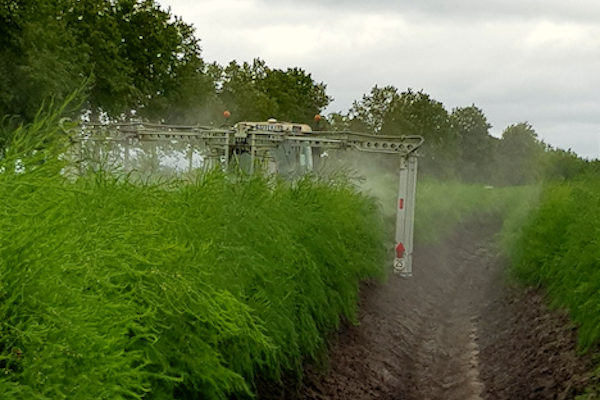
This year, the asparagus season began with a general delay of 2 to 3 weeks. The reason? Unstable weather, with especially cool nights that have prevented the warming of the soil ridges and thus slowed asparagus growth. “The season started slowly across the country. The Southeast usually comes in a week to 15 days ahead of the Southwest, but this year it was the opposite. In fact, under these late-start conditions, the Southwest had the best campaign launch,” says Christian Befve, internationally recognized asparagus production expert.

“We nearly ran out of volume for Easter”
Despite delayed volumes, the market is fairly balanced, with good-quality asparagus:
“In terms of quality, there’s nothing to complain about. We’re also seeing larger calibers this year. As for prices, the initial lack of supply pushed them very high at the start of the season, before settling at a more acceptable level for both producers and consumers. The fact that we’re not overwhelmed with volumes helps keep prices decent. We nearly ran out of stock for Easter this year, and we’re still short now.”
A minor “Dutch offensive” last week with little impact
In this market setup—reasonable volumes, fair prices, and limited foreign competition—consumer demand remains strong:
“We’re facing very little European competition this year due to poor weather affecting all producer countries, which favors French asparagus demand. The week before Easter, high-quality asparagus from the Netherlands entered the market at €3.50/kg (delivered to Rungis).
The Dutch are known for selling their surplus at very low prices abroad to ease their local market when supply exceeds demand. Last year, this lasted about two weeks and heavily disrupted the market. But this year, that small offensive had little effect. Buyers now recognize how short-lived such operations are.”
Renewed interest in asparagus planting
With a slightly under-supplied but promising market, more producers are showing interest in growing asparagus or expanding their acreage:
“I’ve been saying for two years now that the difficult seasons are behind us and it’s time to replant. We’re seeing renewed momentum. We should be in a stable cycle for the next ten years.
Still, growers must plan their 2026 planting needs now and communicate them to nurseries that sow in April. For years, nurseries have had to throw away crowns. To avoid economic losses, they now only grow to order.
It’s crucial for producers to send their planting requests now to secure the varieties they want.”
For more information:
Christian Befve
Christian Befve & Co
christian@befve.com
www.befve.com
Publication date: Wed, April 23, 2025
© FreshPlaza.fr / Aurélie Pintat
Such a beautiful presentation of the Lebourg company with the harvest, packaging, sale and culinary preparation by Ultimedia
Asparagus: these producers from the Landes share their advice for choosing them, by Marmiton
The Sierra de Yeguas Asparagus Fair returns with new features on April 26 and 27 Las 4 Esquinas The talk will be given by Christian Befve, consultant and one of the world’s leading specialists in the cultivation of white and green asparagus

“Do not confuse our cultivated asparagus with so-called wild asparagus!” by FreshPlaza
“Do not confuse our cultivated asparagus with so-called wild asparagus!”

Photo credit – Dreamstime – Below: cultivated green asparagus, above: Pyrenean Ornithogale
“Since these cases of poisoning appeared in the press, several growers have told me of their concerns about the two species being confused. I have also witnessed this first-hand, as some people told me they no longer buy asparagus as a precaution. These two species have absolutely nothing to do with each other, and it is very important to communicate on the subject so that the sector does not suffer from this gross confusion. Some media have even published photos of cooked green asparagus to illustrate their articles about these cases of poisoning,” according to a professional of the sector.
Nicolás Chica, director of Agroláchar (Spain): “A period of very strong demand for green asparagus in Europe is approaching” by FreshPlaza
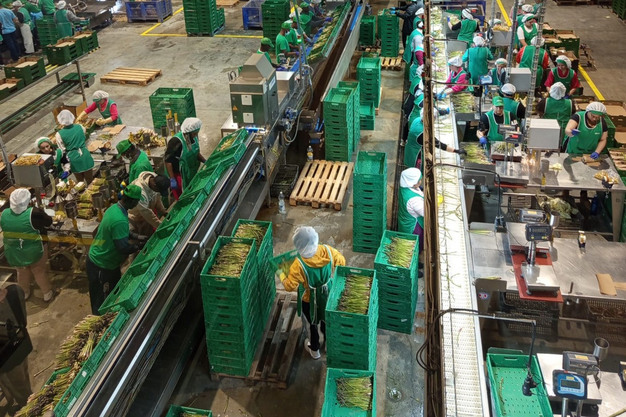
The green asparagus harvest is going very well in Granada. “This year, we are doing much better than in recent years. We are coming out of two bad weather years, 2023 and 2024, marked by extreme drought that prevented asparagus spears from developing properly. Now we’re finally facing a normal harvest,” says Nicolás Chica from Agroláchar.
“Fortunately, in 2024 we had a rainy autumn and a cold winter, which were very beneficial. Although we started a bit late due to the rains in March, we are now at the optimal point for harvesting,” he adds.
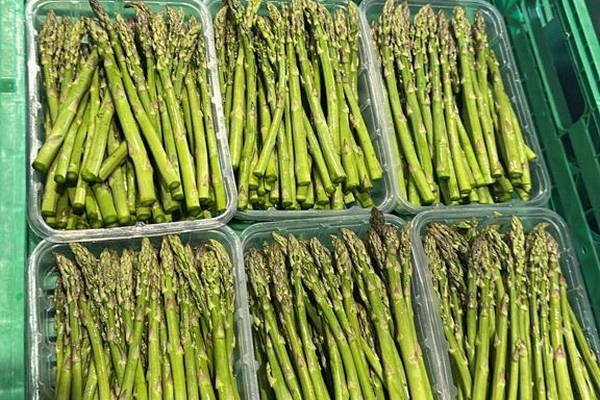
Although climate is often the green asparagus’ worst enemy, it’s currently working in its favor. “Here in Granada, minimum temperatures are around 10–11°C and maximums reach 22°C, which is very good for asparagus because it allows us to harvest spears of extraordinary quality just as volumes are increasing,” Nicolás explains.
“We are maintaining excellent production, which is recognized by all the markets where we export our asparagus,” he emphasizes. “In fact, 72% of the green asparagus grown in Granada is consumed by clients in Central Europe and Nordic countries, who eagerly await the start of our campaign each year.”

“However, even though this season is better in terms of production, one thing is missing, and it applies to all agricultural sectors: labor,” Nicolás notes. “There’s a lack of workers for agricultural tasks and harvesting. During the three-month campaign from March to June, we need staff every day to carry out harvesting and post-harvest handling for marketing. This labor shortage is growing, and I know companies are trying to find ways to mechanize the harvest to reduce reliance on labor.”
“Still, the good news is that prices have been favorable so far. For us, Easter and the days leading up to it are a great time because demand for green asparagus is very high, and we are already in a strong price period. By the end of the season, prices will drop, but we hope the weather conditions remain good enough to extend the season as long as possible, maintain excellent product quality, and sell as much as we can.”

For more information:
Agroláchar S.C.A.
Adresse Av. Andalucía, s/n
18327, Láchar, Grenade (Espagne)
Tél. : +34 692 043 375
comercial@agrolachar.com
https://agrolachar.com/
2026 Asparagus Claws Catalog at Angiers International
Danielle Chambaraud, Asperges du Blayais – Des volumes d’asperges qui peinent à arriver par FreshPlaza
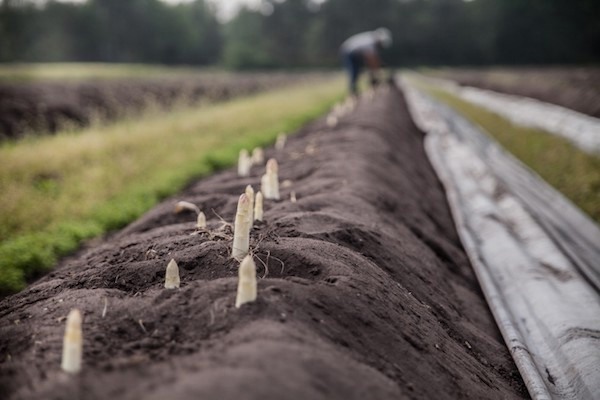
« Les prix sont rémunérateurs mais commencent cette semaine à chuter »

De gros calibres qui commencent à arriver
Malgré les risques qu’un démarrage tardif comporte et une année une fois de plus « particulière », les volumes devraient être présents pour Pâques, temps fort de la campagne : « Le problème lorsque la campagne peine à démarrer, c’est que l’on risque de se retrouver subitement avec de gros volumes sur le marché. Néanmoins, Pâques étant dans une vingtaine de jours, nous devrions avoir les volumes nécessaires pour approvisionner nos clients, que nous sommes aujourd’hui obliger de restreindre. Quant à la qualité, elle est belle, mais les calibres jusqu’à présent étaient plutôt fins. On commence à voir désormais les gros calibres arriver ».
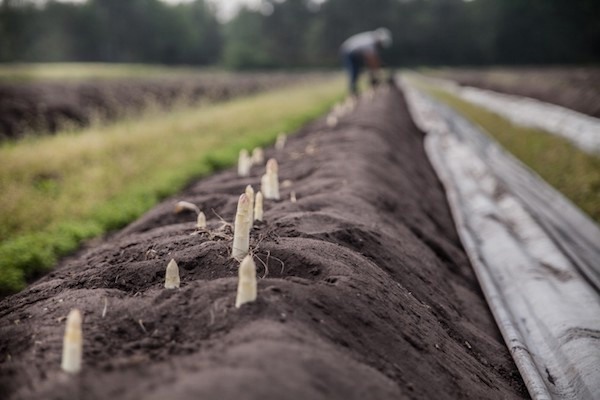
80T d’asperges attendues pour cette saison
Bien qu’un démarrage tardif puisse engendrer un décalage de la saison et donc une fin de campagne également plus tardive, la date de clôture de la campagne sera comme chaque année dictée par l’état du marché : « Nous sommes encore sur une année particulière. On se dit qu’en démarrant plus tardivement, on ira plus loin dans le temps, mais c’est comme toujours le commerce qui le déterminera. S’il y a encore de la demande, on pourra pousser la saison jusqu’à début juin, sinon, nous serons contraints de nous arrêter avant. L’asperge est souvent chassée par l’arrivée des produits estivaux comme le melon, mais on peut espérer qu’avec un démarrage plus tardif, le consommateur ait envie d’en profiter plus longtemps. Nous en attendons cette année 80T. Nous pensions en effet qu’après une petite récolte l’an passé (65T), les aspergeraies seraient plus productives cette année, mais pour le moment ce n’est pas le cas. A voir comment la saison évolue ».
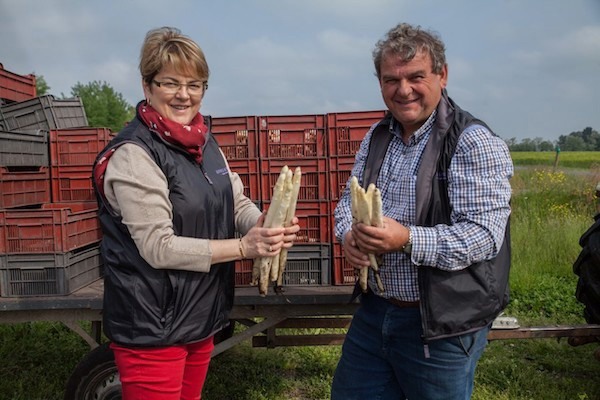
Face à des volumes encore limités, les prix sont eux relativement intéressants : « Bien que l’on sente une baisse des prix cette semaine, c’est sûr qu’en ce moment, l’asperge est plutôt rémunératrice. Nous bénéficions d’une bonne demande et l’on sent vraiment que les clients sont impatients de retrouver les asperges ».
Pour plus d’informations :
Danielle Chambaraud
Association IGP Asperges du Blayais
Danielle.chambaraud@asperges-blandine.fr