Archive

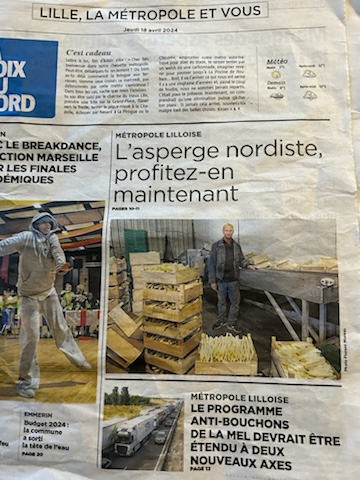
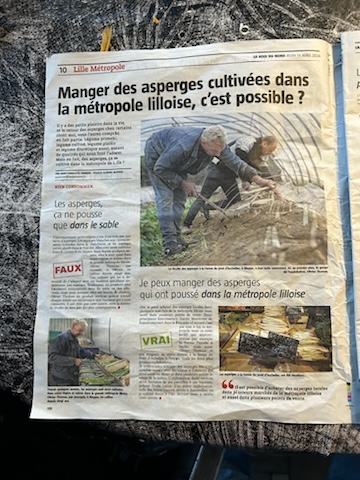
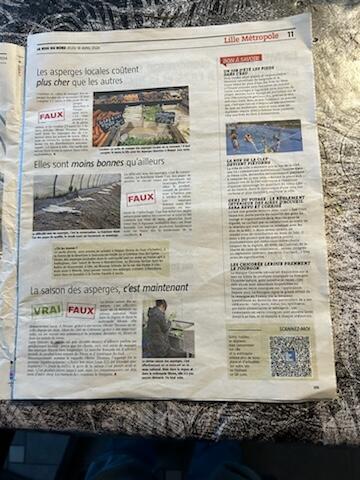
L’asperge du nord avec ses bonnes et fausses idées chez Olivier Thomas de la Ferme du Pont d’Achelle par la Voix du Nord
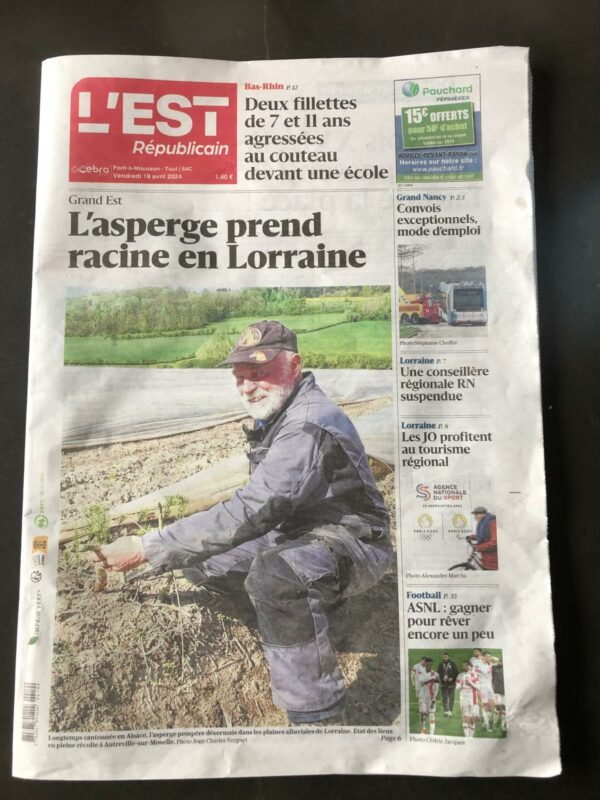
Lorraine. Cueilleurs d’asperges depuis trois générations « Mon grand-père s’est installé juste après la Première Guerre mondiale », confie Jean Paul Bruché le patron de la SCEA Asparagus. « La terre d’alluvions par l’Est Républicain

Las lluvias revitalizan el espárrago Así se presenta el futuro más inmediato del espárrago verde en Granada. La organización agraria UPA por FruitToday
Hnos. Catalán Ibáñez, de El Gerriko (Espagne) : «En Navarre, Nous avons réussi à avancer de deux mois la production d’asperges blanches » par FreshPlaza
Hnos. Catalán Ibáñez, de El Gerriko (Espagne) :
« Nous avons réussi à avancer de deux mois la production d’asperges blanches »
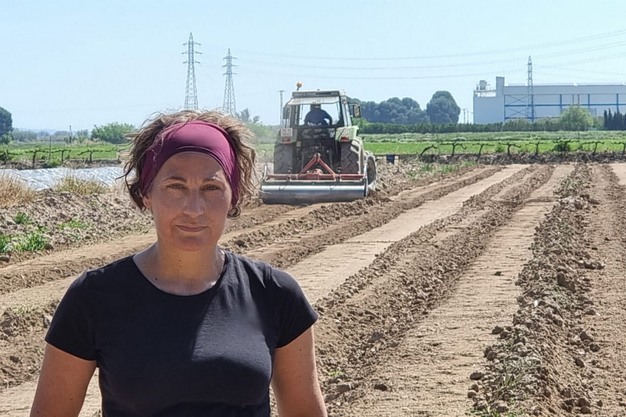
« Nous commençons la semaine de Pâques et, bien que tout dépende de la météo, nous aurons normalement une production jusqu’à la mi-mai, un peu plus tôt que les autres exploitations d’asperges de Navarre, car nous sommes situés dans la Ribera de Navarre, dans la commune de Cortes, au sud, où il fait généralement plus chaud et où le cycle de l’asperge blanche s’achève plus tôt. »
El Gerr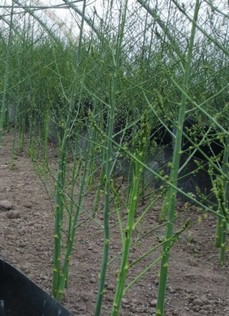 iko, producteur de l’Asperge de Navarre IGP, est une entreprise familiale créée par les parents de Nuria et Eduardo. « Nous sommes une petite organisation qui se consacre à la vente directe, en commercialisant uniquement notre production. Nos parents ont été agriculteurs toute leur vie et, comme tout le monde à l’époque parce que c’était la seule option, ils ont apporté leur production d’asperges aux coopératives. Ils étaient alors mal payés, et c’était trop de travail pour gagner si peu d’argent. Il y a plus de 30 ans, ils ont décidé d’apporter les asperges directement aux restaurants pour les vendre eux-mêmes. »
« En fait, jusqu’à la pandémie, nous étions presque entièrement axés sur le secteur de l’hôtellerie et la restauration, mais depuis, nous avons développé la vente en direct aux particuliers, et aujourd’hui nous poursuivons ce modèle autant que possible », explique Nuria.
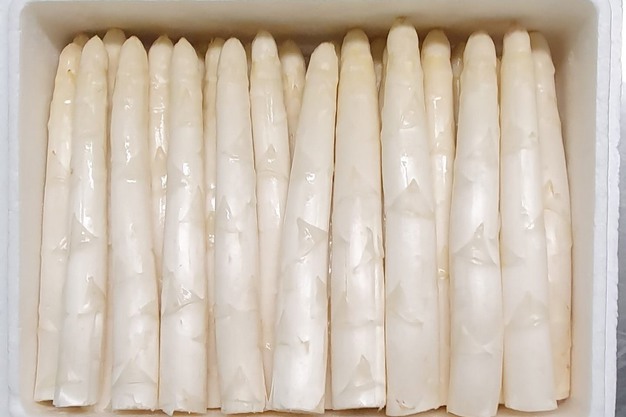
« Nous avons une clientèle très sélective pour les asperges de grande qualité que nous produisons. A El Gerriko, nous privilégions la qualité à la quantité, et lorsque nous atteignons nos prévisions, nous préférons nous arrêter et laisser le sol se reposer afin qu’il ait le temps de se régénérer pour la saison suivante. Nos clients eux-mêmes remarquent la différence et nous disent que notre produit se distingue du reste de l’offre. »
« Nous avons été parmi les premiers producteurs d’asperges de Navarre à commencer à cultiver sous serre »
Selon l’IGP Asperges de Navarre, « la qualité et la réputation dont jouit aujourd’hui l’asperge de Navarre sont le fruit du travail des agriculteurs qui ont cultivé le produit de manière traditionnelle sur les rives de l’Èbre, avec des techniques de culture particulières qui se sont transmises de génération en génération et qui se sont affinées au fil du temps. » Cette amélioration technique a conduit El Gerriko à opter pour un modèle cultural innovant dans la région, importé des Pays-Bas. « Nous avons toujours pratiqué la culture traditionnelle de l’asperge en plein air, mais en 2008, j’ai pris connaissance d’une nouvelle technique de culture sous serre utilisée en Hollande, dans le but d’améliorer la production. Nous avons étudié la manière dont nous pourrions l’adapter ici, nous avons fait de la recherche et du développement pour la perfectionner dans notre exploitation et, après une période d’essais, nous avons réussi à la mettre en place avec succès. Grâce à la culture sous serre, nous avons pu avancer la production d’un mois par rapport à la culture en plein air. »
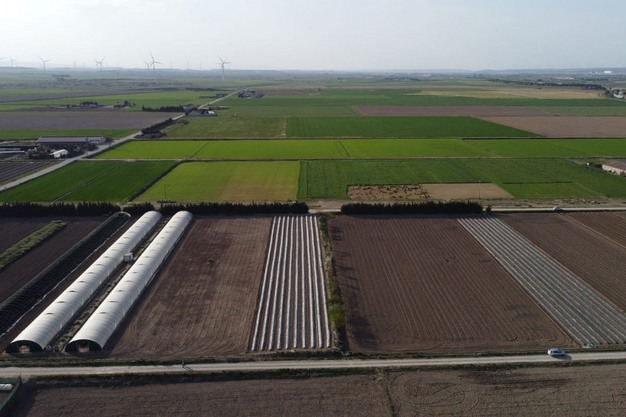
« Après avoir validé la technique et avoir constaté l’avantage que cela nous procurait, nous avons décidé d’aller plus loin et d’avancer la production encore plus avec l’utilisation du chauffage, ce qui nous a permis d’avancer la récolte d’un mois supplémentaire. »
« Nous avons été parmi les premiers producteurs d’asperges de toute la Navarre à commencer à cultiver sous serre et, de fait, nous porduisons les premières asperges navarraises chaque saison. »
Pour plus d’informations :
El Gerriko
Tél. : +34 627 40 29 64
esparragos@elgerriko.com
www.elgerriko.com
El espárrago peruano redujo un 62,5% el volumen exportado en marzo por FreshPlaza
El espárrago peruano redujo un 62,5% el volumen exportado en marzo
Fuente: Fresh Fruit / agraria.pe
A vendre d’occasion rotobêche Farmax pour implantation d’aspergeraies par le Bon Coin
https://www.leboncoin.fr/ad/materiel_agricole/2378620392
Navarra Hnos. Catalán Ibáñez, de El Gerriko: “Hemos logrado adelantar dos meses la producción de espárrago blanco” por FreshPlaza
Hnos. Catalán Ibáñez, de El Gerriko:
“Hemos logrado adelantar dos meses la producción de espárrago blanco”
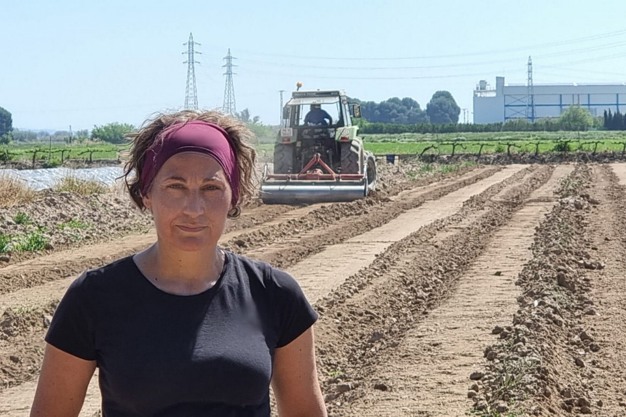
“Empezamos en la semana de Semana Santa, y aunque todo dependerá del tiempo, normalmente tendremos producción hasta mitad de mayo, un poco antes que otras explotaciones de espárragos de Navarra, ya que nos encontramos en la Ribera de Navarra en el municipio de Cortes, al sur, donde hace más calor por lo general y el ciclo del espárrago blanco concluye antes”.
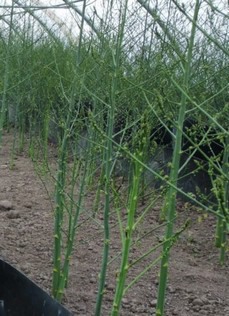
El Gerriko, productores de Espárragos de Navarra IGP, es una empresa familiar que pusieron en marcha los padres de Nuria y Eduardo. “Somos una empresa pequeña que nos dedicamos a la venta directa, comercializando únicamente nuestra producción. Nuestros padres fueron toda la vida agricultores y, como todo el mundo en aquella época porque era la única opción, llevaban su producción de espárragos a las cooperativas; pero se pagaban mal, y resultaba demasiado trabajo para ganar tan poco dinero, de manera que hace más de 30 años decidieron llevar directamente los espárragos a los restaurantes para comercializarlos ellos mismos”.
“De hecho, hasta antes de la pandemia estábamos enfocados casi por completo en la hostelería, pero desde la COVID, cuando el sector horeca cerró, empezamos a comercializar directamente a particulares, y hoy en día este tipo de venta la seguimos manteniendo siempre que podemos”, explica Nuria.
“Tenemos una clientela muy selectiva para el espárrago de gran calidad que hacemos;
en El Gerriko primamos la calidad frente a la cantidad, y cuando alcanzamos nuestras previsiones preferimos parar y dejar descansar la tierra para que tenga el tiempo suficiente de recuperarse para la siguiente temporada. Nuestros clientes mismos notan la diferencia y nos comentan que cuando lo prueban ven la diferencia que hay con el resto”.
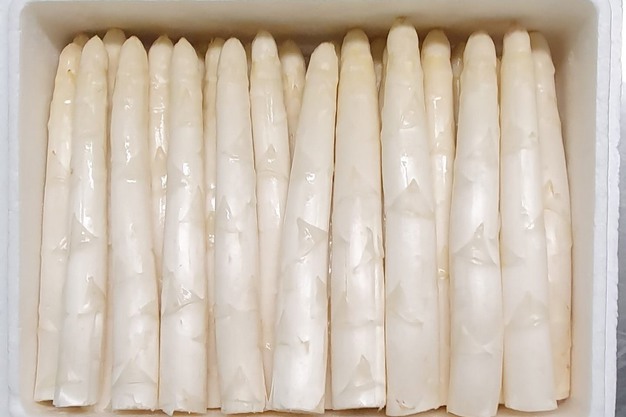
“Fuimos de los primeros productores de espárrago de toda Navarra en empezar a cultivar en invernadero”
Citando al Pliego de la IGP Espárragos de Navarra, “la calidad y la reputación de la que hoy goza el espárrago de Navarra, son el fruto del trabajo de agricultores que han cultivado el espárrago en la ribera del río Ebro de forma tradicional”, con “técnicas peculiares en su cultivo, que han ido transmitiéndose a lo largo de generaciones a la vez que han ido depurándose con el paso del tiempo”. Y esa mejora en las técnicas llevó a El Gerriko a optar por un modelo de cultivo innovador en la región importado de Países Bajos.
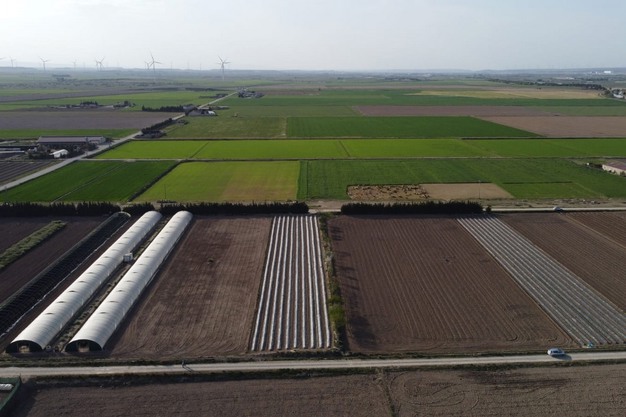
“Siempre nos hemos dedicado al cultivo tradicional del espárrago al aire libre, pero en 2008 conocí una nueva técnica de cultivo en invernadero que se utilizaba en Holanda para adelantar la producción. Estuvimos estudiando cómo podríamos implementarla aquí haciendo I+D para perfeccionarla, y tras un periodo de pruebas, conseguimos que funcionara con éxito. Con el cultivo en invernadero logramos adelantar la producción un mes respecto al cultivo al aire libre”.
“Una vez que vimos que era posible y la ventaja que nos aportaba, decidimos dar un nuevo paso y adelantar aún más la producción con el uso de calefacción, de manera que pudimos adelantar la cosecha otro mes”.
“Fuimos de los primeros productores de espárrago de toda Navarra en empezar a cultivar en invernadero y, de hecho, los nuestros son de los primeros espárragos navarros cada temporada”.
 Para más información:
El Gerriko
Tel.: +34 627 40 29 64
esparragos@elgerriko.com
www.elgerriko.com
In Germany, “Initial forecasts vary” In many federal states, this year’s asparagus season has now officially begun, including in Lower Saxony and North Rhine-Westphalia. However, the initial forecasts vary greatly. by FreshPlaza
“Initial forecasts vary”
Lower Saxony is the number one asparagus region, with every fifth asparagus stalk coming from Lower Saxony. “The rainy autumn and winter with little sunshine, but still very warm temperatures at the beginning of the year, allowed some farms to harvest their first fresh asparagus by Easter. Now we are hoping for more sunshine and less rain so that farms in all regions can start harvesting and asparagus can be offered at all sales points,” said Fred Eickhorst from the Association of Asparagus and Berry Growers e. V. at the official season opening in Lower Saxony.
“Our motivated seasonal workers, who return to the farms every year, perform the optimized workflows in well-coordinated teams. This ensures that the price of asparagus in our farm shops and sales booths remains at about last year’s level, despite significantly increased production costs, which we have tried to manage with further rationalizations.”
NRW:
“We have even been marketing the first asparagus from heated regional cultivation in the west of Germany in small quantities since the beginning of March,” says Alexander Scheufen, Sales Manager Vegetables at Landgard West Obst & Gemüse. “The asparagus harvest in unheated open fields started in most of our member farms in the west in calendar week 12. Traditionally, the first open-field asparagus is initially available at farm shops and weekly markets due to the lower yields. With increasing quantities, we were able to add marketing via Landgard to retailers for open-field produce after Easter.”
Thorsten Clemens and his team grow early, mid, and late asparagus varieties under various foil coverings on around 45 hectares in the family-run horticultural business in Nettetal-Leuth. So far, he is very satisfied with the start of the asparagus season in open fields. “Due to the comparatively high soil temperature, we have had larger harvest volumes right from the start this year. Unlike regions with heavier soils, we were fortunate here in Nettetal not to have any problems with too much water and were able to navigate the fields well. How the season will develop, naturally primarily depends on the weather. If the good yields continue, there could be somewhat lower quantities available on the market at the end of the season than in 2023.”
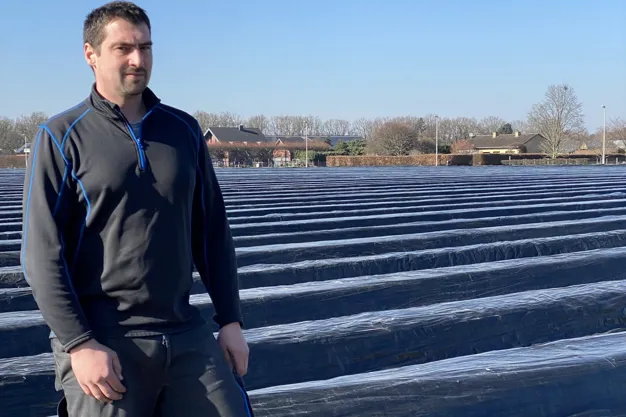
Landgard producer Thorsten Clemens.
Schleswig-Holstein:
With the official start of the asparagus season in Worth (Herzogtum Lauenburg district), the season has begun. According to the Schleswig-Holstein Chamber of Agriculture, customers will have to pay as much as they did last year.
Saxony-Anhalt:
In Saxony-Anhalt, there are fewer and fewer asparagus farmers – only 32 this year – and less and less land for cultivating the royal vegetable. However, Gemüsehof Schönberg in the Altmark is defying this trend: They have even expanded their cultivation area. “When agricultural cooperative Seehausen stopped three years ago, we decided to cultivate a bit more land to cover the demand in the Seehausen region with local asparagus. We also don’t go into areas where there are other asparagus farmers. Why competitors would want to set up shop right under our noses is beyond me.”
Bavaria:
“Expectations for the upcoming season could not be higher.” Miriam Adel, the chairwoman of the Franconian Asparagus Producers Association, was optimistic about the coming weeks at the season opening in Franconia and is hoping for mild and sunny weather for the optimal asparagus enjoyment. “After sufficient rainfall in winter, we look forward to the future with confidence,” said Adel. “Our local sandy soils are ideal for Franconian asparagus cultivation and promise an outstanding quality.”
Austria:
Since mid-March, the big business with asparagus has already started in Austria: About five percent of the goods have already been sold to haute cuisine, retail, and others, but the labor-intensive harvest puts many farms to the test, which in turn is due to the shortage of harvest workers.