Archive

Keragro

Keragro – Innovative crop protection

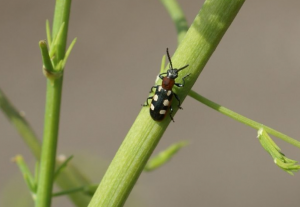
Composed of medicinal plants and essential oils, ALGOPREV promotes a healthy and protective environment for asparagus crops and prevents certain biotic stresses, (e.g. larvae and insects). Keragro manufactures a range of specialties capable of preventing certain invasions or diseases. The formula is made up of seaweed, plants, essential oils and trace elements to NOURISH, FORTIFY, DRY, DESSICATE, PROTECT and SCAR OVER asparagus crops. KeraSoufre powder has a proven track record thanks to its repellent and fungistatic effect. Keragro supplies direct to customers in France and is currently seeking distributors outside of the country.


JANNY MT

For several years now, JANNY MT has been working on the development of new membranes to improve their permeability and therefore increase the volume of asparagus stored in a natural controlled atmosphere in their storage modules. This has now been achieved. In practice, the far superior permeability of this new membrane makes it possible to optimise the modules to store up to 180 kg (compared to 90 kg previously). This new material will still be tested by a number of companies in 2021 to expand on a bigger scale the following years. “I think we have achieved an important breakthrough for the industry: we now need to bring it on to the profession.” Comments JANNY MT.


Hepro

T

Hepro conquers Spain with vertical industrial peeling machines

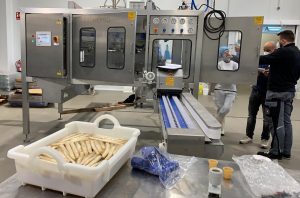
he asparagus sector of Navarra swears by HEPRO®’s industrial peeling machines. “We always fly to Spain as a team. During commissioning, we take the time to answer queries and familiarise customers with how the peeling machines work,” said Ellen Reinhold, responsible for sales in Benelux, Spain and Peru. The vertical peeling principle is particularly popular within the asparagus processing sector. It enables customers to cut personnel costs and optimise the peeling process. In addition, thanks to HEPRO®´s unique vertical-cut quality, there is no need for reworking.

The machines are manufactured in Germany and marketed worldwide. HEPRO® peeling machines have been used successfully in Spain, Peru and China for over 10 years. “We visit our customers on site at regular intervals. We are also very well positioned in terms of IT, so that spare parts can be shipped worldwide within 24 hours. Our customers can reach us by phone at any time. But nothing can replace an on-site visit,” said Reinhold.


Europlastic

Europlastic presents dpuble film

Europlastic continues to innovate and adapt to the needs of ever more technically demanding customers by offering more up-to-date and efficient product ranges.

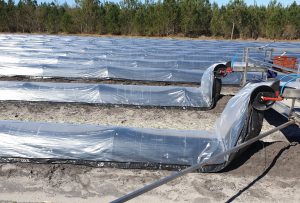
Multitech is a double film for growing white asparagus on arches. It provides excellent agronomic and financial results for producers. The two-in-one product is made up of two films assembled together, one thermal and the other opaque. It is easy and economical to use as it requires handling only one film and can be used on a single type of hoop. Multitech offers a very good relationship between investment, yield, quality and labour costs and represents excellent value.

Asparaclim is a new plastic range dedicated entirely to green asparagus cultivation and was specially designed to meet the requirements of this very technical crop. It offers greater efficiency thanks to its climatic effect by acting as a barrier to conserve humidity in the tunnel. In addition, the film’s athermic properties allow prolonged use during harvesting, thus considerably improving the yield, size and quality of asparagus. Asparaclim is a plastic designed for cultivating green asparagus.

ECOGREEN

ECOGREEN ITALIA presents a new device to accompany its electric asparagus harvesters. It’s an anti-slug pellet dispenser. Slugs are more and more frequently attacking the asparagus fields with consequent production problems. ECOGREEN wants to help growers with this new device which is easily installed at the rear of its electric machines to dispense anti-slug pellet while running along the asparagus rows. The dispenses is connected to the electric unit of the machine and, by adjusting a potentiometer, the worker adapts the quantity of slug pellet that is distributed along the row. It’s a very practical, easy to use system that contributes to optimize your harvest.

Daios

Ionnis Tsarkiris
Dalin Pocket Advance – the new film from Daios

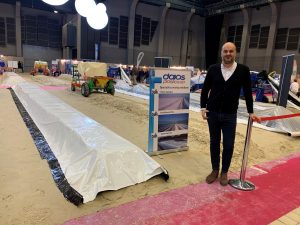
Daios, the largest Greek producer of agro-textiles since 1977, specialises in films for protecting asparagus crops: “Our latest novelty is called Dalin Pocket Advance. It is a pocket film specially designed for asparagus. Thanks to a special valve, it allows the cells to be filled while preventing soil from entering. Rainwater can enter but it is drained through the micro-holes on the cell and this guarantees better performance with great benefits and lower costs for asparagus producers,” said Ioannis Tsakiris. Like most of the company’s special films for asparagus, Dalin Pocket Advance is destined for the major European markets, especially Germany (80%).

Cosmeco


Cosmeco – Specialists in asparagus cultivation.

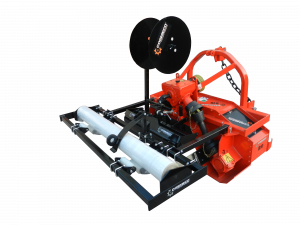
Cosmeco Srl has specialised in the production of agricultural machines for more than 40 years. The firm has now added to its range for asparagus, with the market launch of the B70 bedformer, a totally adjustable machine that can form seedbeds at up to 70cm high. Cosmeco has also developed two new accessories. The first is a film-holder – a reel support for laying films made of plastic or other materials. It is totally customisable both in terms of film width and height from the ground, which allows placement on seedbeds of any height. The second innovation is a film winder/unwinder for drafting or collecting films made of plastic, TNT or other materials with pockets for ballast designed specifically for asparagus. Equipped with a tear-proof hydraulic clutch (tractor hydraulic system) and braking system to allow adjustment of operating speed, the item is currently available for film widths of up to 180cm. Other products in Cosmeco’s line for asparagus include mulch-laying machines, which are totally customisable and can be applied to bed formers to permit multiple operations in a single step.

CoRHIZE


CoRHIZE – the app for asparagus producers.

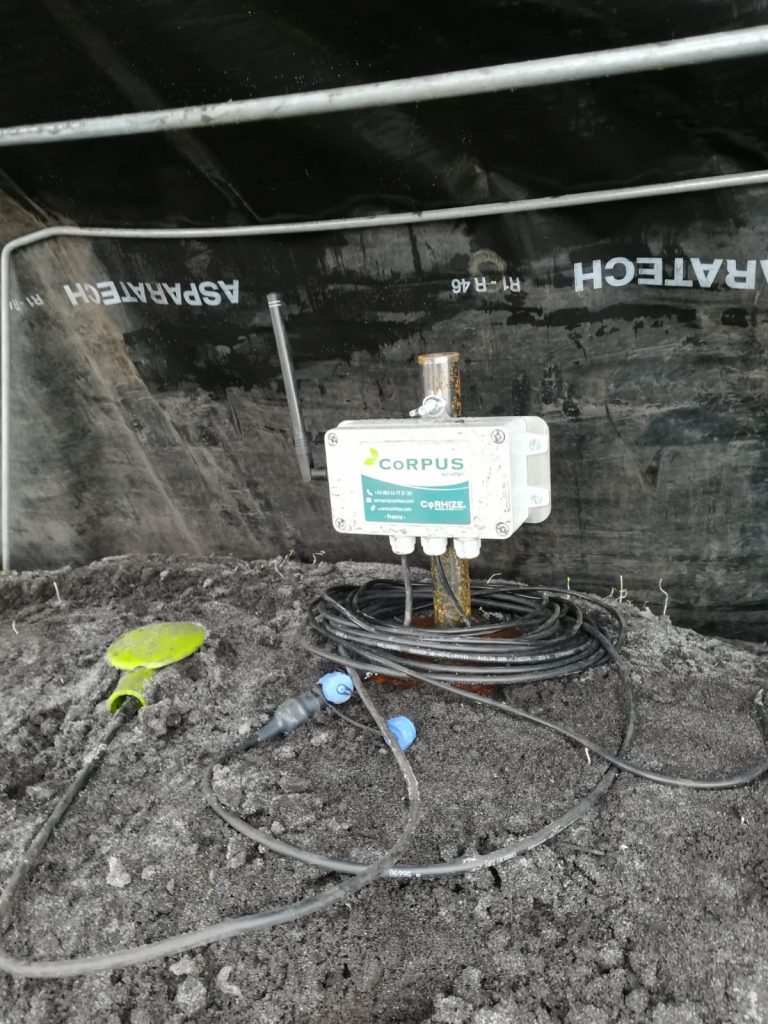
The AspaView kit is a complete all-in-one tool developed by CoRHIZE to support asparagus producers all year round. It helps control irrigation in season, monitors temperatures during dormant periods and helps manage mulch during harvest. The specific module on the Columbus app is improved each year taking into account the experiences of producers and technicians. “We remain committed to developing reliable and practical tools that offer both basic and highly specialised support for different user profiles,” said Serge Escuraing, CEO of CoRHIZE.  With its Nutrisens kit already employed by several technical organisations, the company is also working on improving nutrition.

Chicorium

Chicorium sees a parallel between endives and asparagus. These two plants have an incredible and faithful memory of their life cycles. In both cases, their consumable crops are derived from a reserve organ (the crown of the asparagus and the root of the endive) and come from a dormant bud. The growth of both plants is closely linked to temperature and humidity levels, which makes it possible to adapt production to a certain market or industry. Both vegetables grow in the dark (in earth or air) and quickly turn green in the presence of light. It is based on these parallels that Chichorium has become a producer of organic endive and offers Endicar. This quality chicory is produced all year round by means of a complete cultivation system that is free of any form of treatment.

Drones, probes, sensors… Asparagus goes high-tech

Connected agriculture is the convergence of agriculture and information technologies (sensors, vision, networks, assessment tools, robotics, artificial intelligence, etc.). When adapted to crops, these technologies can improve productivity but also meet environmental and societal expectations. Already present in livestock and in other crops, these new technologies are now coming into the field of asparagus, too, as evidenced by Cesar Urrutia in Peru and Olivier Lamote in France.

The primary functions of these new technologies regard the accumulation of data. Human occasional observation is replaced by digital continuous information capture via sensor, probe, camera, drone and satellite, which all generate data. This information can be stored, compared and modelled, but its final use still requires human analysis, i.e. asparagus professionals and specialists. This influx of information can amplify experts’ skills. The high speed of information transfer allows precise decision-making and fast implementation.

A mine of information

Connected agriculture is still in its infancy. It therefore has to contend with various problems, such as the sometimes-anarchic development of the various tools, the reliability of companies (often start-ups) that supply them, and the competence of the people who use them. One might think that it will never become easier to implement going forward. However, many observers of connected agriculture predict and anticipate other problems, including the accessibility of data while avoiding “toll networks”, the inter-compatibility of data between different sources to make it possible to assemble and exchange, and the control and ownership of this mine of information. Data is, however, spawning major developments. For instance, experiments could go from being a demonstrative study (research, tests, development) to a demonstrative study with the acquisition and comparison of a great deal of data to determine the development or the solution. In the same way, it is possible to go from being reactive when piloting plots (as is currently the norm) to making decisions in anticipation thanks to forecasting knowledge, live information and future simulations. At the moment, the very high costs are the key obstacles to development. The lack of engagement between the agricultural sector and high-tech companies and managers is another limitation, as is the incomplete coverage of communication networks.

Agro-technologies serving asparagus

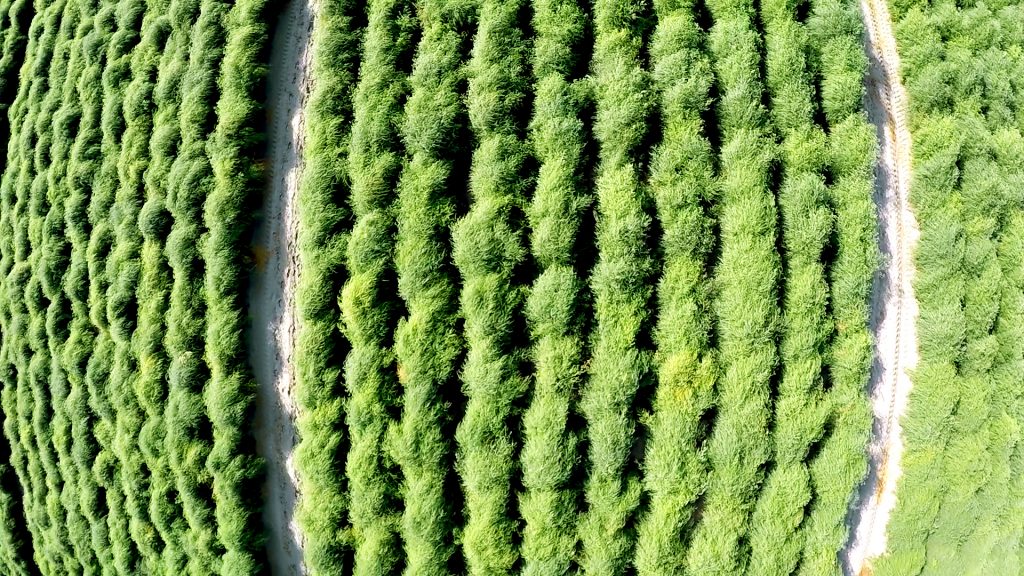
In France, Cosmocel offers the SSAT (Agro Technological Monitoring Service), which brings together various new technologies at different levels of the plot (e.g. probes, sensors, cameras, satellite). “This agro-technological monitoring aims to enable us to have a better understanding of the crop, facilitate decision-making and better understand the effects of the bio-stimulants we market,” said Olivier Lamote of Cosmocel. This service, offered free by Cosmocel to its partners, includes soil and leaf analysis (Pronut), which, thanks to the use of deep learning software based on 10,000 analyses, can make recommendations for fertilisation. It also monitors Redox Potential. “It’s about estimating a soil or plant’s oxidation potential using a voltmeter and analysing it. In particular, it helps to define the risk of disease development,” said the specialist. “The concept of Redox Potential is something which is increasingly being taken into account in agriculture and can provide the key to understanding many phenomena,” he said. The SSAT also provides a diagnosis of a crop’s photosynthetic performance with the measurement of the NDVI (normalised difference vegetation index) by satellite imagery (Taranis). Soil water kinetics (Spiio) are also evaluated with sensors that record humidity/temperature/EC, etc. Finally, the service uses time-lapse cameras that take one photo per day in the same location. “By compiling the images, it is possible to visualise the growth of the plants and see differences in growth according to the feeding of the crop,” said Lamote. The first measurements taken in asparagus crops in 2020 have prompted Cosmocel to re-test in 2021. The objective is to establish a repository for this culture over the next three years.

Read also:  Using AI to anticipate droughts and diseases