Archive

German asparagus production continues downward trend

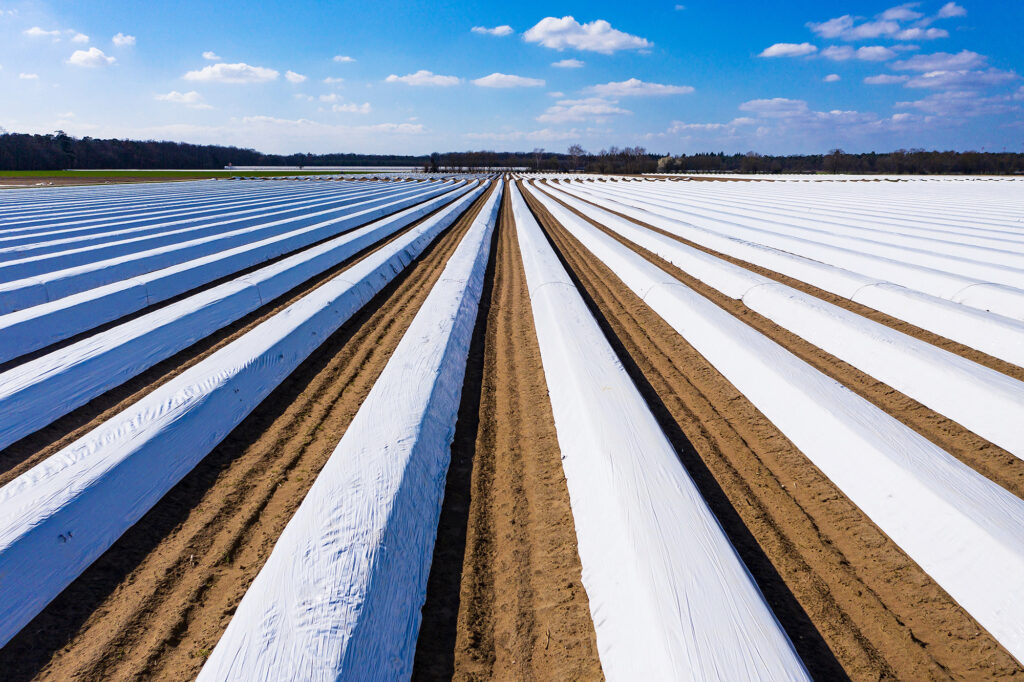
Despite abundant sunshine in March, the asparagus season got off to a slow start this year in Germany, reports AMI horticultural market analyst Claudio Glaesser. He said persistently cold night temperatures, often accompanied by frost, slowed plant development. “Operations with heated fields and multiple protective layers were at a clear advantage, whereas simply covered areas only began producing marketable volumes in April. Regionally, the season started unevenly – particularly in eastern Germany, where harvesting was delayed but caught up quickly following a pre-Easter shift in weather conditions. Due to the slow development of supply, household purchase volumes in March remained low and clearly below the levels of the previous year, when an early Easter had shifted the focus more strongly toward early harvesting. Throughout April, market penetration also remained below last year’s figures – except in the week leading up to Easter,” Glaesser said. “Demand around Easter was strong across all channels: direct marketing, wholesale markets, and food retail reported solid sales. Even after the holidays, supply remained limited, avoiding any significant market oversupply. Yields increased only gradually, contributing to a stable market situation. Meanwhile, the ongoing decline in asparagus cultivation and young plant establishment is expected to further limit supply in the medium term. Overall, German asparagus production has been on a downward trend for several years, with tangible impacts on the domestic market,” he said.

Asparagus area declining overall but increasing for organic

A total of around 108,100 tons of asparagus were harvested in Germany in 2024, representing a volume down 3% on 2023, according to Destatis. The German statistical office also said in a press release that the productive* cultivated area of asparagus has also shrunk by 3% and, at 19,800 ha last year, was at its lowest level in Germany since 2013. Reporting on the fall in production, public broadcaster Deutsche Welle said: “Asparagus could be the victim of changing tastes and rising costs of fresh produce, as well as farmers giving over some asparagus fields in favor of other crops — as diversifying is seen as one way to combat the ravages of climate change.Despite the decline, asparagus remained the vegetable with the largest cultivation area in Germany in 2024, followed by onions (17,700 ha) and carrots (13,800 ha). At 22,600 tons, the largest asparagus harvest in 2024 took place in Lower Saxony, followed by Brandenburg (20,200 tons).
Meanwhile, the harvest volume for organic asparagus rose 8.5% year-on-year to about 9,243  tons in 2024 while the productive cultivated area for organic asparagus climbed 7.7% ​​to nearly 1,785 ha. Carrots attracted Germany’s largest area of ​​organic vegetable cultivation, with 3,350 ha, followed by pumpkins, onions, and then asparagus (in terms of yield).

Germany’s asparagus growers positive about outlook overall

Germany will continue to see a further decline in the overall asparagus acreage as long as consumers remain reluctant to buy, says Simon Schumacher, managing director and spokesperson for the Board of Directors of the South German Asparagus and Strawberry Growers Association (VSSE). Schumacher told AW in February that the decline to date, combined with a rather cool spring, had resulted in a market supply that is just sufficient, with more stable prices. “We are aware that the trade (retail) is looking for security of supply and is increasingly favouring and promoting domestic produce in the domestic season. Fortunately, the slight increase in demand for green asparagus is also being brought forward in the trade with Germany as a source, so that some compensation for white asparagus seems possible.” Schumacher said the VSSE is also trying to increase consumer enthusiasm for domestic asparagus, such as with the introduction of the German Asparagus Day, now celebrated each May 5.

Schumacher added that young plants were in short supply throughout Europe. “However, this also shows that replacement and new planting is taking place and that young plant producers are continuing to avoid overproduction. Nevertheless, we will only need a short reaction time to react to a possible increase in demand after the inflation phase, as the structures, logistics and exchanges are well established. In the future, we will see fully or partially automated robots on sustainable, slightly larger farms. This will help to counteract rising prices to some extent and improve competitiveness. The change of government is also seen positively by many farmers and is linked to hopes of an improvement in the production location.
So we are positive,
” he said.

Sources include:
https://www.destatis.de/DE/Presse/Pressemitteilungen/2025/04/PD25_N015_41.html?templateQueryString=spargel
https://www.destatis.de/EN/Themes/Economic-Sectors-Enterprises/Agriculture-Forestry-Fisheries/Fruit-Vegetables-Horticulture/Tables/1-1-organic-farming.html
https://www.dw.com/en/germanys-asparagus-season-shrinking/a-72123100
Cloud of uncertainty marks start of US harvest

The appetite for fresh asparagus in the United States remains strong, attracting annual retail sales worth nearly US $893 million. But its asparagus production was already declining – due to factors including the higher cost and shortage of labour – before this year brought the added challenges of an immigration crackdown and tariff threats. With asparagus from Minnesota expected to hit stores nationwide around May 8-10 at time of writing, it remains to be seen what the trade fallout might bring this season for what has become a popular vegetable in this major market.

Sales of organic asparagus 
on the rise

Circana* retail scan data for the 12 months ending February 23 this year showed total fresh asparagus sales in the US were worth $892.6 million, down 1.9% compared with the previous year. However, organic asparagus sales for the 12 months totaled $97.3 million, up 7.4%, while conventional sales were worth $795.3 million, down 2.9%. Conventional asparagus sales accounted for 89% of total sales, with organic sales contributing 11%. Circana data also shows that the volume of asparagus sold across all retail outlets for the 12 months was down 2%, with organic up 4.3% and conventional down 2.6%. Green accounted for nearly 99% of America’s total spend at retail on fresh asparagus, with tips the next biggest subcategory with a 0.7% share, 0.17% for white, 0.04% for purple, and 0.16% for all others. The average unit price for all asparagus was $3.31, up 0.1% YoY. Circana data indicates average conventional unit pricing was down 0.3% to $3.29 while that for organic was up 3% to $3.53. Similarly, USDA data for the Easter period – during which asparagus is a traditional favourite among vegetables – shows the average advertised price for fresh green asparagus in major retail outlets, ($2.65/lb) was down 13% compared to the same week last year, while that for organic was up 3.2% (to $4.51/lb).

Domestic production decreasing every year

In Michigan, the nation’s largest producer of asparagus, the 2024 crop value of $24.5 million was down 18.5% – or $5.57 million – on that of 2022, while the harvested area had shrunk by 24% to 7,500 acres (3,035 ha), USDA data shows. According to Michigan State University, the industry is facing difficulties: “As is the case with many commodities, rising labor costs is pressuring the profitability of the asparagus industry.” In its March, 2025, report “The Outlook for Michigan Agriculture 2025”, the university noted great uncertainty surrounding this year’s farm forecast, with “tariffs and other trade issues” increasing the level of risk, “increasing concern about a possible recession”, labor prices expected to rise, and ongoing labor shortages.

Tariffs cast shadow over trade outlook

Imports supply up to 90% of America’s fresh asparagus supply and its first and third biggest sources – Mexico and Canada – happen to also be among the countries, along with China, under threat by the Trump administration of high tariffs on their exports. USDA data shows that in 2024, Mexico held a 65.6% share of US fresh asparagus imports by volume, followed by Peru with 33% and Canada with a distant 0.9%. In a market update in March, US foodservice supplier Markon Cooperative said: “Should tariffs add cost to Mexican supplies, Peru may act as a small relief valve, but it will not be able to support all national demand.” In March, Giancarlo Riva from Ernst & Young Peru said increased tariffs on Mexico could create opportunities in the US market for Peruvian exports, such as might be the case with avocado, but noted some analysts warn protectionist measures could lead to more expensive supply chains, disrupt consumer expectations and habits, and potentially trigger inflation in the US economy, while overarching uncertainty typically paralyses or slows investment. As for ramifications for US growers, while import tariffs might make local products more price competitive, retaliatory tariffs could drive up farm costs, such as for fertiliser, and adversely affect consumer habits if the current year-round supply is disrupted and/or retail prices rise.

* Circana OmniMarket™ Integrated Fresh

Sources include:
https://msu-prod.dotcmscloud.com/resources/
the-outlook-for-michigan-agriculture-2025
https://www.ams.usda.gov/mnreports/fvwretail.pdf
https://www.markon.com/update-asparagus-51


PGI for Guadalajara’s ‘juicy’ green asparagus

The ‘Espárrago verde de Guadalajara’ PGI, registered on July 5, 2024, covers a production area in the western part of the province, in the districts of La Sierra, La Campiña and Alcarria Alta, in the municipalities of Membrillera and Loranca de Tajuña, at elevations of 640 – 1,020 m above sea level. “The nutrients in the soil, together with the traditional practices regarding crop fertilisation and the area’s agri-climate characteristics, mean that the flavour of this asparagus is intense and juicy, very slightly fibrous, with sweet and bitter notes. It has a lingering flavour thanks to specific concentrations of soluble solids, salts, organic acids and other bioactive com- pounds,” according to the application for PGI registration published by the EU.

Thanks to the altitude and sunshine

The PGI application was sought on grounds such as the following specific characteristics of the product arising from its link with the geographical area: during the months of production, temperatures are relatively low, which means the asparagus grows slowly, facilitating a greater concentration of soluble solids, of 3.8 to 6.1 degrees Brix, and pH values of 5.7 – 5.9. The green colour and dry matter content of between 6.5 – 8.5% are due to the average solar radiation of 1,642.5 megajoules/sqm during the production period, which is thanks to the altitude of the producers’ farms and the latitude of the province of Guadalajara. The spear length of between 13 cm and 26 cm and minimum diameter of 10 mm are due to the special characteristics of the soils, including pH values mainly between 8.1 – 8.3, along with the depth of the soils, availability of nutrients and balanced sand, clay and silt content. These qualities mean that considerable reserves of moisture and macro and microelements are available. According to the government of Castilla-La Mancha, the PGI covers 25 producers, about 550 ha of green asparagus planted area and average production of 2,500 – 3,000 tons.

Lesotho making renewed bid with asparagus

Lesotho, a high-altitude, landlocked kingdom that is entirely encircled by South Africa, is preparing for another bid to boost its asparagus production. The country boasts many hectares of arable land with the kind of soil and climatic conditions that favour production of excellent fresh green asparagus. Earlier efforts to promote investment in and expansion of asparagus production in the Southern Africa nation were largely unsuccessful. But Kingdom Asparagus co-founders Alex Stainburn, Thuso Green and Khotso Mapepesa believe the time is ripe to try again.

Sandy loams, abundant sun and affordable labour

African kingdom

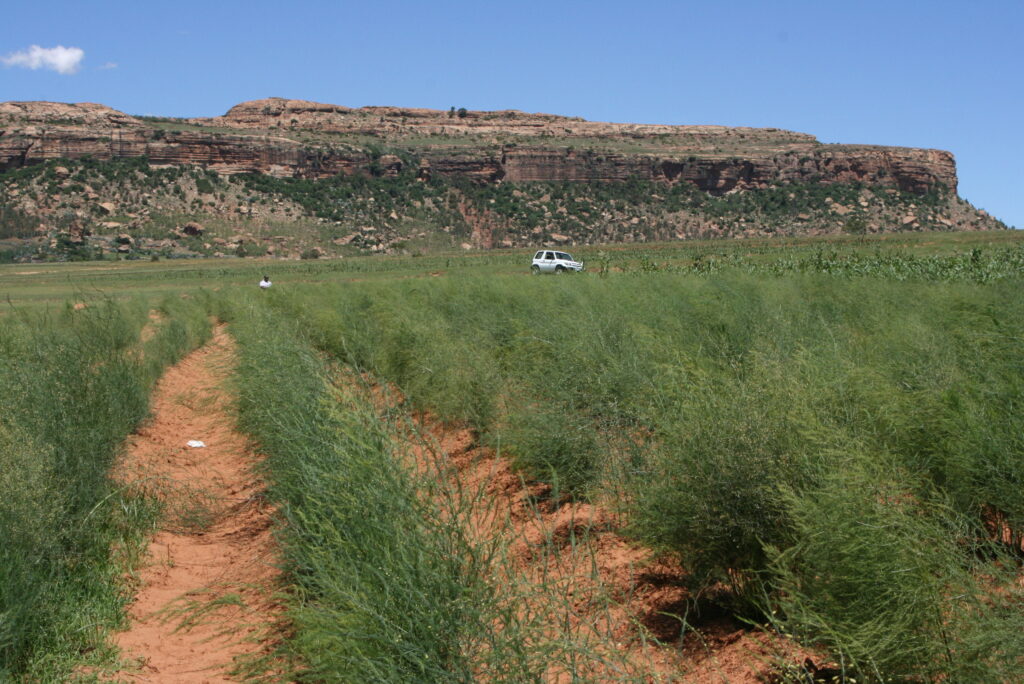
Lesotho is a mostly mountainous country in Southern Africa and has a population of about 2.33 million. Located at an altitude of 1,400 metres (4,590 ft), it has the distinction of having the highest low point of any country. Although mountainous, there are many hectares of arable land with the qualities necessary to produce great asparagus: sandy loam soils, over 300 days of sun per year, and labour rates that are very competitive in the global market. “Asparagus was grown successfully in Lesotho for a number of years in the 1970s and 1980s for canning, so we are confident that it can be grown again on a commercial scale, for high quality, fresh green asparagus,” Stainburn said. “Our niche consumer is the individual who cares about where their food comes from.” Records from the 1980s show average yields of three tons per hectare without irrigation, but those records are 30-40 years old. “Plant varieties and growing techniques have improved significantly since then. With the addition of irrigation, we should see yield reliability and harvest volumes increase,” Stainburn said. “Starting in 2016, we conducted a series of trials to learn how to grow asparagus specifically in Lesotho; namely how to source labour, and inputs effectively. We found that much of the knowledge from the 1980s has been lost as the former generation of farmers has retired, so farmer training is a big part of our scale-up process,” he said.

There’s local demand in Lesotho

Planting in the spring, just before the rains usually set in. The spacing is about a shovel blade and a half.
African kingdom

During trials in 2018, 2019 and 2020, Kingdom Asparagus delivered fresh asparagus to local restaurants and to a large grocery store, Pick n Pay, in Lesotho capital Maseru, which asked for 250 gram bundles, Stainburn said. “The spears were cut and bundled in the early morning and delivered within a few hours to the store, where they were bought by customers as soon as they were placed on the shelves. Also, a few Germans who were living in Lesotho at the time contacted us to place a special, bulk order, a good sign to us that our quality was up to standards for discerning tastes,” he said. Starting a new agricultural endeavour in Lesotho has not been without its challenges and detailed planning is the key. “For example, do not expect to find a tractor with a ripper attachment a week before you want to plough – those arrangements should be made during the winter months. Working with local farmers also requires reducing their expected debt burden. Farmers see the potential of asparagus to increase their incomes versus growing a low value crop such as maize, but getting past the high input costs and the first few years of low revenue makes the crop inaccessible to most smallholder growers. Asking a farmer in Africa to take on debt for a few years before any income is realised, usually doesn’t end well,” Stainburn said.

Current and future priorities

Kingdom Asparagus is currently working to expand its area under cultivation. Favourable sites have been identified in the Leribe and Butha-Buthe areas of Lesotho where there are good soil conditions (namely sandy loam soils on flat land) and a potential for irrigation. “We have the need for partners with the expertise and financial capabilities to move our production forward from a local to export focused model. And in case you’re wondering, we usually grill our asparagus. We coat it with a little olive oil, sprinkle on some salt and then cook for 3-4 minutes on the grill. Simple, but the best way to enjoy what we have grown,” he said. The Government of Lesotho recognises the potential of re-establishing asparagus as an export crop, and has expressed a willingness to support expansion of production in whatever ways it can. There are tax incentives for new export based companies, through the Lesotho National Development Corporation, and free movement of currency. Lesotho is also part of many international trade agreements for low income countries, Stainburn said.

Why Lesotho’s earlier asparagus export project failed

African kingdom

Previously a British protectorate, Lesotho gained its independence in October 1966 and is currently classified by the World Bank as a lower middle-income country. Per capita gross domestic product (GDP) was US$999.7 in 2022, a year in which Lesotho’s economy grew by 1.8%, mainly driven by construction, mining, manufacturing, business services, and public administration. Agriculture also contributed positively due to good seasonal rainfalls and input subsidies, according to the World Bank, which also said that unemployment, inequality and poverty remained high in 2022.

In a bid to combat rural poverty back in the 1970s, the government in Lesotho launched a project promoting asparagus production for export to Europe. A cannery was reopened and initially bought asparagus in three grades: white, green and salad.

The project ran from 1974 to 1999 and despite considerable investment (including financing under the UN Capital Development Fund), it encountered many difficulties, ultimately failing to provide sustainable livelihoods for the rural poor.

According to an article in the Journal of Sustainable Development in Africa*, factors closely linked to the unsustainability of Lesotho’s asparagus production project were (a) poor management of production and (b) processing and marketing services that inhibited the expansion of asparagus production and made it impossible for Lesotho’s asparagus to compete effectively in the Western European markets.

Among the various problems leading to the failure of the project was an inability to take advantage of the shift in consumer preferences in Western Europe towards greater demand for fresh asparagus, largely due to lack of air cargo availability.

Read more

“Factors to the Failure of Sustainable Asparagus Production or Agricultural Export Economy in Lesotho”

Journal of Sustainable Development in Africa (Volume 16, No.6, 2014)

Other sources:


Peru exports about 75% of its fresh green asparagus

The rhythm of exports of fresh asparagus generally starts to rise from about week 12 in Peru and usually reaches its crescendo around the week 48 mark, with 78% of all the shipments taking place in the period in between, IPEH’s research shows. In total, the country shipped over 25,872,640 boxes (of 11lb or ≈5kg) in 2022. The lowest total in the previous 11 years was 23,082,591, in 2017, and the highest was 27,329,252 boxes, in 2021. When it comes to FOB value, the highpoint between 2012-22 was a total of over $448.8 million in 2013 and the lowest was $341.3 million in 2012. In 2022, Peru’s fresh asparagus exports had a FOB value of almost $370 million, which was 8.4% down on 2021.

The US takes 76% of Peru’s shipments

With a total of 18,821,270 boxes, the US took nearly 73% of the boxes of fresh asparagus exported by Peru in 2022. IPEH’s research shows that the next biggest markets for Peru were Spain (8%), the Netherlands (7%), the UK (6%), Belgium (1.2%) Canada (0.8%) and Brazil (0.6%). By FOB value, about 85.6% of exports to the US are by sea, 13.9% by air and 0.5% by road, while for Europe air accounts for the bulk, nearly 71%, and sea 28.7%, and for Asia, where South Korea is the biggest market for Peru, air (87%) also leads over sea (13%). Over 2021-22, the number of boxes shipped to the US slipped 4.6% and the FOB value fell 7.3%, while for Spain there were corresponding increases of 5.5% and 3%. The Netherlands saw declines of 9.5% and 12.2%, and the UK of 14.7% and 17.6% respectively.

Peru’s top exporter in 2022 was Danper Trujillo

AW

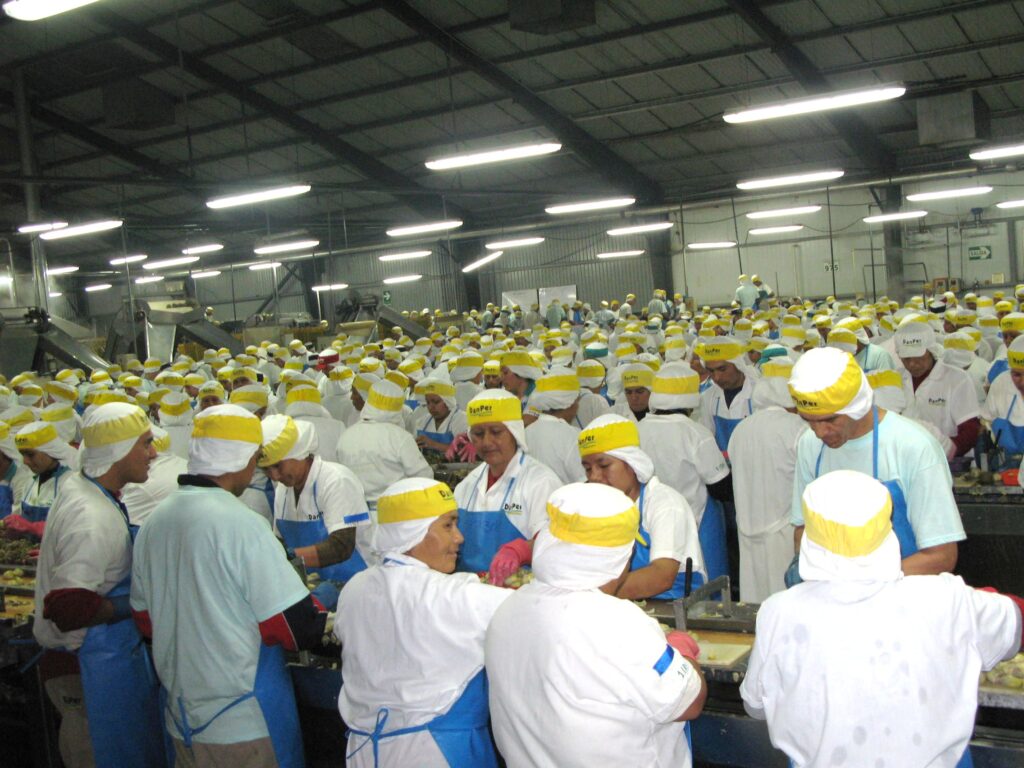
According to IPEH’s analysis, the top exporter for fresh asparagus from Peru in 2022 was Danper Trujillo, which achieved a 46% year-on-year (YoY) boost in its export volume to over 2.48 million boxes – accounting for 9.6% of the Peruvian total – and 34% growth in FOB value to over US$39.8 million. Next came Complejo Agroindustrial Beta with over 2.16 million boxes (+4.4% YoY and holding an 8.4% market share) and FOB value of over $34.2 million (-7.6%). Agrovision Peru logged growth of nearly 15% YoY in volume to over 1.2 million boxes and almost 25% in value to nearly $16.1 million, with Agricola Cerro Prieto’s shipments climbing 11.3% to 1.16 million box with the value up strongly by nearly 25% to nearly $16.1 million.

Callao airport and Salaverry the top departure points

In the 5 years to 2022 there’s been a big shift in departure points for fresh asparagus from Peru. Compared to 2018, the number of boxes shipped from Callao airport has plunged nearly 50%, though it still retained its lead with a total of nearly 7.96 million boxes. Callao port, which had ranked second, now ranks third with a total of 4.62 million (-15.6% since 2018) while sendings from Salaverry (La Libertad) Pisco (Ica) have more than tripled to respective totals in 2022 of nearly 7 million and 3.27 million boxes.

Peru’s asparagus seed imports led by UC 157 F2

C. Befve

Peru imported nearly 733.4 kg of asparagus seeds in 2022, down from 1,967.45 kg in 2021. UC 157 F2 (265 kg) was the top seed in terms of volume in 2022 but UC 157 F1 (220 kg), which ranked second, was the most imported seed over 2018-22.  In third place in 2022 was UC 115 F1 (199 kg), which until then had been the leader for the previous four years. In 2022, the region of Ica accounted for 38.3% of the nearly 15.5 million ha  in Peru planted with asparagus, followed by La Libertad with 35.2%, Lambayeque with 16.8%, Ancash 4.9%, Lima 4.3% and Arequipa with 0.4%.

Asparagus sector wins increase in maximum length

Both white and purple fresh asparagus spears can now be sold at retail in Europe at lengths of up to 24 cm – 2 cm longer than had previously been allowed. The change, which came into effect on December 20, 2023, followed lobbying from asparagus growers, particularly those in Germany. Provision for the change was made in the 2023 version of “UNECE* standard FFV-04 concerning the marketing and commercial quality control of asparagus.” The standard now says “The maximum length allowed for white and violet asparagus is 24 cm,” where in the past it had stipulated 22cm. The maximum length applying to violet/green and green asparagus remains unchanged at 27 cm. The previous maximum of 22 cm for white and violet asparagus spears had applied since at least November, 1999 – before the UNECE standard was introduced – under European Commission regulation 2377/1999 laying down the marketing standard for asparagus. It was introduced for standardisation and quality assurance purposes.

Germans says change will cut foodwaste, French concerned about fibrosity

The change in the UNECE standard to 24 cm followed a submission by the German delegation to the UNECE Working Party on Agricultural Quality Standards, dated February 23, 2023. In its submission, Germany gave the following reasons in its justi cation of the change sought: “By increasing the permissible length to 24 cm, food waste could be avoided. In the past there have been concerns about quality with longer shoots. With today’s production methods, deeper planting and higher dams, these concerns can be alleviated. In recent years, further research and development have given the asparagus producers opportunities to improve the quality of longer asparagus shoots.” UNECE documents show that the German proposal was accepted by the relevant part of the UNECE Working Party – the Specialised Section on Standardisation of Fresh Fruit and Vegetables – but it was noted that there had been “a request from France to postpone adoption to carry out a study due to brosity concerns.”

German producers pleased with prompt response

In a press release in February welcoming the change, a German representative group highlighted that the extension to 24 cm applies to all classes of asparagus. “We welcome how quickly our demand for a change to the UNECE standard was implemented and are pleased that the longer asparagus spears can now also be marketed through food retailers, thus signi cantly reducing asparagus cutting waste,” the Network of Asparagus and Berry Associations said. “In direct marketing, the experiences so far with longer asparagus spears have been consistently positive,” said Jürgen Schulze, the networks’ asparagus cultivation consultant. The network also said the change “is a significant contribution to regional sustainable asparagus production, as the use of important and limited resources, such as water, fertilisers and pesticides” will be “significantly reduced in production. In addition to reducing food waste and increasing sustainability in asparagus production, producers can also further improve the regional asparagus o ering in food retailers,” it said. At an informal meeting of representatives of German and French asparagus producer unions during the Interaspa 2023 trade fair in Sandhatten, Germany in September 2023, it was argued that the proposed new standard would enable a higher volume of marketed product without changing the quantity of inputs (plastic, pesticides, fertilisers, water, etc.).

It would not impact product quality

It was also said that this would provide economic bene ts to asparagus producers, through greater yield per hectare for unchanged production costs (particularly in terms of labour). The measure would not impact product quality because modern cultivation techniques with high mounds and new varieties are already being developed. In addition, it would allow waste reduction in the eld. Also, there would be no obligation on producers to provide longer spears as everyone would remain free to continue to sell 22 cm asparagus instead of 24 cm, thus also allowing producers that prefer not to make the calibre change to highlight their traditions. For its part, the French industry seemed divided on the subject, with delegates expressing concerns about the risk of fibrosity in the last two centimetres of the spear and lower taste quality. The exchanges prompted a desire for a broader sharing of information between Germany and France, as well as with other producing countries in Europe.

*UNECE: United Nations Economic and Social Council, the commercial quality standards developed by the Working Party on Agricultural Quality Standards of the United Nations Economic Commission for Europe (UNECE) help facilitate international trade, encourage high-quality production, improve profitability and protect consumer interests. UNECE standards are used by Governments, producers, traders, importers and exporters, and other international organizations. They cover a wide range of agricultural products, including fresh fruit and vegetables, dry and dried produce, seed potatoes, meat, cut flowers, eggs and egg products.

A “Label Rouge” for French white asparagus

The Label Rouge is a national quality seal denoting products of a higher degree of quality than similar products usually found on the market. According to a Kantar Worldpanel survey, the Label Rouge remains the most popular label of its kind in France, with 96% of respondents saying they are familiar with it. Strawberries, kiwis, clementine and garlic are already covered by the label. In 2024, 600 tons of asparagus will bear the Label Rouge, a total expected to eventually reach 2,000 tons, i.e. 65% of all French asparagus covered by a Protected Geographical Identi cation (PGI).

Two select varieties, Vitalim and Grolim

Label Rouge asparagus encompasses two select varieties, Vitalim and Grolim, following three years of agronomic trials and sensory analysis to verify their ability to deliver the following product characteristics: straightness and colour of the asparagus, Extra category potential, closed-tip asparagus potential, etc. Label Rouge asparagus must be white, Extra category (with a diameter of
16-42 mm), and sold fresh in packaging, synonymous with freshness. The Label Rouge guarantees the characteristic taste and aroma of asparagus as well as spears that melt in the mouth and are not very  brous and with tips that are neither too bitter nor too sweet.

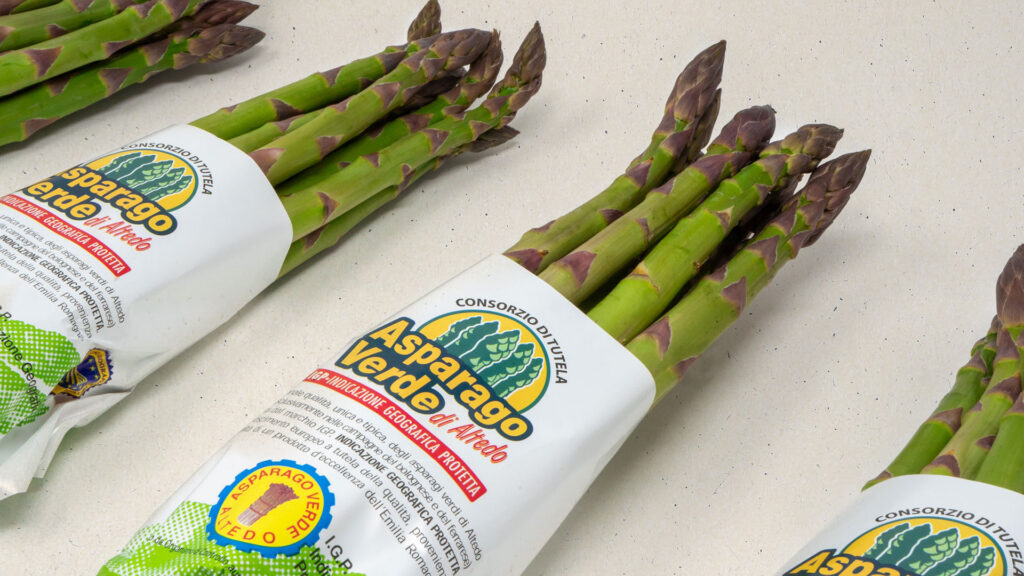
Promoting the authenticity and quality of Green Asparagus of Altedo

Green Asparagus of Altedo – recognised with Protected Geographical Indication (PGI) status – is the protagonist of a communication campaign created thanks to the contribution of the Emilia Romagna Region. The Green Asparagus of Altedo represents culinary excellence combining tradition and quality.

Collaborations with chefs and restaurateurs

The fertile land and the favourable climate of the territory encompassed by the PGI Production Regulations – which extends from the Bolognese Plains, in the Altedo area, and continues to the coast, in the Mesola district, covering 52 municipalities (30 in the province of Bologna and 22 in that of Ferrara) – contribute to the cultivation of this asparagus with a unique  avour, valued by gourmets across the globe. In parallel with the harvest, the consortium, which protects Altedo’s PGI-certified green asparagus, has planned a series of communication initiatives to promote and enhance this culinary treasure. Through tastings, social media activities, collaborations with chefs and restaurateurs and other events, the Consortium aims to spread knowledge and appreciation for Green Asparagus of Altedo both nationally and internationally.

Brits cut back on asparagus as inflation continues to bite

With prices still highly inflated, the volume and value of asparagus sold in Great Britain continues its descent. The 8,365 tons sold at retail in the last 12 months is 6.8% lower than the previous year’s total. In comparison, the wider vegetable market declined by just 2.1% and the full fresh produce market by 2.8% over the same period. The average price per kilo of asparagus rose nearly 5% to £9.28 over the 52 weeks to September 3 and caused penetration to fall for several months, dropping nearly 6% since a year ago to 26.5% of British households. However, this downward trend appears to be softening, Kantar says.

Brits swapping out asparagus for staples like potatoes

Kantar data also shows the price inflation has affec-ted purchase frequency, which has slipped 3.2% to just under 5.3 times a year. The shopper behaviour expert says there’s a clear correlation between this inflation and consumers exiting the category. Asparagus shoppers appear to be continuing to switch to more staple items such as potatoes and carrots. Existing shoppers are also buying less this year compared to last year (the volume per buyer is -1.9% to 1.1 kg for the latest 12 months), likely linked to the drop in frequency for asparagus purchases. However, trip volume has re-entered growth in the last couple of months (+1.4% to 210 g), meaning shoppers are now putting a bit more asparagus in their basket. “An increase in volume sold on ‘Y for £X’ deals has likely helped push trip volume back into growth,” Kantar said. “We are seeing across grocery that promotional levels are creeping up and it looks like this is happening within asparagus too,” it added. Overall, the spend on fresh asparagus at retail in Britain was down 2.3% year-on-year to about £77.6 million for the 52 weeks ending on September 3, 2023, a decline driven by fewer shoppers and fewer trips.

Fine asparagus has driven growth in trip volume

Spears account for the biggest share of asparagus sales in the UK, delivering 57% of the value and 70% of the volume sold at retail, followed by tips with 41% and 28% respectively and fine asparagus accounting for the about 3% remainder in both cases. Kantar reports all three of these asparagus sub-categories are seeing penetration decline.

Could the Dutch be convinced to eat even more asparagus?

The Dutch have long held a fondness for asparagus, with each person estimated to eat nearly 1 kg each year. And they are also known for growing high quality asparagus, which is mainly used to supply the domestic market but also exported to other parts of Europe and beyond. However, the planted area and annual production volume of ‘white gold’ in the Netherlands have been declining since 2018. At the International Asparagus Meeting, held as part of the asparagus and berry show, ExpoSE in Karlsruhe, Germany, on November 23, 2022, Teboza owner Will Teeuwen, a 3rd generation asparagus grower, sketched out the current context and the outlook for the Dutch sector.

Further concentration foreseen for Dutch asparagus production

The number of Dutch asparagus growers and the planted area has declined since 2018. The number of growers in 2014 was 800 but had dropped to 700 by 2018 and in 2021 stood at 500, while the planted area has gone from 2,800 almost a decade ago to 3,400 in 2018 and 2,900 in 2021. On average, there’s currently about 6 ha per grower and a net yield of about 6,000-7,000 kg/ha. “I think now we are in a kind of stable situation and the number of growers will still go down but the number of hectares will stay on this level,” Teeuwen said. Dutch production is concentrated in the country’s south, “which has something to do with the sandy soil but also with a bit more of a microclimate there, with warmer tem-peratures in spring.” Teboza is located in Limburg, which delivers 63% of production, with a further 33% in North Brabant and 4% dotted around other parts of Holland.

Overall consumption growth stalling, but green gaining traction

Teeuwen said fresh asparagus consumption is more or less stable in the Dutch market at an average of about 900 g per person, “which we think is quite good.” Twenty years ago, it was 200-300 g, “so we did a good job in those 20 years but in the last 5-6 years it has more or less been stable, so there’s a challenge to increase consumption,” he said. White currently accounts for 88% of
asparagus sales in the Netherlands, green 11% and purple under 1%. But the influence of green asparagus is increasing, “not very fast, but it’s increasing and I think it’s mainly because the younger people are focused more on the green asparagus but also people from abroad, and there’s quite a lot in the Netherlands, are also more into the green.”

Accommodation the biggest workforce challenge

Teeuwen said that in 2023, the minimum hourly wage in the Netherlands is €11.75 gross (up from €10.24 in 2021), which after taxes puts about €9.50 net in an employee’s pocket. But the employer cost is actually €17.63 per hour, which includes payments such as for social security and pension plans for the seasonal workers. “I always thought we had the most expensive salaries in the world but then I saw that Canada is doing quite a good job on that one also,” he quipped. Teboza’s harvest workers mainly come from Romania. It still has some coming from Greece, but these numbers are decreasing. “The biggest challenge we have at the moment in Holland is not getting the people, by being a good employer we get them, but we also have to house them,” he said.

Successful robot harvesting probably still 3-4 years away

Teboza has been doing a lot of tests with robotic harvest machines, including in its fields last year. “Unfortunately, the first one (Cerescon’s Sparter) went bankrupt in the middle of the season and that caused us a big challenge because we had to take out this machine somewhere in April. The other one (from AVL Motion), is still going on but I think we still need some more time before these machines will be suitable for harvesting asparagus on a large scale,” Teeuwen said.

Rising costs also a major headache

“The biggest challenge we have in the business, not only us as an asparagus grower but as a business in general, is how we can cope with increasing costs,” he went on to say. “We are constantly trying to innovate in our company.” In addition, Teboza is saving a lot of money on packing materials, which is good both for sustainability and reducing costs. Teeuwen said it is focusing a lot on decreasing packing materials but in the meantime, retail customers are still showing high demand for packed asparagus, “so although we decreased our use of the packaging material signi-ficantly we are packing more asparagus,” he said.