Archive

Asparagus in the age of Brexit

Britain’s asparagus sector is at a critical juncture, with its very survival in the balance, assailed on all sides by a combination of rising costs and labour shortages fuelled by political uncertainty. The sector had previously been in a healthy state, having grown rapidly in the past 15 years, from 1,000 hectares in 2005 to 3,200 hectares in 2019, making it northern Europe’s largest producer.  There are around 150 asparagus producers in the UK growing exclusively green varieties. The country’s asparagus is reputed to be among the best in world, but the sector is heavily dependent on seasonal migrant labour, mainly from Eastern Europe. The British fruit and vegetable sector relies on up to 80,000 seasonal workers arriving from the EU each year. While once the country was awash with applications for work on its farms, the post-Brexit climate in the UK is less accommodating of these migrants and a less appealing work destination. Indeed, labour agencies report a significant drop in interest in 2017 and 2018, with Romanian and Bulgarian workers in particular opting to go elsewhere in the EU where communities are more welcoming and employment conditions involve less uncertainty. The new immigration reforms recently announced by the government specifically restrict entry to the UK to unskilled labourers and appear highly likely to exacerbate the current problems faced by the agricultural sector.

UK losing its shine as an employment destination

Besides the less welcoming environment in the UK for foreign workers, there are also financial reasons for these migrants to look towards the UK’s neighbours instead. The fall in the value of the British pound against the Euro makes salaries in Germany and France more attractive. And the lack of workers could lead to a form of internecine warfare within the UK farming sector. As Doug Amesz of AG Recruitment points out, it is the entire UK agricultural industry that is facing labour shortages, so British asparagus producers are not only forced to compete with other asparagus producers to hire workers but also with producers in other sectors. “There are increasing immigration dossier constraints and increasing competition from other sectors,” said Amesz at the 2019 British Asparagus Conference.

“No migrant labour, no asparagus”

There has been a shortfall of around 10,000 workers over the past two seasons, which has forced farms to increase wages and bonuses. British farms typically pay workers the national minimum wage of £7.83 an hour plus performance-related bonuses. According to Concordia, a labour agency charity that recruits EU pickers for British farms, UK agriculture is entering a period of crisis. Speaking to Reuters, chief executive Stephanie Maurel said, “No labour means no harvesting, which means no fruit and no vegetables on the shelves of British supermarkets.” And the country’s retailers appear unlikely to rush to the aid of the struggling producers, as sales volumes are negotiated in advance for the season and prices are fixed, barring exceptional circumstances.

New sources of labour in the East

The working conditions currently on offer have so far been unable to attract British workers to fill the gap left by the migrants and this is likely to remain the case for the foreseeable future, as the lure of the agriculture sector struggles to compete with that of other sectors. In a bid to overcome the lack of workers from the EU, the British government has recently sanctioned a pilot trial for 2,500 workers to enter the country from Russia, Ukraine and Moldova for up to six months over the next two years. This new pool of labour could prove to be just the lifeline that the benighted sector needs right now. The bottom line is that if there are no migrant workers in the UK, there will be no locally grown asparagus and, ironically, after Brexit, the British people will actually become more dependent than ever before on Europe if they wish to continue to enjoy the vegetable that they so adore.


Opportunities for Peruvian asparagus

The UK is a net importer of asparagus – in fact, none of the precious home-grown product is sold abroad. Total imports reached just over 13.9 million tons in 2014, before steadily falling to approximately 12.1 million tons in 2017, then recovering to around 13.2 million tons in 2018. The main source is Peru, which ships between 8,000 and 10,000 tons to the UK every year, worth around US$60 million. Some distance behind Peru comes Mexico (around 2,000 tons per season), followed by Spain (around 1,000 tons). The total value of the UK’s asparagus imports fell from US$77.3 million in 2015 to 73.7 million in 2019. Producers in these countries will no doubt be keeping a close eye on developments in the lucrative UK asparagus market over the coming months.


ExportersImported value in 2015Imported value in 2016Imported value in 2017Imported value in 2018Imported value in 2019
World7731377966756987568473742
Peru6109062081575045957455258
Mexico76718812120121094815004
Spain30132241112012861002
Netherlands1059866751560737

Source: ITC

 Value of UK asparagus imports (thousands of US dollars)

 

There are increasing immigration dossier constraints and increasing competition from other sectors.


A British speciality

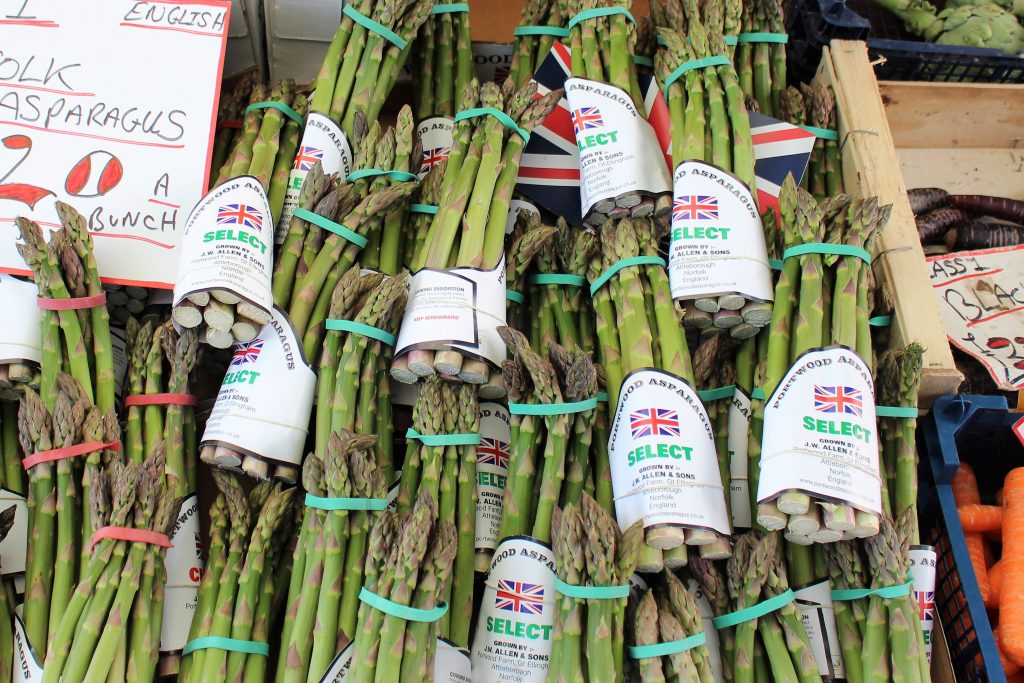
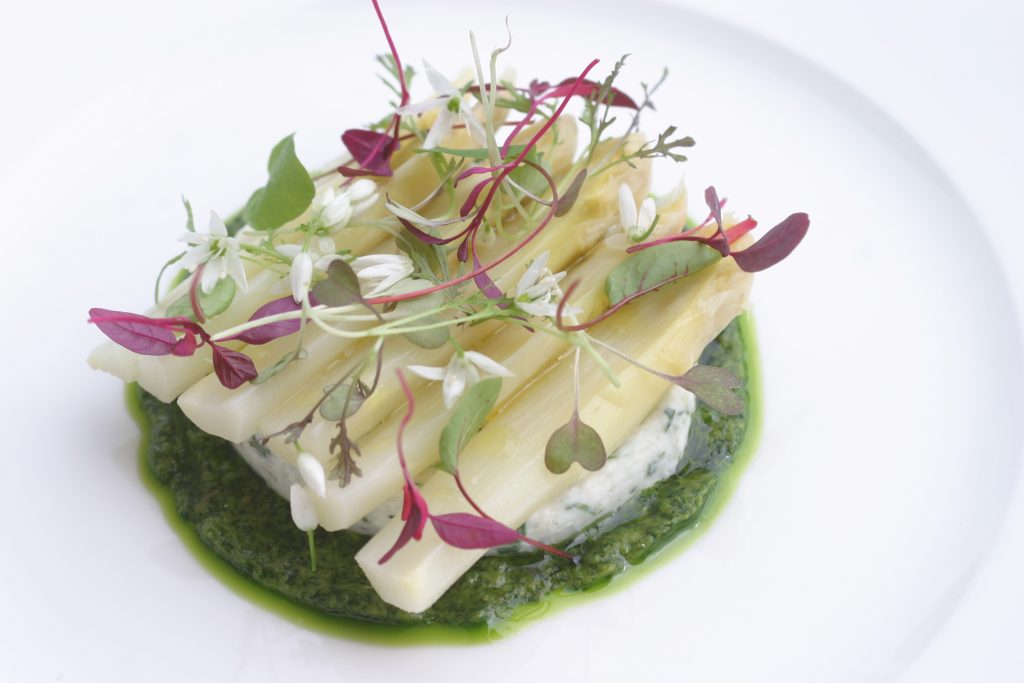
The British are fiercely proud of their asparagus; so much so that when UK retail chain Tesco began selling imported Peruvian asparagus in the Vale of Evesham, Worcestershire (considered the heart of the UK’s asparagus sector), shoppers threatened to boycott the supermarket over its lack of support for British farmers. Britain’s asparagus season is relatively short, traditionally beginning on St George’s Day (23rd April) and ending on Midsummer Day (21st June). During this period, premium British asparagus is in great demand, with £23 million spent on green varieties. It is believed that asparagus was first introduced to the island by the Romans, but the varieties grown today are the French type of asparagus that arrived in Britain in the seventeenth century. The southern British climate is ideal for the slow growth of a sweet and tender asparagus. Demand for home-grown product is so high that there is never anything left to export outside the UK. The asparagus season is celebrated across the country; the Vale of Evesham holds an annual week-long festival with auctions of the best crop and locals dressing up as spears of asparagus. British consumers are still less familiar with white asparagus, which is so highly prized in parts of Europe continent, but this kind is now becoming something of a gourmet product in UK retailers and trial programmes have been run in growing the product in the UK, such as at Cobrey Farm, in the Wye Valley, Herefordshire.


 More Info

The same concerns

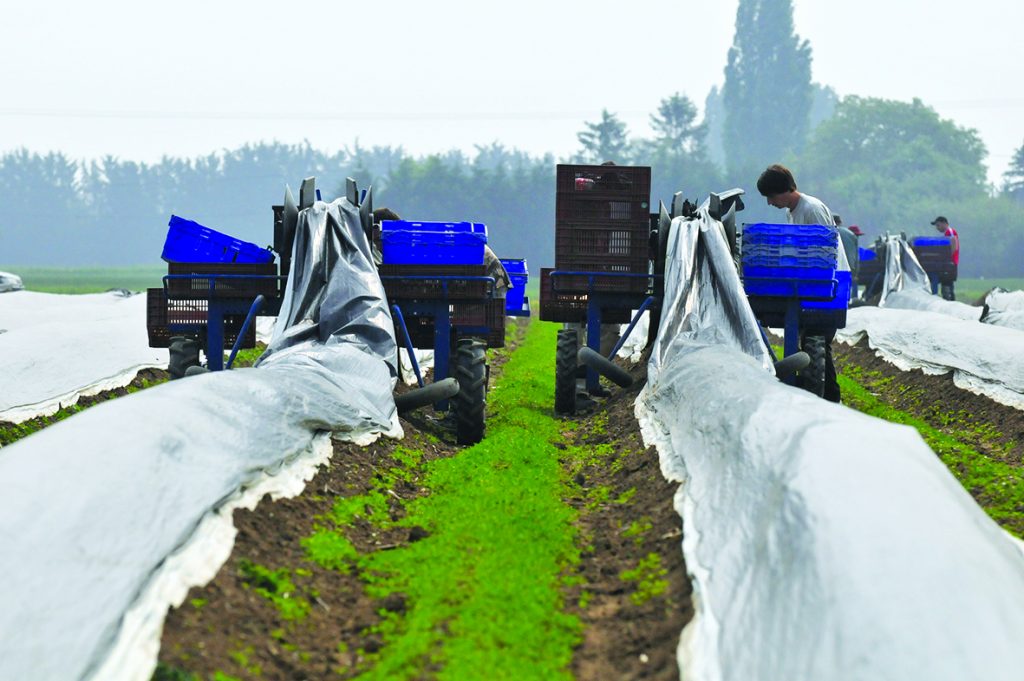
Asparagus is mainly produced in the south of the UK on different sized farms, from just a few hectares to 800 hectares in area. Regardless of size, they all face the same concerns, rising costs and labour shortages.  As is the case everywhere in Europe, harvesting and packaging represent the most costly activities for British asparagus producers, with costs roughly equivalent to those of French producers
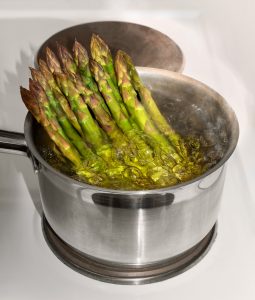
Why Asparagus is among the world’s healthiest foods

In August, it featured in WebMD’s list of “12 Powerhouse Vegetables You Should Be Eating”. And in December, a nutritionist listed it as one of “15 of the Healthiest Vegetables You Can Eat” in a Good Housekeeping article. Asparagus is even okay with the keto crowd, who welcome the fact it is filling, highly nutritious, and very low carb. Furthermore, it is also low in saturated fat, very low in cholesterol, fibre-rich and low-calorie to boot. A 100-gram serving of cooked, boiled, drained asparagus (hereafter referred to as cooked) delivers only 22 calories, with carbohydrates contributing two-thirds of that energy, protein just over a quarter and fat the remaining 8%. In terms of weight, the vast majority of asparagus – over 92% – is water, 2.4% is protein, and 0.2% is fat (total  lipids). While total carbohydrates account for 4.1%, 2% of that is fibre and just 1.3% simple sugars. Read on to find out what else makes this versatile vegetable so beneficial.

 Asparagus is packed with various vitamins and minerals   

packed with vitamins and minerals


Based on data from the U.S. Department of Agriculture (USDA) Nutrient Data Laboratory, a 100g cooked serving of this popular vegetable is an excellent source of Vitamin K, delivering 63% of the recommended daily value (DV). According to the UK National Health Service (NHS) website, Vitamin K refers to a group of fat-soluble vitamins that the body needs for blood clotting and helping wounds to heal, and there’s also some evidence it may help keep bones healthy. Asparagus is also high (37% DV) in folate (Vit B9), which the NHS says  helps the body form healthy red blood cells and reduces the risk of birth defects called neural tube defects in unborn babies. Folate, and other B group vitamins, play a role in maintaining a healthy blood level of homocysteine, high levels of which are associated with increased risk of heart attack and stroke. A 100g serve of asparagus also delivers 20% of the DV for Vitamin A, as well as 13% for Vitamin C, Thiamin (Vit B1) 11%, Riboflavin (Vit B2) 8%, Vitamin E (7%), Niacin (Vit B3) 5%, Vitamin B6 (4%) and Pantothenic Acid (2%). Vitamin C is just one of the factors in the antioxidant properties of asparagus. Antioxidants neutralise free radicals – the chemical by-products that harm cell membranes and damage DNA.

Asparagus also a good source of essential minerals

Cooked asparagus also makes a valuable contribution to the dietary intake of necessary minerals, providing 9% of the DV of Selenium, 8% each for Copper and Manganese, Potassium 6%, Iron and Phosphorus 5% each,  Zinc 4% Magnesium 3% and Calcium 2%.  The NHS says Selenium helps the immune system work properly, as well as in reproduction. It also helps prevent damage to cells and tissues. Potassium, meanwhile, can be of particular value to people with hypertension, given high dietary potassium is associated with a decrease in blood pressure, particularly in the presence of a high-sodium diet. The NHS says Potassium helps control the balance of fluids in the body – one of the reasons asparagus is often touted as an anti-bloating superfood – and also helps the heart muscle work properly. In regard to the minerals in asparagus, it’s interesting to note they are most concentrated in the upper sections of the spears.1 It is also worth noting that green asparagus contains relatively higher nutritional components than white asparagus.2

Compounds with antioxidant & anticarcinogenic properties

Asparagus also contains a range of bioactives – compounds with actions in the body that may promote good health. Among these are flavonoids and other phenols which have been of particular interest to researchers for their antioxidant and potential anticarcinogenic properties. Rutin, an important flavonoid in asparagus,  is one of the best natural antioxidants, but it has low bioavailability. It is, however, used in food including as a preservative and stabiliser. Other flavonoids in asparagus include tannin, anthocyanin, quercetin and kaempferol. According to At WHFoods3, quercetin is one of the best-researched flavonoids in nutrition, and its intake has been linked to reduced risk of numerous cardiovascular diseases as well as other chronic health problems. A study in Japan found asparagus was the most important dietary source of quercetin (following onions) for people living near Hokkaido. Also found in asparagus are sulphur-containing compounds (S-compounds), one of which, Asparagusic acid, has been reported as being unique in asparagus and of strong interest for its pharmacological and flavour properties. (Some S-compounds have also been highlighted as being major contributors to the distinctive urine odour following asparagus consumption.)

There is still so much to learn about how best to store asparagus, cook it and otherwise optimise its nutritional and flavour properties.

Still much to learn about Asparagus

Asparagus also contains steroidal saponins, often associated with medicinal properties, including improving the health of rats on a high-cholesterol diet. These compounds are also linked to the characteristic bitter taste of asparagus. While this article spans benefits of eating asparagus spears, it’s worth remembering that  for centuries, other parts of the asparagus plant – such as roots and sprouts – have also been used in traditional medicine, particularly in Korea and China. There are even references to its use in ancient Greek and Roman times both for food and herbal medicines. And while A. officinalis is the commercial variety, various of the nearly 300 species in the genus Asparagus have been used for health reasons. Despite all this, there is still much to learn about the impact of asparagus on human physiology after ingestion and how best to store, cook and otherwise optimise its nutritional and flavour properties.

What Britain says about health & its asparagus

British asparagus is packed full of goodness, so not only are you getting a delicious vegetable but a healthy one too:

Eating asparagus promotes healthy bacteria in the large intestine and can help reduce bloating

Asparagus contains vitamin K, essential for healthy blood clotting

It is a rich source of vitamin C, which boosts your immune system

Asparagus is a mild diuretic and is believed to help detoxify the body

source: enjoyasparagus.com


L’intérêt du préemballé en sursis

L’asperge est un légume dont la respiration est particulièrement intense. Elle peut se déshydrater facilement ce qui entraine une perte de poids très rapide. La perte d’eau génère la formation de stries qui déclassent rapidement le produit. Ce produit fragile peut perdre très rapidement en qualité. Une botte d’asperge non emballée peut présenter en magasin des symptômes de déshydratation marquée dès le deuxième jour. L’intensité respiratoire peut être limitée en conservant le produit à basse température et/ou en modifiant l’atmosphère.

Ralentir le flétrissement et la coloration

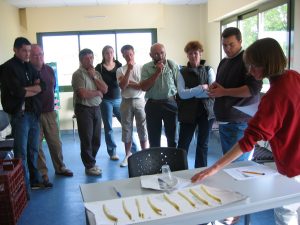
Des séances d’analyse sensorielle ont permis d’évaluer les effets de l’emballage sur la majorité des descripteurs : croquant, fondant, fibreux, tendre, amer, granuleux et sucré.

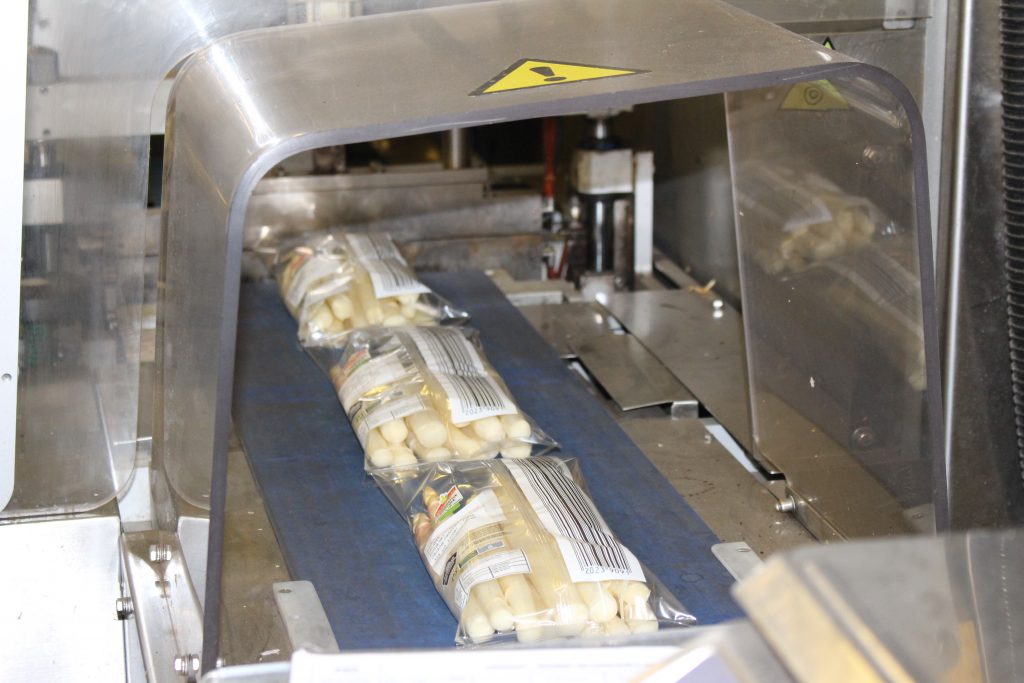
L’emballage des bottes d’asperge avec du film polypropylène microperforé permet de créer une atmosphère modifiée, réduisant la concentration en oxygène dans le sachet, sachant que ce conditionnement permet d’augmenter la durée de vie en magasin de plusieurs jours. Les essais mis en place entre 2011 et 2015 par le CTIFL (1) sur asperge blanche avaient pour objectifs de réduire la perte de poids, de ralentir le flétrissement et la coloration des turions, tout en minimisant la formation de buée dans les sachets lors de leur mise sur l’étal, ceci sans que le préemballage ne modifie les aspects de texture et de goût. Ces essais ont permis de montrer que le préemballage, quelle que soit la perméabilité testée (non perforé, macro et microperforé) limite considérablement la perte de poids au cours d’une conservation au point de vente. De plus, ils ont permis de définir une gamme de perméabilité permettant de conserver les qualités visuelles des turions. Le choix de la perméabilité doit également permettre de maintenir la qualité organoleptique. Dans les conditions des différents essais, il apparaît que le conditionnement dans des sachets en polypropylène entraînerait une diminution de la perception du caractère sucré quelle que soit la perméabilité testée. La modalité non emballé est significativement perçue plus sucrée que les trois autres modalités, lorsque la simulation point de vente dure huit jours. En revanche, si la conservation au point de vente dure six jours, seule la modalité non perforé est significativement moins sucrée que les trois autres. Sur le caractère amer, qui vient en opposition du sucré, l’influence de l’emballage est également mise en évidence. Il y a une augmentation croissante de l’amertume perçue corrélée à la diminution de la perméabilité. La modalité non perforé est significativement plus amère que le produit frais. Pour le caractère croquant, le « classement » des modalités est le même : l’emballage le plus imperméable entraîne une perte de croquant. On constate également que le préemballage dans un film macroperforé entraîne une hausse du caractère croquant de manière significative.

Une perméabilité s’est avérée optimale

Pour le caractère fondant, qui vient en opposition du croquant, les conclusions vont dans le même sens : le produit frais est intermédiaire. Ainsi le préemballage dans un film macroperforé entraîne une perte du fondant (hausse du croquant constatée précédemment) et le préemballage dans un film imperméable entraîne une augmentation du fondant (baisse du croquant constatée précédemment). Concernant les caractères tendre et fibreux, on constate une logique d’opposition dans les classements des modalités. Ainsi, au cours de la conservation, les turions deviennent plus fibreux. Cette évolution est limitée par l’étanchéité croissante du film : la tendance est la même pour tous les  essais réalisés. Les nombreuses modalités testées mettent  en avant une gamme de perméabilités (de 3 μm²/cm² à plus de 12 μm²/cm²) qui, dans les conditions particulières  de ces essais (conditions de température de point de vente avec alternance jour/nuit), semblent être les mieux adaptées pour prolonger la conservation du produit avec une qualité acceptable (limitation du verdissement et de la perte de poids (0,5 à 1 %)). Ces essais montrent également les limites à partir desquelles on observe des défauts de conservation. Afin de garantir le maintien des critères organoleptiques (goût et texture), il est préférable d’éviter les perméabilités trop élevées comme celle testée via le film macroperforé. Ainsi, une perméabilité de l’ordre de 5 μm²/cm² s’est avérée optimale. Avec des températures plus basses, la conservation est encore prolongée avec un optimum à 2 °C. Cette température utilisée au stockage permet de prolonger la conservation du produit au-delà de 15 jours, toutefois elle parait très difficilement applicable sur le lieu de vente.


The interest of pre-packaged in reprieve

In France, studies carried out by CTIFL show that polypropylene sachets can significantly limit the asparagus weight loss and extend its shelf life at the point of sale. However, they can change certain taste criteria (sweetness, bitterness, crunchiness, etc.). But their use is in question due to the coming French regulation concerning the use of plastic packaging.


GERMANY: Spargel und Beerenanbau Winkelmann GmbH & Co

How has the pandemic affected your operations?

Andreas Löbke, Production Manager

For the 2020 season we had a shortage of about 25%, especially women from Poland who decided to stay with their families. We understood and respected their decisions. In March 2020, much of what was happening was new and unknown and presented us with some challenges. Due to the great commitment of our staff, we were able to implement all the necessary hygiene measures in a short time. Disinfectants were organised from various sources, masks were sewn at employees’ homes, the entire company premises were fenced off and guarded by a gatekeeper. We had 25% less production. But people who came working for us stayed for a longer period than usual, which helped. We have since learned to deal with the situation and have further tightened and improved our measures and hygiene standards. But the mutations with the higher infection rates worry us. In 2020, we had no infections on the farm. We hope that we will be able to do the same in 2021. We believe that customers are eagerly awaiting the first fresh asparagus and that sales in 2021 will be good.

How has it affected marketing, consumption and logistics?

None of our usual sales to gastronomy and canteen kitchen customers took place. Sales to food retailers worked well – but all on a lower base level. Our markets and our customer relationships have developed robustly, however. Consumers seemed to place more value on high-quality, fresh asparagus and ate a little more asparagus at home, maybe because they couldn’t go out to restaurants. Our exports, mainly to Scandinavia, have remained stable. Our logistics partners were able to deliver everything as agreed. Our own logistics also functioned reliably.


NETHERLANDS: Teboza

How has the pandemic affected your operations?

Will Teeuwen, Grower

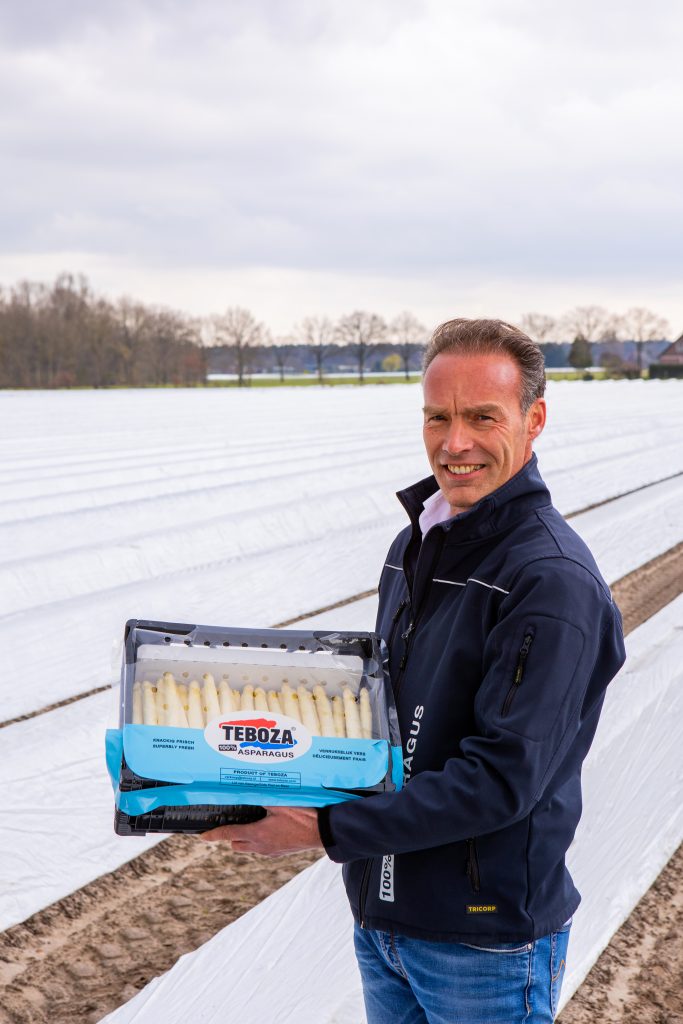
Just before the 2020 asparagus season, we were hit with lockdowns and closed borders in Europe which meant a significant amount of those who had worked at Teboza in past years were unable to return. With enormous effort by everyone in our organisation, we were able to fill the gap, such as by deploying workers from other sectors. This year, we have been in close contact with our employees, and we took control of the entire process from local testing before departure, safe travel and safe accommodation. We have also set up a test and quarantine policy in collaboration with the government and our health and safety officer. We see that after one year away, many people are happy to work with us again and we expect we’ll have enough people to harvest and process every kilogram. The deployment of personnel from other sectors, small-scale accommodation, extra hygiene measures and more and small-scale transport have led to considerable additional costs in the past year, and will also lead to extra costs in the coming year and possibly the coming years.

How has it affected marketing, consumption and logistics?

As in most of Europe, in 2020 the catering industry was closed for almost all the asparagus season. As we expect a similar situation in 2021, our catering-related customers face another difficult year. However home consumption has been remarkably good and has offset the lower turnover. While sustainability in packaging has been an important theme in recent years, last year we saw that from a hygiene point of view, more asparagus was packed in plastic, such as flow packs and trays. We have not experienced any inconvenience with regard to the transport of our products to customers at home and abroad.


ITALY: Apofruit

How has the pandemic affected your operations?

Mirco Zanelli, Commercial Director

The pandemic prompted Apofruit Group to adopt measures to protect its employees: the spaces dedicated to product processing have been expanded, additional specialist personnel have been recruited, processing lines have been equipped with safety devices such as plexiglass panels, and employees have been provided with protective masks in addition to normal PPE (gloves, caps and caps). In order to ensure the processing and marketing of the product, another processing line has been implemented at another of the group’s plants. While we have had more difficulties hiring workers for harvesting, the quality of our asparagus is unchanged, divided as always into: Extra (40%), 1st Category (50%) and baby asparagus (10%), while our acreage has grown to 240 ha for a total production of 1,000 tons. And due to a new specification, which also covers some new varieties, the production of Apofruit’s green Asparagus of Altedo PGI will be 30% higher this year on 2020.

How has it affected marketing, consumption and logistics?

Last year’s March-May lockdown reduced the purchase frequency for perishables like asparagus in favour of products with longer shelf life. This had a negative impact on the campaign in both supermarkets and general markets but was worse for food service. Overall, our output was not overly high and was well spread out over the period, allowing for more regular marketing and avoiding production peaks that can cause price drops. In Switzerland, Germany and the Netherlands, consumption decreased and the presence of local production also affected export volumes. On the logistics front, we have witnessed a slight increase in road transportation costs, mainly due to the initial uncertainty and lack of means.


The French asparagus sector is increasingly dynamic

Asparagus in France has enjoyed favourable technical and commercial dynamics over the past ten years. However, as the Covid crisis hit the last campaign rather hard, the French retail sector has rallied in support to promote asparagus consumption.

Organisational dynamics

Some consumers are discovering this vegetable for the first time, as revealed by Kantar panel figures. The number of French households buying asparagus increased by 11 percentage points in 2020, rising to 31% from a previously stable 20% since 2017. The challenge now is to maintain this momentum in 2021, an apparently achievable goal judging from the performance in the current campaign. French production is developing dynamically in different areas. In 2021, Planasa joined the National Association of Asparagus of France and entrusted the marketing of 700 tons of asparagus produced on 170 hectares to its new commercial partner Priméale. There has also been an increase in the production of green asparagus, particularly in the south of France and under cover. The National Association of Asparagus of France comprises seven member groups spread over the south-western basins (Copadax, Maisadour, Tutiac and Planasa Vignerons), the Loire Valley (Fleuron D’Anjou) and the south-east (Cofruid’oc and Arterris). Sales during the 2021 season are expected to exceed 6,000 tons of asparagus, with white and purple varieties dominating. The association accounts for around 30% of the estimated 20,000 tons of production in France, and its share is growing. It is estimated that the French consume about 28,000 tons of asparagus each year, which leaves room for imports, especially Spanish green asparagus which is sold at very competitive prices in relation to French production costs.

Forthcoming ban on plastic packaging

However, French asparagus holds a significant commercial advantage in the form of its French origin designation and its local distribution. Analyses of the market highlight the prominence of French product on supermarket shelves thanks to the numerous communication campaigns carried out by Asparagus de France in the media (radio, TV), at points of sale and on social networks. In France, asparagus is sold in a variety of packaging, in 4kg and 1 kg packages, in 0.5kg bunches and in 0.5kg flow-pack plastic bags. However, as of January 1, 2022, the AGEC Act (a law to tackle waste in the circular economy) will prohibit the use of plastic packaging for sales units of less than 1.5kg. Asparagus will be affected, but a waiver request has been made to extend the deadline to 2025. The asparagus industry is currently looking for solutions.


Larrere

At Larrere farms we produce organic asparagus. Fully committed into a CSR approach, the respect of nature, soils and plants is essential for us.  Our family farms are located in the heart of Les Landes in France, which is an historical production basin for asparagus growing. In order to extend our production season and to offer to our customers asparagus from January, we started to grow asparagus in our farm BVLH which is located in Comporta in the Alentejo region in Portugal. We chose this region because it is an area which has some very unique geological and climatic conditions, similar to what he have in Les Landes.

In both of our farms, asparagus fields are very close from the Atlantic coast, around ten kilometres from the ocean, and are surrounded by pine forests. The soils are mainly made up of a very clear sand which is typical of those regions. Those soils allow us to cultivate a product of excellence with a strong flavour typicality and sweet aromatic notes.  Today Larrere Farms are already well established on local and French markets but we have the ambition to continue to develop exports by creating partnerships at European and International levels.


Fleuron d’Anjou

Traditionally cultivated in the Maine and Loire region, asparagus constitutes a strategic product for the Fleuron d’Anjou cooperative, which plans to increase production to 1,000 tons on 200 hectares within 2 years. Beyond planting dynamics, volumes have risen three-fold since 2015, thanks to strength in several areas, including the commitment of the group of asparagus specialists and the arrival of some young producers. The firm’s technical support, its implementation of new itineraries and its marketing expertise have been reinforced by investments in production and stations. Fleuron d’Anjou’s offering is early, diversified and committed (20% organic and soon to be certified with HEV (High Environmental Value)). In order to meet gastronomic demands, work is currently being undertaken to develop the taste and storage life of asparagus as part of the project to promote the Val de Loire origin.


C’zon

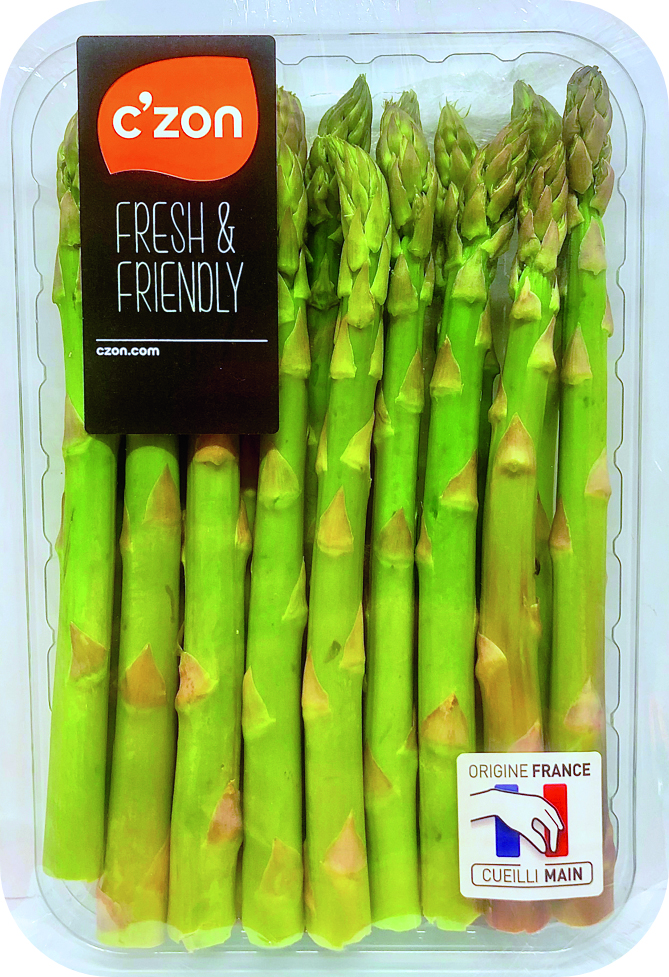
Import Direct Service, the head of the C’ZON brand, is an import-export company for ready-to-use fresh fruits and vegetables.  It has only one conviction: to work directly with agricultural producers all over the world with the aim of bringing consumers a product that has naturally reached maturity. Acting in a short circuit, but not only, it also aims to charge a fixed price all year round on fresh products, without additives or preservatives, and with flawless traceability!  In bundles or in trays, asparagus has always been a key reference for this SME, which has been established in northern France since 2001. And recently, C’ZON launched a fine green asparagus from France! This is an opportunity to expand its range and meet new customer needs that have been considerably felt since the arrival of the pandemic we are currently experiencing. This new asparagus comes from a local production in the North of France, a Global Gap certified production, like all the fruits and vegetables of the brand! (Certification guaranteeing the use of good agricultural practices as well as maximum safety of the food products offered by the distributors).  It is hand-picked when ripe and has proven itself to be a good choice for customers… A new product that has already won over customers and that bodes well for the future! »