Archive

Fleuron d’Anjou

Traditionally cultivated in the Maine and Loire region, asparagus constitutes a strategic product for the Fleuron d’Anjou cooperative, which plans to increase production to 1,000 tons on 200 hectares within 2 years. Beyond planting dynamics, volumes have risen three-fold since 2015, thanks to strength in several areas, including the commitment of the group of asparagus specialists and the arrival of some young producers. The firm’s technical support, its implementation of new itineraries and its marketing expertise have been reinforced by investments in production and stations. Fleuron d’Anjou’s offering is early, diversified and committed (20% organic and soon to be certified with HEV (High Environmental Value)). In order to meet gastronomic demands, work is currently being undertaken to develop the taste and storage life of asparagus as part of the project to promote the Val de Loire origin.


C’zon

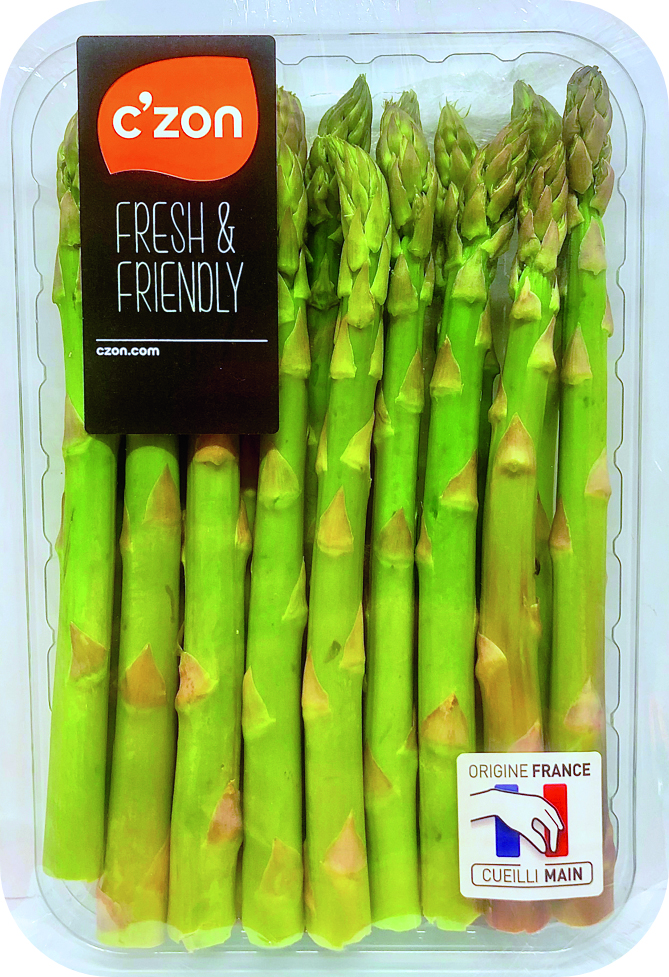
Import Direct Service, the head of the C’ZON brand, is an import-export company for ready-to-use fresh fruits and vegetables.  It has only one conviction: to work directly with agricultural producers all over the world with the aim of bringing consumers a product that has naturally reached maturity. Acting in a short circuit, but not only, it also aims to charge a fixed price all year round on fresh products, without additives or preservatives, and with flawless traceability!  In bundles or in trays, asparagus has always been a key reference for this SME, which has been established in northern France since 2001. And recently, C’ZON launched a fine green asparagus from France! This is an opportunity to expand its range and meet new customer needs that have been considerably felt since the arrival of the pandemic we are currently experiencing. This new asparagus comes from a local production in the North of France, a Global Gap certified production, like all the fruits and vegetables of the brand! (Certification guaranteeing the use of good agricultural practices as well as maximum safety of the food products offered by the distributors).  It is hand-picked when ripe and has proven itself to be a good choice for customers… A new product that has already won over customers and that bodes well for the future! »


I produttori italiani investono ancora sull’asparago

Quella dell’asparago è una coltivazione che mantiene un trend  che consideriamo tuttora  positivo sotto il profilo commerciale visto l’andamento crescente  della domanda  da parte dei consumatori per tutte le tipologie di asparagi, verdi, bianchi e violetti. Gli investimenti in questo ultimo biennio,soprattutto nel Sud dell’Italia hanno subito  una flessione  già a partire dal2019, protrattasi anche nel 2020 poiché aggravata dai problemi commerciali connessi  alla pandemia da Coronavirus.  La motivazione del calo delle superfici investite ad asparago nel Sud Italia trova una motivazione legata sia ad aspetti agronomici, che ambientali, che hanno avuto ripercussioni negative sul reddito delle imprese.  Come sanno bene i produttori di asparago  le quantità raccolte oltre che dalla tecnica colturale,  sono influenzate in maniera determinante dalla scelta della varietà da coltivare. Purtroppo in questi ultimi anni, il proliferare di nuove varietà, spesso non verificate sperimentalmente per longevità e produttività, hanno costretto  i produttori a distruggere gli impianti a causa dello scarso reddito provocato  delle basse produzioni.

La Era post-covid 19

Nel 2020 la pandemia  ha comportato  la chiusura di bar ristoranti e mense (Horeca e ristorazione) e questo ha contribuito a ridurre  il consumo di asparagi non solo freschi, ma anche conservati e surgelati . Solo la commercializzazione verso la GDO e l’export hanno consentito vendite pressoché normali .Sempre nel 2020  la difficoltà di reperire la manodopera ha avuto un peso notevole sulle decisioni degli agricoltori di ridurre gli investimenti ed anche sulla decisione di abbandonare la raccolta in impianti giovani.

A complicare ulteriormente la situazione  è stato l’andamento climatico negativo degli ultimi anni caratterizzato da primavere siccitose e frequenti gelate come nel 2020 che hanno in parte compromesso la produzione. Anche per questa campagna 2021 la situazione  soprattutto in Puglia dove si coltivano circa  il 50 % degli asparagi italiani è difficile.   Gli abbassamenti termici e le abbondanti piogge stanno, come nell’annata precedente, nuovamente ritardando la raccolta  compromettendo ancora una volta le rese produttive. Al momento, per carenza di prodotto i prezzi di mercato sono buoni ma si teme un abbassamento dei prezzi di mercato se  si verificherà  la temuta  concentrazione di produzione fra gli areali produttivi del  Nord e del Sud Italia per effetto degli andamenti climatici avversi, in analogia al 2021 quando le gelate tardive colpirono duramente.

 I asparagi italiani in numeri

In Italia quest’anno la superficie in produzione è stimata in circa  9.500/9.800 ha . A questi  bisogna aggiungere circa 1000 ettari di giovani impianti che attendono di entrare  in produzione. Gli asparagi bianchi che rappresentano poco meno del 20% dell’intera superficie  nazionale, sono presenti solo in due regioni italiane  più precisamente  in Veneto ed in Friuli Venezia Giulia . Gli asparagi  viola ( il più conosciuto è il Violetto d’Albenga)  sono coltivati  quasi esclusivamente in Liguria. A trainare la produzione nazionale  sono sempre gli asparagi verdi di Puglia  che oggi rappresentano ancora  livelli produttivi superiori  ai 5.000ettari,  in Veneto si coltivano circa 2000 ha di asparagi  verdi e bianchi( 70%) . In Emilia-Romagna (circa 750 ettari) e in Lazio (500 ettari). In Campania la coltura interessa  oltre  400 ettari di asparagi verdi coltivati prevalentemente in serra. In Friuli Venezia Giulia si coltivano circa 200 ettari dei quali il 70 % bianchi. Si può affermare che per questa campagna 2021,  la superficie a livello nazionale rispetto al 2020  è diminuita di circa un 10% . La  riduzione più marcata si è verificata al sud dove il calo è stimato molto vicino al 15 % . Stabile invece la produzione nelle regioni minori ed in Campania e nel Nord, dove si ha qualche  nuovo investimento .  In leggero  aumento  la produzione di asparagi precoci riscaldati o con acque geotermiche come il Veneto, in Friuli Venezia Giulia  e nel Lazio, ma vi sono prove in atto che prevedono di impiegare acque  riscaldate da energie rinnovabili o come nel caso di un recentissimo e nuovo impianto, che utilizza come fonte energetica la  energia elettrica.


Slow recovery of Peruvian asparagus

Asparagus production in 2020 fell 4% due to labour shortages during harvest, a result of the strict national lockdown that restricted the movement of some workers. Added to this were social unrest and blockades on the main roads towards the end of 2020 in the regions of Ica and La Libertad. However, the forecasts for 2021 are positive, with the USDA predicting a 5% increase compared to the previous year, reaching 370,000 tons.

Frozen asparagus volumes to shrink slightly

During 2020, Peru exported 8.8 million kilos of frozen asparagus worth US$37.7 million. According to Agrodata Peru, these figures reveal a moderate drop from the 10 million kilos exported during 2019 for a value of US$42 million. The main destination of these shipments was the US ($18 million), followed by Japan ($12.2 million), Spain ($3 million), Belgium ($979,000), Germany ($945,000) and South Korea ($672,000). These figures will probably remain roughly the same in 2021.

Among the largest exporting companies were IQF del Perú SA, with sales of $16.6 million (44% of total shipments), Complejo Agroindustrial Beta SA ($13.7 million), Agroindustrias AIB SA ($2.6 million), Virú SA ($1.5 million), Fundo San Fernando SA ($1.3 million), and others.

Good forecasts for fresh asparagus

As for fresh asparagus, exports totalled 130 million kilos and were worth $384 million, -1% and -2% respectively compared to 2019. The US was the main destination ($260.3 million), followed by the UK ($35.3 million), the Netherlands, Spain, Canada, Belgium and Brazil. This year’s export forecasts for fresh asparagus are good, with the USDA projecting 138 million kilos.

Complejo Agroindustrial Beta was the largest exporter of fresh asparagus ($38.4 million), followed by Danper Trujillo S.A.C. ($33 million), both significantly down on 2019 levels. The next largest exporters were Nathanael Agroexports, Agro Paracas, Sociedad Agrícola Drokasa and Santa Sofía del Sur.


What’s new in asparagus science?

The increased consumption and production of asparagus in recent times have heightened the need to extend the shelf-life for long-distance distribution. During storage, asparagus spear quality is reduced due to toughening, water loss and changes in biochemical compound content. Various physical methods have been studied to reduce these undesirable traits, like quick cooling, long-term refrigeration, and storage in a modified atmosphere. Packaging management is also known to play a key role in preserving asparagus quality. Various research programmes have been set up to study the impact of different solutions for extending the shelf-life of fresh asparagus. 

In Thailand, a team (Lwin et al., 2020) studied the effect of electrostatic atomised water particle (EAWP) treatment on the spear lignification and for maintaining asparagus quality. The results show that EAWP treatment maintains colour, reduces weight loss, and inhibits lignin and cellulose accumulation, leading to a better shelf-life of the asparagus during storage at 4°C.

In Italy, Toscano et al. (2021) showed that the use of micro-perforated coextruded polypropylene limits weight loss and maintains a fresh-like appearance of green asparagus of the Vegalim variety after 30 days of refrigerated storage.

In China, Pu et al. (2020) demonstrated that high-oxygen modified atmosphere packaging maintains a tender texture, inhibits the increase of lignin content and delays the lignification process in green asparagus stored for 30 days.

In South Korea, a team from the Kangwon National University (Wang et al., 2020) showed that a 60% CO2 treatment at 4°C for 48 hours in modified atmosphere packaging is capable of maintaining the post-harvest sensory and biological qualities of asparagus, and provides strong inhibition of microflora growth during the storage period.

In Poland , a team from the Warsaw University of Life Sciences (Gantner et al., 2020) developed an ethylene vinyl alcohol copolymer (EVOH) film combined with modified atmosphere packaging to enhance the shelf-life of white and green asparagus spears. They showed that the use of this new packaging with refrigeration at 2°C promotes reduction in weight loss and prevents changes in the colour, texture and sensory quality of green and white asparagus for 17 and 10 days respectively.

In the USA, Michigan State University’s School of Packaging (Benyathiar et al., 2020) studied the shelf-life of fresh-cut asparagus packed in modified atmosphere packaging (MAP) and vacuum skin packaging (VSP) in microwaveable tray systems. They found that both techniques combined with refrigeration (4°C) maintain the freshness and hedonic qualities of asparagus directly eaten from the package.

In Vietnam, Tran et al. (2020) showed that the use of a biofilm made of chitosan-alginate directly applied on the asparagus can be considered a new form of multi-component edible coating that allows very effective quality preservation and shelf-life extension.

In 2016, Garcia-Robles et al. from Mexico showed that asparagus spears treated after harvest with sucrose and acetylsalicylic acid present lower longitudinal and diametric growth, lower opening of bracts and less weight loss, thereby extending shelf-life at 10°C and 90% relative humidity.


Walker Brothers

Although the Covid-19 pandemic brought unprecedented challenges to industries around the globe last year, Walker Brothers never stopped exploring new ways to improve its asparagus business. By consolidating its partnership with its European distributor, Blumen Vegetable Seeds, Walker Brothers, Inc. continues as a leader in the asparagus world. Since the outbreak of Covid-19, Walker Brothers, Inc. has witnessed an increase in growers wishing to produce and supply fresh asparagus domestically. New growers have contacted the firm via various virtual platforms. Through these connections, the company has found new homes (e.g. in Africa) for its productive and competitive green hybrid asparagus varieties, including Atlas F1™, Grande F1™, UC 157 F1, etc. In this group, Grande F1™ stands out as the dominant variety in Mediterranean countries and has been tested by new growers in areas with similar climates. Walker Brothers, Inc. understands the importance of developing more efficient varieties that offer sustainable and profitable returns, in addition to offering its existing commercial varieties. New hybrids from the Walker Breeding Programme are being tested in 17 countries, including Italy, Spain, and other Mediterranean countries. Walker Brothers, Inc. and Blumen Vegetable Seeds will continue to proudly supply regional and international growers with its decades of expertise in asparagus.

Planasa

Planasa has just launched three varieties onto the market that will be available from 2022. Darkong, Darzan and Darius, the names of the three new selections, mark the start of the renewal of its variety catalogue planed by the company for the next five years.

The three selections are characterised by 100% male genetics, following the research line that began with Darvador, whose development is offering very good results to European growers.  As for its individual characteristics, Darzan is somewhat less precocious than the well-known Darlise, but offers great production and exceptional vigour. Darkong, on the other hand, is a good choice for growers who opt for high yields and large sizes for white asparagus production. And finally, Darius, although a late variety, provides uniform quality throughout the season.

These three new selections, together with Darvador, are Planasa’s commitment to gradually renewing its catalogue and offering growers varieties that will help them to be more competitive and position themselves as market leaders.


Limgroup

After years of intensive and successful trialling, Limgroup brings the asparagus variety Maralim onto the market. Is a variety suitable for the production of white asparagus in the mid-early segment in the temperate climate.  Due to the perfect tipclosure, the harvesting rhythm can be changed, while the quality remains the same. As a result, cost savings on labor can be realized. Trials have shown that the production of Maralim can be up to 17% higher than the production of conventional varieties in the mid-early segment. The high yield and good sorting result into more kilos of class 1, resulting in a higher turnover per hectare. In summary, the benefit of growing Maralim can amount to several thousand euros per hectare. Maralim produces a typically white and straight asparagus and is hardly susceptible to breakage, hollow, pink discoloration and rust. The variety is perceived by consumers as very tasteful. Maralim can be used in all sales channels, from retail to home sales, where, among other things, the quality and taste lead to repeat purchases.


Lamboseeds

Presenting rustic Saent asparagus

For the first time, Lamboseeds is to offer the market a different variety of asparagus, characterised by a more marked and bitter taste than traditional asparagus. “Saent was born out of a research and development project developed together with Luciano Trentini, who also takes care of the agronomic aspects, and developed commercially by Ortofrutta Castello, supplier of Coop. Saent is a recent variety with rustic characteristics and a tendency to develop a purplish red colour. It is medium-sized and the result of a cross between the Officinalis genus of asparagus and wild asparagus, selected from the species of the Veneto coast. It is ideal for lovers of strong-flavoured vegetables. In 2021, we’ll launch the first major volumes in sustainable packaging containing an information sheet to inform customers of the product’s value,” said sales manager Sandro Colombi. Meanwhile, in addition to producing asparagus for the fresh market, the first trials of industrial processing are set to get underway in collaboration with Sipo to create derivative products for the kitchen such as spreads and pesto. Italian retail will be the target market in the initial commercial phase, focusing particularly on connoisseurs of niche and high-value products.


Coviro

Over the past couple of years, Coviro has presented new varieties suited to growing in Mediterranean climates, such as Starlim, Atticus, two early green hybrids of Dutch origin, and an absolute novelty Espada, which is also very early and was developed by the University of California. These join a range of well-known varieties such as the early Atlas and De Paoli, Grande (a high-yielding Californian hybrid), and Vegalim (a late hybrid). “As for the varieties suitable for continental climates, we have had great success with green ones of Italian origin, which represent about 80% of our offering. These include Eros, Giove, Ercole and Franco, as well as the Dutch Magnus. Among our white varieties, we have the Dutch Grolim and Cumulus, and, above all, the Italian Vittorio, which is a new hybrid with high climatic adaptability and can be used for the production of both white and green asparagus,” said Marcello Sbrighi, sales manager. The current campaign seems to have started promisingly, with the prospect of repeating the good results of 2020, when 2.5 million plants were sold. This followed two difficult years during which yields had dropped by as much as 40%. Coviro’s production is destined mainly for the Italian market, as well as Slovenia, France, Germany and Hungary.