Europlastic continues to innovate and adapt to the needs of ever more technically demanding customers by offering more up-to-date and efficient product ranges.
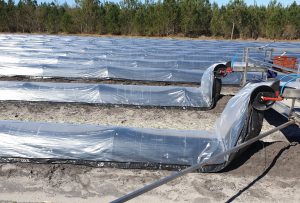
Multitech is a double film for growing white asparagus on arches. It provides excellent agronomic and financial results for producers. The two-in-one product is made up of two films assembled together, one thermal and the other opaque. It is easy and economical to use as it requires handling only one film and can be used on a single type of hoop. Multitech offers a very good relationship between investment, yield, quality and labour costs and represents excellent value.
Asparaclim is a new plastic range dedicated entirely to green asparagus cultivation and was specially designed to meet the requirements of this very technical crop. It offers greater efficiency thanks to its climatic effect by acting as a barrier to conserve humidity in the tunnel. In addition, the film’s athermic properties allow prolonged use during harvesting, thus considerably improving the yield, size and quality of asparagus. Asparaclim is a plastic designed for cultivating green asparagus.
ECOGREEN ITALIA presents a new device to accompany its electric asparagus harvesters. It’s an anti-slug pellet dispenser. Slugs are more and more frequently attacking the asparagus fields with consequent production problems. ECOGREEN wants to help growers with this new device which is easily installed at the rear of its electric machines to dispense anti-slug pellet while running along the asparagus rows. The dispenses is connected to the electric unit of the machine and, by adjusting a potentiometer, the worker adapts the quantity of slug pellet that is distributed along the row. It’s a very practical, easy to use system that contributes to optimize your harvest.
Ionnis Tsarkiris Dalin Pocket Advance – the new film from Daios
Daios, the largest Greek producer of agro-textiles since 1977, specialises in films for protecting asparagus crops: “Our latest novelty is called Dalin Pocket Advance. It is a pocket film specially designed for asparagus. Thanks to a special valve, it allows the cells to be filled while preventing soil from entering. Rainwater can enter but it is drained through the micro-holes on the cell and this guarantees better performance with great benefits and lower costs for asparagus producers,” said Ioannis Tsakiris. Like most of the company’s special films for asparagus, Dalin Pocket Advance is destined for the major European markets, especially Germany (80%).
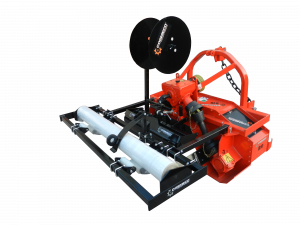
Cosmeco Srl has specialised in the production of agricultural machines for more than 40 years. The firm has now added to its range for asparagus, with the market launch of the B70 bedformer, a totally adjustable machine that can form seedbeds at up to 70cm high. Cosmeco has also developed two new accessories. The first is a film-holder – a reel support for laying films made of plastic or other materials. It is totally customisable both in terms of film width and height from the ground, which allows placement on seedbeds of any height. The second innovation is a film winder/unwinder for drafting or collecting films made of plastic, TNT or other materials with pockets for ballast designed specifically for asparagus. Equipped with a tear-proof hydraulic clutch (tractor hydraulic system) and braking system to allow adjustment of operating speed, the item is currently available for film widths of up to 180cm. Other products in Cosmeco’s line for asparagus include mulch-laying machines, which are totally customisable and can be applied to bed formers to permit multiple operations in a single step.
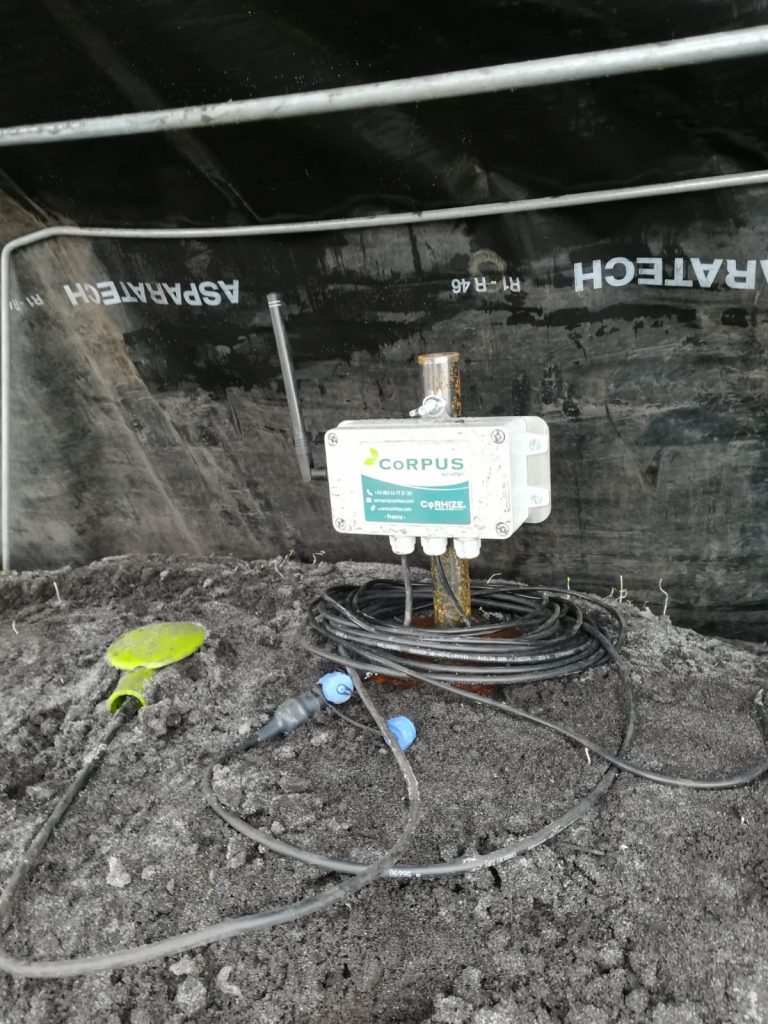
The AspaView kit is a complete all-in-one tool developed by CoRHIZE to support asparagus producers all year round. It helps control irrigation in season, monitors temperatures during dormant periods and helps manage mulch during harvest. The specific module on the Columbus app is improved each year taking into account the experiences of producers and technicians. “We remain committed to developing reliable and practical tools that offer both basic and highly specialised support for different user profiles,” said Serge Escuraing, CEO of CoRHIZE. With its Nutrisens kit already employed by several technical organisations, the company is also working on improving nutrition.
Chicorium sees a parallel between endives and asparagus. These two plants have an incredible and faithful memory of their life cycles. In both cases, their consumable crops are derived from a reserve organ (the crown of the asparagus and the root of the endive) and come from a dormant bud. The growth of both plants is closely linked to temperature and humidity levels, which makes it possible to adapt production to a certain market or industry. Both vegetables grow in the dark (in earth or air) and quickly turn green in the presence of light. It is based on these parallels that Chichorium has become a producer of organic endive and offers Endicar. This quality chicory is produced all year round by means of a complete cultivation system that is free of any form of treatment.
Connected agriculture is the convergence of agriculture and information technologies (sensors, vision, networks, assessment tools, robotics, artificial intelligence, etc.). When adapted to crops, these technologies can improve productivity but also meet environmental and societal expectations. Already present in livestock and in other crops, these new technologies are now coming into the field of asparagus, too, as evidenced by Cesar Urrutia in Peru and Olivier Lamote in France.
The primary functions of these new technologies regard the accumulation of data. Human occasional observation is replaced by digital continuous information capture via sensor, probe, camera, drone and satellite, which all generate data. This information can be stored, compared and modelled, but its final use still requires human analysis, i.e. asparagus professionals and specialists. This influx of information can amplify experts’ skills. The high speed of information transfer allows precise decision-making and fast implementation.
A mine of information
Connected agriculture is still in its infancy. It therefore has to contend with various problems, such as the sometimes-anarchic development of the various tools, the reliability of companies (often start-ups) that supply them, and the competence of the people who use them. One might think that it will never become easier to implement going forward. However, many observers of connected agriculture predict and anticipate other problems, including the accessibility of data while avoiding “toll networks”, the inter-compatibility of data between different sources to make it possible to assemble and exchange, and the control and ownership of this mine of information. Data is, however, spawning major developments. For instance, experiments could go from being a demonstrative study (research, tests, development) to a demonstrative study with the acquisition and comparison of a great deal of data to determine the development or the solution. In the same way, it is possible to go from being reactive when piloting plots (as is currently the norm) to making decisions in anticipation thanks to forecasting knowledge, live information and future simulations. At the moment, the very high costs are the key obstacles to development. The lack of engagement between the agricultural sector and high-tech companies and managers is another limitation, as is the incomplete coverage of communication networks.
Agro-technologies serving asparagus
In France, Cosmocel offers the SSAT (Agro Technological Monitoring Service), which brings together various new technologies at different levels of the plot (e.g. probes, sensors, cameras, satellite). “This agro-technological monitoring aims to enable us to have a better understanding of the crop, facilitate decision-making and better understand the effects of the bio-stimulants we market,” said Olivier Lamote of Cosmocel. This service, offered free by Cosmocel to its partners, includes soil and leaf analysis (Pronut), which, thanks to the use of deep learning software based on 10,000 analyses, can make recommendations for fertilisation. It also monitors Redox Potential. “It’s about estimating a soil or plant’s oxidation potential using a voltmeter and analysing it. In particular, it helps to define the risk of disease development,” said the specialist. “The concept of Redox Potential is something which is increasingly being taken into account in agriculture and can provide the key to understanding many phenomena,” he said. The SSAT also provides a diagnosis of a crop’s photosynthetic performance with the measurement of the NDVI (normalised difference vegetation index) by satellite imagery (Taranis). Soil water kinetics (Spiio) are also evaluated with sensors that record humidity/temperature/EC, etc. Finally, the service uses time-lapse cameras that take one photo per day in the same location. “By compiling the images, it is possible to visualise the growth of the plants and see differences in growth according to the feeding of the crop,” said Lamote. The first measurements taken in asparagus crops in 2020 have prompted Cosmocel to re-test in 2021. The objective is to establish a repository for this culture over the next three years.
The new plantings are carried out with densities of between 30,000 and 32,000 for large-calibre crown varieties and between 22,000 and 25,000 for the most common ones. Density increases as distances between rows widen. This trend is directly related to the reduction in pickers’ movement. In an asparagus plantation with 2-metre inter-rows, the distance travelled by a picker is 5km per ha. When rows are distanced at 3.30m, pickers cover only 3.3km per ha. After 50 days of harvest, the travel gain is 85km/ha. The picker will have walked 250km in the first plot and 165km in the second.
More soil volume for roots
But if the planting distance widens, the density must increase to keep the same number of plants per hectare. At distances of 2.50m, 5 crowns can be planted per linear metre compared to 7 crowns for an inter-row of 3.30m. Some plantations now have 4m gaps between rows. This increase requires a new arrangement of the crowns on the row. From one planting line, we move to two planting lines 20cm apart and a staggered crown layout to provide more useful space in which the claw can grow. It will therefore be necessary to open a wider planting trench. Observations made on these new asparagus designs show that they generate a 10% increase in yield compared to the smaller spread. They also extend the lifespan of asparagus plantations by 3-5 years thanks to the associated reduction in health risks. Moreover, they allow for better quality and better calibre spears thanks in particular to the large volume of earth available between rows. The widening of the inter-rows also facilitates ridging-up with a larger volume of surface soil available between the rows. It leads to better aeration of vegetation and a reduction in foliage health problems (e.g. rust and stemphylium). Working between rows is also facilitated and work times reduced (shorter rows to be covered and maintained). It reduces investment in equipment in linear metres (drip feed ducts, plastic covers, etc.). Finally, this mode of implantation allows the cultivation of green manure in the inter-rows and offers the possibility of replanting in soil that is (almost) free of asparagus.
Asparagus is one of the few perennial vegetable crops. Its installation is planned two years ahead and the plant can be exploited for about ten years. Nevertheless, it is the planting that is the defining moment. It’s the moment when multiple technical choices must be made. Soil and climate often represent imposed parameters, but variety, density, depth of planting, etc. are more strategic decisions. The basics of plot preparation and tillage are common to any cultivation. Notable development in asparagus cultivation has come in the form of the prior input of green manure, the addition of organic matter and the deep working of the soil. What are normally considered recommendations become obligations when replanting asparagus on asparagus. Lastly, it is the planting that determines the “economic potential” of the plot. The potential yield rests on the varietal choice, its density and the technical means implemented (irrigation, fertilisation, plastic cover, etc.). However, the planting configuration also influences yield as well as harvest speed, a determining factor in the final cost of production.
Respect the keynotes of plantation
The organisation of the planting site is important to optimise the time spent.
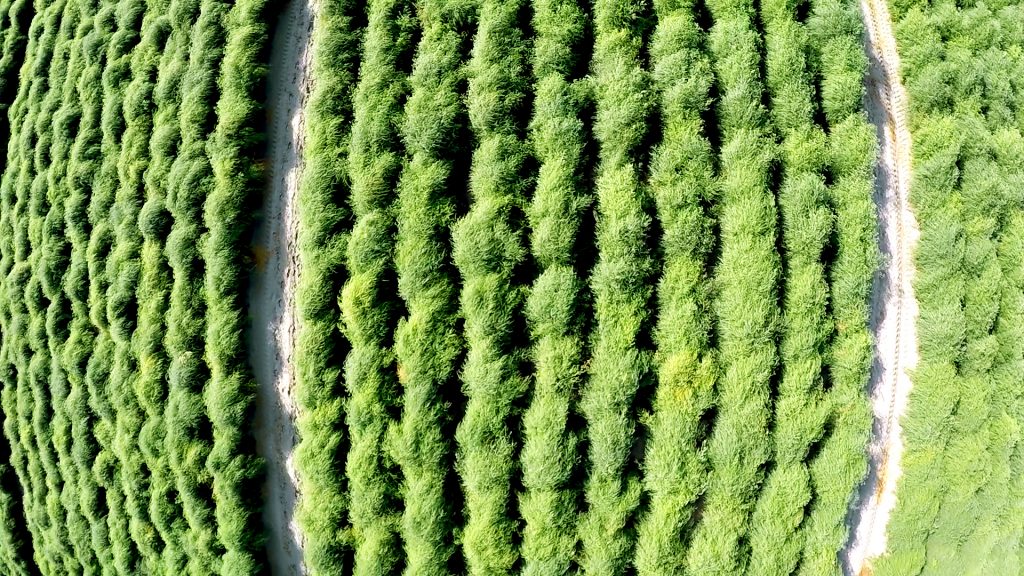
Cultivating asparagus requires respecting certain “keynotes”. The first step is to define the inter-row spacing, taking into account the existing equipment on the farm in order to avoid the need to invest in specific materials. Then, the rows must be of adequate length to optimise the investment in mulch, drip feed systems and labour for harvesting. For example, a hectare planted with 3.30m between rows represents 3 linear kilometres of ridge. This relates to the densification of asparagus (see box). The second keynote is the volume of land available to the roots; the larger the volume, the larger the root mass. A plant’s yield is, of course, proportional to its root mass. The third keynote is to ensure that after too much rain or even flooding in winter, plants do not suffer from the presence of standing water. A solution in this regard is to incorporate high ridge cropping (see Asparagus World No. 2).
Expanding inter-row gaps
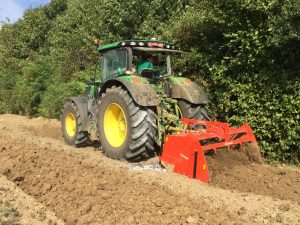
Besides respecting these keynotes, many other precautions must also be taken, starting with healthy, well-drained soil (see box). Soil preparation begins one year before planting. This is the time to sow green manure, like Ray-grass, rye, mustard, siletta, phacelia, etc., which will provide a significant mass of organic matter when incorporated into the soil. However, it also destroys perennials, meaning that the land must be free and drained at the end of the summer before planting. Modification of lime or magnesium content in the soil is carried out if necessary. Then, sub-soiling at a minimum depth of 80 cm is carried out across and in the direction of the rows. The supply of decomposed organic matter (dung, compost, etc.) is focused on the planting row. Then a spader passes along the row working at a depth of between 0.60 and 1.10m. The machine must work at very slow speeds in order to create a homogeneous, aerated, fertilised profile at all depths, which facilitates the descent of roots and thus limits the rise of the rootstock.
The orientation of the planting rows is another important element, with planting usually carried out in the direction of the slope, if one exists. The orientation of the rows can also be in the direction of the prevailing wind. However, with the widening of the distances between rows, not ridge-splitting at the end of the harvest and the grassing, the current trend is to plant across the wind as this strategy ensures better weeding efficiency. It also promotes the creation of a micro climate and avoids plastics films blowing away in high winds (see page ????).
Adapting to the current and future climate
Then comes the choice of the variety (or varieties) to plant. Asparagus World No. 1 devoted a long article to the presentation of varieties (“Varieties undergoing innovation”), while Asparagus World No. 2 contained an article on the choice of crowns (“How to achieve a good plantation”). Bear in mind, however, that the selected variety must meet market demands to ensure it can be successfully marketed. Choosing vigorous and disease-resistant varieties is vital given the new legislation focused on reducing the use of chemical crop protection. The calibre of the spears determines the crop’s profitability as it is the cost of producing a kilo of asparagus that essentially accounts for the cost of the harvest. Choose good calibres, as a 15g spear costs as much to harvest as a 45g spear, and is therefore 3 times cheaper per kilo to produce. Another key factor that now must be taken into account is how best to adapt to the current and future climatic conditions (see page 10).
Choosing the right soil
A healthy, deep and well-drained soil is conducive to good asparagus cultivation. It is sometimes necessary to dig ditches and lay drains to improve these soil properties. But this is not about having dry soil – access to water and irrigation is essential! The ideal soil has a pH of between 6 and 7, and maximum clay content of 15% to avoid the development of fibres and bitterness in the spears. The maximum salinity tolerated by asparagus is 10 grams per litre. Soil test samples are taken at depths of 10-40 cm and 40-80 cm.
Plant in deep soil
Without
With
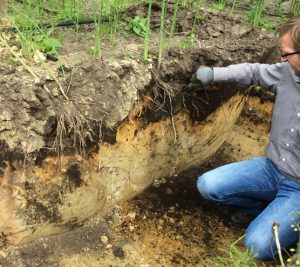
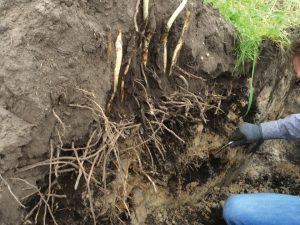
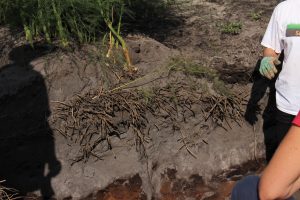
The use of spaders and deep soil planting is a fairly recent innovation. The goal is to get as much good soil as possible deep down and to oxygenate the soil as much as possible in order to attract as many roots as possible. Some equipment can allow the soil to be worked at depths of over a metre. But, it is imperative to adapt the depth at which the soil is worked depending on the location of the bed-rock so as to avoid bringing up stones, clay, and chalk, etc. Working in the summer or autumn, rather than in the spring, will allow you to work at great depths. Before the passage of the spader, de-compaction of the plot must be carried out across the field on the entire surface followed by a second passage only on the row. “The rise of poor soil to the surface is not a problem because good soil on the surface serves no other purpose than to confine the roots horizontally. At these depths, three times more earth is mixed than before. The soil that is going to be fetched up from this depth is generally less rich than the surface soil. A new soil must therefore be made with at least 3 times more organic matter and 3 times more phosphoric acid per hectare concentrated on the row than with spader-free methods,” said Christian Befve, a consultant specialising in asparagus.
Asparagus is phytotoxic for subsequent crops
Replanting a new crop of asparagus on the same plot can be risky. Indeed, the presence of the roots of old asparagus would be phytotoxic for the new crop. In addition, phytotoxicity increases from year to year after the cessation of cultivation, especially between the 2nd and 4th year. This effect of toxins emitted by old crowns on later crops was highlighted by Ludger Aldehoff, a German researcher at BDSE Brucshal, whose work was presented at the 2017 International Asparagus Congress in Potsdam, Germany. The practical advice is to “replant as early as the year after an asparagus crop is removed or wait at least ten years.” The decrease in the root volume and absorption potential of the plant is also to be taken into account in the management of fertiliser inputs on an asparagus bed replanted on asparagus. Observations of 17 varieties of asparagus in virgin soil or replanted show that they react differently. Cumulus, Tallems, Gijnlim and Vitalim are found to retain their root potential in the replanting condition, while the root potential of Steiniva, Bacchus, Fortems and Ramon is reduced by about 30%. The other varieties show a decrease of about 20%.
Over the last few years several pot-based fertilising trials were conducted to investigate different aspects of fertiliser application in asparagus. One of these trials was designed with seedlings in sandy soil with different nutritional contents.
Trial design
The trial contained several groups of 5 randomly positioned 5.5l pots, each group having just one nutrient withheld (all macro minerals and most microminerals). As base material sandy subsoil of an existing asparagus field was analysed and then fertilised according to the trial design.
Seedlings were produced in grow plates filled with upper sandy soil from the same field. Once seedlings had developed at least one stalk, two plants were transferred into each pot. Overhead irrigation occurred at -200hPa and an additional small amount of the macro minerals and boron was applied once in the summer. In autumn, the crowns were weighed, and the mineral status of the roots analysed. This was repeated over three consecutive years.
Results and discussion
The induced lack of nutrients was evident in the amount of crown mass in autumn. Some treatments did not differ from the control (e.g. without giving Mg or Mo), whereas other treatments showed significant reduction in root mass (e.g. without any fertiliser or P).
When a mineral was withheld from the plants, it translated to a reduced content in the root. For example, without giving nitrogen (“-N”), this group only contained 61 % of nitrogen compared to the average amount of all of the samples. The control group that received the whole spectrum of nutrients (“+all) was showing nearly 100% of each nutrient in the analysis. This indicates a close relationship between the soil and the root content, too – at least in the young stage of the asparagus plant.
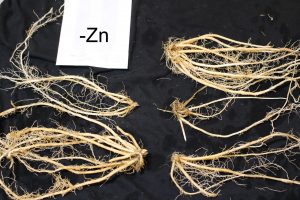
Zinc was the only exception. Although lack of this mineral caused a significant reduction in root mass there was only a small decrease in root content. There could be two explanations. Firstly, plants that lacked zinc in the soil showed the biggest differences between root mass in this trial (data not presented). Individual plants
either grew normally or had significantly reduced growth (picture plants with lack Zn). Secondly, the data showed all groups had an overall low zinc content compared to other trials and high amounts of data from crop fields in praxis.
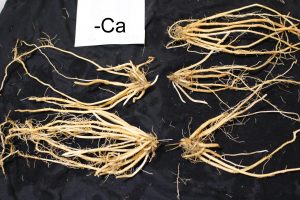
Additionally, calcium appears to be an especially important nutrient in asparagus. The relationship between fertilization and root content was closest in this trial with very young plants. Lack of calcium also caused a lack of many other minerals. Closer inspection of the roots revealed a reduction in fibrous roots which may decrease absorption of some other micronutrients (picture plants with lack Ca).
In conclusion
Although there were significant differences in the growth of the crowns and mineral content of the roots there were no visible symptoms in fern. Other trials with plugs or crown also showed similar results. This indicates that root tissue samples may be more useful for improving fertilisation strategies than fern.
The substantial differences in crown weight without visible differences in fern appearance in these various fertilisation strategies show that asparagus can have a significant “hidden hunger”. This also indicates that checking the nutrient status of asparagus roots during winter can be a useful tool for improving plant growth.
As other crops, asparagus shows some antagonism in the absorption of minerals. For example, manganese and calcium show that lack of one of these leads to better absorption of the other. This could be used to check the basic absorption potential of the immobile calcium in older plants.
Manage consent
To provide the best experiences, we use technologies such as cookies to store and/or access device information. Consenting to these technologies will allow us to process data such as browsing behavior or unique IDs on this site. Failure to consent or withdrawing consent may adversely affect certain features and functions.
Functional
Always active
Technical access or storage is strictly necessary for the legitimate interest purpose of enabling the use of a specific service explicitly requested by the subscriber or user, or for the sole purpose of carrying out the transmission of a communication over an electronic communications network.
Preferences
Technical access or storage is necessary for the legitimate interest purpose of storing preferences that are not requested by the subscriber or Internet user.
Statistics
Technical storage or access that is used exclusively for statistical purposes.Technical storage or access that is used exclusively for anonymous statistical purposes. Absent a subpoena, voluntary compliance from your internet service provider, or additional records from a third party, information stored or retrieved for this sole purpose generally cannot be used to identify you.
Marketing
Technical access or storage is necessary to create user profiles in order to send advertisements, or to track the user on a website or across websites with similar marketing purposes.