Archive

Understanding asparagus tip breakdown

There’s year-round demand for fresh green asparagus in the UK, however, the UK asparagus season is short and averages just 5,300 tons. What’s more, the local spears suffer from a relatively short shelf-life resulting in substantial waste at times of peak production, when it is difficult to manage asparagus yield and consumer demand. To meet the shortfall in supply, nearly 12,000 tons were imported by the UK in 2022, much coming by air freight from Peru and Mexico. Being able to prolong storage-life while maintaining the quality of UK-grown spears would have benefits including reducing food loss and the carbon footprint of imports. Currently, maintaining asparagus quality using cold storage alone is limited to one week, after which the spears have about a seven-day shelf-life in retail outlets. One of the factors limiting a longer life in cold storage is the onset of the postharvest physiological disorder tip breakdown. Also (erroneously) known as tip rot, this disorder occurs only sporadically during the shelf-life of chilled or cold stored spears; and often the first symptom is an unpleasant aroma. Unfortunately, this ‘off’ smell usually ends up causing the whole batch of asparagus to be discarded even if only some spears are affected by tip breakdown. While microbes appear to be off the hook, the underlying causes of tip breakdown remain to be discovered.

What is already known about tip breakdown

Initial investigation into tip breakdown suggests its origin is physiological (1), not pathological, developing in the rapidly dividing cells of the spear tip (2) during periods of hot weather. (High levels of tip breakdown across the UK in 2018 coincided with an unseasonably warm harvest season.) Fast growth and reduced levels of non-structural carbohydrates have also been linked to a higher incidence of tip breakdown (3), and it has been noted that warm adapted asparagus genotypes, such as ‘Jaleo’, have lower susceptibility than cold adapted ones, such as ‘Gijnlim’. Nevertheless, despite previous research, the underlying causes of tip breakdown have not yet been fully elucidated. Since 2020, researchers* in the UK have thus been on the hunt for the true culprits causing this disorder. Hailing from Cranfield University (Plant Science Laboratory and Environmental Analytical Facility) and Cardiff University (School of Biosciences), they are being led on this project by JGHC Ltd, which is linked to Cobrey Farms, where 40% of the UK’s asparagus is grown. Once the factors responsible for tip breakdown are identified, they hope to develop a decision support tool to identify pre-symptomatic tip breakdown spears.

‘Early California’ and ‘Aspalim’ spears under the microscope

Does fast growth or a slow rate of sugar transport play a key role in tip breakdown? To test these theories, the researchers chose two asparagus cultivars with low and high susceptibility to tip breakdown, the warm acclimated ‘Early California’ and cold acclimated ‘Aspalim’, respectively, and grew them under a cold controlled temperature regime (18/8°C, day/night) as well as a warm one (28/14°C). Harvested spears were cut to a length of 16 cm, packaged into shelf-life trays, wrapped in commercial film and stored at 7°C to assess the development of tip breakdown. Sampling took place on days 14 and 21. The top 4 cm of each spear sampled was snap frozen and underwent biochemical analysis of non-structural carbohydrates and plant growth regulators (PGRs), followed by statistical assessment.

More susceptible: spears that grow fast under hot conditions

‘Early California’ seemed to grow at a slower rate than ‘Aspalim’, though the growth rate for both was significantly lower under the cold compared to the warm conditions. What’s more, tip breakdown was not observed in any of the spears grown under cold conditions. Under the warm regime, however, the problem appeared in both and although overall the incidence was not that high, it was twice as much for ‘Aspalim’ than for ‘Early California’. Such results are in line with work by other researchers (4) who found that tip breakdown occurred under warm growing conditions.

Spears with tip breakdown had less sugar

As for sugar content, the UK researchers found that fructose concentrations were lower in spears with tip breakdown than in healthy spears. Further experiments will be needed to see whether the decreasing trend in sugar content towards the end of the harvest increases predisposition to tip breakdown, they said. Also of note is that the ‘Aspalim’ spears grown under cold conditions had an overall higher sugar content (fructose and glucose) at harvest than the warm-grown spears. These results are in line with previous studies where asparagus grown in the field under cooler, more favourable growing conditions resulted in spears with higher sugar content and better quality during storage (5), they said.

Tip breakdown and postharvest senescence are likely to be different processes

In prior studies (6), higher levels of the plant growth regulator abscisic acid (ABA) in asparagus tips was associated with lower quality spears. However, in the current research, after 14 days of cold storage, it was healthy spears, not those with tip breakdown, that had significantly higher concentrations of ABA. The researchers said it could therefore be hypothesised that tip breakdown disorder and postharvest senescence in asparagus are two independent processes which may be governed by different molecular pathways. A more detailed hormonal study, quantifying cytokinins and auxins, plus a transcriptomic analysis, would aid in fully explaining what role, if any, that plant growth regulators have in the incidence and development of postharvest tip breakdown in asparagus spears, they said.

Studying tip breakdown at molecular and cellular level

Does spear cell size have something to do with tip breakdown? Or could changes in gene expression have a key role? To explore these hypotheses, the researchers studied the cellular mechanisms of tip breakdown. Once more, ‘Aspalim’ and ‘Early California’ cultivars were chosen and were grown under cooler and warmer controlled conditions as described above. Harvested spears were stored at 7oC in the dark for 14 days and tip breakdown was assessed visually.

Cellular analysis appears to rule out cell size as a culprit

Among the reasons to suspect a role for cell size in tip breakdown is the link to faster spear growth. This led to the hypothesis that this may result in larger, weaker cells that are more susceptible to postharvest tip breakdown. However, an examination of cell sizes for ‘Aspalim’ (susceptible to tip breakdown) and ‘Early California’ (a variety in which it very rarely occurs) – at both higher and lower growth temperatures – did not reveal any significant differences in cell size.

RNA analysis a potent tool for studying gene expression, metabolic activity

RNA sequencing (RNAseq) was used to investigate any changes in the genes being switched on and off in asparagus spears affected by tip breakdown. Also known as transcriptome sequencing, RNAseq is a powerful method for revealing changes in metabolic pathways that may be involved in the development of postharvest disorders. The publication of the asparagus genome has greatly facilitated this approach.

On analysing spears after 14 days of shelf-life, many genes were found to be upregulated in those showing tip breakdown compared to healthy spears that had been grown and stored under the same conditions. The authors said that this was “perhaps surprising” and suggests the process of tip breakdown is an active, not passive one. This might indicate that tip breakdown is not due to necrotic cell death (such as excessive heat might cause), although further work is needed to confirm this. Preliminary analysis of the types of genes that change in expression during tip breakdown revealed a high proportion of genes involved in reprogramming activities in the cell and may therefore be involved in regulating the progression of tip breakdown. Several metabolism-related genes were also altered in expression, including transferases, oxidoreductases and O-methyltransferases. “Understanding the role of these genes may help us identify the mechanisms controlling the tip breakdown. This could lead to the discovery of pre- or postharvest treatments or provide breeding targets to improve resilience to tip breakdown in more susceptible asparagus varieties,” the researchers said.

*Principal Investigators: John Chinn (JGHC Ltd – overall lead), Dr MariCarmem Alamar (Cranfield University), Prof Hilary Rogers (Cardiff University)

1. Beever et al., 1985; Carpenter et al., 1996
2. Jermyn et al., 1999
3. Lill et al., 1994; Hurst et al., 1996; Lill et al., 1996; Lill and Borst, 2001
4. Lill et al. 1996
5. Anastasiadi et al., 2020 doi: 10.1016/j.postharvbio.2019.111017
6. Anastasiadi et al., 2022 doi: 10.1016/j.postharvbio.2022.111892
7. Lallu et al., 2000 doi: 10.1080/01140671.2000.9514119

Find out more:

https://www.cranfield.ac.uk/people/dr-m-carmen-alamar-498015

https://www.cardiff.ac.uk/people/view/81265-rogers-hilary
https://www.cranfield.ac.uk/research-projects/asparagus-tip

Innovation and experimentation define Japan’s asparagus sector

Asparagus was first introduced to Japan by the Dutch during the Edo Period (1603-1868), but as with many exotic plants, it was initially grown as an ornamental rather than for eating. In the early 20th century, cultivation of white asparagus began in Hokkaido, mainly for export to the European market, although it was also served at a select few high-end French restaurants in Japan. It was not until the early 1970s that asparagus was widely cultivated for domestic consumption, with the green type dominating. Satoru Motoki of Meiji University treated attendees at the IAS 2022 conference in Cordoba (Spain) last June to an engaging talk about the Japanese asparagus sector and provided insights into the many research projects underway “to achieve high quality at each stage of asparagus production, marketing and consumption”. Asparagus has become one of the most popular vegetables in Japan and is widely cultivated across various regions of the country with green, white, purple and pink spears. While green asparagus remains the most popular among Japanese consumers, a recent trend towards diversification in dietary style has emerged, leading to an increase in the popularity of white asparagus. This trend has also driven a rise in cultivation area dedicated to purple and pink asparagus. The marketing of asparagus in Japan has become diverse in recent years, with consumers seeking uniqueness and variety. This has resulted in the marketing of different forms and sizes and the introduction of new kinds of asparagus, such as mini-asparagus, and three-colour sets of asparagus.

Rise of pink asparagus

The Japanese employ the different coloured asparagus in a variety of ways. Green asparagus is the most popular for eating in its fresh raw form. Besides being marketed in different colours, the asparagus spears also come in various lengths and shapes. As Western cuisine has become increasingly popular in recent decades, Japanese people have been drawn to white asparagus as something new and tasty to try. Similarly, the cultivation of purple asparagus for eating in its fresh form has also begun to increase. And it’s not only taste that counts in Japan. Aesthetics also plays a key role in the country’s cooking, which is part of the appeal of innovative pink asparagus, which has been gaining attention in recent time as consumers attach importance to uniqueness. Pink asparagus is prepared by shielding purple asparagus from light to make white asparagus, and subsequently applying light to it until it takes on a pink colouration.

New techniques emerging

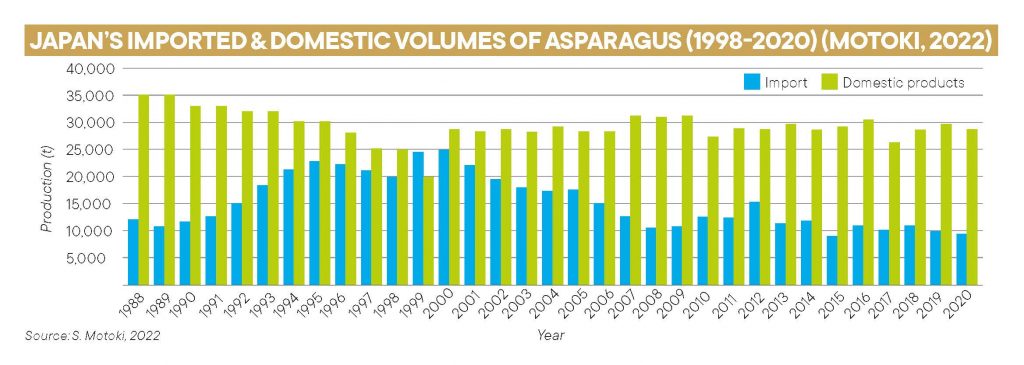
Meanwhile, domestic output has remained relatively unchanged for the past 26 years, averaging around 30,000 tons annually, ranking Japan 8th at the global level. Asparagus is grown in different parts of Japan to harness the full potential of its various climates. Hokkaido Prefecture is Japan’s largest asparagus producing region, where around 3,300 tons is grown on average each year. The other growing regions are Saga Prefecture (2,900 tons), Kumamoto Prefecture (2,100 tons) and Nagano Prefecture (2,100 tons) (Japanese Ministry of Agriculture, 2022). The climate in these prefectures ranges from subarctic to subtropical, allowing for the production of asparagus in a variety of cropping types.

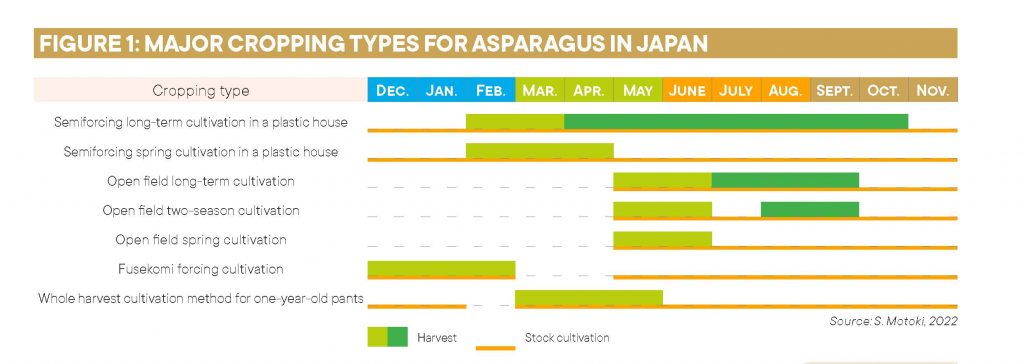
Hokkaido Prefecture has a climate similar to that prevailing in the northern part of the United States and Canada and in Northern Europe (Germany, the Netherlands, Poland, etc.), while Saga Prefecture and Kumamoto Prefecture have a climate resembling that along the western coast of the United States. Due to its high soil adaptability, asparagus is considered an excellent crop for growing in Japan’s upland fields that have been converted from paddy fields. To address the lack of off-season product, Japanese farmers have developed new techniques for year-round asparagus production. One technique that is spreading quickly is called fusekomi forcing culture, while another innovative method is the whole harvest cultivation method for one-year-old plants, which enables the cultivation of asparagus in larger quantities in a shorter period of time.

Fusekomi forcing culture

Fusekomi forcing culture is a technique employed to be able to harvest asparagus during winter. Unique to Japan, it plays a key role in the country’s asparagus production in the winter and early spring (December to March).


“Fusekomi forcing culture is a technique employed to be able to harvest asparagus during winter. Unique to Japan, production via this method is performed in part by using dug rootstocks,” said Motoki, and it plays a key role in the country’s asparagus production in the winter and early spring (December to March). The technique involves cultivating the asparagus rootstock for a short period of time (about 1-2 years) in an open field, digging it up in the autumn and planting it into beds arranged within a greenhouse, followed by warming until the spears are harvested. However, as Motoki pointed out, this approach “requires digging up the rootstock, which means that there is a need for specific farming machines and special skills. It is also necessary to have a special facility such as greenhouse in which the dug-up rootstock can be planted.”

Whole harvest cultivation method for one-year-old plants

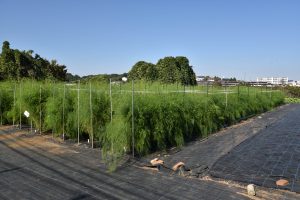
Whole harvest cultivation method for one-year-old plants. Open field culture summer of the previous year.


A simpler technique developed by Motoki and colleagues is the whole harvest cultivation method for one-year-old plants. One benefit offered by this method is its brevity, with the cultivation process completed within one year of planting the seedlings. Conventional cultivation techniques require several years before a stable yield can be established. “Another advantage of this technique is that it involves lower risk of disease and pest damage. Cultivation from thfe same plants over many years results in increased likelihood of such afflictions occurring each year,” said Motoki. What’s more, the whole harvest cultivation method for one-year-old plants can even be employed by beginners without too much training necessary. Launched in 2016, and the first of its kind in the world, this technique is currently spreading rapidly across Japan thanks to the combined efforts of the government, Japanese agricultural cooperatives (Zen-Noh) and private enterprises. The method has been the focus of multiple TV programmes and newspaper and magazine articles that have attracted growing attention. In the academic realm, since 2020, researchers at Meiji University have been studying cultivars/lines selection using the whole harvest cultivation method for one-year-old plants in cooperation with Walker Brothers, Inc. of the United States.

Reusing plant parts

Researchers in Japan have also been exploring ways to make production more sustainable and resource-efficient by employing the parts of the asparagus plant that are normally discarded, such as its cladophylls. Despite Japan’s production of cladophylls totalling approximately 130,000 tons per year, only a small fraction gets utilised, with the rest either going to waste or returned to the field. Studies have shown that the beneficial component rutin is most abundant in the cladophylls and in the storage root of asparagus plants, while another valuable component, protodioscin, is most abundant in the buds and underground parts. Therefore, all of these parts offer great potential as rich sources of nutrition. Were storage roots to be left in the ground, besides making use of their valuable properties, another upside would be that it avoids the need to dig them up and saves labour. However, it has been found that if the storage root remains in the soil at the time of replanting, a growth inhibitor leaks out of it. “One way to supress this growth-inhibitory activity is with the use of active carbon,” said Motoki. So there is certainly great potential in utilising parts such as cladophylls and storage roots as it offers the potential to reduce waste, provide greater nutrition and save labour.

As long as the current levels of demand for asparagus hold in Japan, it is likely that new techniques will continue to be developed for growing this healthy and delicious vegetable and new varieties proposed to attract an even wider customer base.

[VIDEOS] How to prepare the cultivation of asparagus

1/ Pulverising destroys and removes the plant mass (foliage + weeds) accumulated during the autumn. Pulverising is either lateral (off-set) or frontal. Vegetation can be directed into the inter-row.

2/ Spreading the ridges (haulm extraction) allows the row to be cleaned for green asparagus or the mound for white asparagus. The burning of green asparagus haulm is also practiced.

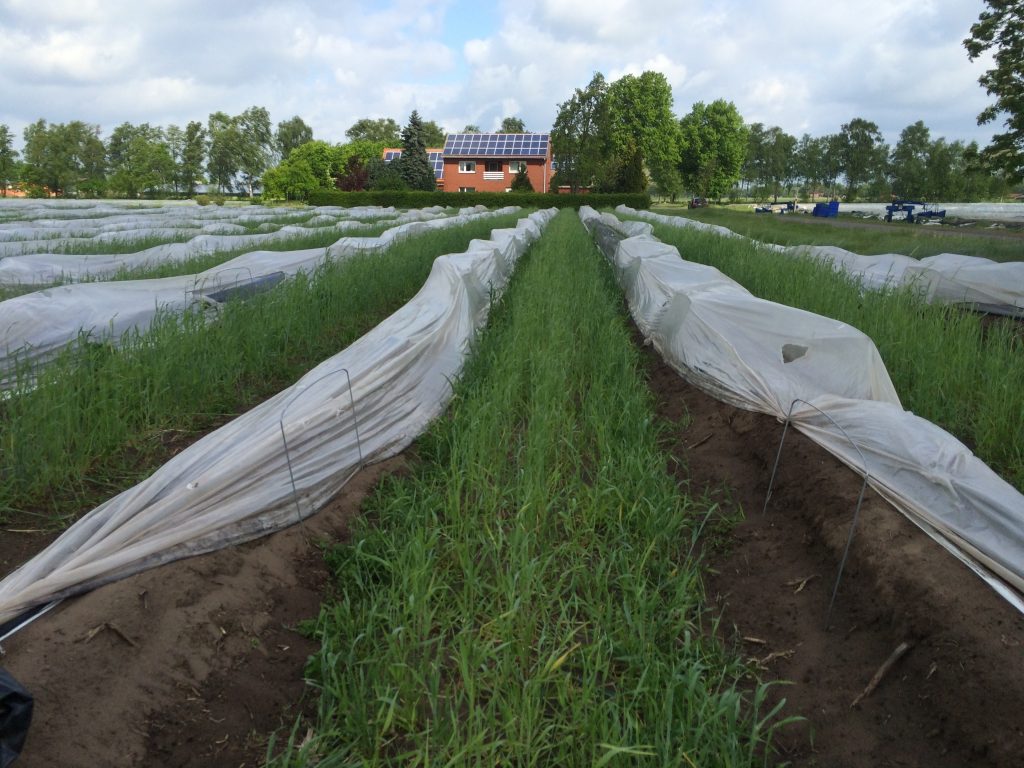
3/ After the addition of organic matter on the row, the work of the new season begins with the bed-forming and installation of plastic mulch covers, then the installation of the hoops for the maintenance of mini-tunnels (early culture) and the filling of the pocket mulch (for wind resistance).


6 ways to counter climate change

1/ Change the varietal range

When establishing an asparagus plantation, it is necessary to reflect on the choice of varieties, as well as on the setting of the asparagus and its management, with particular attention to irrigation. The varieties are characterised by their different cold needs during their vegetative rest period. Colder areas or temperate climates, such as northern European countries (e.g. Germany, the Netherlands, France) and those in North America (US, Canada) require 1,000 hours of cold (under 7oC), while intermediate areas, i.e. with a Mediterranean climate (e.g. Spain, Italy, Middle East, California, Mexico, Australia) need between 500 and 600 hours, and hot zones or warm areas (e.g. Peru, Philippines) have no need for cold at all. It is likely that global warming in temperate zones will alter the current varietal range in Northern Europe and North America. The varieties chosen will be less demanding of cold in order to facilitate their annual storage and ensure an economically satisfactory lifespan. For green varieties in particular, an increasingly important criteria will be tip closure rather than flowering under the effects of heat. Improving the quality of the spear is currently a major goal for all breeders.

2/ High ridges to limit excess water

Even if average temperatures are likely to increase, the overall rainfall of some areas, especially in temperate climates, should remain stable. However, the precipitation regime could alter, with very heavy rainfall accumulations in autumn and winter. This consideration is driving interest in planting on ridges (see box).

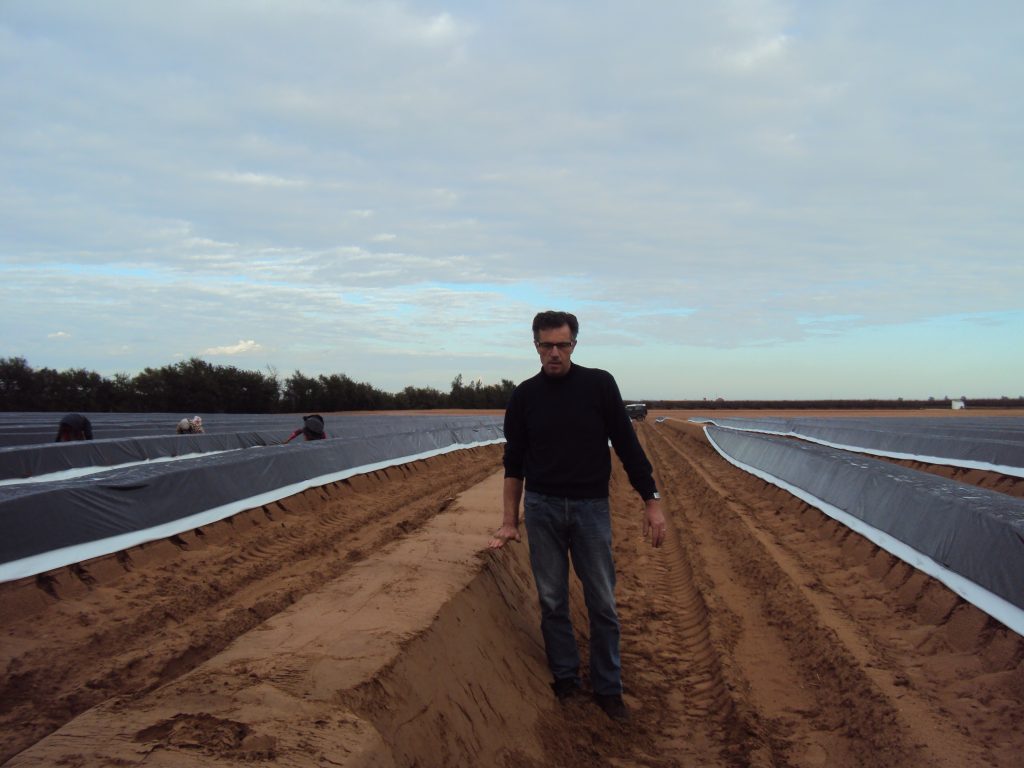
Ridge cropping is used to address water accumulation caused by very heavy rainfall, which could become increasingly more frequent. With this technique, planting is conducted at between 25 and 30 cm above ground level. Ridge cropping also allows natural drainage. Asparagus crowns are always found outside of the wet zone during wet and rainy winters or springs (see Asparagus World n°2/2020). A higher bed also results in more exposure, which leads to faster drying. Localised irrigation is a must in order to concentrate moisture at the foot of the plants. With this method, about 10% more input will be required on the row and per hectare. Another consideration is planting depth. Reducing depth also lowers the risks associated with excess moisture (asphyxiation, root diseases, etc.). Precocity can improve with faster soil warming: 1 cm less in planting depth = 1 day more precocity.

3/ Optimise Irrigation

Irrigation provides new roots with moisture at the plateau level during harvest; this is mainly for green asparagus, but also for white. Each new spear produces 1 to 3 roots at its base. Close monitoring of root development is required to ensure constant humidity and allow the right humidity at depth. If these new roots are in drought, this will result in a lack of calibre, wrinkled spears, and loss of tip quality; in very harsh drought conditions, the spear can become completely dehydrated. On the other hand, supplying water ensures better calibres and yields and less flowering of the tip.

4/ Culture Management

Culture Management

Sprinkling and shading can limit flowering and improve the quality of green asparagus. The spear contains more than 90% water and it is difficult to protect the skin from the aggression of the sun and wind and from too low hygrometry levels. In the greenhouse, two or three rounds of sprinkling during the hot hours maintains a humidity of above 80%, which is required to harvest a spear that is turgescent, un-wrinkled and of good calibre. Supplementing the moisture supply with sprinkling also lowers the ambient temperature.

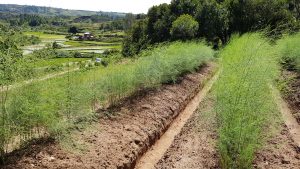
Tall grass between the ridges creates a micro-climate, which reduces the risk of frosts and regulates the temperature by +1.5 degrees. The planting of long grass also reduces the effects of wind and prevents mulch from being blown away during storms.

5/ Night harvesting

Harvesting at night protects asparagus from the daytime effects of the sun and dehydration. Asparagus harvested at night is colder, whiter and less fibrous. Professionals practising this technique find that spears harvested at night are 10oC cooler than those harvested in the middle of the day. The cooling and storage process is facilitated during calibration and packaging. Asparagus harvested at night is also of better quality: it is straight, less fibrous, and has better calibre. Night harvesting often takes place in calm weather to avoid possible damage caused by the often dry wind to green asparagus, which bends. Indeed, wind affects the skin on the exposed side of the asparagus, and this invisible wound results in curvature.

6/ Put the asparagus under cover

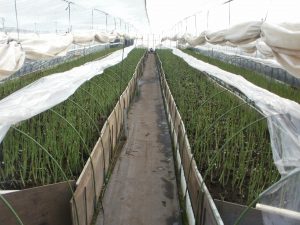
Like many other crops that suffer from increasingly frequent climatic “accidents” (hail, high winds, intense rainfall, etc.), planting asparagus in greenhouses is an increasingly feasible practice. At the beginning of cultivation, greenhouses can regulate climatic jolts and bring more precocity, which often equates to better selling prices. The gain depends on the structure (greenhouse, plastic) and the volume of the greenhouse (tunnel, multi-span).

Put the asparagus under cover

Mini-tunnels (Engels type) provide three weeks of precocity compared to the open field and 20 to 30% more yield per hectare.

Plastic tunnels, 5 to 9 m wide, provide 4 to 5 weeks of precocity and 30 to 50% more yield.

Multi-span tunnels provide a gain of 5 to 7 weeks of precocity with 40 to 70% more yield per hectare.

Yields are improved by the favourable conditions when growing in spring, but also by the longer vegetative period in the spring and autumn which increases the accumulation of reserves in the crown. Greenhouses also improve working conditions, making the harvest more comfortable and efficient thanks to the regularity and density of the spears to be harvested.

Today’s new horticultural greenhouses equipped with photovoltaic panels mean that we can enjoy the benefits of sheltered production with a limited financial outlay. Investments in greenhouse structure are supported by energy-producing partners. However, in this type of greenhouse, the percentage of shade can be very important and become a limiting factor in terms of the precocity, productivity and longevity of the crop. Hence, the design of the sheltering structure is also crucial to its success.

Read Also: The major challenges of climate change  

Asparagus to conquer Africa

Asparagus for processing, canning and freezing is subject to different production constraints from asparagus for the fresh market. Two parameters are decisive for this type of culture. The availability of deep, sandy land with good water resources is a primary agronomic parameter. The availability of labour at the lowest possible cost is a second determining economic criterion. The history of asparagus production is marked by the industry’s migrations driven by changing labour costs and availability, while at the same time maintaining the same distribution markets in North America and Europe. Canned or frozen asparagus left France in the mid-1980s, when Spain entered the Common Market and was able to offer lower labour costs and receive subsidies.


Motivated by low labour costs

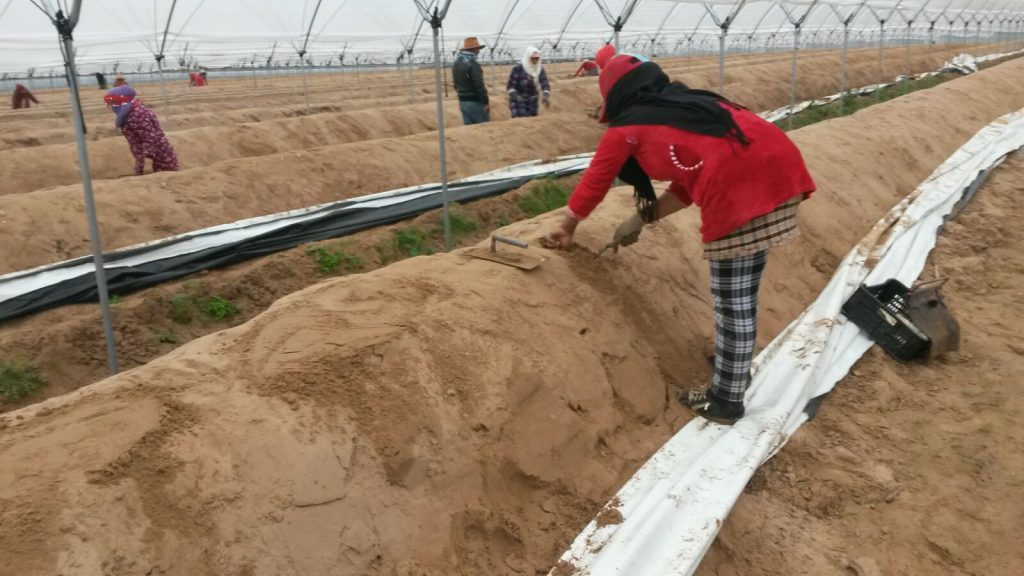
In 1995, the Spanish asparagus industrialists set up in Peru attracted by the availability, cost and efficiency of Peruvian workers. This explains why there is no longer an asparagus canning industry in Europe with the exception of the PGI Asparagus of Navarra. Faced with the rising costs and scarcity of Peruvian labour in around 2005, some of the companies decided to set up in China. But China’s economic and industrial boom over the past decade has seen a steady flow of workers leaving the countryside to be absorbed by the construction and industrial sectors. Now, new asparagus manufacturers or the same companies that were in Spain, Peru and China are setting up in Africa. These players have mainly chosen Namibia, Ethiopia and Madagascar for various reasons. Each of these African countries already has between 100 and 400 hectares in place in less than 5 years with a projected 400 to 600 hectares more in the future. The primary driving force for these new implantations is the low labour costs available. Thus, the average daily cost including expenses is estimated at US$3 per worker in Madagascar and Ethiopia and $5 in Namibia, compared with $10 in China, $20 in Peru and $60 in Spain. The availability of a large number of workers is also critical to the decision.


Need for mulch in asparagus production

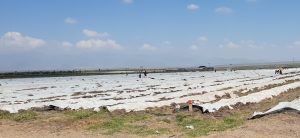
Another asset the African continent has is access to good, deep, virgin land at reasonable prices. Prices are about $5,000 to $10,000/ha. However, these are fallow lands that require a lot of work to grow crops. While Peru enjoys very stable temperatures throughout the year (between 12 and 30 degrees) these African countries, in contrast, have much greater climatic ranges, going from 5 to 30 degrees Celsius in Madagascar, up to 35 degrees Celsius in Namibia, and up to 40 degrees Celsius in Ethiopia. The winter period does not allow production, and summer temperatures are too high (especially in Ethiopia and Namibia), slowing or stopping production. It is therefore obligatory to use mulch for warming and to ensure the production of asparagus in the spring and autumn. Even if asparagus crops are at altitude (between 1,000 and 2,000 m) in order to escape the excessively high summer temperatures, the soil must be refreshed with irrigation water. Water is available in sufficient quantity and quality from dams or deep boreholes. On the other hand, the rains are irregular and difficult for the local meteorological services to predict.  For Madagascar and Namibia, located in the Southern Hemisphere, the period of precipitation is between November and March. For Ethiopia, in the Northern Hemisphere, it rains the most between June and September. These rains can interrupt water stress and complicate harvesting and health protection. Without special measures, these new zones can only produce 3 to 5 months a year, which impacts heavily on the returns on the very high investment costs for asparagus fields.


Essential technical adaptations

With the benefits, however, come certain constraints and difficulties. Indeed, while the workforce is often plentiful, skill and motivation levels may be low or entirely absent. For many workers, asparagus is a totally unknown crop, which requires time for training and learning. Careful management is crucial if the expected economic gains are to be achieved. Even if local, this workforce is often very scattered, with no means of transport. The company must therefore implement transport logistics to move its workers and sometimes even house them, which in turn requires constructing housing. Untouched asparagus-friendly land may also be land which has been poorly cultivated previously. The parcels sometimes require levelling work as well as the construction of basic infrastructure (roads, wells, etc.) to make production possible. These “new Eldorados” also require technical adaptations and new expertise in cultivation to adapt to climatic conditions that are different from areas already cultivated in the world. In

In Madagascar asparagus is grown by a large number of small farmers.

some cases, climate data is deficient or non-existent. These new destinations for asparagus have no nearby bases for the supply of inputs. It is therefore necessary to import all means of production, storage and packaging, which involves time delays that sometimes require order growing equipment 7 to 10 months in advance. The resulting costs can very quickly reduce or even wipe out the expected economic gains. In addition to the very high cost of air cargo, between $1.5 and $2/kg, it is also important to take into account the remoteness of international airports, the average regularity of domestic flights, the few tarmac roads, and the numerous tracks; remoteness of ports for sea freight (1 to 2 day’s transport). Also, it is almost impossible to export fresh asparagus. In order to get the best value from the product, it must be transformed either by appertisation (canning) or, more riskily, by freezing. Both cases require very costly agro-industrial equipment.


Danper

Danper’s Director, Jorge Aranguri

Three markets for Peruvian asparagus

Peru-based Danper has been processing white asparagus for canning since 1994. In its early days, the company sourced from the producers of its own region. It was not until 2002, after acquiring some land, that it began producing and marketing white asparagus for fresh export markets. “Fresh white asparagus has to be of a high quality level and there must be total control of the production chain until shipping,” said Danper’s director Jorge Aranguri. Then, in 2004, the company invested in its own freezing unit, mainly to freeze green asparagus. Today Danper has over 1,100 hectares of its own asparagus, with an additional 1,000 hectares belonging to various partner producers. The average yield of asparagus is around 10 tons/ha. Asparagus production takes place all year round, which means three markets can be supplied: fresh, canned, and frozen, according to the different qualities of asparagus and market prices. “Our peak production of white asparagus for the fresh market runs from August to December,” said Aranguri. For this market, calibres above 14 mm are preferred. For canning, calibres of 9 to 12 mm after peeling are desirable. “We have different opportunities due to the different quality requirements. This allows us to make the best use of all types of asparagus and to adjust to the markets,” said Aranguri.


White asparagus – A hot water treatment to limit postharvest pink discolouration ?


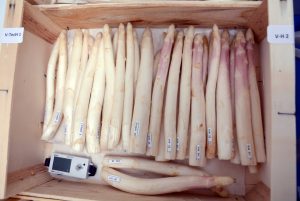
Spraying 58° C/45 sec                  Hydrocooling

Spraying 58° C/90 sec              Control


After harvest, white asparagus undergoes physiological and biochemical changes that rapidly lead to a loss of quality. The main effects are higher fibrosity, water loss, and the development of a pink discolouration due to an increased synthesis of anthocyanins. The pink discolouration is a criterion that depreciates product quality and, depending on the distribution channel, may entail downgrading to a lower class, with a possible price loss of 5 to 15% for the grower, according to a survey by CTIFL (2017).

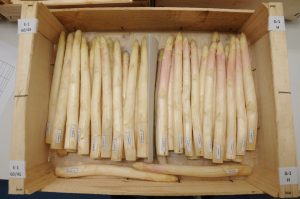
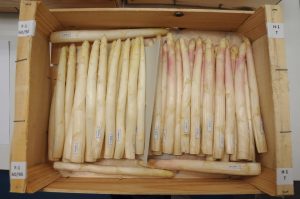
Aspect of the spears of the variety Vitalim after 24 hours (D+1) in point-of-sale conditions for the treatments TecH = immersion in hot water at 55° C/2min = hydrocooling by spraying at 2°C/20 min (left) and H = hydrocooling by spraying at 2° C/20 min (right).

Spears immersed in hot water show practically no pink discolouration

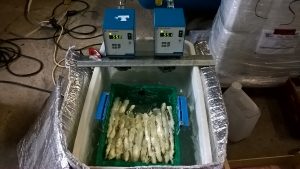
Several studies have shown the advantage of rapidly lowering the temperature of asparagus with cold (6-8°C) or iced water by spraying or immersion (hydrocooling) in order to delay the appearance of this pink tint. In an article published in Infos Ctifl nr. 353 (July 2019), Patricia Sanvicente, Sophie Annibal and Valérie Mérendet write that « rapid cooling after harvest is currently the most widely used technique in France ». Based on literature (see boxed text), new studies were conducted by CTIFL in 2017 and 2018 in order to assess the interest of hot water treatments applied to white asparagus varieties. Thus, in 2017, the hot water treatment of the varieties Darlise (little susceptible to pink discolouration) and Vitalim (highly susceptible) was applied by immersion of the spears, followed or not by a hydrocooling treatment using spraying. The core temperature of the spears during the trials was maximum 47-50°C for immersion treatments at 55 °C. The spears returned to their initial temperature after 30 minutes at room temperature (18 °C) or were cooled to the core at 3° C in less than an hour if the hot water treatment was followed by hydrocooling (2 °C/20 min). In the trials, the spears immersed in hot water showed practically no pink discolouration, whereas the control spears, hydrocooled and immersed in water at room temperature, took on a pink tint after 5 to 6 hours in simulated point-of-sale conditions, with the discolouration further evolving over the three days of exposure to light (Figure 1). As the authors observe, « pink discolouration of white asparagus is strongly delayed by immersion in water at 55 °C ».

Towards a large-scale implementation?

In the experiments, techniques combining a hot water treatment applied by dipping or spraying within 3 or 4 hours after harvest, followed by hydrocooling or immersion in temperate water (Mérendet & Annibal 2015) offer the best compromise in order to limit pink discolouration and water loss. Using this method, the core temperature of asparagus decreases rapidly and the spears are quickly cooled down before storage. As the authors of the article state, « Before those techniques can be applied on a large scale, the growers will have to confirm the feasibility of introducing the various steps into the organisation of the packing stations, as well as the positioning of the existing equipment. ». If one of the two proposed methods is deemed to offer perspectives for implementation, the advantage of a hot water treatment will have to be validated at the grower’s facility using existing or specifically adapted equipment.


Why does white asparagus turn pink?

Anthocyanins are pigments that filter light; they accumulate in plant tissue in response to the action, joint or separate, of various environmental factors, such as light (Leyva 1995), low temperatures (Christie et al. 1994, Dixon 1995) or nutritional stress, e.g. a phosphorus deficiency (Kakegawa et al., 1995). As a reaction to those factors, the activity of phenylalanine ammonia-lyase (PAL), a key enzyme in the pathway of anthocyanin biosynthesis, is stimulated (Dixon 1995, Flores et al, 2005). In the case of white asparagus, research indicates that there is an increase in the activity of PAL, and therefore enhanced postharvest anthocyanin synthesis, after an initial stimulation by light, independently of temperature and lighting conditions during storage, thus causing the appearance of a pink tint (Siomos et al. 1994, Siomos et al. 1995a, Siomos et al. 1995b; Siomos et al. 2000; Siomos et al. 2001, Flores et al. 2005).


Existing data

Research in the Netherlands showed that a hot water treatment (50 °C/2 min) limits the appearance of a pink tint in white asparagus (Poll 1998). More recently, Siomos and his team (2005, 2010) confirmed that, in experimental conditions, heat treatment by immersion in hot water is efficient in preserving the white colour of asparagus spears. A treatment by immersion in hot water at 55 °C for 2 to 3 minutes, followed by an immersion in water at room temperature for 10 minutes, is efficient against pink discolouration in the varieties Atlas and Dariana. Similar results were obtained in preliminary research conducted by CTIFL in 2015 on the variety Grolim (Mérendet & Annibal 2015).


Spraying or immersion?

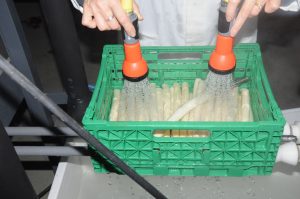
Hot water treatment by spraying

Hot water treatment by immersion.

In 2018, hot water spraying was tested by CTIFL in order to determine if this method was as efficient as immersion in limiting the appearance of a pink tint in asparagus. The technique was assessed using several combinations of temperature/duration, systematically followed by hydrocooling through immersion (1 °C/5 min). In the spraying treatment, asparagus spears in plastic crates were placed under two spraying nozzles supplied with water heated and regulated at the desired temperature. As in the « immersion » trials, the spears in the « control » batch and the « hydrocooled » spears took on a faint pink hue within a few hours of their transfer into point-of-sale conditions. After 24 hours in said conditions, 90 to 100 % of the spears showed a fairly marked pink discolouration (colour index 70 to 80). However, spraying with hot water 3 to 4 hours after harvest, followed by hydrocooling through immersion, limited the appearance of a pink tint. The best results for each tested treatment temperature were obtained with the longest exposure. On the other hand, a heat treatment 24 hours after harvest was less efficient than a treatment within 3 or 4 hours after harvest. In the experimental conditions, the temperature/duration combination of 58 °C/90 sec was the most efficient to avoid pink discolouration of the spears. Unlike the results of the « immersion » trials, which showed a very slight dehydration of the spears (0,1 to 0,2 %), the heat treatments using spraying did not entail any weight loss. On the contrary, the spears gained an average of 2 % of their initial mass by absorbing water during the treatment.


Night-harvesting asparagus in Spain

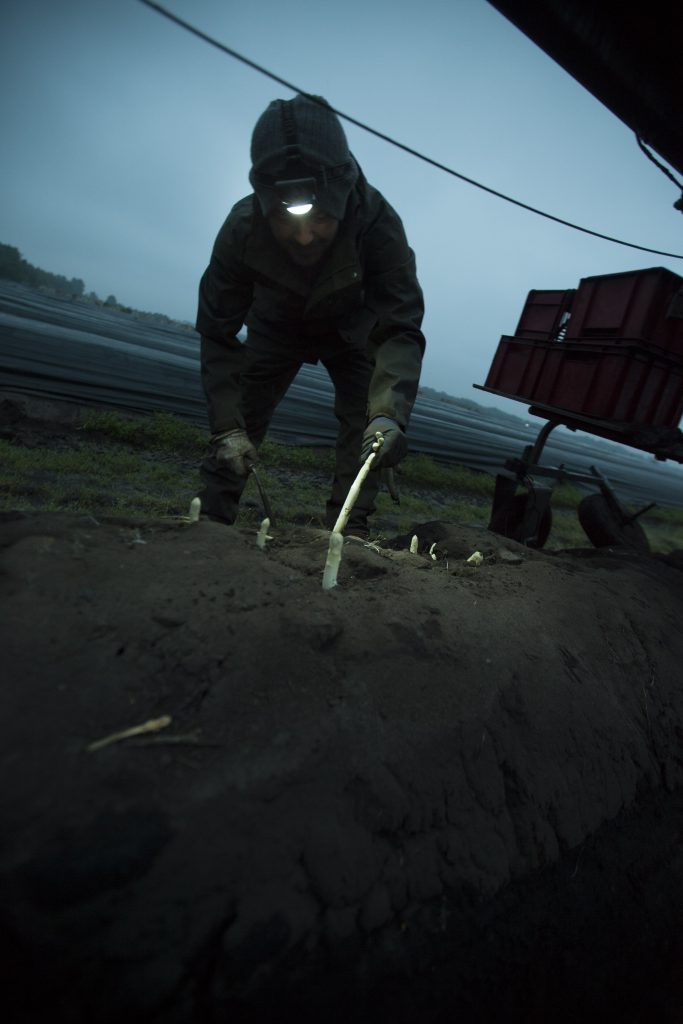
There are several reasons for harvesting asparagus at night. One of the main ones is that it assists pickers – a key consideration given that Spain has very few machines to assist in harvesting. Our Andalusian labourers find that the plastic is soft in daytime temperatures and doesn’t handle well. Also, as asparagus harvesting is a laborious task, the workers feel less fatigue at night, which allows them to work at a better pace. For night vision purposes, they use headlamps. However, handling asparagus is a delicate endeavour that requires care and precision to ensure the quality and integrity of the product is maintained throughout the production process. This is why we always employ expert and reliable pickers. The harvesting usually starts at 10 pm and ends between 4 and 7 in the morning, depending on the amount of asparagus.

Another benefit of harvesting asparagus at night concerns the quality of the product. Picking the plant at this time allows the asparagus to come out cooler and whiter as it avoids contact with sunlight. This in turn ensures a better appearance and taste – key considerations for retailers and consumers alike. The third major factor relates to operational organisation. When all of day’s production is carried out early in the morning, you can start organising the storage house very early and begin processing the production for sale and delivery. This ensures the product arrives on the market as fresh as possible. So, we feel there are more advantages than disadvantages relating to night collection. We should never forget, however, that the pickers’ expertise and skills are at the heart of the process.

Harvesting asparagus at night

The night harvest would seem to be a complex operation. Yet the producers who have tried out the experiment in different countries have all done so successfully. Today, it represents a trend that is spreading in several parts of the world.

Natural temperature lowering

Asparagus harvested in the night can be 3 to 8 degrees cooler than asparagus harvested during the day.

The goal of the night harvest is to optimise conditions for the preservation of asparagus during and after collection. It avoids the light (colouring of the tips), heat, low humidity, and wind that often lead to the rapid dehydration of asparagus. Depending on how the work site is set up, the process starts either at the end of the day or in the middle of the night. In both cases, the aim is to have the bulk of the harvest completed by between 6 and 8 am in order to start washing and packing early, and, above all, so as to know the precise quantity and quality of the asparagus to be marketed. The night harvest takes advantage of the natural lowering of the temperature. Asparagus harvested in this way can be 3 to 8 degrees cooler than asparagus harvested during the day. This makes cooling easier and improves the preservation and quality of the product. The night harvest hinders the bud growth that appears under plastic after the day’s temperature peak. As a result, the percentage of burnt spears is lower. Asparagus harvested at night is whiter. Its development in the mound happens during the day, and the tip appears later. Once harvested, the spears are no longer exposed to light.

Knowing the volume allows better marketing

Nocturnal conditions also provide higher relative humidity, which limits dehydration that can result in pinking. Moreover, there is little or no wind interference when handling the plastic covers. As the reports show, most teams of pickers enjoy working in cooler and less demanding conditions. The night harvest also optimises the management of packaging, which is particularly important as once sorting teams start work, they have to handle large volumes. The station manager can also adapt the number of operators to the volume of the night’s harvest as the available volumes are known very early in the day. This improved knowledge of the offer makes it possible to make the most of the daily harvest.

5 benefits of the night harvest

– colder asparagus: between 3 and 8 degrees less than during the day harvest

– better quality, resulting especially from fewer burnt tips

– no pinkness due to darkness, higher relative humidity and often less wind

– knowledge of harvest volume facilitates organisation of sorting work

– better knowledge of the offer and better daily valuation

Seasonal Spanish workers brought night harvesting to France.

Night picking revolutionises harvest in Alsace

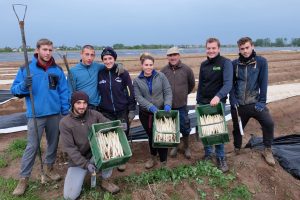
As soon as they get out of the van, the small group disperses into the plot. It could be 7:00 in the morning, but it’s actually 7.00 in the evening. This is the usual time when the working “day” begins. Emmanuel Dollinger, manager of Dollinger Farm, welcomes his first group of eight Spanish seasonal workers for the 2018 season. The farm has completely overturned its harvesting routine, which used to start at 6 am and end at noon, or sometimes later. “Last year it was very hot. After ten days, Juan, the team leader suggested starting work at 7 pm or 7:30 pm, telling me that at night, you don’t suffer from the heat, and that you are more efficient and quieter,” recalls Dollinger. At first, the farm manager was reluctant but was eventually persuaded to give it a try using headlamps. The test results provided such positive results that within a fortnight, the group had become familiar with the single 10-hectare plot. Today, Dollinger is completely free to manage his time and harvest according to the weather, “as long as I have the maximum amount of asparagus waiting for me in the morning in 6 kg crates. Juan knows his stuff. He is 47 years old and has twenty-eight years of experience in asparagus.” For Dollinger, the 2018 campaign represented a revolution in crop management. “I’m a winner in every way,” he said. “When I start my day at 7:00 am, all I have to do is count the crates to instantly know how much volume I have for sale.” Sales have increased and some customers have pointed out that the quality of asparagus has improved.


SDD Solar

SDD SOLAR a pour activités le développement des projets solaires, le financement, l’exploitation et la maintenance de centrales de production d’électricité d’origine renouvelable. SDD SOLAR a développé un concept innovant de serres horticoles qui peuvent être adaptées à différentes cultures dont l’asperge blanche et verte. L’intérêt de ce concept est multiple : sécuriser la production soumise aux aléas climatiques (pluie, vent, excès de chaleur, basses températures), lutter contre les parasites et les ravageurs, rendement optimisé, précocité, amélioration des conditions de travail.

Fondée en mai 2018, SDD SOLAR a pour activités le développement des projets solaires, le financement, l’exploitation et la maintenance de centrales de production d’électricité d’origine renouvelable, la réalisation d’études et de missions d’assistance relatives au développement de projets de centrales photovoltaïques.

SDD SOLAR travaille principalement au montage de projets « agri-voltaïques », des serres , des volières… pour l’ensemble des productions agricoles à destination des agriculteurs et des industriels du monde agricole en France et à l’international, l’objectif étant de faire des projets de filières pour assurer la pérennité de leurs exploitations agricoles avec un gain financier sur le long terme.


SDD SOLAR a développé un concept innovant de serres horticoles qui peuvent être adaptées à différentes cultures:

– un espacement entre serres pour optimiser l’exploitation du rayonnement solaire naturel

– une ventilation maximale par ouverture latérale contrôlée et automatisée de bâches, filets…

– un système de contrôle de la température par ouverture automatisée et indépendante des modules photovoltaïques, situé sur les pans Nord faisant office d’ouvrants

– des panneaux avec un taux de luminosité pouvant aller de 5 à 30 %


Des industriels dans les secteurs de l’asperge verte, blanche ou violette, de la framboise et du kiwi…ont validé le concept des serres « agri-voltaïques » de SDD SOLAR et souhaitent le développer et le proposer à leurs adhérents.

L’intérêt de ce concept est multiple :

– sécuriser la production soumise aux aléas climatiques : pluie, vent, excès de chaleur, basses températures

– lutter de façon plus efficace contre les parasites et les ravageurs

– une meilleure gestion des intrants

– une économie d’eau avec moins d’évapotranspiration

– un rendement optimisé

– une précocité de la culture

– une amélioration des conditions de travail

SDD SOLAR possède toutes les compétences pour mener à bien les projets en France et à l’International en réalisant les études techniques , les implantations de projet, la construction d’un business plan, la maîtrise et la connaissance des instances administratives et la recherche d’investisseurs.


149 route de Samadet

40700 SERRES-GASTON

Tél : 06.83.93.38.89

Mail : sddsolar40@gmail.com


SDD Solar

Photovoltaic greenhouses

The activities of SDD SOLAR are involved in development of solar projects, financing, operating and maintaining renewable energy power plants. SDD SOLAR has developed an innovative concept of horticultural greenhouses which can be adapted to different crops including white and green asparagus. There are multiple advantages to this concept: securing production subject to unpredictable climatic conditions (rain, wind, excess heat, low temperatures), control of parasites and pests, optimising yield, precocity, improving working conditions.


Recyclability of plastics used to grow asparagus.

White, purple or green, asparagus is grown all over the world and, in the right season, is highly prized by consumers. They are probably unaware that cultivation techniques use plastic and that the quality of asparagus owes a lot to plastic!

Plastic brings many advantages to production, but it also imposes constraints on the producer after its use. In addition, the environment can pay the cost in the absence of an end-of-life management system.  In many countries, professionals have organised themselves to eliminate these constraints.

The “asparagus film” is a low-density polyethylene film with the peculiarity of having pockets filled with soil to locate well on the mound. Black-white opaque films are sometimes covered with transparent thermal film. More than 700 kg of new plastics per hectare are required for 4 or 5 seasons in the case of opaque films and 2 to 3 for thermal films. After the end of the film life, 4 to 5 tons of used plastics must be removed from the field and recycled, taking into account the soil in the pockets.

Polyethylene is a perfectly recyclable material. However, when very soiled its recyclability is greatly diminished, and costs are increased. However, after use, it is possible to give the plastic a second life, in another form, in another product. To achieve this, several steps must be taken. Removal techniques must ensure that as much soil as possible is left in the field. Mechanical pre-treatment of the soiled film after removal may be necessary before delivery to the recycler. Despite this, the technical, efficient and inexpensive solution has yet to be found to improve the quality of used asparagus film in order to restore its full value and for it to become a real resource. European plastic manufacturers have launched research and development projects to meet this need.