Archive

Call to accelerate development of precision agriculture for China’s asparagus growers

Asparagus cultivation in China started in the 1970s and has since taken off. China is now the world’s top producer, with an asparagus area of around 100,000 ha and just five provinces together growing 60% of its total crop.The asparagus market in China was forecast to reach a value of about US$32.44 billion by 2023, followed by further growth to $40.79 billion by 2029 thanks to a 3.9% growth rate. About 70% of China’s crop is consumed domestically – with green asparagus the type preferred by Chinese consumers – and the rest is exported. Efforts to further expand and enhance the asparagus industry in China are imperative in order to meet the growing demands of both domestic and foreign markets. But the industry faces challenges such as relatively low average yields compared to those in Europe, resulting in a loss rate of nearly 40% before the product even reaches the consumer.

What keeps China from growing more asparagus?

The development of the Chinese asparagus industry faces several limitations that need to be addressed for sustainable growth. These include:

  1. Disarray in the asparagus seed market: lack of quality seeds
  2. Lagging cultivation techniques
  3. Stem blight disease

To address these barriers, researchers are working on a breeding program focused on developing asparagus cultivars with traits including resistance to cold temperatures (cultivar can reach as low as -35°C), tolerance to saline (up to 0.4% salinity) and alkaline soils, and resistance to diseases. There are already over 30 commercial cultivars available in the market as a result of these breeding efforts.

Overly generalised approach to asparagus farming in China

Today’s asparagus management in China tends to be overly generic. More than 50% of asparagus growers in China are relatively new to the industry, driven by the high profit potential. These growers acquire their skills through training provided by local agricultural centres or by following the instructions of experienced neighbours. To manage fertiliser and irrigation practices, many Chinese growers rely on the guidance of the “Green Asparagus Book”, a standard management manual developed by local agricultural research centres. This manual has become popular for its comprehensive 
instructions for growers.

The farm management approach outlined in the “Green Asparagus Book” provides standard procedures to simplify the management process. This approach provides a comprehensive to-do list for growers to follow. While this approach is generally effective, it may not be suitable for all climate conditions or geographical factors. Certain exceptional circumstances, such as unpredictable climate changes or specific geographical conditions, can arise where this “one size fits all” solution may not be a perfect match.

Call for low-cost precision agriculture technology for asparagus cultivation in China

The integration of precision agriculture techniques in asparagus production plays a vital role in optimising crop management and promoting sustainable growth. European asparagus growers have the advantage of accessing multiple types of precision agriculture technologies and are strongly supported by the European Union’s Common Agricultural Policy (CAP). In contrast, Chinese growers often do not embrace precision agriculture – instead relying on their experience or following standard guides to manage their crops – and they often face difficulties in adopting precision agriculture tools due to factors including cost constraints. Since they tend to farm relatively small plots, averaging around 2 ha, and sell their produce to distributors at a relatively low price of $1,000 per ton, these technologies can be overly costly for them to invest in. Therefore, “There is a pressing need for the development of low-cost precision agriculture technologies that are more accessible and practical for Chinese growers,” says Dean JiQin Yu (Asparagus Industry Research Center, WFIT, China).

Sensor fusion technology

Great potential lies in utilising sensor fusion technology – such as drones or satellite imagery – to provide valuable information on crop health, growth patterns and potential stress factors. Soil testing can also be employed to assess nutrient levels and pH, guiding specific fertiliser requirements. Consulting companies that specialise in sensor data fusion and machine learning interpretation can play a crucial role in bridging the gap for growers. They can provide management kits that utilise collected data to make informed decisions and optimise crop management practices. Implementing such technology is considered a worthwhile investment for Chinese growers, as it can provide fundamental technical support, allowing them to quantify and visualise various aspects of asparagus cultivation.

VRA automated fertigation systems

The management of fertiliser and irrigation constitutes a significant portion of raw material inputs and labour costs in asparagus production. Some Chinese growers have experimented with locally designed fertigation systems. However, these systems have primarily focused on mixing and supplying fertilisers without the support of data or reliability. For growers utilising flooding systems, prescription data can serve as a reference to determine the precise duration of flooding. Growers using modified dripping fertigation systems could leverage Variable Rate Application (VRA) technology to control the velocity of the dripper, ensuring precise application of fertilisers. This approach generally leads to higher yields and cost reduction.

Robotic harvest machinery

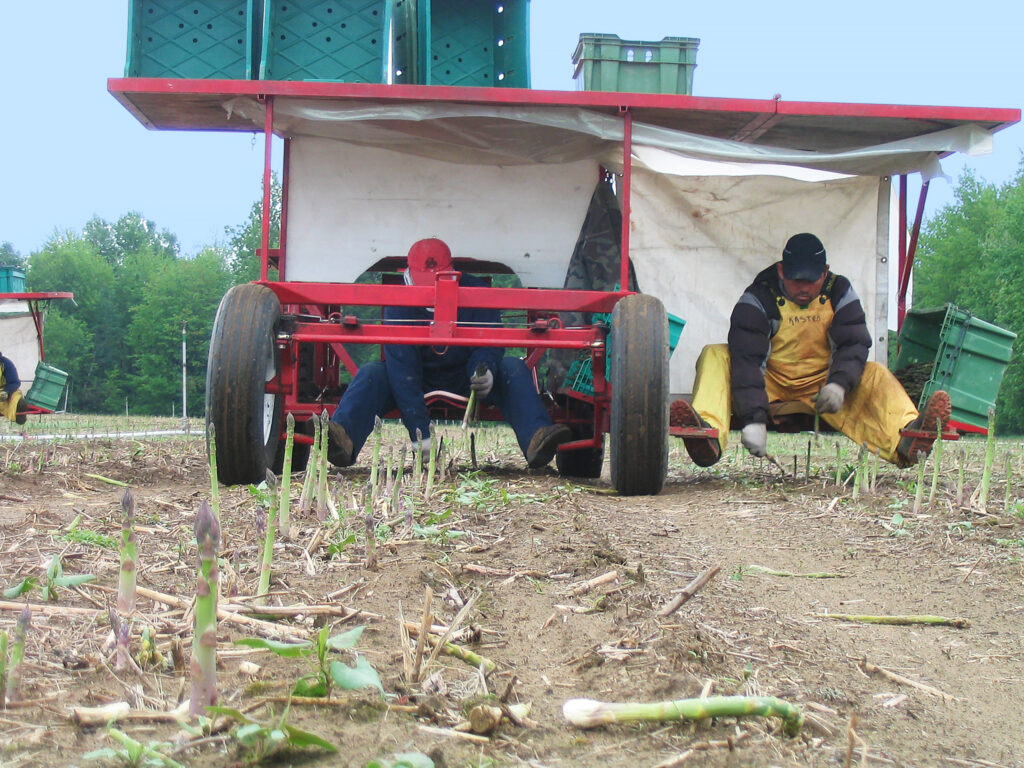
Asparagus production is a labour-intensive industry that relies heavily on manual labour. Labour costs in asparagus production have risen 52% worldwide in the last five years, presenting a challenge for China’s growers. The development of cost-effective robotic systems for asparagus harvesting could provide labour savings and enhance efficiency.

Evaluation of precision agriculture technology

The aim of calling for low-cost precision agriculture technology for asparagus cultivation in China is to create a more efficient and environmentally friendly system for asparagus growers, while ensuring higher yields and superior quality of asparagus produce. Before implementing precision agriculture techniques in asparagus cultivation, it is important to analyse their potential impact and benefits. The University of Bologna in Italy is currently developing an integrated LCC (Life Cycle Costing), LCA (Life Cycle Assessment), and S-LCA (Social Life Cycle Assessment) framework for this purpose. It expects that by applying precision agriculture tools in asparagus cultivation, the use of fertilisers can be optimised, resulting in a significant reduction in emissions such as CO2 and NO3 and thus a positive environmental impact. The ongoing R&D in precision agriculture techniques for asparagus cultivation will contribute to the advancement of more sustainable agriculture generally.
German asparagus production continues downward trend

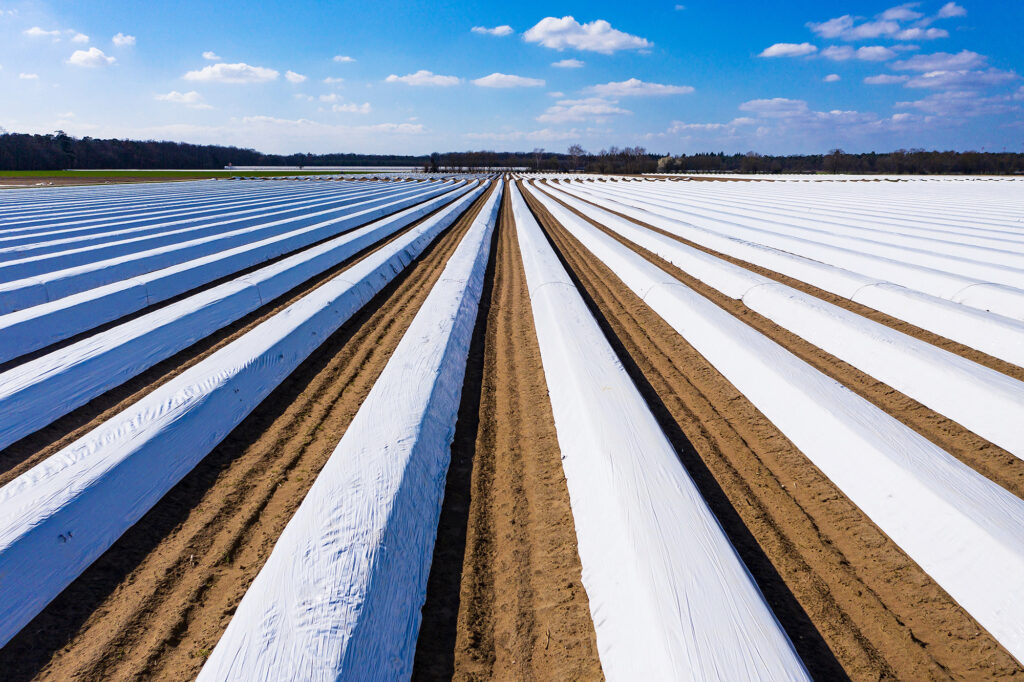
Despite abundant sunshine in March, the asparagus season got off to a slow start this year in Germany, reports AMI horticultural market analyst Claudio Glaesser. He said persistently cold night temperatures, often accompanied by frost, slowed plant development. “Operations with heated fields and multiple protective layers were at a clear advantage, whereas simply covered areas only began producing marketable volumes in April. Regionally, the season started unevenly – particularly in eastern Germany, where harvesting was delayed but caught up quickly following a pre-Easter shift in weather conditions. Due to the slow development of supply, household purchase volumes in March remained low and clearly below the levels of the previous year, when an early Easter had shifted the focus more strongly toward early harvesting. Throughout April, market penetration also remained below last year’s figures – except in the week leading up to Easter,” Glaesser said. “Demand around Easter was strong across all channels: direct marketing, wholesale markets, and food retail reported solid sales. Even after the holidays, supply remained limited, avoiding any significant market oversupply. Yields increased only gradually, contributing to a stable market situation. Meanwhile, the ongoing decline in asparagus cultivation and young plant establishment is expected to further limit supply in the medium term. Overall, German asparagus production has been on a downward trend for several years, with tangible impacts on the domestic market,” he said.

Asparagus area declining overall but increasing for organic

A total of around 108,100 tons of asparagus were harvested in Germany in 2024, representing a volume down 3% on 2023, according to Destatis. The German statistical office also said in a press release that the productive* cultivated area of asparagus has also shrunk by 3% and, at 19,800 ha last year, was at its lowest level in Germany since 2013. Reporting on the fall in production, public broadcaster Deutsche Welle said: “Asparagus could be the victim of changing tastes and rising costs of fresh produce, as well as farmers giving over some asparagus fields in favor of other crops — as diversifying is seen as one way to combat the ravages of climate change.Despite the decline, asparagus remained the vegetable with the largest cultivation area in Germany in 2024, followed by onions (17,700 ha) and carrots (13,800 ha). At 22,600 tons, the largest asparagus harvest in 2024 took place in Lower Saxony, followed by Brandenburg (20,200 tons).
Meanwhile, the harvest volume for organic asparagus rose 8.5% year-on-year to about 9,243  tons in 2024 while the productive cultivated area for organic asparagus climbed 7.7% ​​to nearly 1,785 ha. Carrots attracted Germany’s largest area of ​​organic vegetable cultivation, with 3,350 ha, followed by pumpkins, onions, and then asparagus (in terms of yield).

Germany’s asparagus growers positive about outlook overall

Germany will continue to see a further decline in the overall asparagus acreage as long as consumers remain reluctant to buy, says Simon Schumacher, managing director and spokesperson for the Board of Directors of the South German Asparagus and Strawberry Growers Association (VSSE). Schumacher told AW in February that the decline to date, combined with a rather cool spring, had resulted in a market supply that is just sufficient, with more stable prices. “We are aware that the trade (retail) is looking for security of supply and is increasingly favouring and promoting domestic produce in the domestic season. Fortunately, the slight increase in demand for green asparagus is also being brought forward in the trade with Germany as a source, so that some compensation for white asparagus seems possible.” Schumacher said the VSSE is also trying to increase consumer enthusiasm for domestic asparagus, such as with the introduction of the German Asparagus Day, now celebrated each May 5.

Schumacher added that young plants were in short supply throughout Europe. “However, this also shows that replacement and new planting is taking place and that young plant producers are continuing to avoid overproduction. Nevertheless, we will only need a short reaction time to react to a possible increase in demand after the inflation phase, as the structures, logistics and exchanges are well established. In the future, we will see fully or partially automated robots on sustainable, slightly larger farms. This will help to counteract rising prices to some extent and improve competitiveness. The change of government is also seen positively by many farmers and is linked to hopes of an improvement in the production location.
So we are positive,
” he said.

Sources include:
https://www.destatis.de/DE/Presse/Pressemitteilungen/2025/04/PD25_N015_41.html?templateQueryString=spargel
https://www.destatis.de/EN/Themes/Economic-Sectors-Enterprises/Agriculture-Forestry-Fisheries/Fruit-Vegetables-Horticulture/Tables/1-1-organic-farming.html
https://www.dw.com/en/germanys-asparagus-season-shrinking/a-72123100

Italy : Confronting both a labour shortage and climate change

Italy’s production covers all three types of Asparagus officinalis: green (70%), white (25%) and purple (5%) asparagus. Green asparagus is grown from north to south in all Italian regions; white asparagus is also widespread, but especially in the north-east of Italy; and purple asparagus crops are found in the northwest, particularly in Liguria.

High-quality white asparagus

In total, asparagus accounts for 8,300 ha of the “Italian boot”. But production is concentrated in Puglia, which grows about 45% of the national total, followed by Veneto with 23%, and Emilia-Romagna, Lazio and Campania with 6% each. The cultivation of asparagus in greenhouses spans about 500 ha, mainly in the Campania region. In 2024, Italy produced around 45,000 tons of asparagus. After averaging out the differences between the production areas in northern and southern Italy – accentuated by the effects of climate change – the national yield is about 5.5 tons/ha. In 2024, Italy was still exporting more asparagus than it imported, sending about 7,850 tons to other markets (mainly green asparagus to Northern Europe) from March to June, but with the majority of exports during March and April. Italy has also found an attractive outlet in Japan for its high-quality white asparagus (e.g. the Asparago Bianco di Bassano PDO). Its imports totalled just 2,650 tons and came mainly from Spain, Peru and Mexico and over February to May, but particularly the latter four months.

Varieties adapted well to different situations

Italy grows many asparagus varieties due to its 1,200-km-long production area. In the south, American F1 varieties such as UC 157, Grande and Atlas predominate, but there are also Dutch varieties such as Starlin, Vegalim and Lunalim, and Italian cultivars such as Italo and Vittorio. In the north, many varieties grown for the production of green asparagus are of Italian origin, for example Athos, Eros, Ercole, Giove, Franco and Vittorio. There is also a significant presence of Dutch hybrids such as Avalim, Grolim, Thielim, Vitalim and Verdus. For the production of white asparagus, Dutch hybrids such as Avalim, Grolim, Prius and Thielim are commonly planted. Italian hybrids such as Giove, Vittorio, Zeno, and the German variety Cumulus, are also used for the production of both white and green asparagus. There are also the French cultivars Darzilla (for green asparagus) and Dariana (for white asparagus). Others have also been reported, as it is always hard to find the varieties that adapt best to different production situations. In the last two years, seeds for Italian and American varieties have been in short supply so there has been some investment in Dutch cultivars instead. Trials seem to show that when grown in Italy, the Dutch varieties deliver excellent productive capacity in the first years of cultivation but this then slows compared to the Italian cultivars which, over time, gain in productivity and display greater longevity.

Need for varieties adapted to climate change

The labour shortage is a key barrier to increasing Italy’s planted area for asparagus. The lack of workers has become a real obstacle to expansion of the crop and is pushing up hourly costs. In general, the production costs of asparagus are also increasing due to rising prices for inputs such as fertilisers and pesticides, and plastic covering materials for white asparagus. At the same time, in recent years a significant reduction in production has been caused by atypical weather characterised by heavy spring rainfall combined with low temperatures. Furthermore, very high summer temperatures have limited the crop’s vegetative development. In 2024, the main region of Puglia suffered more than 14 days of temperatures above 40°C with spikes of up to 45°C. These climate extremes have reduced producers’ incomes. Looking ahead, asparagus growers need research to identify new cultivars that are more resistant to climate change and classic diseases in humid environments in spring, especially in northern Italy, and cultivars that are resistant to drought and high temperatures for southern Italy.

A record in quality seals

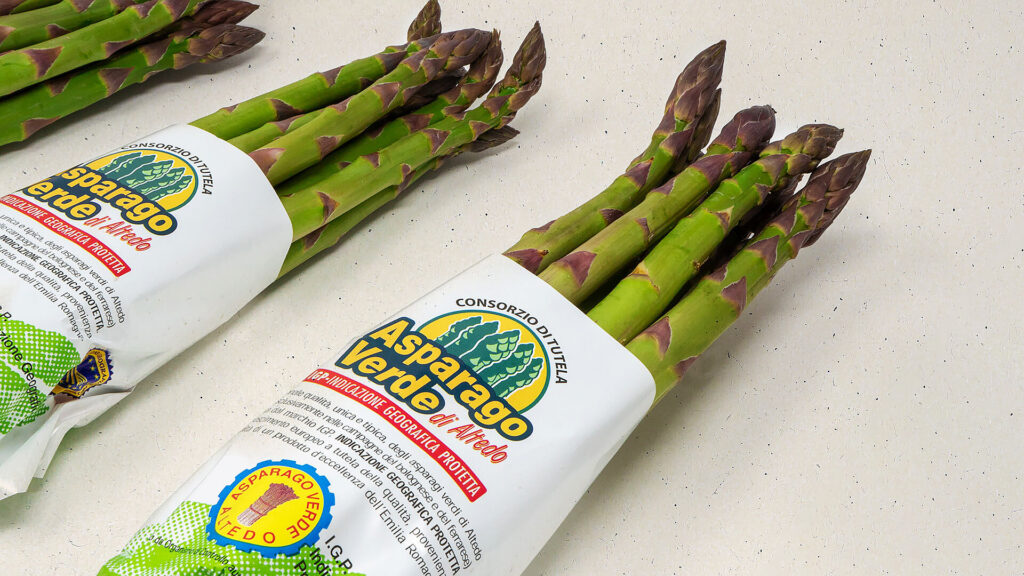
Boosting asparagus consumption in Italy is not proving easy. Data from the last 3-4 years shows that only 45% of Italian families eat asparagus at least once a year. The average consumption per consumer family is just 2.7 kg, a total restricted by the high cost of white and green asparagus, which is mainly sold in supermarkets. Unfortunately, asparagus has failed to capture the interest of Italy’s younger generation, who consider it difficult to cook. But a more positive figure for Italian asparagus involves its recognition under the European PDO and PGI quality seals: Italian asparagus has six such recognitions of excellence – a record in Europe! In white asparagus they are the Cimadolmo PGI, Badoere PGI, Cantello PGI, and the Bassano PDO, a consumer favourite, while in green asparagus there’s the Canino PGI and Altedo PGI.

Cloud of uncertainty marks start of US harvest

The appetite for fresh asparagus in the United States remains strong, attracting annual retail sales worth nearly US $893 million. But its asparagus production was already declining – due to factors including the higher cost and shortage of labour – before this year brought the added challenges of an immigration crackdown and tariff threats. With asparagus from Minnesota expected to hit stores nationwide around May 8-10 at time of writing, it remains to be seen what the trade fallout might bring this season for what has become a popular vegetable in this major market.

Sales of organic asparagus 
on the rise

Circana* retail scan data for the 12 months ending February 23 this year showed total fresh asparagus sales in the US were worth $892.6 million, down 1.9% compared with the previous year. However, organic asparagus sales for the 12 months totaled $97.3 million, up 7.4%, while conventional sales were worth $795.3 million, down 2.9%. Conventional asparagus sales accounted for 89% of total sales, with organic sales contributing 11%. Circana data also shows that the volume of asparagus sold across all retail outlets for the 12 months was down 2%, with organic up 4.3% and conventional down 2.6%. Green accounted for nearly 99% of America’s total spend at retail on fresh asparagus, with tips the next biggest subcategory with a 0.7% share, 0.17% for white, 0.04% for purple, and 0.16% for all others. The average unit price for all asparagus was $3.31, up 0.1% YoY. Circana data indicates average conventional unit pricing was down 0.3% to $3.29 while that for organic was up 3% to $3.53. Similarly, USDA data for the Easter period – during which asparagus is a traditional favourite among vegetables – shows the average advertised price for fresh green asparagus in major retail outlets, ($2.65/lb) was down 13% compared to the same week last year, while that for organic was up 3.2% (to $4.51/lb).

Domestic production decreasing every year

In Michigan, the nation’s largest producer of asparagus, the 2024 crop value of $24.5 million was down 18.5% – or $5.57 million – on that of 2022, while the harvested area had shrunk by 24% to 7,500 acres (3,035 ha), USDA data shows. According to Michigan State University, the industry is facing difficulties: “As is the case with many commodities, rising labor costs is pressuring the profitability of the asparagus industry.” In its March, 2025, report “The Outlook for Michigan Agriculture 2025”, the university noted great uncertainty surrounding this year’s farm forecast, with “tariffs and other trade issues” increasing the level of risk, “increasing concern about a possible recession”, labor prices expected to rise, and ongoing labor shortages.

Tariffs cast shadow over trade outlook

Imports supply up to 90% of America’s fresh asparagus supply and its first and third biggest sources – Mexico and Canada – happen to also be among the countries, along with China, under threat by the Trump administration of high tariffs on their exports. USDA data shows that in 2024, Mexico held a 65.6% share of US fresh asparagus imports by volume, followed by Peru with 33% and Canada with a distant 0.9%. In a market update in March, US foodservice supplier Markon Cooperative said: “Should tariffs add cost to Mexican supplies, Peru may act as a small relief valve, but it will not be able to support all national demand.” In March, Giancarlo Riva from Ernst & Young Peru said increased tariffs on Mexico could create opportunities in the US market for Peruvian exports, such as might be the case with avocado, but noted some analysts warn protectionist measures could lead to more expensive supply chains, disrupt consumer expectations and habits, and potentially trigger inflation in the US economy, while overarching uncertainty typically paralyses or slows investment. As for ramifications for US growers, while import tariffs might make local products more price competitive, retaliatory tariffs could drive up farm costs, such as for fertiliser, and adversely affect consumer habits if the current year-round supply is disrupted and/or retail prices rise.

* Circana OmniMarket™ Integrated Fresh

Sources include:
https://msu-prod.dotcmscloud.com/resources/
the-outlook-for-michigan-agriculture-2025
https://www.ams.usda.gov/mnreports/fvwretail.pdf
https://www.markon.com/update-asparagus-51


Asparagus World #7 is here ! Read now our new 2025 edition

Like asparagus in spring, the new magazine from Asparagus World, 100% asparagus, has just been released ! Read Aspargus World No.7 and discover how asparagus is a good candidate for robotisation. Travel around the world of asparagus, from the United States to Peru, China, or Europe, and see why Poland is moving from white to green.

Read now below Asparagus World No.7 online or subscribe to the printed magazine for free.


International Asparagus Days and International Berries Days in France in October

After the success of the last 4 editions, the 5th edition of International Asparagus Days will take place in Bordeaux (France) from 7 to 9 October 2025. The event will be held in association with the 1st edition of International Berries Days. Macfrut, the international trade fair for the fruit and vegetable sector in Italy, Befve&Co, and Interco Nouvelle-Aquitaine are organising two international professional events to bring together the entire asparagus and soft fruit sector. “There is an obvious complementarity between these productions. Asparagus producers are also producers of berries, many suppliers offer a range of products for these crops, and marketers have a common offer of asparagus and red fruits,” explain the organisers to the two sectors.

More than 100 specialised exhibitors

Organisers expect a large international participation of visitors. Already German, Spanish, Peruvian, and Turkish delegations are expected. More than 100 specialised exhibitors will be present on 8 and 9 October. These days will be devoted to visits to stands of plant material and equipment, services and marketers, to outdoor demonstrations (preparation, planting, maintenance and harvesting equipment, etc.), to pitches and technical workshops led by exhibitors and sponsors. 7 October and 10 October (optional) are devoted to visits to leading French farms (click here to see the program). International Asparagus Days and International Berries Days are free events with prior registration required (click here to register).

Two equipment for asparagus awarded at ExpoSE 2024

4Disc : Cutting cultivator for very shallow soil cultivation for the inter-row

As a world trade fair premiere, 4Disc is presenting the InterCut, a cutting cultivator for ultra-shallow and full-surface soil cultivation for the area between the ridges. The InterCut works from 1 cm with permanently horizontally rotating, sharp discs that cut through the weeds precisely at the root collar. The sharp cutting edge in combination with the angle of attack keeps the soil open-pored. The cutting cultivator can be conveniently and precisely adjusted to a depth of 1-12 cm using spindles. The two-bar cutting discs are followed by the three-row «Turn Over» harrow, which is safe to use thanks to its spe- cially angled design and loosely places weeds on top to dry. The InterCut is attached to a narrow-track tractor. According to the manufacturer, the ultra shallow work is guaranteed. 4Disc is fuel efficient and easy to pull.

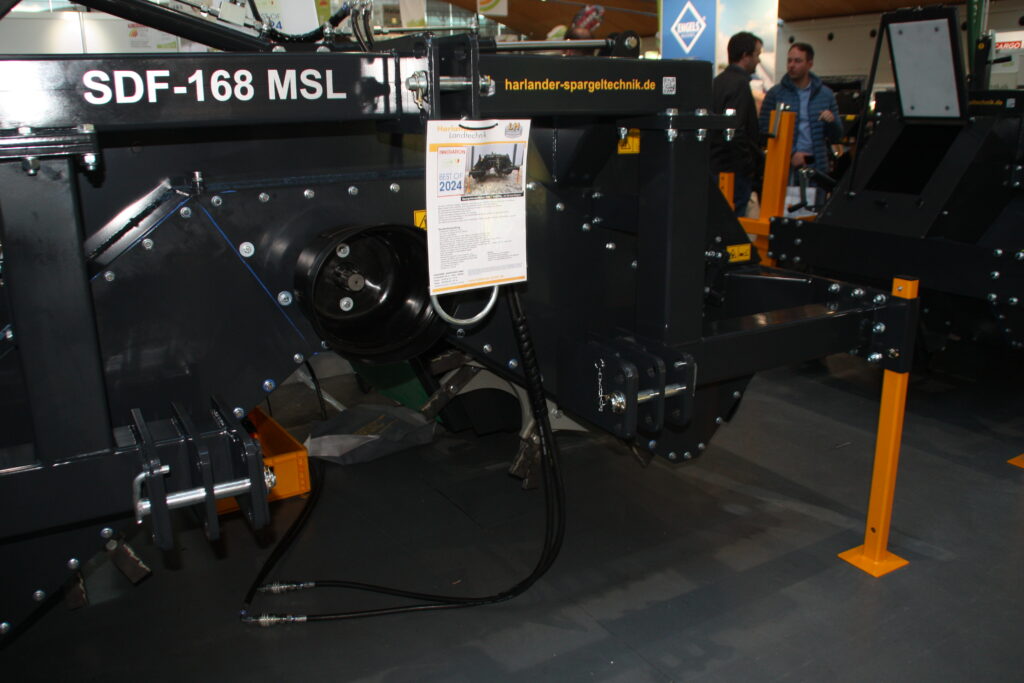
Harlander Landtechnik from Aresing (Germany): Hydraulic service flap for the asparagus bed cutter

As a world first, Harlander Landtechnik will launch the SDF-168 MSL asparagus bed cutter with hydraulic service flap. These wide-opening flaps make cleaning the machine and changing the beaters easier. Both activities can be carried out easily from above through the open flaps. This significantly reduces the time required for cleaning and maintenance and increases employee safety. Harlander has also developed various flap shapes and materials with which the asparagus bed cutter can be better adapted to different soil conditions. The flaps are inter- changeable and the entire side housing sections can be opened. The interior of the machine has been designed to be free of concealed edges that are difficult to clean.

How to limit the risks associated with asparagus replanting ?

The AOPn Asperges de France devoted its 6th technical day, at the beginning of October, to the theme of asparagus replanting. This practice, while still infrequent in France, is nonetheless increasing due to the specialisation of farms and the lack of «virgin» asparagus plots. On the technical day, Christophe Paillaugue, president of Asperges de France estimated, «Of the 6000 ha of asparagus grown in France, about 500 to 600 ha are replanted each year, to ensure the renewal of the surfaces with a low percentage of replanting on the same plot.» However, this situation is tending to increase and also exists in many other producing countries, particularly in Germany. «Planting asparagus on top of asparagus can give disappointing results with lower yields in the first years and plant losses,» says Adèle Sahut, from Asperges de France. Crop losses can be up to 30% with a three-year reduction in the life of the asparagus grove. This is due to soil fungi which are pathogenic to asparagus (Fusarium, Rhizoctonia), autotoxins released by the roots of the previous crop and to the more general syndrome known as «soil fatigue». In addition, several presentations were given in the room making it possible to identify the microbial activity of soils in a broad way. «Fungi and bacteria contribute to the stability of the soil. The loss of diversity and activity leads to decreases in the mineralisation process and in the yield of the plants grown,» says Emile Benizri, a lecturer at INRAE.

20 years of asparagus replanting on top of asparagus

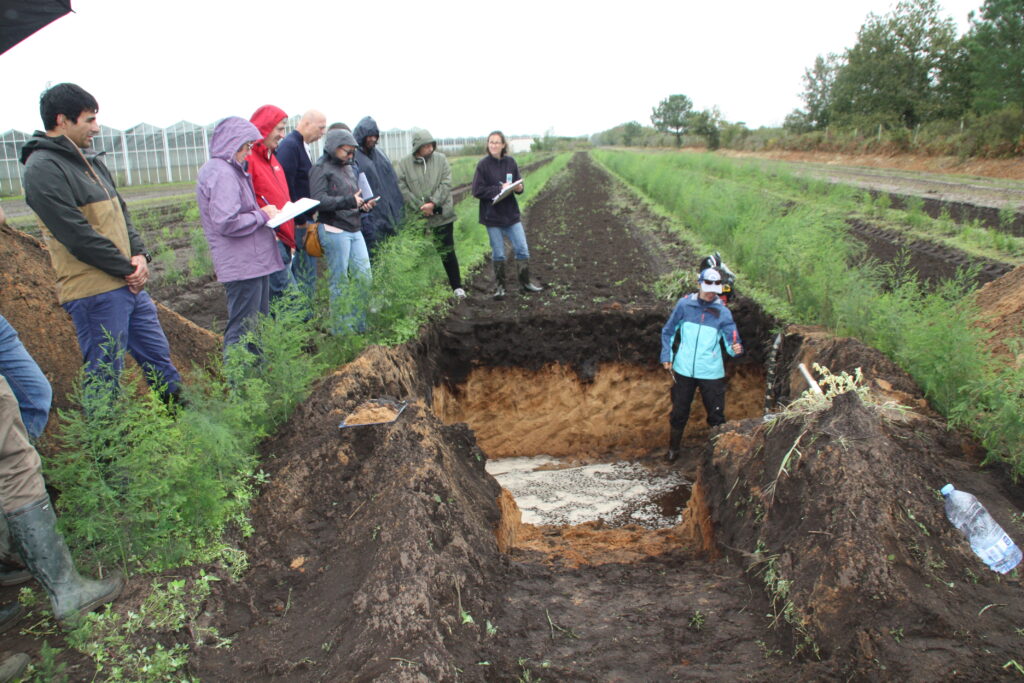
Carmen Feller, researcher at the Leibniz-Institute (Germany) presented the results of the Newsoil 21 programme, which made it possible to evaluate different prevention methods over five years (2017-2021): organic matter inputs, biofumigation, inoculation of microorganisms, varietal resistance. Christian Befve, an international consultant, also presented the «out of ground – in the ground» method, which consists of creating a large volume of homogeneous soil before planting with the addition of compost and micro-organisms using a spader. During the round table discussions, David Ducourneau, an asparagus producer in the Landes, detailed his twenty years’ experience of replanting asparagus on asparagus, i.e. three crops on certain plots, insisting on the importance of drainage. According to the experience of Ophélie Lendani,a technician with MaïsAdour technician,working with three asparagus growers, replanting on the same plot led to very marked reductions in yield, up to 40% after the 4th year of harvest. The afternoon of fieldwork on the asparagus groves of Planasa allowed the hundred or so participants to attend the presentation of organic solutions proposed by Innovak global and Medinbio, and also allowed them to observe crop profiles led by two specialists, Céline Collin Bellier, manager of Solenvie, and Emmanuelle Choné, agro-soil scientist from Agronomie Terroirs.

expoSE & expoDirekt : stability confirms specialisation

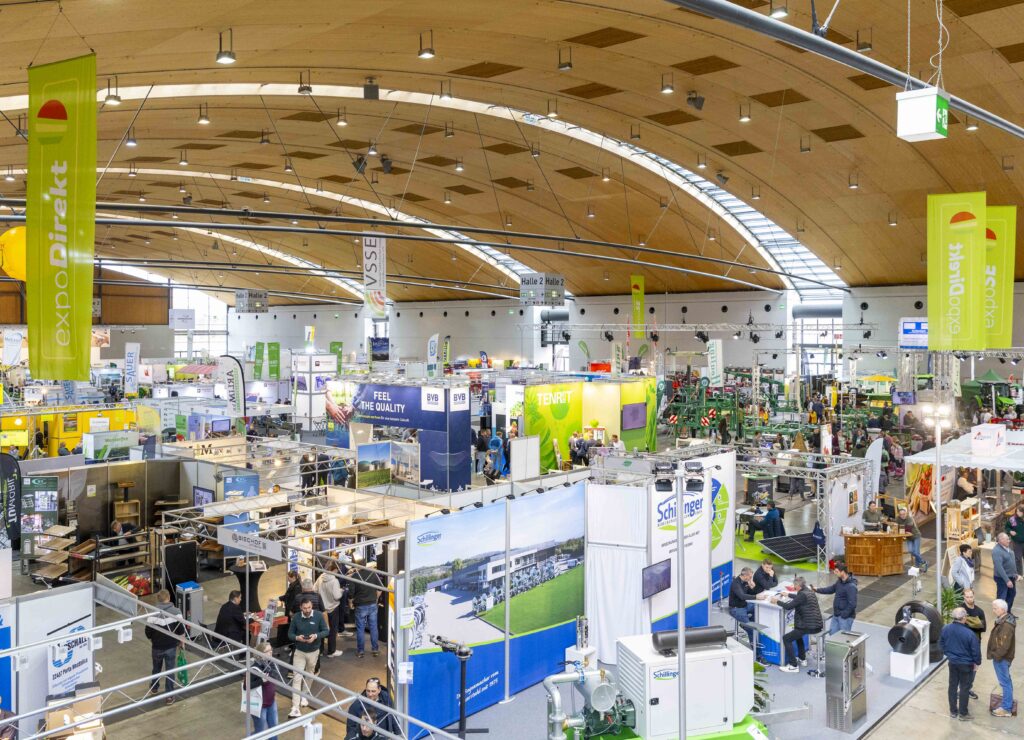
The 28th edition of the expoSE – the trade fair for asparagus and berry production in Europe – and the 13th expoDirekt – trade fair for direct sales – which took place at the Messe Karlsruhe welcomed more than 5,200 trade visitors on 20th and 21st November. Of the 440 exhibitors, almost 16% were participating in the trade fairs for the first time. «The overall mood of the trade fair duo was more confident than a year ago, and the exhibitors surveyed at random indicated that the number of investment projects would increase again,» says Simon Schumacher, organiser of the expoSE and expoDirekt trade fairs. 84% are convinced by the salon duo and will come back.

Three innovation awards for asparagus and strawberries

«The stable but slightly lower number of visitors reflects the concentration of the sector as well as the ever important need for information on new developments and innovations, as well as the interest in professional exchanges observed for the popularity of specialized forums,» says the manager. Three innovation awards were presented for each trade fair: expoSE and expoDirekt. The expoSE Innovation Awards went to 4Disc from Dortmund for its InterCut for ultra-flat tillage between asparagus rows, to Harlander Landtechnik for its asparagus mound rotavator with hydraulic service hatch and to Hexafarms from Berlin for its intelligent yield forecasting system for strawberries and berries under tunnel. The expoDirekt innovation awards went to two cooperating companies, getpacked and Click & Collect Service for getpacked & collect – which enables online shopping with collection of products from vending machines, to Pflanzentheke from Lorsch for their smart vertical farm system for direct marketing and to Schwab Automaten (Packmatisch) from Munich for the HofKiosk, the vending machine with product tray system. The next trade fair duo expoSE & expoDirekt as well as the four forums (see box) will take place from 19 to 20 November 2025 at Messe Karlsruhe.

Photos and videos are available: www.expo-se.de/en/press-impressions-videos-photos-videos

Success for 4 specialist forums

The 35th Asparagus Day attracted a large number of visitors, with the focus squarely on technical topics such as replanting, the resurgence of the asparagus fly, the viability of asparagus growing and the possibilities for reducing the use of phytosanitary products in asparagus cultivation. It also afforded an overview of the cultivation and marketing of green asparagus in southern Spain and provided current information about the world of asparagus.

The forum on berry techniques recorded a good turnout for its 2nd edition, with nearly 80 participants. The forum addressed the importance of data-driven crop management for better plant growth and energy savings, as well as more reliable harvest forecasts for better planning of strawberry harvests by robots. These technical elements should also facilitate the transition from soil cultivation to trough cultivation as well as making irrigation easier.

The direct sales forum, organised by the trade magazine HOFdirekt and the VSSE, worked perfectly with topics on “Smart Shopping” and “The farm shop as a brand”.

Portugal : Pedro’s green asparagus

Based in the north-eastern Porto, Pedro Martins Da Costa is first and foremost a winegrower. But his desire to try a different crop led him to produce asparagus. “It’s a healthy product that’s different to grapes and high in both taste and economic value,” he says. Thus Martins Da Costa came to France, south of Bordeaux, to learn how to grow asparagus before starting his own plantation in 2018.

Make the harvest last as long as possible

Today, he has 5 ha of asparagus on several fields on his farm. He uses suitable areas at the bottom of a slope with very fertile soil or at the top of a hill with sandier soil. It’s the first time this crop has been grown on this land and the asparagus, mainly green and cultivated in a very protected environment, carries the organic label. “I planted three Planasa varieties with different degrees of precocity in order to space out my production period,” says Martins Da Costa. Placosesp is an early, hardy and very productive variety, while Darzilla and Darvador are vigorous and hardy. Martins Da Costa uses mini tunnels to obtain greater precocity (+15 days) and also white plastic to limit the heating of the mound for white asparagus in order to prolong his harvests as long as possible.

« Very rewarding work »

Martins Da Costa sees a long asparagus season as key to providing his customers with extended supply. On average, his yields are 7-8 tons/ha but up to 11 tons depending on the age of the asparagus plantation and the field. His asparagus is sold under the “Espargos verdes” brand and direct to restaurants, organic stores and private homes. “Since Covid, we have developed direct sales with the pos- sibility of delivering a bunch of asparagus anywhere in the country one day after the order is placed,” says Martins Da Costa. The young producer is very active in promoting his asparagus on social media and to restaurant chefs. “It’s both well-rewarded and very gratifying work,” he says. His objective is to expand these direct sales by slightly increasing his asparagus area and by diversifying with other crops, particularly berries.