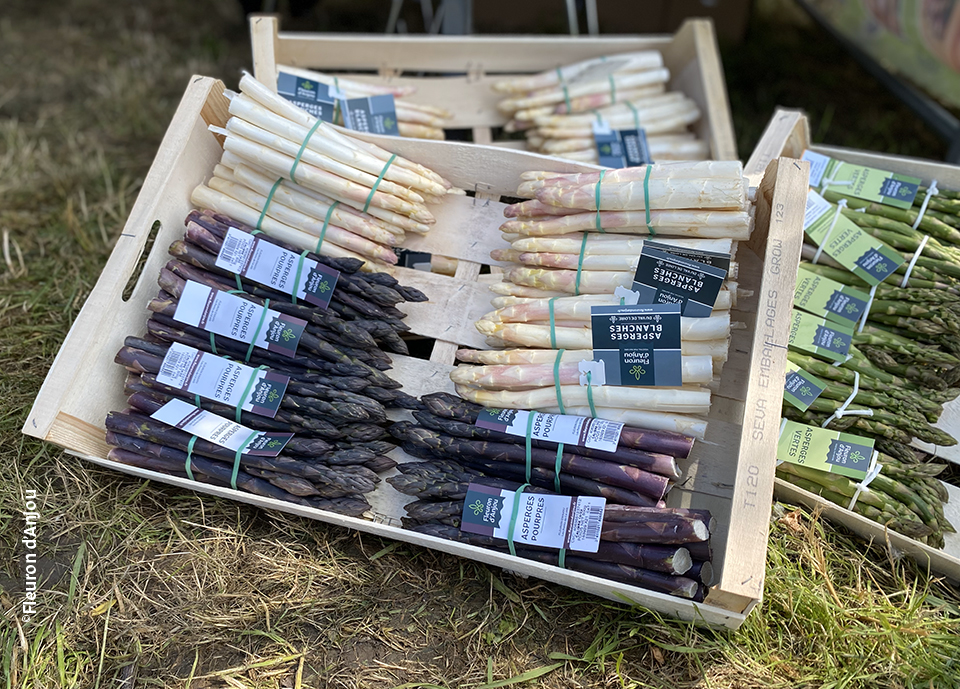
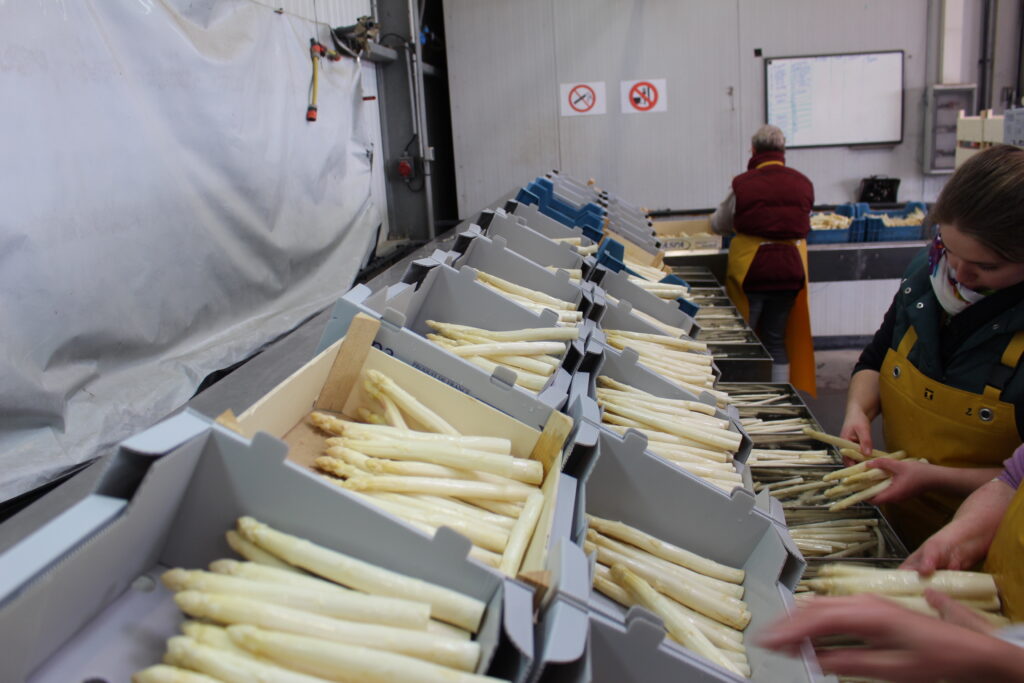
The Fleuron d’Anjou Cooperative organised its first Asparagus Technical Day in the Val-de-Loire region at the home of Guillaume Thomas, an asparagus producer since 2005. « This technical day was intended to present the asparagus development project for the cooperative and in particular the objective of reaching 1000 tons within 5 years », explains the organiser.
Being a major player in asparagus
In fact, the Fleuron d’Anjou cooperative increases its asparagus production every year. In 2024, the cooperative’s producer members produce 700 tonnes of white, purple, green and purple asparagus, some of which is organically grown, on a total area of 200 hectares. The personalised support it provides for specific equipment and labels accentuates this increase in performance. To reinforce their desire to be a major player, Fleuron d’Anjou is part of the producers’ association that is actively working with IDfel Val de Loire to create the specifications that support the Protected Geographical Indication (PGI) Asperges du Val de Loire project. This identification will promote the know-how of producers, the specificities of asparagus grown in the Val de Loire region and will provide consumers with traceability on the origin and superior quality of their product. The Fleuron d’Anjou cooperative hopes to respond to the consumer trend that is now focused on a France origin.
Three themes and technical workshops
Agrivaloire @ Engels Machines demonstrated their new ‘EcoSpader’ ridger. This ingenious machine revolutionises the ridging process in order to better meet the requirements expected with regard to the quality of asparagus, in particular its rectilinear shape and the purity of its colour.
Europlastic has an answer to the question of precocity through the use of various plastic films. This theme is an important economic issue for farms. For several years now, Fleuron d’Anjou has been conducting joint trials with this company, which now allow them to deliver results on techniques that are proving to be effective.
Sylektis presented its ‘AsperCut’, a selective field harvesting robot which will eventually be able to provide solutions to the labour problem that asparagus producers face every year.
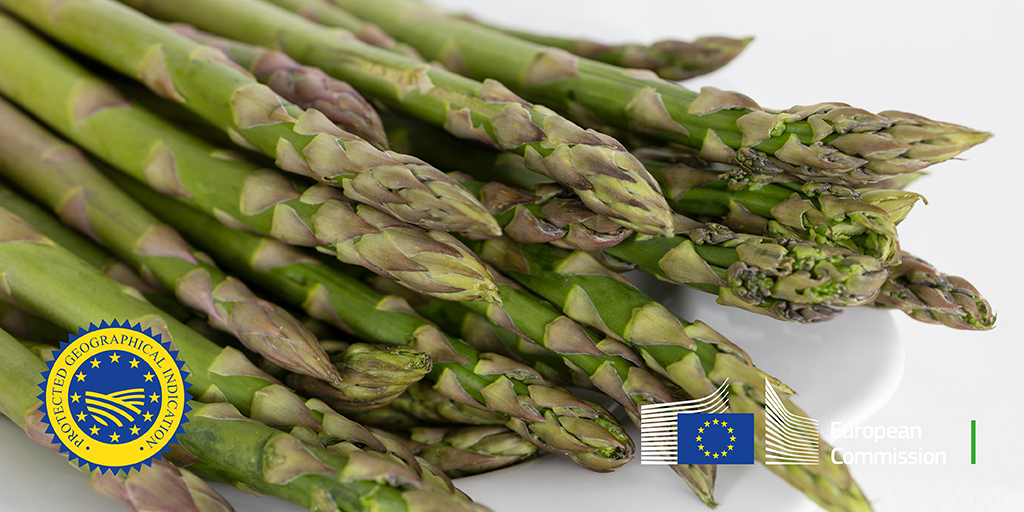
The ‘Espárrago verde de Guadalajara’ PGI, registered on July 5, 2024, covers a production area in the western part of the province, in the districts of La Sierra, La Campiña and Alcarria Alta, in the municipalities of Membrillera and Loranca de Tajuña, at elevations of 640 – 1,020 m above sea level. “The nutrients in the soil, together with the traditional practices regarding crop fertilisation and the area’s agri-climate characteristics, mean that the flavour of this asparagus is intense and juicy, very slightly fibrous, with sweet and bitter notes. It has a lingering flavour thanks to specific concentrations of soluble solids, salts, organic acids and other bioactive com- pounds,” according to the application for PGI registration published by the EU.
Thanks to the altitude and sunshine
The PGI application was sought on grounds such as the following specific characteristics of the product arising from its link with the geographical area: during the months of production, temperatures are relatively low, which means the asparagus grows slowly, facilitating a greater concentration of soluble solids, of 3.8 to 6.1 degrees Brix, and pH values of 5.7 – 5.9. The green colour and dry matter content of between 6.5 – 8.5% are due to the average solar radiation of 1,642.5 megajoules/sqm during the production period, which is thanks to the altitude of the producers’ farms and the latitude of the province of Guadalajara. The spear length of between 13 cm and 26 cm and minimum diameter of 10 mm are due to the special characteristics of the soils, including pH values mainly between 8.1 – 8.3, along with the depth of the soils, availability of nutrients and balanced sand, clay and silt content. These qualities mean that considerable reserves of moisture and macro and microelements are available. According to the government of Castilla-La Mancha, the PGI covers 25 producers, about 550 ha of green asparagus planted area and average production of 2,500 – 3,000 tons.
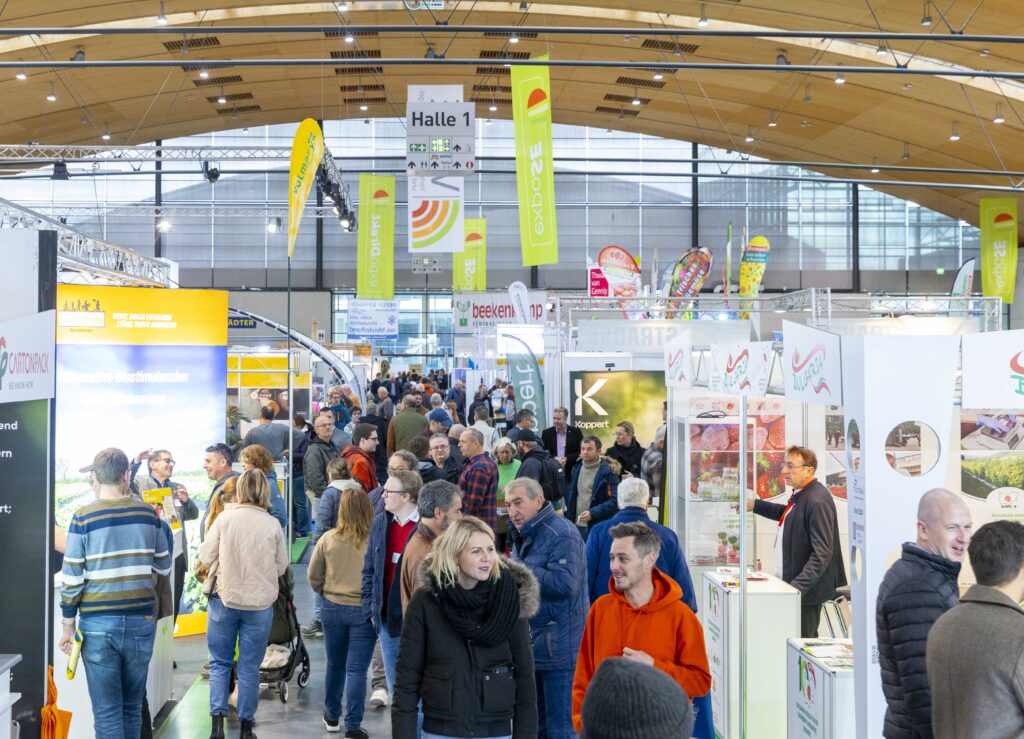
More than 400 exhibitors from 13 countries specialising in the production of asparagus and strawberries and berries as well as in direct marketing will be present at the expoSE & expoDirekt trade fair duo from 20 to 21 November 2024 at the Karlsruhe Exhibition Centre. The organiser of this 28th edition of expoSE and the 13th expoDirekt is the Association of Asparagus and Strawberry Growers of Southern Germany (VSSE), the largest trade association of asparagus and strawberry growers in Germany with around 630 members. Since its creation in 1996), expoSE has become the leading European trade fair for the production of asparagus and berries. It offers a high concentration of German and European exhibitors for the production, harvesting, packaging and preservation of these products.
The 35th Asparagus Day will take place on November 20
Several specialists will discuss various topics including: Cultivation and marketing of green asparagus in southern Spain, asparagus replanting at Queckbrunnerhof, what to do in the face of the increase in asparagus fly attacks. Current information from the world of asparagus will also be provided in a short format. Faced with skyrocketing production costs, a specialist from North Rhine-Westphalia will ask «Is it still worth growing asparagus?». The conference will end with the possibilities of reducing pesticides in asparagus cultivation.
New : Stone Fruit Forum
For the first time, VSSE is organising the first stone fruit forum as part of the fair. Two renowned stone fruit experts, Peter Hilsendegen, DLR Rheinpfalz, and Thorsten Espey, LVWO Weinsberg, will present new trends in varieties and crop management on the topics of Plums and Cherries. Stone Fruit Forum | Focus on varieties on Wednesday, November 20, 2024, from 10:00 a.m. to 12:30 p.m. in conference room 4/5 of the Karlsruhe Fair. During the trade fair visit, the specific topic “Stone Fruit” is dealt with comprehensively and concentrated in one place.
Berry Technology Forum
The second edition of the Berry Technology Forum will take place on Thursday, November 21, 2024, from approximately 10:00 a.m. to 1:30 p.m., as part of expoSE, in the conference room of the Karlsruhe trade fair. The organisers are Marco Joseph and the Association of Asparagus and Strawberry Growers in Southern Germany (VSSE).
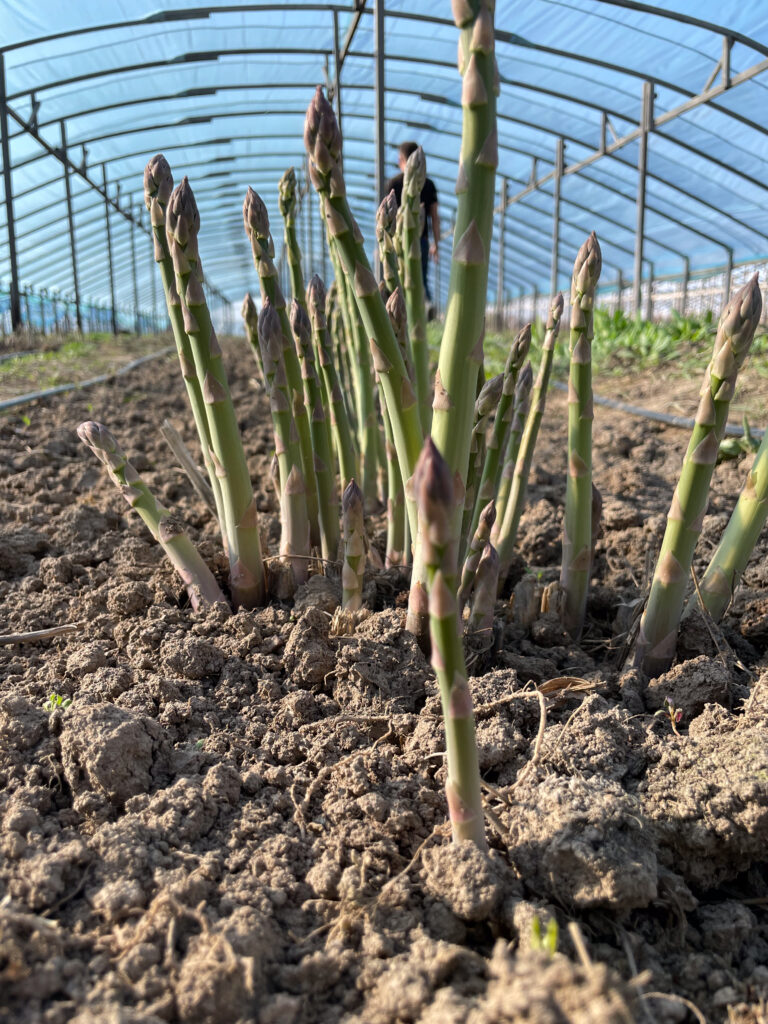
Self-taught farmer Chubak Orozaliev believes he was one of the first to grow asparagus in Kyrgyzstan. He says there is already demand for spears from restaurateurs in the Central Asian country, as well as growing interest from consumers as more people aim to eat healthily. The Aspa Farm director says the firm is trialling 3 different methods. It is growing asparagus on 20 ha in the Chui region, 70 km from the capital city of Bishkek, under a traditional approach (spring harvest) with seedlings from Atlas F1 seeds. It has also allocated about 2.2 ha in a greenhouse complex on the outskirts of Bishkek for the mother stem method (summer harvest, mainly using UC 157 F1) and is testing winter forcing (autumn-winter harvest) over 0.2 ha.
“I became acquainted with asparagus in the US and since about 2013, my partners and I have experimented in different places in Kyrgyzstan on small plots,” Orozaliev told Asparagus World. Production volumes are currently small, with no more than 10 tons estimated for 2024, but the firm, legally formed a year ago, hopes to find a partner to help it scale up for export. For now, it markets its spears via an intermediary in Bishkek and Almaty, Kyrgyzstan’s biggest city, he said.
Germany : Rain reduces output but not prices in Germany
Persistent rains in Germany, particularly in the north, caused flooding and waterlogged soil in the leadup to the 2024 white asparagus season, reports AMI horticultural market analyst Claudio Glaesser. Depending on the soil structure, it wasn’t possible to start preparing the mounds until April, which was significantly later than usual. Despite this, a mild winter and high temperatures at the start of spring saw the harvest kick-off early, he says. Nevertheless, imports had to be used for what was also an early Easter this year, falling at the beginning of April. With the strong sunshine that followed Easter, there was a brief phase of supply pressure. Weeks of moderate temperatures and few hours of sunshine kept the market stable for large parts of the season from then on. Farmgate prices remained largely at a satisfactory level and retail prices in the important month of May were also in line with those of the previous year. The 2024 season ended sooner than usual in many areas due to the early start. In southern Germany, extreme rainfall and flooding also led to an abrupt end at the end of May. Overall, the harvest volume is likely to have declined in line with the reduction in the planed area due to the more difficult weather conditions, Glaesser said.
France : low production without recovery
Despite very difficult conditions for preparing the mounds (too much rain), the asparagus harvest in France started early. “The first asparagus in the South-West was harvested at the beginning of February in small quantities,” says Astrid Etèvenaux, director of Asperge de France. In March, good harvests in the South-West made it possible to supply the market for the Easter holidays (1 April). April was a “lack-lustre” month, depending on the production basins but especially the plots. In the Loire Valley, the late start of the harvest resulted in low volumes. The month of May was marked by low inflows in all French production areas. In the end, there was disappointment without a recovery in production, as has been observed in recent years due to the weather remaining cold. “Its low inputs have led to additional costs at the harvest and in the station. So higher production costs for less volume”, comments Astrid Etèvenaux. The market remained without much enthusiasm. Mass distribution and its promotional drives have made it possible to sell all French volumes without difficulty.
Italy : Asparagus in search of confirmation
“In 2024, Italian asparagus growing areas amount to 8000 hectares, for a production of 45 to 50,000 tons intended both for fresh consumption and also for the processing industry,” estimates Luciano Trentini, an asparagus specialist. In 2024, high temperatures (soil temperatures always above 14-15 degrees) in February and early March made it possible to start the harvest 15 days early. Unfortunately, the drop in temperatures during the Easter holidays, accompanied by heavy rain, slowed down the flow of deliveries to both the north and the south of Italy. Then the sudden rise in temperatures that followed allowed a recovery of the quantities produced to the point of creating a degree of uncertainty on the market, which then quickly rebalanced. High temperatures and the now persistent problem of labour availability have led to a reduction in the harvesting period. In the end, production fell by about 15% in southern Italy and 30% in the north. The lower availability on the market has led to an increase in prices that has allowed the sale of top-quality processed green asparagus, both in the North and in the South, at around 3.5-4 euros per kg, while white asparagus in the North at around 5.5 euros per kg. “Analysis of consumption shows that the consumption of asparagus in Italy is reaching 20,000 tons, worth 111 million euros,” concludes Luciano Trentini.
Spain : Encouraging outlook for 2025
Thanks to plenty of rain, green asparagus production in the province of Granada this year could end up totalling 20% more than that of 2023, despite initial expectations that it would instead suffer a reduction of 10-15%. Furthermore, according to Antonio Zamora, president of the Spanish organsiation the Green Asparagus Interprofessional and of the Centro Sur cooperative, the quality has been “extraordinary thanks to the rain at the start and during the season.” Speaking to Spanish media, Zamora said many production zones in Granada – which accounts for 70% of Spain’s green asparagus crop – now have enough rain in their reservoirs and water catchment areas to plan for similar levels of production in 2025, while others will have to see how summer evolves. Spanish producers, however, continue to face a shortage of farm labour, an issue the Inerprofessional is lobbying authorities on in a bid to reduce red tape when it comes to recruiting workers in other countries.
Netherlands : Rain causes yield to plummet
An unprecedentedly wet season has pushed yields 30-40% below average this year for Limburg-based Teboza, one of the leading Dutch white asparagus growers. Teboza’s Will Teeuwen says it rained from late October to May (especially in the latter month), preventing the usual preparation for harvest and harvesting itself in many fields. He believes it was a similar situation elsewhere in the Netherlands as well as in Belgium and the Rhineland region of Germany. On the positive side, the firm was able to market what it was able to harvest and the shortage pushed prices higher than last year, though not enough to offset the increased cost of farm inputs. Teeuwen says the outlook for next season is for yields about 20% below average, unless a very warm summer expedites the recovery of the waterlogged fields. “What we see now is the regrowth of the fields is not good,” he said. After five previous seasons dealing with overly dry weather and learning how to use water more efficiently, the firm is now studying why some of its fields fared better in terms of drainage and how to remove excess water more efficiently.
Is there any interest in fresh white asparagus in Australia? In November, Tasmanian white asparagus grower Richard Weston was interviewed for a public radio program aired in German in Australia and says within 24 hours his company had 7,000 more followers on Facebook and 600 direct contacts from people in Australia wanting to buy its white gold. That response suggests there is indeed a lot of unmet demand in cities such as Sydney, Melbourne, Adelaide and Brisbane, “so we’re working on how to fill that market gap,” he told Asparagus World in March this year. “The demand is there – we’ve just got to produce the goods now.”
Fever for edible ivory sets in
The impetus for Weston’s interest in the delicacy was a conversation in 2012 with renowned local chef Luke Burgess, who had just come back from working in Copenhagen’s famed Noma restaurant and raved about the amazing white asparagus they had used. His curiosity sparked, Weston, already a supplier of vegetables to top restaurants in Tasmania, started his research and in 2013 went to Europe on a Nuffield Farming Scholarship to spend three months studying white asparagus production in the Netherlands (spending time with experts from Bayer and Teboza) and Germany and Spain. It was there that he tasted white asparagus for the first time and wondered why something so popular and so tasty remained little-known in Australia, sowing the seeds of a dream to one day grow premium fresh European varieties himself in his home state of Tasmania.
Early attempts fail due to heavy soil
Back in Australia, in about 2014, Weston and wife Belinda made a first attempt to grow white asparagus, with one hectare planted on a friend’s cherry farm in southern Tasmania. They planted about 35,000 asparagus plants grown from seeds imported from Europe. (Australia’s biosecurity rules prevented the import of crowns, Richard Weston said.) The plants grew beautifully in the Tasmanian climate but the heavy soil was not quite right, being high in magnesium and becoming very hard when wet, making harvesting difficult. “It took three years just to get that first crop and it had to be ploughed back in,” he said.
Sandy loam with good drainage found
Belinda Weston
The Westons then partnered with fellow farmers Tom Barham and Jenna Howlett, whose property in Brighton, just 100 m from their own farm and 35 km north of Tasmanian capital Hobart, has fertile sandy loam with good drainage – similar to what Weston had seen growing white asparagus in Europe – as well as a perfect microclimate. Thus, in 2018 they started afresh, planting 34,000 plants on 1.4 ha, and launching ‘Tasmanian White Asparagus’, dedicated to growing premium European varieties of white asparagus. “It was very hard work,” Richard remembers.
First commercial harvest in 2022
They let the plants grow for four years then started their first commercial harvest on September 1, 2022, continuing for about four weeks – the company was being careful not to over-harvest – and obtaining 2.5 tons of white asparagus in what was an “incredibly wet” year. In contrast, winter of 2023 was “incredibly dry” in Tasmania and spring temperatures were “exceptionally warm,” thus making drip irrigation necessary. The warmer soil temperatures led to some blushing of the asparagus tips, “which doesn’t affect the amazing taste of white asparagus, it’s just a crowning of the king of spring,” Weston said. Three back-to-back overnight frosts kept the harvest rhythm slow at the start of the 2023 season but momentum eventually picked up and this second commercial harvest – which ran for about eight weeks, from August 31 to about October 26 – provided 7 tons. “And hopefully this year we’ll go higher again,” he said. “But it won’t be till we have five years of data that we will see how our quantities will be.” As the crop matures, the firm hopes its yield will reach around 10 tons/ha, using as a reference top growers in Europe who average yields of 6-14 tons/ha.
About 70% of crop is AAA grade
Tasmanian White Asparagus
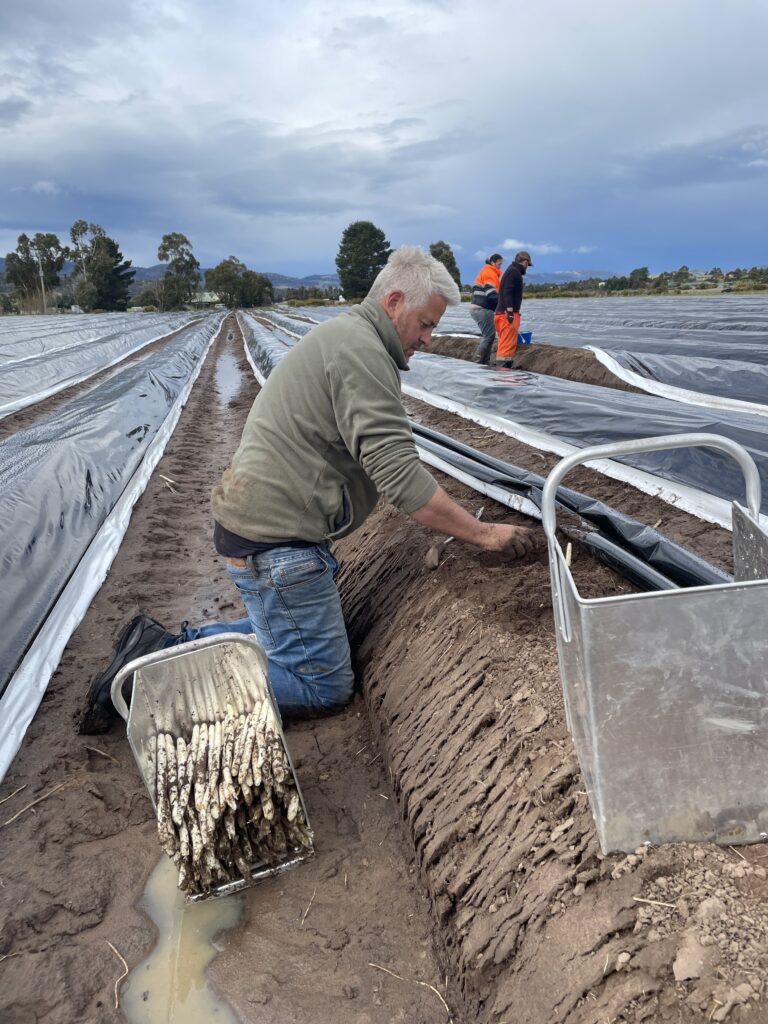
For last year’s harvest, about 12 people, mainly backpackers (3 Nepalis, 2 Italians and 7 Brazilians), were employed for field work and another six in the packing shed, with similar numbers anticipated this year. The farm hands are recruited through labour hire companies and are due a minimum hourly wage (pre-tax) of AU$27.45 (~€16.55). Harvesting starts about 7am: “We bend down and gently dig to expose each spear so we can clearly see where to cut and, using a special curved harvesting tool, cautiously make a snick to remove each spear, one by one and row by row,” Weston says. The spears are picked into crates which, when full, are taken to a cool store on Weston’s farm where they are washed then placed in 2.5°C water overnight to cool them quickly. The next day they are taken out of the ice slurry and graded and sorted in a packing shed on the Westons’ farm, where they are generally stored until orders come in, which usually means dispatch to Hobart airport. The spears are graded into three categories: AAA premium grade (stem diameter of 20+ mm), AA (16-20 mm) and A (10-16 mm). Nearly 70% of the company’s commercial crop has been AAA grade. At time of speaking in mid-March of 2024, Weston said they were set to harvest a total of 54,000 plants across 2 ha this year (including about 20,000 plants of a new variety it is trying that were about to go in the ground) and envisaged a harvest of 14 tons, “but possibly as high as 18.”
Asparagus rust about the only disease issue
The company pretty much follows European planting practices, Weston says, with 18 cm spacings between plants, grown in mounded beds, and underground drippers 1.8 m apart. For the first year of commercial production, the plastic covers over the rows were black facing up but with the local climate warmer than Europe’s main growing regions, from the second year the company has used the white face up. Australia is lucky not to have a lot of the diseases or pests seen in Europe. The biggest issue has been asparagus rust, he said.
Trial and error, particularly in packaging
Packing and logistics are areas in which the company seeks to improve, particularly since many of its spears are destined for high end eateries and, in accord with their premium price, must arrive in perfect condition. To reach mainland Australia they are air freighted in 1 kg packs in 5 kg boxes and there was a lot of breakage in the first year, mainly upon loading and unloading as air cargo. Sturdier packaging is now being used and the airport cargo handlers will aim to limit how many boxes are stacked on each other. The company is still experimenting with the best material for its 1 kg packs, having tried options including paper, bubble wrap and vacuum packs, and is currently using biodegradable plastic vacuum seals.
Investigating ways to reuse waste products
When it comes to the spears themselves, “wastage is too high at the moment,” Weston said. Because the soils are quite cold in Tasmania in winter, the plants become quite brittle and require delicate handling. Because each year the harvest workers change, the new ones must be trained in how to avoid breakage. “We’re getting better every season at finding uses for the offcuts,” he said. With all the spears cut to a uniform length of 22cm, the trimmings are sold as soup-grade in 5 kg vacuum packs.
European white asparagus cultivars
Belinda Weston
The company will be using five different varieties in a bid to widen its supply window. It says it has gone to great lengths to choose genotypes that suit Tasmanian conditions and will deliver the desired flavour and spear shape while also growing to a good size. It prides itself on the varieties it has invested in and as a result, prefers not to reveal details of them except to add that they are premium European white asparagus cultivars. Weston says he was fortunate to be able to spend time in the Netherlands with some of the best growers in the world and learn about the great care they’ve taken to breed their special varieties. He will say, however, that the seeds are from Bayer and Bejo and he expects to get 10-14 years of production from them.
How Aussie chefs are using Tasmanian white asparagus
Tasmanian White Asparagus
In September and October last year, Sydney’s celebrated Quay restaurant was pairing Tasmanian white asparagus with a Queensland mud crab custard; the Chophouse, also in Sydney, served it with pancetta and cured yolk; while in Victoria, Paringa Estate offered the delicacy with butter poached King Island lobster, bottarga and yellow tomato vinaigrette. These are just examples of high-end eateries around Australia eager to work with the new product, which is seen as very niche, Weston said. “It comes in at the end of winter before the spring vegetables kick off so it’s a really good window when chefs are chasing great products to fill that seasonal gap. The feedback we’ve had from some of Australia’s best chefs is that the quality is as good as they’ve tasted in Europe. They’ve been very happy and very supportive. We really are starting to kick some good goals here.” Top chefs in Japan have also been eyeing off the vegetable, as well as buyers in Hong Kong and Malaysia, but for now, Weston is focusing on filling local demand. “Our main job in Australia is to educate people to cook white asparagus as traditionally they’ve used green,” he said.
Lesotho, a high-altitude, landlocked kingdom that is entirely encircled by South Africa, is preparing for another bid to boost its asparagus production. The country boasts many hectares of arable land with the kind of soil and climatic conditions that favour production of excellent fresh green asparagus. Earlier efforts to promote investment in and expansion of asparagus production in the Southern Africa nation were largely unsuccessful. But Kingdom Asparagus co-founders Alex Stainburn, Thuso Green and Khotso Mapepesa believe the time is ripe to try again.
Sandy loams, abundant sun and affordable labour
African kingdom
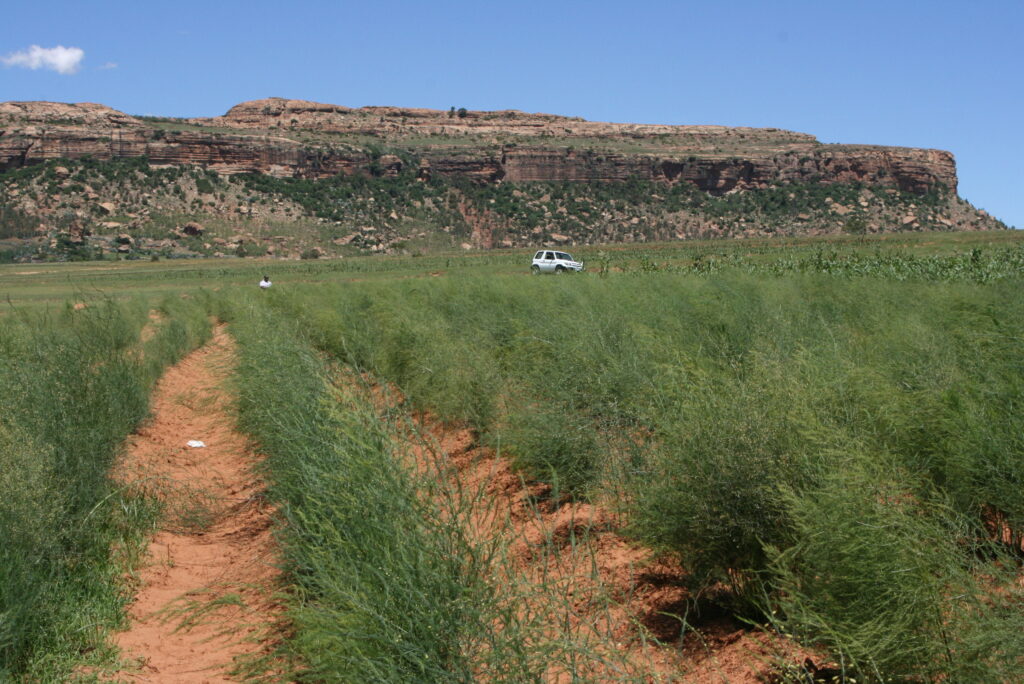
Lesotho is a mostly mountainous country in Southern Africa and has a population of about 2.33 million. Located at an altitude of 1,400 metres (4,590 ft), it has the distinction of having the highest low point of any country. Although mountainous, there are many hectares of arable land with the qualities necessary to produce great asparagus: sandy loam soils, over 300 days of sun per year, and labour rates that are very competitive in the global market. “Asparagus was grown successfully in Lesotho for a number of years in the 1970s and 1980s for canning, so we are confident that it can be grown again on a commercial scale, for high quality, fresh green asparagus,” Stainburn said. “Our niche consumer is the individual who cares about where their food comes from.” Records from the 1980s show average yields of three tons per hectare without irrigation, but those records are 30-40 years old. “Plant varieties and growing techniques have improved significantly since then. With the addition of irrigation, we should see yield reliability and harvest volumes increase,” Stainburn said. “Starting in 2016, we conducted a series of trials to learn how to grow asparagus specifically in Lesotho; namely how to source labour, and inputs effectively. We found that much of the knowledge from the 1980s has been lost as the former generation of farmers has retired, so farmer training is a big part of our scale-up process,” he said.
There’s local demand in Lesotho
African kingdom
During trials in 2018, 2019 and 2020, Kingdom Asparagus delivered fresh asparagus to local restaurants and to a large grocery store, Pick n Pay, in Lesotho capital Maseru, which asked for 250 gram bundles, Stainburn said. “The spears were cut and bundled in the early morning and delivered within a few hours to the store, where they were bought by customers as soon as they were placed on the shelves. Also, a few Germans who were living in Lesotho at the time contacted us to place a special, bulk order, a good sign to us that our quality was up to standards for discerning tastes,” he said. Starting a new agricultural endeavour in Lesotho has not been without its challenges and detailed planning is the key. “For example, do not expect to find a tractor with a ripper attachment a week before you want to plough – those arrangements should be made during the winter months. Working with local farmers also requires reducing their expected debt burden. Farmers see the potential of asparagus to increase their incomes versus growing a low value crop such as maize, but getting past the high input costs and the first few years of low revenue makes the crop inaccessible to most smallholder growers. Asking a farmer in Africa to take on debt for a few years before any income is realised, usually doesn’t end well,” Stainburn said.
Current and future priorities
Kingdom Asparagus is currently working to expand its area under cultivation. Favourable sites have been identified in the Leribe and Butha-Buthe areas of Lesotho where there are good soil conditions (namely sandy loam soils on flat land) and a potential for irrigation. “We have the need for partners with the expertise and financial capabilities to move our production forward from a local to export focused model. And in case you’re wondering, we usually grill our asparagus. We coat it with a little olive oil, sprinkle on some salt and then cook for 3-4 minutes on the grill. Simple, but the best way to enjoy what we have grown,” he said. The Government of Lesotho recognises the potential of re-establishing asparagus as an export crop, and has expressed a willingness to support expansion of production in whatever ways it can. There are tax incentives for new export based companies, through the Lesotho National Development Corporation, and free movement of currency. Lesotho is also part of many international trade agreements for low income countries, Stainburn said.
Previously a British protectorate, Lesotho gained its independence in October 1966 and is currently classified by the World Bank as a lower middle-income country. Per capita gross domestic product (GDP) was US$999.7 in 2022, a year in which Lesotho’s economy grew by 1.8%, mainly driven by construction, mining, manufacturing, business services, and public administration. Agriculture also contributed positively due to good seasonal rainfalls and input subsidies, according to the World Bank, which also said that unemployment, inequality and poverty remained high in 2022.
In a bid to combat rural poverty back in the 1970s, the government in Lesotho launched a project promoting asparagus production for export to Europe. A cannery was reopened and initially bought asparagus in three grades: white, green and salad.
The project ran from 1974 to 1999 and despite considerable investment (including financing under the UN Capital Development Fund), it encountered many difficulties, ultimately failing to provide sustainable livelihoods for the rural poor.
According to an article in the Journal of Sustainable Development in Africa*, factors closely linked to the unsustainability of Lesotho’s asparagus production project were (a) poor management of production and (b) processing and marketing services that inhibited the expansion of asparagus production and made it impossible for Lesotho’s asparagus to compete effectively in the Western European markets.
Among the various problems leading to the failure of the project was an inability to take advantage of the shift in consumer preferences in Western Europe towards greater demand for fresh asparagus, largely due to lack of air cargo availability.
Greece’s total cultivated area in 2021 was 1,500 ha, which is just 2% of its highwater mark of 73,330 ha in 1997. “Our farms are small,” said Gkouderis, “the average farm is 1 ha.” The four main growing regions are Eastern Macedonia and Thrace (750 ha), Central Macedonia (600 ha), Western Greece (140 ha) and the Peloponnese (50 ha), with white asparagus production mainly occurring in the first three and green in the latter. Cultivation has been steadily dwindling in Eastern Macedonia and, to a greater degree, in Thrace, due to the difficulty of the cultivation, a worker shortage, the high cost of labour and of establishing cultivation and because other crops, such as kiwifruit, are better suited to these areas. In contrast, however, the asparagus acreage has been increasing in Central Macedonia in recent years because wholesalers have provided economic incentives to establish asparagus cultivation and also because it’s an area of extensive fruit production so the growers don’t have many other profitable choices. “In Aridaia, my area, the asparagus area has been increasing by 30 ha a year,” he said.
Exports go mainly to Germany, Netherlands
D. Gkouderis
White asparagus, which accounts for 95% of Greek production, is harvested from late February to late April/early May in Greece, while green asparagus (the remaining 5%) is picked from early March to early June. The average yield for white asparagus in Greece is 10 tons/ha, while for green it is 7 tons/ha. Sixty percent of the crop is marketed by wholesalers and the rest by producer groups, Gkouderis said. In March, 2023, prices being paid by wholesalers to farmers ranged from €3.50/kg in some areas to €5.50/kg in other areas, with the lower prices applying to areas that had just started harvesting and where the quality was not yet stable. In 2022, Greece exported 5,746 tons of asparagus, mainly to Germany (90%) and the Netherlands (10%). “We’re not a very big market so we don’t import asparagus,” he said.
Special features of asparagus cultivation in Greece
D. Gkouderis
Depending on the variety, it’s common to plant between 13,000 and 15,000 crowns per hectare in Greece, with a distance between rows of 2.2-2.5 metres. The sowing depth used to be 25 cm but now growers sow at 18-20 cm in order to achieve more earliness. Eighty percent of the farms are drip-irrigated and many fertigation applications are made. Black and white plastic (film) is commonly used to cover the rows, with 60-70% of growers using mini tunnels in addition to the plastic covers. For extra earliness, some growers use an additional layer of plastic above their tunnels.
Labour shortage the biggest problem
There are no mechanical harvesting methods yet, so manual labour is still needed and is “a great cost for the growers.” The salary is €35 for 8 hours of work, which includes a 1 hour break. Social security adds an extra 10% in costs but in most cases doesn’t apply “because many of the workers are working illegally.” The seasonal labour comes from neighbouring countries, mostly Albania, with only a small percentage of the workers being Greek. Gkouderis said the worsening shortage of labour is the biggest problem for Greek growers.
Asparagus Pests and Diseases
When it comes to foliar diseases, the main ones in Greece are Stemphylium botryosum, Puccinia asparagi and Botrytis cinerea, while for root systems it’s Fusarium spp. and Helicobasidium purpureum (syn. Rhizoctonia violacea). The principal pests are Zeyzera pyrina, Parahypopta caestrum, Ophiomyia simplex, Lygus spp., Thrips spp., and Mites.
The rhythm of exports of fresh asparagus generally starts to rise from about week 12 in Peru and usually reaches its crescendo around the week 48 mark, with 78% of all the shipments taking place in the period in between, IPEH’s research shows. In total, the country shipped over 25,872,640 boxes (of 11lb or ≈5kg) in 2022. The lowest total in the previous 11 years was 23,082,591, in 2017, and the highest was 27,329,252 boxes, in 2021. When it comes to FOB value, the highpoint between 2012-22 was a total of over $448.8 million in 2013 and the lowest was $341.3 million in 2012. In 2022, Peru’s fresh asparagus exports had a FOB value of almost $370 million, which was 8.4% down on 2021.
The US takes 76% of Peru’s shipments
With a total of 18,821,270 boxes, the US took nearly 73% of the boxes of fresh asparagus exported by Peru in 2022. IPEH’s research shows that the next biggest markets for Peru were Spain (8%), the Netherlands (7%), the UK (6%), Belgium (1.2%) Canada (0.8%) and Brazil (0.6%). By FOB value, about 85.6% of exports to the US are by sea, 13.9% by air and 0.5% by road, while for Europe air accounts for the bulk, nearly 71%, and sea 28.7%, and for Asia, where South Korea is the biggest market for Peru, air (87%) also leads over sea (13%). Over 2021-22, the number of boxes shipped to the US slipped 4.6% and the FOB value fell 7.3%, while for Spain there were corresponding increases of 5.5% and 3%. The Netherlands saw declines of 9.5% and 12.2%, and the UK of 14.7% and 17.6% respectively.
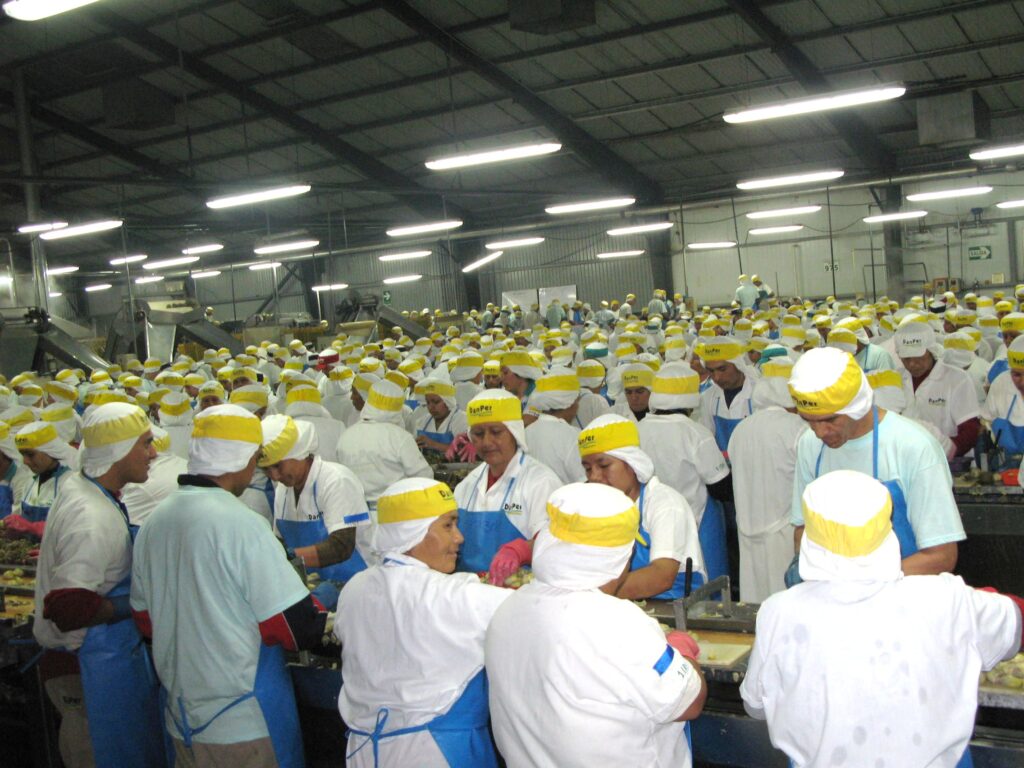
Peru’s top exporter in 2022 was Danper Trujillo
AW
According to IPEH’s analysis, the top exporter for fresh asparagus from Peru in 2022 was Danper Trujillo, which achieved a 46% year-on-year (YoY) boost in its export volume to over 2.48 million boxes – accounting for 9.6% of the Peruvian total – and 34% growth in FOB value to over US$39.8 million. Next came Complejo Agroindustrial Beta with over 2.16 million boxes (+4.4% YoY and holding an 8.4% market share) and FOB value of over $34.2 million (-7.6%). Agrovision Peru logged growth of nearly 15% YoY in volume to over 1.2 million boxes and almost 25% in value to nearly $16.1 million, with Agricola Cerro Prieto’s shipments climbing 11.3% to 1.16 million box with the value up strongly by nearly 25% to nearly $16.1 million.
Callao airport and Salaverry the top departure points
In the 5 years to 2022 there’s been a big shift in departure points for fresh asparagus from Peru. Compared to 2018, the number of boxes shipped from Callao airport has plunged nearly 50%, though it still retained its lead with a total of nearly 7.96 million boxes. Callao port, which had ranked second, now ranks third with a total of 4.62 million (-15.6% since 2018) while sendings from Salaverry (La Libertad) Pisco (Ica) have more than tripled to respective totals in 2022 of nearly 7 million and 3.27 million boxes.
Peru’s asparagus seed imports led by UC 157 F2
C. Befve
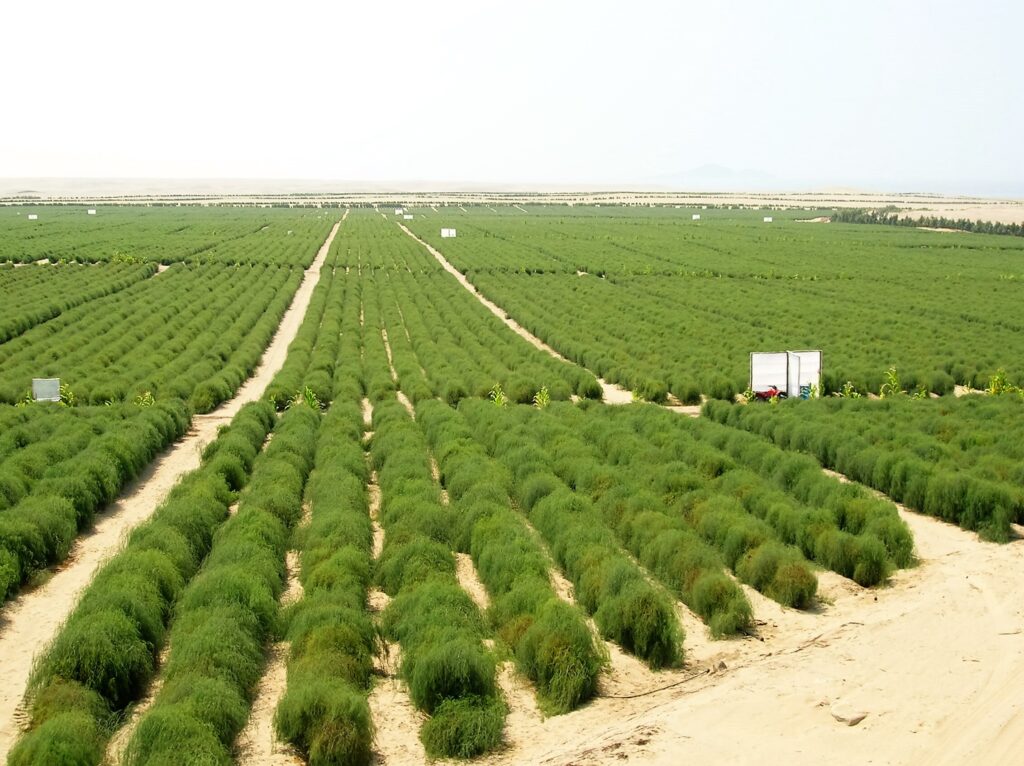
Peru imported nearly 733.4 kg of asparagus seeds in 2022, down from 1,967.45 kg in 2021. UC 157 F2 (265 kg) was the top seed in terms of volume in 2022 but UC 157 F1 (220 kg), which ranked second, was the most imported seed over 2018-22. In third place in 2022 was UC 115 F1 (199 kg), which until then had been the leader for the previous four years. In 2022, the region of Ica accounted for 38.3% of the nearly 15.5 million ha in Peru planted with asparagus, followed by La Libertad with 35.2%, Lambayeque with 16.8%, Ancash 4.9%, Lima 4.3% and Arequipa with 0.4%.
Asparagus can be grown almost anywhere in the world, in many climates and sometimes in very different soils. Its good preservation, the maintenance of its taste qualities and, above all, the added value that this vegetable generates throughout its production and distribution chain have turned it into a “globalised” crop in the same way as certain fruits such as banana, avocado, mango, kiwi, apple and, more recently, blueberry. It is an example of intercontinental trade in vegetables.
The “globalisation” of trade flow
C. Befve
The end of the last century saw steady growth in asparagus production around the world. From 140,000 ha in 1988, world production crossed the 200,000 ha mark just before entering the new millennium. Then it continued to progress up to 280,000 ha. The expansion of planted area has mainly occurred thanks to the emergence of new production areas, such as Peru and Mexico. Until then, asparagus was mainly grown in the countries where it was consumed, but it has taken off in countries where agronomic conditions were favourable to it and, above all, where labour is inexpensive. The “globalisation” of the flow of goods (by sea and air) and new transport technologies (containers) have led to the intensification of trade. Currently, global asparagus production spans 190,000 ha across four major production areas.
“Luxury product” in Japan
Asia grows asparagus on over 59,000 ha, with China alone accounting for 47,000 ha. China’s production is 70% white asparagus and 30% green asparagus and it has diverse end markets: 60% for preservation, 30% for the fresh market and 10% frozen. It is the world’s largest producer of canned asparagus. With a much smaller area (7,000ha), Japan is the other country in Asia where asparagus is a traditional crop. In Japan, Asparagus is sold for the fresh market with high added value and seen almost as a “luxury product” (see Asparagus World n°5/2023). Thailand and the Philippines have modest but stable production areas of about 1,600 ha of 100% green asparagus. Taiwan is focused on the fresh white asparagus market (90%). In this part of the world, Australia (2,000 ha) and New Zealand (1,000 ha) grow green asparagus, principally for their own domestic markets.
Peru’s weak point vis-à-vis Mexico
On the American continent, the predominantly green asparagus production of the countries of the North – the US (8,000 ha) and Canada (2,000 ha) – pales in comparison with that of Mexico (32,000ha). Climatic conditions, labour costs and proximity to the lucrative North American market are the factors driving the growth of Mexican asparagus, which continues upward. (See World Asparagus n°1/2019). Further south, Peru (18,000ha) is the largest asparagus-producing country in Latin America. It is one of few countries – along with its smaller neighbours, such as Ecuador (2,000 ha) and Colombia (800 ha), but also Thailand – that is able to grow asparagus year-round. Peru’s production is spread across green (60%) and white (40%) asparagus. The canned goods market is its largest outlet (50%), followed by the fresh (40%) and frozen (10%) markets (see Asparagus World n°3/2021 & n°4/2022). But the distance to the North American market (9+ days by sea) and very expensive air freight are weak points in relation to its main competitor, Mexico, which has gained a lot of market share. In the past 15 years, the economic situation has forced Peru not only to reduce its acreage but to shrink its production schedule by two months and stop exports in January and February. As a result, Peru has lost its position as the world’s leading asparagus-producing country. Chile (2,000 ha) is a dynamic market with green asparagus areas mainly oriented towards supplying the frozen segment (60%). On the same continent, Argentina (1,000 ha) (see Asparagus World n°6/2024), Brazil (800 ha), Guatemala (500 ha), Uruguay and Nicaragua (200ha), are also asparagus-producing countries.
Attempts that did not endure
Asparagus production is almost absent from the African continent (3,700 ha), with rare exceptions in the North and South. South Africa has the largest asparagus area (1,500 ha) focused on white asparagus production (80%), most of which goes to canneries (60%). The production of fresh asparagus finds its outlets on the domestic market as well as for export, particularly to Japan. Lesotho (see Asparagus World n°6/2024) and Kenya are also asparagus-producing countries. In North Africa, Morocco (500 ha) and Tunisia (200 ha) have hosted projects often led by European companies attracted by labour costs and precocity. In many cases, these attempts have not proved sustainable in the long run.
Europe invests its hopes in innovation
Europe is the botanical and historical cradle of asparagus production (58,000 ha). This is very clearly split between the production and consumption of green asparagus in the Mediterranean (Spain, Italy) and Anglo-Saxon (UK) countries and white asparagus production on Continental Europe (Germany, France, the Netherlands). Asparagus production in Europe is exclusively for the fresh market. In terms of surface area, Germany is the leading producer (18,000 ha), mainly of white asparagus. Spain (12,000 ha) and Italy (10,000 ha) are very much oriented towards the cultivation of green asparagus. Then comes France (6,000 ha), which produces white asparagus (70%) though is seeing growth in green asparagus (30%), then the Netherlands (3,000 ha) 100% white asparagus, and the UK (2,500 ha) 100% green asparagus. There is also white asparagus production in Poland (2,000 ha), Austria (800 ha), Belgium (700 ha), Hungary (500 ha). The general trend in European production is towards a decrease in surface area, particularly in Germany (see Asparagus World n°5/2023) and the Netherlands but also in Spain and Italy. The surface area is shrinking due to the lack of profitability of the crop, which is very much affected by the rising cost of labour, but also by a decrease in consumption. More recently, the effects of climate change and reduced water availability are also limiting renewal and new plantings in Mediterranean countries. To stay competitive, Europe has relied on technological innovation. It has developed very productive varieties and gained precocity by using plastic covers. European producers are trying to reduce their production costs by developing the mechanisation of cultivation and the robotisation of harvesting.
Signs of emergence from crisis
This world tour of asparagus-producing countries can be summed up as “producer/consumer countries” that have reduced their surface area. And “producer/exporter countries” that expanded them. The competitiveness of each of these is constrained by the cost of labour, the cost of getting to market (logistics) and by the sales price. The cost of labour is a parameter that is constantly increasing (see box). The availability of asparagus around the world plays a role in market fluctuations. By analysing the evolution of asparagus areas and world prices, Christian Befve, an international consultant, notes that when the world asparagus production passes the 240,000 ha mark, prices are destabilised and the market enters a crisis situation. “This is the situation that the asparagus world has just experienced over 2014-18 with a strong increase in global surface area, from 210,000 ha to 280,000 ha over this period, leading to stagnation and a fall in prices, then to a phase of grubbing up and regression of areas,” he says. Since 2022, when the global surface area fell below 200,000 ha, there has been an increase in world asparagus prices. “Does this signal that we are starting to emerge from the global asparagus crisis?” the expert wonders.
It takes over a kilo of asparagus to pay for an hour of work
In a comparison between the number of kilos of asparagus (at the farmgate price) needed to pay for an hour of harvesting work in France and Peru, data provided by international consultant Christian Befve shows they have grown in parallel. For example, in 2005, it took 2 kg of asparagus to pay for one hour of work in France but just 1.3 kg in Peru. By 2025, the gap between the origins will have widened, to 2.5 kg in Peru and more than 4 kg in France.
Manage consent
To provide the best experiences, we use technologies such as cookies to store and/or access device information. Consenting to these technologies will allow us to process data such as browsing behavior or unique IDs on this site. Failure to consent or withdrawing consent may adversely affect certain features and functions.
Functional
Always active
Technical access or storage is strictly necessary for the legitimate interest purpose of enabling the use of a specific service explicitly requested by the subscriber or user, or for the sole purpose of carrying out the transmission of a communication over an electronic communications network.
Preferences
Technical access or storage is necessary for the legitimate interest purpose of storing preferences that are not requested by the subscriber or Internet user.
Statistics
Technical storage or access that is used exclusively for statistical purposes.Technical storage or access that is used exclusively for anonymous statistical purposes. Absent a subpoena, voluntary compliance from your internet service provider, or additional records from a third party, information stored or retrieved for this sole purpose generally cannot be used to identify you.
Marketing
Technical access or storage is necessary to create user profiles in order to send advertisements, or to track the user on a website or across websites with similar marketing purposes.