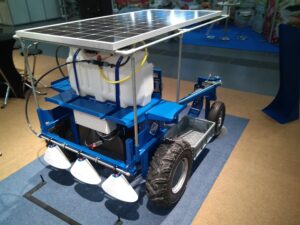
Engels Machines offers ASverde, an asparagus harvesting assistance machine from a prototype tested in 2023. The harvester is equipped with a rear-mounted sprayer to ensure the weeding of the bed at the same time. The machine can be adjusted to regulate the application rate according to the speed of progress and at each stop (stop-and-go). The kit is equipped with a photovoltaic panel that ensures up to 80% autonomy which limits charging cycles.
Funck: recovering plastic films and ducting
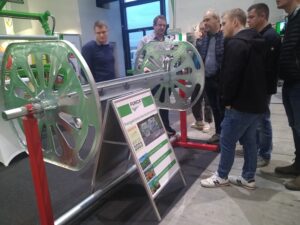
The Funck Machine Company has developed a drum with a central diameter that can be reduced so that it can be easily removed from the film roll. This drum, variable in diameter thanks to a simple mechanical system, allows plastic films and flexible drip ducting to be wound. It can be used for all film setting and dispensing machines from different manufacturers.
Hermeler: Emptying the Hems of Mulch Films
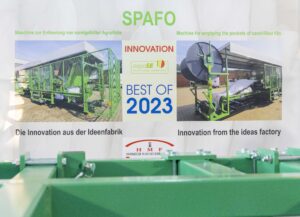
SPAFO, a platform for the recovery and processing of pocket mulching films for asparagus crops, was presented for the first time at ExpoSE. The machine is designed to cut open the bags and empty them of their contents (sand, soil), so that they can be recycled. According to the manufacturer, it ensures the removal of more than 90% of soils, which limits the weight of the films for transport and facilitates their reinsertion into the reuse cycle of used agricultural plastics.
Hepro: the smallest peeler on the market
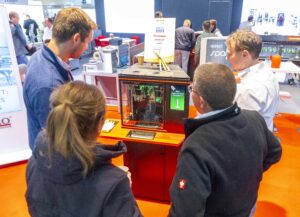
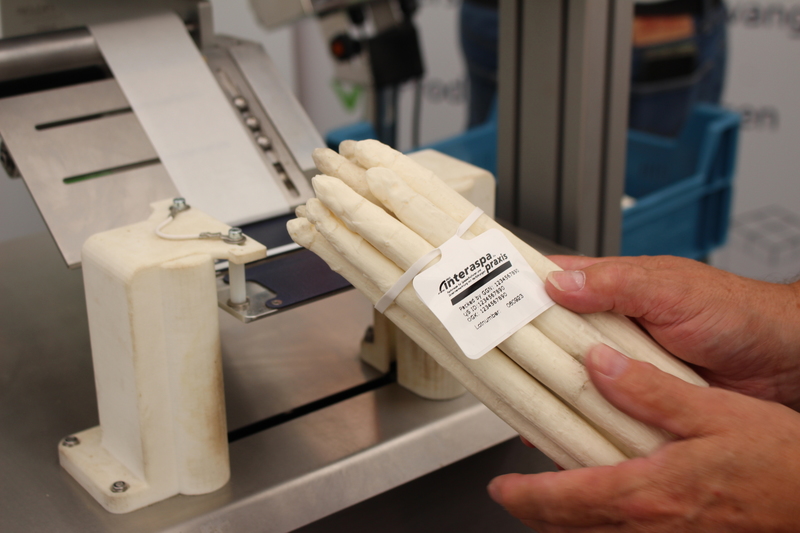
Hepro, who have mastered the vertical peeling technology for asparagus, have designed the smallest peeling machine offering self-service «peeled asparagus to go» directly from the point of sale. Intended for shops or farm shops, this very compact machine only requires an electrical outlet.
FreezeDry : Freeze Drying at Home
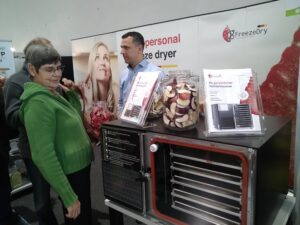
FreezeDry presents freeze-drying units with different capacities, from 2, 20 and 80 kg. The equipment from the agri-food industry and adapted to the scale of an SME freezes and then dehydrates all food products, fruit and vegetables, but also meat and fish. The products retain their colour and volume. The freeze-drying process takes between 10 to 50 hours depending on the size and thickness (0.5 mm/hour). The products are then sold dry.
Fardin Machine: Reducing Harvesting Time
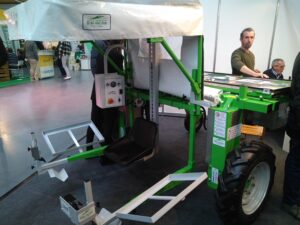
The Italian manufacturer has taken over the activities of the Ecogreen Company constructing machines to assist with the harvesting of green asparagus. The Far-Green is equipped with two 1,000-watt electric motors and has a gearbox directly connected to the drive wheel to improve traction. Its track is adjustable in width from 1.20 to 2.20 m as well as height adjustable to be used for harvesting white asparagus, with the adaptation of a structure to lift plastics. A platform is used to store crates. The manufacturer announced time savings of 50% – compared to a traditional harvest.
Neubauer: Handling Robot
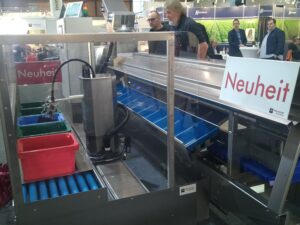
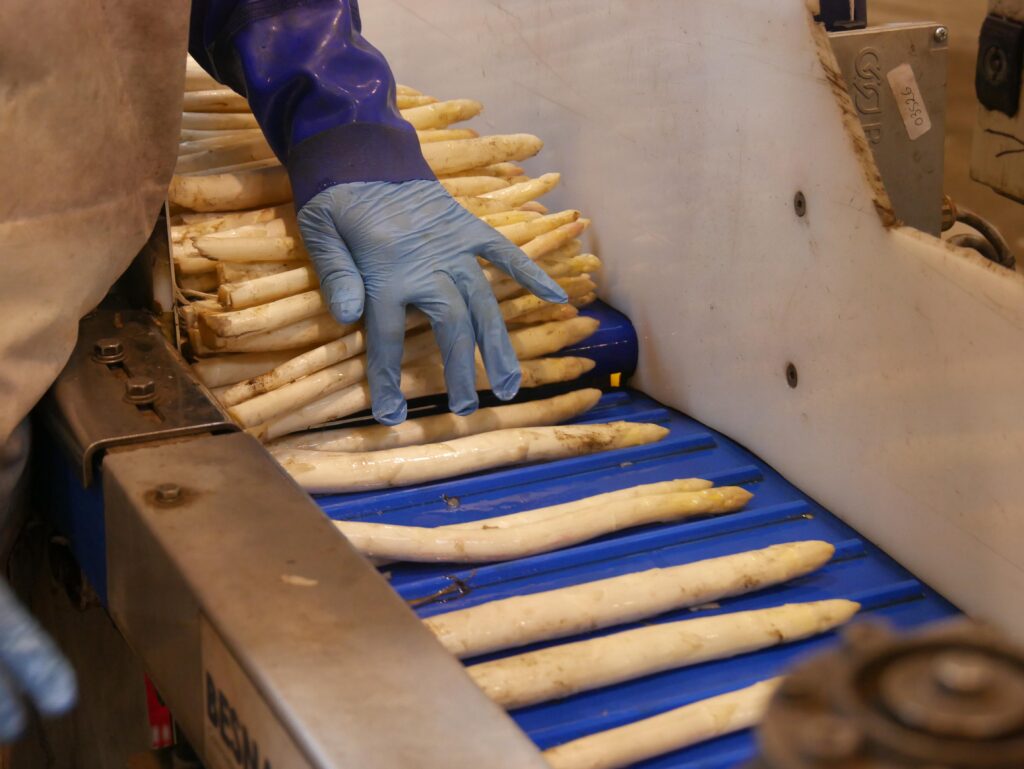
Neubauer presented a prototype for handling and crating asparagus at the grader outlet. The handling arm is equipped with a gripper able to grasp a dozen spears and place them in a box. Each arm ensures the release of 10 to 12 calibration outputs, i.e. approximately 500 kg/hour. It reduces the number of support people on the grader by replacing at least one person.
Bejo: Sirius, a late novelty
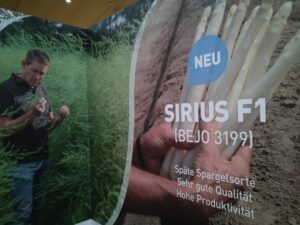
Sirius F1 (ex 3199) is a 100% male hybrid specially bred for the cultivation of late white asparagus. This variety has a very good yield with a high percentage of category 1, homogeneous in size. According to breeder Bejo, the spear is very white with a closed tip of excellent quality. The plant performs well against rust and hollow stems and purple discolouration. Sirius is also suitable for heated cultivation and completes the range with Prius, Cumulus and Cygnus.
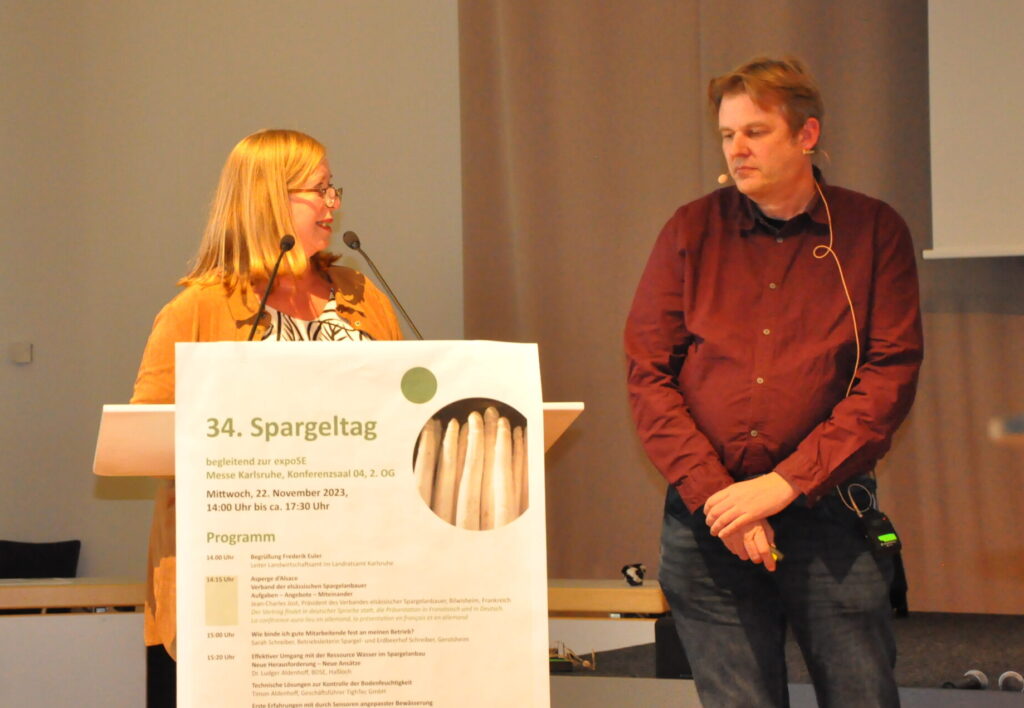
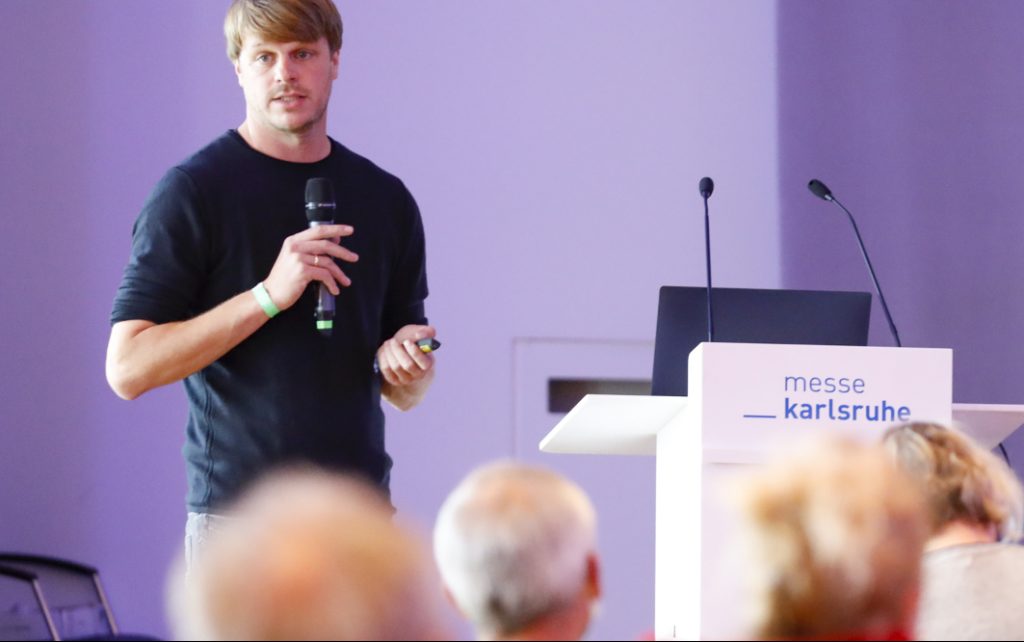
The conference hall at the Karlsruhe Trade Fair Centre was well attended and interested parties were able to listen to presentations from international guests and experienced experts. In addition to asparagus cultivation in the neighbouring region of Alsace, one of the main topics was the sustainable irrigation of asparagus plants. In addition, the results of current cultivation trials were presented and the situation of the minimum wage in Europe was explained.
Asperge d’Alsace – Association of Alsatian asparagus growers
Directly on the opposite side of the Rhine, asparagus cultivation plays an important role in Alsace’s agriculture. In Alsace, the total asparagus area of around 565 hectares is currently farmed by 120 producers, although the farms in the south are somewhat larger. Pale asparagus is marketed both via co-operatives and privately from the farm. Jean-Charles Jost, President of the Aperge d’Alsace association, in which 50 farms are organised, presented the association’s marketing strategy together with Philippe Sigrist. For 30 years now, the association’s primary objective has been to support asparagus cultivation in Alsace and to emphasise it as a regional brand with a very distinctive profile. The association’s modern and versatile marketing is exemplary and easily recognisable on social media, on its own website and also on the radio during the season: the traditional and recurring logo can be found on the personalised product labels and all other print media. By working together with cooperation partners from retail and catering, a competition and a season opening for the press, the association creates public awareness and a loyal customer base. Last but not least, the association endeavours to strengthen the «togetherness» of its own members through events at the beginning and end of the season and thus counteract the actual competition.
Results of current cultivation trials were presented
The increased shortage of employees since Covid made it very clear to Sarah Schreiber that intensive efforts to recruit employees were needed. Her company continues to work with local employees and takes into account the skills and opportunities of each individual in order to be well positioned locally.
Climate change has become a concrete and tangible reality in recent years due to hot, dry summers. Even the asparagus plant is reaching its limits without irrigation. In his presentation, Dr Ludger Aldenhoff from the BDSE advisory service uses scientific data to show that irrigating asparagus usually makes sense, but that too much water can also have a detrimental effect on the plants. Timon Aldenhoff and his company Tightec have developed a technical solution to this problem. Rolf Meinhardt from Tannenhof Weiterstadt was also able to report on his experiences with the soil moisture sensor in a two-year asparagus plantation.
In a field trial in Lower Saxony, a comparison was made of the yield potential of asparagus claws from crown plants and pressed soil pots. Nils Kraushaar, asparagus consultant at the Lower Saxony Chamber of Agriculture, accompanied and analysed this trial.
Katja Kuplich, Head of the Social Law Department of the Baden-Württemberg Farmers’ Association, presented the situation regarding minimum wage and ancillary wage costs in the various European countries and also pointed out the differences in the requirements regarding labour law, accommodation and meals, which make comparability difficult. Werner Magoschitz, manager of an asparagus farm in Austria, presented the situation in his own country.
The phenomenon of asparagus plantation dieback concerns all production areas in France, with variations depending on the year and climatic conditions. “In Maine-et-Loire, Landes or Gard, the mortality rate of shoots in vegetation is estimated at 10 to 20% on asparagus plantations over 8 years old. And yield losses can reach 30%,” said Maurane Pagniez of Invenio Asparagus Pole (a French experimentation centre). Phytophthoras, fusariums and purple rhizoctonia are the main causes and mycorrhization could limit or even resist these pathogens.
Promote the establishment of mycorrhizae
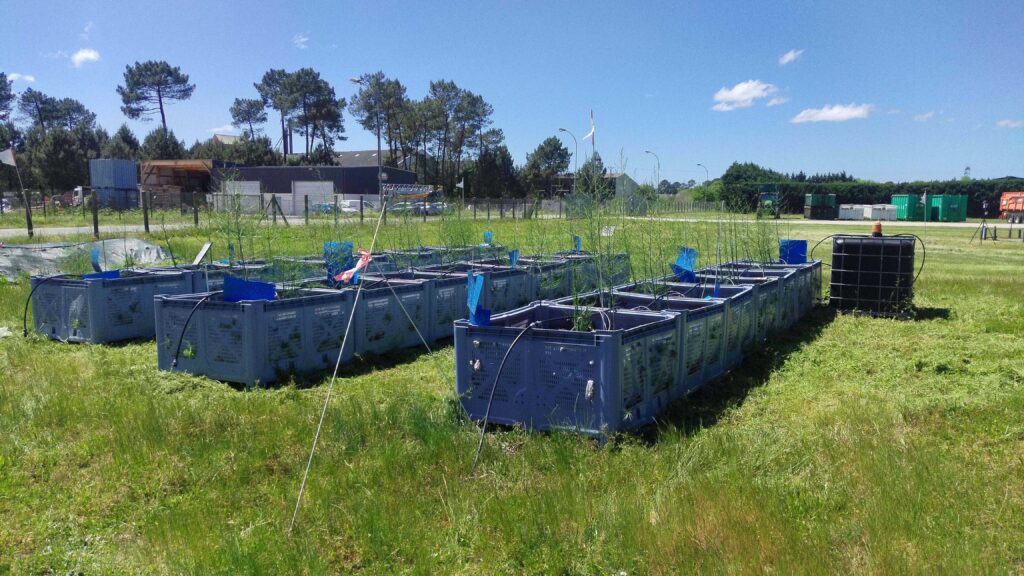
To avoid contamination of asparagus fields, crowns are often disinfected and treated before planting. “But this operation has the effect of destroying the endogenous mycorrhizae normally present on the crowns and making the young plants more sensi-tive to soil pathogens,” said Pagniez. The objective of a study by Invenio called Mycado is to evaluate the potential positive effects of the establishment of mycorrhizae. The project also aims to identify whether these mycorrhizae, once installed, have an impact on plant vigour. These tests involve comparing several strategies for promoting the establishment of mycorrhizae. “First of all, it is possible to wait for these mycorrhizae to settle without outside help, since it is a natural phenomenon,” said Pagniez. A second strategy is to employ « commercial solutions » for bringing these fungi. A third way is to obtain plants whereby nursery workers directly introduce mycorrhizae. The last strategy requires an intermediate step of relaying plants so as to multiply mycorrhizae, either by natural or commercial means, then incorporating this soil into the growing medium.
Impact on dieback
“After a year of culture in pallox, mycorrhizae became established via all modalities, including the control modality; that is to say, the one containing just the soil of a plot on which an absence of mycorrhization had been noted,” said Pagniez. In response to the other strategies, results will vary depending on whether the focus is on mycorrhization or on asparagus biomass. “The trial, which was set up in 2021, must be monitored over time with disease inoculations if necessary to ultimately validate the impact of mycorrhizae on resistance to dieback,” said Pagniez.
An informal meeting was held by representatives of German asparagus producer unions (North, South and East) and the French asparagus producers union during the Interaspa 2023 trade fair in Sandhatten, Germany at the beginning of September. The discussions, initiated in Germany, focused on proposals to change European standards regulating the harvesting length of CAT I and II asparagus, extending the dimensions from 22 cm to 24 cm.
An economically beneficial standard
The proposed new standard would enable a higher volume of marketed product without changing the quantity of inputs (plastic, pesticides, fertilisers, water, etc.). This would provide economic benefits to asparagus producers, through greater yield per hectare for unchanged production costs (particularly in terms of labour). The measure would not impact product quality because modern cultivation techniques with high mounds and new varieties are already being developed. In addition, it would allow waste reduction in the field, an argument that should also appeal to Brussels. The proposed new standard would simply be added to previous ones, with no obligation on producers to follow it. Everyone would remain free to continue to sell 22 cm asparagus instead of 24 cm. This would provide plenty of time for adapting labels, while also allowing producers that prefer not to make the calibre change to highlight their traditions. For its part, the French industry seems divided on the subject, with delegates expressing fears (poorly substantiated) concerning the risk of fibrosity in the last two centimetres of the spear and lower taste quality. The exchanges prompted a desire for a broader sharing of information between Germany and France, as well as with other producing countries in Europe. The coordination work could continue during ExpoSE in Karlsruhe in November, with an official meeting between Italian, Spanish and Greek authorities.
Attendance at Interaspa, a show dedicated to asparagus and berries in Sandhatten in Germany, is in sharp decline. Show director Fred Eickhorst said that this is the case with many agricultural events in the region. The sector is doing poorly, continuing the downward trend from the previous season, with a deflated market amidst spiralling production costs. Labour in particular represents a significant burden for German producers while the minimum wage continues to increase in the country. Bank interest rates are also rising, making it more difficult to invest to renew crops on German farms. In addition, producers are also encountering difficulties in handing down their activity to younger generations along the Rhine. So, the climate is far from calm, given all the uncertainties concerning the future of the German sector.
French campaign in sharp contrast to its neighbour’s
The 2023 German campaign saw volumes drop slightly, in line with the trend from the previous campaign, with stable prices, although price disparities were observed in different German regions. The climate remains gloomy for German producers walking the show’s aisles. By contrast, the French 2023 asparagus campaign went well, despite average sale prices over the season being identical to those registered in 2022 and production costs jumping again (+15%). However, French production is in currently going through a different phase from German production. The French asparagus sector is now stable after a period of drastic decline in surface area, and benefits from a dynamic domestic market. The German asparagus market, for its part, is a price-driven market. Experts from the sector advocate educating German consumers so that the share of household income allocated to food will rise from its current level in Germany of only 11% to closer to the 14% it is in France (Sources: Eurostat 2018; INSEE 2021).
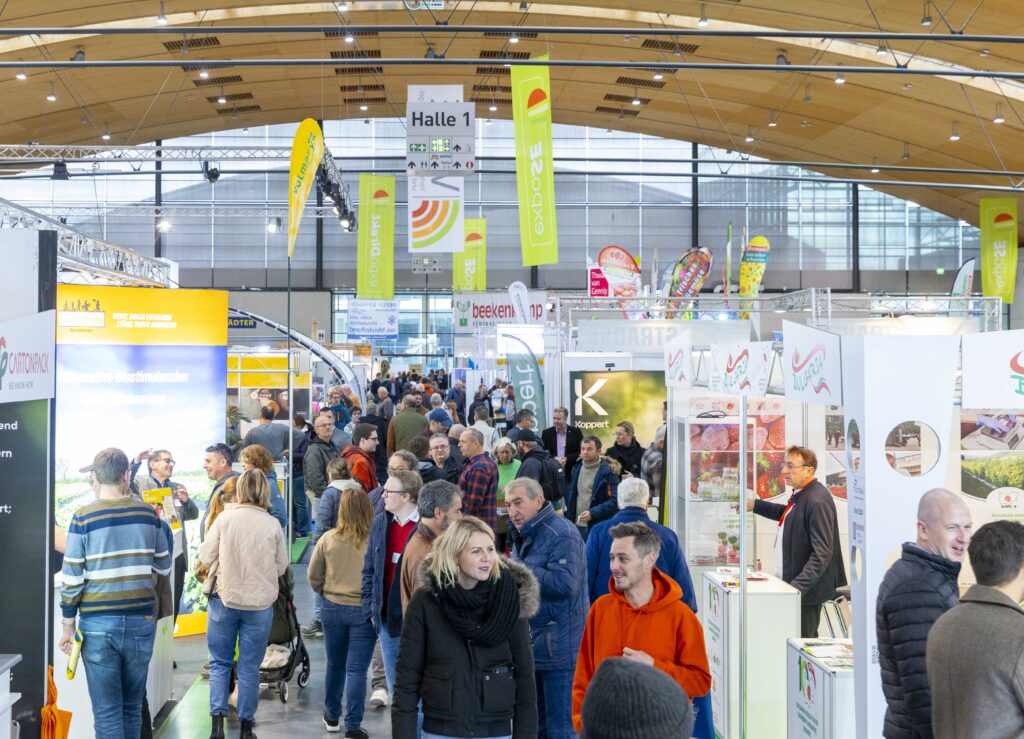
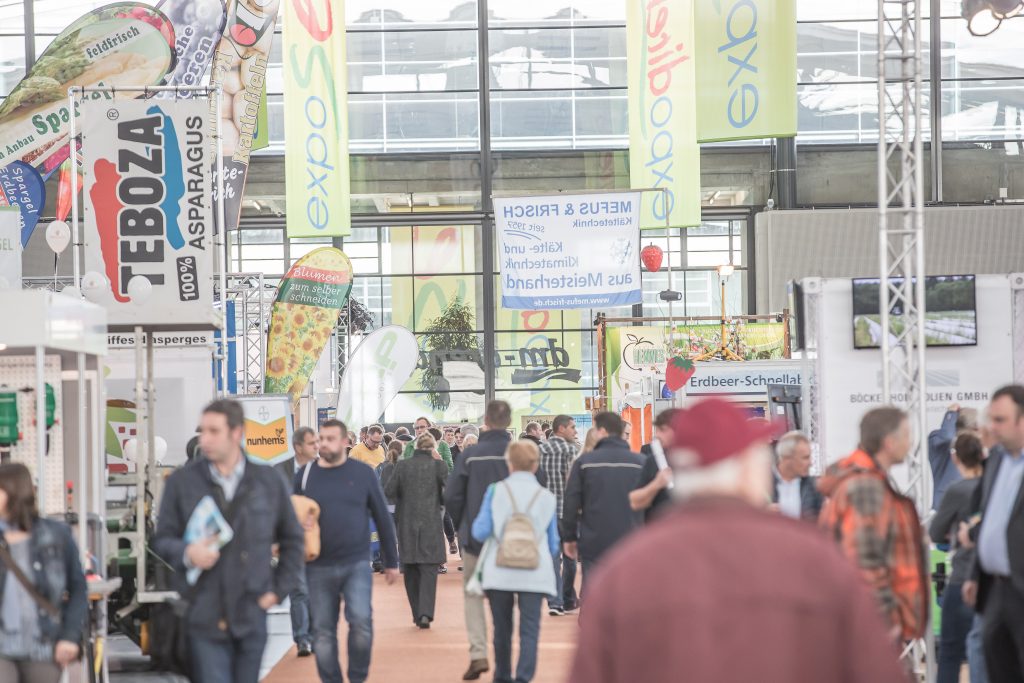
More than 400 exhibitors and 6,000 visitors attended the ExpoSE trade fairs, specialised in asparagus and berries, and ExpoDirekt, for direct sales, in Karlsruhe (Germany). Despite the concerns felt about the show Simon Schumacher, General Manager of VSSE, Association of Asparagus and Strawberry Producers of the Southern Germany, said he was satisfied with this edition which had a higher attendance than expected in a positive and dynamic atmosphere, and sometimes with some exhibitors having some unexpected contacts from Egyptian or Swedish visitors. Asparagus trade show ExpoSE hosted the first IAM, International Asparagus Meeting co-organised with Asparagus World magazine. In a European market of about 300,000 tons, Germany, a major player with 120,000 tons is currently experiencing a drop in production and consumption of about 15%. German technicians are finding, “With the increase in production and labour costs, some farming methods are no longer profitable.” This country, which has experienced the biggest increase over the last ten years, has also experienced a sharp drop in production since 2017. This year was also marked by a decline in asparagus consumption by German consumers, hitherto “European champions”.
Prototypes of harvesting robots
The same was true for the eight IAM stakeholders. Common concerns are mainly focused on the difficulty of recruiting labour for harvesting which has led to several prototypes of harvesting robots such as the one for green asparagus made by Muddy Machines currently under development in the United Kingdom. However, the labour costs presented by the speakers show marked differences: ranging from 35 euros per day in Greece to 17.63 euros per hour in the Netherlands.
Faced with a difficult 2022 campaign assessment, the project for a European observatory of asparagus production was led by Christian Befve, international consultant at IAM. “The 33rd Spargeltag – asparagus day – addressed more technical topics such as the use of plastic films, the prevention of browning of the spear, the robotisation of the harvest,” says Isabelle Kokula, asparagus advisor and organizer of the day.
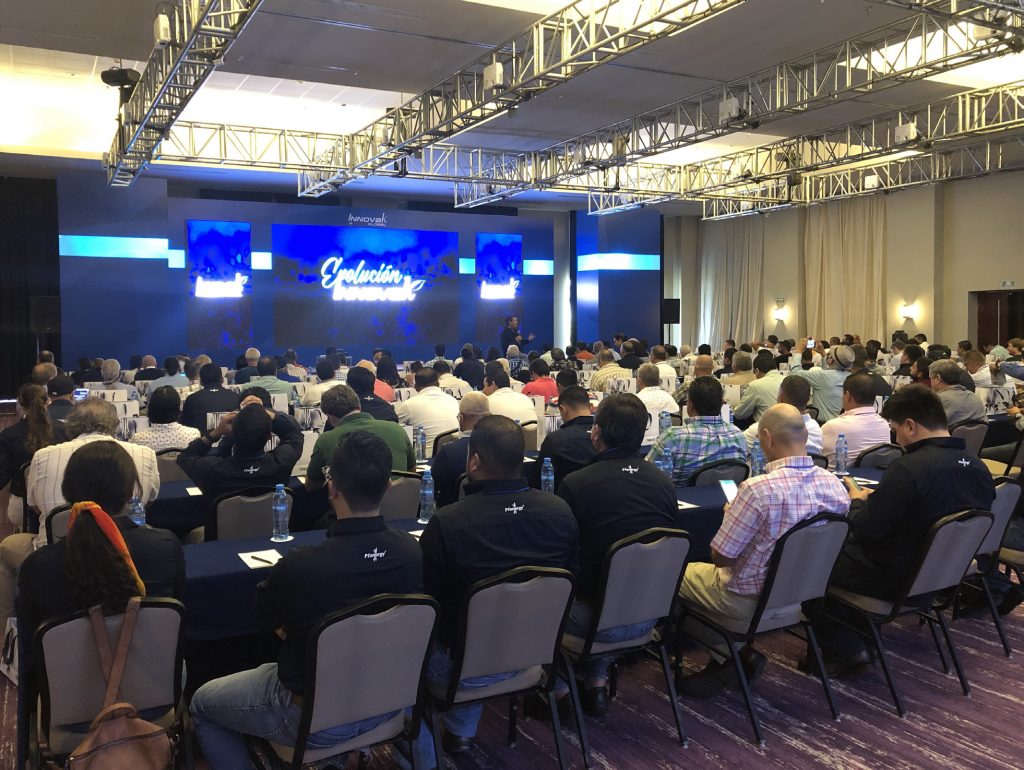
Constantly bringing new innovations to the market is part of Innovak Global’s DNA. And every two years, it brings together advisors, distributors and professionals with close links to it in order to share details of its latest advances. In July, 2022, over 200 people from all over the world attended the Innovak Evolution event in Cancún featuring talks by eminent scientists and demonstration stations of the company’s new technologies. It was there that the root biostimulation pioneer launched Pfenergy, its new technology named to reflect the use of polyphenol components as the source of energy for plants.
The Root Dynamics Regulation approach
Innovak Global was one of the first companies in the world to study the root and its environment, considering it a vital component with great potential to increase crop productivity. Accordingly, it set up a knowledge centre called the Rhizosphere Center, where researchers develop solutions for root problems in different crops. By 2005, the company had developed its Root Dynamics Regulation (RDR) approach to understanding all the processes that take place in roots and their environment during the crop cycle. With a focus on maximising the productivity of crops in a sustainable way, RDR is constantly updated as the company generates new findings or develops new products addressing emerging problems in the fields. For example, Innovak Global recently launched Balox, a biostimulant based on polyphenols that addresses plant saline stress.
Boosting root activity in crops
This comes in response to the root stress issues now facing various crops around the globe. Balox stimulates plants to generate their own osmolytes to face adversities in the environment, allowing better crop development amid salt stress. Innovak Global’s RDR technology covers five areas critical to crop development, starting with soil conditioners to improve plant establishment, followed by the previously mentioned root stress, such as that caused by saline stress. Then there is a focus on boosting root activity in crops, such as generating new roots, so as to improve nutrient absorption and fertiliser efficiency. Next is the rhizospheric environment and facilitating the beneficial interaction that exists between microorganisms and the roots, while the fifth area involves maximising root health so plants can better deal with the presence of soil-borne diseases that affect crop productivity.
“We are very glad that we have been able to convince so many interesting companies to join our dual trade fairs, expoSE and expoDirekt. The new products clearly show that companies know what is important in the industry: reducing costs, simplifying work, saving on personnel expenses, and adjusting production and direct marketing” explains Simon Schumacher, board spokesman for the Verband Süddeutscher Spargel- und Erdbeeranbauer e.V. and the event organiser for the expoSE and expoDirekt. Both new and proven products alike will be on display at the Messe Karlsruhe at the dual trade fairs expoSE & expoDirekt from 23rd to 24th November 2022. A total of around 400 exhibitors from eleven countries will be presenting at the 26th expoSE – Europe’s leading trade fair for asparagus and berry production – and 11th expoDirekt – Germany’s largest specialist trade fair for agricultural direct marketing.
Specialist presentations at the 33rd Asparagus Day and the Direct Marketer Forum
The 33rd Asparagus Day will focus on criticised aspects, as well as the profitability of using film in asparagus cultivation based on past experience, avoiding browning of asparagus stems, and cultivating and growing wild asparagus. Asparagus Day will be held on Wednesday, 23rd November from 2:00 to 5:15 PM in the large conference hall (2nd upper floor) at the Messe Karlsruhe, and is an event being put on by the Central Agricultural Office of the Karlsruhe District Administration and the Verband Süddeutscher Spargel- und Erdbeeranbauer e.V. (VSSE).
For the first time, the VSSE is organising the International Asparagus Meeting (IAM) alongside the trade journal Asparagus World. During the IAM, speakers will present topics on asparagus production in individual European countries and beyond. The goal is to familiarise participants with asparagus cultivation in individual countries, discuss market conditions, and avoid the potential for excess production International Asparagus Meeting will take place in three times :
10 a.m. to 11.30 a.m. – Part 1: Presentation of asparagus production in Europe and Canada 11.30 a.m. to 11.45 a.m. – Part 2: Presentation of the European Asparagus Observatory 11.45 a.m. – 12.30 p.m. – Part 3: Opinions of the speakers about the idea of the European asparagus Observatory
The increased consumption and production of asparagus in recent times have heightened the need to extend the shelf-life for long-distance distribution. During storage, asparagus spear quality is reduced due to toughening, water loss and changes in biochemical compound content. Various physical methods have been studied to reduce these undesirable traits, like quick cooling, long-term refrigeration, and storage in a modified atmosphere. Packaging management is also known to play a key role in preserving asparagus quality. Various research programmes have been set up to study the impact of different solutions for extending the shelf-life of fresh asparagus.
In Thailand, a team (Lwin et al., 2020) studied the effect of electrostatic atomised water particle (EAWP) treatment on the spear lignification and for maintaining asparagus quality. The results show that EAWP treatment maintains colour, reduces weight loss, and inhibits lignin and cellulose accumulation, leading to a better shelf-life of the asparagus during storage at 4°C.
In Italy, Toscano et al. (2021) showed that the use of micro-perforated coextruded polypropylene limits weight loss and maintains a fresh-like appearance of green asparagus of the Vegalim variety after 30 days of refrigerated storage.
In China, Pu et al. (2020) demonstrated that high-oxygen modified atmosphere packaging maintains a tender texture, inhibits the increase of lignin content and delays the lignification process in green asparagus stored for 30 days.
In South Korea, a team from the Kangwon National University (Wang et al., 2020) showed that a 60% CO2 treatment at 4°C for 48 hours in modified atmosphere packaging is capable of maintaining the post-harvest sensory and biological qualities of asparagus, and provides strong inhibition of microflora growth during the storage period.
In Poland , a team from the Warsaw University of Life Sciences (Gantner et al., 2020) developed an ethylene vinyl alcohol copolymer (EVOH) film combined with modified atmosphere packaging to enhance the shelf-life of white and green asparagus spears. They showed that the use of this new packaging with refrigeration at 2°C promotes reduction in weight loss and prevents changes in the colour, texture and sensory quality of green and white asparagus for 17 and 10 days respectively.
In the USA, Michigan State University’s School of Packaging (Benyathiar et al., 2020) studied the shelf-life of fresh-cut asparagus packed in modified atmosphere packaging (MAP) and vacuum skin packaging (VSP) in microwaveable tray systems. They found that both techniques combined with refrigeration (4°C) maintain the freshness and hedonic qualities of asparagus directly eaten from the package.
In Vietnam, Tran et al. (2020) showed that the use of a biofilm made of chitosan-alginate directly applied on the asparagus can be considered a new form of multi-component edible coating that allows very effective quality preservation and shelf-life extension.
In 2016, Garcia-Robles et al. from Mexico showed that asparagus spears treated after harvest with sucrose and acetylsalicylic acid present lower longitudinal and diametric growth, lower opening of bracts and less weight loss, thereby extending shelf-life at 10°C and 90% relative humidity.
Gestionar el consentimiento
Para brindar las mejores experiencias, utilizamos tecnologías como cookies para almacenar y/o acceder a información del dispositivo. Al dar su consentimiento para estas tecnologías, podremos procesar datos como el comportamiento de navegación o identificaciones únicas en este sitio. La falta de consentimiento o la revocación del consentimiento pueden afectar negativamente ciertas características y funciones.
Funcional
Siempre activo
El acceso técnico o almacenamiento es estrictamente necesario para el interés legítimo de permitir el uso de un servicio específico solicitado explícitamente por el suscriptor o usuario, o para el solo fin de realizar la transmisión de una comunicación a través de una red de comunicaciones electrónicas.
Preferencias
El acceso técnico o almacenamiento es necesario a efectos de interés legítimo de almacenar preferencias que no son solicitadas por el suscriptor o usuario de Internet.
Estadística
Almacenamiento o acceso técnico que se utiliza exclusivamente con fines estadísticos.Almacenamiento o acceso técnico que se utiliza exclusivamente con fines estadísticos anónimos. En ausencia de una citación, el cumplimiento voluntario de su proveedor de servicios de Internet o registros adicionales de un tercero, la información almacenada o recuperada para este único propósito generalmente no se puede utilizar para identificarlo.
Marketing
El acceso técnico o el almacenamiento son necesarios para crear perfiles de usuario con el fin de enviar anuncios o para rastrear al usuario en un sitio web o en sitios web con fines de marketing similares.