Archive

“We still need to ensure sufficient asparagus for supermarkets and other customers” by Goertz Asperges BV

Franc Goertz expands asparagus cultivation against the trend:

“We still need to ensure sufficient asparagus for supermarkets and other customers”

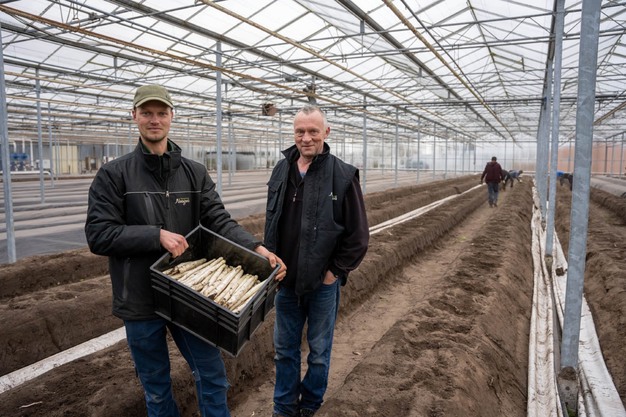
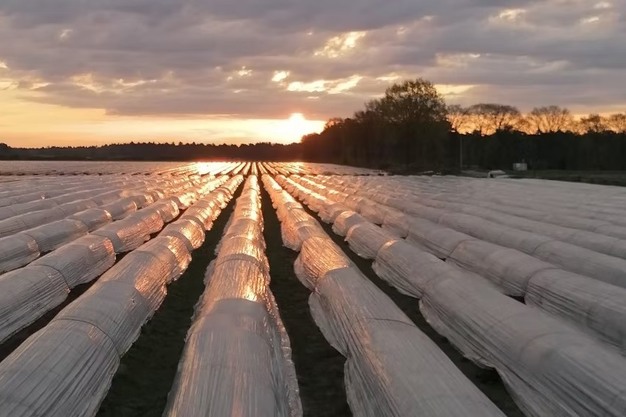
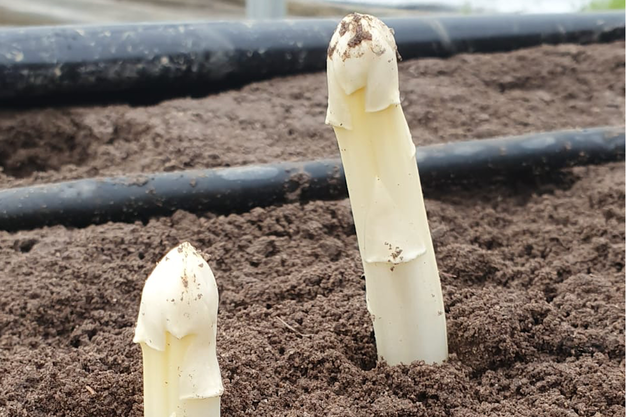
At Goertz Asperges in Maria Hoop, preparations for the asparagus season are in full swing. “We now have two-thirds of our acreage under black foil. Around 20 March, we expect to harvest the first asparagus. The rest of the acreage will follow later in the season, for harvest in April,” says Franc Goertz, who has been growing asparagus on the sandy soils of Limburg since 1987.

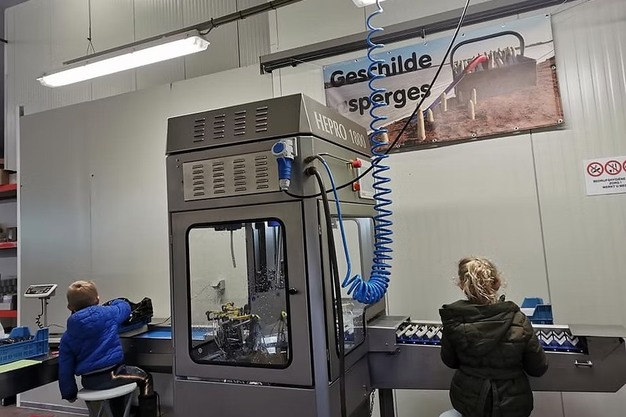
New sorting location for asparagus under construction

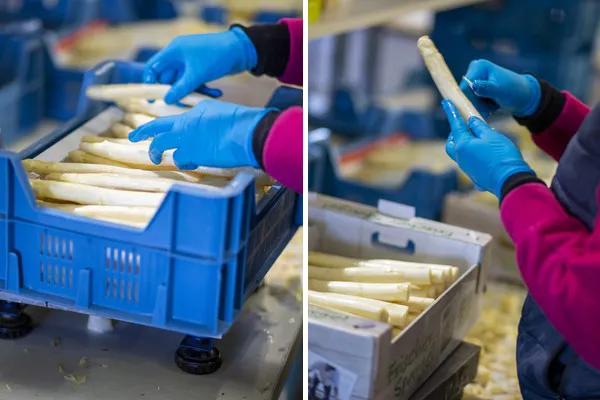
Against the trend, he has chosen to expand his asparagus acreage again this year. “We didn’t do it last year, but we are going to make up for it now. We still have to ensure that we have enough product left for the supermarkets and other customers,” the grower states. He expects a reasonably good harvest this season. “Last year, production was low, but last summer was reasonably good. However, we do see that many plots have not yet recovered from the flooding two years ago.”

“We see that it is not easy to maintain sufficient acreage in the Netherlands. Many small growers are stopping, and larger growers are no longer expanding as quickly, so the total area continues to decline slightly. There are several reasons for this. A number of growers do not have access to enough fresh land. In addition, it is not easy for everyone to secure sufficient staff, and there is a group of older growers who do not have a successor,” Franc continues.

Sweet potatoes
Goertz is also expanding sweet potato cultivation again this year. “We are now supplying the last sweet potatoes of the season, but we would eventually like to move towards year-round production. We see enough demand from supermarkets, as well as from retail and farm shops. Demand increases slightly every year. Next year, we hope to deliver through until July.”

While Goertz initially grew sweet potatoes in two rows per bed, the plants are now grown on a small potato ridge. “We believe the plants warm up faster and deliver a higher yield,” says Franc. “Every year, the quality of Dutch sweet potatoes improves. It has to, because I want to be able to compare the product with the American ones; after all, these are the very best available on the market.”

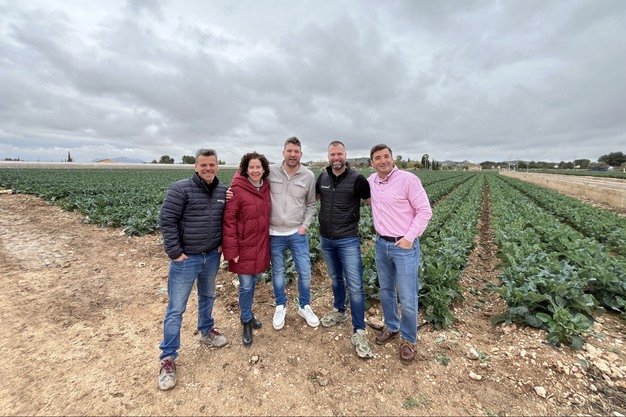
Franc with his family

For Goertz’s third crop, blueberries, he has no plans to expand. “We are maintaining our plantation, but not increasing it. Last year, the harvest and price of blueberries were good, but it is and remains a difficult crop because it is so easy to transport. You can ship blueberries over long distances, and they can be supplied more cheaply from abroad. Our main crop remains asparagus, sweet potatoes are a product on the rise alongside it, and we are keeping blueberries stable.”

For more information:
Franc Goertz
Goertz Asperges BV
Veestraat 20
6105 AB Maria Hoop
info@goertzasperges.nl
www.goertzasperges.nl

The first french white asparagus are already avilable at ASPA2 by FreshPlaza

Jacques Guironnet, ASPA2

The first French asparagus are already available!

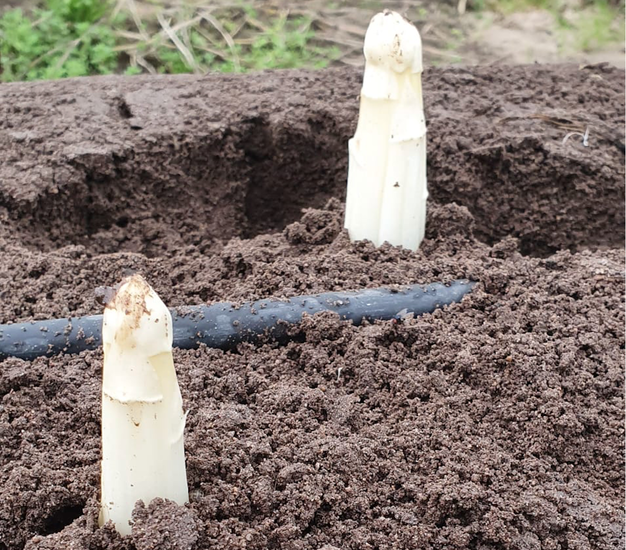
Every January, Aspa2 marks the start of the French asparagus season. Based in Indre-et-Loire, the company is one of the very first to market asparagus in France, kicking off a campaign that is eagerly awaited by market operators. This year’s harvest began on January 12th, under conditions that were deemed particularly satisfactory, both agronomically and commercially.

“Good sizes and quality” right from the start
“We have good quantities and, above all, very good sizes for the start of the season,” explains a delighted Jacques Guironnet, the company’s managing director. Quality is once again at the heart of Aspa2’s priorities, with a product that fully meets the market standards. “We have a very white product, as we always strive to do. This is a very important criterion for us.”

Although the last few weeks have been marked by cold weather, this has not penalized production; quite the contrary. “On the one hand, our underground heating system protects us from the cold temperatures. In addition, we had some good vegetation this year, which enabled us to build up reserves in the autumn. It also explains the good sizes we have.” For a number of years, Aspa2 has relied on high-performance heating networks, enabling it to achieve remarkable earliness while ensuring regular production. A decisive advantage that explains its ability to reach the market well before spring.

An exceptional niche and a market to match
In terms of marketing, the arrival of the very first French asparagus is always a big hit. “Customers are very happy to see the arrival of asparagus. It signals an early spring and, in the middle of winter, that is very good news.” In France, Aspa2 works mainly with wholesalers, but also generates a significant proportion of sales in exports, particularly to Asia, several European countries, and North America.

Being the first on the market is a definite advantage, even if this positioning corresponds to a very specific niche. “It is a production reserved for exceptional circuits,” admits the director. In terms of price, initial feedback has been satisfactory. “In a rather gloomy economic climate for many sectors, we are fortunate to be positioned in this particular niche.” On the strength of this momentum, Aspa2 is aiming to keep the campaign going right up to Easter, a key period for asparagus consumption. “We are enjoying good regularity in production, thanks to our fairly exceptional environmental conditions. So far, everything has been very positive, and we hope that the season will continue in this vein.”

For more information:
Jacques Guironnet
ASPA2
Phone: +33 (0)2 47 58 95 93
info@aspa2.fr
www.aspa2.fr

“Asparagus supply has been increasingly limited in recent years” by FreshPlaza and Danper

Cristina Albuquerque, from Danper (Peru):

“Asparagus supply has been increasingly limited in recent years”

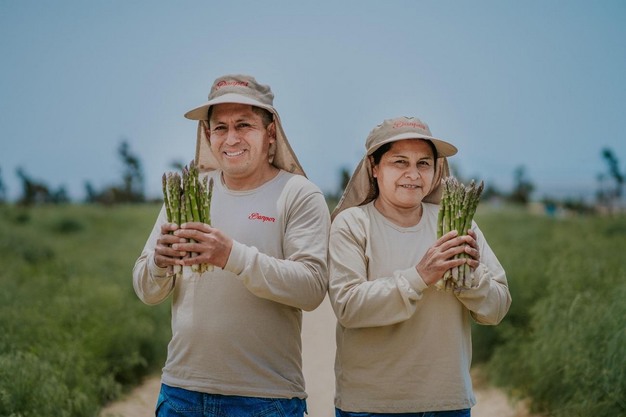
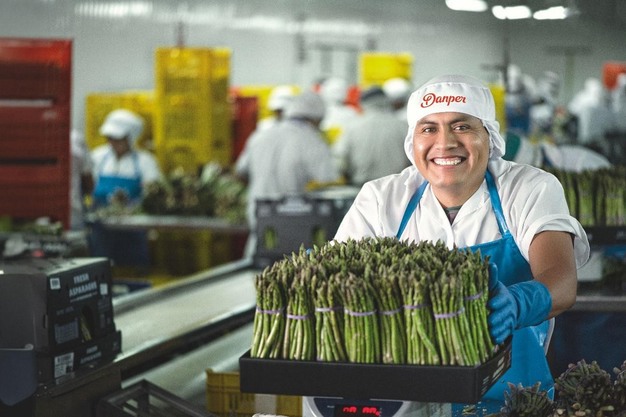
Peru’s 2025 fresh green asparagus season is drawing to a close. “We have succeeded in managing the supply for most of the year, aligning our production to the seasonality of our main target markets,” says Cristina Albuquerque, commercial director for Danper’s fresh and frozen categories.

“This season, with our three categories combined, we are expecting to export around 10,000 tons of asparagus, 80% of which corresponds to fresh produce and the other 20% to canned and frozen,” says Albuquerque. The UC157 remains the predominant variety in the company’s fields, but looking ahead, there’s also ongoing research into the behavior of new varieties.

There has been a gradual recovery after recent climatic phenomena, such as El Niño and Yaku. “After these phenomena, we have been working already in the years 2023-2024, and the company has been making a considerable effort at both an agricultural and quality technical level to be able to recover the plantations,” says the director. Although yields have not yet reached previous levels, agronomic management and technological innovation have enabled significant progress to be made.

“We are mainly shipping to Europe and the United States,” says Albuquerque, who also highlights the growing presence in markets such as the United Kingdom, Ireland, Italy, and France. The main competitor is Mexico and, to a lesser extent, the seasonal European productions. “When there is production from Mexico, we focus on giving due maintenance to our fields and packing facilities, as well as making sure to meet our commitments in canning and freezing,” she says.

Green asparagus is highly perishable, which means that air shipments are essential if you want certain calibers to reach the markets with the right quality. However, dependence on air freight means higher costs and logistical challenges. “Asparagus is still a product that is heavily dependent on air shipments because it is quite perishable,” says Albuquerque. Still, Danper has remained committed to the use of sea freight to Europe and the UK, thus contributing to reducing the carbon footprint and improving the sustainability of the logistics chain.

There’s a clear downward trend in supply in the global asparagus market, while demand remains strong, especially in segments that value nutritious food products managed under systems that ensure fair treatment and sustainability. “Looking at the volumes of the main producers, such as Peru or Mexico, asparagus supply has been increasingly limited in recent years. Prices have fallen by 10% compared to the previous season, influenced by the pressure of logistical costs and competition from other crops,” says the commercial director.

In the fields, Danper has opted for the implementation of advanced technologies to optimize production and be ready to face the challenges of climate change. “We are focused on digital transformation in the framework of our agricultural and industrial operations, so we have developed precision agriculture tools that allow us to be more efficient and resilient,” says Albuquerque. These technologies facilitate data-driven decision-making, improving irrigation management, pest control, and crop management.

“We are the only agribusiness company in Latin America with the Zero Waste standard awarded by SGS Spain, in addition to certifications such as GLOBALG.A.P., LEAF, SPRING, ISO 14001, and ISO 14064-1, among others. We have also been awarded the Carbon Footprint Peru seal by the Ministry of the Environment for our significant efforts to reduce greenhouse gas emissions,” she says.

For more information:
Cristina Albuquerque
Danper
Peru
Tel.: +51 949 711 340
calbuquerque@danper.com
https://danper.com/

By Dirk Cederhout, Nature’s Pride and FreshPlaza:

“We travel with the sun and seasons”

Dirk Cederhout, Nature’s Pride:

“We travel with the sun and seasons”

Lychees, green asparagus, even perhaps star fruit: exotic products are staples on Christmas menus. Nature’s Pride, a market leader and exotic fruit and vegetable importer, supplies supermarkets, exporters, wholesalers, and catering suppliers throughout Europe. This Dutch company sees sales surge around Christmas. “In the past, sales just about doubled; these days, an upturn in year-round supply is a better description,” says exotic produce sourcing manager Dirk Cederhout.

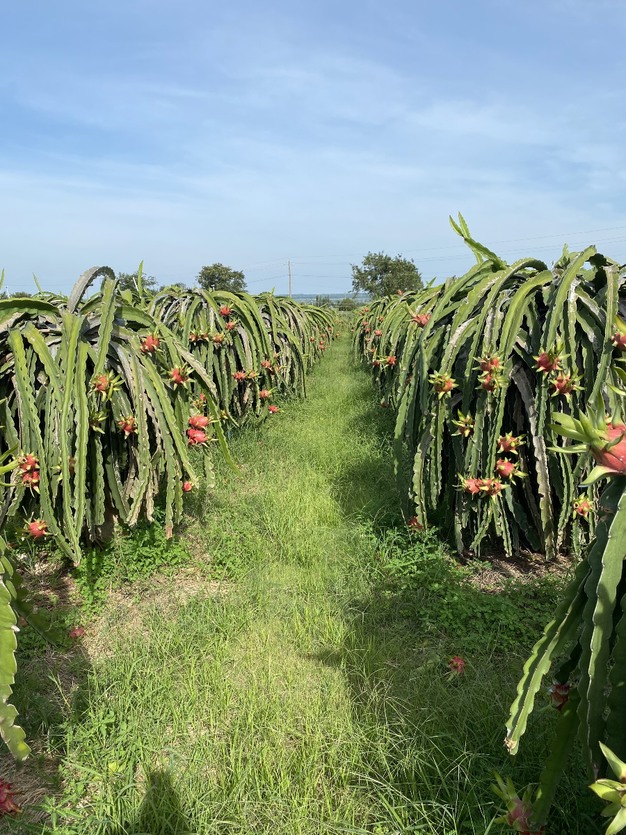
That peak often starts in early December and culminates just before Christmas. Green asparagus is the frontrunner, followed by passion fruit, figs, sweet potatoes, and Bimi. Carambola (star fruit), kumquat, lychee, dragon fruit, and physalis also do well.

Most of these products, except lychees, are now available year-round. Sweet potatoes, green asparagus, and bimi are growing the fastest. “Sweet potato sales are up 30% this year, partly due to their low-carbohydrate image, while bimi sales are growing by more than 30%, too. As a good alternative to broccoli, you can use bimi for barbecues or on Christmas menus.”

”We travel with the sun”
There is a trend toward local food, yet demand for exotics remains stable. Nature’s Pride responds to regions of origin and seasons, with products coming from Spain, Egypt, Morocco, and the Netherlands, depending on where they grow best at the time. “We travel with the sun. That ensures the best flavor, sufficient supply, and a lower environmental impact,” says Dirk. The company transports 95% of its volume by ship or truck. They no longer offer flown-in mangoes; the same quality is now delivered, perfectly ripe, by sea freight.
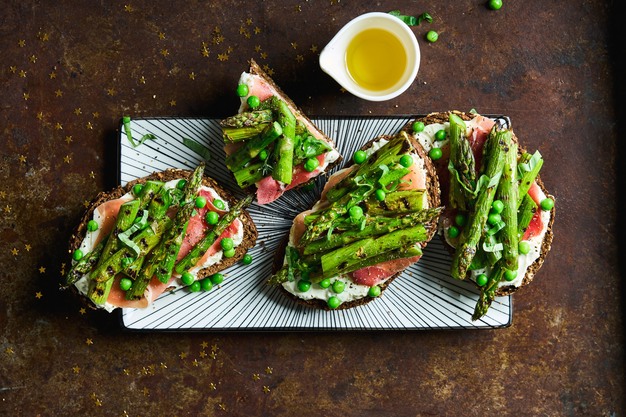


Transportation modes deliberately chosen to maintain quality
When sea or road transport cannot guarantee quality, the importer still uses air freight to a limited degree for, say, green asparagus. “It’s not sustainable to have 30% of a product go to waste after three weeks in a container. In that case, you have to use air freight.” For example, most Bimi comes from the Netherlands rather than Kenya, and haricots verts often come by road from Morocco or by ship from Egypt. That shift, however, means countries such as Kenya have lost their competitive position.

Three-sided cooperation
Cooperation is vital to Nature’s Pride. The company works within a triangle: what is feasible for the grower, what do customers want, and how does the business remain valuable without losing sight of people and nature? Transport is only one part of the equation; they are also taking steps in cultivation to reduce CO₂ emissions and restore biodiversity. Plus, all their growers are socially certified.

“Enjoying fruit and vegetables can go hand in hand with caring for people and nature. If well organized, a mango or avocado can be a responsible choice, even at Christmas,” Dirk concludes. (PB/PDC)

For more information:
Nature’s Pride
Honderdland 611
2676 LV Maasdijk
Tel: +31 (0)174 52 59 00
info@naturespride.nl
www.naturespride.nl Publication date: Tue 23 Dec 2025

© FreshPlaza.com / Contact

Ukrainian demand rises for sweet potatoes and asparagus by FreshPlaza

Ukrainian demand rises for sweet potatoes and asparagus

Demand for niche vegetable crops in Ukraine is rising, particularly for sweet potatoes and asparagus, according to a market review published in “Gardening in Ukrainian” by Ksenia Guseva, fruit and vegetable market analyst at APK-Inform IA.

Guseva notes that sweet potatoes, once available only in premium supermarket formats such as Le Silpo or Delmar, are now stocked in mainstream retail, including the Varus chain. “While sweet potatoes used to be sold only in premium supermarkets, like Le Silpo or Delmar, now they can be found even in regular retail chains, in particular Varus. The price has become quite affordable,” she says.

She reports that production of salads and leafy greens is also increasing. Supermarkets now offer a wider selection of mixes, packaged salads, green onions, parsley, and dill. “I won’t say that prices are high, but the choice is much wider now than a few years ago. Conditions for growing greens are now favorable, so production is gradually increasing,” Guseva notes.

Despite wider availability, she emphasizes that sweet potatoes and greens remain niche crops grown largely under contract-based supply programs for supermarkets and restaurants. “This is not a mass product: you need to know exactly who you are selling to before you plant it. If ten farms nearby grow onions and only one grows potatoes, then the potatoes will be more expensive,” she says.

The current trend reflects increased consumer interest in alternative vegetable crops and a shift in retail assortment, though production remains limited and targeted toward specific buyers rather than broad distribution.

Source: PotatoPro

Frontpage photo: © Jianghongyan | Dreamstime

When automation supports blueberry and asparagus growers with Berryway and Optisort by Maf Roda and FreshPlaza

Berryway and Optisort by Maf Roda

When automation supports blueberry and asparagus growers

At the IAD-IBD trade fair held last month in the Bordeaux region, the Maf-Roda Group – platinum sponsor of the event – presented its sorting and grading solutions for red fruit and asparagus. The two installations did not go unnoticed.

Berryway and Berryscan: Cutting-edge technology for high-precision sorting while respecting the fruit
The Berryway grading machine attracted the attention of visitors, as it offers a complete solution for post-harvest blueberries, combining delicate handling with high-precision sorting. “The Berryway is designed to handle blueberries with the utmost delicacy. Each line takes care of the berries to limit shocks and guarantee the integrity of the fruit,” explains Fabrice Blanc, managing director of Maf Roda. Modular from two to eighteen lines, processing 160 to 200 kg of blueberries/hour/line at an average weight of 2g per fruit, Berryscan is equally suited to small-scale producers and industrial structures.

The Berryscan module enhances this performance with particularly accurate multispectral optical sorting. Taking 360° photos of each berry, it analyzes color, shape, and external quality, while detecting defects such as soft, dehydrated, or damaged fruit. “Thanks to Insight technology, we can measure sugar levels to guarantee a consistent, tasty product,” explains Fabrice Blanc. Based on artificial intelligence, the software makes it possible to fine-tune the sorting criteria (shape, firmness, size, Brix) and automate the entire process right through to packaging.

Already widely deployed internationally – from the United States to South Africa, via Eastern Europe – the solution is now attracting considerable interest in France. “Demand for high-performance, automated sorting lines is growing strongly,” observes Fabrice Blanc. By reducing dependence on manual sorting while maximizing final quality, Berryway and Berryscan are positioning themselves as essential tools for growers looking to improve precision, productivity, and added value.

An asparagus grading machine for high-precision associativity
Since acquiring the German company Strauss, Maf-Roda has also been offering a complete range of solutions for asparagus, from harvesting to packaging, including grading and weighing. At the IAD-IBD trade fair, it was the grading machine for white and green asparagus that was presented. “In this sector too, we can offer turnkey solutions that can be adapted to any type of structure,” explains Fabrice Blanc.

These solutions are all the more appreciated in this particularly labor-intensive sector, since no human intervention is required, apart from receiving the packaged product. “We were the first to automate bundling. Our grading machine enables us to achieve high associativity accuracy, to +/- 4g on the bundle. The capacity of our machines ranges from 800kg/1.2T to 2T/h.” Another special feature of the Strauss-Maf-Roda grading machines is their high-pressure washing system. This is a definite advantage for products that come straight out of the ground, such as asparagus, which is contaminated by the sand that slips into its scales.

The asparagus grading machine presented at the show can also be adapted to leeks, zucchinis, and rhubarb.

For more information:
Christophe Nivet
Maf-Roda
Phone: +33 5 63 63 27 70 Publication date: Wed 26 Nov 2025