
https://italianberry.it/en/news/peru-blueberries-forecast-2026-27-week-33
Archive
Early start for blackberry and raspberry seasons by Kelley SablanCalifornia Giant Berry Farms and FreshPlaza
Blackberry volumes are steadily ramping up towards a late-July peak while raspberry production is in its peak. “Our Watsonville blackberry and raspberry season is starting earlier than usual this year,” says Tom Smith, VP of Sales and Marketing at California Giant Berry Farms, adding that peak volume of raspberries is expected to continue through the next few months. “A warm winter and spring advanced plant development. We expect the season to run through November and then transition back to Mexico supply.”
In the meantime, there are some varietal developments for the company in this category. “We’re enhancing our program with three varieties — Noelia, Majestic, and VR 68 — all selected with flavor at the forefront,” says Smith. “Together they strengthen our raspberry lineup on taste, shelf appeal, and eating quality, giving consumers a more consistently flavorful berry across the season.”
Smith says the company’s Watsonville blackberries have fully transitioned to BK613.
Meanwhile on blackberries, as far as varieties, the company’s Watsonville program is now 100 percent BK613. “We’ve fully transitioned to this variety because it delivers consistent size, color, and a sweet, well-balanced flavor profile that holds up through the supply chain,” notes Smith.
While both berries are coming from Watsonville, along with Mexico, in early-August, San Diego, CA will also be providing a strong supply of organic blackberries.
Promotional availability ahead
How about demand? “It is strong for both berries and serves as a traffic driver for the produce department as merchants position the category to capture summer merchandising opportunities,” says Smith. “With both categories soon hitting promotional availability, right now is the prime window for retailers to plan aggressive promotions and for customers to enjoy peak-season freshness.”
 Raspberry production is in its peak right now.
While consumption on both berries continues to see robust growth and is moving away from occasional treats to daily household staples, the company continues to work behind the scenes to do its part in growing consumption.
“Historically, the caneberry category faced barriers due to variable shelf-life and tart flavor profiles. Today, consumers are paying a premium for a superior eating experience,” says Smith. “Backed by genetics that emphasize sweetness and excellent shelf life, we project steady volume growth as we convert occasional buyers into weekly consumers.”
At the same time, it also continues to focus on expanding the health link to berries. Much of this is driven by a massive shift toward holistic wellness and consumers increasingly viewing berries as essential, antioxidant-rich functional foods. “This is particularly visible in the organic segment, where North American organic raspberry consumption has surged significantly in recent years. Our continued focus on organic offerings aligns perfectly with this clean-label demand,” adds Smith.
 For more information:
Kelley Sablan
California Giant Berry Farms
ksablan@calgiant.com
www.calgiant.com Publication date: Mon 8 Jun 2026
Chinese berry exports reach US$24.4 million in April by FreshPlaza
Chinese berry exports reach US$24.4 million in April
Exports of fresh blueberries from China continue to increase, with Southeast Asia accounting for a large share of shipments. According to data from China’s General Administration of Customs, exports of fresh blueberries and cranberries reached US$24.4 million in April. During the first quarter of 2026, exports totaled US$38.8 million, compared with US$50.8 million during all of 2025 and US$23.1 million in 2024.
Higher production in Yunnan Province, China’s main blueberry-growing region, has supported both domestic consumption and export availability. According to Dezan Shira & Associates, Yunnan more than doubled its blueberry cultivation area and production between 2020 and 2025.
Exports to Southeast Asia have been supported by trade facilitation measures under the Regional Comprehensive Economic Partnership (RCEP) and by the China-Laos Railway. The railway has reduced transport times and helped maintain fruit quality during shipment. Yunnan is located at the northern end of the transport network.
According to Quinn Lu, senior manager at Dezan Shira, Chinese blueberries can reach Kuala Lumpur by road or sea within days and are sold at around US$7 per kilogram. Refrigerated transport has also supported quality retention.
“Chinese blueberries offer an unmatched combination of freshness, year-round availability and accessible pricing,” Lu said.
“These improvements allow exporters to consistently deliver berries to Southeast Asia that are visually appealing, uniform in size and durable enough to survive transit with their quality intact.”
China became the world’s largest blueberry producer in 2020. Between 2020 and 2025, the country’s cultivation area expanded from approximately 66,400 hectares to more than 105,000 hectares, while production increased to 810,000 tons, according to a report published by Xinhua in April. The report attributed the expansion to developments in agricultural technology and noted that increased production has contributed to lower prices.
Cranberry exports remain limited, with production in Heilongjiang Province primarily serving the domestic market.
Customs data show that in April, exports of blueberries and cranberries totaled US$3.7 million to Malaysia, US$3.9 million to Singapore, and US$2.6 million to Thailand. Hong Kong and Russia were the largest individual destinations, each importing more than US$4 million worth.
Demand has increased in Southeast Asia, where climatic conditions are generally not suitable for large-scale blueberry production due to the crop’s winter chilling requirements. Consumers in Malaysia, Singapore, and Vietnam reported increased availability of Chinese blueberries in retail outlets.
In Singapore, consumers noted that Chinese blueberries are priced 30 to 50 per cent below fruit from Australia and Japan. Market participants also indicated that Chinese oranges and grapes have helped build familiarity with Chinese fruit among consumers in the region.
Source: South China Morning Post
Blueberry varietal strategy: genetics, profitability and commercial risk by Italian Berry
Global blueberries exceed 2 million tonnes: yields, genetics and premium quality drive growth by Italian Berries
Berries: nursery certification and prevention against emerging pathogens by Italian Berry
“High strawberry prices ahead of Whitsun weekend due to supply gap” by Shannen Dienn, Coöperatie Hoogstraten and FreshPlaza
“High strawberry prices ahead of Whitsun weekend due to supply gap”
After a strong start to the season, strawberry supply at Coöperatie Hoogstraten is currently temporarily tighter. Dark and wet weather conditions in recent weeks have slowed the ripening of outdoor crops, while early crops advanced faster than expected due to sunny weather. “As a result, we had really good weeks of almost 2 million kilos per week,” says Shannen Dienn of Coöperatie Hoogstraten.
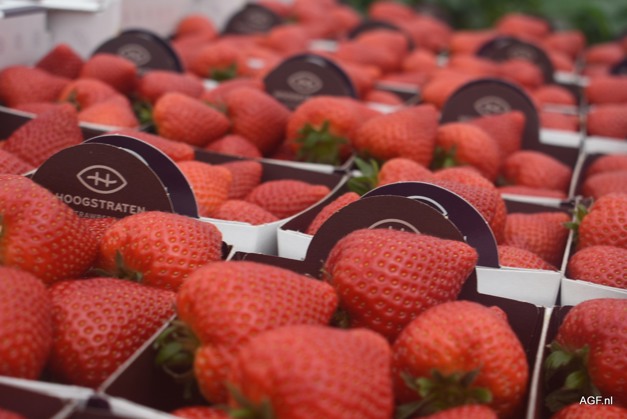
“However, because of the beautiful spring, those productions developed a bit faster than expected, and the next crops from the cold cultivation systems are not yet in full production,” she continues. “The strawberries are not yet ripe. As a result, we are currently dealing with somewhat lower volumes. This is actually a combination of the first productions moving too quickly and the later crops being delayed, which has also caused prices to rise considerably this week.”
Strong demand, but quick recovery from shortage
This is partly because demand remains firm. “Especially with an extended Whitsun weekend and summer temperatures approaching, we notice that consumers are once again turning en masse to soft fruit. The past two weeks of grey and wet weather were not exactly strawberry weather, but consumption continued to perform well. Now that the weather is cooperating again, we have really seen a strong increase in demand in recent days. That remains the strength of the strawberry after all. As soon as the weather improves, people flock to it.”
This is causing high prices for the time being, but Shannen does not expect the shortage to last long. “From the weekend onwards, we will have good weather again, and by the middle of next week, we expect sufficient production again. Fortunately, strawberries can recover quite quickly once the sun returns.”
Stable market
Regarding price levels this season, Shannen expresses satisfaction. “We certainly cannot complain about the prices over the past period. The market has actually remained very stable during the spring. Prices are slightly higher than in previous years, partly because we have slightly lower production. The volumes are spread more evenly throughout the season, so we have fewer extreme peaks than in the past. Only in recent weeks have prices increased somewhat due to limited supply.”

This more stable production is linked to the growth of everbearing varieties among the growers of Coöperatie Hoogstraten. “This year, about 40 per cent of our total production will consist of everbearers, compared to around 31 per cent last year. So there is clear growth, which spreads production better throughout the season.” Whether this also poses a threat to the future of June-bearers, Shannen doubts. “June-bearers remain important, because they still account for our main volumes. And we also have absolutely no ambition to switch completely with our growers. Besides, we never impose varieties on anyone. They always decide that for themselves. We only advise them, but for now, these varieties within our range still complement each other well.”
Limited impact from Spain
At the beginning of the season, there were brief concerns that a larger Spanish supply would disrupt the market in early April. In the end, that impact proved limited, Shannen points out. “In weeks 14 and 15, some more Spanish products did come onto the market as the weather recovered there, but we did not really suffer much from that. And even now, we actually see little competition from other origins on the market. There seems to be enough room for a good summer season. June and July also traditionally remain busy months. We are heading towards good temperatures, which is beneficial for both strawberries and consumption. We are looking forward to it.”
More interest in specialties
The cooperative is also seeing growing interest in specialties such as raspberry, pineapple, peach, or white strawberries, in addition to classic strawberries. “Especially from retail, demand for distinctive products within the soft fruit segment is increasing. Of course, you have to put that into perspective, as they remain true niche products, but even so, there have already been several requests from retailers for next year to include those products in their assortment.”
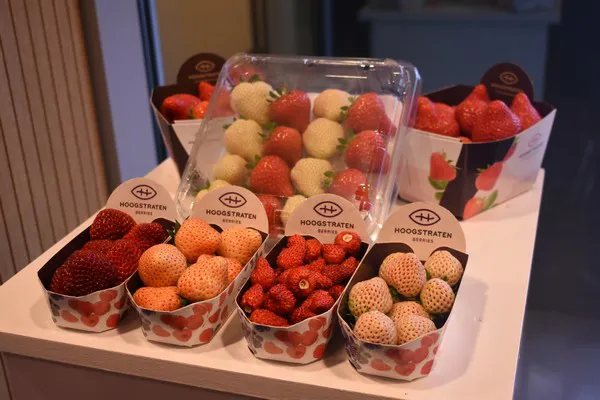
According to Shannen, the specialties mainly respond to the need for exclusivity on shop shelves. “It remains an exclusive product that retailers want to offer for a certain period of time. It will never become a standard product, but it is nice that they want to market it.”
However, this interest is not immediately driving expansion. “Currently, we only have one producer growing the specialties, so volumes remain limited. If demand continues to grow, the producer will surely be open to expanding slightly. However, of course, there are limits to how much you can expand with such exclusive products.”
For more information:
Shannen Dienn
Coöperatie Hoogstraten
Loenhoutseweg 59
2320 Hoogstraten, Belgium
+32 33 40 02 11
info@hoogstraten.eu
www.hoogstraten.eu