Archive

Organto Foods appoints Chad Hagen to board by FreshPlaza

Organto Foods appoints Chad Hagen to board

Organto Foods has appointed Chad Hagen to its board of directors, effective January 27, 2026. He replaces Alejandro Maldonado, who resigned from the board effective January 26, 2026.

The company, which operates in the natural and organic food sector, is headquartered in Vancouver, British Columbia, and Breda, the Netherlands. Steve Bromley, chair and co-CEO of Organto Foods, thanked Mr. Maldonado for his contributions following his departure.

Mr. Hagen has more than 30 years of experience across the food, beverage, and fresh produce industries. He currently serves as chief commercial officer at Sojo Industries, a U.S.-based company providing packaging and logistics solutions using robotics and software. Prior to this role, he spent 17 years at SunOpta Inc., where he held several commercial and customer-focused positions, most recently as chief customer officer.
Earlier in his career, Mr. Hagen worked for more than a decade in the organic fresh produce sector, with roles at Robinson Fresh, Newman’s Own Organics, Cape Organics, and Pavich Farms. His work included brand development and supply chain operations across more than 15 countries. He holds a Bachelor of Science degree in agricultural business from California Polytechnic State University, San Luis Obispo.

Following the board change, Organto Foods’ board remains composed of six directors, four of whom are considered independent. The remaining two are classified as non-independent due to their roles as officers and consultants of the company.

In connection with Mr. Hagen’s appointment, the company granted 100,000 stock options with an exercise price of US$0.85 per share, expiring on January 26, 2031, as well as 75,000 restricted share units. The stock options vest in stages, with 25 per cent vesting immediately and further portions vesting every six months. The restricted share units vest over a three-year period.

Organto Foods also provided an update on its digital marketing services agreement with Machai Capital Inc. The agreement, originally announced in November 2025, was amended and restated on December 22, 2025. Under the revised terms, Machai will provide digital marketing services, including branding, content optimisation, and search engine marketing, from January through December 2026 for a base fee of US$200,000, excluding GST.

As part of the amendment, 200,000 previously issued stock options to Machai at an exercise price of US$0.58 were cancelled and replaced with 200,000 new options at an exercise price of US$0.67. These options vest quarterly over one year and expire on December 22, 2027.

For more information
John Rathwell
Organto Foods
Email: john.rathwell@organto.com
www.organto.com Publication date: Wed 28 Jan 2026
By PromPerú and FreshPlaza

Peruvian blueberry exports increase, managing distribution is crucial to prevent price drops

PromPerú

Peruvian blueberry exports increase, managing distribution is crucial to prevent price drops

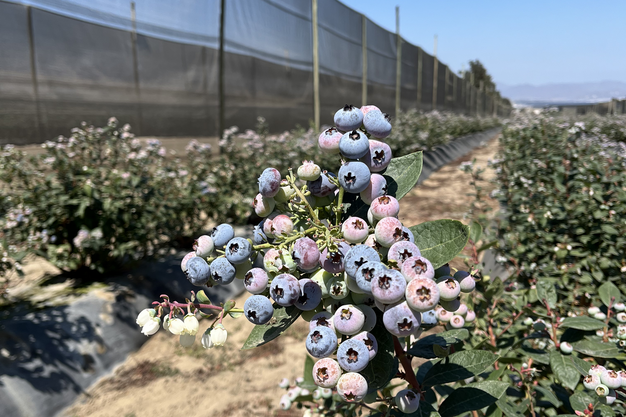
The Peruvian blueberry season is centered in the United States and Europe.

“The Peruvian blueberry season 2025/26 is advancing steadily, with evident signs of increased competition in the key destination markets. By the end of week 2, Peru had exported 347,105 tons, a 20% rise from the previous season,” according to ProArándanos data derived from Senasa figures.

This increase in volume confirms the trend seen in recent seasons: a growing supply, which means shipments must be managed more carefully. “As noted in previous market analyses, price impacts are not solely due to total seasonal volume but also to the concentration of fruit within very short windows, which can create immediate pressure on the markets,” they stated.

“The United States remains the leading destination, accounting for 47% of total exports with 163,651 tons. Europe follows with 96,630 tons (28%), and China with 44,304 tons (13%). Europe, in particular, stands out with a 35% increase compared to last year, strengthening its position as a crucial market for diversifying export destinations,” PromPerú stated.

“The region of La Libertad leads shipments with 49% of the total volume, followed by Lambayeque and Ica. This regional growth has been accompanied by a strong focus on maritime transport, which now accounts for 96% of shipments, reflecting improvements in logistics and planning. However, air transport remains important for certain niches,” they stated.

The increased availability of fruit has heightened competition among different origins in international markets. Recent experience shows that a structured weekly volume distribution is crucial to prevent sharp price drops during peak production periods across multiple countries.

PromPerú is promoting a growth strategy centered on commercial planning, volume management, and diversification of destinations. The 2025/26 season emphasizes a structured approach to entering international markets, with a focus on commercial sustainability and competitiveness.

In early February, PromPerú is organizing a trade mission in the run-up to Fruit Logistica. Activities will take place in Rotterdam, Europe’s leading agri-food hub, on February 2 and 3. Eight export companies will participate in business meetings, visit the Port of Rotterdam, distribution centers, and supermarkets to better understand logistics processes, consumer behavior, and commercial potential.

The delegation will then travel to Berlin to participate in Fruit Logistica 2026 (February 4-6). Peru will be represented in the national pavilion and networking areas with international buyers, aiming to strengthen the position of its agro-export offerings in Europe.

For more information:
PromPeru
Tel: +51 979 367 355
Email: agro@promperu.gob.pe Publication date: Tue 27 Jan 2026

© FreshPlaza.com / Diana Sajami

Blueberries picking up in volume by FreshPlaza and California Giant Berry Farms

Blueberry supply is coming in from a few regions at the moment. “Peru continues to provide a steady volume, while Mexico is currently building toward a peak in early February,” says Tim Youmans, vice president of sales with California Giant Berry Farms.

Blueberries picking up in volume

Blueberry supply is coming in from a few regions at the moment. “Peru continues to provide a steady volume, while Mexico is currently building toward a peak in early February,” says Tim Youmans, vice president of sales with California Giant Berry Farms. “These volumes will be complemented by high-quality fruit from Chile. This increasing influx, paired with Oxnard, California’s domestic organic program hitting its stride mid-month, is expected to provide ample availability especially for February.”

Compared to last year at this time, conventional supply is as stable and consistent as it was, while organic supply is a little lighter than this time last year. However it is also ramping up quickly.

For California Giant, its conventional blueberries are being harvested in Peru, Chile, and Mexico while organic product is coming from Peru and Oxnard. Organic supply from Chile is expected towards the end of January.

Youmans says that late January and early February is when the market will transition into a much more abundant and stable blueberry supply phase.
Weather in the growing regions
In terms of growing conditions, they have been favorable for quality across these regions. “In Peru, optimal weather has led to an earlier-than-normal peak, while Mexico is benefiting from steady, warm days that are supporting consistent yields,” says Youmans. “In Oxnard, while we’ve monitored recent seasonal rains and cooler morning temperatures typical for January, the fruit quality remains strong as the California season begins to gain momentum.”

Meanwhile blueberry demand remains strong as consumers increasingly consider eating blueberries year-round. “This is characterized by a shift in consumer behavior rather than a seasonal trend. Despite the lighter organic volumes currently seen due to the early Peru start, the consumer pull has not softened. The health halo of blueberries continues to drive growth in dollar sales year-over-year,” says Youmans, adding that demand is also expected to intensify as that halo attracts new household demographics.

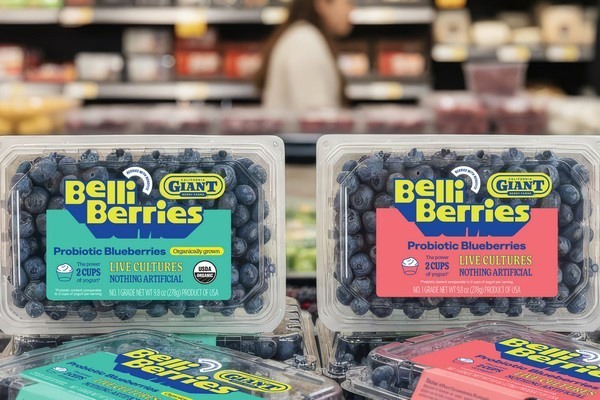
Belli Berries are berries boosted with live probiotic cultures.

Health and blueberries
Capitalizing on that health association with blueberries, last October, the company introduced a new berry product–Belli Berries, which are blueberries boosted with probiotics. That allows consumers to add further functional benefits to their daily diets with this product which is non-GMO and free of artificial flavors. While Belli Berries made its debut at IFPA 2025 in Anaheim, California, the item is expected to be on shelves and available to consumers in June.

Meanwhile as per-capita blueberry consumption continues to climb, the market is also seeing a distinct trend toward premiumization. “Consumers are increasingly seeking proprietary genetics—specifically jumbos—and are showing a willingness to pay a premium for a consistently superior eating experience,” notes Youmans.

Looking ahead, moving into late January and early February is when the market will transition into a much more abundant and stable supply phase. “The arrival of volumes from Chile in late January, complementing Mexico hitting its peak in early February, will provide a boost to overall availability,” says Youmans, adding that with Oxnard’s organic program also ramping up to peak volumes in mid-February and Peru maintaining its stability, the industry is looking at a window of strong availability. “This alignment of regional peaks creates a perfect opportunity for large-scale promotions and consistent shelf presence throughout the mid-winter months.”

For more information:
Kelley Sablan
California Giant Berry Farms
Tel: +1(831) 786-7467 Ext. 267
kking@calgiant.com
www.calgiant.com

By FreshPlaza and Mohammed EzzatGreen Nile Egypt; “This season will go down as a valuable lesson for the Egyptian strawberry industry”

“This season will go down as a valuable lesson for the Egyptian strawberry industry”

The 2025/2026 Egyptian strawberry season was preceded by a sharp increase in acreage and an early harvest, coupled with difficulties in sourcing seedlings, resulting in a massive increase in production, falling prices, and a sharp rise in shipment interceptions due to high MRLs. According to Mohammed Ezzat, Egyptian producer and exporter and CEO of Green Nile, this season is nothing less than a “turning point for the industry.”

According to Ezzat, much of the additional acreage planted this season went in without any real market research, let alone sales contracts. Worse still, many newcomers to strawberry growing and exporting do not fully understand the international market requirements for quality or food safety. “The inevitable result is that the European Union has decided to increase sampling and testing of Egyptian strawberries by 20% in 20226, and a similar measure has been taken by the United Arab Emirates, and rightly so,” the grower adds.

“We don’t know where the market is headed this season, and we are trying to control the situation as much as we can. At Green Nile, as strawberry specialists with a long track record in the sector, we are offering technical assistance to growers in our region, even free of charge, in order to preserve the image of Egyptian strawberries,” Ezzat continues.

After a chaotic start to the season, with prices sometimes falling below production costs according to several growers, the sector is stabilizing somewhat. Ezzat says, “The situation varies from market to market, but overall, we are back to price levels similar to last season. We are saved by the history of the sector in Egypt, which has acquired traditional markets through long and hard work and exceptional fruit.”

Demand remains “very active” in several markets, according to the grower. He explains, “I see Poland standing out this year as the most active market for Egyptian strawberries, thanks to the drying industry in the country. Polish processors have also established themselves in Egypt and set up drying plants this season. Germany and the Netherlands are also very active markets.”

“There are also other important markets this season, such as Russia and Ukraine, due to less stringent MRL requirements. The downside is that it is a crowded market and there is strong competition between Egyptian exporters. We see that a real burn-off pricing strategy is needed to be present in Russia, especially this season, which we do not endorse and which makes it a secondary market for us at Green Nile,” Ezzat continues.

The grower hopes that the industry will return to calmer waters next season. “I expect a large number of growers and exporters, especially newcomers, to pull out and exit the sector next season. There will certainly be a drop in acreage. This season will go down as a valuable lesson for the Egyptian strawberry industry and fresh produce in general.”

Mohammed Ezzat
Green Nile Egypt
Tel: +201000285606
Email: info@greennile-eg.com
www.greennile-eg.com Publication date: Tue 20 Jan 2026

© FreshPlaza.com / Youness Bensaid

By Port International Group on the Chilean blueberry season and FreshPlaza:

“Following the early start to the season, the campaign is also expected to end somewhat earlier”

Port International Group

Port International Group on the Chilean blueberry season:

“Following the early start to the season, the campaign is also expected to end somewhat earlier”

As planned, the first Chilean blueberries were delivered to food retailers shortly before the turn of the year. “Demand has been very good so far, and price developments in this segment are typically strongly driven by supply,” summarizes Malte Storjohann, Head of Procurement Overseas at Port International Group. The first shipments from the South American growing region confirm the early assessments: “The quality is good overall, especially in terms of fruit firmness and shelf life. This is due, among other things, to favorable weather conditions in the main growing areas and the increasing variety change.”

In terms of harvest and export volumes, Port International Group currently expects a largely stable level compared to last year. Storjohann: “Compared to last year, the overall situation is neither clearly better nor worse, but structurally different. Due to climatic conditions, we started earlier with the produce, which is also likely to lead to an earlier and possibly abrupt end to the season. In addition, the start of the season for produce from Morocco and Spain has been delayed. Overall, however, we still expect the total volume to be roughly on par with last year’s level.”

Malte Storjohann visited suppliers in Chile shortly before the start of the season
Seasonal peak approaching
In addition to Chilean blueberries, the Hamburg-based fruit trading company is currently also offering European food retailers produce from Peru and South Africa, Storjohann continues. The latter origin is produced by the exclusive partner Rainbow Superfood. “They have their production in the Western Cape and offer blueberries until the end of January. In general, we are now approaching the peak, which of course also has an impact on volume pressure.” Overall, there has been a relatively smooth seasonal transition from the Northern Hemisphere to the Southern Hemisphere in the blueberry category. “Overseas produce is usually available until spring, but this always depends heavily on weather, harvest progress, logistics, and market uptake. We expect to be able to offer Chilean blueberries until March.”

Focus on variety innovations and expansion of acreage
In the long term, the Port International Group sales team is observing a gradual structural and variety change. “The Latin American blueberry industry tends to focus more on variety renewal, known as New Genetics, and quality profiles than on pure acreage growth. These have a more consistent quality and longer shelf life. In some cases, however, there is also a growing demand for larger sizes, but this depends on the respective market. When it comes to packaging, standardization, handling, and comparability are often the main priorities in the retail sector; major innovations are currently rather rare.”

Insights into Chilean blueberry cultivation

A cornerstone of Port International Group’s corporate strategy is to maintain close, long-term partnerships with producers and suppliers. “We place particular emphasis on personal communication and regular on-site exchanges to align expectations early on, ensure quality, and plan ahead together. We visit our producers several times a year, thereby regularly deepening our business relationships and securing fixed programs,” he concludes.

For more information:
Malte Storjohann
Port International Group
Lippeltstrasse 1
20097 Hamburg
Phone: +49 40 301000-0
info@port-international.com
www.port-international.com Publication date: Tue 20 Jan 2026

© FreshPlaza.com / Hugo Huijbers

Macfrut 2026 focuses on berries with a growing and renewed Berry Area by Italianberry
The Italian berry market accounts for Eur 621 millions and is growing at a pace of 15% annually.
https://italianberry.it/en/news/macfrut-2026-berry-area

Peru added 66 blueberry exporters in 2025 while 47 exporters exited by Agraria, Blueberries Consulting and FreshPlaza

Peru added 66 blueberry exporters in 2025 while 47 exporters exited

Although Peru’s blueberry sector continues to show expansion in export volumes, the underlying structure of the industry is changing. In 2025, the export landscape experienced marked turnover, with both new entrants and exits reshaping the market. “2025 witnessed a major restructuring of the export sector,” says Martín Garay, market analyst at Garay Company.

During the year, 66 new companies entered the Peruvian blueberry export market, while 47 exporters active in 2024 exited the sector. This resulted in a net increase in participating companies, but also a more competitive environment with higher financial, technical, and commercial requirements.

“The entry of new players is surprising not only because of the number, but also because of the scale of their arrival,” Garay explains. New exporters include Agrícola Huarmey SAC, with a turnover of US$15.52 million, Ta Export SAC with US$12.61 million, and Reiter Peruvian Berry SA with US$6.89 million. “This confirms that the sector continues to attract significant capital and is raising the bar for entry,” he adds.

At the same time, a number of exporters withdrew from the market. “Some failed to adapt to price volatility or sought opportunities in other sectors,” Garay says. Among those no longer active are Frusan Agro, which recorded more than US$5 million in sales the previous year, Agrícola Isabel with close to US$5 million, and Consorcio JRM SAC, which moved US$965,000.

According to Garay, current market conditions are challenging for less resilient business models. Average prices declined to US$5.31 per kilogram, while supply increased, and buyer requirements for quality, certifications, and logistics became more demanding. These factors have limited the participation of exporters without sufficient financial backing or operational efficiency.

Despite the exits, the total number of exporters is 19 higher than last year. However, this figure does not fully reflect the changes taking place. Rather than uniform growth, the sector is undergoing a process of replacement, with new and more specialised exporters taking the place of companies that were unable to maintain their position.

“The lesson is clear: in agricultural exports, generating millions in revenue one year doesn’t guarantee survival the next,” Garay says. Under tighter margins and increased competition, performance depends on adaptability, risk management, and the structure of production and commercial operations.

As a result, the Peruvian blueberry industry is entering a phase where expansion is increasingly linked to strategy and execution rather than the number of active exporters. New large-scale players continue to enter, others exit, and market conditions continue to determine which companies remain active over time.

Source: Agraria / Blueberries Consulting