Archive

Regenerative Landwirtschaft – erste Erfahrungen im Spargelanbau

Die ca. 20 ha Spargelanbau auf schweren Böden mit einer Kiesschicht und einem durchschnittlichen Jahresniederschlag von 810 mm stellten ihn dabei vor große Herausforderungen. Bereits seit 2015 unterliegt die Wahl aller Bewirtschaftungsmaßnahmen im Betrieb dem vorrangigen Ziel, Bodenverdichtungen zu verhindern.

Seit 2019 bemüht man sich darüber hinaus die 5 Prinzipien der Regenerativen Landwirtschaft für den Spargelanbau anzupassen:

1 Dauerhafte Bodenbedeckung

2 Dauerhaftes Vorhandensein von lebenden Wurzeln

3 Förderung der Biodiversität in und über dem Boden

4 Minimale Bodenstörung durch reduzierte Bodenbearbeitung

5 Integrierung von Tierhaltung

Aussaat der
Winterbegrünung

Die grundsätzliche Zielsetzung der Regenerativen Landwirtschaft ist es, durch Wiederherstellung der natürlichen Prozesse, das gesamte Ökosystem zu stärken und zu regenerieren. Die zentrale Funktion übernimmt hierbei der Boden als komplexes Ökosystem, da er eine wesentliche Rolle hinsichtlich der Biodiversität, der Pflanzengesundheit und durch die Speicherung von CO² auch für das Klima spielt. Ein gesunder Boden speichert mehr Wasser, ist widerstandsfähiger gegen Überschwemmungen und Dürre, liefert mehr Nährstoffe für die Pflanzen und belastet das Grundwasser nicht. Die Umsetzung dieser Ideen findet beim Spargelanbau im Rafzer Feld vor allem durch die Einsaat von zwei Gassenbegrünungen im Laufe des Kulturablaufes, sowie durch die Düngung mit einer selbst entwickelten Terrapreta statt. Diese Komposterde setzt sich zusammen aus festem Gärgut, Pferdemist, Pflanzenkohle, Gesteinsmehl, Melasse und EM (Effektive Mikroorganismen) und reift in Form einer Feldrandkompostierung 4 Monate lang unter einer Abdeckung von Grünschnitt.

Nach der Fertigstellung und Abdeckung der Dämme

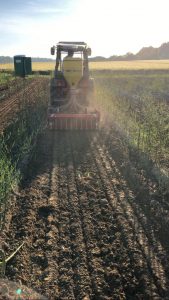
Nach der Stechperiode werden die Spargeldämme mit einer Scheibeneggenkombi komplett abgetragen. Dies ist notwendig, um den organischen Dünger mit dem Kompoststreuer gleichmäßig auszubringen. Danach findet eine Tiefenlockerung der Gasse bei gleichzeitigem Einspritzen von EM (200 l/ha) statt. Direkt im Anschluss wird auf den Spargelflächen im Rafzer Feld mit Saatkasten auf Kreiselegge und Walze eine abfrierende Begrünungsmischung in den Gassen ausgesät (s. Foto 1). Das Mulchen von Begrünung und Spargelkraut findet für die zu verfrühenden Anlagen im Oktober in zwei aufeinanderfolgenden Arbeitsschritten statt. Nach der Fertigstellung und Abdeckung der Dämme erfolgt dann die zweite Begrünungsaussaat mit Winterweizen mit einer Säkombination beidseitig des Dammes. Diese Begrünung bleibt dann bis zum Ende der Stechperiode stehen und wird erst mit dem Abdämmen umgebrochen.

Verschlämmungen und Verdichtungen stark vermindert werden konnten

Die in der Regenerativen Landwirtschaft angestrebte andauernde Bodenbedeckung durch Begrünungspflanzen ist im Spargelanbau durch das Auf- und Abdämmen kaum umsetzbar. Doch die Praxis der zweifachen Begrünung der Gassen stellt eine Annäherung an die Zielsetzung dar und führt zu  einer nachhaltigen Verbesserung des Humusgehaltes im Oberboden. Durch Verwendung des Schmalspurschleppers für die Aussaat der Begrünung wird die tiefgelockerte Gasse nicht befahren. Die Walze nach der Einsaat der Begrünung schließt den Oberboden, wodurch aerobe Prozesse die zur  Nitrifikation führen direkt unterbrochen werden.

Bereits im zweiten Jahr ließ sich erkennen, dass sich durch die Umsetzung der beschriebenen Maßnahmen die Befahrbarkeit während des Stechens mit den Spargelspinnen verbessern liess, dass die Wasseraufnahme nach Starkregenereignissen erhöht war und Verschlämmungen und Verdichtungen stark vermindert werden konnten.

Brits swapping out asparagus for cheaper foods

Sales of fresh asparagus at retail in Britain have dropped 14% year-on-year to nearly £76.5 million (≈€87m) while the volume plunged 18.7% to 8.4 million kg. Kantar data for the year to March 19, 2023, also shows fine asparagus has taken the worst hit from the UK’s cost of living crisis, with both the value and volume slashed by around half. In comparison, the overall spend on fresh vegetables in British supermarkets is up 1.5%, though the volume fell 5.6% over the same period. The market research firm says average prices of asparagus have risen by nearly 6%, triggering penetration to slide by nearly 10% in response.

A correlation between price inflation and shoppers exiting the category

It’s clear there is a correlation between price inflation and shoppers exiting the category. A number of shoppers have swapped their asparagus purchases for more staple categories like potatoes, carrots, cucumbers and onions, while others have dropped asparagus from their overall vegetable repertoire. We know that shoppers have already been reducing the number of different fruit and veg types they buy and this has ramped up in recent months suggesting shoppers are becoming more minimalistic in a bid to save money,” a Kantar analyst told Asparagus World in late March. Britain’s produce shoppers in general have moved some of their spend over to frozen vegetables, most likely as a way to make some savings, with frozen vegetables perceived as offering better value for money, they also said.

Making it easier to spot a “supermale”

In the current scenario of climate change, and with problems such as the soil-borne disease caused by Fusarium spp. compromising production, developing asparagus with traits such as resistance to aridity, diseases and pests is of great interest. A narrow genetic base for the diploid cultivars has been reported for this crop. Thus, a major goal in breeding programmes today is to develop new asparagus germplasm (13). Of particular interest is developing the ability to more easily exploit traits from wild species and landraces (traditional varieties that have naturally evolved traits to thrive in a specific region and climate).

Identifying “supermales” is time-consuming

Most flowering plants used as crops are hermaphrodites (monoecious) but commercially-grown asparagus belongs to the Asparagus subgenus, which is composed of dioecious species that have male (XY) and female (XX) flowers on separate plants. The male plants are generally preferred by growers due to their higher yields and longer life than female plants and the fact they don’t produce seeds, avoiding the further growth of the asparagus seeds into weeds. To develop male hybrid cultivars, breeders first seek to produce YY “supermales”. When they cross these with a female plant, all the resulting progeny consist exclusively of male (XY) plants. Supermales can be obtained in two ways: i) by self pollination of andromonoecious plants (with both male and hermaphrodite flowers on the same plant), which can be found among wild or cultivated asparagus plants but with a very low frequency; ii) by anthers in vitro culture, which is technically difficult and genotype-dependent (1).

Until recently, breeders have lacked a way to quickly distinguish XY males from the YY supermales they need to produce the all-male seed. Since there are no morphological differences between males and supermales, a test-cross with a female and further evaluation of the progeny is needed. According to researchers from the asparagus breeding programme at the University of Cordoba (UCO), the whole process to establish a useful supermale currently takes about 24 months. Having a rapid way to identify the supermales would pave the way for more efficient development of new asparagus hybrids. To develop such a diagnostic test, the university’s researchers are harnessing techniques like polymerase chain reaction (PCR), which has revolutionised the study of DNA, and recent advances in whole-genome sequencing of asparagus.

Developing a supermales test based on qPCR

“We propose to develop a systematic method using quantitative real-time PCR (real-time qPCR) for supermale diagnosis based on the dose level of a specific nucleotide sequence tightly linked to the male determining locus,” the researchers told Asparagus World. Put crudely, that involves using real-time qPCR to look for a specific DNA building block closely connected to the region on the plant’s chromosomes where genes responsible for determining the development of male characteristics are found. By measuring the number of copies of this molecule, scientists can tell if the plant is a supermale or not.

Such an approach was attempted in 2011 (2) but involved only diploid genotypes with a small sample size and there was some inconsistency in the data produced. “Knowledge has been gained on molecular features in the asparagus genome since 2011 and, nowadays, the research community is in a position to rethink past inconsistent data and design new experiments to achieve a long-sought objective,” the UCO researchers told Asparagus World. Also in their favour, they add, are recent advances in whole-genome sequencing revealing the presence of a male specific region on the male-specific (Y) chromosome, which contains two sex determination genes, as well as the fact that the team has developed a number of different polyploid male plants (YXXX, YYXX, YYYX and YYYY).

Most commercial asparagus varieties today are diploid, meaning their seeds contain two complete sets of chromosomes, one from each parent. In comparison, tetraploid genotypes contain four sets and the term polyploid applies to all those with more than two full sets. For diploid varieties, a useful way of detecting supermales already exists and is based on use of a sex-linked marker called RM17(3). This marker has proven successful in use for germplasm of most modern asparagus cultivars that can be traced back to the Dutch population ‘Violet Dutch’ (18th century). “However, the marker is not useful for working on polyploid varieties such as ‘Morado de Huétor’ and wild species,” the UCO researchers said. This is a hurdle they want to overcome not just in order to enlarge the genetic variability of the current asparagus cultivars, but also for reasons including that polyploid asparagus varieties may be valuable to explore in order to address climate change challenges. Hence, they are focusing on developing a reliable approach to identify supermale lines that’s independent of the ploidy level.

Wild species traits of interest to breeders

Tolerance of, or resistance to, biotic (caused by living things) and abiotic stresses has been reported among wild asparagus species.(4) When it comes to abiotic stresses, the UCO researchers said that it’s of interest that some wild species grow near the seaside (A. prostatus, A. maritimus, and A. macrorrhizus) or in arid and high-salinity environments (such as A. breslerianus(5, 6) with implications for tolerance to abiotic stresses. In terms of biotic stresses, Fusarium spp. plays a significant role in Asparagus Decline Syndrome (ADS), which severely compromises the current asparagus production. Several species belonging to the Fusarium genus such as F. oxysporum, F. redolens or F. proliferatum are mainly associated with ADS, with F. oxysporum the most prevalent in Spain.(7) Currently, no resistant cultivars have been described and a high level of resistance has been found only in A. densiflorus (8), a wild species belonging to a different subgenus than the cultivated one and for which sex incompatibility has been reported (9), the researchers say. Other pathogens related to ADS are the viruses AV1 and AVII, possibly because infected plants are more susceptible to diseases caused by Fusarium spp.(10). High resistance to AV1 has been reported in wild species of the Asparagus genus, including crop wild relatives (CWR) such as A. prostratus, A. maritimus and A. pseudoscaber (4,11). The University of Cordoba group is going to collaborate with a team of German researchers (12) in order to phenotype the UCO’s collection of CWR species for resistance to Fusarium and virus diseases.

1. Falavigna, A., et al. Acta Hortic. 215–222 (1983) doi:10.17660/ActaHortic.1983.131.24.
2. Horiuchi, K., et al. Japan. Soc. Hort. Sci. 80, 308–313 (2011).
3. Stone, N. K., et al. Acta Hortic. 51–58 (2018) doi:10.17660/ActaHortic.2018.1223.8.
4. Nothnagel, T. et al. Genet. Resour. Crop Evol. 64, 1873–1887 (2017). Pag 16 de 20
5. Mousavizadeh, S. J., et al. Euphytica 206, 445–457 (2015).
6. Mousavizadeh, S. J., Hassandokht, M.R., Kashia A., Gil J., Cabrera A., Moreno R. Sci. Hortic. 211, 269–276 (2016).
7. Brizuela, A. M. et al. J. Fungi (Basel) 6, (2020).
8. Kathe, L. et al. J. Phytopathol. 167, 558–566 (2019).
9. Marcellán, O. N. et al. Can. J. Bot. 74, 1621–1625 (1996).
10. Jaspers, M. V., et al. Ann. Applied Biology 135, 379–384 (1999).
11. Plath, S., et al. Acta Hortic. 17–24 (2018) doi:10.17660/ActaHortic.2018.1223.3.
12. Under Dr T. Nothnagel (Institute for Breeding Research on Horticultural Crops, Julius Kühn-Institut, Quedlinburg, Germany)
13. Moreno et al. Advances in Plant Breeding Strategies. Vegetable Crops. Volume 9: Fruits and Young Shoots. Springer, DOI: 10.1007/978-3-030-66961-4_12. (2021)

Understanding asparagus tip breakdown

There’s year-round demand for fresh green asparagus in the UK, however, the UK asparagus season is short and averages just 5,300 tons. What’s more, the local spears suffer from a relatively short shelf-life resulting in substantial waste at times of peak production, when it is difficult to manage asparagus yield and consumer demand. To meet the shortfall in supply, nearly 12,000 tons were imported by the UK in 2022, much coming by air freight from Peru and Mexico. Being able to prolong storage-life while maintaining the quality of UK-grown spears would have benefits including reducing food loss and the carbon footprint of imports. Currently, maintaining asparagus quality using cold storage alone is limited to one week, after which the spears have about a seven-day shelf-life in retail outlets. One of the factors limiting a longer life in cold storage is the onset of the postharvest physiological disorder tip breakdown. Also (erroneously) known as tip rot, this disorder occurs only sporadically during the shelf-life of chilled or cold stored spears; and often the first symptom is an unpleasant aroma. Unfortunately, this ‘off’ smell usually ends up causing the whole batch of asparagus to be discarded even if only some spears are affected by tip breakdown. While microbes appear to be off the hook, the underlying causes of tip breakdown remain to be discovered.

What is already known about tip breakdown

Initial investigation into tip breakdown suggests its origin is physiological (1), not pathological, developing in the rapidly dividing cells of the spear tip (2) during periods of hot weather. (High levels of tip breakdown across the UK in 2018 coincided with an unseasonably warm harvest season.) Fast growth and reduced levels of non-structural carbohydrates have also been linked to a higher incidence of tip breakdown (3), and it has been noted that warm adapted asparagus genotypes, such as ‘Jaleo’, have lower susceptibility than cold adapted ones, such as ‘Gijnlim’. Nevertheless, despite previous research, the underlying causes of tip breakdown have not yet been fully elucidated. Since 2020, researchers* in the UK have thus been on the hunt for the true culprits causing this disorder. Hailing from Cranfield University (Plant Science Laboratory and Environmental Analytical Facility) and Cardiff University (School of Biosciences), they are being led on this project by JGHC Ltd, which is linked to Cobrey Farms, where 40% of the UK’s asparagus is grown. Once the factors responsible for tip breakdown are identified, they hope to develop a decision support tool to identify pre-symptomatic tip breakdown spears.

‘Early California’ and ‘Aspalim’ spears under the microscope

Does fast growth or a slow rate of sugar transport play a key role in tip breakdown? To test these theories, the researchers chose two asparagus cultivars with low and high susceptibility to tip breakdown, the warm acclimated ‘Early California’ and cold acclimated ‘Aspalim’, respectively, and grew them under a cold controlled temperature regime (18/8°C, day/night) as well as a warm one (28/14°C). Harvested spears were cut to a length of 16 cm, packaged into shelf-life trays, wrapped in commercial film and stored at 7°C to assess the development of tip breakdown. Sampling took place on days 14 and 21. The top 4 cm of each spear sampled was snap frozen and underwent biochemical analysis of non-structural carbohydrates and plant growth regulators (PGRs), followed by statistical assessment.

More susceptible: spears that grow fast under hot conditions

‘Early California’ seemed to grow at a slower rate than ‘Aspalim’, though the growth rate for both was significantly lower under the cold compared to the warm conditions. What’s more, tip breakdown was not observed in any of the spears grown under cold conditions. Under the warm regime, however, the problem appeared in both and although overall the incidence was not that high, it was twice as much for ‘Aspalim’ than for ‘Early California’. Such results are in line with work by other researchers (4) who found that tip breakdown occurred under warm growing conditions.

Spears with tip breakdown had less sugar

As for sugar content, the UK researchers found that fructose concentrations were lower in spears with tip breakdown than in healthy spears. Further experiments will be needed to see whether the decreasing trend in sugar content towards the end of the harvest increases predisposition to tip breakdown, they said. Also of note is that the ‘Aspalim’ spears grown under cold conditions had an overall higher sugar content (fructose and glucose) at harvest than the warm-grown spears. These results are in line with previous studies where asparagus grown in the field under cooler, more favourable growing conditions resulted in spears with higher sugar content and better quality during storage (5), they said.

Tip breakdown and postharvest senescence are likely to be different processes

In prior studies (6), higher levels of the plant growth regulator abscisic acid (ABA) in asparagus tips was associated with lower quality spears. However, in the current research, after 14 days of cold storage, it was healthy spears, not those with tip breakdown, that had significantly higher concentrations of ABA. The researchers said it could therefore be hypothesised that tip breakdown disorder and postharvest senescence in asparagus are two independent processes which may be governed by different molecular pathways. A more detailed hormonal study, quantifying cytokinins and auxins, plus a transcriptomic analysis, would aid in fully explaining what role, if any, that plant growth regulators have in the incidence and development of postharvest tip breakdown in asparagus spears, they said.

Studying tip breakdown at molecular and cellular level

Does spear cell size have something to do with tip breakdown? Or could changes in gene expression have a key role? To explore these hypotheses, the researchers studied the cellular mechanisms of tip breakdown. Once more, ‘Aspalim’ and ‘Early California’ cultivars were chosen and were grown under cooler and warmer controlled conditions as described above. Harvested spears were stored at 7oC in the dark for 14 days and tip breakdown was assessed visually.

Cellular analysis appears to rule out cell size as a culprit

Among the reasons to suspect a role for cell size in tip breakdown is the link to faster spear growth. This led to the hypothesis that this may result in larger, weaker cells that are more susceptible to postharvest tip breakdown. However, an examination of cell sizes for ‘Aspalim’ (susceptible to tip breakdown) and ‘Early California’ (a variety in which it very rarely occurs) – at both higher and lower growth temperatures – did not reveal any significant differences in cell size.

RNA analysis a potent tool for studying gene expression, metabolic activity

RNA sequencing (RNAseq) was used to investigate any changes in the genes being switched on and off in asparagus spears affected by tip breakdown. Also known as transcriptome sequencing, RNAseq is a powerful method for revealing changes in metabolic pathways that may be involved in the development of postharvest disorders. The publication of the asparagus genome has greatly facilitated this approach.

On analysing spears after 14 days of shelf-life, many genes were found to be upregulated in those showing tip breakdown compared to healthy spears that had been grown and stored under the same conditions. The authors said that this was “perhaps surprising” and suggests the process of tip breakdown is an active, not passive one. This might indicate that tip breakdown is not due to necrotic cell death (such as excessive heat might cause), although further work is needed to confirm this. Preliminary analysis of the types of genes that change in expression during tip breakdown revealed a high proportion of genes involved in reprogramming activities in the cell and may therefore be involved in regulating the progression of tip breakdown. Several metabolism-related genes were also altered in expression, including transferases, oxidoreductases and O-methyltransferases. “Understanding the role of these genes may help us identify the mechanisms controlling the tip breakdown. This could lead to the discovery of pre- or postharvest treatments or provide breeding targets to improve resilience to tip breakdown in more susceptible asparagus varieties,” the researchers said.

*Principal Investigators: John Chinn (JGHC Ltd – overall lead), Dr MariCarmem Alamar (Cranfield University), Prof Hilary Rogers (Cardiff University)

1. Beever et al., 1985; Carpenter et al., 1996
2. Jermyn et al., 1999
3. Lill et al., 1994; Hurst et al., 1996; Lill et al., 1996; Lill and Borst, 2001
4. Lill et al. 1996
5. Anastasiadi et al., 2020 doi: 10.1016/j.postharvbio.2019.111017
6. Anastasiadi et al., 2022 doi: 10.1016/j.postharvbio.2022.111892
7. Lallu et al., 2000 doi: 10.1080/01140671.2000.9514119

Find out more:

https://www.cranfield.ac.uk/people/dr-m-carmen-alamar-498015

https://www.cardiff.ac.uk/people/view/81265-rogers-hilary

https://www.cranfield.ac.uk/research-projects/asparagus-tip

Produire des asperges et de l’électricité

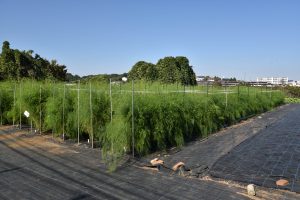
En France, l’agrivoltaïsme est en plein essor. La loi récente relative à l’accélération de la production d’énergies renouvelables lui confère une définition claire et un cadre législatif. Dans ce contexte, Engie Green a développé CAMELIA, une nouvelle solution agrivoltaïque de haies solaires bifaciales verticales. Implantées en synergie avec une culture à haute valeur ajoutée telle qu’une culture d’asperges, elles permettent en priorité de protéger les cultures du vent et de diminuer leur évapotranspiration, tout en produisant de l’électricité renouvelable. La culture d’asperge est sensible aux vents forts : durant la période végétative, ils risquent de coucher les plantes, limiter le développement foliaire et générer une perte de rendement jusqu’à 15 %. Durant la récolte plein champ, les turions se tordent sous l’effet du vent dominant. Les turions tordus présentent de nombreux désavantages : fabrication de fibres côté vent, plus d’amertume, conditionnement en bottes impossible et besoin d’emballages plus grands. Sur le marché, ces asperges perdent plus de 50 % de leur valeur commerciale.

Valoriser la lumière reçue sur les deux faces

Les solutions actuelles de protection au vent, comme les microtunnels, les serres ou les haies naturelles, sont coûteuses et parfois difficiles à mettre en place. Les haies solaires CAMELIA sont composées de panneaux photovoltaïques bifaciaux, capables de valoriser la lumière reçue sur leurs deux faces. Positionnés à la verticale et orientés est-ouest, ils permettent d’obtenir une production d’électricité maximale au levant et au couchant du soleil, à la différence des panneaux solaires inclinés avec une orientation sud qui produisent majoritairement en milieu de journée.

Les haies solaires CAMELIA proposent un profil de production “à 2 bosses”, qui a l’intérêt de compléter celui des installations PV classiques pour mieux répondre aux besoins électriques et qui a aussi inspiré son nom : CAMEL (le chameau) – IA (Installation Agrivoltaïque).

En plus de l’intérêt énergétique, les bénéfices d’un point de vue physique sont multiples :

Effet brise-vent, protecteur et la diminution de l’évapotranspiration

Partage lumineux la lumière de la journée bénéficie à la culture.

Empreinte au sol limitée des haies verticales permettant de conserver toute la surface agricole.

Système d’ancrage simple, modulable et réversible.

Pas d’entrave au passage d’engins agricoles ni la mise en place de paillage ou de microtunnels.

Espace ouvert sous les panneaux permet de conserver le passage de l’air et d’implanter une bande de biodiversité.

Protection sanitaire de la culture, aération préservée.

Réduction de la vitesse des ventes dominants

À l’initiative d’Engie Green, une étude a été réalisée en 2022 par un bureau d’études spécialisé, pour caractériser cet effet de protection appliqué à une culture d’asperges et valider la résistance des haies photovoltaïques. Les simulations numériques ont permis d’établir qu’en positionnant les haies solaires perpendiculairement aux vents dominants, la vitesse de ces vents est divisée par deux sur plus de 95 % de la surface du champ et les risques de vent violents supérieurs à 80 km/h sont divisés par plus de 50. Cette solution agrivoltaïque peut bénéficier aussi aux grandes cultures fourragères et céréalières, aux PPAM et aux terres d’élevage.

Innovation and experimentation define Japan’s asparagus sector

Asparagus was first introduced to Japan by the Dutch during the Edo Period (1603-1868), but as with many exotic plants, it was initially grown as an ornamental rather than for eating. In the early 20th century, cultivation of white asparagus began in Hokkaido, mainly for export to the European market, although it was also served at a select few high-end French restaurants in Japan. It was not until the early 1970s that asparagus was widely cultivated for domestic consumption, with the green type dominating. Satoru Motoki of Meiji University treated attendees at the IAS 2022 conference in Cordoba (Spain) last June to an engaging talk about the Japanese asparagus sector and provided insights into the many research projects underway “to achieve high quality at each stage of asparagus production, marketing and consumption”. Asparagus has become one of the most popular vegetables in Japan and is widely cultivated across various regions of the country with green, white, purple and pink spears. While green asparagus remains the most popular among Japanese consumers, a recent trend towards diversification in dietary style has emerged, leading to an increase in the popularity of white asparagus. This trend has also driven a rise in cultivation area dedicated to purple and pink asparagus. The marketing of asparagus in Japan has become diverse in recent years, with consumers seeking uniqueness and variety. This has resulted in the marketing of different forms and sizes and the introduction of new kinds of asparagus, such as mini-asparagus, and three-colour sets of asparagus.

Rise of pink asparagus

The Japanese employ the different coloured asparagus in a variety of ways. Green asparagus is the most popular for eating in its fresh raw form. Besides being marketed in different colours, the asparagus spears also come in various lengths and shapes. As Western cuisine has become increasingly popular in recent decades, Japanese people have been drawn to white asparagus as something new and tasty to try. Similarly, the cultivation of purple asparagus for eating in its fresh form has also begun to increase. And it’s not only taste that counts in Japan. Aesthetics also plays a key role in the country’s cooking, which is part of the appeal of innovative pink asparagus, which has been gaining attention in recent time as consumers attach importance to uniqueness. Pink asparagus is prepared by shielding purple asparagus from light to make white asparagus, and subsequently applying light to it until it takes on a pink colouration.

New techniques emerging

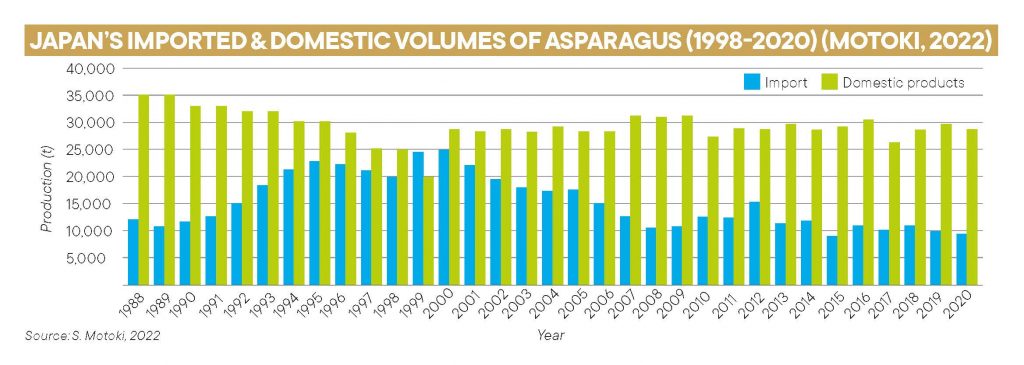
Meanwhile, domestic output has remained relatively unchanged for the past 26 years, averaging around 30,000 tons annually, ranking Japan 8th at the global level. Asparagus is grown in different parts of Japan to harness the full potential of its various climates. Hokkaido Prefecture is Japan’s largest asparagus producing region, where around 3,300 tons is grown on average each year. The other growing regions are Saga Prefecture (2,900 tons), Kumamoto Prefecture (2,100 tons) and Nagano Prefecture (2,100 tons) (Japanese Ministry of Agriculture, 2022). The climate in these prefectures ranges from subarctic to subtropical, allowing for the production of asparagus in a variety of cropping types.

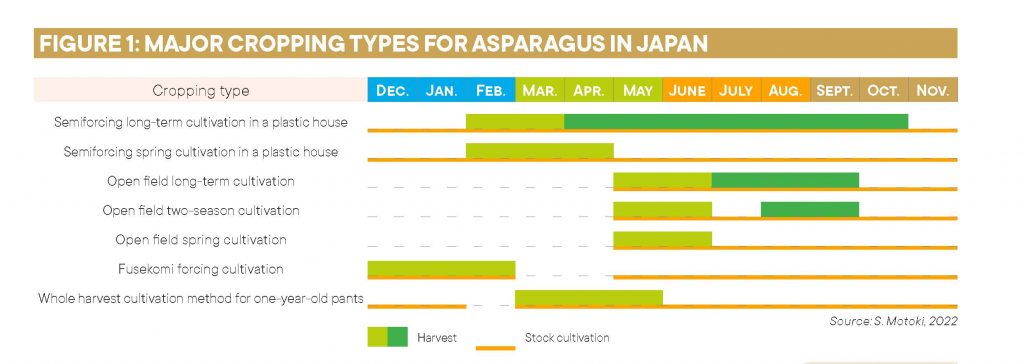
Hokkaido Prefecture has a climate similar to that prevailing in the northern part of the United States and Canada and in Northern Europe (Germany, the Netherlands, Poland, etc.), while Saga Prefecture and Kumamoto Prefecture have a climate resembling that along the western coast of the United States. Due to its high soil adaptability, asparagus is considered an excellent crop for growing in Japan’s upland fields that have been converted from paddy fields. To address the lack of off-season product, Japanese farmers have developed new techniques for year-round asparagus production. One technique that is spreading quickly is called fusekomi forcing culture, while another innovative method is the whole harvest cultivation method for one-year-old plants, which enables the cultivation of asparagus in larger quantities in a shorter period of time.

Fusekomi forcing culture

Fusekomi forcing culture is a technique employed to be able to harvest asparagus during winter. Unique to Japan, it plays a key role in the country’s asparagus production in the winter and early spring (December to March).


“Fusekomi forcing culture is a technique employed to be able to harvest asparagus during winter. Unique to Japan, production via this method is performed in part by using dug rootstocks,” said Motoki, and it plays a key role in the country’s asparagus production in the winter and early spring (December to March). The technique involves cultivating the asparagus rootstock for a short period of time (about 1-2 years) in an open field, digging it up in the autumn and planting it into beds arranged within a greenhouse, followed by warming until the spears are harvested. However, as Motoki pointed out, this approach “requires digging up the rootstock, which means that there is a need for specific farming machines and special skills. It is also necessary to have a special facility such as greenhouse in which the dug-up rootstock can be planted.”

Whole harvest cultivation method for one-year-old plants

Whole harvest cultivation method for one-year-old plants. Open field culture summer of the previous year.


A simpler technique developed by Motoki and colleagues is the whole harvest cultivation method for one-year-old plants. One benefit offered by this method is its brevity, with the cultivation process completed within one year of planting the seedlings. Conventional cultivation techniques require several years before a stable yield can be established. “Another advantage of this technique is that it involves lower risk of disease and pest damage. Cultivation from thfe same plants over many years results in increased likelihood of such afflictions occurring each year,” said Motoki. What’s more, the whole harvest cultivation method for one-year-old plants can even be employed by beginners without too much training necessary. Launched in 2016, and the first of its kind in the world, this technique is currently spreading rapidly across Japan thanks to the combined efforts of the government, Japanese agricultural cooperatives (Zen-Noh) and private enterprises. The method has been the focus of multiple TV programmes and newspaper and magazine articles that have attracted growing attention. In the academic realm, since 2020, researchers at Meiji University have been studying cultivars/lines selection using the whole harvest cultivation method for one-year-old plants in cooperation with Walker Brothers, Inc. of the United States.

Reusing plant parts

Researchers in Japan have also been exploring ways to make production more sustainable and resource-efficient by employing the parts of the asparagus plant that are normally discarded, such as its cladophylls. Despite Japan’s production of cladophylls totalling approximately 130,000 tons per year, only a small fraction gets utilised, with the rest either going to waste or returned to the field. Studies have shown that the beneficial component rutin is most abundant in the cladophylls and in the storage root of asparagus plants, while another valuable component, protodioscin, is most abundant in the buds and underground parts. Therefore, all of these parts offer great potential as rich sources of nutrition. Were storage roots to be left in the ground, besides making use of their valuable properties, another upside would be that it avoids the need to dig them up and saves labour. However, it has been found that if the storage root remains in the soil at the time of replanting, a growth inhibitor leaks out of it. “One way to supress this growth-inhibitory activity is with the use of active carbon,” said Motoki. So there is certainly great potential in utilising parts such as cladophylls and storage roots as it offers the potential to reduce waste, provide greater nutrition and save labour.

As long as the current levels of demand for asparagus hold in Japan, it is likely that new techniques will continue to be developed for growing this healthy and delicious vegetable and new varieties proposed to attract an even wider customer base.

US could soon lift fumigation rule for Peruvian spears

Currently, fresh green asparagus exports from Peru must be fumigated with methyl bromide in order to enter their biggest market, the US. The requirement is designed to reduce the entry of pests. But Peru’s national phytosanitary agency Senasa has sought for fumigation to be replaced by a systems approach. In March, the US Animal and Plant Health Inspection Service (APHIS) told Asparagus World it was considering alternative phytosanitary import requirements, including the systems approach proposed by Peru. In 2022, APHIS published a pest risk assessment for stakeholder consultation which closed on August 8. “We have reviewed the comments received and are developing risk mitigation measures to support safe importation without fumigation. If APHIS determines that imports could occur safely under alternate measures, we will publish an initial notice of proposal for new import requirements in the Federal Register. The initial notice would be available for public comment for 60 days. After, we would evaluate all comments received and make any needed changes to the requirements before we publish a final notice authorising importation,” an APHIS spokesperson said.

 “Improve the competitiveness of Peruvian asparagus”

Under the International Plant Protection Convention (IPPC), a phytosanitary systems approach is defined as the integration of different phytosanitary measures, at least two of which act independently, that cumulatively reduce the risk of pest and pathogen movement to the appropriate level of phytosanitary protection. In a press release last year, Senasa said replacing the fumigation requirement would “improve the competitiveness of Peruvian asparagus in terms of quality and shelf life; mainly benefiting small producers and exporters of this product to the US.” Research* shows even a moderate fumigation treatment harms both the shelf life and eating quality of spears even if there’s no visible damage. In 2022, Peru exported 24.8 million 11lb (≈5kg) boxes of fresh asparagus, with 73% going to the US.

* D. J. Beever, C. W. Yearsley & M. G. Hogg (1985) Effect of post-harvest fumigation on quality of asparagus spears, New Zealand Journal of Agricultural Research, 28:4, 537-543, DOI: 10.1080/00288233.1985.10418000

[VIDEOS] How to prepare the cultivation of asparagus

1/ Pulverising destroys and removes the plant mass (foliage + weeds) accumulated during the autumn. Pulverising is either lateral (off-set) or frontal. Vegetation can be directed into the inter-row.

2/ Spreading the ridges (haulm extraction) allows the row to be cleaned for green asparagus or the mound for white asparagus. The burning of green asparagus haulm is also practiced.

3/ After the addition of organic matter on the row, the work of the new season begins with the bed-forming and installation of plastic mulch covers, then the installation of the hoops for the maintenance of mini-tunnels (early culture) and the filling of the pocket mulch (for wind resistance).


A herd of green asparagus harvesting robots

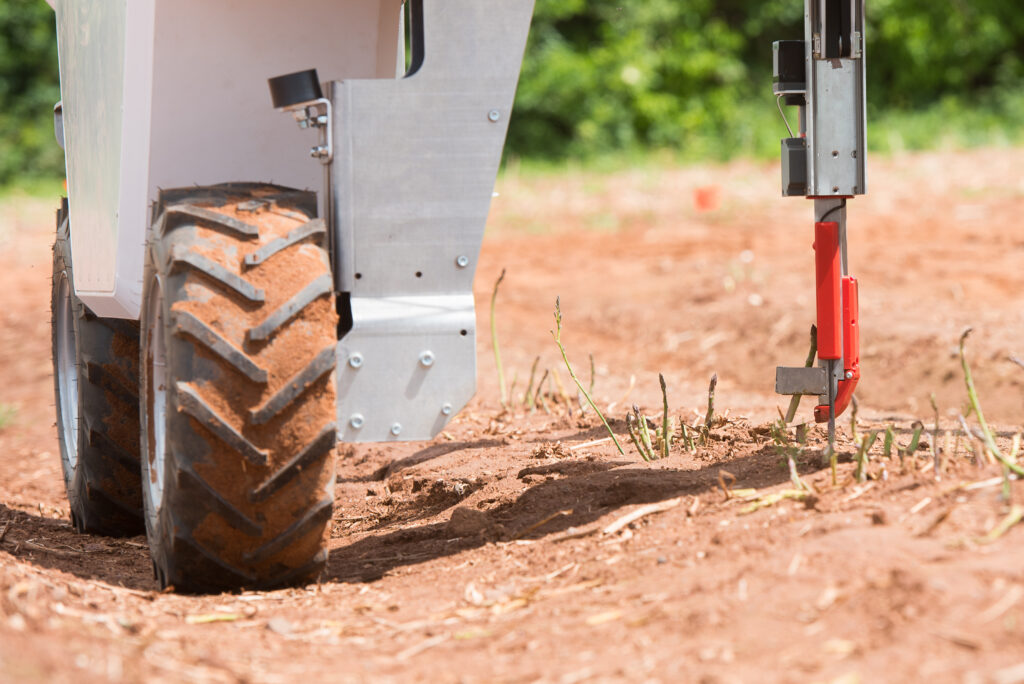
Demonstrating how a small herd of robots can work together to harvest asparagus is on the horizon next season for Muddy Machines. That’s one way the AgTech and robotics company plans to use a new round of seed funding totalling £1.5 million (over €1.7m) announced in August for its Sprout harvesting robot. The company’s technology allows farmers to precision harvest crops like asparagus. It says Sprout – now on its 3rd prototype – can already drive through fields harvesting accurately for up to 16 hours a day before needing a recharge, therefore hugely increasing the picking window. The new round of funding will be used to strengthen the company’s engineering team and build capacity to cope with more widespread adoption of its technology.

It will specifically focus on building a small herd of Sprout robots for the 2023 asparagus harvest season – all communicating with each other to autonomously harvest whole fields of asparagus – as well as generating initial revenues; continuing with the development of different crop harvesting capabilities; and planning production of the next generation of lightweight, battery-powered Sprout robots. Muddy Machines was founded in 2020 by Christopher Chavasse and Florian Richter with a vision to use robots to sustainably solve pressing labour issues in farming. The company has previously won nearly £2.5m in grants from Innovate UK and DEFRA.

Sprout has the support of UK’s largest asparagus grower Cobrey Farms

Muddy Machines has been developing its Sprout robot through trials this year on Redhill Farm, in South West England. Part of Cobrey Farms, the UK’s largest growers of asparagus, the startup has been provided with a portacabin office and barn to use as a workshop there. John Chinn of Cobrey Farms said it’s generally believed that robotic selective harvesting of fruit and vegetables, such as asparagus, is still a few years away from being commercially available and viable. “However, I believe Muddy Machines may well be the first to market with their asparagus harvest robot,” he said, with harvesting of Tenderstem and courgette likely to follow a few years later. In return for its collaboration, Cobrey Farms has been promised first right of refusal on the robots for asparagus harvesting for the first two years of their commercial availability. While there’s been remarkable progress with machine learning and the ability to recognise harvestable asparagus spears – leaving young spears for another day and not trying to harvest a weed – the next challenge is to improve the mechanics of cutting them, Chinn said.

The arrival of commercially available and viable robot harvesters for asparagus won’t come soon enough in the UK, where “the situation is desperate.“ “It’s not about cutting costs of labour, but our inability to find it. We have a 12-week season and this technology is vital if we are to harvest the crop,” he said. With around 1,350 people needed each picking season at Cobrey Farms, labour is one of the biggest costs to his business and finding ways to save costs and become more efficient is crucial for survival. While farm machinery is generally getting bigger and heavier, which is bad for soil compaction, Sprout is fairly small and light, at less than half the size of the smallest car. With several robots working in one field, each using GPS navigation and communicating with each other to ensure that they do not overlap, soil compaction will be reduced, Chinn said. He is also looking at ways to provide electricity to recharge the robots by harnessing renewable energy on the farm.

ExpoSE : 9 innovations for asparagus and strawberries

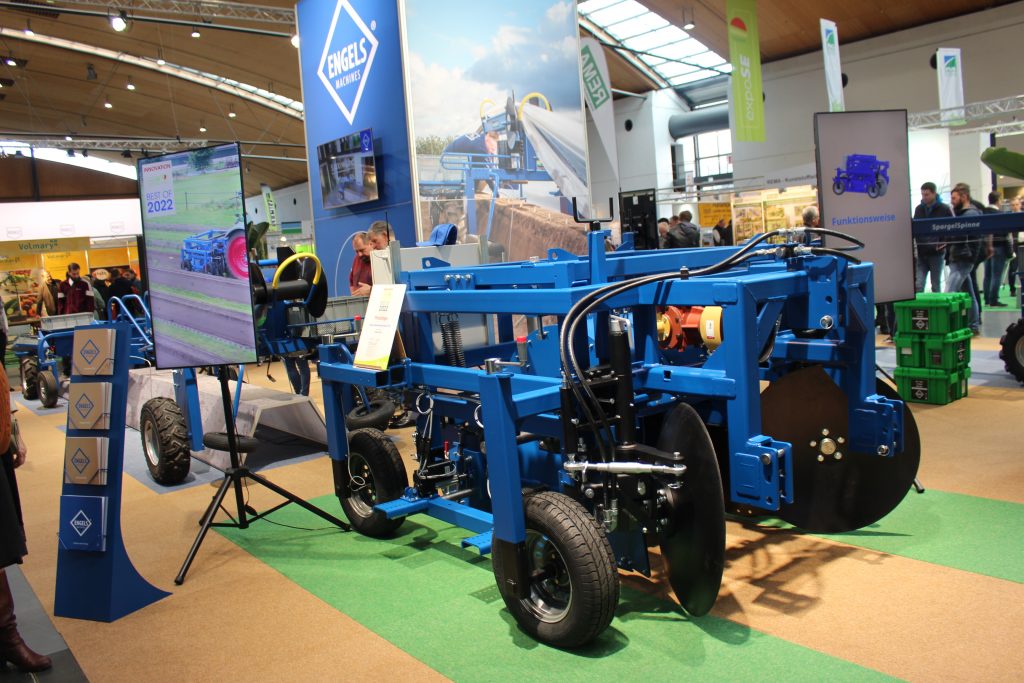
Engels : a ridger for agroecology

Designed by the Dutch manufacturer Engels, the EcoSpader 2030 asparagus ridger was awarded one of the “Innovation-Best of 2022” at ExpoSE. More than a ridger, the EcoSpader preserves the plant cover of the inter-row and allows an agro ecological approach by promoting the improvement of soil quality. To do this, the machine groups the volume of soil available for the mound using disks. It works the soil in depth without touching the crown in order to form a mound with a homogeneous soil to facilitate asparagus growth. The height of the mound is fixed, only its width can vary thanks to sensors and cylinders integrated into the machine. The machine can be used in plantations with an inter-row starting from 2.20 m.

Strauss : prototype of a harvesting robot

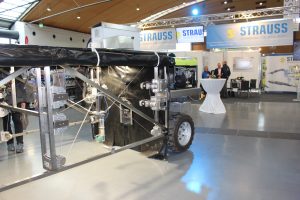
Strauss, a specialist in asparagus harvesting and packaging, presented a prototype of a robot for the harvesting of green asparagus. The harvesting arm is placed in a controlled light environment (covered cell) where asparagus (location + size) is detected using cameras. A picking arm, suspended and mobile thanks to pulleys, picks and deposits the asparagus on a conveyor tray. According to the manufacturer, the system is intended to be “rustic and efficient” and to harvest 2000 to 3000 asparagus per hour and facilitate the maintenance of the machine. The machine works autonomously on the plot and can change row by itself. By analysing the images the forecast of the next day’s harvest may be ensured. Finalisation of development and demonstrations to take place in 2023 with availability in 2024.

Ringo Plast : refrigerated boxes

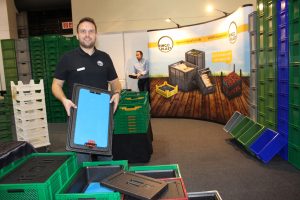
The Ringo Plast Company offers insulated crates of different sizes that can contain from 5 to 10 kg of asparagus (or other produce) in order to maintain the temperature for 6 to 8 hours and preserve the freshness of the product. They can also be equipped with additional freezing plates that improve shelf life.

Böckenhoff Folien : recycled plastic films

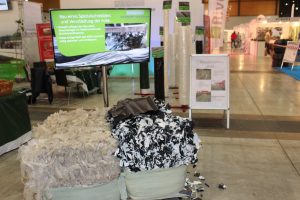
This supplier ensures the recycling of plastic sheeting, covering films and pocket films used in asparagus cultivation. After collection, the plastic films are shredded, washed and cleaned to remove all dirt and then baled for recycling. The service is charged at 110 euros per ton of films.

Daios : tunnel ventilation

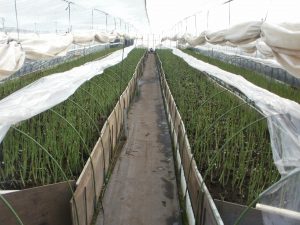
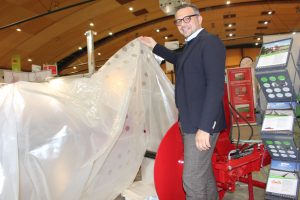
Daios, the plastic film manufacturer presented a new tunnel cover film. The cover, made of polyethylene of from 90 to 150 microns, designed for covering an 8.40m tunnel, is equipped with a 1.20m wide ventilation “box”. It consists of a perforated film and a cover film, placed at the ridge of the tunnel. This box ensures both the seal of the tunnel and its superior ventilation. According to the manufacturer, it is possible to reduce excessive summer temperatures by 5°C. The film is already available in Spain, Italy, Germany and Mexico.

Tenrit : peel your asparagus yourself

“Do it yourself”, this is what Tenrit offers with this adaptation to the direct sale of its automatic asparagus peeler. The basic peeler element is equipped with an automatic asparagus feeding conveyor that starts when the first asparagus is placed on it and it has a recovery tray reduced to the size of an asparagus bunch. It will take the customer/consumer 20 seconds to peel his one-kilo bunch of asparagus.

Kesse Böhner : self-service micro-marketplace

This micro market designed in a container is the commercial evolution of self-service in a small space. The customer enters this micro store, under video surveillance, using a bank card. Once inside, the customer weighs out and pays for the products installed on the shelves and in refrigerated cabinets. Several modules exist, the 18 m2 (6x3m) one costs 60,000 euros all inclusive.

Christiaens : total harvesting of green asparagus

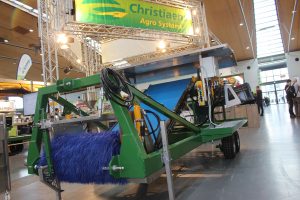
“Christian” is a harvester for green asparagus designed on the concept of “total harvest” already used by this manufacturer for white asparagus with his “Chris” harvester. The machine is equipped with a cutting bar, a conveyor belt and distribution for crating and sorting asparagus. All asparagus is harvested every 5 days. According to the manufacturer, the waste rate (particularly asparagus which is too short) is 20%. The loss is compensated by a harvesting yield (2 hours per hectare) and a very low harvest cost. The machine is also equipped with claws to ensure mechanical weeding.

Bejo : new late variety

Bejo 3199 F1 is a new variety from the breeding program that gave rise to Cumulus, Prius and Cygnus. Bejo 3199 F1 is a late variety that comes in the April-June production window with a medium calibre and more than 50% asparagus being 22-26mm. According to the breeder, the taste quality of Bejo 3199 F1 comes second just after the Cumulus reference.