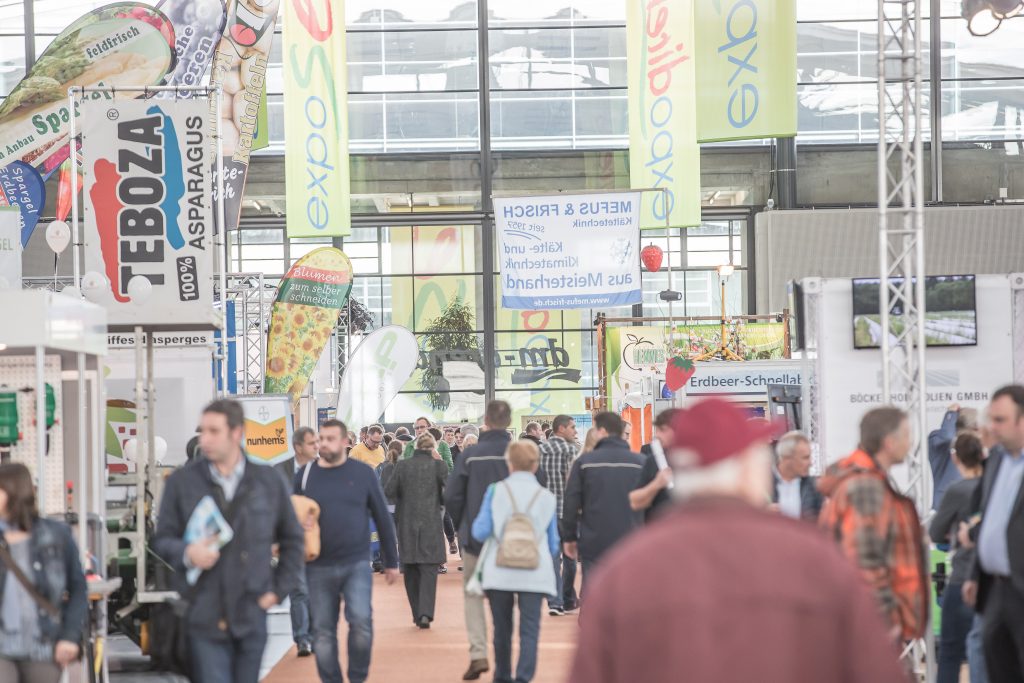
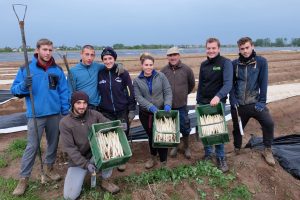
More than 400 exhibitors and 6,000 visitors attended the ExpoSE trade fairs, specialised in asparagus and berries, and ExpoDirekt, for direct sales, in Karlsruhe (Germany). Despite the concerns felt about the show Simon Schumacher, General Manager of VSSE, Association of Asparagus and Strawberry Producers of the Southern Germany, said he was satisfied with this edition which had a higher attendance than expected in a positive and dynamic atmosphere, and sometimes with some exhibitors having some unexpected contacts from Egyptian or Swedish visitors. Asparagus trade show ExpoSE hosted the first IAM, International Asparagus Meeting co-organised with Asparagus World magazine. In a European market of about 300,000 tons, Germany, a major player with 120,000 tons is currently experiencing a drop in production and consumption of about 15%. German technicians are finding, “With the increase in production and labour costs, some farming methods are no longer profitable.” This country, which has experienced the biggest increase over the last ten years, has also experienced a sharp drop in production since 2017. This year was also marked by a decline in asparagus consumption by German consumers, hitherto “European champions”.
Prototypes of harvesting robots
The same was true for the eight IAM stakeholders. Common concerns are mainly focused on the difficulty of recruiting labour for harvesting which has led to several prototypes of harvesting robots such as the one for green asparagus made by Muddy Machines currently under development in the United Kingdom. However, the labour costs presented by the speakers show marked differences: ranging from 35 euros per day in Greece to 17.63 euros per hour in the Netherlands.
Faced with a difficult 2022 campaign assessment, the project for a European observatory of asparagus production was led by Christian Befve, international consultant at IAM. “The 33rd Spargeltag – asparagus day – addressed more technical topics such as the use of plastic films, the prevention of browning of the spear, the robotisation of the harvest,” says Isabelle Kokula, asparagus advisor and organizer of the day.
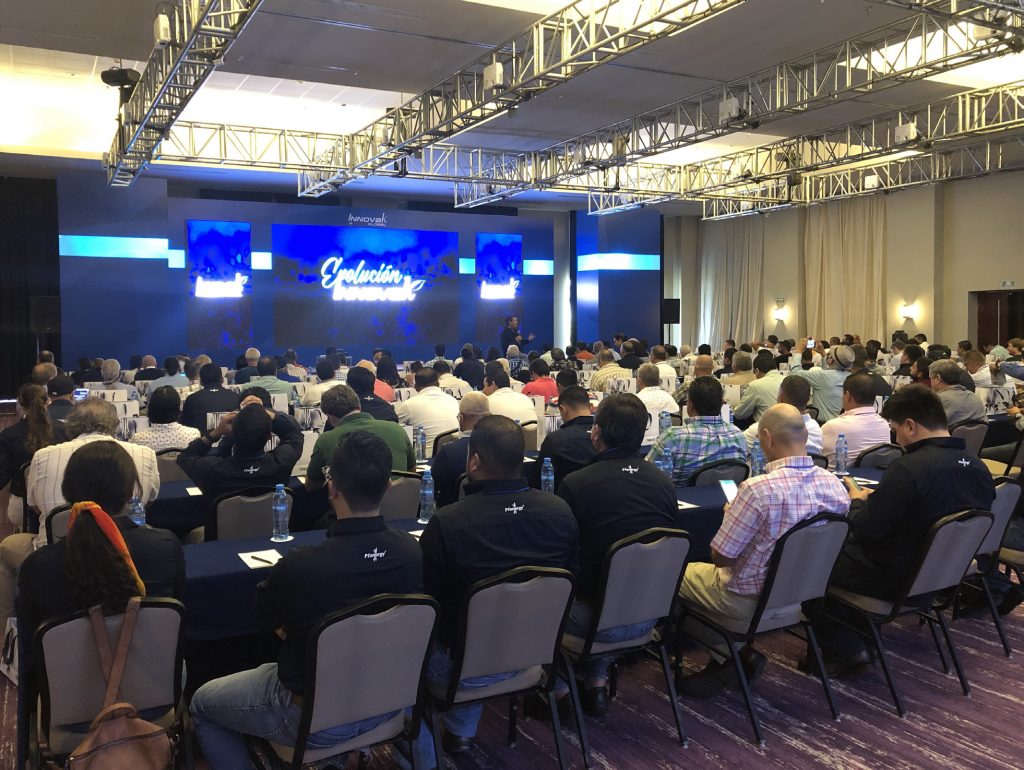
Constantly bringing new innovations to the market is part of Innovak Global’s DNA. And every two years, it brings together advisors, distributors and professionals with close links to it in order to share details of its latest advances. In July, 2022, over 200 people from all over the world attended the Innovak Evolution event in Cancún featuring talks by eminent scientists and demonstration stations of the company’s new technologies. It was there that the root biostimulation pioneer launched Pfenergy, its new technology named to reflect the use of polyphenol components as the source of energy for plants.
The Root Dynamics Regulation approach
Innovak Global was one of the first companies in the world to study the root and its environment, considering it a vital component with great potential to increase crop productivity. Accordingly, it set up a knowledge centre called the Rhizosphere Center, where researchers develop solutions for root problems in different crops. By 2005, the company had developed its Root Dynamics Regulation (RDR) approach to understanding all the processes that take place in roots and their environment during the crop cycle. With a focus on maximising the productivity of crops in a sustainable way, RDR is constantly updated as the company generates new findings or develops new products addressing emerging problems in the fields. For example, Innovak Global recently launched Balox, a biostimulant based on polyphenols that addresses plant saline stress.
Boosting root activity in crops
This comes in response to the root stress issues now facing various crops around the globe. Balox stimulates plants to generate their own osmolytes to face adversities in the environment, allowing better crop development amid salt stress. Innovak Global’s RDR technology covers five areas critical to crop development, starting with soil conditioners to improve plant establishment, followed by the previously mentioned root stress, such as that caused by saline stress. Then there is a focus on boosting root activity in crops, such as generating new roots, so as to improve nutrient absorption and fertiliser efficiency. Next is the rhizospheric environment and facilitating the beneficial interaction that exists between microorganisms and the roots, while the fifth area involves maximising root health so plants can better deal with the presence of soil-borne diseases that affect crop productivity.
“We are very glad that we have been able to convince so many interesting companies to join our dual trade fairs, expoSE and expoDirekt. The new products clearly show that companies know what is important in the industry: reducing costs, simplifying work, saving on personnel expenses, and adjusting production and direct marketing” explains Simon Schumacher, board spokesman for the Verband Süddeutscher Spargel- und Erdbeeranbauer e.V. and the event organiser for the expoSE and expoDirekt. Both new and proven products alike will be on display at the Messe Karlsruhe at the dual trade fairs expoSE & expoDirekt from 23rd to 24th November 2022. A total of around 400 exhibitors from eleven countries will be presenting at the 26th expoSE – Europe’s leading trade fair for asparagus and berry production – and 11th expoDirekt – Germany’s largest specialist trade fair for agricultural direct marketing.
Specialist presentations at the 33rd Asparagus Day and the Direct Marketer Forum
The 33rd Asparagus Day will focus on criticised aspects, as well as the profitability of using film in asparagus cultivation based on past experience, avoiding browning of asparagus stems, and cultivating and growing wild asparagus. Asparagus Day will be held on Wednesday, 23rd November from 2:00 to 5:15 PM in the large conference hall (2nd upper floor) at the Messe Karlsruhe, and is an event being put on by the Central Agricultural Office of the Karlsruhe District Administration and the Verband Süddeutscher Spargel- und Erdbeeranbauer e.V. (VSSE).
For the first time, the VSSE is organising the International Asparagus Meeting (IAM) alongside the trade journal Asparagus World. During the IAM, speakers will present topics on asparagus production in individual European countries and beyond. The goal is to familiarise participants with asparagus cultivation in individual countries, discuss market conditions, and avoid the potential for excess production International Asparagus Meeting will take place in three times :
10 a.m. to 11.30 a.m. – Part 1: Presentation of asparagus production in Europe and Canada 11.30 a.m. to 11.45 a.m. – Part 2: Presentation of the European Asparagus Observatory 11.45 a.m. – 12.30 p.m. – Part 3: Opinions of the speakers about the idea of the European asparagus Observatory
When establishing an asparagus plantation, it is necessary to reflect on the choice of varieties, as well as on the setting of the asparagus and its management, with particular attention to irrigation. The varieties are characterised by their different cold needs during their vegetative rest period. Colder areas or temperate climates, such as northern European countries (e.g. Germany, the Netherlands, France) and those in North America (US, Canada) require 1,000 hours of cold (under 7oC), while intermediate areas, i.e. with a Mediterranean climate (e.g. Spain, Italy, Middle East, California, Mexico, Australia) need between 500 and 600 hours, and hot zones or warm areas (e.g. Peru, Philippines) have no need for cold at all. It is likely that global warming in temperate zones will alter the current varietal range in Northern Europe and North America. The varieties chosen will be less demanding of cold in order to facilitate their annual storage and ensure an economically satisfactory lifespan. For green varieties in particular, an increasingly important criteria will be tip closure rather than flowering under the effects of heat. Improving the quality of the spear is currently a major goal for all breeders.
2/ High ridges to limit excess water
Even if average temperatures are likely to increase, the overall rainfall of some areas, especially in temperate climates, should remain stable. However, the precipitation regime could alter, with very heavy rainfall accumulations in autumn and winter. This consideration is driving interest in planting on ridges (see box).
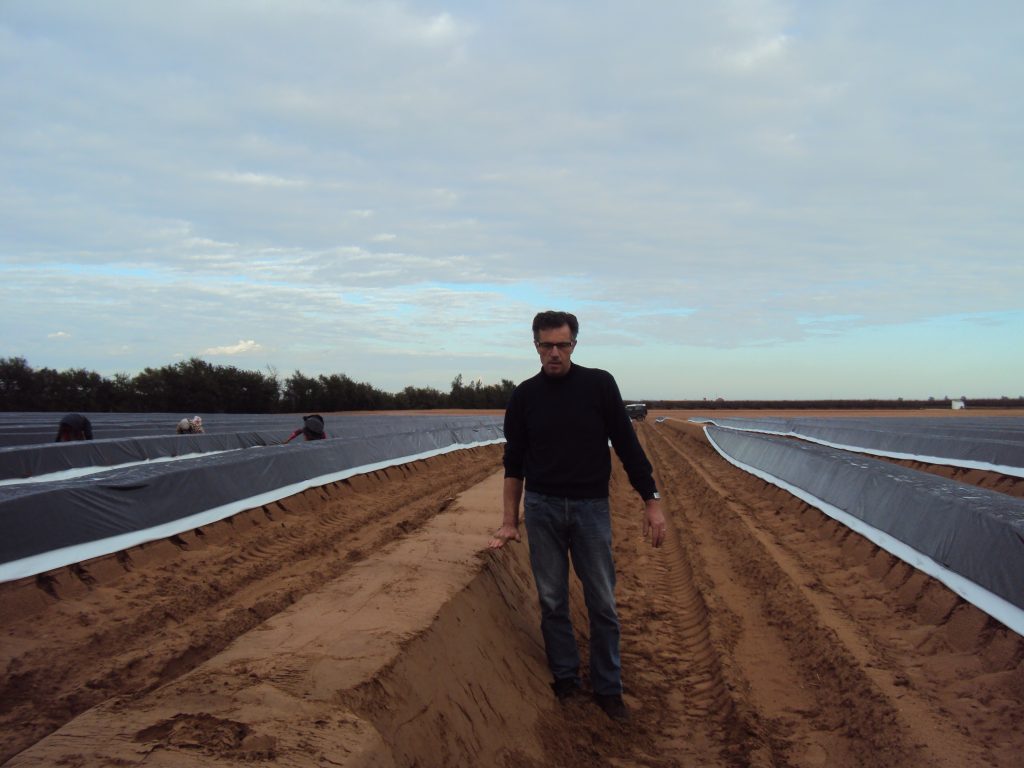
Ridge cropping is used to address water accumulation caused by very heavy rainfall, which could become increasingly more frequent. With this technique, planting is conducted at between 25 and 30 cm above ground level. Ridge cropping also allows natural drainage. Asparagus crowns are always found outside of the wet zone during wet and rainy winters or springs (see Asparagus World n°2/2020). A higher bed also results in more exposure, which leads to faster drying. Localised irrigation is a must in order to concentrate moisture at the foot of the plants. With this method, about 10% more input will be required on the row and per hectare. Another consideration is planting depth. Reducing depth also lowers the risks associated with excess moisture (asphyxiation, root diseases, etc.). Precocity can improve with faster soil warming: 1 cm less in planting depth = 1 day more precocity.
3/ Optimise Irrigation
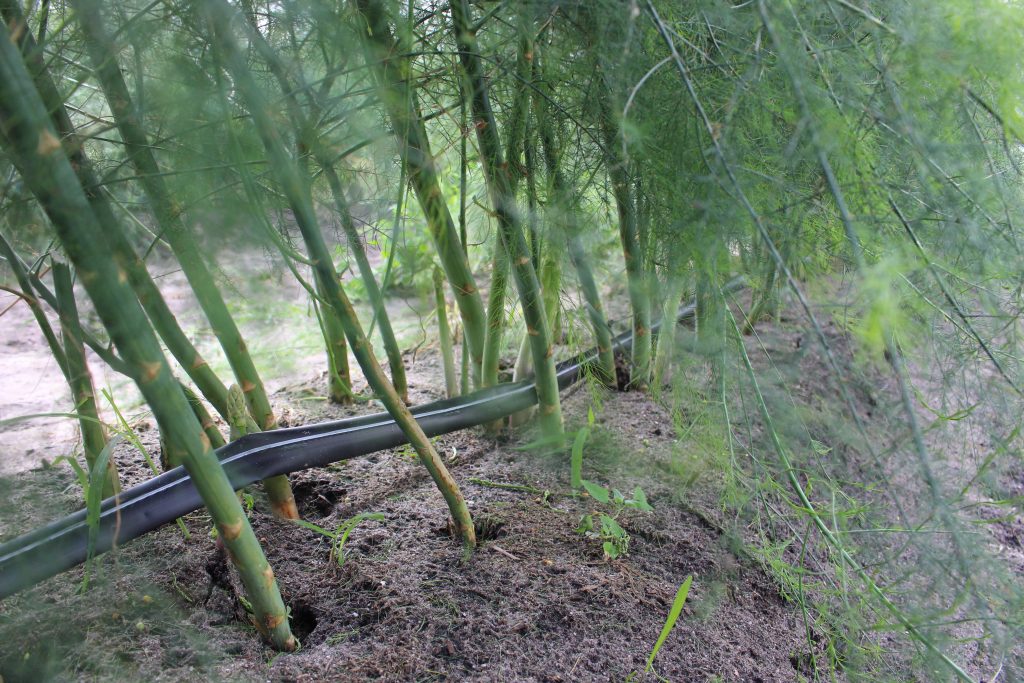
Irrigation provides new roots with moisture at the plateau level during harvest; this is mainly for green asparagus, but also for white. Each new spear produces 1 to 3 roots at its base. Close monitoring of root development is required to ensure constant humidity and allow the right humidity at depth. If these new roots are in drought, this will result in a lack of calibre, wrinkled spears, and loss of tip quality; in very harsh drought conditions, the spear can become completely dehydrated. On the other hand, supplying water ensures better calibres and yields and less flowering of the tip.
4/ Culture Management
Culture Management
Sprinkling and shading can limit flowering and improve the quality of green asparagus. The spear contains more than 90% water and it is difficult to protect the skin from the aggression of the sun and wind and from too low hygrometry levels. In the greenhouse, two or three rounds of sprinkling during the hot hours maintains a humidity of above 80%, which is required to harvest a spear that is turgescent, un-wrinkled and of good calibre. Supplementing the moisture supply with sprinkling also lowers the ambient temperature.
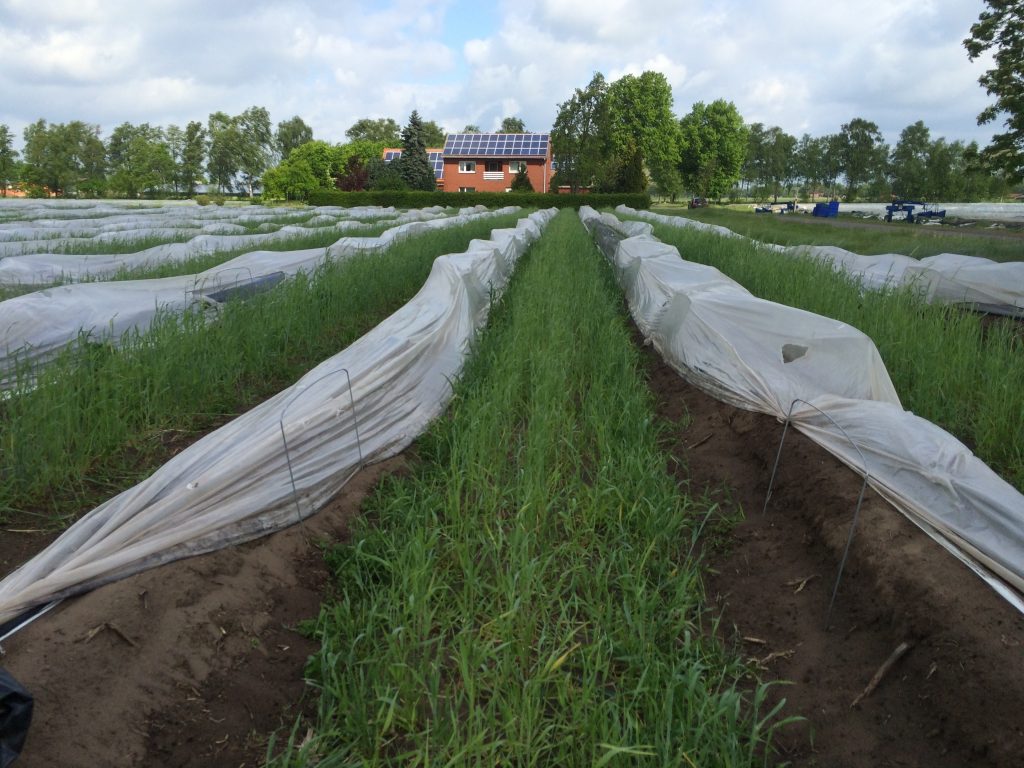
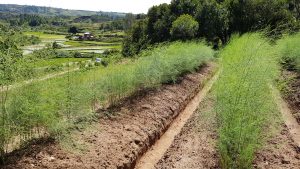
Tall grass between the ridges creates a micro-climate, which reduces the risk of frosts and regulates the temperature by +1.5 degrees. The planting of long grass also reduces the effects of wind and prevents mulch from being blown away during storms.
5/ Night harvesting
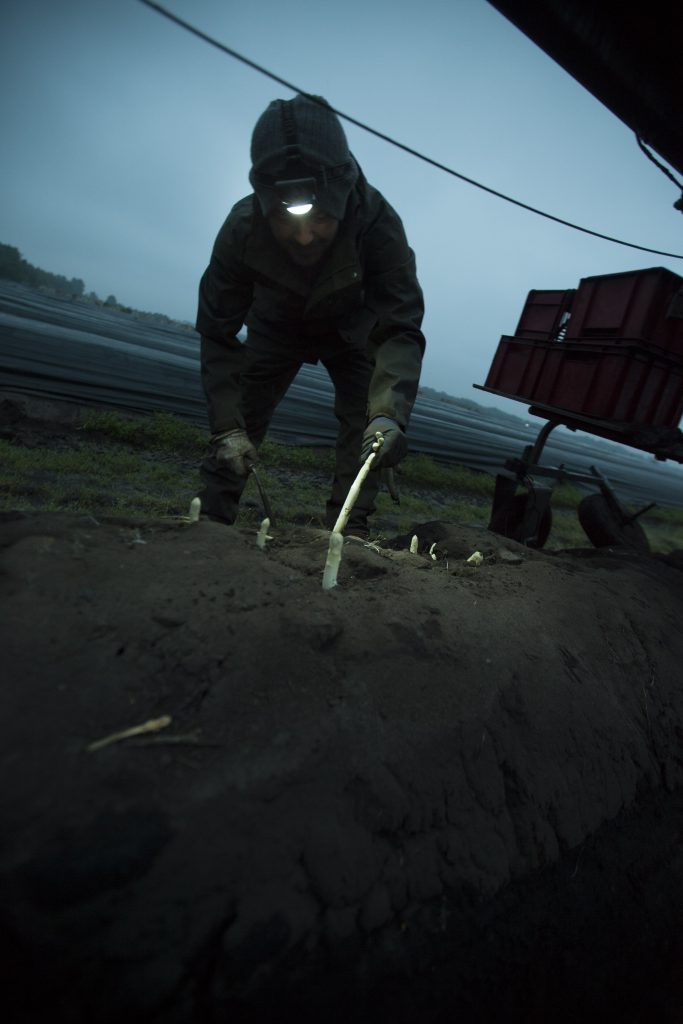
Harvesting at night protects asparagus from the daytime effects of the sun and dehydration. Asparagus harvested at night is colder, whiter and less fibrous. Professionals practising this technique find that spears harvested at night are 10oC cooler than those harvested in the middle of the day. The cooling and storage process is facilitated during calibration and packaging. Asparagus harvested at night is also of better quality: it is straight, less fibrous, and has better calibre. Night harvesting often takes place in calm weather to avoid possible damage caused by the often dry wind to green asparagus, which bends. Indeed, wind affects the skin on the exposed side of the asparagus, and this invisible wound results in curvature.
6/ Put the asparagus under cover
Like many other crops that suffer from increasingly frequent climatic “accidents” (hail, high winds, intense rainfall, etc.), planting asparagus in greenhouses is an increasingly feasible practice. At the beginning of cultivation, greenhouses can regulate climatic jolts and bring more precocity, which often equates to better selling prices. The gain depends on the structure (greenhouse, plastic) and the volume of the greenhouse (tunnel, multi-span).
Put the asparagus under cover
Mini-tunnels (Engels type) provide three weeks of precocity compared to the open field and 20 to 30% more yield per hectare.
Plastic tunnels, 5 to 9 m wide, provide 4 to 5 weeks of precocity and 30 to 50% more yield.
Multi-span tunnels provide a gain of 5 to 7 weeks of precocity with 40 to 70% more yield per hectare.
Yields are improved by the favourable conditions when growing in spring, but also by the longer vegetative period in the spring and autumn which increases the accumulation of reserves in the crown. Greenhouses also improve working conditions, making the harvest more comfortable and efficient thanks to the regularity and density of the spears to be harvested.
Today’s new horticultural greenhouses equipped with photovoltaic panels mean that we can enjoy the benefits of sheltered production with a limited financial outlay. Investments in greenhouse structure are supported by energy-producing partners. However, in this type of greenhouse, the percentage of shade can be very important and become a limiting factor in terms of the precocity, productivity and longevity of the crop. Hence, the design of the sheltering structure is also crucial to its success.
Asparagus for processing, canning and freezing is subject to different production constraints from asparagus for the fresh market. Two parameters are decisive for this type of culture. The availability of deep, sandy land with good water resources is a primary agronomic parameter. The availability of labour at the lowest possible cost is a second determining economic criterion. The history of asparagus production is marked by the industry’s migrations driven by changing labour costs and availability, while at the same time maintaining the same distribution markets in North America and Europe. Canned or frozen asparagus left France in the mid-1980s, when Spain entered the Common Market and was able to offer lower labour costs and receive subsidies.
Motivated by low labour costs
In 1995, the Spanish asparagus industrialists set up in Peru attracted by the availability, cost and efficiency of Peruvian workers. This explains why there is no longer an asparagus canning industry in Europe with the exception of the PGI Asparagus of Navarra. Faced with the rising costs and scarcity of Peruvian labour in around 2005, some of the companies decided to set up in China. But China’s economic and industrial boom over the past decade has seen a steady flow of workers leaving the countryside to be absorbed by the construction and industrial sectors. Now, new asparagus manufacturers or the same companies that were in Spain, Peru and China are setting up in Africa. These players have mainly chosen Namibia, Ethiopia and Madagascar for various reasons. Each of these African countries already has between 100 and 400 hectares in place in less than 5 years with a projected 400 to 600 hectares more in the future. The primary driving force for these new implantations is the low labour costs available. Thus, the average daily cost including expenses is estimated at US$3 per worker in Madagascar and Ethiopia and $5 in Namibia, compared with $10 in China, $20 in Peru and $60 in Spain. The availability of a large number of workers is also critical to the decision.
Need for mulch in asparagus production
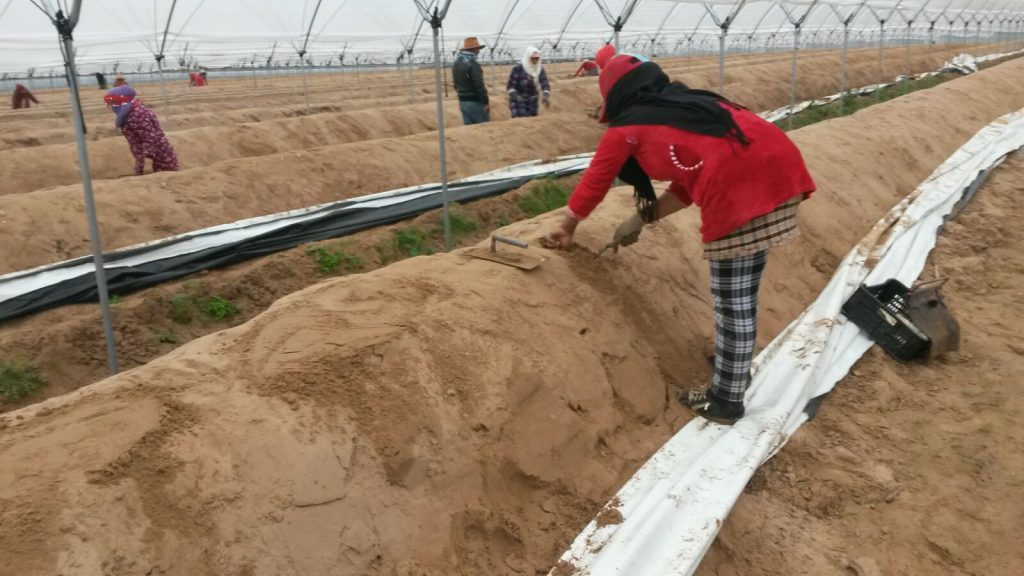
Another asset the African continent has is access to good, deep, virgin land at reasonable prices. Prices are about $5,000 to $10,000/ha. However, these are fallow lands that require a lot of work to grow crops. While Peru enjoys very stable temperatures throughout the year (between 12 and 30 degrees) these African countries, in contrast, have much greater climatic ranges, going from 5 to 30 degrees Celsius in Madagascar, up to 35 degrees Celsius in Namibia, and up to 40 degrees Celsius in Ethiopia. The winter period does not allow production, and summer temperatures are too high (especially in Ethiopia and Namibia), slowing or stopping production. It is therefore obligatory to use mulch for warming and to ensure the production of asparagus in the spring and autumn. Even if asparagus crops are at altitude (between 1,000 and 2,000 m) in order to escape the excessively high summer temperatures, the soil must be refreshed with irrigation water. Water is available in sufficient quantity and quality from dams or deep boreholes. On the other hand, the rains are irregular and difficult for the local meteorological services to predict. For Madagascar and Namibia, located in the Southern Hemisphere, the period of precipitation is between November and March. For Ethiopia, in the Northern Hemisphere, it rains the most between June and September. These rains can interrupt water stress and complicate harvesting and health protection. Without special measures, these new zones can only produce 3 to 5 months a year, which impacts heavily on the returns on the very high investment costs for asparagus fields.
Essential technical adaptations
With the benefits, however, come certain constraints and difficulties. Indeed, while the workforce is often plentiful, skill and motivation levels may be low or entirely absent. For many workers, asparagus is a totally unknown crop, which requires time for training and learning. Careful management is crucial if the expected economic gains are to be achieved. Even if local, this workforce is often very scattered, with no means of transport. The company must therefore implement transport logistics to move its workers and sometimes even house them, which in turn requires constructing housing. Untouched asparagus-friendly land may also be land which has been poorly cultivated previously. The parcels sometimes require levelling work as well as the construction of basic infrastructure (roads, wells, etc.) to make production possible. These “new Eldorados” also require technical adaptations and new expertise in cultivation to adapt to climatic conditions that are different from areas already cultivated in the world. In
In Madagascar asparagus is grown by a large number of small farmers.
some cases, climate data is deficient or non-existent. These new destinations for asparagus have no nearby bases for the supply of inputs. It is therefore necessary to import all means of production, storage and packaging, which involves time delays that sometimes require order growing equipment 7 to 10 months in advance. The resulting costs can very quickly reduce or even wipe out the expected economic gains. In addition to the very high cost of air cargo, between $1.5 and $2/kg, it is also important to take into account the remoteness of international airports, the average regularity of domestic flights, the few tarmac roads, and the numerous tracks; remoteness of ports for sea freight (1 to 2 day’s transport). Also, it is almost impossible to export fresh asparagus. In order to get the best value from the product, it must be transformed either by appertisation (canning) or, more riskily, by freezing. Both cases require very costly agro-industrial equipment.
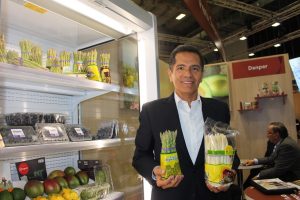
Danper
Danper’s Director, Jorge Aranguri
Three markets for Peruvian asparagus
Peru-based Danper has been processing white asparagus for canning since 1994. In its early days, the company sourced from the producers of its own region. It was not until 2002, after acquiring some land, that it began producing and marketing white asparagus for fresh export markets. “Fresh white asparagus has to be of a high quality level and there must be total control of the production chain until shipping,” said Danper’s director Jorge Aranguri. Then, in 2004, the company invested in its own freezing unit, mainly to freeze green asparagus. Today Danper has over 1,100 hectares of its own asparagus, with an additional 1,000 hectares belonging to various partner producers. The average yield of asparagus is around 10 tons/ha. Asparagus production takes place all year round, which means three markets can be supplied: fresh, canned, and frozen, according to the different qualities of asparagus and market prices. “Our peak production of white asparagus for the fresh market runs from August to December,” said Aranguri. For this market, calibres above 14 mm are preferred. For canning, calibres of 9 to 12 mm after peeling are desirable. “We have different opportunities due to the different quality requirements. This allows us to make the best use of all types of asparagus and to adjust to the markets,” said Aranguri.
After harvest, white asparagus undergoes physiological and biochemical changes that rapidly lead to a loss of quality. The main effects are higher fibrosity, water loss, and the development of a pink discolouration due to an increased synthesis of anthocyanins. The pink discolouration is a criterion that depreciates product quality and, depending on the distribution channel, may entail downgrading to a lower class, with a possible price loss of 5 to 15% for the grower, according to a survey by CTIFL (2017).
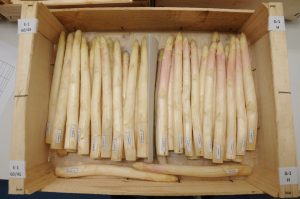
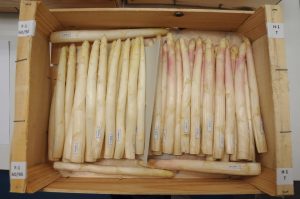
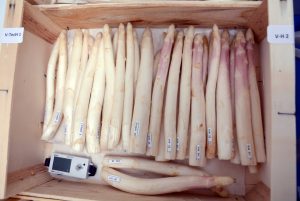
Aspect of the spears of the variety Vitalim after 24 hours (D+1) in point-of-sale conditions for the treatments TecH = immersion in hot water at 55° C/2min = hydrocooling by spraying at 2°C/20 min (left) and H = hydrocooling by spraying at 2° C/20 min (right).
Spears immersed in hot water show practically no pink discolouration
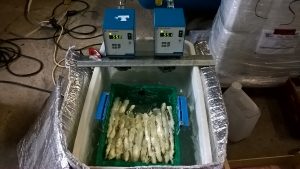
Several studies have shown the advantage of rapidly lowering the temperature of asparagus with cold (6-8°C) or iced water by spraying or immersion (hydrocooling) in order to delay the appearance of this pink tint. In an article published in Infos Ctifl nr. 353 (July 2019), Patricia Sanvicente, Sophie Annibal and Valérie Mérendet write that « rapid cooling after harvest is currently the most widely used technique in France ». Based on literature (see boxed text), new studies were conducted by CTIFL in 2017 and 2018 in order to assess the interest of hot water treatments applied to white asparagus varieties. Thus, in 2017, the hot water treatment of the varieties Darlise (little susceptible to pink discolouration) and Vitalim (highly susceptible) was applied by immersion of the spears, followed or not by a hydrocooling treatment using spraying. The core temperature of the spears during the trials was maximum 47-50°C for immersion treatments at 55 °C. The spears returned to their initial temperature after 30 minutes at room temperature (18 °C) or were cooled to the core at 3° C in less than an hour if the hot water treatment was followed by hydrocooling (2 °C/20 min). In the trials, the spears immersed in hot water showed practically no pink discolouration, whereas the control spears, hydrocooled and immersed in water at room temperature, took on a pink tint after 5 to 6 hours in simulated point-of-sale conditions, with the discolouration further evolving over the three days of exposure to light (Figure 1). As the authors observe, « pink discolouration of white asparagus is strongly delayed by immersion in water at 55 °C ».
Towards a large-scale implementation?
In the experiments, techniques combining a hot water treatment applied by dipping or spraying within 3 or 4 hours after harvest, followed by hydrocooling or immersion in temperate water (Mérendet & Annibal 2015) offer the best compromise in order to limit pink discolouration and water loss. Using this method, the core temperature of asparagus decreases rapidly and the spears are quickly cooled down before storage. As the authors of the article state, « Before those techniques can be applied on a large scale, the growers will have to confirm the feasibility of introducing the various steps into the organisation of the packing stations, as well as the positioning of the existing equipment. ». If one of the two proposed methods is deemed to offer perspectives for implementation, the advantage of a hot water treatment will have to be validated at the grower’s facility using existing or specifically adapted equipment.
Why does white asparagus turn pink?
Anthocyanins are pigments that filter light; they accumulate in plant tissue in response to the action, joint or separate, of various environmental factors, such as light (Leyva 1995), low temperatures (Christie et al. 1994, Dixon 1995) or nutritional stress, e.g. a phosphorus deficiency (Kakegawa et al., 1995). As a reaction to those factors, the activity of phenylalanine ammonia-lyase (PAL), a key enzyme in the pathway of anthocyanin biosynthesis, is stimulated (Dixon 1995, Flores et al, 2005). In the case of white asparagus, research indicates that there is an increase in the activity of PAL, and therefore enhanced postharvest anthocyanin synthesis, after an initial stimulation by light, independently of temperature and lighting conditions during storage, thus causing the appearance of a pink tint (Siomos et al. 1994, Siomos et al. 1995a, Siomos et al. 1995b; Siomos et al. 2000; Siomos et al. 2001, Flores et al. 2005).
Existing data
Research in the Netherlands showed that a hot water treatment (50 °C/2 min) limits the appearance of a pink tint in white asparagus (Poll 1998). More recently, Siomos and his team (2005, 2010) confirmed that, in experimental conditions, heat treatment by immersion in hot water is efficient in preserving the white colour of asparagus spears. A treatment by immersion in hot water at 55 °C for 2 to 3 minutes, followed by an immersion in water at room temperature for 10 minutes, is efficient against pink discolouration in the varieties Atlas and Dariana. Similar results were obtained in preliminary research conducted by CTIFL in 2015 on the variety Grolim (Mérendet & Annibal 2015).
Spraying or immersion?
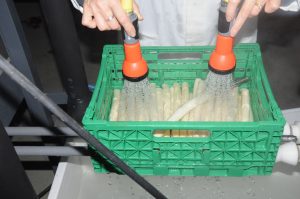
Hot water treatment by spraying
Hot water treatment by immersion.
In 2018, hot water spraying was tested by CTIFL in order to determine if this method was as efficient as immersion in limiting the appearance of a pink tint in asparagus. The technique was assessed using several combinations of temperature/duration, systematically followed by hydrocooling through immersion (1 °C/5 min). In the spraying treatment, asparagus spears in plastic crates were placed under two spraying nozzles supplied with water heated and regulated at the desired temperature. As in the « immersion » trials, the spears in the « control » batch and the « hydrocooled » spears took on a faint pink hue within a few hours of their transfer into point-of-sale conditions. After 24 hours in said conditions, 90 to 100 % of the spears showed a fairly marked pink discolouration (colour index 70 to 80). However, spraying with hot water 3 to 4 hours after harvest, followed by hydrocooling through immersion, limited the appearance of a pink tint. The best results for each tested treatment temperature were obtained with the longest exposure. On the other hand, a heat treatment 24 hours after harvest was less efficient than a treatment within 3 or 4 hours after harvest. In the experimental conditions, the temperature/duration combination of 58 °C/90 sec was the most efficient to avoid pink discolouration of the spears. Unlike the results of the « immersion » trials, which showed a very slight dehydration of the spears (0,1 to 0,2 %), the heat treatments using spraying did not entail any weight loss. On the contrary, the spears gained an average of 2 % of their initial mass by absorbing water during the treatment.
There are several reasons for harvesting asparagus at night. One of the main ones is that it assists pickers – a key consideration given that Spain has very few machines to assist in harvesting. Our Andalusian labourers find that the plastic is soft in daytime temperatures and doesn’t handle well. Also, as asparagus harvesting is a laborious task, the workers feel less fatigue at night, which allows them to work at a better pace. For night vision purposes, they use headlamps. However, handling asparagus is a delicate endeavour that requires care and precision to ensure the quality and integrity of the product is maintained throughout the production process. This is why we always employ expert and reliable pickers. The harvesting usually starts at 10 pm and ends between 4 and 7 in the morning, depending on the amount of asparagus.
Another benefit of harvesting asparagus at night concerns the quality of the product. Picking the plant at this time allows the asparagus to come out cooler and whiter as it avoids contact with sunlight. This in turn ensures a better appearance and taste – key considerations for retailers and consumers alike. The third major factor relates to operational organisation. When all of day’s production is carried out early in the morning, you can start organising the storage house very early and begin processing the production for sale and delivery. This ensures the product arrives on the market as fresh as possible. So, we feel there are more advantages than disadvantages relating to night collection. We should never forget, however, that the pickers’ expertise and skills are at the heart of the process.
The night harvest would seem to be a complex operation. Yet the producers who have tried out the experiment in different countries have all done so successfully. Today, it represents a trend that is spreading in several parts of the world.
Natural temperature lowering
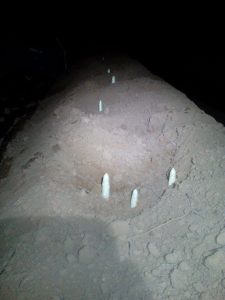
Asparagus harvested in the night can be 3 to 8 degrees cooler than asparagus harvested during the day.
The goal of the night harvest is to optimise conditions for the preservation of asparagus during and after collection. It avoids the light (colouring of the tips), heat, low humidity, and wind that often lead to the rapid dehydration of asparagus. Depending on how the work site is set up, the process starts either at the end of the day or in the middle of the night. In both cases, the aim is to have the bulk of the harvest completed by between 6 and 8 am in order to start washing and packing early, and, above all, so as to know the precise quantity and quality of the asparagus to be marketed. The night harvest takes advantage of the natural lowering of the temperature. Asparagus harvested in this way can be 3 to 8 degrees cooler than asparagus harvested during the day. This makes cooling easier and improves the preservation and quality of the product. The night harvest hinders the bud growth that appears under plastic after the day’s temperature peak. As a result, the percentage of burnt spears is lower. Asparagus harvested at night is whiter. Its development in the mound happens during the day, and the tip appears later. Once harvested, the spears are no longer exposed to light.
Knowing the volume allows better marketing
Nocturnal conditions also provide higher relative humidity, which limits dehydration that can result in pinking. Moreover, there is little or no wind interference when handling the plastic covers. As the reports show, most teams of pickers enjoy working in cooler and less demanding conditions. The night harvest also optimises the management of packaging, which is particularly important as once sorting teams start work, they have to handle large volumes. The station manager can also adapt the number of operators to the volume of the night’s harvest as the available volumes are known very early in the day. This improved knowledge of the offer makes it possible to make the most of the daily harvest.
5 benefits of the night harvest
– colder asparagus: between 3 and 8 degrees less than during the day harvest
– better quality, resulting especially from fewer burnt tips
– no pinkness due to darkness, higher relative humidity and often less wind
– knowledge of harvest volume facilitates organisation of sorting work
– better knowledge of the offer and better daily valuation
Seasonal Spanish workers brought night harvesting to France.
Night picking revolutionises harvest in Alsace
As soon as they get out of the van, the small group disperses into the plot. It could be 7:00 in the morning, but it’s actually 7.00 in the evening. This is the usual time when the working “day” begins. Emmanuel Dollinger, manager of Dollinger Farm, welcomes his first group of eight Spanish seasonal workers for the 2018 season. The farm has completely overturned its harvesting routine, which used to start at 6 am and end at noon, or sometimes later. “Last year it was very hot. After ten days, Juan, the team leader suggested starting work at 7 pm or 7:30 pm, telling me that at night, you don’t suffer from the heat, and that you are more efficient and quieter,” recalls Dollinger. At first, the farm manager was reluctant but was eventually persuaded to give it a try using headlamps. The test results provided such positive results that within a fortnight, the group had become familiar with the single 10-hectare plot. Today, Dollinger is completely free to manage his time and harvest according to the weather, “as long as I have the maximum amount of asparagus waiting for me in the morning in 6 kg crates. Juan knows his stuff. He is 47 years old and has twenty-eight years of experience in asparagus.” For Dollinger, the 2018 campaign represented a revolution in crop management. “I’m a winner in every way,” he said. “When I start my day at 7:00 am, all I have to do is count the crates to instantly know how much volume I have for sale.” Sales have increased and some customers have pointed out that the quality of asparagus has improved.
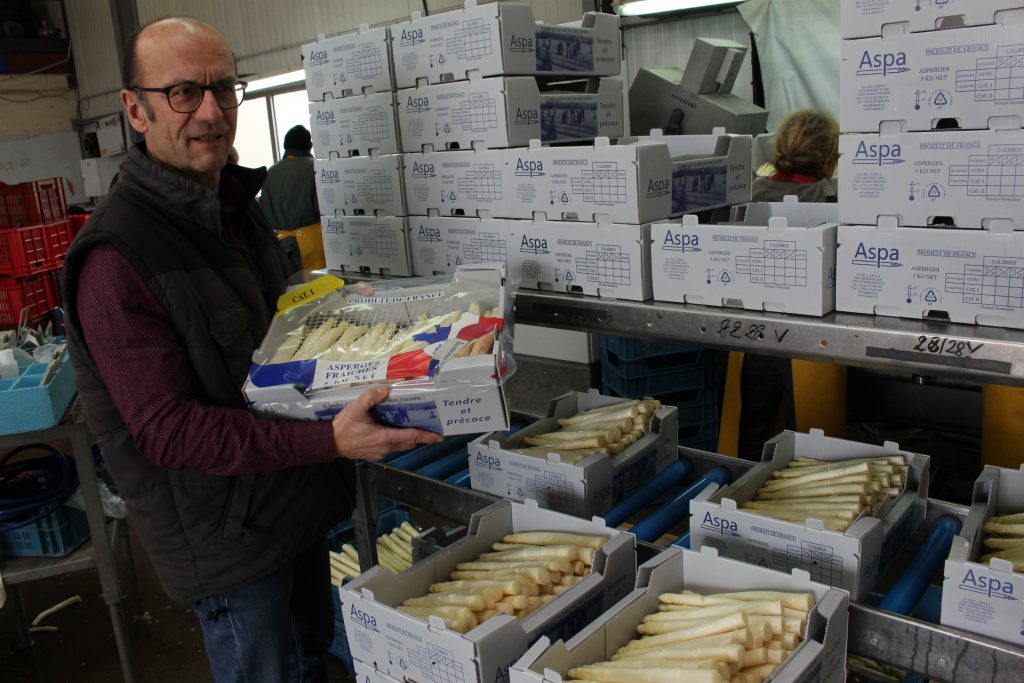
Loire Valley Asparagus has been grown for centuries in the deep sandy soils of the ancient riverbed of the kings of France. But since 1995 in Avoine, it has benefitted from an added advantage: hot water. This is provided by the tertiary network of the EDF nuclear power plant. ASPA, which specialises in the production of white asparagus, takes advantage of this hot water by using a 200-km pipeline network under the asparagus mounds. 30oC water is distributed across 20 hectares of asparagus grown under different types of shelter, and without producing any greenhouse gas emissions.
Heating pipes in the mound
The temperature in the mound can be raised to 18-22 degrees Celsius in the middle of winter, thanks to the channelling of water at 30 degrees Celsius.
“We grow 5 hectares under plastic greenhouses and 15 hectares in open field,” said Jacques Guironnet, who bought the company in 2012 and created ASPA2. The temperature in the mound can be raised to 18-22 degrees Celsius in the middle of winter. “We aim to start production in mid-January by starting heating 20 days before,” said Guironnet, who can be considered the earliest asparagus producer in France, and in Europe, too. After acquiring the farm, Jacques Guironnet modified the production technique by switching to a 3-metre-wide gap plantation, and a density of 25,000 crowns per hectare in double rows. Establishing the asparagus field required a significant investment and a great deal of work in installing the heating pipes, which do not allow mechanical planting. Faced with the lack of area, Jacques Guironnet started replanting asparagus on asparagus, which in this case required the removal of the old heating system. A lot of extra work.
Backlim was traditionally the variety planted in the area. Nowadays, it is Vitalim, chosen for the fact that it performs better in cold conditions and because the plant’s rest period is shorter. When the asparagus grows, the harvest is constant thanks to the controlled heating and the buffering effect of the shelters. “We are not required to handle the black/white and thermal plastics very much because the cool weather conditions are more stable than those of April or May,” he said.
So tender that there is nothing left on the plate
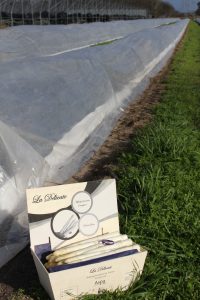
“Even in the cold weather, it is important not to overheat the mound, as the excess temperature can lead to a loss of
“la Délicate” is a premium quality asparagus from ASPA with a special packaging.
quality,” said Guironnet. Early production followed by an early end of harvest ensure a very long growing period that begins in mid-April. These additional two months allow great potential for accumulation of reserves for the following year. In summer, the cultivation is carried out in the same way as for a classic asparagus crop by aerating the shelters as much as possible. Most importantly of all, the crop is protected against thrips.
The regular growth of ASPA asparagus gives it a remarkable quality. Indeed, this is what led Jacques Guironnet to come up with the slogan: “So tender that there is nothing left on the plate”. ASPA customers appreciate this asparagus for its great tenderness, its very slight fibrousness, its sweetness and absence of bitterness, and its very regular taste quality. ASPA also pays great attention to the visual quality of its asparagus, which is very white and hand-peeled for extra quality. The supply period runs from mid-January to mid-April, with 50% of sales being in France to wholesalers, specialty distribution, and food service. The other half is exported, mainly to Asia, through importers who supply a high-end clientele from the gastronomic world. ASPA asparagus is available in 5 kg and 2 kg packs as well as in 500 g bunches.
Manage consent
To provide the best experiences, we use technologies such as cookies to store and/or access device information. Consenting to these technologies will allow us to process data such as browsing behavior or unique IDs on this site. Failure to consent or withdrawing consent may adversely affect certain features and functions.
Functional
Always active
Technical access or storage is strictly necessary for the legitimate interest purpose of enabling the use of a specific service explicitly requested by the subscriber or user, or for the sole purpose of carrying out the transmission of a communication over an electronic communications network.
Preferences
Technical access or storage is necessary for the legitimate interest purpose of storing preferences that are not requested by the subscriber or Internet user.
Statistics
Technical storage or access that is used exclusively for statistical purposes.Technical storage or access that is used exclusively for anonymous statistical purposes. Absent a subpoena, voluntary compliance from your internet service provider, or additional records from a third party, information stored or retrieved for this sole purpose generally cannot be used to identify you.
Marketing
Technical access or storage is necessary to create user profiles in order to send advertisements, or to track the user on a website or across websites with similar marketing purposes.