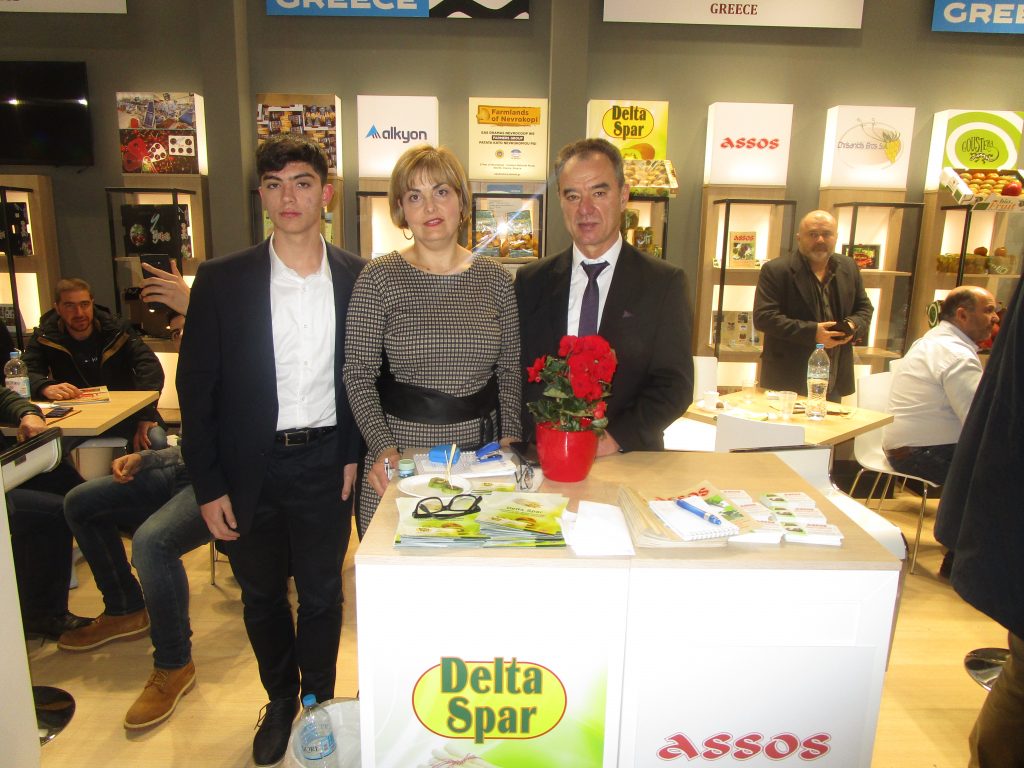
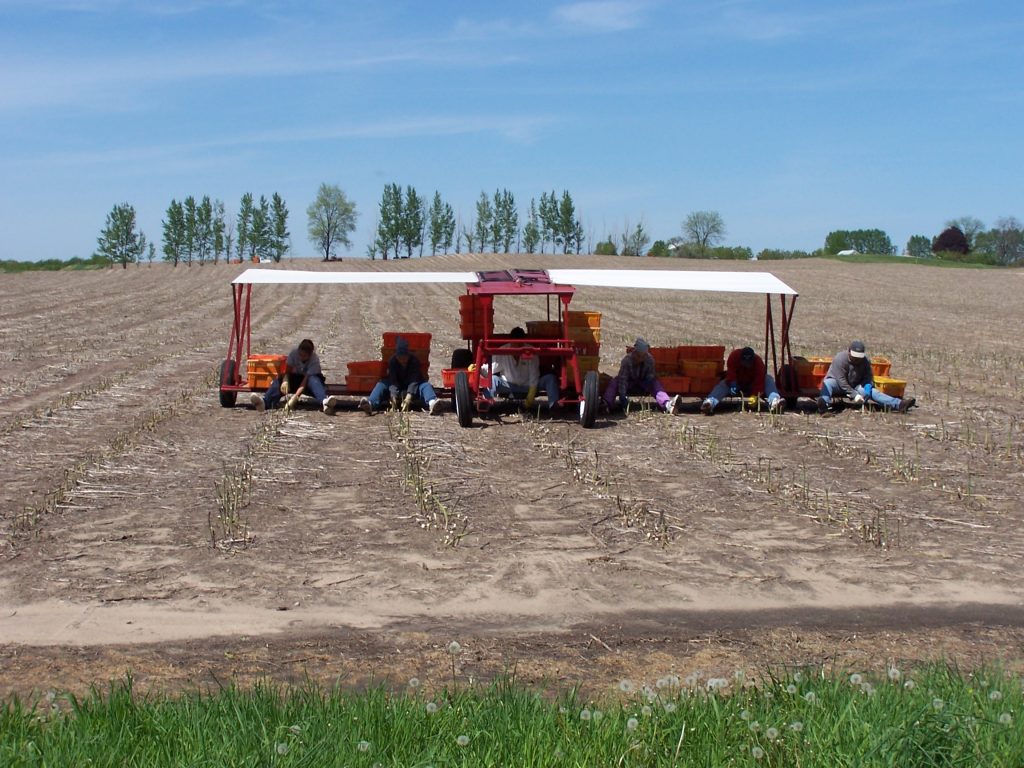
Greece’s asparagus production area is around 5,000 hectares in the Kavala and Agrinio regions, mainly marketed fresh to other EU countries. Although 97% is dedicated to white varieties, this year, for the first time, some pioneer companies are also growing green asparagus. The 2020 asparagus season in Greece kicked off 10 days early this year, as the warm weather across South-Eastern Europe accelerated the growth of the product and brought good quality. Consequently, all calibres of white and purple asparagus are available earlier than normal. Peru is the only competitor currently on the market with higher volumes. But as Greek producers’ sustainable packaging meets the requirements of most German retailers (the main market), they are ahead of their South American rivals.
Delta Spar
positive early season
Delta Spar has made a positive and early start to the asparagus season in the Greek region of Kavala: “Thanks to the good weather we have had in Greece, the season will start early and should end in early May. The product quality is essentially of the same level as that of last year, both for the 12 gauge and for the 14 and 16 gauges,” said Anastasios Papargyriou. Available exclusively in the white and purple type, Delta Spar’s asparagus is mainly destined for the major European supermarket chains in Germany, Italy and Spain.
Coop Kavala
Starts producing green asparagus
Coop Kavala is preparing to introduce green asparagus alongside its production of white to expand its range: “In the last 5-6 years, the asparagus sector has seen major changes, with the arrival on the market of new producers who have replaced old ones. Today we have reached the point where resources have to be optimised. This is why we have chosen to take on the challenge of introducing green asparagus, with the certainty that the asparagus produced in our region has an incomparable taste,” said general manager Karkatzalos Tasos. With a combined 150 hectares divided between approximately 50 producer members, Coop Kavala is the main Greek producer of asparagus. The product is mainly exported to the major European markets, such as Italy, Slovakia, Switzerland, Austria, France, Poland and above all Germany.
Assos
asparagus from protected cultivation
The Assos Cooperative supplies asparagus from the Greek region of Kavala produced using protected and heated cultivation methods: “We essentially produce white asparagus, and have recently started to use protected and heated cultivation techniques, which allow us to harvest earlier than other production areas. We also offer new, cheaper and more sustainable packaging to meet the needs of large retailers,” said the cooperative’s president, Leonidas Kafetzopoulos. At the outset of a season that promises to be a positive one and in line with the previous campaigns, Assos’ asparagus is destined mainly for export, especially to Germany, France and Italy.
Agiasma
with organic and green asparagus
Agiasma expects a positive asparagus campaign in Eastern Macedonia and Thrace, and anticipates the arrival of the first green varieties: “For 27 years we have been cultivating exclusively white asparagus. This year’s favourable weather conditions will allow us to bring forward the harvest to mid-February for asparagus grown in the field. From next year, we are also thinking of introducing the first green asparagus and starting organic production,” said the firm’s president, Nikolaos Emmanouilidis. Agiasma’s high-quality product is destined primarily for European markets, with 20% going to Italy, another 20% to the Netherlands, and the remainder to southern Germany.
Increasing competition from foreign asparagus has strongly impacted US acreage. USDA data shows that in 2019, the area planted in the country totalled 21,900 acres, which produced 75.3 million pounds, down from 2017 levels of 27,600 acres and 84.1 million pounds, respectively. The main area affected, especially by the increasing entry of Mexican asparagus, is California, whose cultivation in 2007 covered 20,000 acres, reaching a harvest volume of 58 million pounds. By 2019, growing area was down to 5,300 acres and output was only 18.2 million pounds. The state of Michigan was the country’s leading asparagus producer in 2019, with 10,000 acres and 28.2 million pounds, followed by the state of Washington, with 4,500 acres and 22.5 million pounds of asparagus harvested.
Altar Produce
Christopher Ramirez
develops East Coast to increase US presence
Altar Produce has 3 offices in the US: a central office in the city of Calexico, one in San Diego, and a newly opened one in Miami, from where it is developing its penetration strategy along the East Coast. Christopher Ramirez, president of Altar Produce, said, “It is a challenge to change the mentality on the East Coast, which is dominated by Peruvian asparagus, but we believe that we are doing a good job with the supermarkets who appreciate Mexico’s year-round stable offer and supreme quality. Another great advantage we have in Mexico is the freshness that we can deliver for our US customers, being just on the other side of the border. Peruvian asparagus faces several challenges: old fields, logistical problems with maritime transit times of up to 2 weeks, and the fact that it has to be fumigated.” Every year, Mexico is supplying fresh product in ever greater volumes. The US represents 60% of the volume sold by the company, which records annual production increases of 20-25%. “There are certain periods of the year when Mexico has a high volume of asparagus. That is why we have to sell to the entire US, rather than only to the West Coast.” As of this year, the firm will begin offering organic asparagus – the result of an initial project of 500 hectares. Moreover, Altar is testing biodegradable materials for packaging. “We have to be up to date with viable technologies,” said Ramírez.
Dan Miller
JMB Asparagus
invests in acres and new packaging in California
Jacobs Malcom & Burtt started out as a wholesale fruit operator, and when Leo Ronlandelli purchased the company in the 1960s, it pioneered the shipping of fresh asparagus to the East Coast and the Pacific Rim. “We have taken a seasonal commodity and made it a year-round available product with our own production and importing primarily from Mexico,” said Dan Miller, worldwide production & grower relations manager. “We are one of the last shippers of asparagus from California, where JMB represents 30% of the asparagus acreage. We also ship from Canada and South America, managing on a yearly basis over 8 million pounds.” Last year, JMB’s California growers have invested in more than 150 new acres of asparagus, and more than US$1 million of automated packing equipment to reduce costs. Overall, the company and its suppliers have invested more than US$4 million to improve its packing facilities and food safety operations in California and Mexico. Regarding new demand trends, Miller explained that “purple asparagus has become a specialty variety, especially among gourmet chefs, but the green asparagus still leads the category.”
Michigan asparagus
an industry focused on value-added products
Michigan State has over 100 firms involved in commercial asparagus production on 9,500 acres. For years, its production has been stable, between 20.5 and 22.5 million pounds, ranking, together with Washington State, as the largest or second largest producer in the country, depending on the year. The most significant thing about Michigan production is that it still has a very viable processing market. Last year, 30% was either canned or frozen, while the remaining 70% was sold in the fresh market. This year’s harvest season will start in May, with similar volumes to 2019 expected. “Our focus is on value-added products. Instead of just sending asparagus in the traditional 5-kilo boxes, we will offer something like a microwavable bag, or focus on larger-sized spears, which are better for grilling and roasting,” said John Bakker, executive director of the Michigan Asparagus Advisory Board. Michigan growers are always looking for new and better varieties. “The majority of the industry has planted a variety using our materials called Millennium, and now we are starting to see a new variety from the same breeding programme called Guelph Eclipse. We have started to plant the Dutch variety called Spartacus, a New Zealand variety called Pacific Challenger 2, and we are carefully monitoring a couple of new varieties from the LimGroup programme,” said Bakker.
With 700 hectares of asparagus cultivation for processing, Italy now ranks first in Europe. In recent years, the Emilia-Romagna region has developed a regulation for integrated production of asparagus which governs both fresh and processed products. Compliance with these regulations means that the packaging can be labelled “Quality Controlled QC”, with guarantees for the environment and for the health of consumers.
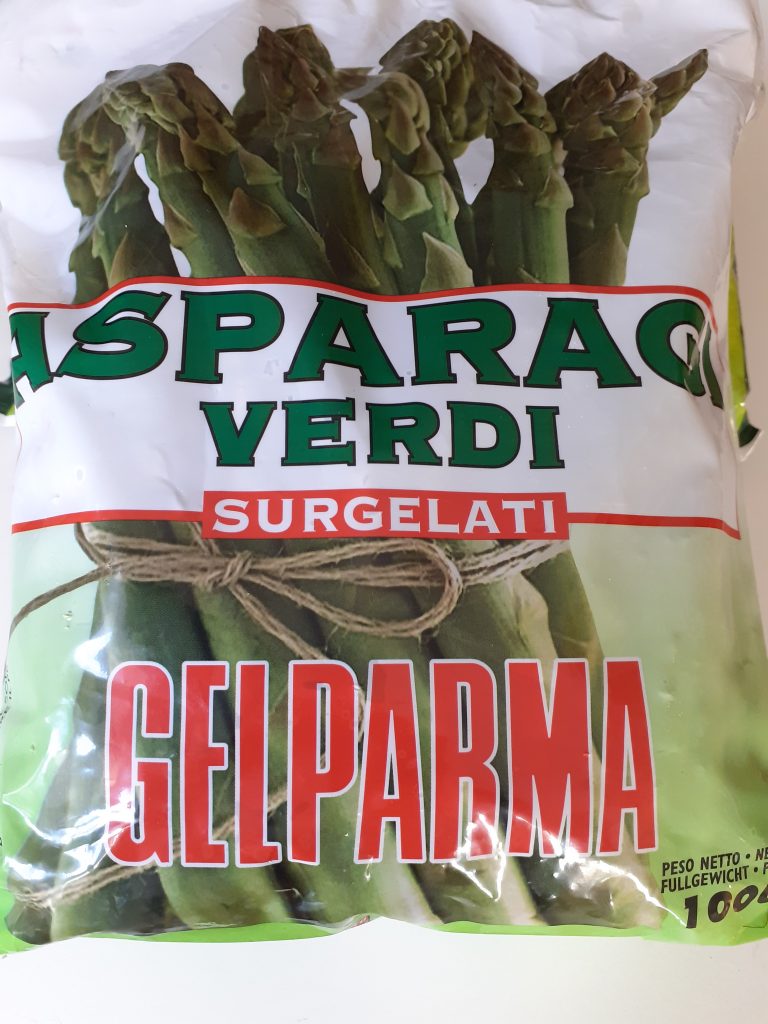
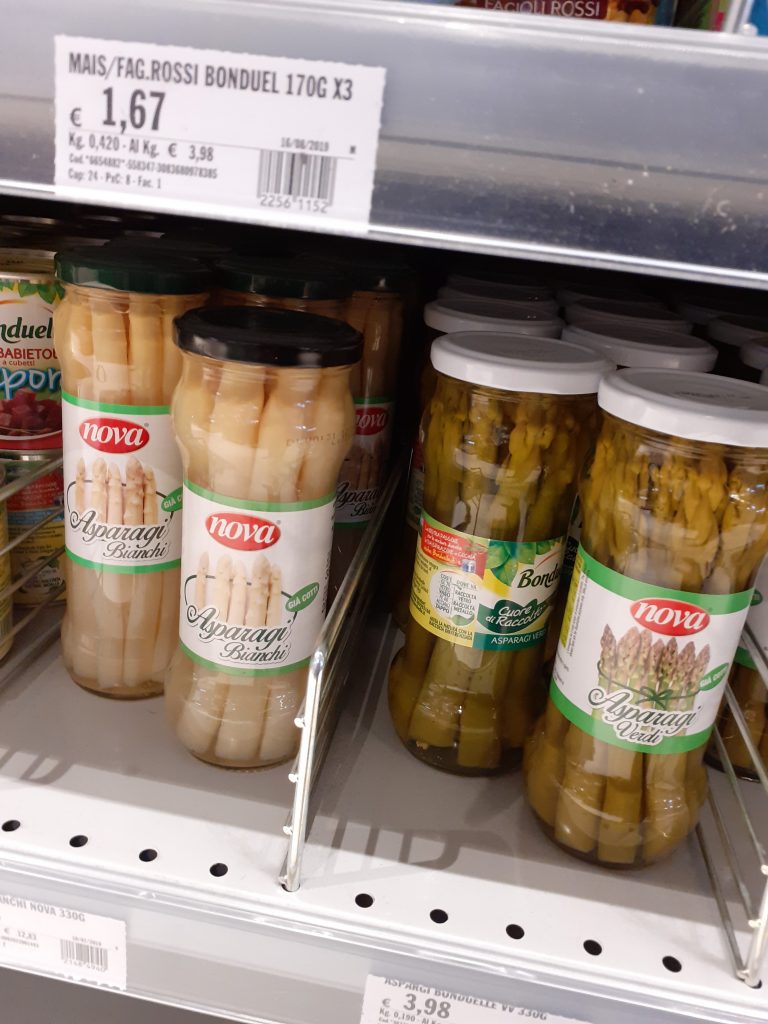
In the case of asparagus, the varieties suitable for vegetable preserves must have specific characteristics, including a uniform white or green colour, homogeneous calibre, and resistance to the sterilisation process. When peeling, the waste rate should not exceed 10% of the gross weight. After blanching, the product undergoes a sterilisation phase. Then, 90% of the can’s content weight should consist of asparagus. Asparagus can also be stored by deep freezing, with the tips very quickly reaching the temperature of -18 C. Unlike with normal freezing, deep freezing ensures that the cooling speed causes the formation of microcrystals that do not damage the biological structure of the food. Keeping the temperature below -18 degrees Celsius significantly slows down chemical and enzymatic reactions and microbial activity becomes almost zero. The organoleptic and nutritional characteristics of frozen vegetables remain unchanged from the original product. If the cold chain throughout the asparagus’ frozen life is scrupulously respected, deep freezing is the best storage system and is capable of offering the consumer a product that can compete with the fresh product. Freezing requires a high-quality product. Spears must have a closed tip and a regular, straight shape so that the frozen product can be packaged (in cans or bags). The colour should be a homogeneous white or green, with red-purple hues not persisting after blanching. To optimise freezing, spears must be at least 130 mm long and have a homogeneous calibre divided into three categories: 7 to 10 mm; 10.1 to 15 mm; 15.1 to 20 mm.
Asparagus should be considered a “global” crop; the world’s asparagus cultivation currently comprises 210,000 hectares, with a high concentration in Peru (20,000 ha), Mexico (20,000 ha) and China. In Europe, Germany (22,000 ha), Spain (14,000 ha) and Italy (9,000 ha) are the main producing countries. The processing sector is divided into two major markets: canning and freezing. The asparagus produced in China is largely intended to meet the need for freeze-dried and frozen asparagus. Peruvian production is also very oriented towards the processing market. In fact, it was to meet the demand for processing that asparagus was first grown in Peru. Approximately 13,200 ha (or 60%) of the 22,000 ha of asparagus produced in Peru is for processing. The United States processes half of its asparagus crop (10,000 ha), mostly green and frozen. China, Peru and the United States therefore represent the world’s top-three processed asparagus producers. South Africa also devotes a significant proportion (70%) of its crops to processing, that is to say, more than 1,800 ha. Other African countries are also developing their processed asparagus industries (see previous page). On a smaller scale, New Zealand processes 50% of its crops (about 600 ha). By contrast, Europe no longer produces much asparagus for processing. Spain processes only a small part of its production of Navarra PGI asparagus and Italy sends some green asparagus for freezing.
Asparagus can be cut in the field in Australia and on sale in Japan 30 hours later. This second to none access to markets in Asia is one of Australia’s fortes and maximises the freshness, quality and shelf life of its spears. Via direct flights, the majority of the country’s asparagus exports not only reach countries such as Japan and Singapore fast, they benefit from minimal tariff restrictions. But Australia also faces challenges – such as the high cost of labour and of this rapid air freight – and it has just ended a “rollercoaster” of a season dogged by adverse weather, explains Australian Asparagus Council president Adrian Raffa.
Japanese now have yen for thicker Aussie spears
Asparagus is Australia’s second biggest fresh vegetable export, though it contributes just 1.8% of the total volume while carrots lead with 53.6%. The Southern Hemisphere grower is among the world’s top ten asparagus producers but ranks lower by area, arguably due to yields higher than the global average. The official figures are not yet in for Australia’s 2019/20 asparagus season, but ITC Trade Map data shows Australia exported 3,245 tons of fresh asparagus (HS code 070920) in the 2019 calendar year. Of that total, the lion’s share (70%) went to Japan, Singapore 7%, Taiwan 6.5%, Korea 6.3%, Hong Kong 5.6%, China 3% and Malaysia 1.3%. Raffa, who is also export coordinator at exporter Momack Produce, said around 50-60% of the spears for Japan are sent loose in 10kg wooden boxes, with 30-40% in the standard Japanese retail format of 100g barcoded and banded bunches. In Japan, the Australians usually ship to trading companies who onsell to retailers. The Aussie export season – usually mainly from about September to December – coincides with a time when there is still a lot of production in Japan and Taiwan despite being the counterseason. Raffa said Australia has managed to turn to its advantage something that 10 years ago was a problem – the fact that its spears have a much bigger diameter than the very skinny ones grown locally in these markets and imported from Mexico. Now, in both its domestic and export markets, consumers are learning to associate Australia’s thicker asparagus with a softer, juicier product with less fibre per spear. “We offer a different eating experience you can really only get from Australia,” he said.
High-end segment in China beckons
So far, Australia sells insignificant volumes to China (mainly Beijing and Shanghai) but the Asian giant is well on its radar because unlike other markets in the region, most of which are quite mature and saturated, “it is slowing transforming into more and more growth for Australian asparagus,” Raffa said. China has so many growing regions that it has domestic supply for much of the of year and a very low cost base compared to Australia’s high labour and air freight costs. “But if we can highlight our quality there’s a lot of potential in China’s retail channel,” he said.
Room for domestic demand to rise
source: 2017/18 Australian Horticulture Statistics Handbook
According to the 2017/18 Australian Horticulture Statistics Handbook, only a third of Australian households bought asparagus in the year to June 2018, buying an average of 233 g of asparagus per shopping trip. The supply per capita was 326 g, based on the volume supplied. Raffa said consumption is growing but with plenty of room for more of this versatile vegetable in the Aussie diet. Fresh asparagus – 99% green – is marketed through central wholesale markets in all states of Australia and also sold direct to supermarkets and foodservice. Raffa said the standard retail format is now a 150g bunch with bands at the top and bottom. Many years ago it was 250 g but retail pressure to hit certain price points has seen it shrink. The national market predominantly prefers spears of 9-15 ml diameter.
Counter season imports from Mexico, Peru
Generally, about 60% of domestic asparagus production is consumed within Australia, with the local product usually available from August to December and then mid-January through to April. Over the Australian winter, when local asparagus is not available, imports arrive from Mexico mainly but also Peru and as of August 2019, both must undergo pre-shipment methyl bromide fumigation. Australia also imports small amounts from the US to meet seasonal and variety niches, and Thailand.
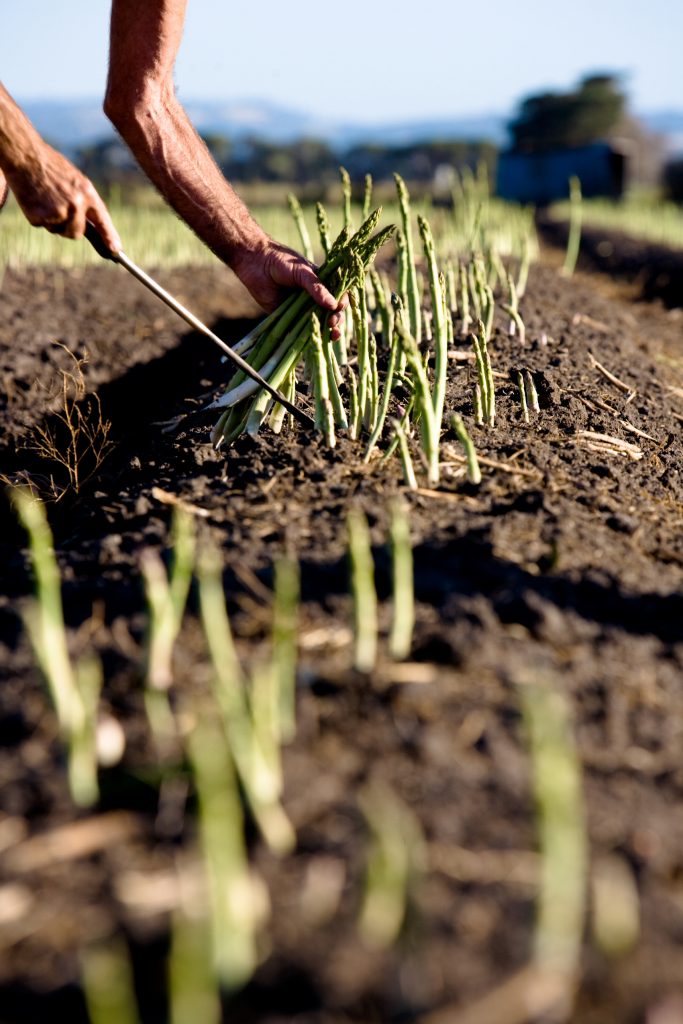
Imports generally arrive pre-packed for Australian specifications. Around 98% of Australia’s tonnage is grown in the south-eastern state of Victoria and the vast majority of it in Koo Wee Rup, which is known for its “black gold” – a unique and highly fertile black peat asparagus thrives in. Like the perfect ‘terroir’ for wine, this asparagus hub also has ideal air, water, climate and terrain for great quality spears. Mildura, in north-western Victoria, is the second-biggest production area and has a slightly earlier crop thanks to being an average 5C warmer. Compared to asparagus producers elsewhere in the world, Australia generally enjoys environmental benefits such as low chemical use and relative freedom from pests and diseases.
Ko Wee Rup is known for its “black gold” – a unique and highly fertile black peat. Like the ideal “teroir” for wine, it grows asparagus with great quality spears.
UC157F1 favoured for Australian farrows
There are typically two asparagus harvests: a spring cut, which supplies premium quality spears (known for their sweetness, Raffa says) mainly for the export market; and a summer cut, primarily destined for the domestic market. In Victoria, the spring harvest is usually from about August to late December (with peak availability in October). The summer cut runs from mid-January-mid April. By far the main variety is the high yield UC157F1, with Mildura also growing some Ida Lea. The asparagus is grown in raised beds which keep lots of water in the furrows during high rain periods in spring and the plants out of flooding. “The last season was quite a rollercoaster,” Raffa said. Very wet weather at the start of the 2019 spring season reduced volumes and Koo Wee Rup faced unprecedented amounts of cold weather and hailstorms in mid-October. All this combined with other adverse weather reduced volumes and created challenges in maintaining quality and reliability. On the positive side, the bushfires which razed many other regions over summer did not reach these areas though smoke haze made visibility quite low, he said. While it was once focused on canneries, competition from much-cheaper China has seen Australia predominantly supply fresh spears. And where once there were over 100 growers nationally, consolidation and farmer retirement has shrunk that to about 20. On the potential impact of the COVID-19 pandemic, Raffa said the Australian industry is very reliant on air freight exports and foreign workers. “The potential to be without either for the upcoming season is very concerning and we’re looking at ways to address that,” he said. Fresh Asp by country
Australia’s main asparagus growers & exporters
Momack Produce Pty Ltd: farmers, packers and exporters based in Koo Wee Rup, Victoria. Dispatches 7 days week from Melbourne airport. Supplies major wholesale markets and supermarkets including Coles and Woolworths across Australia via sister company Motta Produce.
T&G Vizzarri Farms Pty Ltd: also a Koo Wee Rup-based grower-packer-shipper, is the nation’s biggest asparagus producer and a supplier to Coles, Woolworths, Aldi and Costco.
Over 20,000 tons of asparagus is produced in France each year; according to Eurostat, output reached 20,680 tons in 2018 and 21,600 tons in 2017. Asparagus is part of France’s agricultural and gastronomic culture.
Producers’ great technical expertise
For producers and consumers alike, asparagus has now become an established part of the heritage of many French regions. It used to be grown only in the south of country, because asparagus is a Mediterranean plant, but the kings of France also tasted asparagus from the Loire Valley. The variety Asparagus d’Argenteuil (a city near Paris) won awards in 1878 at the Universal Exhibition in Paris. Asparagus has been grown in many parts of France such as the Loire Valley, Languedoc, Aquitaine and Alsace. In the 1960s, asparagus developed in the south-east of France alongside its vines. This is an early harvesting area thanks to its warm spring climate. But fusariasis has largely decimated this culture. In the 1980s, French production found refuge in the sandy lands of the Landes on the ocean front. New soils and especially the development of the use of plastic films have allowed the south-west of France to become the country’s leading asparagus production area, with almost 25% of the surface.
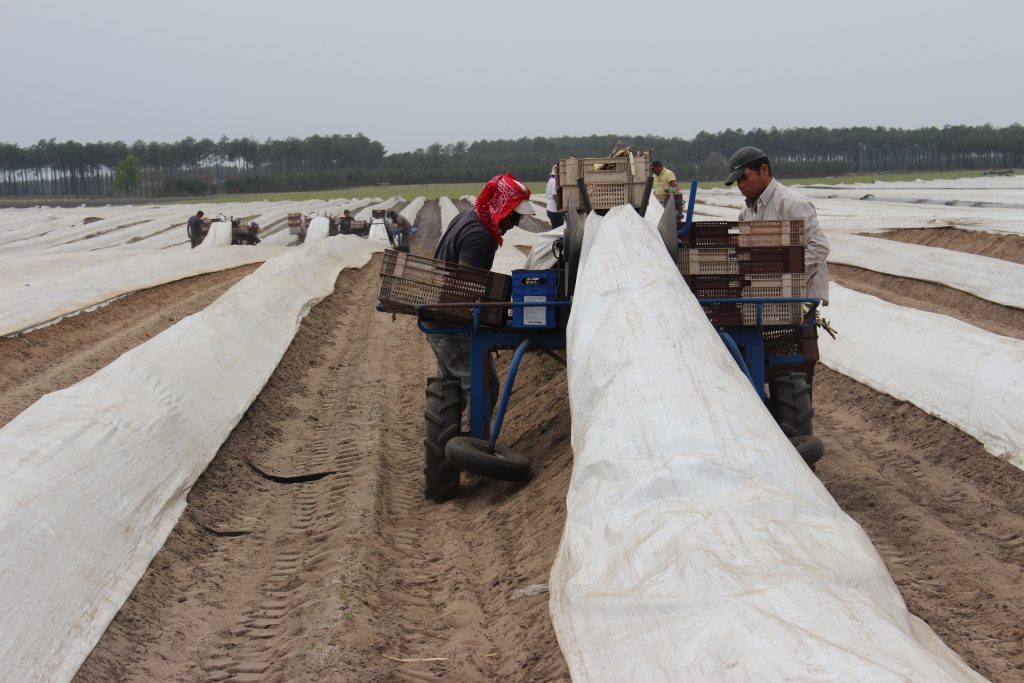
The climatic issues presented by the south-western region have been overcome by a winning combination of the producers’ high level of technical knowhow, early planting of varieties, and the use of multi-film coverage. This year, the first French asparagus was harvested in early February in the Landes. French asparagus has long been in competition with Spanish asparagus, which is always earlier and often cheaper on the French market, with the extra cost of transport offset by the lower labour costs in Spain. With the drop in the production of Spanish white asparagus (now converted to green), French asparagus has regained its domestic market. Demand for French asparagus and consumer interest in direct selling boosted plantations and replanting in all production basins between 2014 and 2018, with about 5,000 ha now in France. The asparagus grown in the south-west is mainly intended for large-scale distribution (hyper markets, hard-discounters). The region has two producer groups, Coopadax and Maïsadour, associated with Primeurs de France (formerly Prim’co) for marketing. It also has large independent producers. The region has been recognised as a PGI (protected geographical identification) “Asperges des Landes” since 2005, which brings together 2,500 tons of asparagus from 60 producers. Further north, the Blayais region has also benefited from the “Aperges du Blayais” PGI since 2016.
Standing out from a taste point of view
The Val de Loire is another developing region. In Maine et Loire, asparagus growers, consolidated in the Fleuron d’Anjou cooperative, have specialised and increased their production area. There is also production in the Loir-et-Cher region, where the cultivation of green asparagus is organised within the Axéréal cooperative.
In Languedoc too, asparagus has regained some momentum, with new green asparagus plantations (accounting for a third of the 2017 and 2018 plantations). Green asparagus is often produced by specialised producers under shelters (some heated) and in mini-tunnels to achieve high quality levels. The Camargue is another asparagus area with light, sandy and sometimes salty soils that make for a production with a very different taste quality. The Cofruid’oc cooperative highlights this quality with the “Celestin” brand of white asparagus and “Wild” brand of green asparagus. Alsace has also planted asparagus. Producers there have developed the use of a double mulch (black/white mulch + thermal mulch) to make gains of a few days in terms of precocity while also benefiting final yields. Alsace asparagus is consumed in the region, with more than 70% of the volume going to direct sale. The asparagus is generally peeled at the time of sale, as is also the case in Germany.
Potential for growth in consumption
The highly favourable technical and commercial environment enjoyed by French asparagus over the past ten years is now starting to shift. However, asparagus consumption can be promoted through packaging innovations such as flow packs to improve shelf life, or peeled asparagus to offer greater convenience, or green (and purple) asparagus for greater product innovation. The French asparagus sector can also play the “natural” card with consumers who care about their health, and the “local” card with consumers who want to buy locally. Increased volumes, an extended production schedule, and marketing campaigns can also create opportunities for openings in Europe, as well as in markets further afield thanks to improved conservation techniques and logistics. But 2020 will be a year marked by the Covid-19 crisis, which is hitting the countryside and the consumption of asparagus in France.
More Info
Asparagus Associations
Asparagus accounts for only 2% of France’s vegetable production area, but the place it occupies in the country’s heart is much larger. For consumers, it is the first vegetable of spring. For professionals, asparagus is a high-tech culture that requires great financial investment and management of labour resources, and one which can offer good profitability (depending on the year). In commercial terms, asparagus is a high-end vegetable, with (often) comfortable margins. Asparagus is a vegetable that is grouped within the Association of Asparagus Producers’ Organisations of France. The association consists of seven groups, representing a combined 1,100 ha and 5,300 tons of asparagus – or about 30% of overall production (2019 data). Its missions are to study production and markets, to develop consumption, to respond to production problems (agronomy, crop protection, etc.) and to be the producers’ representative in dealings with the government and administrations. Other independent producers are also grouped within the association Asperge Avenir, while organic asparagus producers have formed an association of their own. These two structures together account for about 30% of French production.
More Info
How to get young people to eat asparagus?
Around 81% of asparagus eaten in France is consumed by people over the age of 50, with only 5% eaten by the under 35s. This has led the French asparagus association “Asperges de France” to carry out a study to encourage young adults to consume more. The results show that under 35s tend to buy asparagus because it is a vegetable that “celebrates the arrival of spring”, which is “rare and seasonal”, and which is “fun”. The reasons they don’t buy it are because “it’s not on the shelf,” “it’s expensive”, or “it’s not good quality”. The majority of young people buy bunches because they are “fast, practical and aesthetic”. They love novelty and new uses like green asparagus. 71% of them are inspired by a dish they have eaten in a restaurant to prepare a meal at home. But asparagus is almost never seen on restaurant menus in France!
Britain’s asparagus sector is at a critical juncture, with its very survival in the balance, assailed on all sides by a combination of rising costs and labour shortages fuelled by political uncertainty. The sector had previously been in a healthy state, having grown rapidly in the past 15 years, from 1,000 hectares in 2005 to 3,200 hectares in 2019, making it northern Europe’s largest producer. There are around 150 asparagus producers in the UK growing exclusively green varieties. The country’s asparagus is reputed to be among the best in world, but the sector is heavily dependent on seasonal migrant labour, mainly from Eastern Europe. The British fruit and vegetable sector relies on up to 80,000 seasonal workers arriving from the EU each year. While once the country was awash with applications for work on its farms, the post-Brexit climate in the UK is less accommodating of these migrants and a less appealing work destination. Indeed, labour agencies report a significant drop in interest in 2017 and 2018, with Romanian and Bulgarian workers in particular opting to go elsewhere in the EU where communities are more welcoming and employment conditions involve less uncertainty. The new immigration reforms recently announced by the government specifically restrict entry to the UK to unskilled labourers and appear highly likely to exacerbate the current problems faced by the agricultural sector.
UK losing its shine as an employment destination
Besides the less welcoming environment in the UK for foreign workers, there are also financial reasons for these migrants to look towards the UK’s neighbours instead. The fall in the value of the British pound against the Euro makes salaries in Germany and France more attractive. And the lack of workers could lead to a form of internecine warfare within the UK farming sector. As Doug Amesz of AG Recruitment points out, it is the entire UK agricultural industry that is facing labour shortages, so British asparagus producers are not only forced to compete with other asparagus producers to hire workers but also with producers in other sectors. “There are increasing immigration dossier constraints and increasing competition from other sectors,” said Amesz at the 2019 British Asparagus Conference.
“No migrant labour, no asparagus”
There has been a shortfall of around 10,000 workers over the past two seasons, which has forced farms to increase wages and bonuses. British farms typically pay workers the national minimum wage of £7.83 an hour plus performance-related bonuses. According to Concordia, a labour agency charity that recruits EU pickers for British farms, UK agriculture is entering a period of crisis. Speaking to Reuters, chief executive Stephanie Maurel said, “No labour means no harvesting, which means no fruit and no vegetables on the shelves of British supermarkets.” And the country’s retailers appear unlikely to rush to the aid of the struggling producers, as sales volumes are negotiated in advance for the season and prices are fixed, barring exceptional circumstances.
New sources of labour in the East
The working conditions currently on offer have so far been unable to attract British workers to fill the gap left by the migrants and this is likely to remain the case for the foreseeable future, as the lure of the agriculture sector struggles to compete with that of other sectors. In a bid to overcome the lack of workers from the EU, the British government has recently sanctioned a pilot trial for 2,500 workers to enter the country from Russia, Ukraine and Moldova for up to six months over the next two years. This new pool of labour could prove to be just the lifeline that the benighted sector needs right now. The bottom line is that if there are no migrant workers in the UK, there will be no locally grown asparagus and, ironically, after Brexit, the British people will actually become more dependent than ever before on Europe if they wish to continue to enjoy the vegetable that they so adore.
Opportunities for Peruvian asparagus
The UK is a net importer of asparagus – in fact, none of the precious home-grown product is sold abroad. Total imports reached just over 13.9 million tons in 2014, before steadily falling to approximately 12.1 million tons in 2017, then recovering to around 13.2 million tons in 2018. The main source is Peru, which ships between 8,000 and 10,000 tons to the UK every year, worth around US$60 million. Some distance behind Peru comes Mexico (around 2,000 tons per season), followed by Spain (around 1,000 tons). The total value of the UK’s asparagus imports fell from US$77.3 million in 2015 to 73.7 million in 2019. Producers in these countries will no doubt be keeping a close eye on developments in the lucrative UK asparagus market over the coming months.
Exporters
Imported value in 2015
Imported value in 2016
Imported value in 2017
Imported value in 2018
Imported value in 2019
World
77313
77966
75698
75684
73742
Peru
61090
62081
57504
59574
55258
Mexico
7671
8812
12012
10948
15004
Spain
3013
2241
1120
1286
1002
Netherlands
1059
866
751
560
737
Source: ITC
Value of UK asparagus imports (thousands of US dollars)
There are increasing immigration dossier constraints and increasing competition from other sectors.
A British speciality
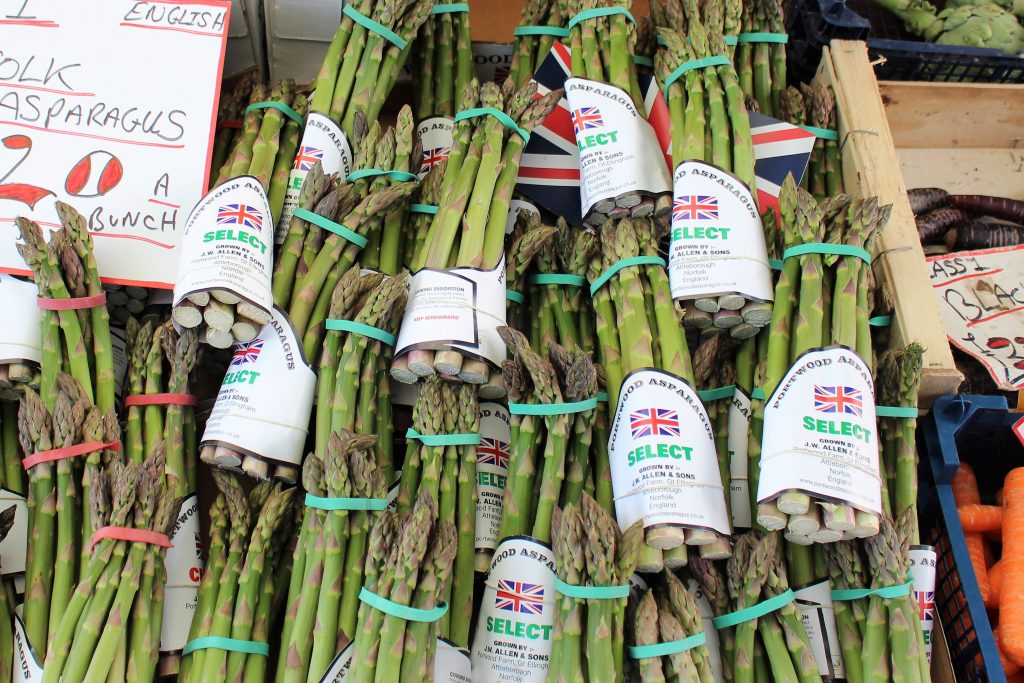
The British are fiercely proud of their asparagus; so much so that when UK retail chain Tesco began selling imported Peruvian asparagus in the Vale of Evesham, Worcestershire (considered the heart of the UK’s asparagus sector), shoppers threatened to boycott the supermarket over its lack of support for British farmers. Britain’s asparagus season is relatively short, traditionally beginning on St George’s Day (23rd April) and ending on Midsummer Day (21st June). During this period, premium British asparagus is in great demand, with £23 million spent on green varieties. It is believed that asparagus was first introduced to the island by the Romans, but the varieties grown today are the French type of asparagus that arrived in Britain in the seventeenth century. The southern British climate is ideal for the slow growth of a sweet and tender asparagus. Demand for home-grown product is so high that there is never anything left to export outside the UK. The asparagus season is celebrated across the country; the Vale of Evesham holds an annual week-long festival with auctions of the best crop and locals dressing up as spears of asparagus. British consumers are still less familiar with white asparagus, which is so highly prized in parts of Europe continent, but this kind is now becoming something of a gourmet product in UK retailers and trial programmes have been run in growing the product in the UK, such as at Cobrey Farm, in the Wye Valley, Herefordshire.
More Info
The same concerns
Asparagus is mainly produced in the south of the UK on different sized farms, from just a few hectares to 800 hectares in area. Regardless of size, they all face the same concerns, rising costs and labour shortages. As is the case everywhere in Europe, harvesting and packaging represent the most costly activities for British asparagus producers, with costs roughly equivalent to those of French producers
OXYBIOTOP manufactures and distributes the SILIBOOST process based on activated silica. With this concept compacted, asphyxiated, or even hydromorphic soils can be oxygenated in order to restore the biological ecosystem (mycological and bacterial) which guarantees all the balances both of the soil and of the plant. This technique, simple to use and relatively inexpensive (about 80 euros /ha) means it is possible to make most efficient use of organic and mineral fertilizers resulting in a better plant vitality, guaranteeing abundant production and quality and better resistance to biotic aggressors (moulds and insects) but also abiotic (rain, wind). A specific programme has been developed for asparagus, the applications (between 200 and 300 grams/ha added to the sprayer with 150 L of water / ha) start at the resumption of plant activity and during the production period.
Specialised in the creation and marketing of bio-stimulant solutions. GETADE Environnement is a company engaged in many projects, driven by real innovations as reflected in its slogan “L’Agriculture renoue avec la Nature ®” (“Agriculture reconnects with Nature)”. Its goal is to combine immunology and physiology to best serve the plant. GETADE Environnement is present in several areas of activity such as viticulture, arboriculture, market gardening, large crops, green spaces, golf, etc. For asparagus GETADE Environnement offers a range of products based on plant extracts, natural substances and trace elements including ALTO’STRESS®, ISOPLANT®, ISOMARAICHAGE, BCP M02 ALTO’DEGA® and SEMA’ZEN®. These bio-stimulant solutions work at different levels of plant physiology improving the quality of the crop.
Planasa’s Darvador asparagus variety has met with great success. It has 100% male genetics and great precocity, which allows a gain of about 10 days on other early varieties, such as Placosesp and Darlise. Asparagus and garlic product manager, Manuel Garcés, said: “Asparagus cultivation is evolving and becoming ever more professional. That is why Darvador has been developed as a response to new market needs. Due to its easy handling, it can be grown in both white and green forms. And its closed tip makes it very attractive to the final consumer.” With this new proposal, Planasa is seeking to adapt to a dynamic market, which demands ever more homogeneous and higher-quality production, and very good presentation.
Manage consent
To provide the best experiences, we use technologies such as cookies to store and/or access device information. Consenting to these technologies will allow us to process data such as browsing behavior or unique IDs on this site. Failure to consent or withdrawing consent may adversely affect certain features and functions.
Functional
Always active
Technical access or storage is strictly necessary for the legitimate interest purpose of enabling the use of a specific service explicitly requested by the subscriber or user, or for the sole purpose of carrying out the transmission of a communication over an electronic communications network.
Preferences
Technical access or storage is necessary for the legitimate interest purpose of storing preferences that are not requested by the subscriber or Internet user.
Statistics
Technical storage or access that is used exclusively for statistical purposes.Technical storage or access that is used exclusively for anonymous statistical purposes. Absent a subpoena, voluntary compliance from your internet service provider, or additional records from a third party, information stored or retrieved for this sole purpose generally cannot be used to identify you.
Marketing
Technical access or storage is necessary to create user profiles in order to send advertisements, or to track the user on a website or across websites with similar marketing purposes.