Archive

Coviro

Vittorio is the name of the new hybrid male asparagus variety developed and successfully marketed by Italian nursery Coviro. “Vittorio is characterised by the good cylindrical shape of its spear. Based on the technique used, it can be developed for green or white asparagus in medium-textured soils. This is a very productive variety and has a great uniformity in its calibre,” said marketing manager Marcello Sbrighi. Vittorio adapts very well to all kinds of soil found in northern Italy and is suitable for cultivation in both Continental and Mediterranean climates. This variety combines early production with extremely high yields.

Coviro is an Italian agricultural nursery company founded in 1978. It produces and sells certified plants for asparagus and berries, with annual sales of around 2.5 million asparagus and 20 million berry plants.

Cosmeco

Italian firm Cosmeco has developed a new bedformer designed especially for asparagus. This bedformer is adjustable both in width and height and its rotors are equipped with different types of knives to keep every kind of soil soft and stable, improve porosity and encourage the recirculation of air and water for a fast germination and optimal shoot growth. The machine is equipped with various accessories, such as external directional filling disks to either collect additional land or dig a furrow for the drainage between the beds.


Eco Green

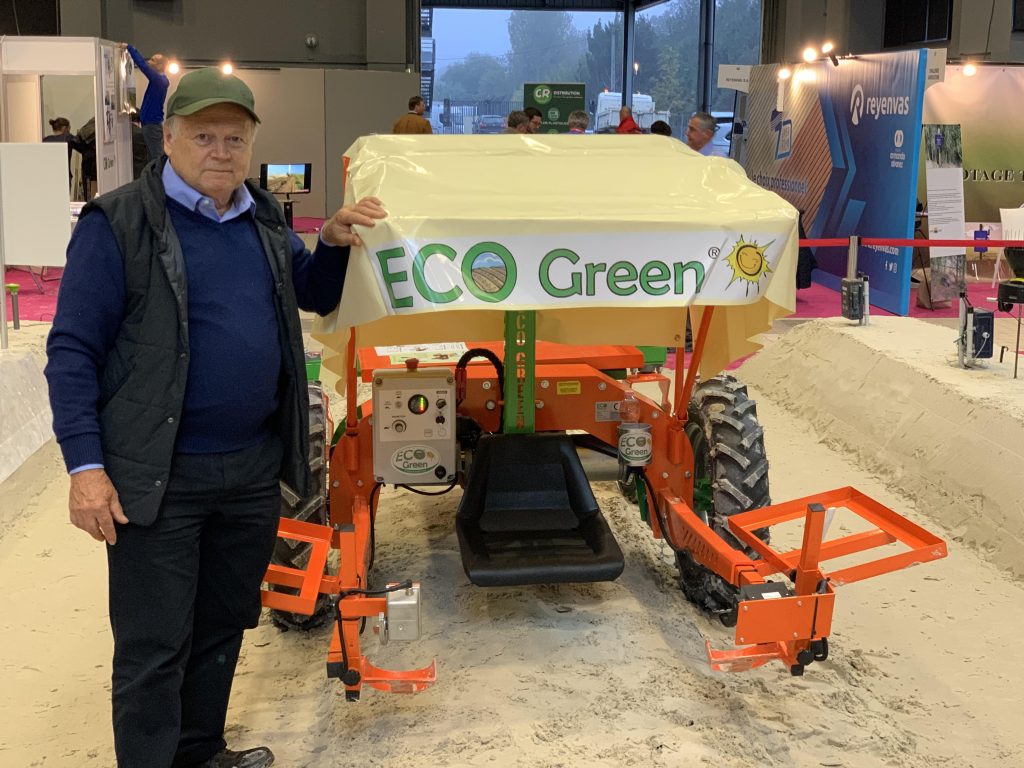
Ecogreen develops environment-friendly technology and its latest innovation is the AV1, an electric harvesting machine for green asparagus. It has a front wheel drive and an electrical steering, as well as two electric motors and four batteries that can give 16 hours of life. The machines have large strong wheels that are perfectly adapted to muddy ground. Owner Leonardo Zanarini said, “We believe that these kinds of environment-friendly machines are part of the future of asparagus. That’s why we are also developing new photovoltaic prototypes with solar panels.”

Founded 15 years ago, Ecogreen is an Italian-based company that manufactures self-propelled electric machines designed to facilitate the manual harvesting process. The high-quality machines are manufactured with special care to meet the needs of modern farming.


Sopropêche

French specialist in organic fertiliser Sopropêche has developed a compound for asparagus called castor meal. This organic fertiliser derives from a castor by-product which is used for its NPK content (4.5/2/1). “In the version offered by Sopropêche, our castor meal is vegetal cake from India. The versatile properties of this product allow the asparagus plant to develop much faster,” said sales manager Jean-François Hoyez.

Sopropêche offers a wide range of organic fertiliser (vegetal cakes, seabird guano, vegetal ashes, hoof and horn meal, manures) that meet different types of cultures, such as viticulture, arboriculture, and market gardening, to provide optimum nutrition for soil and plants.

Strauss

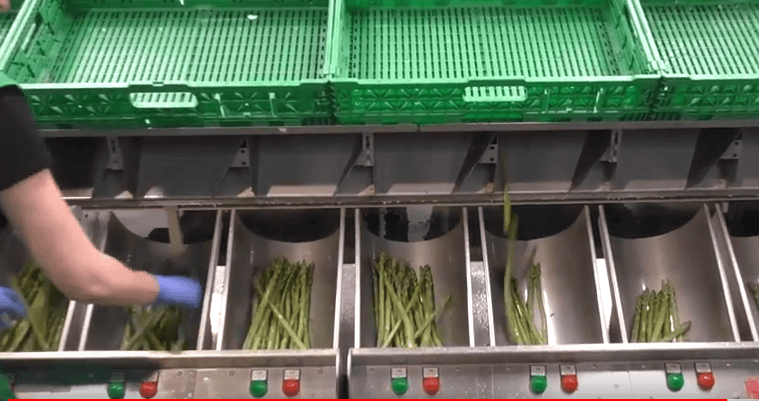
The Optisort G-Series from Strauss is the sector’s favourite asparagus sorting machine. With customised machine sizes, white and green asparagus can be processed by one machine. To prepare the asparagus for optical sorting, first it is cut to a certain length by a sophisticated and long-developed aligning and knife system. Afterwards, it is cleaned using an abundant quantity of water at almost zero pressure. Low water consumption is achieved through recycling. Then, using an optical quality recognition unit, the asparagus is singulated and placed in a cup, and from there, it is moved on to the appropriate collecting container, which is subdivided into different quality levels. The Optisort G-Series methodology allows every asparagus to be checked, with incorrect classifications avoided using 360-degree optical viewing in the sorting cup.


Netherlands

Bejo has been gathering experience in asparagus breeding for over 15 years. The Bejo asparagus programme focuses on white, green, anthocyanin-free green, and purple varieties. The company only develops 100% male varieties as this means there are no berries, so all of the plants’ energy goes into producing the asparagus, resulting in more uniform, quality spears and in a higher yield. Purple varieties are also a part of the breeding programme, which has recently led to the launch of the Erasmus variety, the first 100% male, purple variety in the world. Erasmus has high-quality, thick spears with an intense purple colour. It’s an early variety that produces very high yields, with high upright foliage and a good taste. This kind of asparagus is for growing in cold and intermediate areas, and also in mini tunnels. Erasmus purple salad asparagus is an interesting addition to the current asparagus market. It can be eaten raw due to its sweet taste and is the ideal way to appeal to modern consumers wishing to enter the world of asparagus and who like to prepare quick and healthy meals.

Bejo is a leader in breeding, producing and selling vegetable seeds, with operations in more than thirty countries. The company has expanded over the years in an organic, ongoing process, shaped by interaction between growers, dealers, supply chain partners and its employees.


KERAGRO DUSTING LINES

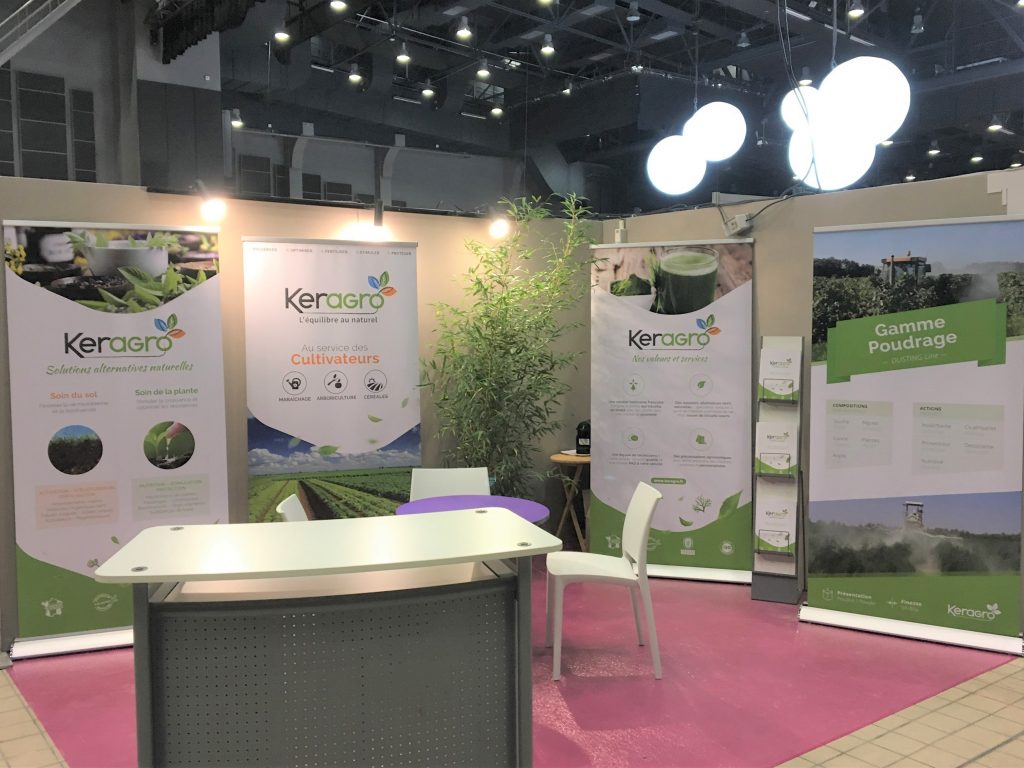
Keragro manufactures a range of powder applications capable of preventing certain invasions and cryptogamic diseases.  DRYING, DESSICATION, PROTECTION and SCARRING OVER, these are the virtues of seaweed and trace elements that make up these formulas developed for asparagus growers. KeraSoufre has a proven track record for its repellent and fungistatic effect, KeraSilice for its moisture absorbing effect and strong scarring power.  For those who do not have dusting lines, Keragro manufactures specialities for spraying made from medicinal plants and algae, aimed at strengthening and stimulating crops to regulate Biotic and Abiotic stresses.

Walker Brothers

Producing in New Jersey for over 50 years, Walker Brothers has increased the number of international markets on which its asparagus is sold: “As the world’s largest producers of green asparagus, we distribute to the main markets, especially in South America and southern Europe. But we are now looking to strengthen our presence in other important markets, such as Africa, the Middle East and the Asian Pacific area by increasing our production. Exports to India and Bangladesh are already growing. Vietnam, Indonesia, Taiwan and South Korea are other interesting destinations,” said Wenjing Chen, the firm’s international representative. Walker Brothers produces exclusively green and violet asparagus, especially of the Grande F1 ™ variety, the most appreciated variety on the European and American markets for its taste and texture. It also supplies the Atlas F1™ and Walker Deluxe F1 green varieties as well as the Purple Passion F1.

SDD Solar

SDD SOLAR a pour activités le développement des projets solaires, le financement, l’exploitation et la maintenance de centrales de production d’électricité d’origine renouvelable. SDD SOLAR a développé un concept innovant de serres horticoles qui peuvent être adaptées à différentes cultures dont l’asperge blanche et verte. L’intérêt de ce concept est multiple : sécuriser la production soumise aux aléas climatiques (pluie, vent, excès de chaleur, basses températures), lutter contre les parasites et les ravageurs, rendement optimisé, précocité, amélioration des conditions de travail.

Fondée en mai 2018, SDD SOLAR a pour activités le développement des projets solaires, le financement, l’exploitation et la maintenance de centrales de production d’électricité d’origine renouvelable, la réalisation d’études et de missions d’assistance relatives au développement de projets de centrales photovoltaïques.

SDD SOLAR travaille principalement au montage de projets « agri-voltaïques », des serres , des volières… pour l’ensemble des productions agricoles à destination des agriculteurs et des industriels du monde agricole en France et à l’international, l’objectif étant de faire des projets de filières pour assurer la pérennité de leurs exploitations agricoles avec un gain financier sur le long terme.


SDD SOLAR a développé un concept innovant de serres horticoles qui peuvent être adaptées à différentes cultures:

– un espacement entre serres pour optimiser l’exploitation du rayonnement solaire naturel

– une ventilation maximale par ouverture latérale contrôlée et automatisée de bâches, filets…

– un système de contrôle de la température par ouverture automatisée et indépendante des modules photovoltaïques, situé sur les pans Nord faisant office d’ouvrants

– des panneaux avec un taux de luminosité pouvant aller de 5 à 30 %


Des industriels dans les secteurs de l’asperge verte, blanche ou violette, de la framboise et du kiwi…ont validé le concept des serres « agri-voltaïques » de SDD SOLAR et souhaitent le développer et le proposer à leurs adhérents.

L’intérêt de ce concept est multiple :

– sécuriser la production soumise aux aléas climatiques : pluie, vent, excès de chaleur, basses températures

– lutter de façon plus efficace contre les parasites et les ravageurs

– une meilleure gestion des intrants

– une économie d’eau avec moins d’évapotranspiration

– un rendement optimisé

– une précocité de la culture

– une amélioration des conditions de travail

SDD SOLAR possède toutes les compétences pour mener à bien les projets en France et à l’International en réalisant les études techniques , les implantations de projet, la construction d’un business plan, la maîtrise et la connaissance des instances administratives et la recherche d’investisseurs.


149 route de Samadet

40700 SERRES-GASTON

Tél : 06.83.93.38.89

Mail : sddsolar40@gmail.com


SDD Solar

Photovoltaic greenhouses

The activities of SDD SOLAR are involved in development of solar projects, financing, operating and maintaining renewable energy power plants. SDD SOLAR has developed an innovative concept of horticultural greenhouses which can be adapted to different crops including white and green asparagus. There are multiple advantages to this concept: securing production subject to unpredictable climatic conditions (rain, wind, excess heat, low temperatures), control of parasites and pests, optimising yield, precocity, improving working conditions.



Recyclability of plastics used to grow asparagus.

White, purple or green, asparagus is grown all over the world and, in the right season, is highly prized by consumers. They are probably unaware that cultivation techniques use plastic and that the quality of asparagus owes a lot to plastic!

Plastic brings many advantages to production, but it also imposes constraints on the producer after its use. In addition, the environment can pay the cost in the absence of an end-of-life management system.  In many countries, professionals have organised themselves to eliminate these constraints.

The “asparagus film” is a low-density polyethylene film with the peculiarity of having pockets filled with soil to locate well on the mound. Black-white opaque films are sometimes covered with transparent thermal film. More than 700 kg of new plastics per hectare are required for 4 or 5 seasons in the case of opaque films and 2 to 3 for thermal films. After the end of the film life, 4 to 5 tons of used plastics must be removed from the field and recycled, taking into account the soil in the pockets.

Polyethylene is a perfectly recyclable material. However, when very soiled its recyclability is greatly diminished, and costs are increased. However, after use, it is possible to give the plastic a second life, in another form, in another product. To achieve this, several steps must be taken. Removal techniques must ensure that as much soil as possible is left in the field. Mechanical pre-treatment of the soiled film after removal may be necessary before delivery to the recycler. Despite this, the technical, efficient and inexpensive solution has yet to be found to improve the quality of used asparagus film in order to restore its full value and for it to become a real resource. European plastic manufacturers have launched research and development projects to meet this need.