Archive

ExpoSE trade fair : all the latest on asparagus

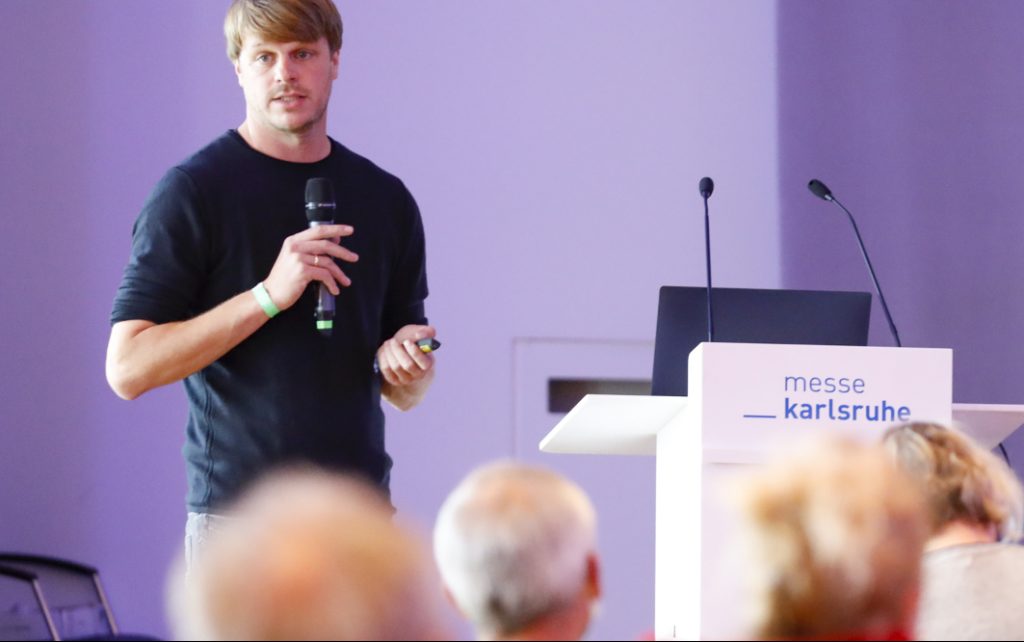
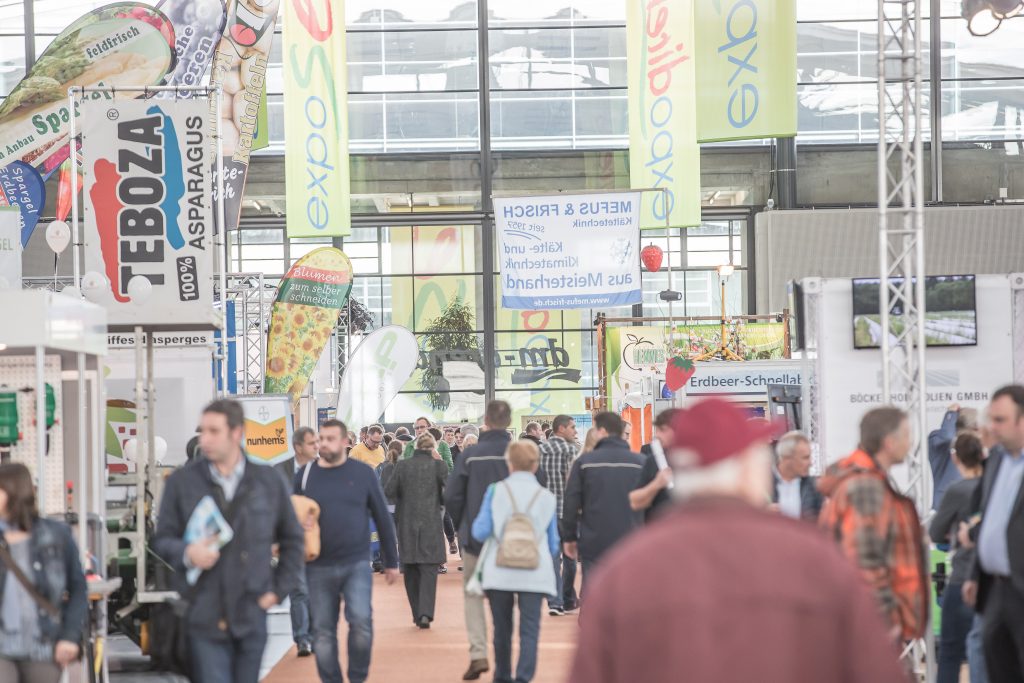
More than 400 exhibitors and 6,000 visitors attended the ExpoSE trade fairs, specialised in asparagus and berries, and ExpoDirekt, for direct sales, in Karlsruhe (Germany). Despite the concerns felt about the show Simon Schumacher, General Manager of VSSE, Association of Asparagus and Strawberry Producers of the Southern Germany, said he was satisfied with this edition which had a higher attendance than expected in a positive and dynamic atmosphere, and sometimes with some exhibitors having some unexpected contacts from Egyptian or Swedish visitors. Asparagus trade show ExpoSE hosted the first IAM, International Asparagus Meeting co-organised with Asparagus World magazine. In a European market of about 300,000 tons, Germany, a major player with 120,000 tons is currently experiencing a drop in production and consumption of about 15%. German technicians are finding, “With the increase in production and labour costs, some farming methods are no longer profitable.” This country, which has experienced the biggest increase over the last ten years, has also experienced a sharp drop in production since 2017. This year was also marked by a decline in asparagus consumption by German consumers, hitherto “European champions”.

Prototypes of harvesting robots

The same was true for the eight IAM stakeholders. Common concerns are mainly focused on the difficulty of recruiting labour for harvesting which has led to several prototypes of harvesting robots such as the one for green asparagus made by Muddy Machines currently under development in the United Kingdom. However, the labour costs presented by the speakers show marked differences: ranging from 35 euros per day in Greece to 17.63 euros per hour in the Netherlands.

Faced with a difficult 2022 campaign assessment, the project for a European observatory of asparagus production was led by Christian Befve, international consultant at IAM. “The 33rd Spargeltag – asparagus day – addressed more technical topics such as the use of plastic films, the prevention of browning of the spear, the robotisation of the harvest,” says Isabelle Kokula, asparagus advisor and organizer of the day.
Innovak Global : 65 years as a root specialist

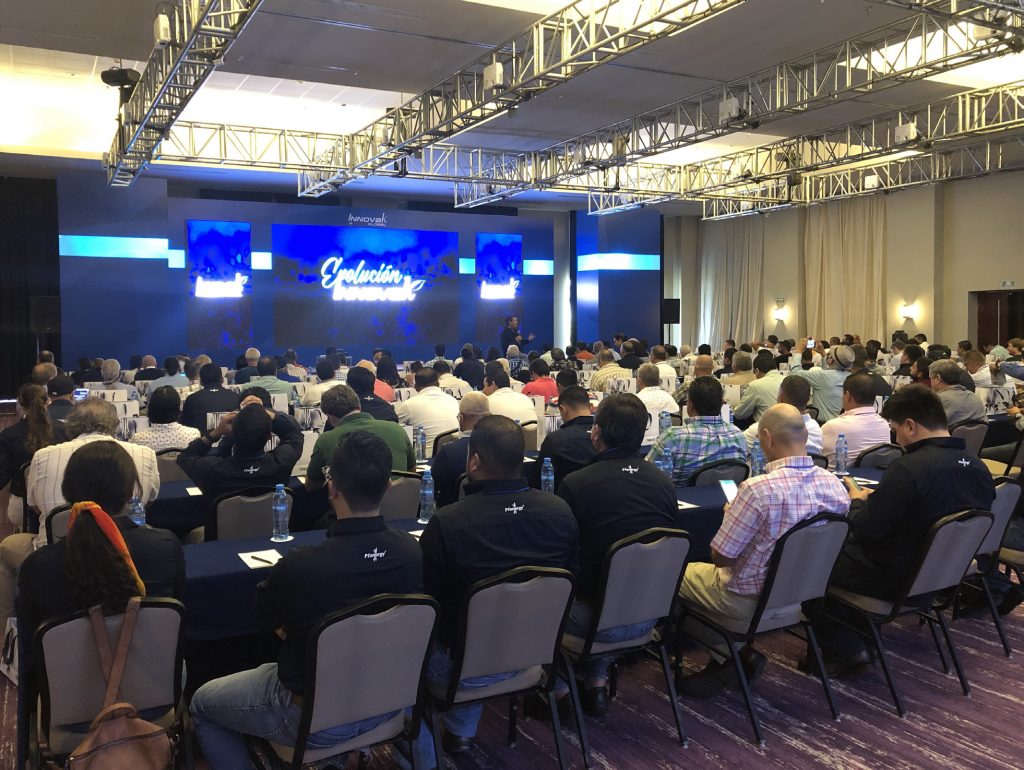
Constantly bringing new innovations to the market is part of Innovak Global’s DNA. And every two years, it brings together advisors, distributors and professionals with close links to it in order to share details of its latest advances. In July, 2022, over 200 people from all over the world attended the Innovak Evolution event in Cancún featuring talks by eminent scientists and demonstration stations of the company’s new technologies. It was there that the root biostimulation pioneer launched Pfenergy, its new technology named to reflect the use of polyphenol components as the source of energy for plants.

The Root Dynamics Regulation approach

Innovak Global was one of the first companies in the world to study the root and its environment, considering it a vital component with great potential to increase crop productivity. Accordingly, it set up a knowledge centre called the Rhizosphere Center, where researchers develop solutions for root problems in different crops. By 2005, the company had developed its Root Dynamics Regulation (RDR) approach to understanding all the processes that take place in roots and their environment during the crop cycle. With a focus on maximising the productivity of crops in a sustainable way, RDR is constantly updated as the company generates new findings or develops new products addressing emerging problems in the fields. For example, Innovak Global recently launched Balox, a biostimulant based on polyphenols that addresses plant saline stress.

Boosting root activity in crops

This comes in response to the root stress issues now facing various crops around the globe. Balox stimulates plants to generate their own osmolytes to face adversities in the environment, allowing better crop development amid salt stress. Innovak Global’s RDR technology covers five areas critical to crop development, starting with soil conditioners to improve plant establishment, followed by the previously mentioned root stress, such as that caused by saline stress. Then there is a focus on boosting root activity in crops, such as generating new roots, so as to improve nutrient absorption and fertiliser efficiency. Next is the rhizospheric environment and facilitating the beneficial interaction that exists between microorganisms and the roots, while the fifth area involves maximising root health so plants can better deal with the presence of soil-borne diseases that affect crop productivity.

expoSE and expoDirekt from 23rd to 24th November 2022 at Messe Karlsruhe

“We are very glad that we have been able to convince so many interesting companies to join our dual trade fairs, expoSE and expoDirekt. The new products clearly show that companies know what is important in the industry: reducing costs, simplifying work, saving on personnel expenses, and adjusting production and direct marketing” explains Simon Schumacher, board spokesman for the Verband Süddeutscher Spargel- und Erdbeeranbauer e.V. and the event organiser for the expoSE and expoDirekt. Both new and proven products alike will be on display at the Messe Karlsruhe at the dual trade fairs expoSE & expoDirekt from 23rd to 24th November 2022. A total of around 400 exhibitors from eleven countries will be presenting at the 26th expoSE – Europe’s leading trade fair for asparagus and berry production – and 11th expoDirekt – Germany’s largest specialist trade fair for agricultural direct marketing.

Specialist presentations at the 33rd Asparagus Day and the Direct Marketer Forum

The 33rd Asparagus Day will focus on criticised aspects, as well as the profitability of using film in asparagus cultivation based on past experience, avoiding browning of asparagus stems, and cultivating and growing wild asparagus. Asparagus Day will be held on Wednesday, 23rd November from 2:00 to 5:15 PM in the large conference hall (2nd upper floor) at the Messe Karlsruhe, and is an event being put on by the Central Agricultural Office of the Karlsruhe District Administration and the Verband Süddeutscher Spargel- und Erdbeeranbauer e.V. (VSSE).

Read also:  International Asparagus Meeting on 23rd November 2022 at expoSE

International Asparagus Meeting on 23rd November 2022 at expoSE

For the first time, the VSSE is organising the International Asparagus Meeting (IAM) alongside the trade journal Asparagus World. During the IAM, speakers will present topics on asparagus production in individual European countries and beyond. The goal is to familiarise participants with asparagus cultivation in individual countries, discuss market conditions, and avoid the potential for excess production International Asparagus Meeting will take place in three times :

10 a.m. to 11.30 a.m. – Part 1: Presentation of asparagus production in Europe and Canada
11.30 a.m. to 11.45 a.m. – Part 2: Presentation of the European Asparagus Observatory
11.45 a.m. – 12.30 p.m. – Part 3: Opinions of the speakers about the idea of the European asparagus Observatory

The International Asparagus Meeting will be held in English. Further information on the programme is available at www.expo-se.de. Participants are required to register at www.expo-se.de/vortraege-foren/international-asparagus-meeting.

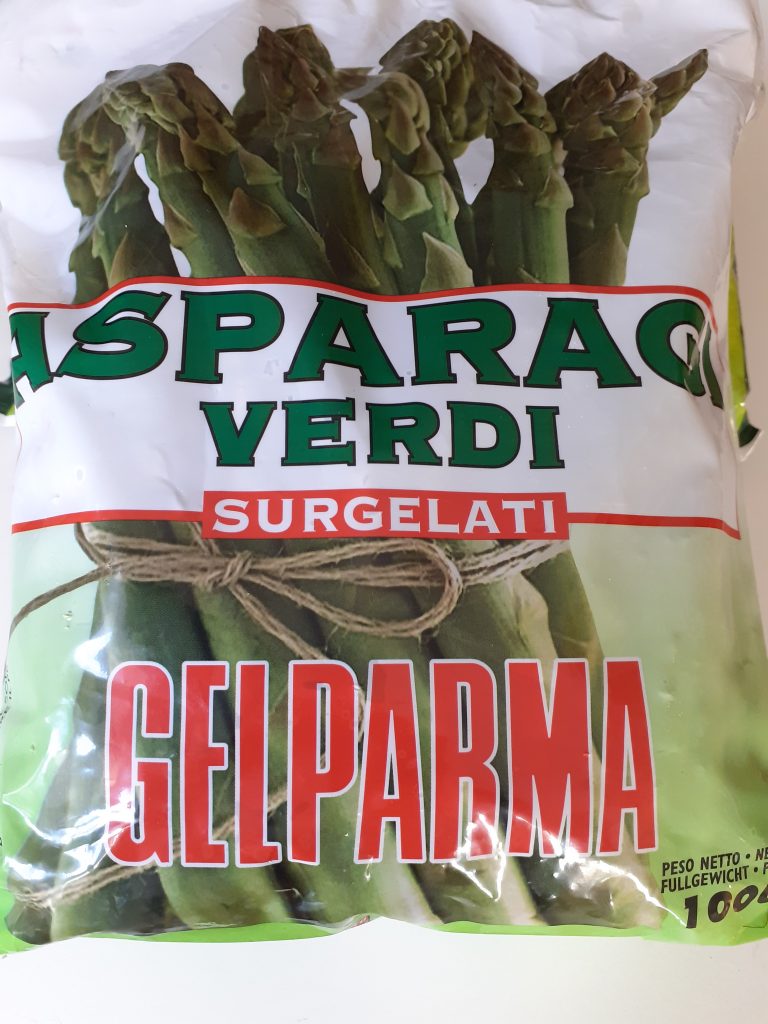
Italy freezes its asparagus

With 700 hectares of asparagus cultivation for processing, Italy now ranks first in Europe. In recent years, the Emilia-Romagna region has developed a regulation for integrated production of asparagus which governs both fresh and processed products. Compliance with these regulations means that the packaging can be labelled «Quality Controlled QC», with guarantees for the environment and for the health of consumers.

In the case of asparagus, the varieties suitable for vegetable preserves must have specific characteristics, including a uniform white or green colour, homogeneous calibre, and resistance to the sterilisation process. When peeling, the waste rate should not exceed 10% of the gross weight. After blanching, the product undergoes a sterilisation phase. Then, 90% of the can’s content weight should consist of asparagus. Asparagus can also be stored by deep freezing, with the tips very quickly reaching the temperature of -18 C. Unlike with normal freezing, deep freezing ensures that the cooling speed causes the formation of microcrystals that do not damage the biological structure of the food. Keeping the temperature below -18 degrees Celsius significantly slows down chemical and enzymatic reactions and microbial activity becomes almost zero. The organoleptic and nutritional characteristics of frozen vegetables remain unchanged from the original product. If the cold chain throughout the asparagus’ frozen life is scrupulously respected, deep freezing is the best storage system and is capable of offering the consumer a product that can compete with the fresh product. Freezing requires a high-quality product. Spears must have a closed tip and a regular, straight shape so that the frozen product can be packaged (in cans or bags). The colour should be a homogeneous white or green, with red-purple hues not persisting after blanching. To optimise freezing, spears must be at least 130 mm long and have a homogeneous calibre divided into three categories: 7 to 10 mm; 10.1 to 15 mm; 15.1 to 20 mm.

SILIBOOST

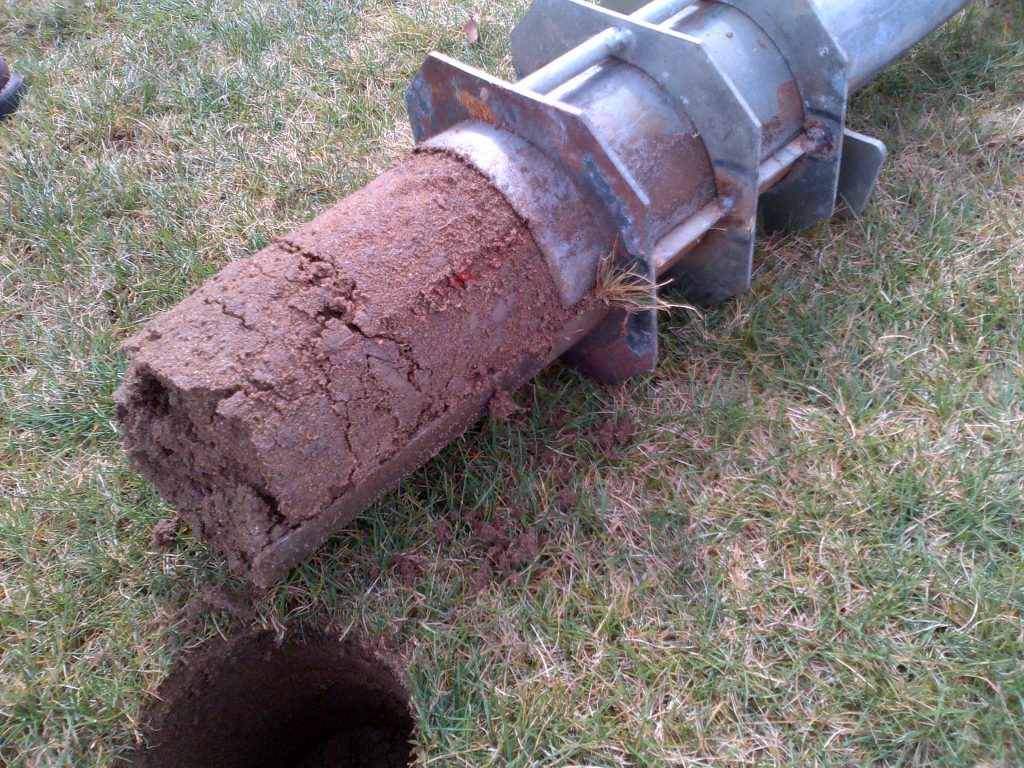
OXYBIOTOP manufactures and distributes the SILIBOOST process based on activated silica.  With this concept compacted, asphyxiated, or even hydromorphic soils can be oxygenated in order to restore the biological ecosystem (mycological and bacterial) which guarantees all the balances both of the soil and of the plant. This technique, simple to use and relatively inexpensive (about 80 euros /ha) means it is possible to make most efficient use of organic and mineral fertilizers resulting in a better plant vitality, guaranteeing abundant production and quality and better resistance to biotic aggressors (moulds and insects) but also abiotic (rain, wind). A specific programme has been developed for asparagus, the applications (between 200 and 300 grams/ha added to the sprayer with 150 L of water / ha) start at the resumption of plant activity and during the production period.

GETADE ENVIRONMENT

Specialised in the creation and marketing of bio-stimulant solutions. GETADE Environnement is a company engaged in many projects, driven by real innovations as reflected in its slogan   “L’Agriculture renoue avec la Nature ®” («Agriculture reconnects with Nature)». Its goal is to combine immunology and physiology to best serve the plant. GETADE Environnement is present in several areas of activity such as viticulture, arboriculture, market gardening, large crops, green spaces, golf, etc.  For asparagus GETADE Environnement offers a range of products based on plant extracts, natural substances and trace elements including ALTO’STRESS®, ISOPLANT®, ISOMARAICHAGE, BCP M02 ALTO’DEGA® and SEMA’ZEN®. These bio-stimulant solutions work at different levels of plant physiology improving the quality of the crop.

Planasa

Planasa’s Darvador asparagus variety has met with great success. It has 100% male genetics and great precocity, which allows a gain of about 10 days on other early varieties, such as Placosesp and Darlise. Asparagus and garlic product manager, Manuel Garcés, said: “Asparagus cultivation is evolving and becoming ever more professional. That is why Darvador has been developed as a response to new market needs. Due to its easy handling, it can be grown in both white and green forms. And its closed tip makes it very attractive to the final consumer.” With this new proposal, Planasa is seeking to adapt to a dynamic market, which demands ever more homogeneous and higher-quality production, and very good presentation.

Coviro

Vittorio is the name of the new hybrid male asparagus variety developed and successfully marketed by Italian nursery Coviro. “Vittorio is characterised by the good cylindrical shape of its spear. Based on the technique used, it can be developed for green or white asparagus in medium-textured soils. This is a very productive variety and has a great uniformity in its calibre,” said marketing manager Marcello Sbrighi. Vittorio adapts very well to all kinds of soil found in northern Italy and is suitable for cultivation in both Continental and Mediterranean climates. This variety combines early production with extremely high yields.

Coviro is an Italian agricultural nursery company founded in 1978. It produces and sells certified plants for asparagus and berries, with annual sales of around 2.5 million asparagus and 20 million berry plants.

Cosmeco

Italian firm Cosmeco has developed a new bedformer designed especially for asparagus. This bedformer is adjustable both in width and height and its rotors are equipped with different types of knives to keep every kind of soil soft and stable, improve porosity and encourage the recirculation of air and water for a fast germination and optimal shoot growth. The machine is equipped with various accessories, such as external directional filling disks to either collect additional land or dig a furrow for the drainage between the beds.