Archive

A vendre d’occasion Butteuse à disques pour asperges vertes ou blanches ou pour cultures sur billons Dormy sur Matériel agricole – Leboncoin
A vendre d’occasion une laveuse coupeuse Calibrex pour asperges vertes ou blanches par le Bon Coin
La récolte des asperges débute à la mi-mars dans le sud-ouest de l’Allemagne « Pour Pâques, nous attendons suffisamment d’asperges pour tous » par www.vsse.de https://deutschlandspargel.de/ et FreshPlaza
La récolte des asperges débute à la mi-mars dans le sud-ouest du pays :
« Pour Pâques, nous attendons suffisamment d’asperges pour tous »
Grâce à un automne sec et à un hiver froid, les asperges ont pu accumuler d’immenses réserves d’énergie. Le contraste marqué entre les journées froides de février et les journées très ensoleillées et relativement chaudes du début du printemps a stimulé la croissance de ce légume noble. Les premières asperges sont attendues dès la mi-mars dans le sud-ouest de l’Allemagne. Les volumes récoltés devraient devenir significatifs à partir du 20 mars, date marquant le début du printemps. Selon les systèmes de culture et le degré de précocité, les premières asperges devraient également être disponibles à cette période dans le nord-ouest de l’Allemagne. Les fêtes de Pâques devraient ainsi se transformer en véritable célébration de l’asperge, les amateurs pouvant compter sur des disponibilités suffisantes.
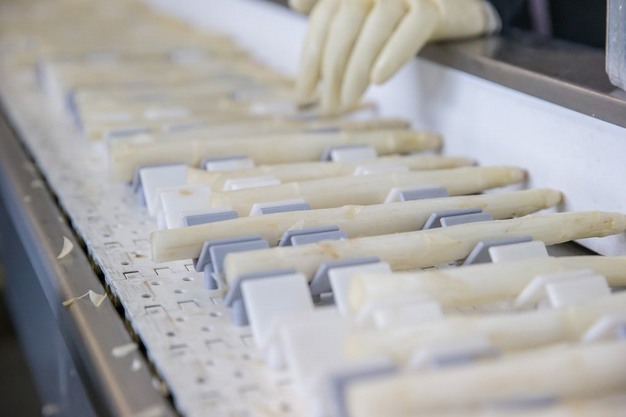
Des conditions de départ optimales pour le légume préféré des Allemands
« L’automne sec et les journées hivernales particulièrement froides ont permis aux asperges d’accumuler de l’énergie dans des conditions idéales, avec une bonne phase de repos et de reprise végétative. Avec ce passage presque brutal de l’hiver au printemps, les turions commencent maintenant à pointer abondamment. Comme les buttes se réchauffent plus rapidement que prévu, nous pouvons nous attendre à un démarrage très dynamique. Une fois la récolte lancée, la saison prendra réellement son envol. Pour Pâques, nous attendons suffisamment d’asperges pour tout le monde », résume le Dr Ludger Aldenhoff, conseiller spécialisé en culture de l’asperge.
Simon Schumacher, directeur et porte-parole du conseil d’administration de l’Association des producteurs d’asperges et de fraises d’Allemagne du Sud, se montre lui aussi optimiste pour la saison à venir : « Au vu des conditions climatiques observées ces derniers mois, nous nous attendons à une qualité satisfaisante des turions. La saison des asperges s’annonce donc particulièrement savoureuse. »
« Journée de l’asperge allemande » le 5 mai 2026
Pour la quatrième fois, la « Journée de l’asperge allemande » se tiendra dans toute l’Allemagne le mardi 5 mai 2026. À travers cette journée d’action, la filière souhaite mettre à l’honneur ce légume emblématique du pays. Les consommateurs recevront une petite surprise lors de l’achat d’asperges sur les stands spécialisés et dans les magasins à la ferme. Selon l’Agrarmarkt Informations-Gesellschaft (AMI), le taux d’auto-approvisionnement en asperges en Allemagne atteignait 82 % l’an dernier. L’asperge blanche fait ainsi partie des rares légumes produits et consommés à un niveau aussi élevé dans le pays. L’achat d’asperges locales contribue non seulement à renforcer l’autosuffisance alimentaire, mais s’inscrit également dans une démarche durable et équitable.
Régional, durable et équitable
Les courtes distances de transport permettent de réduire considérablement les émissions de CO₂. Selon l’Öko-Institut e.V. de Fribourg, les asperges importées du Pérou par avion génèrent environ 11 kg d’équivalents CO₂ (CO₂e) par kilogramme ; soit une empreinte carbone environ 27 fois plus élevée que celle d’un kilogramme d’asperges produites en Allemagne (0,4 kg d’équivalents CO₂). D’après l’Institut péruvien de l’asperge et des légumes (IPEH), 32 % des asperges exportées sont transportées par voie aérienne.
Rétrospective de la saison 2025
Selon l’Office fédéral de la statistique, la récolte d’asperges en 2025 a été inférieure de 3,9 % à celle de l’année précédente, atteignant 104 920 tonnes pour l’ensemble de l’Allemagne. Sur les sept dernières années, la production moyenne s’établit autour de 114 520 tonnes par an. La récolte 2025 se situe ainsi 8,4 % en dessous de cette moyenne. La superficie des cultures d’asperges en production a diminué d’environ 3 % par rapport à l’année précédente, passant de 19 764 à 19 218 hectares.
Avec 5,4 tonnes par hectare, le rendement a légèrement reculé de 1,3 % par rapport à 2024. L’an dernier, l’Allemagne comptait au total 1 349 exploitations spécialisées dans la culture de l’asperge (contre 1 357 en 2024), qui exploitaient ensemble 22 484 hectares de surfaces cultivées, plantations jeunes comprises. La baisse de 1,5 % des surfaces cultivées et de 0,6 % du nombre de producteurs indique toutefois que le recul du secteur tend à ralentir.
La Verband Süddeutscher Spargel- und Erdbeeranbauer e. V. (VSSE), l’Association des producteurs d’asperges et de fraises d’Allemagne du Sud en français, représente les intérêts des producteurs d’asperges et de fraises dont l’activité principale se situe dans le sud de l’Allemagne. Avec environ 630 membres, la VSSE est la plus vaste organisation professionnelle de producteurs d’asperges et de fraises en Allemagne.
Pour plus d’informations :
www.vsse.de
https://deutschlandspargel.de/
A vendre d’occasion une laveuse, coupeuse, calibreuse Hermeler pour les asperges par le Bon Coin
« Notre diversité variétale permet de répondre aux besoins de chaque producteur de fraise et d’asperge » par Frédéric Angier, Angier International et FreshPlaza
Frédéric Angier, Angier International :
« Notre diversité variétale permet de répondre aux besoins de chaque producteur de fraise et d’asperge »
Depuis 55 ans, l’entreprise familiale Angier International s’emploie à apporter une réponse adaptée à chaque producteur, à chaque terroir, à chaque marché.
Spécialisée dans la production de plants de fraisiers et de griffes d’asperges, l’entreprise s’est forgé une identité singulière dans le paysage français : celle d’un pépiniériste indépendant, non obtenteur, capable d’offrir une gamme variétale particulièrement large.
« Notre marque de fabrique, c’est cette diversification variétale. Nous sommes aussi bien capables d’apporter une solution adaptée à un producteur niçois qu’à un producteur lillois, et ce à toutes les exploitations quelles que soient leurs tailles.
Chez nous, un producteur est un producteur », résume Frédéric Angier, directeur de la société éponyme.
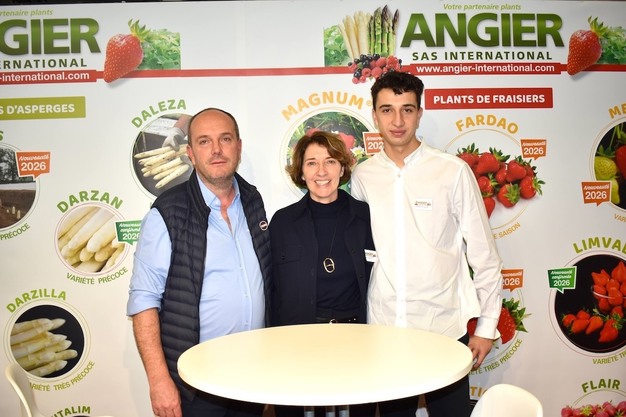
Une indépendance revendiquée au service du choix variétal
Contrairement à d’autres acteurs intégrés à un programme génétique unique, la société Angier a fait le choix de ne plus être obtenteur. « Nous l’avons été dans le passé, mais nous avons arrêté la création variétale pour travailler aujourd’hui avec différents programmes de sélection, français et étrangers ».
Un positionnement qui lui permet de proposer une diversité génétique issue de programmes français, italiens, anglais et hollandais. « A nous de savoir ensuite développer et proposer les variétés les plus pertinentes en fonction des besoins de nos clients. »
En fraise, cette diversité est particulièrement marquée. Elle permet de répondre à des créneaux commerciaux variés – précocité, rendement, qualité gustative, adaptation au hors-sol – mais aussi à des contextes pédoclimatiques très différents. « Nous mettons à disposition une offre qui peut correspondre à des environnements très contrastés. C’est ce qui fait notre force. »
En asperge, la situation est plus homogène. « En Europe, nous travaillons avec des programmes où la génétique est assez similaire.
La culture d’asperge est une culture qui répond à des cycles beaucoup plus longs que la fraise. Le producteur ne peut pas changer de variété chaque année. Il y a donc moins de diversité qu’en fraise, même si les hybrides ont beaucoup évolué et que la valeur des griffes a fortement augmenté. »
Une entreprise familiale tournée vers l’export
Si l’entreprise reste à taille humaine et très attachée à répondre aux besoins du marché national, son horizon dépasse largement les frontières françaises.
Sur les 50 millions de plants de fraisiers et les 6 millions de griffes d’asperges commercialisés chaque année, 25 % sont destinés à l’export. « C’est une spécificité de notre entreprise. Peu d’acteurs français exportent à ce niveau-là », souligne Frédéric Angier.
L’Europe constitue le principal débouché, mais l’entreprise travaille également avec certains pays d’Afrique centrale, les DOM-TOM ou encore la Corée du Sud, de manière régulière ou ponctuelle selon les opportunités.
La production s’appuie sur 80 hectares dédiés aux fraisiers, en pleine terre et en hors-sol, et 35 hectares pour les griffes d’asperges. Un outil dimensionné pour répondre à des marchés variés, tout en conservant une gestion familiale. « Nous portons notre nom.
Nous ne sommes pas une multinationale et tenons à continuer de faire de la relation avec nos clients un point de différentiation par rapport à d’autres très grosses sociétés qui rayonnent sur le marché mondial ».
L’évolution du fraisier : du plant racines nues au plant à potentiel intégré
Le marché du fraisier a profondément muté en trois décennies. « Il y a 30 ans, nous travaillions principalement pour des cultures de pleine terre avec des plants racines nues. Aujourd’hui, la réduction voire l’abandon des surfaces plein champ et le développement du hors-sol ont complètement changé la donne. » La culture hors-sol exige des plants mottés, avec un potentiel déjà construit en pépinière. « Avant, le producteur finissait en quelque sorte le travail. Aujourd’hui, le potentiel du plant se fait chez nous. L’exigence qualitative est beaucoup plus forte ».
Productivité, homogénéité, qualité sanitaire, respect des calendriers de livraison : les attentes se sont intensifiées. « De la prise de commande à la livraison, tout doit être maîtrisé. Il faut que nous réussissions à proposer des plants qui répondent à la fois à des contraintes phytosanitaires de plus en plus présentes et aux attentes des producteurs en termes de productivité et qualité ».
Parallèlement, le nombre d’acteurs s’est considérablement réduit. « Les capitaux engagés ne sont par ailleurs plus du tout les mêmes qu’il y a 30 ans. Aujourd’hui, il y a un vrai risque à faire notre métier, risque que certains ne sont plus prêts à prendre. En plants de fraisiers, on comptait 25 à 30 entreprises et aujourd’hui, nous sommes moins d’une dizaine. Même tendance en asperge, nous sommes passés de huit à deux acteurs français en 25 ans. »
Un contexte phytosanitaire sous tension
À ces mutations structurelles s’ajoutent les contraintes réglementaires. « La gamme des produits homologués se réduit d’année en année. L’interdiction récente du Movento par exemple pour lutter contre le puceron est un vrai sujet. Si des dérogations pour un autre produit alternatif ont pu être accordées en production de fraises, elles ne concernent pas les pépinières. « Nous n’avons à ce jour pas d’alternative en pépinière, et donc pas de solution. L’État a répondu sur la partie production, mais sans inclure dans sa réflexion l’amont de la filière ».
Frédéric Angier plaide pour une harmonisation européenne. « Un plant produit dans un autre pays d’Europe peut bénéficier de solutions que nous n’avons pas le droit d’utiliser. Il y a une vraie distorsion de concurrence qui met à mal notre filière française. Il y a une véritable nécessité d’adopter une réglementation commune pour l’ensemble des pays européens ».
Il semblerait donc que le métier de pépiniériste s’est profondément transformé ce dernier demi-siècle, confronté à la réduction des solutions phytosanitaires et aux aléas climatiques de plus en plus marqués. Plus technique, plus encadré, plus exposé, il exige encore plus aujourd’hui anticipation et capacité d’adaptation. Un équilibre délicat que des entreprises comme la société Angier International s’efforcent de maintenir pour sécuriser l’amont de toute la filière.
Pour plus d’informations :
Frédéric Angier
Angier International
Email : frederic@angier-international.com
“Personalmangel im Gastgewerbe sorgt weiterhin für hohen Bedarf an verarbeiteten Produkten” Belgisches Atelier Claessens feiert 5-jähriges Jubiläum FreshPlaza
Belgisches Atelier Claessens feiert 5-jähriges Jubiläum
“Personalmangel im Gastgewerbe sorgt weiterhin für hohen Bedarf an verarbeiteten Produkten”
Am 1. März feiert das Atelier Claessens sein fünfjähriges Bestehen als gezielte Erweiterung von Groothandel Claessens. Das Atelier, das sich ganz auf das Waschen von Salaten und das Schneiden und Verarbeiten von Obst und Gemüse konzentriert, sollte als eine Unterstützungsinitiative für Köche dienen. “Wir wollen den Köchen bei ihrer täglichen Arbeit helfen und ihnen vor allem ermöglichen, Zeit zu sparen, ohne dass die Qualität darunter leidet”, erklärt Brent Peeters von Groothandel Claessens.
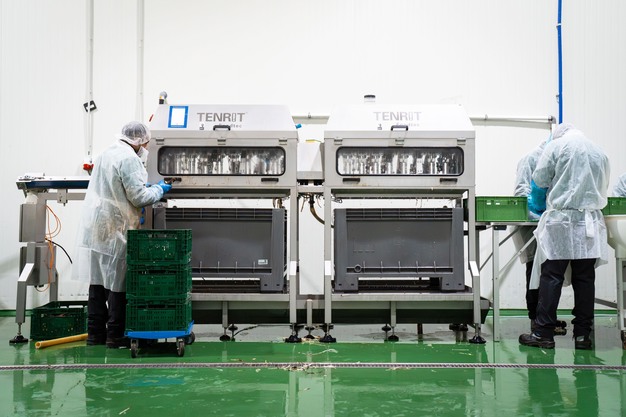
“Effizienz und fachmännisches Können müssen Hand in Hand gehen. Gerade in einer Zeit, in der es für viele Gastronomiebetriebe schwierig ist, genügend Personal zu finden, erweist sich diese Unterstützung als kein überflüssiger Luxus. Mit dem Einkauf von geschnittenem Gemüse können wir Köchen viele Vorteile bieten, wie Zeitersparnis, geringerer Bedarf an kompetentem Personal, einfache Preisberechnung, weniger Abfall/Verschwendung, HACCP-Konformität, konstante Qualität und Schnitt. Dass dies geschätzt wird, merken wir auch an dem anhaltenden Wachstum, das wir Jahr für Jahr erzielen”, erklärt er. In dieser Hinsicht konzentriert sich das Atelier Claessens ausschließlich auf den belgischen Markt.
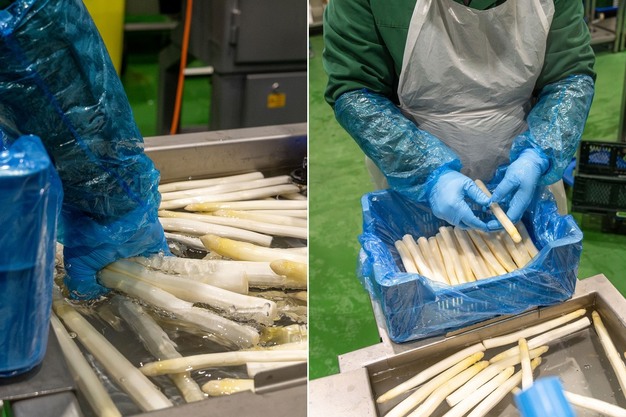
“Wir arbeiten mit zwei Systemen. Einerseits haben wir feste Lagerartikel. Produkte, die standardmäßig geschnitten und verfügbar sind. Andererseits bieten wir Artikel auf Bestellung an. Köche können bestimmte Produkte oder bestimmte Schnittarten anfordern. Wenn etwas nicht standardmäßig in unserem Sortiment enthalten ist, prüfen wir, was möglich ist, und machen uns konkret daran, es zu realisieren. Diese Flexibilität ist für uns sehr wichtig.”
Spargel schälen
Das Angebot passt sich den Jahreszeiten an. Mit dem nahenden Frühling beginnt das Atelier Claessens zum Beispiel wieder mit dem Schälen von Spargel, einem ausgesprochenen Saisonprodukt, das jedes Jahr sehr gefragt ist. “Früher haben wir zum Beispiel auch Schwarzwurzeln geschält. Einige Produkte, wie beispielsweise Karotten, verarbeiten wir das ganze Jahr über, aber andere sind wirklich saisonal. Wir passen unser Angebot bewusst an das Marktgeschehen an und gehen immer von den Bedürfnissen der Kunden aus.”
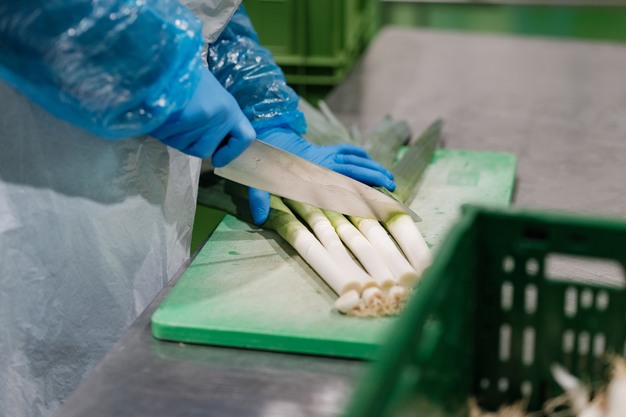
Das Wachstum der vergangenen fünf Jahre lässt sich auch in Zahlen ausdrücken. Heute arbeiten 25 Mitarbeiter in der Produktion. “Aufgrund der anhaltenden Nachfrage prüfen wir derzeit den Aufbau eines Teams, das Tag und Nacht arbeitet. Wir werden diese Nachtschicht im Jahr 2026 einführen, damit wir kontinuierlich schneiden und verarbeiten können. Das wäre ein großer Schritt nach vorn und zeigt vor allem, dass der Bedarf auf dem Markt nach wie vor hoch ist.”
Qualität
Mit dem fünften Jahrestag wird das Hauptaugenmerk in den kommenden Jahren auf der Optimierung und Qualitätskontrolle liegen. Größere strukturelle Veränderungen sind nicht sofort geplant, aber die Verfeinerung und Verbesserung bleibt ein ständiges Ziel. “Das fünfte Jubiläum ist für uns in erster Linie ein Anlass, den eingeschlagenen Weg zu reflektieren. Gleichzeitig blicken wir nach vorn und überlegen, wie wir unseren Betrieb noch effizienter gestalten können.”
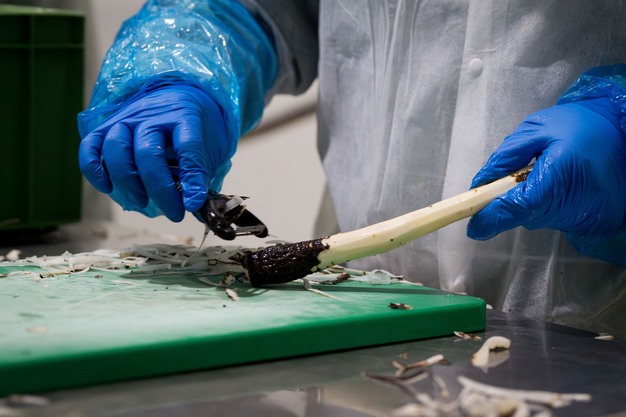
Laut Brent zeichnet sich Atelier Claessens vor allem durch die Kombination von Qualität und einer breiten Produktpalette aus. “Wir bieten eine breite Palette von Produkten an, und das ist gleichzeitig unsere größte Herausforderung. Bei einem so umfangreichen Sortiment muss jeder im Team die verschiedenen Produkte und Schneidemethoden genau kennen. Wir sorgen dafür, dass alles richtig gemacht wird und dass die Qualität gleich bleibt. Mit unserem jetzigen Team schaffen wir es, diesem breiten Leistungsangebot gerecht zu werden und gleichzeitig flexibel auf die Wünsche unserer Kunden einzugehen.”
Der Großhandel Claessens ist während der Tavola 2026 vom 15. bis 17. März am Stand 1304 zu finden.
Weitere Informationen:
Brent Peeters
Groothandel Claessens
Kielsbroek 23
2020 Antwerpen, Belgien
Tel: +32 (0) 3 237 44 29
contact@groothandelclaessens.be
www.groothandelclaessens.be
Asperges : quand l’intelligence artificielle redéfinit les standards du calibrage par Besnard Père & Fils et FreshPlaza
Antoine Besnard, Besnard Père & Fils :
Asperges : quand l’intelligence artificielle redéfinit les standards du calibrage
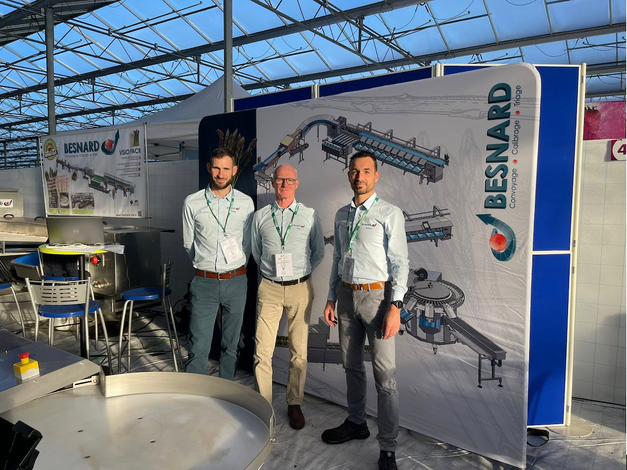
Dans l’univers exigeant de l’asparagiculture, où la précision du tri et la régularité des calibres conditionnent directement la valorisation des lots, la fiabilité des outils industriels est déterminante. Depuis 1965, Besnard Père & Fils accompagne les producteurs avec des solutions de convoyage, calibrage et triage développées en interne. Implantée à Bazouges-Cré-sur-Loir, dans la Sarthe, l’entreprise familiale revendique près de 60 ans d’expérience et poursuit aujourd’hui un travail de modernisation technologique centré sur l’intégration de l’intelligence artificielle.
Un savoir-faire historique construit au plus près du terrain
Depuis sa création, Besnard Père & Fils conçoit, fabrique et installe des équipements dédiés aux produits agricoles, avec une spécialisation marquée dans l’asperge.
« Nous avons toujours travaillé en lien étroit avec les producteurs pour proposer des machines adaptées à leurs contraintes réelles », explique Antoine Besnard.
« Notre ancrage historique s’est construit autour d’une ingénierie robuste et d’une maîtrise complète de la chaîne de conception. Le développement mécanique et électronique est réalisé en interne, ce qui permet des ajustements précis en fonction des spécificités des exploitations et des cahiers des charges commerciaux ».
Être un constructeur français constitue également un atout dans un contexte où la proximité, la réactivité du service technique et la compréhension des normes locales jouent un rôle clé.
Cette implantation nationale facilite les échanges avec les producteurs et l’adaptation des équipements aux évolutions réglementaires et structurelles du marché européen.
L’innovation comme moteur de développement
Si l’entreprise s’inscrit dans la durée, elle affirme ne pas se reposer sur son héritage.
Une part significative de son activité est consacrée à la recherche et développement, avec un objectif clair : améliorer la performance du tri tout en répondant aux enjeux de main-d’œuvre et de compétitivité.
« Le tri de l’asperge devient de plus en plus exigeant. Les critères qualitatifs se multiplient et les attentes des marchés se précisent », souligne Antoine Besnard. « Cette évolution pousse à développer des outils capables d’aller au-delà des seuls paramètres de de couleurs, diamètres, longueurs ».
L’intelligence artificielle au service du tri des asperges
Depuis deux ans, Besnard Père & Fils travaille à l’intégration de modules d’intelligence artificielle dans ses calibreuses électroniques. Une évolution technologique qui pourrait modifier en profondeur les standards du tri.
L’objectif est d’affiner l’analyse des asperges traitées : « Nous cherchons à détecter davantage de critères qualitatifs et à automatiser des décisions qui, jusqu’à présent, reposaient en partie sur l’appréciation humaine. »
Grâce à l’IA, les machines pourraient identifier plus finement certains défauts, analyser des textures ou encore adapter les paramètres de tri en temps réel en fonction des lots. Cette approche vise à améliorer l’homogénéité des colis, à limiter les pertes et à optimiser le rendement global des lignes.
Pour la filière, les perspectives sont multiples : qualité de tri renforcée, meilleure valorisation commerciale et réduction de la variabilité entre opérateurs.
Vers une nouvelle génération de calibreuses
Si tous les développements ne sont pas encore dévoilés par l’entreprise, des prototypes sont actuellement testés. Ils laissent entrevoir des calibreuses électroniques plus rapides et dotées d’une capacité d’analyse accrue. « Les enjeux de productivité et de disponibilité de la main-d’œuvre nous obligent à repenser certains standards », indique Antoine Besnard. L’automatisation avancée apparaît comme une réponse aux contraintes structurelles du secteur, tout en maintenant un niveau d’exigence élevé sur la qualité finale.
À l’heure où la modernisation des outils de conditionnement devient stratégique pour les producteurs d’asperges, Besnard Père & Fils poursuit son évolution en combinant expérience industrielle et technologies émergentes. L’entreprise entend ainsi accompagner la filière dans ses transformations, en proposant des solutions adaptées aux réalités du terrain et aux attentes des marchés.
Pour plus d’informations :Antoine Besnard
Besnard Père & Fils
Bazouges-Cré-sur-Loir
Tél. : 02 43 94 09 82
a.besnard@besnard-ste.fr Date de publication: mar. 3 mars 2026
Selon Anusaya exportateur Indien « Les premiers cycles de culture de l’asperge ont donné des résultats encourageants » par FreshPlaza
Un exportateur indien se lance dans l’asperge
« Les premiers cycles de culture ont donné des résultats encourageants »
L’exportateur indien de produits frais Anusaya Fresh a annoncé une nouvelle phase d’expansion axée sur la culture commerciale d’asperges et le développement des exportations depuis le sud de l’Inde. Dinesh Shinde, PDG de l’entreprise, se montre confiant quant aux premiers résultats obtenus : « Nous collaborons actuellement avec 75 agriculteurs progressistes dans les régions de Bangalore et du Tamil Nadu, des zones reconnues pour leurs conditions agroclimatiques favorables à la production d’asperges de haute qualité. Les premiers cycles de culture ont donné des résultats encourageants, ce qui confirme la viabilité à long terme du projet. »
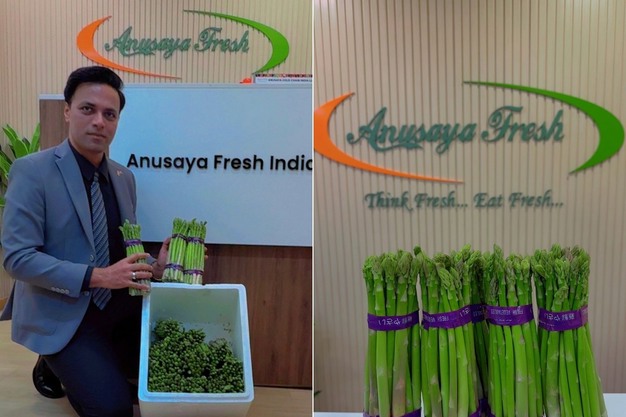
Pour répondre aux exigences des marchés internationaux, l’entreprise a mis l’accent sur la formation et l’accompagnement technique. « Nous avons déployé une équipe de terrain dédiée, composée notamment d’agronomes expérimentés, afin de former activement les producteurs à la nutrition avancée des cultures, aux pratiques culturales scientifiques et à la gestion post-récolte. L’objectif est d’atteindre de manière constante les standards requis à l’export tout en améliorant la productivité et la durabilité des revenus agricoles », explique Dinesh Shinde.
Cette montée en puissance s’est également accompagnée d’investissements structurels. « Dans le cadre de notre stratégie de chaîne d’approvisionnement intégrée, nous avons créé un centre régional de collecte afin d’optimiser l’agrégation des volumes. Cette infrastructure permet aux agriculteurs de livrer efficacement leurs asperges, même en petites quantités, tout en garantissant un tri rigoureux et une consolidation homogène de la qualité », précise Dinesh Shinde.
L’entreprise renforce parallèlement ses capacités logistiques, notamment en matière de chaîne du froid et de fret aérien, afin d’assurer une distribution rapide et sécurisée tant sur le marché domestique qu’à l’international.
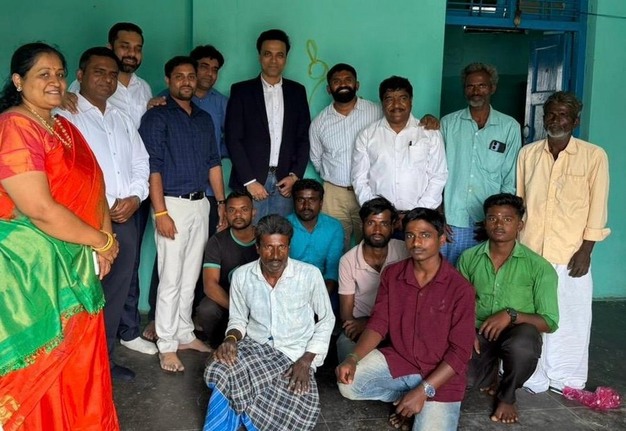
Les pays du Conseil de coopération du Golfe (CCG) figurent parmi les cibles prioritaires. « Nous préparons actuellement l’extension de nos exportations vers les pays du CCG, où la demande d’asperges progresse régulièrement. Ces marchés importent collectivement plus de 50 000 kilogrammes d’asperges par jour, en provenance de diverses origines internationales. Grâce à la proximité géographique de l’Inde et à une logistique optimisée, nous souhaitons positionner le pays comme une alternative compétitive et rentable, tout en maintenant des standards de qualité élevés », souligne Dinesh Shinde.
La demande intérieure évolue également favorablement, portée par l’essor des établissements de restauration multicuisine, où l’asperge trouve une place croissante sur les cartes.
« Notre ambition est de faire de l’Inde une origine fiable pour des asperges premium répondant aux standards internationaux, tout en restant compétitives en termes de prix. En combinant autonomisation des agriculteurs, expertise technique et gestion structurée de la chaîne d’approvisionnement, nous sommes convaincus de pouvoir bâtir un modèle d’exportation durable et évolutif », conclut Dinesh Shinde.
Pour plus d’informations :
Dinesh Shinde
Anusaya Fresh
Dinesh@anusayafresh.com
Www.anusayafresh.com Date de publication: ven. 27 févr. 2026