Archive

ESPÁRRAGO ORGÁNICO

El espárrago por sí solo se ha posicionado como un ítem de prestigio y alta popularidad para todo tipo de consumidores. Si a esto le sumamos la condición de producto orgánico tenemos entonces un producto de demanda en continuo crecimiento.

Conceptos generales

Las preguntas más frecuentes entre los interesados en el manejo orgánico son ¿Cómo voy a reemplazar los agroquímicos necesarios para que mi cultivo sea rentable? ¿Conseguiré los mismos resultados utilizando productos orgánicos que agroquímicos convencionales?

Lo primero que hay que tener en cuenta es que no se trata de sustituir agroquímicos de síntesis con otros aprobados por los organismos correspondientes, se trata de un sistema completo y complejo de manejo del cultivo que involucra trabajar “en conjunto” con lo que la naturaleza nos ofrece para mantener el equilibrio y lograr producciones de calidad, en cantidad suficiente, sin producir contaminación de ningún tipo en el producto y en el ecosistema.

Una parte muy importante es tomar conciencia del hábitat que rodea al cultivo y cómo este nos puede ayudar en nuestro propósito. Vegetación autóctona, barreras naturales, topografía del terreno, condiciones climáticas, condición de los suelos, etc. Con respecto al cultivo en sí, lo importante es tratar de que la planta desarrolle por sí misma la mayor cantidad de defensas posibles de manera tal que las aplicaciones fitosanitarias sean solo como ayuda y no el único método. Las esparragueras que se desarrollen fuertes, equilibradas nutricionalmente, con la cantidad apropiada de agua y manejo adecuado de cosecha, estarán en mejores condiciones de resistir plagas, enfermedades y estrés. A su vez producirán la suficiente cantidad de espárrago como para que el cultivo sea rentable.  Cómo podemos lograr que todo esto ocurra? En primer término tomando conciencia que la agricultura orgánica es un sistema, no una receta y como tal hay que atender a todas las partes del mismo.

Manejo del cultivo

El espárrago es un cultivo que responde muy bien al manejo del agricultor. Esto nos da un plus con respecto a otros cultivos ya que todas las acciones que tomemos se manifestarán en el cultivo fácilmente. El espárrago orgánico tiene las mismas necesidades fisiológicas que un espárrago convencional. La forma de proporcionárselas será lo que deberemos adecuar para lograr la condición de orgánico.

Analizaremos los siguientes puntos:

Fertilización

La agricultura orgánica no centra la mayor importancia en los requerimientos de nutrientes de la planta, sino en la salud y fertilidad de los suelos. Fortaleceremos este concepto  para asegurar la nutrición de la esparraguera de acuerdo a sus necesidades y a la disponibilidad de nutrientes que un suelo sano pueda proporcionarle.

Lo importante es determinar la fuente de los diferentes nutrientes y las prácticas que podemos realizar para favorecer la fertilidad y sanidad del suelo. Las cantidades de nutrientes, estarán dadas por diversos factores inherentes a cada situación en particular (suelo, edad de las plantas, producción, etc.).

Las distintas prácticas que podemos realizar para favorecer la fertilidad del suelo son

  • Asociaciones de cultivos o coberturas vegetales en los interfilares de la esparraguera. Siempre que se cuente con el agua suficiente, es una excelente práctica. Depende de las necesidades del suelo podremos consociar con leguminosas (inoculadas con rhizobium), cereales invernales, etc. esto también proporcionara al suelo la estructura necesaria para favorecer a los organismos benéficos. Estas asociaciones pueden ser temporarias o permanentes, cada agricultor verá la forma en que esta práctica le resulte más beneficiosa.
  • Aplicar distintos tipos de compostas vegetales o animales, correctamente fermentadas, para evitar contaminación de suelo, agua o producto
  • Aplicación de microrganismos
  • Aplicación de minerales

Como en todos los casos, es importante contar con análisis de suelo y agua para saber en qué condiciones iniciaremos nuestro cultivo.

Igual que en cualquier  cultivo de espárragos, especialmente en el orgánico, la fertilización de pre siembra es fundamental para el éxito

La incorporación de una buena fuente de materia orgánica en cantidades adecuadas, no solo dará la nutrición necesaria a la futura planta sino que también creará las condiciones óptimas para la proliferación de microrganismos benéficos de los cuales hablamos anteriormente. Podremos aplicar composta animal o vegetal. Además será muy importante agregar en este momento la cantidad suficiente de mineral fosfórico y si es necesario K como sulfato que se irán biodisponibilizando. También cualquier tipo de enmienda  como por ejemplo yeso agrícola, sales calcáreas, o cualquier otra corrección que se requiera.
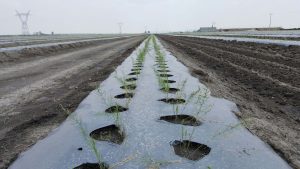
En plantación se puede utilizar acolchados plásticos biodegradables para dar tiempo a la pequeña plántula a desarrollar fuerte y sana hasta poder competir con las malezas de forma efectiva.

Es importante en este punto comenzar con la microbiología. Los microorganismos del suelo  ponen  nutrientes a disposición de las plantas (biodisponibilidad) a través de la descomposición de la materia orgánica y su reacción bioquímica con la porción mineral del suelo. Bacterias y hongos aeróbicos forman una relación simbiótica con las raíces de la planta proporcionándoles nutrientes fácilmente asimilables. Asimismo algunos, como las micorrizas, forman una capa protectora sobre la raíz que impide el ataque de patógenos. Otros   producen antibióticos naturales como la estreptomicina, que destruye patógenos del suelo. Hay algunos organismos específicos que protegen las semillas y las plántulas contra varias enfermedades, varias especies de bacilos, trichodermas y pseudomonas que protegen las raíces de las plantas contra enfermedades infecciosas.

Existen en el mercado varios productos con mezclas de estos microrganismos benéficos con los que deberemos inocular el suelo y luego dar condiciones para su proliferación. El suelo se compone de una cadena compleja de organismos. Su salud depende totalmente de que esa cadena se mantenga vibrante, activa y dinámica. En esparragueras ya implantadas podemos utilizar una serie de productos para mantener la fertilidad de nuestro suelo. Podemos utilizar fuentes permitidas de N, P y K así como también micronutrientes. También es importante el agregado de ácidos húmicos y fúlvicos por las muchas ventajas que estos ofrecen.

Control de plagas y enfermedades

Partiremos de la base que una planta fuerte y equilibradamente nutrida será capaz de lidiar más fácilmente con cualquier plaga o enfermedad que quiera atacarla. Cuando las medidas preventivas, que incluyen controles culturales y físicos, no son capaces de controlar poblaciones de plagas y enfermedades, la última opción es el uso de productos permitidos. El espárrago es un vegetal naturalmente rústico y con gran capacidad de adaptación lo que hace que sea bastante simple manejarlo de forma orgánica. El monitoreo regular y sistemático de la esparraguera  va a proveer de información acerca del estatus tanto de las poblaciones de plagas como de benéficos. Debemos saber identificar cuales  son plagas, cuales son benéficos, y cuales son neutrales,  sus ciclos de vida  y qué comen cada uno de ellos. También nos permitirá evaluar si las medidas aplicadas para su control están dando el resultado esperado. Si es posible, hay que elegir cultivares de espárrago que sean resistentes a algunas de las principales plagas y enfermedades en su área. Identificar el daño  temprano en el ciclo del cultivo, es una forma efectiva  para reducir las poblaciones de plagas  y el daño producido por ellas. Los insectos también pueden ser vectores de enfermedades, por lo que reconocer los síntomas de enfermedades comunes  es fundamental para que el control sea integral. El manejo orgánico de plagas puede incluir trampas (feromonas, adhesivas, de agua, de luz) la liberación de insectos benéficos, el uso de cultivos trampa, y otras técnicas agronómicas aprobadas para la producción orgánica.

El control de las enfermedades seguirá las mismas reglas. Prevención, observación y control integral. El uso de pesticidas es un último recurso en la producción orgánica, y deberán ser productos aprobados e incluidos en el listado de productos permitidos. Pueden ser extractos de vegetales como piretrinas, neem, cítricos, chiles, etc. Productos minerales como azufre, cobre, arcillas, silicatos, caolín, aceites, jabón de potasa, etc. La utilización del pirodiservo es de gran ayuda en lugares donde esté permitido el uso de fuego.

Control de malezas

No hay muchas opciones para el control de malezas, lo más seguro es el control mecánico o manual. Tener en cuenta que las malezas, bien llevadas, pueden ser un aliado en contra de plagas y enfermedades. En plantación se puede utilizar acolchados plásticos biodegradables para dar tiempo a la pequeña plántula a desarrollar fuerte y sana hasta poder competir con las malezas de forma efectiva. Existen herbicidas orgánicos pero no son selectivos y a veces tampoco muy eficientes.

Riego

El manejo del riego en la esparraguera orgánica no difiere de la de sistema convencional. Lo haremos de manera tal de incorporarlo al sistema ecológico que hemos creado para permitir la salud del suelo y por lo tanto de la planta.

Conclusión

Como vemos es todo un sistema que tenemos que manejar, o más bien llevar a las condiciones de equilibrio que logren que nuestro cultivo se desarrolle en condiciones óptimas.

La agricultura orgánica es una forma de vida, una diferente forma de pensar y actuar, que nos aportará no solo un interesante beneficio económico sino también la satisfacción de estar colaborando con la salud del planeta.


Summary

Organic asparagus has the same physiological needs as conventional asparagus. It is how we meet these needs that we must adjust in order to achieve organic status. Organic agriculture places greatest importance on the health and fertility of soils. We need to strengthen these elements according to the asparagus’ needs and the nutrients present in the soil so as to ensure the plant receives sufficient nutrition.

It is assumed that a strong and well-nourished plant will be able to deal more easily with any pest or disease that wishes to attack it. Regular and systematic monitoring of asparagus will provide information about the status of both pest and beneficial populations. Such supervision will also allow us to assess whether the control measures applied are giving the expected results. If possible, choose asparagus cultivars that are resistant to some of the major pests and diseases in your area.


L’intérêt du préemballé en sursis

L’asperge est un légume dont la respiration est particulièrement intense. Elle peut se déshydrater facilement ce qui entraine une perte de poids très rapide. La perte d’eau génère la formation de stries qui déclassent rapidement le produit. Ce produit fragile peut perdre très rapidement en qualité. Une botte d’asperge non emballée peut présenter en magasin des symptômes de déshydratation marquée dès le deuxième jour. L’intensité respiratoire peut être limitée en conservant le produit à basse température et/ou en modifiant l’atmosphère.

Ralentir le flétrissement et la coloration

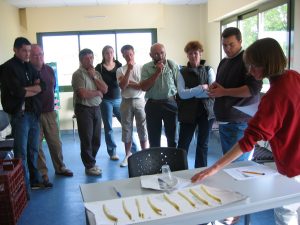
Des séances d’analyse sensorielle ont permis d’évaluer les effets de l’emballage sur la majorité des descripteurs : croquant, fondant, fibreux, tendre, amer, granuleux et sucré.

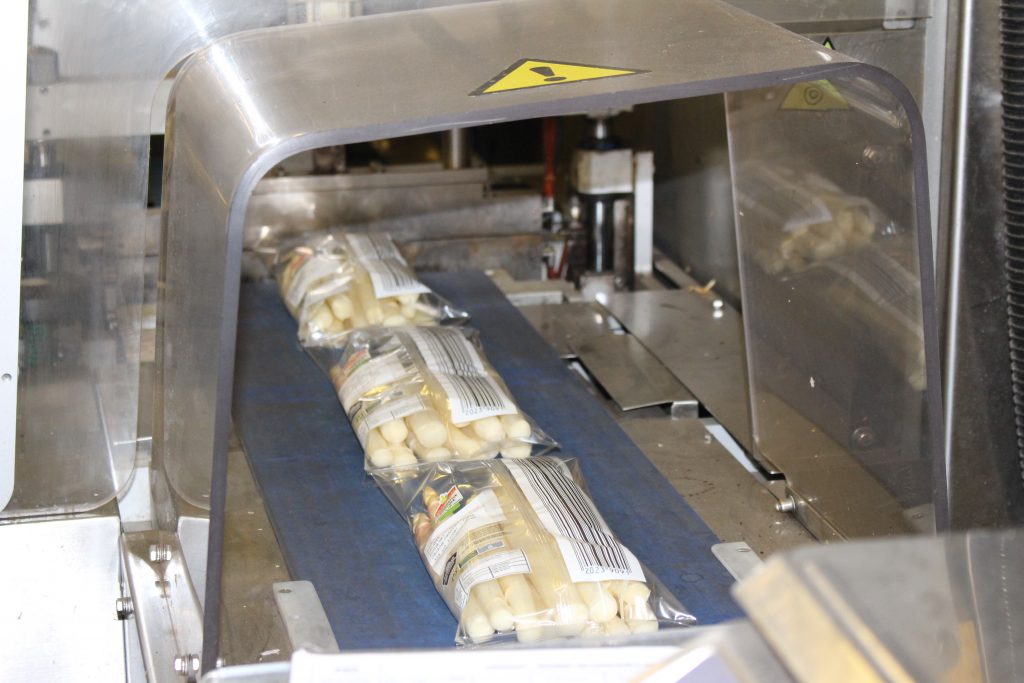
L’emballage des bottes d’asperge avec du film polypropylène microperforé permet de créer une atmosphère modifiée, réduisant la concentration en oxygène dans le sachet, sachant que ce conditionnement permet d’augmenter la durée de vie en magasin de plusieurs jours. Les essais mis en place entre 2011 et 2015 par le CTIFL (1) sur asperge blanche avaient pour objectifs de réduire la perte de poids, de ralentir le flétrissement et la coloration des turions, tout en minimisant la formation de buée dans les sachets lors de leur mise sur l’étal, ceci sans que le préemballage ne modifie les aspects de texture et de goût. Ces essais ont permis de montrer que le préemballage, quelle que soit la perméabilité testée (non perforé, macro et microperforé) limite considérablement la perte de poids au cours d’une conservation au point de vente. De plus, ils ont permis de définir une gamme de perméabilité permettant de conserver les qualités visuelles des turions. Le choix de la perméabilité doit également permettre de maintenir la qualité organoleptique. Dans les conditions des différents essais, il apparaît que le conditionnement dans des sachets en polypropylène entraînerait une diminution de la perception du caractère sucré quelle que soit la perméabilité testée. La modalité non emballé est significativement perçue plus sucrée que les trois autres modalités, lorsque la simulation point de vente dure huit jours. En revanche, si la conservation au point de vente dure six jours, seule la modalité non perforé est significativement moins sucrée que les trois autres. Sur le caractère amer, qui vient en opposition du sucré, l’influence de l’emballage est également mise en évidence. Il y a une augmentation croissante de l’amertume perçue corrélée à la diminution de la perméabilité. La modalité non perforé est significativement plus amère que le produit frais. Pour le caractère croquant, le « classement » des modalités est le même : l’emballage le plus imperméable entraîne une perte de croquant. On constate également que le préemballage dans un film macroperforé entraîne une hausse du caractère croquant de manière significative.

Une perméabilité s’est avérée optimale

Pour le caractère fondant, qui vient en opposition du croquant, les conclusions vont dans le même sens : le produit frais est intermédiaire. Ainsi le préemballage dans un film macroperforé entraîne une perte du fondant (hausse du croquant constatée précédemment) et le préemballage dans un film imperméable entraîne une augmentation du fondant (baisse du croquant constatée précédemment). Concernant les caractères tendre et fibreux, on constate une logique d’opposition dans les classements des modalités. Ainsi, au cours de la conservation, les turions deviennent plus fibreux. Cette évolution est limitée par l’étanchéité croissante du film : la tendance est la même pour tous les  essais réalisés. Les nombreuses modalités testées mettent  en avant une gamme de perméabilités (de 3 μm²/cm² à plus de 12 μm²/cm²) qui, dans les conditions particulières  de ces essais (conditions de température de point de vente avec alternance jour/nuit), semblent être les mieux adaptées pour prolonger la conservation du produit avec une qualité acceptable (limitation du verdissement et de la perte de poids (0,5 à 1 %)). Ces essais montrent également les limites à partir desquelles on observe des défauts de conservation. Afin de garantir le maintien des critères organoleptiques (goût et texture), il est préférable d’éviter les perméabilités trop élevées comme celle testée via le film macroperforé. Ainsi, une perméabilité de l’ordre de 5 μm²/cm² s’est avérée optimale. Avec des températures plus basses, la conservation est encore prolongée avec un optimum à 2 °C. Cette température utilisée au stockage permet de prolonger la conservation du produit au-delà de 15 jours, toutefois elle parait très difficilement applicable sur le lieu de vente.


The interest of pre-packaged in reprieve

In France, studies carried out by CTIFL show that polypropylene sachets can significantly limit the asparagus weight loss and extend its shelf life at the point of sale. However, they can change certain taste criteria (sweetness, bitterness, crunchiness, etc.). But their use is in question due to the coming French regulation concerning the use of plastic packaging.


GERMANY: Spargel und Beerenanbau Winkelmann GmbH & Co

How has the pandemic affected your operations?

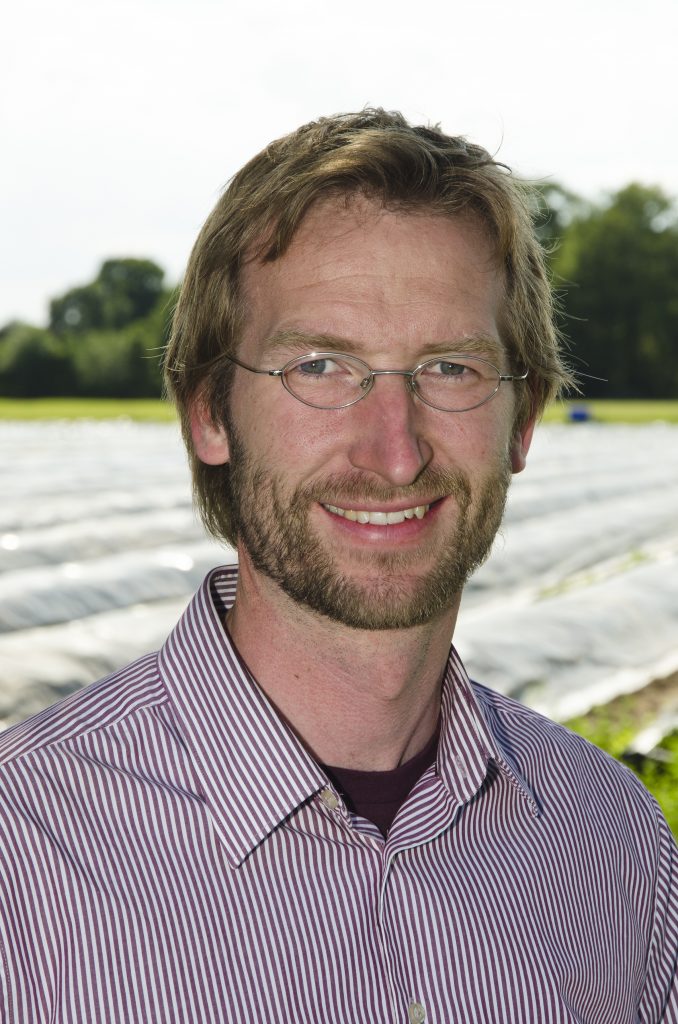
Andreas Löbke, Production Manager

For the 2020 season we had a shortage of about 25%, especially women from Poland who decided to stay with their families. We understood and respected their decisions. In March 2020, much of what was happening was new and unknown and presented us with some challenges. Due to the great commitment of our staff, we were able to implement all the necessary hygiene measures in a short time. Disinfectants were organised from various sources, masks were sewn at employees’ homes, the entire company premises were fenced off and guarded by a gatekeeper. We had 25% less production. But people who came working for us stayed for a longer period than usual, which helped. We have since learned to deal with the situation and have further tightened and improved our measures and hygiene standards. But the mutations with the higher infection rates worry us. In 2020, we had no infections on the farm. We hope that we will be able to do the same in 2021. We believe that customers are eagerly awaiting the first fresh asparagus and that sales in 2021 will be good.

How has it affected marketing, consumption and logistics?

None of our usual sales to gastronomy and canteen kitchen customers took place. Sales to food retailers worked well – but all on a lower base level. Our markets and our customer relationships have developed robustly, however. Consumers seemed to place more value on high-quality, fresh asparagus and ate a little more asparagus at home, maybe because they couldn’t go out to restaurants. Our exports, mainly to Scandinavia, have remained stable. Our logistics partners were able to deliver everything as agreed. Our own logistics also functioned reliably.


SPAIN: García Mateo & Sinova

How has the pandemic affected your operations?

Sergio Sinova, general manager

The availability of personnel has become one of the greatest challenges for all producers, regardless of origin, for various reasons: increased salary costs, restrictions on hiring foreign personnel due to limitations on international mobility to combat Covid-19 and increased personal space requirements for each worker to prevent contagion. All of this has resulted in fewer workers and lower productivity, or in extraordinary costs to adapt facilities to Covid-19 protocols. Like all companies, we have had to bear significant costs to adapt our facilities to Covid-19 protocols. Similarly, we’ve seen an increase in labour costs resulting from having to alternate personnel in our facilities, and we have had to constantly replace personnel in the event of Covid-19 infections. In addition, production rates have been reduced by having to prioritise space and reduce the number of workers in the warehouses.

How has it affected marketing, consumption and logistics?

The food service restrictions diverted demand for fresh green asparagus to greengrocers and supermarkets. The 2020 Spanish campaign largely coincided with the March-May lockdown, which reduced fresh asparagus consumption, especially early in the campaign. The domestic and import campaigns don’t overlap, so consumers don’t have to choose between them. In fact, consumption during the domestic campaign makes them more likely to know the product and thus buy it more often the rest of the year. In the asparagus sector, the greatest impact of Covid-19 has been on air freight logistics for imported products. Prior to the pandemic, the vast majority of asparagus was sent to Europe on passenger planes, whose routes have been cancelled during the pandemic.


NETHERLANDS: Teboza

How has the pandemic affected your operations?

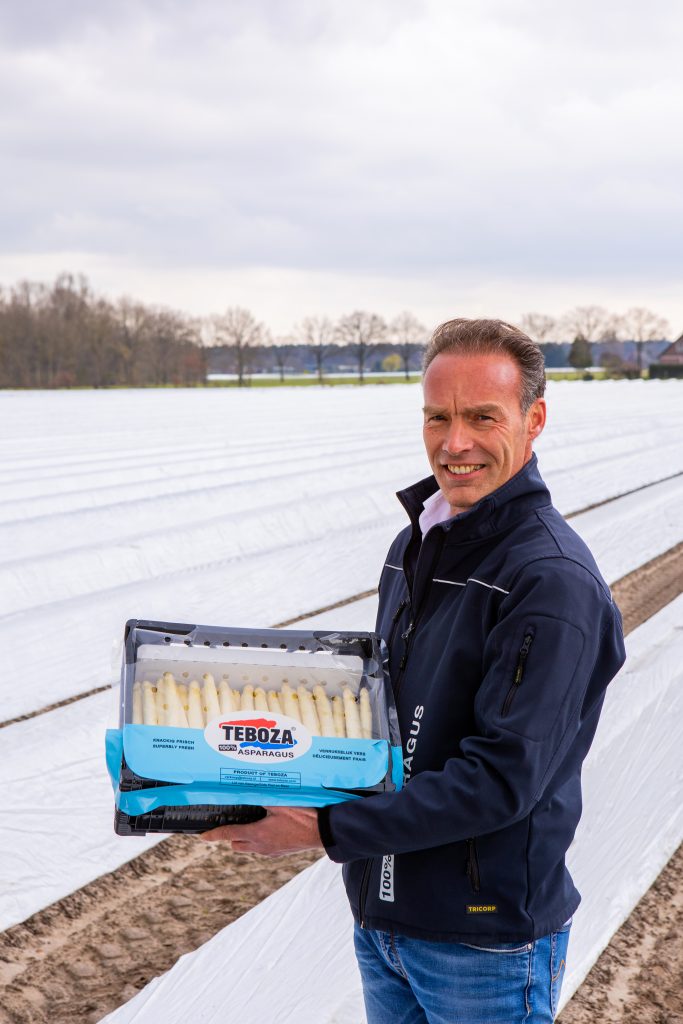
Will Teeuwen, Grower

Just before the 2020 asparagus season, we were hit with lockdowns and closed borders in Europe which meant a significant amount of those who had worked at Teboza in past years were unable to return. With enormous effort by everyone in our organisation, we were able to fill the gap, such as by deploying workers from other sectors. This year, we have been in close contact with our employees, and we took control of the entire process from local testing before departure, safe travel and safe accommodation. We have also set up a test and quarantine policy in collaboration with the government and our health and safety officer. We see that after one year away, many people are happy to work with us again and we expect we’ll have enough people to harvest and process every kilogram. The deployment of personnel from other sectors, small-scale accommodation, extra hygiene measures and more and small-scale transport have led to considerable additional costs in the past year, and will also lead to extra costs in the coming year and possibly the coming years.

How has it affected marketing, consumption and logistics?

As in most of Europe, in 2020 the catering industry was closed for almost all the asparagus season. As we expect a similar situation in 2021, our catering-related customers face another difficult year. However home consumption has been remarkably good and has offset the lower turnover. While sustainability in packaging has been an important theme in recent years, last year we saw that from a hygiene point of view, more asparagus was packed in plastic, such as flow packs and trays. We have not experienced any inconvenience with regard to the transport of our products to customers at home and abroad.


ITALY: Apofruit

How has the pandemic affected your operations?

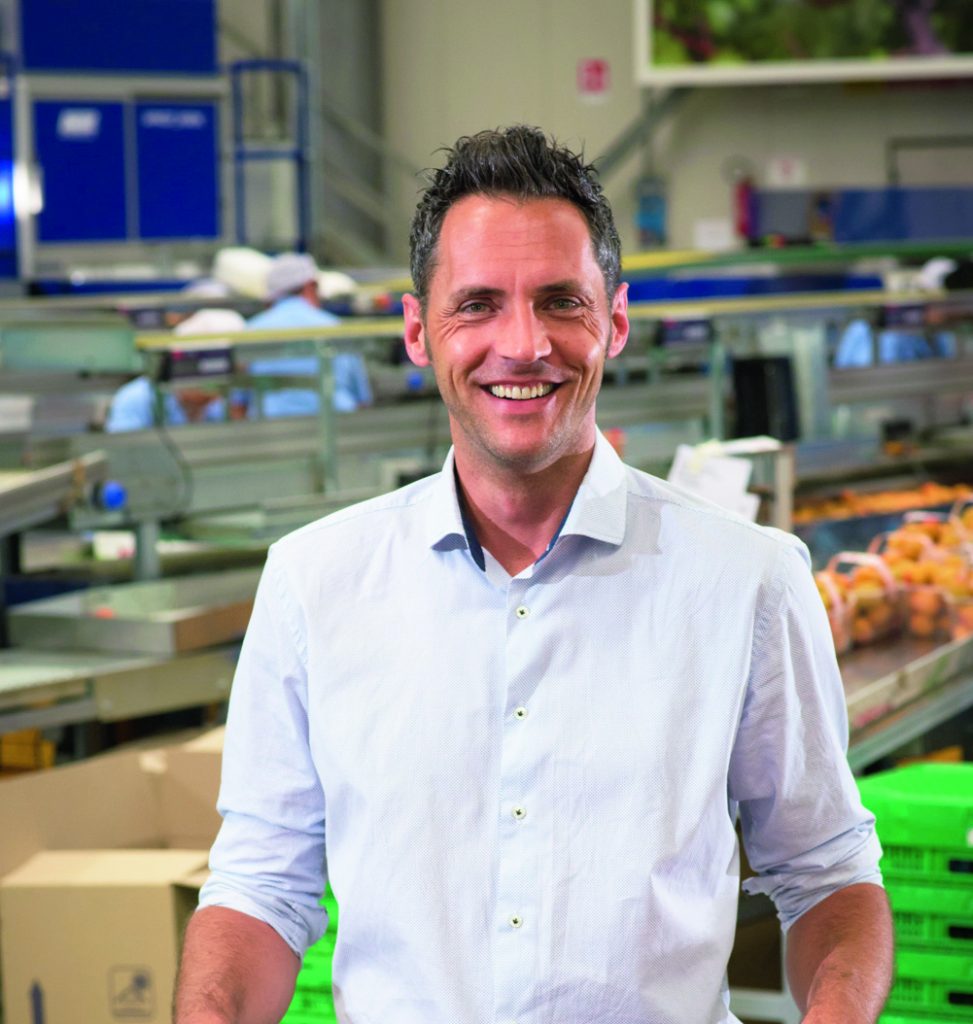
Mirco Zanelli, Commercial Director

The pandemic prompted Apofruit Group to adopt measures to protect its employees: the spaces dedicated to product processing have been expanded, additional specialist personnel have been recruited, processing lines have been equipped with safety devices such as plexiglass panels, and employees have been provided with protective masks in addition to normal PPE (gloves, caps and caps). In order to ensure the processing and marketing of the product, another processing line has been implemented at another of the group’s plants. While we have had more difficulties hiring workers for harvesting, the quality of our asparagus is unchanged, divided as always into: Extra (40%), 1st Category (50%) and baby asparagus (10%), while our acreage has grown to 240 ha for a total production of 1,000 tons. And due to a new specification, which also covers some new varieties, the production of Apofruit’s green Asparagus of Altedo PGI will be 30% higher this year on 2020.

How has it affected marketing, consumption and logistics?

Last year’s March-May lockdown reduced the purchase frequency for perishables like asparagus in favour of products with longer shelf life. This had a negative impact on the campaign in both supermarkets and general markets but was worse for food service. Overall, our output was not overly high and was well spread out over the period, allowing for more regular marketing and avoiding production peaks that can cause price drops. In Switzerland, Germany and the Netherlands, consumption decreased and the presence of local production also affected export volumes. On the logistics front, we have witnessed a slight increase in road transportation costs, mainly due to the initial uncertainty and lack of means.


FRANCE: Primeur de France

How has the pandemic affected your operations?

Bertrand Guivarch, Managing Director (on the left)

Labour posed few problems in 2020 in the early production zone because seasonal workers were present during the lockdown. In 2021, the travel protocols are well defined and allow the movement of workers. The new constraints require more supervision to respect distances and the use of equipment – we must ensure rules are respected for the safety of all. It’s been necessary to halve the workstations on the graders. Despite a more rigorous organisation, packing station productivity is 20% lower. However, Primeurs de France-Priméal plans to market 5,000 tons in 2021, thanks to its new collaboration with Planasa France, which adds 700 tons.

How has it affected marketing, consumption and logistics?

The first lockdown saw the restaurants close, and they are an important outlet for asparagus in France. But supermarkets rallied to offer asparagus to French consumers, some of whom discovered it for the first time. Kantar data shows the number of French households buying asparagus rose to 31% last year after sitting at 20% since 2017. It will be hard, but we think we can maintain this level in 2021. Covid has also increased demand for proximity and local products, which favours our French asparagus. Last year, the share of asparagus sold in bags increased. We are selling 45% of our asparagus in 500g flow pack sachets and 55% in 5kg packs and this is due to the better health security of the flow pack and increased sales of asparagus in supermarkets. But from 2022, French law will forbid use of bags and plastic film for small sales units, which will mean the return to the bundle. The logistics of using paper bags are very difficult because there is currently no automation possible.


This is post-Covid!

A year ago, the first wave of the Covid- 19 epidemic struck just as the main asparagus season was commencing, significantly impacting the campaign in Europe, as testified by companies from France, Italy, Germany, the Netherlands and Spain. Across Europe, it has been shown that asparagus is highly dependent on manpower, which often comes from other countries. The health regulations put into place, and still in force today, meant changing the organisation of the production chain, harvesting, packaging and logistics. It also meant increases in these costs, which will have to be passed on to the final price.

The situation has led to producers focusing more on their domestic markets. With the restaurant sector on hold, asparagus has also lost an important outlet. This loss, though temporary, has already changed eating habits regarding asparagus. Consumers have been very receptive to fresh asparagus during this period, with some consuming it for the first time! It is now important to capitalise on this situation to increase the number of asparagus consumers in Europe.

How Covid-19 affected production in 2020

In Mainland China, the world’s top asparagus grower, the unprecedented market fluctuations and general negative impact caused by Covid-19 saw asparagus planted area shrink by 5% between 2019 and 2020 to about 90,000 ha, according to a Fresh Plaza report quoting seed producer Walker Bros, Inc. A USDA report states that in Peru, the Southern Hemisphere’s top asparagus grower and global number two, production in 2020 fell by 4% Y-O-Y to just over 352,300 tons due to a labour shortages during the harvest season, resulting from the strict quarantine imposed by the country’s government. And last year’s asparagus harvest in Germany, the Northern Hemisphere’s 2nd biggest grower after China, was about 117,650 tons, 10% down on 2019 and 5% lower than the average for the previous six years, according to the country’s federal statistics office. Germany’s lower harvest volume was partly due to a 2% decline in acreage but “also due to the fact that, as a result of the corona pandemic, there were no foreign harvest workers in some regions and therefore not all of the asparagus fields could be harvested,” reports the Association of South German Asparagus and Strawberry Growers (VSSE).


Priméale

Priméale is the leading French marketer of asparagus, marketing 5000 tons out of the 20,000 tons of national production. «Priméale was already marketing Copadax and MaïsAdour asparagus. In 2021, Planasa was added to increase our offer with an additional 700 tons,» said Bertrand Guivarch, Commercial Director.  «In 2020, with the health constraints due to covid, the share of asparagus sold in sachets increased. We sell 45% in a 500g flow packs and 55% in 5kg packages,» he says. However, the use of this fresh pouch made of polypropylene with selective permeability has been called into question in the shorter or longer term (see above). «For this season, we are testing a new bag made of 60% paper with a transparent window to maintain the visibility of the product, the number one sales criterion,» says Angélique Aubry, Head of Advertising Marketing. «It’s one way of meeting consumers’ environmental expectations, even if this recyclable alternative, doesn’t meet the requirements of future legislation,» she says.


Larrere

At Larrere farms we produce organic asparagus. Fully committed into a CSR approach, the respect of nature, soils and plants is essential for us.  Our family farms are located in the heart of Les Landes in France, which is an historical production basin for asparagus growing. In order to extend our production season and to offer to our customers asparagus from January, we started to grow asparagus in our farm BVLH which is located in Comporta in the Alentejo region in Portugal. We chose this region because it is an area which has some very unique geological and climatic conditions, similar to what he have in Les Landes.

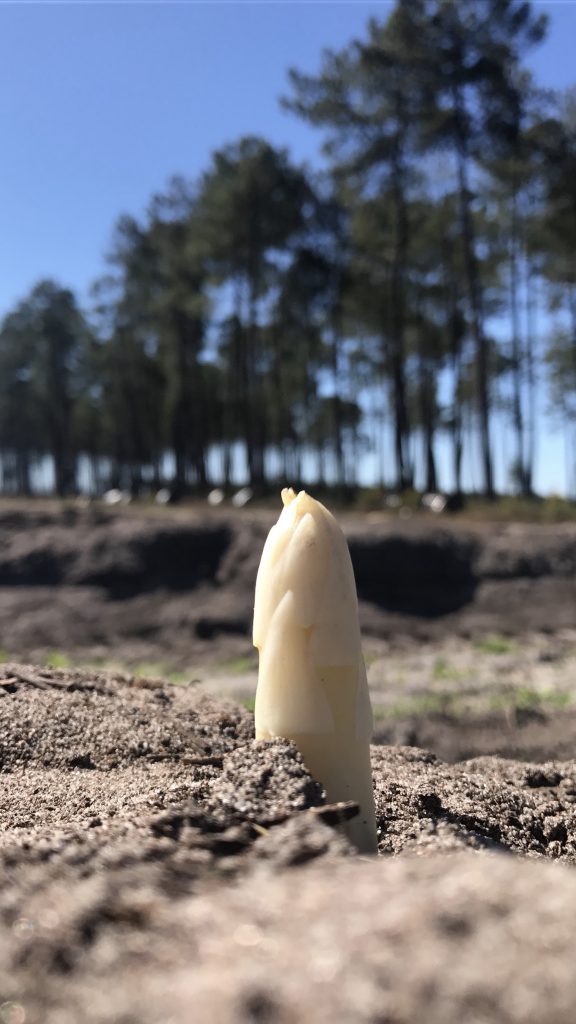
In both of our farms, asparagus fields are very close from the Atlantic coast, around ten kilometres from the ocean, and are surrounded by pine forests. The soils are mainly made up of a very clear sand which is typical of those regions. Those soils allow us to cultivate a product of excellence with a strong flavour typicality and sweet aromatic notes.  Today Larrere Farms are already well established on local and French markets but we have the ambition to continue to develop exports by creating partnerships at European and International levels.