Archive

Dried strawberries are a feature of the current Egyptian season by FreshPlaza

Dried strawberries are a feature of the current Egyptian season

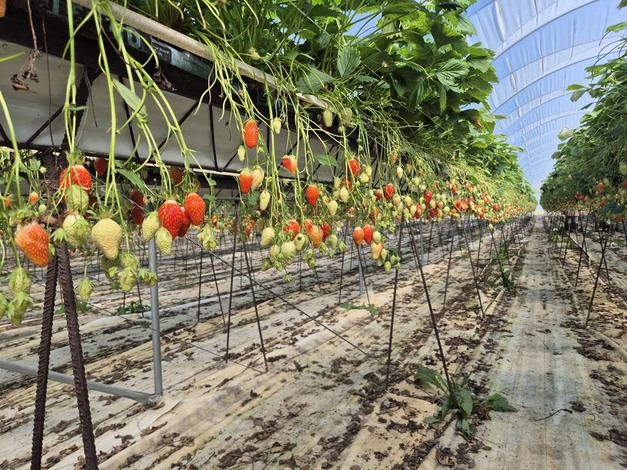
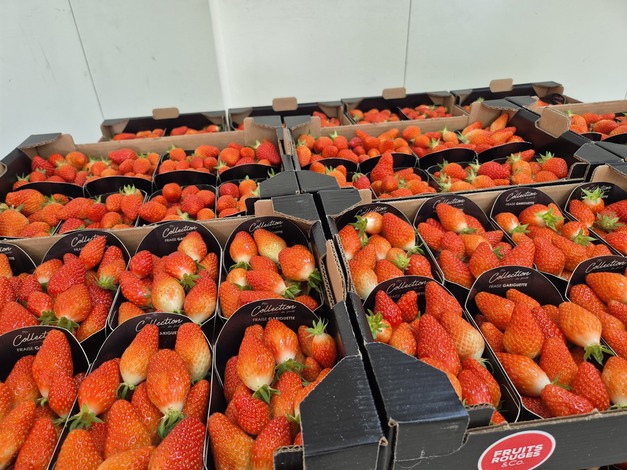
The Egyptian strawberry season started early this year, with a significant increase in acreage and supply, while quality issues reduced the proportion of exportable strawberries. According to several exporters, the start of the season was also marked by a drop in prices compared to last season.

El Sayed El Gohary, Egyptian strawberry grower, explains that many producers had a difficult planting period due to the quality of seedlings, which required vast replantings. He adds: “This problem mainly affected early production and involved plants imported into Egypt last year, and was accompanied by widespread presence of pests. We were able to remedy this through replanting and authorized biological and chemical treatments.”

The producer explains the low prices at the start of the season by the poor quality of certain harvests and assures us that these prices will not dictate the rest of the season. He explains: “The strawberry harvest started earlier than usual this year, in October, while exports to Europe did not begin until mid-November. This led to an abundance of strawberries on the local market and a drop in prices. It should also be noted that the first exports to the Gulf countries were not of the best quality, which explains the low prices. Prices may be slightly lower than last season, but not as low as at the start of the season.”

“Growers who have excellent quality, with good MRL results, will get good prices. For their part, buyers need to pay closer attention to the source of their strawberries this season,” El Gohary continues.

The grower anticipates strong demand for fresh and frozen strawberries during the export season. “We are seeing strong demand. The fresh strawberry season will continue until January in Europe and until March in the Gulf countries, and the frozen strawberry season will start in February. At this pace, Egypt will certainly exceed 500,000 tons of strawberries exported this season.”

In addition to fresh and frozen strawberries, a new export process is emerging in Egypt this season. El Gohary explains: “We are seeing the emergence of drying chambers this season. This is a high-demand sector, as dried strawberries are used in cooking and the food industry in many parts of the world. This process produces very sweet fruit and requires the use of high-quality strawberries with a high Brix level. Usually, Egyptian strawberries are sent to China to be dried and then re-exported, but this industry is being brought to Egypt starting this season. More than 30 drying chambers will be operational starting in January.”

“We anticipate that drying will contribute significantly to sustained demand, as it absorbs large volumes, with 100 tons of dried strawberries requiring 1,000 tons of fresh strawberries,” he concludes.

For more information:
El Sayed El Gohary
Marvel Farm
Tel: +201002496633
Email: azomite2015@gmail.com Publication date: Thu 4 Dec 2025

© FreshPlaza.com / Youness Bensaid

Johan Mostert – DiPAR Systems

Inside the architecture driving real-time fruit supply chain decisions By FreshPlaza

Johan Mostert – DiPAR Systems

Inside the architecture driving real-time fruit supply chain decisions

“Over the last ten to fifteen years, exporters focused mainly on how quickly they could move pallets to market,” says Johan Mostert, managing director of DiPAR Systems. “But that’s changed: with oversupply becoming more common, the real advantage now lies in ensuring that the right carton lands on the right pallet for the right client.”

The recent mandarin season, with its higher-than-normal incidence of peel disorders, illustrates this shift. Producers increasingly need to know which clients tend to claim against a specific defect, what the financial impact has been historically, and whether higher-risk fruit can be identified and rerouted before export.

“This is a deep part of the industry,” he says. “It’s incredibly difficult to systematize, and very few have attempted it at the scale we’re working at.”

For DiPAR Systems, it has taken the form of an extensive, multi-year rewrite of all their agricultural software modules, a project now more than 300,000 logged hours deep, expected to reach roughly half a million hours once every module is completed. He explains that the rewrite began in earnest in 2018 to consolidate legacy systems, eliminate duplication, and bring the entire platform up to modern architectural standards.

Six33 Produce has been running five farms and a pack house for seven years on a single, integrated DataGear® database

DiPAR has been supplying software to packhouses since 2004 and exporters since 1998, later adding quality control, variety evaluation, labour, and wage-tracking components at the industry’s request. They estimate that in some form or other, 20% to 25% of South Africa’s fruit goes through DiPAR’s products; the exact market share is hard to measure.

The new unified platform is called DataGear®, and alongside the major structural modules, it includes new additions such as a forex management component. To support training, Johan and the DiPAR team used modern AI tools to create an internal training assistant, helping DiPAR’s Client Success Team to master and then teach the module efficiently.

“When all modules are complete, this will rank among the largest privately funded Agri-ERP rebuilds in South Africa,” he says. Each module is released first to select early-adopter clients for user acceptance testing. Commercialisation then begins with a small group to allow rapid feedback during stabilisation. Once the module is fully stable, broader client onboarding begins as part of a phased migration.

Exporters at Core Fruit using the latest Stock Planning and Allocations module in DataGear®

From complexity to intelligence
A growing trend in the fruit sector is the use of deep technical data to reduce risk and improve decision-making. DiPAR is leaning into this movement.

One example is cross-referencing specific defects with the historical claims of particular clients, giving exporters a clearer view of risk profiles before they pack a single pallet. For growers, the system can quantify how much a specific defect has cost the farm over multiple seasons, insight previously nearly impossible to extract quickly or consistently.

Food-safety risks can be modelled similarly, and several clients have already used the platform to run mock recalls.

“Our systems collect and track data from pre-commercial variety trials right through to export,” Mostert says. “Once DataGear® has been completed, this end-to-end integration will be available in a single, modular system. For inspection agencies, DataGear® feels like a dedicated inspection tool, yet quality control represents only a small portion of the full platform.”

As vertically integrated producers and exporters adopt more modules, the depth of benchmarking becomes significant. “The system can measure operational aspects previously difficult to quantify, for instance pruning efficiencies, labour performance, varietal behaviour, scouting intelligence and a range of encompassing metrics that influence decisions and therefore the final packouts and grower returns.”

Built in Africa, designed for the world
The expansion of blueberries in Zimbabwe gave DiPAR a foothold in the broader Southern Africa, where large farms are being established at a pace. Due to exchange rate differences, DiPAR’s offering is often substantially more affordable than competing systems, and crucially, the mobile apps are designed to operate fully offline.

Right: The Pest Monitoring module in DataGear® in use at Six33 Produce’s LeArc Farm, Western Cape

“Six33 Produce is in the process of finishing off their seventh season running five farms and a pack house on a single, integrated DataGear® database,” he notes. “They have generated up to 100,000 lines of data in a single day on the app.”

Where connectivity is limited, a daily reality on many farms, DataGear® continues to function without interruption. Some clients also make use of optional offline biometric validation to confirm worker attendance. The system allocates duties, integrates directly with harvesting scales, and feeds the resulting data into labour and wage modules in near real-time.

Despite touching several points of the payroll workflow, DiPAR intentionally avoids the accounting-software space. “We’ve seen farms running three different payroll systems. Our goal isn’t to replace them, but to provide the overarching system that connects everything.”

Safety, audits and future vision
Audits across the value chain, covering farm, packhouse, export, food safety, and more, are increasingly intertwined. This creates a strong need for cross-modular integration so that compliance, traceability, and risk information aren’t trapped in separate systems.

The long-term vision for DataGear® includes additional safety features, such as enforcing post-spray re-entry intervals to prevent accidental exposure for workers, a real challenge in certain crop environments. Similarly, DataGear® aims to integrate receiver requirements, market specifications, consumer preferences, and grower exposure into every allocation decision, with the long-term goal of maximising grower returns while reducing risk.

Among the largest releases, currently in the initial commercialisation phase, is the Stock Planning & Allocations module which is running live at Core Fruit and the Estimates & Planning module which is running live at EXSA and Core Fruit. “Both of these modules represent comprehensive coverage and client configurability, whilst addressing some of the most technically demanding areas of export operations.”

EXSA uses the Estimates & Planning module in their operations

For more information:
Johan Mostert
DiPAR Systems
Tel: +27 82 940 9820
Email: jmostert@dipar.co.za | info@dipar.co.za
www.dipar.co.za

David Vélez, directeur technique de Plus Berries :

« Nous démarrons la récolte des fraises avec de bonnes prévisions commerciales » par FreshPlaza

David Vélez, directeur technique de Plus Berries :

« Nous démarrons la récolte des fraises avec de bonnes prévisions commerciales »

Les premières fraises de la saison 2025/2026 apparaissent dans les champs de Lepe, à Huelva, après avoir surmonté les défis posés par les conditions météorologiques jusqu’à présent.

« Le début de la saison a été marqué par des exigences techniques élevées en raison de facteurs climatiques défavorables, en particulier les températures élevées enregistrées pendant la phase de semis et le récent passage de la tempête Claudia », explique David Vélez, directeur technique agricole de Plus Berries, qui démarre officiellement sa nouvelle saison de fraises avec une augmentation de 10 hectares de sa zone de culture.

« Malgré ces difficultés initiales, le bilan est positif. Bien que la tempête ait causé des dégâts, ceux-ci ont été entièrement réparés et la gestion des cultures a été efficace. »

Néanmoins, M. Vélez souligne objectivement que « la plante est un peu plus tardive que l’année dernière, une situation qui découle de la nécessité de maintenir une irrigation constante pour protéger la culture de la chaleur initiale. » Malgré le retard phénologique, la récolte a déjà commencé et les prévisions de vente restent optimistes, les premiers fruits ayant déjà commencé à être récoltés. »

Pour Plus Berries, la stratégie de la saison s’articule autour de sa propre variété, Candela. « Il s’agit d’une variété précoce dont les fruits sont très homogènes et d’un rouge intense. De plus, elle se distingue par une plante beaucoup plus résistante aux parasites et aux maladies, ce qui est essentiel pour atteindre l’objectif « zéro résidu. » Pour le consommateur, cela se traduit par une saveur et une bonne qualité. Parallèlement, nous maintenons la disponibilité des variétés Marisma et Cleopatra, qui complètent l’offre. »

Selon le directeur technique de l’entreprise, le début de la saison est le moment le plus important et le plus crucial, où il est essentiel de soigner chaque étape, et il souligne les qualités uniques du produit Lepe, « en raison d’une intensité qui se remarque à la dégustation. » En ce qui concerne la commercialisation, les attentes sont positives. « La demande est bonne et nous espérons continuer à couvrir tous les marchés possibles. »

« Nous sommes engagés dans un modèle de culture durable et de zéro résidu, ce qui implique un effort quotidien de surveillance des parasites et des maladies. L’objectif est clair : offrir au consommateur une fraise aussi naturelle que possible. Cet engagement est étayé par un investissement important dans la recherche et le développement. Nous disposons d’un centre de développement de l’innovation qui étudie l’utilisation de la lutte biologique, des micro-organismes et des outils de précision tels que les sondes d’irrigation, les dosimètres et les pluviomètres pour optimiser les ressources. Cette recherche nous permet de développer des variétés plus adaptées au sol, plus rustiques et plus adaptées à une production écologique et sans résidus. »

Pour plus d’informations :
Grupo Plus Berries
Tél. : +34 959504454comunicacion@plusberries.com
plusberries.com Date de publication: jeu. 4 déc. 2025

© FreshPlaza.fr / Joel Pitarch

Articles connexes → See More

More than 110 strawberry breeding lines in development with Red Sun Farms, Heritable Agriculture, and Consorzio Italiano Vivaisti collaboration by FreshPlaza

Red Sun Farms, Heritable Agriculture, and Consorzio Italiano Vivaisti collaboration

More than 110 strawberry breeding lines in development

Red Sun Farms, Heritable Agriculture, and Consorzio Italiano Vivaisti (CIV) have announced significant progress in their collaborative effort to develop the leading indoor-grown strawberry at the Vineland Research Station facility. This partnership combines CIV’s expertise in strawberry genetics and germplasm, Heritable Agriculture’s AI-driven breeding models, and Red Sun Farms’ indoor growing knowledge to change how premium strawberries are bred and grown.

By using AI simulations to predict crop performance, the partnership is streamlining breeding timelines and optimizing key traits for greenhouse efficiency. This approach lets the team bring high-quality, innovative strawberry varieties to market faster, with growers, consumers, and the environment in mind.

Heritable Agriculture’s predictive AI technology generalizes across species, environments, and traits, making it adaptable to almost any agricultural operation. When paired with Red Sun Farms’ vertically integrated model and CIV’s breeding capabilities, this collaboration sets a new benchmark in indoor fruit innovation.

A key differentiator of this initiative is the early involvement of eight retail partners representing more than eight thousand North American store locations. By bringing retailers into the breeding process from the start, the project connects real consumer insights and market needs with advanced technology, ensuring the varieties developed are optimized not only for performance but also for taste, texture, and shopper appeal.

Last week, retail partners joined the research team at Vineland for an exclusive first look at more than one hundred and ten strawberry breeding lines now in development. Through guided sensory evaluations, partners provided valuable feedback that will help shape the next phase of selection and innovation.

“At Vineland, we’re proud to be at the forefront of horticultural innovation by combining world-class research, advanced technology, and industry collaborations to deliver premium, sustainable strawberries to the consumer,” said Ian Potter, President and CEO, Vineland Research. “It’s been incredible to see this research come to life and be validated directly through customer feedback.”

“We’re bringing AI solutions to indoor growers, beginning with greenhouse strawberries,” added Davide Sosso, CSO at Heritable Agriculture. “This work is setting a new standard for strawberry flavor and quality, which is why retailers were here this week to learn more.”

“For CIV, this collaboration represents an important step in turning our genetic research into real value for the entire supply chain,” said Federico Stanzani, General Manager of CIV. “Providing our germplasm and integrating it with Heritable’s predictive models, Red Sun’s cultivation expertise, and the research capabilities of Vineland Research lets us speed up indoor breeding, optimize key traits, and develop varieties that can excel in greenhouses from the earliest stages. This synergy between advanced genetics, artificial intelligence, and precision growing shows technological potential and delivers results for growers, retailers, and consumers, creating strawberries that are ready for market demands.”

“We are entering a new era of produce development where we no longer have to choose between yield and flavor. This partnership brings together the four pillars of modern agriculture: advanced genetics, predictive AI, precision growing, and direct retail feedback. By aligning these forces from day one, we are creating a feedback loop that has never existed before,” said Paul J Mastronardi, Business Development and Account Manager. “We are effectively reverse engineering the perfect strawberry based on what consumers want, ensuring that when these varieties reach the shelf, they are already proven winners.”

As the project advances, Red Sun Farms, Heritable Agriculture, CIV, and Vineland remain committed to driving sustainable, technology-enabled innovation that improves quality, productivity, and flavor in the strawberry category.

For more information:
Red Sun Farms
Tel.: +1 (519) 712-8493
Email: sales@redsunfarms.com
https://www.redsunfarms.com/

Heritable Agriculture
press@heritable.ag
https://heritable.ag

Consorzio Italiano Vivaisti
Tel.: +39 0533 399431
Email: info@civ.it
www.civ.it Publication date: Tue 2 Dec 2025

Spécial Pérou – Valle y Pampa

« La région d’Ica ne connaît pas le chômage grâce à la culture de myrtilles » par FreshPlaza

Spécial Pérou – Valle y Pampa

« La région d’Ica ne connaît pas le chômage grâce à la culture de myrtilles »

Dans les terres sablonneuses de Pisco, à quelque 250 km au sud de Lima, la saison des myrtilles péruviennes touche à sa fin. Valle y Pampa y cultive depuis 15 ans ce fruit qui, grâce à un portefeuille de variétés sélectionnées, garantit du travail à des milliers de personnes pendant plusieurs mois. Selon son directeur général, Miguel Bentín, « l’agriculture favorise l’emploi formel, constitue un outil de réduction de la pauvreté et rend la vie rurale plus digne. »

« Valle y Pampa est un opérateur de la filière doté d’une structure particulière. » La société gère les entreprises de production Agrícola San Gallán, qui se consacre aux grenades, et Family Farms Peru, un partenariat avec l’entreprise américaine Family Tree Farms, qui se concentre sur les myrtilles.

40 % des myrtilles ont une taille supérieure à 20 mm

Les deux exploitations sont situées à Pisco, une région au climat aride et aux sols sablonneux, où l’entreprise gère 700 hectares : quelque 600 hectares de myrtilles et 54 hectares de grenades, avec l’intention de doubler ces derniers.

Des myrtilles sur un sol désertique
Contrairement à de nombreuses autres exploitations du secteur, Valle y Pampa cultive les myrtilles en terre et non en pots. « Notre sol est un sable fin et inerte, typique du désert. Mais nous avons mis au point un système où nous incorporons le substrat en ligne continue, comme on le ferait dans un conteneur. »

Culture de myrtilles en pleine terre

Cette approche est le fruit d’un savoir-faire accumulé pendant plus de 15 ans, lorsque l’entreprise était pionnière dans la culture des myrtilles sur la côte méridionale du Pérou. Le substrat est entretenu avec du compost fabriqué à partir de leurs propres déchets de taille. « À maturité, les rendements sont similaires à ceux en pots. La culture en conteneurs est plus précoce, mais pas forcément plus productive. Les plantes, si la variété n’est pas changée, peuvent donner pendant au moins 15 ans. »

Génétique premium et récoltes prolongées
Toute la production de myrtilles de Family Farms Peru provient de variétés du portefeuille Mountain Blue Orchards (MBO), d’origine australienne, dont le licencié exclusif au Pérou est Family Tree Farms, actionnaire de l’entreprise. Les principales variétés sont Eureka, Eureka Gold, Eureka Sunset et Eureka Sunrise.

« Ce sont toutes des variétés de qualité supérieure : bonne saveur, croquant et gros calibre. 40 % des fruits ont une taille supérieure à 20 mm et dans certains cas, ce pourcentage atteint 80 %. » La saison de récolte du Pisco s’étend de juin à décembre, ce qui permet une activité constante pendant la moitié de l’année. Les variétés sont distribuées en fenêtres précoces, moyennes et tardives, ce qui permet d’échelonner la production et de tirer parti des différents marchés.


Cette année, Family Farms Peru prévoit une production de 11 000 tonnes de myrtilles. « Nous avons des champs de différents âges entre un et cinq ans. Nous prévoyons 35 % supplémentaires en 2026, pour une production estimée à 18 000 tonnes en 2027, lorsque l’exploitation atteindra sa maturité. »

Plus de 60 % de la production de myrtilles est destinée aux États-Unis, grâce à la force commerciale de Family Tree Farms. 10 % sont destinés à l’Asie, en particulier à la Chine, 25 % sont répartis entre le Royaume-Uni et l’Europe continentale, et le reste est destiné à d’autres marchés.

Pour l’Asie (en particulier la Chine), Bentín procède à un conditionnement sur le terrain, en tirant parti de l’uniformité de leurs variétés. En revanche, pour l’Europe et les autres marchés, ils utilisent des lignes de calibrage automatisées.


La grenade : un complément stratégique
Bien que la grenade soit un marché plus petit et plus mature, elle occupe une place importante dans la stratégie de Valle y Pampa. L’entreprise, par l’intermédiaire de sa filiale Agrícola San Gallán, produit 2 000 tonnes par an, principalement de la variété Wonderful, qui s’est avérée la plus fiable. « Au total, le Pérou produit environ 40 000 tonnes. S’il en produisait beaucoup plus, le marché aurait du mal à absorber tous les volumes. »

« Nous commençons à récolter les grenades en mars, ce qui nous permet de faire passer du personnel d’une culture à l’autre. Nous prolongeons ainsi le calendrier de travail. La saison des grenades s’étend de fin mars à début juin, une période très intéressante. Les principales destinations sont le Royaume-Uni et l’Europe continentale. »

Pour accéder à des marchés exigeants, Valle y Pampa dispose de multiples certifications couvrant les bonnes pratiques agricoles, la gestion de l’eau, la responsabilité sociale et la durabilité environnementale. « Smeta est la plus exigeante en matière sociale. D’autres sont plus axés sur l’environnement. Elles sont toutes nécessaires. »


Un travail décent sur le terrain
Pendant la haute saison, l’entreprise emploie jusqu’à 4 200 personnes, en commençant par environ 400 en mars et en augmentant jusqu’en décembre. La main-d’œuvre est un défi permanent, mais Bentín y voit une opportunité : « C’est une concurrence saine. Elle nous oblige à être de meilleurs employeurs. Plus il y a de services, plus les revenus sont élevés. Cela améliore la vie des communautés rurales. »

À Ica, grâce à ce dynamisme agricole, le chômage est nul. Pour Bentín, c’est une source de fierté : « L’agriculture emploie un travailleur sur cinq au Pérou. C’est le principal générateur d’emplois. Elle crée du bien-être, favorise la mobilité sociale et génère du développement. »

Obstacles structurels : eau et logistique
Tout n’est pas positif. La croissance se heurte à des limites, notamment en ce qui concerne les infrastructures et les ressources en eau. Dans le domaine de la logistique, Bentín souligne les problèmes des ports et des lignes maritimes : manque de fréquence, d’équipement et de services adéquats. En ce qui concerne l’eau, la situation est plus critique.

« Le sud du Pérou n’a aucun projet d’irrigation. Toute l’eau de Pisco est souterraine. Et la rivière perd chaque année entre 500 et 600 millions de m3 d’eau douce au profit d’eau salée pendant les mois de pluie. C’est une tragédie. »

Après des années d’expansion accélérée, Valle y Pampa donne désormais la priorité à la consolidation. « Nous voulons optimiser les opérations existantes et maximiser l’efficacité et la qualité, en garantissant la durabilité et la traçabilité. Notre objectif de croissance n’est pas quy’économique, il poursuit aussi d’autres valeurs. » Le directeur général n’exclut pas de s’étendre à d’autres régions, voire à l’étranger, si l’occasion se présente.

Pour plus d’informations :
Miguel Bentín – directeur général
Valle y Pampa
miguel@valleypampa.com
www.vallypampa.com Date de publication: mer. 3 déc. 2025

© FreshPlaza.fr / Peter De Craemer

Dormancy management for maintaining productivity in winter crop production by Hortidaily and American Floral Endowment and osu educ

Dormancy management for maintaining productivity in winter crop production

Photoperiodic lighting can make a huge difference in strawberry production. This article is timely in the season you need to consider extension lighting or night interruption lighting to improve the productivity of your strawberry plants.

Off-season greenhouse strawberry plants are often planted in late summer to start producing fruits in October or November. However, sometimes after the first flush of production, plants may go into a slow growing phase, not producing as many flowers and fruits and not extending leaves. Overall morphology is rosette-like with dark green leaves with short petioles. This is because plants are getting in the dormancy phase as a response to the light environment.

Figure 1. ‘Tochiotome’ strawberry plants showing dormancy symptoms in early January (left). The same plants recovering from the symptoms after three weeks under night interruption lighting (right).

Dormancy in strawberry is induced under short-day conditions when average temperature is greater than 15 °C (Sønsteby and Heide, 2021). Many growers and researchers may have misunderstood that low temperature is part of the stimuli for entering plants into dormancy. In fact, while short-day conditions are considered as the primary factor inducing dormancy in many species, some species such as apple and pear require low temperature for entering dormancy regardless of photoperiod (Heide and Prestrud, 2005). Strawberry plants do not exhibit ‘absolute dormancy’ as their growth is not completely ceased: the reason why the status in strawberry is called ‘semi-dormancy’. The state of semi-dormancy is characterized by reduced growth while still retaining the capacity of growth when transferred to long days. In contrast, plants in the state of absolute dormancy cannot be overcome by photoperiod alone.

When plants start showing low productivity associated with the typical morphology of dormancy status, long-day lighting has been shown as an effective way to overcome the dormancy symptoms. As good news, this photoperiodic response requires only a small amount of light (a minimum of 2 µmol m⁻² s⁻¹) to apply as extension lighting or night interruption lighting. In the Netherlands and Belgium, intermittent cyclic lighting may also be common. This practice in Europe typically follows the winter-resting period of the traditional “double-cropping” system in greenhouses. Specific application methods of dormancy control lighting are shown in Table 1.

Most greenhouse strawberry growers in North America grow cultivars typically considered as facultative long-day plants. Because supplemental photosynthetic lighting is commonly provided for winter strawberry production in greenhouses, creating long-day conditions is common, and therefore dormancy would rarely become an issue. However, when greenhouse production occurs in areas where supplemental photosynthetic lighting is not necessary in winter (e.g., Southwestern U.S., Mexico), strawberries may be exposed to dormancy-inducing short-day conditions. In addition, some growers may wish to grow short-day cultivars for specific traits, such as unique flavor and fruit color, and may apply short-day conditions to assure continuous flower induction. Sensitivity to dormancy-inducing short-day conditions seems to be cultivar-specific (Lin et al., 2025b). Therefore, photoperiodic lighting needs to be carefully applied over short-day cultivars so that it would not inhibit flowering. If cultivars of interest are known to be sensitive to dormancy-inducing short-day conditions, it is recommended to start photoperiodic lighting in late October, as indicated by a compendium of strawberry cultivation in Japan (Nobunkyo, 2008).

Aside from the traditional approach of lighting up strawberry, some research has been conducted to develop alternative means to manage dormancy in strawberry production under short-day conditions. At Ohio State University, it was demonstrated that supplemental far-red
light could prevent dormancy under short-day conditions (Lin et al., 2025a). To implement, more research is needed to optimize the far-red intensity and application methods. Gibberellic acid (GA) application has been also practiced in other countries as alternative approach; however, GA-based growth regulators have not been registered for strawberry fruit production in North America.

For more information:
Chieri Kubota
Email: kubota.10@osu.edu
Yiyun Lin
Email: lin.2266@osu.edu
Pooja Tripathi
Email: Tripathi.78@osu.edu

American Floral Endowment
Tel.: +1 (703) 838-5211
afe@endowment.org
www.endowment.org Publication date: Mon 1 Dec 2025

“Imported blueberry demand grows nearly 50% over last year in India” by FreshPlaza

Madeira variety showcasing consistent quality this season

“Imported blueberry demand grows nearly 50% over last year in India”

Fresh blueberry availability in India is currently tight, with air shipments from Peru dropping from 70 tonnes per week in September to just 30 tonnes in November, says Sharath Loganathan of Ninjacart Global. “Peru is the only active origin supplying the market right now, but production there is around 25 percent below early projections.”

According to Loganathan, “Many Peruvian farms are also grappling with size issues in the later part of the season, producing more berries below the 14 mm size preferred by Indian buyers.” He notes that most imports are coming via the Netherlands’ wholesale ecosystem, which has kept supply reasonable so far. “However, we expect these Holland-routed volumes to gradually reduce in the coming weeks as the Peruvian season progresses.”

Quality this season has been mixed, with over 95 percent of imported blueberries originating from Peru. “While Madeira has performed consistently well, certain dominant varieties showed unexpected variability early on. The market has required more active selection compared to last year,” Loganathan explains. Prices reflect the tighter supply. “Pricing is currently at USD 15 to 17 CIF in the Netherlands, up from USD 12 to 13 CIF during the same period last year. This firming comes from lower volumes and stricter quality picks at origin.”

Loganathan notes how Chile stepped up meaningfully last season during January-February and should do so again, offering a supply bridge as Peruvian fruit tapers. “Although less firm than what Indian consumers favor, Chilean berries provide reliable volumes. Demand for imported blueberries remains strong regardless, up nearly 50 percent year-over-year, especially from organized retail and e-commerce. Tier 2 cities are showing strong double-digit growth, and consistent brands are gaining higher recall in wholesale.”

Domestic production typically enters the market from February to May, coinciding with the end of the Peru season. The two supply windows work well together, Loganathan shares. “This year, domestic supply is expected to arrive earlier, around mid-January. But despite Indian berries gaining visibility, there is still a strong preference for imported berries in premium channels due to their consistency and well-established quality benchmarks.” He adds, “Newer origins like Poland and Georgia have entered the market, but their quality and volumes don’t yet rival Peru. South Africa looks promising for the future as import protocols open.”

Looking ahead, supply and quality are expected to hold steady through mid-December. Loganathan predicts that from late December to early February, things may tighten as Peruvian volumes drop before Chile scales up. “The focus will be on managing quality and supply continuity during that window,” he concludes.

For more information:
Sharath Loganathan
NinjaGlobal
Tel: +91 80 50 064 652
Email: sharath@ninjacart.com
www.ninjacart.com Publication date: Fri 28 Nov 2025

© FreshPlaza.com / Alysha Fernandes

Ukrainian demand rises for sweet potatoes and asparagus by FreshPlaza

Ukrainian demand rises for sweet potatoes and asparagus

Demand for niche vegetable crops in Ukraine is rising, particularly for sweet potatoes and asparagus, according to a market review published in “Gardening in Ukrainian” by Ksenia Guseva, fruit and vegetable market analyst at APK-Inform IA.

Guseva notes that sweet potatoes, once available only in premium supermarket formats such as Le Silpo or Delmar, are now stocked in mainstream retail, including the Varus chain. “While sweet potatoes used to be sold only in premium supermarkets, like Le Silpo or Delmar, now they can be found even in regular retail chains, in particular Varus. The price has become quite affordable,” she says.

She reports that production of salads and leafy greens is also increasing. Supermarkets now offer a wider selection of mixes, packaged salads, green onions, parsley, and dill. “I won’t say that prices are high, but the choice is much wider now than a few years ago. Conditions for growing greens are now favorable, so production is gradually increasing,” Guseva notes.

Despite wider availability, she emphasizes that sweet potatoes and greens remain niche crops grown largely under contract-based supply programs for supermarkets and restaurants. “This is not a mass product: you need to know exactly who you are selling to before you plant it. If ten farms nearby grow onions and only one grows potatoes, then the potatoes will be more expensive,” she says.

The current trend reflects increased consumer interest in alternative vegetable crops and a shift in retail assortment, though production remains limited and targeted toward specific buyers rather than broad distribution.

Source: PotatoPro

Frontpage photo: © Jianghongyan | Dreamstime

Camposol in Peru reports 35% volume growth in Q3 update by FreshPlaza

Camposol reports 35% volume growth in Q3 update

Camposol Holding PLC has released its preliminary financial results for the third quarter of 2025, covering the period ending September 30. The figures, prepared under International Financial Reporting Standards, remain subject to adjustment following the completion of audited financial statements.

For the first nine months of 2025, the company reported sales of USD 367 million, a 21 per cent increase compared with the same period of 2024. Volumes sold reached 99,737 metric tons, up 35 per cent year-on-year. EBITDA stood at USD 101.2 million, down 1 per cent from the previous year, with a margin of 28 per cent. Net profit was USD 19.2 million, a 41 per cent decline. The company’s net debt to EBITDA ratio was 2.81x.

During the third quarter, Fitch Ratings upgraded the company’s long-term credit ratings to B+. The company also inaugurated a new biofactory in Virú, northern Peru. The 2,000-square-metre facility integrates in-vitro and ex-vitro production and has a stated annual capacity of up to five million blueberry plants. The facility is intended to support the company’s varietal development programme and long-term planting plans.

Camposol took part in several industry events throughout the quarter, including meetings focused on avocado and blueberry production. The company also received recognition from Peruvian export and regional trade organisations and obtained ISO 37001 certification for its anti-bribery management system.

In a statement, CEO Ricardo Naranjo said, “The third quarter demonstrated the continued strength of our strategy and disciplined execution. We delivered another solid financial performance, maintaining our Net Debt-to-EBITDA ratio well below the 3.5x threshold for the fifth consecutive quarter, reinforcing the progress of our deleveraging trajectory and the resilience of our financial profile.” He added that the inauguration of the Virú biofactory enhances the company’s development capacity and supports its replanting and new planting programs.

Blueberry volumes in the first nine months grew 62.8 per cent year-on-year to 36,500 metric tons. Sales reached USD 242.2 million, up 34.1 per cent, while gross profit rose 38.7 per cent. Cost per kilogram decreased 19.9 per cent, supported by pruning strategies applied in 2024 and an earlier start to the 2025–2026 season. Avocado volumes rose 14 per cent, and the company reported a 20 per cent gross profit margin for this crop despite lower market prices.

Tangerines experienced lower volumes and quality due to adverse weather in Uruguay and Peru. Mangoes and grapes performed in line with expectations following the close of the 2024–2025 season. Capital investments continued during the period, including funding for the new biofactory and nursery.

Short-term debt represented less than 27 per cent of total debt, and the company expects working capital levels to ease as blueberry collections take place in late 2025 and early 2026.

To view the full report, click here.

For more information:
Jossue Yesquen Lihim
Camposol
Email: jyesquen@camposol.com
www.investors.camposol.com Publication date: Thu 27 Nov 2025