Archive

Le Benelux élargit l’accès aux emballages sans plastique pour les produits frais avec Quality Pack par FreshPlaza

Le Benelux élargit l’accès aux emballages sans plastique pour les produits frais

Les fournisseurs de produits frais du Benelux doivent se conformer aux nouvelles réglementations européennes en matière d’emballage tout en conservant des formats d’emballage efficaces et protecteurs. Une nouvelle collaboration entre Quality Pack et SoFruPak vise à répondre à ce problème en mettant la gamme d’emballages sans plastique de SoFruPak à la disposition des entreprises de la région.

La ligne d’emballage SoFruPak utilise du carton combiné à un film de cellulose. Ces matériaux ne contiennent pas de plastique et sont conçus pour préserver la fraîcheur des produits. L’emballage est recyclable et biodégradable en 24 semaines. Comme le carton et la pellicule de cellulose peuvent être traités ensemble, le système offre une alternative aux emballages en PET à un moment où les exigences réglementaires deviennent plus strictes.

Adam Sikorski, directeur commercial de SoFruPak, a déclaré : “Notre partenariat avec Quality Pack nous permet d’apporter des solutions d’emballage véritablement durables au marché du Benelux. Ensemble, nous permettons aux entreprises de répondre facilement aux exigences réglementaires et à la demande des consommateurs pour des emballages respectueux de l’environnement, sans compromettre la commodité ou la qualité du produit.”

Le partenariat s’aligne sur la législation européenne en cours qui devrait exiger une adoption plus large de matériaux respectueux de l’environnement dans les emballages de fruits et légumes. SoFruPak est actif dans le secteur des produits frais depuis plusieurs années et a été récompensé pour ses concepts d’emballage entre 2016 et 2023.

Cette collaboration permet aux producteurs, emballeurs et criées du Benelux d’avoir accès à des emballages conçus pour répondre aux attentes réglementaires en constante évolution, tout en offrant une option aux entreprises qui souhaitent réduire l’utilisation du plastique dans leurs chaînes d’approvisionnement.

Pour plus d’informations :
Marnix van der Caaij
Quality Pack
Tél : +31 6 53 57 27 74
mvandercaaij@qualitypack.nl
www.qualitypack.nl

When automation supports blueberry and asparagus growers with Berryway and Optisort by Maf Roda and FreshPlaza

Berryway and Optisort by Maf Roda

When automation supports blueberry and asparagus growers

At the IAD-IBD trade fair held last month in the Bordeaux region, the Maf-Roda Group – platinum sponsor of the event – presented its sorting and grading solutions for red fruit and asparagus. The two installations did not go unnoticed.

Berryway and Berryscan: Cutting-edge technology for high-precision sorting while respecting the fruit
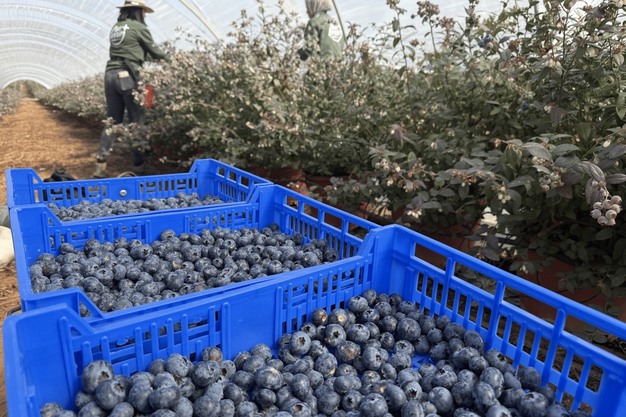
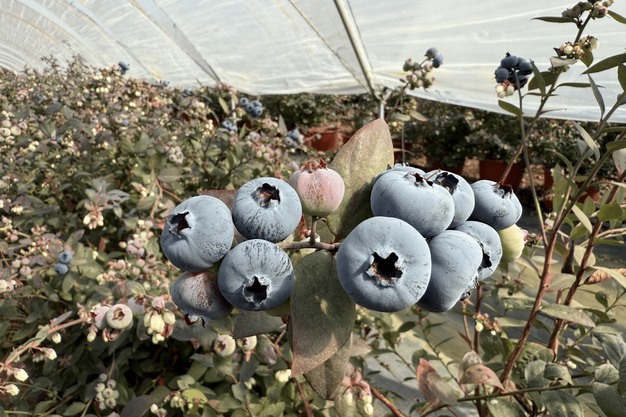
The Berryway grading machine attracted the attention of visitors, as it offers a complete solution for post-harvest blueberries, combining delicate handling with high-precision sorting. “The Berryway is designed to handle blueberries with the utmost delicacy. Each line takes care of the berries to limit shocks and guarantee the integrity of the fruit,” explains Fabrice Blanc, managing director of Maf Roda. Modular from two to eighteen lines, processing 160 to 200 kg of blueberries/hour/line at an average weight of 2g per fruit, Berryscan is equally suited to small-scale producers and industrial structures.

The Berryscan module enhances this performance with particularly accurate multispectral optical sorting. Taking 360° photos of each berry, it analyzes color, shape, and external quality, while detecting defects such as soft, dehydrated, or damaged fruit. “Thanks to Insight technology, we can measure sugar levels to guarantee a consistent, tasty product,” explains Fabrice Blanc. Based on artificial intelligence, the software makes it possible to fine-tune the sorting criteria (shape, firmness, size, Brix) and automate the entire process right through to packaging.

Already widely deployed internationally – from the United States to South Africa, via Eastern Europe – the solution is now attracting considerable interest in France. “Demand for high-performance, automated sorting lines is growing strongly,” observes Fabrice Blanc. By reducing dependence on manual sorting while maximizing final quality, Berryway and Berryscan are positioning themselves as essential tools for growers looking to improve precision, productivity, and added value.

An asparagus grading machine for high-precision associativity
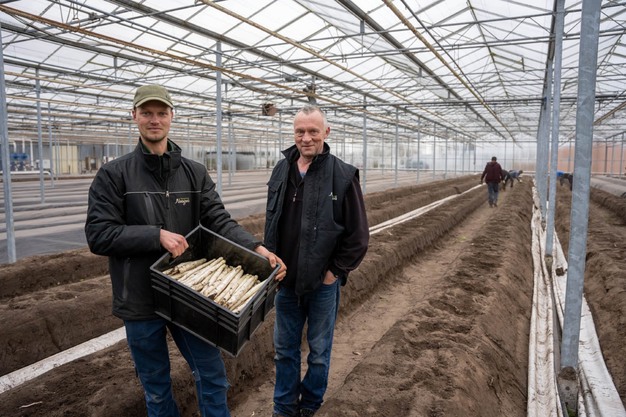
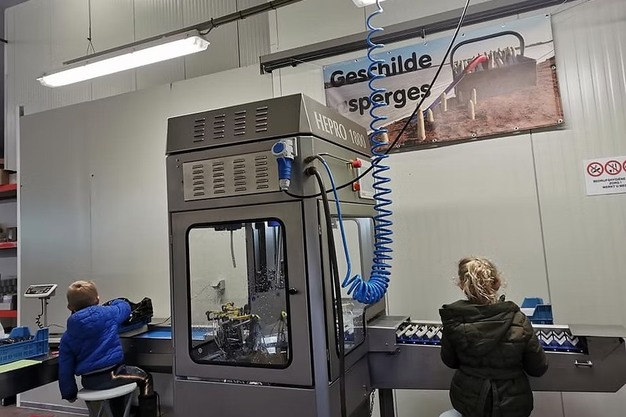
Since acquiring the German company Strauss, Maf-Roda has also been offering a complete range of solutions for asparagus, from harvesting to packaging, including grading and weighing. At the IAD-IBD trade fair, it was the grading machine for white and green asparagus that was presented. “In this sector too, we can offer turnkey solutions that can be adapted to any type of structure,” explains Fabrice Blanc.

These solutions are all the more appreciated in this particularly labor-intensive sector, since no human intervention is required, apart from receiving the packaged product. “We were the first to automate bundling. Our grading machine enables us to achieve high associativity accuracy, to +/- 4g on the bundle. The capacity of our machines ranges from 800kg/1.2T to 2T/h.” Another special feature of the Strauss-Maf-Roda grading machines is their high-pressure washing system. This is a definite advantage for products that come straight out of the ground, such as asparagus, which is contaminated by the sand that slips into its scales.

The asparagus grading machine presented at the show can also be adapted to leeks, zucchinis, and rhubarb.

For more information:
Christophe Nivet
Maf-Roda
Phone: +33 5 63 63 27 70 Publication date: Wed 26 Nov 2025

“We began a major expansion that will bring us to nearly 50 hectares”Raspberries and blackberries production grown in hydroponic tunnels at BigRed berry farm by FreshPlaza

Raspberries and blackberries production grown in hydroponic tunnels

“We began a major expansion that will bring us to nearly 50 hectares”

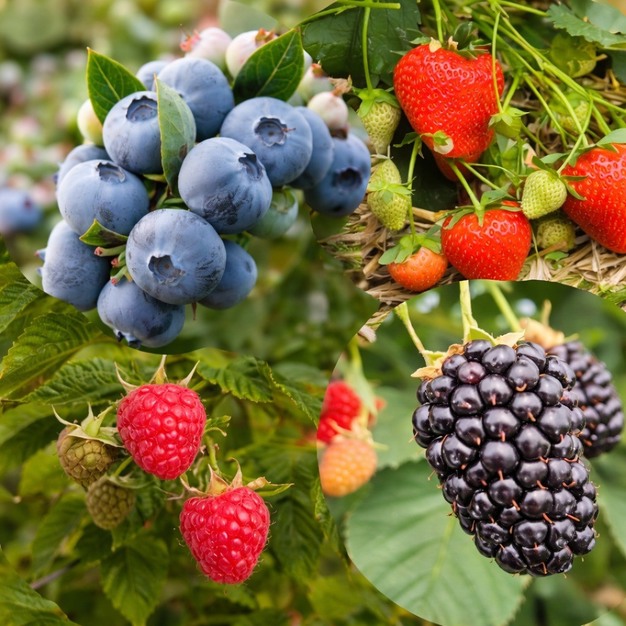
A major expansion is underway for a Polish soft fruit producer, as the company is increasing acreage for both raspberries and blackberries, says Oleh Naumenko, CEO and co-owner of Polish soft fruit producer BigRed berry farm: “Our raspberry and blackberry projects have grown very dynamically. In 2023, we started with a pilot project in Poland, about 7.5 hectares of fully hydroponic tunnels near the German border. We tested different varieties of raspberries and blackberries and saw strong market demand. By 2025, we began a major expansion that will eventually bring us to nearly 50 hectares of hydroponic tunnels. We’re adding around 45 hectares of raspberries and 5 hectares of blackberries, bringing us to nearly 60 hectares total.”

In recent years, overall demand for soft fruit has been in the lift according to Naumenko, which has also resulted in better prices for the produce. “We’ve seen steadily growing demand and gradually rising prices. During the summer season in Poland, there are weeks when berries are scarce on the market and competition is low, allowing us to operate profitably.”

Naumenko emphasizes that their high-tech way of growing the raspberries and blackberries is the future for growing premium berries: “Hydroponic systems are easy to manage and very efficient in terms of yield and quality. They let us control climate and irrigation automatically, which is the future of premium berry production. In 2025, we built the core infrastructure and added 12 hectares of tunnels. In 2026, we’ll add another 15 to 20 hectares, and in 2027, another 15 to 20 hectares. We’re also launching a separate project for our own long canes.”

BigRed berry farm isn’t just growing the soft fruit, they’re also growing in the post-harvest process, working together with a well-known player in the industry: “We’re also expanding in terms of logistics, packaging, and sales. We’re working closely with Berry Group, which ensures smooth distribution and good pricing. Together, we’re ready to handle about 1,500 tons of berries for the European market and local sales in Poland,” Naumenko concludes.

For more information:
Oleh Naumenko
BigRed berry farm
Tel: +48 573 490 247 (🇵🇱)
Tel: +38 067 673 22 99 (🇺🇦)
bigredfarmpl@gmail.com
www.bigredfarm.net

The rush to grow strawberries in Egypt results in falling prices by FreshPlaza and Fruit.Farm

The rush to grow strawberries in Egypt results in falling prices

The first Egyptian strawberries of the season are hitting the market. The industry is emerging from a difficult planting period, marked by issues with seedling quality, only to face a decline in value. However, according to several growers, export volumes this season are expected to reach record highs.

Amr Kadah, export manager at Fruit.Farm, sums up the situation: “The strawberry acreage in Egypt has increased dramatically this year. Growers rushed to cultivate strawberries, and the total area increased by 35% to reach more than 100,000 feddans (1 feddan = 0.43 ha). This has been accompanied by widespread problems with the supply of good-quality seedlings, necessitating extensive replanting. We are now seeing huge volumes and very low prices at the start of the season.”

This craze for strawberries has naturally led to fierce competition among Egyptian exporters themselves. Kadah says, “Despite increased production and transportation costs, prices for fresh strawberries are now lower than last season.”

“Strange strawberry season. We are barely two weeks in, and already we are witnessing a masquerade in the markets. I do not understand how a box of strawberries can be exported at half its cost to Gulf countries,” an Egyptian exporter rants on LinkedIn.

Kadah comments, “This is the inevitable result of the large expansion in acreage and the big jump in volumes. We expect to exceed 550,000 tons exported in a single season, in both fresh and frozen strawberries.”

According to the exporter, strong demand and greater market diversification will help sustain the export campaign. He explains, “We expect a large increase in exports to China, which has exempted Egyptian exports from customs duties. China will join markets that import Egyptian strawberries in large quantities, such as Arab countries, Europe, and Russia.”

“Egypt is therefore set to remain at the top of the podium as the leading exporter of strawberries for the fourth consecutive year, despite strong competition, surpassing all other sources such as China, the United States, Mexico, Chile, Turkey, Morocco, and Spain, thanks to unbeatable prices,” the exporter continues.

According to Kadah, this season’s Egyptian production is dominated by the Florida, Sweet Sensation, Fortuna, and Festival varieties. He concludes: “We strive to offer our partners in all regions of the world the variety they want, at competitive prices and with impeccable quality.”

For more information:
Amr Kadah
Fruit.Farm
Tel: +201009288377
Email: amr.kadah@mail.ru

Asparagus industry in E.China’s Jiangxi shows international human rights officials path to poverty relief (Web editor: Zhong Wenxing, Liang Jun)

Asparagus industry in E.China’s Jiangxi shows international human rights officials path to poverty relief

By Li Yawei in Le’an (Global Times) 09:30, November 21, 2025

In Le’an county, East China’s Jiangxi Province, nestled among the mountains, farmers wear contented smiles as they harvest the final batch of asparagus this year. A reporter from the Global Times on Wednesday joined officials in the field of human rights on a tour of this county to witness the vivid practice of safeguarding farmers’ human rights through its asparagus industry.

The Human Rights Action in China – 2025 Jiangxi Tour took place from November 16-23, and was participated by officials, experts, scholars from countries including France, Mexico, Ireland, Switzerland, and China.

During the trip, participants visited Le’an county to observe its specialized asparagus industry. Following six years of development, the local asparagus cultivation area has expanded from 30 mu (approximately 2 hectares) to 2,500 mu, with greenhouse coverage reaching 1,500 mu, making it the largest single asparagus planting base in China, said a local official surnamed Yu.

Although the industry is now thriving, the substantial initial investment and prolonged production cycle deterred local farmers six years ago, said Yu. To address this issue, the local government adopted a contract model, whereby it provided essential production elements such as greenhouses, seeds, and fertilizers, while farmers took charge of daily management.

Yu said farmers can sell their harvested asparagus to local enterprises at a price of 0.6 ($0.08) to 0.8 yuan per jin (0.5 kilograms).

David Lopez, Permanent Representative and Consultant in Human Rights of International Association for Human Rights and Social Development, told the Global Times on Wednesday that the government assumes primary responsibility for the initial investments and natural market risks, liberating farmers from the high-risk, capital-intensive predicament and enabling them to work and earn within a relatively secure environment.

In addition to sales revenue, the local government also provides farmers with a monthly minimum income of 2,700 yuan, Yu said.

David said the guaranteed income provided by the government functions as a safety net by ensuring stable and predictable cash flow for locals. “This effectively safeguards the basic living expenses of farming households and prevents the risk of seasonal poverty,” he added.

Tiny stalks of asparagus have now become a source of income for the local villagers. The county’s asparagus sales reached 6-million-yuan last year, with products mainly distributed across the country, as well as exported to Europe and Southeast Asian countries, according to local government.

“The work is flexible, close to home, and the pay is decent,” Chen Chahua, a 64-year-old local villager, told the Global Times on Wednesday. “During the peak asparagus season this year, I earned 6,000 yuan in a single month,” she said with a smile.

“The better farmers manage the asparagus, the higher the yield, and the more income they earn,” Yu said.

Linking farmers’ income directly to their output stimulates their labor enthusiasm and creativity, and positions them as direct beneficiaries of their own work outcomes, David said.

During the visit, officials also tasted the last batch of this year’s asparagus. As he ate, David expressed his hope that the asparagus yield would continue to grow steadily next year, bringing further benefits to the local farmers. Yu responded, “This is certain. We have already figured out the methods, we are very confident about it.”

So far, the local asparagus industry has created employment for over 300 farmers, with an average annual income of approximately 40,000 to 50,000 yuan per person, effectively boosting rural household earnings.

David said instead of standing by, the local government innovated mechanisms to address the core challenges faced by farmers who were willing to engage in cultivation but hesitated due to financial constraints or lack of resource. Such effort demonstrates local authority’s efforts to safeguard human rights by resolving the most pressing and practical difficulties in people’s lives, he added.

He also noted that the model goes beyond mere subsidy-based poverty alleviation, enabling famers to achieve stable poverty eradication and long-term development through their own work. It also stands as an example of the internationally advocated principle of “promoting human rights through development,” he added.

(Web editor: Zhong Wenxing, Liang Jun)

Nick Tirado, All Seasons Foods Solutions by FreshPlaza

秘鲁蓝莓季即将结束,葡萄季的开局充满挑战

秘鲁蓝莓季即将结束,正值蓝莓旺季,产量和价格都十分强劲。与此同时,葡萄季也拉开帷幕,但不同地区的葡萄长势不均。Danper Group 下的 All Seasons Foods Solutions (ASF) 首席商务官 Nick Tirado 就此情况进行了详细阐述。ASF 是一家在美国和加拿大进口和分销优质果蔬的公司。

据 Tirado 介绍,秘鲁蓝莓的产量在 10 月份达到高峰,大部分出货将于 11 月和 12 月初结束,但部分小批量出货会持续到 1 月和 2 月。今年,该公司从秘鲁进口到北美的蓝莓数量翻了一番,从约 60 个集装箱增加到约 120 个集装箱。这位高管将强劲的市场表现归功于美国和加拿大消费量的增长、欧洲和墨西哥草莓、覆盆子和黑莓的供应问题,以及南北半球夏季持续时间较长,导致蓝莓周转率持续数周居高不下。

“在 9 月和 10 月期间,品脱的交易价格在 42 美元左右,六盎司装的价格在 25 美元到 28 美元之间。现在,随着市场上水果的增多,价格已调整到较为正常的水平,品脱价格为 24 至 26 美元,六盎司价格约为 14 至 16 美元。由于特大号水果的供应量较少,特大号果的价格更加稳定,” 他说。

在品种方面,ASF 主要种植 Biloxi 和 Madera 品种。今年,该公司增加了 Mágica 品种的产量,这个品种在秘鲁生产中的地位不断提高。

“葡萄的生长受到天气不稳定的影响,尤其是在秘鲁北部,降雨导致采摘延迟,并影响了果实品质。尽管面临这些挑战,但总体而言,预计产量将比去年增长 6% 至 8%。南部地区,例如伊卡,采摘较早,而北部地区则不得不推迟部分地区的采摘,”他强调说。

“目前,绿葡萄需求旺盛,价格在每盎司 30 至 34 美元之间,这主要是由于加州库存量下降以及秘鲁发货延迟。AS F预测,12 月份绿葡萄的售价可能上涨至每盎司 40 美元。与此同时,由于加州供应稳定,以及超市在 12 月底之前不愿更换产地,红葡萄的价格较为稳定,约为每盎司24 至 26 美元。至于价格上涨,预计红葡萄的价格将达到每盎司 34 至 36 美元,”他补充道。

就品种而言,该公司目前主要销售红色品种 Allison 和绿色品种 Arra 15,并计划明年推出 Autumn Crisp 和 Ruby Rush 等新品种。

“在销售渠道方面,我们在北美市场通过多种渠道开展业务。我们估计,约 20% 的总销售额来自加拿大。加拿大市场竞争激烈,容易饱和,因此需要谨慎控制销量。”他说道。

ASF 将参加 NY Show 2025,届时参观者可以了解该公司的产品系列和最新进展。

欲了解更多信息,请联系:
Nick Tirado
All Seasons Foods Solutions (ASF)
电话:+1 941 900 5245
ntirado@aseasonsfs.com

Jorge Arangurí
Danper
秘鲁
电话:+51 44 257484
jaranguri@danper.com
www.danper.com

Nick Tirado, All Seasons Foods Solutions:

秘鲁蓝莓季即将结束,葡萄季的开局充满挑战

秘鲁蓝莓季即将结束,正值蓝莓旺季,产量和价格都十分强劲。与此同时,葡萄季也拉开帷幕,但不同地区的葡萄长势不均。Danper Group 下的 All Seasons Foods Solutions (ASF) 首席商务官 Nick Tirado 就此情况进行了详细阐述。ASF 是一家在美国和加拿大进口和分销优质果蔬的公司。

据 Tirado 介绍,秘鲁蓝莓的产量在 10 月份达到高峰,大部分出货将于 11 月和 12 月初结束,但部分小批量出货会持续到 1 月和 2 月。今年,该公司从秘鲁进口到北美的蓝莓数量翻了一番,从约 60 个集装箱增加到约 120 个集装箱。这位高管将强劲的市场表现归功于美国和加拿大消费量的增长、欧洲和墨西哥草莓、覆盆子和黑莓的供应问题,以及南北半球夏季持续时间较长,导致蓝莓周转率持续数周居高不下。

“在 9 月和 10 月期间,品脱的交易价格在 42 美元左右,六盎司装的价格在 25 美元到 28 美元之间。现在,随着市场上水果的增多,价格已调整到较为正常的水平,品脱价格为 24 至 26 美元,六盎司价格约为 14 至 16 美元。由于特大号水果的供应量较少,特大号果的价格更加稳定,” 他说。

在品种方面,ASF 主要种植 Biloxi 和 Madera 品种。今年,该公司增加了 Mágica 品种的产量,这个品种在秘鲁生产中的地位不断提高。

“葡萄的生长受到天气不稳定的影响,尤其是在秘鲁北部,降雨导致采摘延迟,并影响了果实品质。尽管面临这些挑战,但总体而言,预计产量将比去年增长 6% 至 8%。南部地区,例如伊卡,采摘较早,而北部地区则不得不推迟部分地区的采摘,”他强调说。

“目前,绿葡萄需求旺盛,价格在每盎司 30 至 34 美元之间,这主要是由于加州库存量下降以及秘鲁发货延迟。AS F预测,12 月份绿葡萄的售价可能上涨至每盎司 40 美元。与此同时,由于加州供应稳定,以及超市在 12 月底之前不愿更换产地,红葡萄的价格较为稳定,约为每盎司24 至 26 美元。至于价格上涨,预计红葡萄的价格将达到每盎司 34 至 36 美元,”他补充道。

就品种而言,该公司目前主要销售红色品种 Allison 和绿色品种 Arra 15,并计划明年推出 Autumn Crisp 和 Ruby Rush 等新品种。

“在销售渠道方面,我们在北美市场通过多种渠道开展业务。我们估计,约 20% 的总销售额来自加拿大。加拿大市场竞争激烈,容易饱和,因此需要谨慎控制销量。”他说道。

ASF 将参加 NY Show 2025,届时参观者可以了解该公司的产品系列和最新进展。

欲了解更多信息,请联系:
Nick Tirado
All Seasons Foods Solutions (ASF)
电话:+1 941 900 5245
ntirado@aseasonsfs.com

Jorge Arangurí
Danper
秘鲁
电话:+51 44 257484
jaranguri@danper.com
www.danper.com

The genetic basis of strawberry aroma by Center for Research in Agricultural Genomics and FreshPlaza

The genetic basis of strawberry aroma

Researchers at CRAG have identified the FvHI gene as a key factor in regulating the compounds that shape the fresh aroma of strawberries. Their work shows that this gene modulates the balance of volatile molecules responsible for the fruit’s fragrance. By studying wild strawberry, the team demonstrated that FvHI expression controls the ratio between two important aromatic molecules, which clarifies how the fruit’s signature scent develops. This breakthrough supports the creation of strawberry varieties with better aroma and improved resilience to damage, wounds, and certain pathogens by using natural compounds tied to both flavour and plant defence.

Aroma is one of the most valued traits of strawberries, yet also one of the most complex. It depends on sugars, acidity, texture, and above all, volatile compounds that define the characteristic fragrance. Among these, green leaf volatiles stand out. They provide the fresh, slightly herbaceous notes typical of the most aromatic strawberries.

Cultivated strawberry

Two molecules are central to these qualities: (Z)-3-hexenal, which gives greener notes, and (E)-2-hexenal, which produces fresher and sweeter tones. Until now, the gene responsible for converting one molecule into the other was unknown. The study, carried out by CRAG researchers Rong Zhang, Dylan Nunnally, and Elli Koskella and led by IRTA researcher Amparo Monfort, reveals how this conversion is controlled. Their findings, published in Horticulture Research, explain the mechanism that balances these two compounds and how this knowledge can guide the development of improved strawberry varieties.

Researchers confirmed that differences in strawberry aroma are driven by how the FvHI gene is regulated rather than by changes in the protein it encodes. When FvHI expression is low, (Z)-3-hexenal rises, strengthening green notes. When expression is high, (E)-2-hexenal increases, creating a sweeter aroma. This shows that FvHI acts as a molecular switch that shapes the final smell and taste of the fruit.

Wild strawberry

To uncover this mechanism, the team worked with nearly isogenic lines, which are genetically similar except for a specific genomic region. These lines came from a cross between diploid strawberry species. This approach made it possible to isolate the gene responsible for aroma and validate its function. According to Monfort, this strategy is especially useful because cultivated strawberry is an octoploid crop with eight sets of chromosomes, which complicates genetic studies. Its wild relative, Fragaria vesca, has a simpler diploid genome but still shares much of its architecture with commercial strawberry, making it an ideal research model.

The compounds involved in this aroma pathway also play a role in the plant’s response to damage and wounds. Understanding how these molecules are regulated not only improves fruit quality but also opens the door to enhancing natural plant defences.

The results provide new tools to guide breeding efforts toward varieties with flavours that consumers appreciate most. Aroma is a core part of taste, along with the balance of sugars and acids, and this research lays the groundwork for strawberries with fresher and more balanced profiles. Beyond flavour, the green leaf volatiles studied here are essential to a plant’s natural defence system. This discovery supports the development of fruit with improved aroma and the creation of crops that are more resilient and less reliant on chemical treatments, helping move agriculture toward more sustainable practices.

View the full study here.

For more information:
Center for Research in Agricultural Genomics

« Des volumes records de myrtilles péruviennes étonnamment bien absorbés par le marché européen » par Debra van den Oever, de Berries Pride (Pays-Bas) et FreshPlaza

Debra van den Oever, de Berries Pride (Pays-Bas) :

« Des volumes records de myrtilles péruviennes étonnamment bien absorbés par le marché européen »

Après le passage d’El Niño et la saison qui l’a suivi, on s’attendait cette année à des volumes monstres de myrtilles au Pérou. « Les deux dernières saisons, les prix ont été extrêmement élevés en septembre et en octobre. Tout le monde était donc prêt pour une année normale, avec une bonne offre », explique Debra van den Oever de Berries Pride à De Lier. « Au début de la saison, on a même craint de ne pas pouvoir écouler ces volumes, mais à la surprise générale, ceci s’est avéré complètement injustifié. Nous avons obtenu de très bons prix et certaines semaines même plus élevés en Europe qu’en Amérique et en Chine. Vers la semaine 35, les baies de calibre 14+ à forte acidité conditionnées en 12×125 g se vendaient 4 à 6 $/kg FOB en Chine et 7 à 9 $/kg sur le marché néerlandais. »

Jose Castilla de los Santos, Debra van den Oever et Michael Aagaard de Berries Pride

Un potentiel infini
« Avec les bonnes productions, cela conduit à une augmentation énorme de 48 % des myrtilles envoyées du Pérou vers l’Europe par rapport à 2024. Ces volumes ont été étonnamment bien absorbés. Cela montre que la consommation de myrtilles continue de croître. Le potentiel des myrtilles est infini à mon avis. Il y a encore beaucoup de marchés qui ne connaissent pas ce produit et de plus en plus de pays émergents le commercialisent. Par exemple, dans un pays comme l’Ouzbékistan, les myrtilles viennent à peine d’apparaître. Là-bas pour l’instant, les myrtilles sont encore considérées comme un produit de luxe, mais dès que nous commencerons à nous adresser à d’autres groupes cibles, les volumes augmenteront et la consommation pourra croître considérablement. »

« Cet été, lorsqu’il est apparu que que le Pérou entrerait sur le marché avec des volumes importants, les détaillants européens ont bien réagi en planifiant des promotions. Cela reste crucial, car il ne faut pas que ces volumes supplémentaires se retrouvent sur le marché au comptant. C’est surtout en Allemagne, qui est un gros acheteur, qu’il y a eu un grand nombre de promotions. Les myrtilles sont de plus en plus souvent proposées dans de gros emballages, comme en 500 g et en 750 g ou même 1 kg en Allemagne. Ce dernier est idéal pour les familles. Nous emballons nos myrtilles d’importation aux Pays-Bas avec nos machines, mais pendant la saison espagnole et marocaine, les producteurs conditionnent eux-mêmes directement dans le champ, ce qui réduit les manipulations et les coûts. »

Répondre aux préférences gustatives des consommateurs
« Au Pérou, la saison a commencé tranquillement car la production de myrtilles Ventura avait un peu ralenti. Cette variété reste la plus connue, et ce qui est formidable, c’est qu’aujourd’hui, grâce aux nouvelles variétés, nous pouvons aussi répondre de plus en plus aux préférences gustatives des consommateurs. Aujourd’hui, nous vendons aussi beaucoup de Sekoya Pop, pour les clients qui préfèrent les baies croquantes. Nous proposons Bianca pour les clients qui préfèrent les petits fruits sucrées et Abril pour ceux qui recherchent une bouchée aromatique. Cela nous permet de répondre aux besoins de chaque marché de manière personnalisée. Le marché scandinave, par exemple, préfère les baies fermes avec un peu d’acidité, tandis qu’en Europe de l’Est, les consommateurs préfèrent les petits fruits plus sucrées. L’avantage du Pérou, c’est que l’on peut replanter rapidement, de sorte que les nouvelles variétés – qui sont souvent plus résistantes aux changements climatiques – sont disponibles sur le marché dans un délai relativement court. »

Ventura et Sekoya Pop

« Cette année, le Pérou a connu une forte humidité en mai, juin et juillet. Par conséquent, les plantes se sont physiologiquement physiologiquement très lentement et sont entrées en dormance. En fonction de la variété et du calibre, nous constatons aujourd’hui que les volumes chutent plus fortement que prévu et que, par conséquent, nous n’obtiendrons peut-être plus les volumes escomptés au départ. Chaque variété réagit différemment. Avec Ventura en particulier, la deuxième floraison semble moins abondante et la productivité a diminué. C’est aussi la raison pour laquelle certains producteurs ont déjà décidé de tailler. »

Berries Pride s’engage pleinement à étendre les zones de culture au nord et au sud. « Pas moins de 70 % de la culture a lieu dans le nord, mais nous avons consciemment choisi d’avoir un bon équilibre entre le nord et le sud, où le climat est différent. C’est ainsi que nous avons pu avoir de bons volumes, même pendant El Nino. »

De quelques boîtes en 2013 à 3 millions de kilos
En peu de temps, le Pérou est devenu le premier exportateur mondial de myrtilles. « Cette année, le Pérou compte une superficie totale de 26 000 hectares de plants. De nouvelles parcelles d’essai sont créées à raison de 100 hectares à chaque fois. C’est pourquoi le développement est si rapide », explique van den Oever, qui, de père néerlandais et de mère péruvienne, a un lien naturel avec les deux pays. « J’adore être témoin de ce développement. Nous avons commencé avec quelques boîtes au Pérou en 2013 et nous nous dirigeons maintenant vers les 3 millions de kg par an. Berries Pride essaie de se différencier avec de nouvelles variétés et catégories. Cette année, nous avons lancé les baies 20 et 22+, qui répondent spécifiquement aux préférences gustatives des clients et aux applications, telles que les enfants ou la consommation nomade. Par ailleurs, nos clients grossistes préfèrent souvent des fruits un peu plus gros. »

Par ailleurs, la saison des myrtilles chiliennes arrive à grands pas. « La saison commence une semaine plus tôt et les volumes les plus importants en provenance du Chili arriveront entre les semaines 4 et 7. Nous ne nous approvisionnons plus nous-mêmes au Chili, car nous avons réussi à faire le lien entre le Pérou et le Maroc il y a quatre ans. Cette solution nous convient parfaitement en raison de la qualité et de la logistique constantes du Pérou. Compte tenu de la baisse de l’offre en provenance du Pérou, nous nous attendons à une bonne transition. Du Chili, nous prévoyons une saison similaire à celle de l’année dernière, bien que cela dépende également de la demande du marché américain. » Aux Pays-Bas, il est difficile de jouer un rôle dans l’exportation des myrtilles d’Amérique latine vers le marché chinois. « De nombreux producteurs y ont eux-mêmes des bureaux. Et avec le nouveau port de Chancay, le temps de transit Pérou-Chine a diminué de manière significative. Auparavant, cela pouvait prendre jusqu’à 40 jours avec des retards, alors qu’aujourd’hui, ce délai a été ramené à un peu plus de trois semaines. Je pense que l’unicité du marché chinois réside dans le fait qu’ils sont les plus honnêtes et les plus transparents sur ce qu’ils pensent de la valeur des baies. Ils n’apprécient pas les fruits acides et si vous leur en fournissez, vous êtes fini !. »

Better Together
« Chez Berries Pride, la durabilité fait partie de notre ADN. Nous continuons à étudier l’impact du climat, de l’eau et de l’environnement dans les pays où nous nous approvisionnons. Notre slogan Better Together sous-entend l’attention que nous portons aux personnes et à la nature. Nous apprécions chaque jour de magnifiques produits provenant du monde entier et nous nous sentons donc responsables de veiller à ce que les générations futures puissent continuer à en faire autant. Chaque nouveau partenariat doit reposer sur des bases solides. Nos producteurs partenaires sont désormais certifiés à 99,8 % sur le plan social et à 95 % en ce qui concerne la gestion de l’eau. Mais nous allons plus loin que les seules certifications. Entre autres choses, nous avons fait procéder à un contrôle préalable des droits de l’homme et de l’environnement avec l’aide d’une organisation indépendante dans les pays à haut risque où nous nous approvisionnons, afin d’identifier les principaux défis à relever dans chaque pays. L’accès à l’eau potable dans les communautés locales est l’une des questions qui est ressortie avec force dans plusieurs pays. Avec un producteur de myrtilles et d’avocats au Pérou, nous avons lancé un projet sur la manière dont nous pouvons améliorer l’eau, l’assainissement et l’hygiène dans les conditions de vie des communautés locales. Nous ne pouvons pas toujours faire la différence seuls, mais ensemble si ! »

Pour plus d’informations :
Debra van den Oever
Berries Pride
Tél. : +31 174527517 / +31 611477389
debra.vandenoever@berriespride.nl
www.berriespride.nl

Berryway et Optisort de Maf Roda :

Quand l’automatisation vient soutenir les producteurs de myrtilles et d’asperges avec le groupe Maf-Roda lors des International Asparagus & Berries Days par FreshPlaza

Berryway et Optisort de Maf Roda :

Quand l’automatisation vient soutenir les producteurs de myrtilles et d’asperges

A l’occasion du salon IAD – IBD qui s’est tenu le mois dernier dans la région bordelaise, le Groupe Maf-Roda – sponsor Platinium de l’évènement – est venu présenter ses solutions de tri et calibrage destinées aux fruits rouges et aux asperges. Deux installations qui ne sont pas passées inaperçu.

Berryway et Berryscan : une technologie à la pointe qui permet une grande précision dans le tri tout en respectant le fruit
Ainsi, la calibreuse Berryway a attiré l’attention des visiteurs, puisqu’elle constitue une solution complète pour le post‑récolte des myrtilles, alliant délicatesse dans la manipulation et grande précision dans le tri. « La Berryway est conçue pour traiter les myrtilles avec le maximum de délicatesse. Chaque ligne prend soin des fruits pour limiter les chocs et garantir leur intégrité », explique Fabrice Blanc, directeur général de Maf Roda. Modulable de deux à dix-huit lignes, chacune traitant 160 à 200 kg de myrtilles/heure/ligne pour un poids moyen de 2g par fruit, Berryscan s’adapte aussi bien aux petits producteurs qu’aux structures industrielles.

Le module Berryscan vient renforcer cette performance grâce à un tri optique multispectral particulièrement précis. Photographiant chaque baie sur 360°, il analyse couleur, forme et qualité externe, tout en détectant les défauts comme les fruits mous, déshydratés ou abîmés. « Grâce à la technologie Insight, nous pouvons mesurer le taux de sucre pour garantir un produit constant et savoureux », précise Fabrice Blanc. Basé sur l’intelligence artificielle, le logiciel permet d’ajuster finement les critères de tri (forme, fermeté, taille, Brix) et d’automatiser l’ensemble du processus jusqu’au conditionnement.

Déjà largement déployée à l’international – des États-Unis à l’Afrique du Sud en passant par l’Europe de l’Est – la solution suscite désormais un intérêt marqué en France. « La demande pour des lignes de tri performantes et automatisées progresse fortement », observe Fabrice Blanc. En réduisant la dépendance au tri manuel tout en maximisant la qualité finale, Berryway et Berryscan se positionnent comme des outils indispensables pour les producteurs cherchant à gagner en précision, en productivité et en valeur ajoutée.

Une calibreuse à asperges permettant une grande précision dans l’associativité
Côté asperges, Maf-Roda propose également depuis l’acquisition de la société allemande Strauss, une gamme de solutions complète, allant de l’aide à la récolte au conditionnement en passant par le calibrage et le pesage. Au salon, ce fut la calibreuse pour asperges blanches et vertes qui fut présentée : « Dans cette filière aussi, nous pouvons proposer des solutions clé-en-main qui s’adaptent à tout type de structure », précise Fabrice Blanc.

Des solutions d’autant plus appréciées dans un secteur particulièrement gourmand en main d’œuvre, puisqu’aucune intervention humaine n’est requise, si ce n’est la réception du produit une fois conditionné. « Nous sommes les premiers à faire de l’automatisation en bottes. Notre calibreuse permet d’avoir une grande précision dans l’associativité, à +/- 4g sur la botte. La capacité de nos machines s’étend de 800kg/ 1,2T à 2T/h ». Une autre particularité des calibreuses Strauss – Maf-Roda, réside dans l’efficacité du lavage qui se fait à haute-pression. Un atout certain pour des produits sortant directement du sol tels que les asperges, souillées par le sable qui se glisse dans leurs écailles.

A noter que la calibreuse à asperges présentée à l’occasion du salon peut également être adaptée à la production de poireaux, de courgettes mais aussi de rhubarbe.

Pour plus d’informations :
Christophe Nivet
Maf-Roda
Tél. : +33 5 63 63 27 70

Photo Report: 29th expoSE/expoDirekt:

“We see, especially here in Germany, a steady trend from open field strawberries to covered cultivation” by FreshPlaza Photo Report: 29th expoSE/expoDirekt:

“We see, especially here in Germany, a steady trend from open field strawberries to covered cultivation”

“We see, especially here in Germany, a steady trend from open field strawberries to covered cultivation. This was the main reason for us to participate, as many soft fruit growers do traditionally come to Karlsruhe.” That’s what the team with Looije Agro Technics shared when asked about their debut on the expoSE / expoDirekt, which took place this week in Karlsruhe, Germany. The trade show, focusing on the strawberry and asparagus, have broadened considerably, and again counted 60 companies making their debut, resulting in a mix of traditional suppliers and, more and more, greenhouse companies. For example, an international supplier may be positioned next to a local farm shop. “But oh well, that is also the charm of this event,” one exhibitor aptly summed up the uniqueness of the expoSE/expoDirekt.

On both days, it was pleasantly busy in both exhibition halls where 426 exhibitors from 16 countries presented their novelties and products. Most exhibitors are still from Germany and the Netherlands, although French, Polish, Italian, Spanish and some Eastern Europeans also took part.

New exhibitors predominantly positive
At the same time, there are also exhibitors who return after several years, including machine supplier Top Control from South Tyrol. “For us, it may have been 10 years since we last had our own stand. Back then, we still had a limited portfolio, which put us a bit out of place here. Meanwhile, we have grown fast and this is just the perfect platform for us. So, we’ll definitely come back next year.”

Covered soft fruit growing on the rise, asparagus growing in transition
As some exhibitors point out, protected growing is on a steady rise, particularly in Germany, but also in other countries in western and central Europe. Consequently, due to the disappearance of traditional outdoor growing and the scaling up of mostly smaller, but more efficient crops on racks and under foil tunnels, the total protected acreage is declining. Growers who do not keep up with the pace of change will eventually mostly disappear, experts and suppliers predict.

Meanwhile, a similar development is taking place within the asparagus sector. “Previously, you could still see growers literally and figuratively letting older plots bloom. Nowadays, these kinds of plots go out earlier and are replanted, mostly with more modern varieties,” reports one planting material supplier. In terms of variety innovation, however, things are not keeping up: Limgroup took the opportunity to present the new variety Ruralim and Enza Zaden is also working on a new variety for North-West European cultivation, which will be marketed from next season and has no official name as yet.

Sustainable packaging alternatives needed
A hot topic in the sector at the moment is the dreaded PPWR packaging law, effective from 2030 across the EU. Suppliers are already responding to this after several years without too many innovations with new, sustainable packaging and are massively calling on the industry to switch to PPWR-compliant packaging and associated machinery in time. This necessary switchover is also expected to continue in the coming years until its official introduction on 1-1-2030, although the urgency does not yet seem to have dawned on everyone, suppliers said.

Click here for the photo report

For more information:
https://www.expo-se.de/ Publication date: Fri 21 Nov 2025

© FreshPlaza.com / Hugo Huijbers