Three new blackberry varieties added to berry breeding portfolio
Planasa will present developments from its breeding programs at Fruit AttractionThe presentation will include additions to its berry varietal range, including three blackberry varieties.
Black Rainier® and Black Iguazú® are two thornless blackberry varieties developed for yield and fruit quality, with applications in the snacking category. Black Yosemite® has been developed for growing conditions in Mexico, with characteristics including earliness and shelf life.
In blueberries, Blue Madeira® and Blue Maldiva® recently received the Superior Taste Award from the International Taste Institute. Blue Madeira® has been selected for firmness, shelf life and flavour, while Blue Maldiva combines large calibre, flavour and yield. Blue Malibú® and Blue Manila® are also part of the breeding program, which is active in markets including Spain, Portugal, Morocco, Mexico, Peru, China and South Africa.
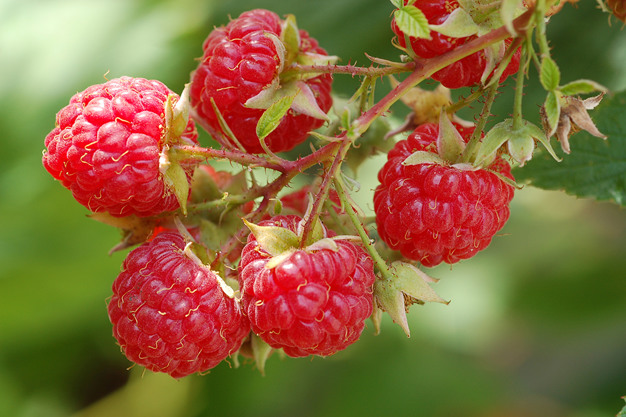
The raspberry program includes Pink Hudson®, which also received the Superior Taste Award, as well as Adelita for winter cultivation and Pink Loira®, introduced last year. Pink Loira® is being grown in areas including Portugal.
The ABB raspberry breeding program will also be represented. Its varieties include Malaika®, a firm raspberry with a shelf life of around 14 days and applications in the snacking category.
For strawberries, RedSayra® was the most widely planted strawberry variety in Spain during the previous season. Its characteristics include earliness, yield and sensory quality. Red Samantha® is a seasonal strawberry focused on flavour. Several advanced selections being evaluated in northern Spain will also be presented.
Planasa’s breeding programs consider requirements from growers, retailers and consumers across different growing regions. Selection parameters include yield, quality, flavour, calibre, firmness, shelf life and ease of harvesting.
The company’s activities also cover endive, garlic, asparagus and avocado. Sweetcorn has been added following the Planasa Group’s recent acquisition of U.S.-based IFSI.
Planasa will be at Fruit Attraction, Hall 9, stand 9F02.
Blueberry grower expands Greek operation and starts production in Turkey
Greek fresh produce exporter Yaka has expanded its blueberry activities in recent years following an extensive period of research and development. The company started trials with different varieties and cultivation systems before establishing a commercial operation in Komotini, Greece, in 2024.
“In the period of 2020-2023, we started our research and development works about the blueberry cultivation. We visited many farms in different countries, and then we started trials with 15 different varieties planted in both soil and pots with different substrates, different types of pots, different irrigation systems, and operated with different fertigation recipes,” says Onur Mustafa Ahmet, general manager of Yaka.
Following the trials, the company selected the combination it considered most suitable and began investing in Greece. “After 2023 and our observations, we decided to invest with the most suitable combination of all those and started our investment in Greece in Komotini in 2024 as Blue Farm company. As of now, we have planted 40,000 plants, and we are the largest blueberry farm in Greece, and our investment still continues. The target is to reach 70,000 plants,” Ahmet explains.
The expansion has also crossed the border into Turkey, where Yaka has started a second blueberry investment based on the experience gained in Greece. “Besides that, we started another blueberry investment in Turkey in Ipsala this year, with the same infrastructure based on our experience and know-how obtained in Greece. The target there is to reach 150,000 plants, and long-term, to become the largest blueberry farm in Turkey as well.”
The Greek operation delivered around 50 tons in its second year of plantation, with Ahmet highlighting both the volume and the size achieved: “This year’s production in Greece was very fruitful, and we dominated the Greek market during the season, in June and July. Also, the product quality was very good in terms of sizes, between 20-22mm. We grew about 50 tons in our second year on the plantation. Next year we expect to double it and also export these berries from Greece.”
Expanding across the border The decision to establish a Turkish operation is linked in part to the different weather conditions, Ahmet says. “The largest advantage for us is the weather, because it permits us to have crops where the supply is at a minimum in Europe, which is mainly in June. With Greek production, we plan to dominate the Greek market and export to Europe, and with Turkish production we plan to dominate the Turkish market and export mostly to the East.”
“All experience and know-how is made in Greek side, thanks to our agronomists, which they feed with that knowledge to the border company in Turkey who now make newly the investment anew, from establishing the pots and planting until their care and irrigation-fertigation. Both companies work like sister companies, sharing all data and knowledge. Their distance is just 100km.”
The expansion is not limited to cultivation. Yaka also plans to develop packing, sorting, and warehouse infrastructure in Turkey, complementing the facilities already available in Greece. “On the Turkey side, besides blueberry cultivation, there will be investment for a packaging-sorting-warehouse facilities too. On the Greece side, we already have Yaka company facilities which have packaging-sorting-warehouse. In both facilities, we plan to invest in blueberry machinery too, from optical calibrators to weighers.”
Managing blueberry production in pots Growing blueberries in pots presents its own technical challenges, particularly because the plants are more sensitive to changes in their growing environment. “The major challenge is blueberry cultivation in pots which, because there is no soil, is very sensitive to changes and because of that you need to keep track of all the details and elements very frequently in order to be able to make changes quickly whenever required.”
The company’s irrigation and fertigation infrastructure is designed to help respond to these changes, with sensors and automation providing more control over the growing conditions. “Our irrigation-fertigation system with many sensors and its automatization settings help very much on that. Of course, our agronomists are also important because they have experience. The most significant proof of this was that we reached 20- 22 mm sizes not only on prime varieties but also on varieties like classical Duke, and that only shows the success of our system. We still continue our R&D work all the time, by trying new varieties and different pruning methods in order to observe new potentials.”
For more information: Onur Mustafa Ahmet YAKA Tel: +30 2531 082 800 Mobile: +30 694 878 5259 Email: onurma@yaka.gr www.yaka.gr
Huelva’s berry sector weathers a difficult season with mixed results across crops
The 2025/26 berry season in Andalusia was defined by difficult weather conditions throughout much of the production cycle, particularly between October and mid-February, when a succession of storms cut the first raspberry harvest and also affected strawberry production, while causing damage to infrastructure and polytunnels. With Spanish supply limited during those months, a larger share of harvested fruit stayed in the domestic market and in Portugal due to the quality risks associated with export, while other producing countries took advantage of reduced Spanish availability to strengthen their position in international markets.
These are the findings of the 2025/26 Berry Sector Campaign Summary, published by the Price and Market Observatory of the Junta de Andalucía, which places virtually all of Andalusia’s berry production in the province of Huelva. In 2025, the province’s protected cropping area reached 15,278 hectares and remained relatively stable compared to recent years, with a high concentration in the Condado Litoral and Costa districts. For the 2025/26 season, Andalusia recorded 6,835 hectares of strawberries, 1,850 of raspberries, and 4,850 of blueberries, representing increases of 3%, 7%, and 2.6% respectively compared to the previous season.
Strawberry production recovers from March onwards For strawberries, improving weather conditions from the second half of March allowed production to recover progressively, and from mid-April, marketed volumes began to exceed those recorded in the same weeks of the previous season. The final balance points to a 2.9% increase in marketed volume, with total Andalusian production reaching 325,500 tonnes, up 2.5% on 2024/25. This increase in supply subsequently helped moderate prices in a market where Spanish fruit competed with product from other origins.
Between March and April, 69.3% of the season’s strawberries were marketed, and although for much of the cycle farmgate prices remained above the average of the previous three seasons, the drop recorded from the second half of March left the final average price at a level similar to 2024/25, with a reduction of 0.8%. Performance varied by format, however: strawberries in standard packs, which accounted for 81% of marketed volume, achieved an average price of €1.94/kg, down 3.8%, while specialty lines recorded an average increase of 6.7%.
Strawberry exports grow 3.2% Andalusian strawberry exports trended upward between December and June, reaching 216,771 tonnes, up 3.2% on the previous season, with a value of €677 million, 1.7% higher. Germany accounted for 26% of the export value, followed by the United Kingdom, France, and Italy. At the same time, imports fell sharply to 1,719 tonnes, down 38%, while their value dropped 47%; Morocco was the main source of these imports.
Raspberries lose volume but improve prices Raspberries followed a different trajectory. The autumn crop came in well below the previous season due to weather conditions, although the recovery recorded during the second crop offset a significant portion of the losses, leaving marketed volume approximately 1% below the previous year. In return, prices remained at elevated levels for virtually the entire season.
The average farmgate price for raspberries reached €8.09/kg, up 13.8% on 2024/25, and for almost the entire cycle it remained above the average of recent seasons. Exports, however, fell 6.2% in volume to 43,795 tonnes, and 4.7% in value to around €408 million. Germany remained the leading market by value, with a 30% share.
Blueberries increase production and price despite harvest delay For blueberries, the introduction of early varieties allowed harvesting to begin promptly, although the storms reduced production from March onwards and pushed the peak harvest back to the second half of May. Despite this, marketed volume ended up 5.6% above the previous season, with total Andalusian production reaching 68,500 tonnes.
Prices also moved in a positive direction: the average farmgate price for blueberries rose to €5.47/kg, up 9.6% year-on-year, with 55.4% of marketed volume concentrated between April and May. In trade terms, however, exports fell 4.4% in volume to 68,856 tonnes and 2.6% in value, while imports grew 16% to 17,090 tonnes and 25% in value. Morocco accounted for 89% of blueberry import value.
An uneven season across crops Overall, the season leaves a mixed picture across crops: strawberries and blueberries increased their production, raspberries closed slightly below the previous year in volume, while prices moved particularly strongly upward for raspberries and blueberries, a season shaped initially by weather and by shifts in the availability of Spanish product in European markets. Publication date: Mon 21 Sep 2026
Test : un robot capable de lutter contre les agents pathogènes à l’aide de faisceaux de lumière UV-C
La coopérative Sant’Orsola, unique en Italie, figure parmi les cinq entreprises partenaires de Bioconfarm, le projet phare voulu et soutenu par la Commission européenne pour favoriser la diffusion, dans le secteur agricole, de bonnes pratiques axées sur la durabilité et constituant de véritables alternatives à l’utilisation des produits phytosanitaires. Ces pratiques ont été testées et validées par la coopérative elle-même, qui les a présentées au cours de la matinée. C’est ce qu’a annoncé Andreas Moser, responsable du projet européen, en ouvrant vendredi 11 septembre 2026 le premier atelier de Bioconfarm, organisé dans l’auditorium de la coopérative à Cirè di Pergine.
Au cours de la matinée, huit bonnes pratiques testées dans la campagne du Trentin chez des producteurs membres de Sant’Orsola ont été présentées, visant à éliminer l’utilisation de produits phytosanitaires. L’après-midi, ces mêmes pratiques ont été démontrées aux participants à l’atelier dans les parcelles des membres situés en Haute Valsugana. Parmi celles-ci, un robot testé dans les campagnes environnantes de Levico Terme par des membres de la coopérative. Il émet des faisceaux de lumière UV-C capables de contenir et de détruire l’oïdium, la tétranyque rouge et le botrytis, grâce à un principe physique de lutte contre les agents pathogènes et les ravageurs.
Parmi les autres techniques durables présentées figurent la méthode « Attract and Kill » pour lutter contre Drosophila suzukii, l’utilisation de la Lobularia maritima comme plante hôte pour favoriser la présence d’insectes utiles et renforcer la lutte biologique naturelle, l’utilisation du chitosane pour la gestion du botrytis, l’utilisation d’extrait de graines de lupin pour lutter contre l’oïdium de la fraise, l’utilisation d’acide orthosilicique pour améliorer la gestion du botrytis, ainsi que l’utilisation de l’ail comme répulsif naturel pour lutter contre l’antonom.
Sant’Orsola a été choisie pour l’ensemble du secteur des petits fruits du continent afin de servir de « Living Farm Lab » (laboratoire agricole vivant) et de faire partie intégrante du pôle numérique en cours de construction, destiné à rassembler toutes les bonnes pratiques des cinq exploitations européennes participant au projet afin d’en diffuser les connaissances auprès des producteurs européens. Les autres entreprises partenaires sont situées en Espagne (oléiculture), en Allemagne (culture de la pomme de terre et de l’oignon), en France (viticulture) et en Slovaquie (cultures herbacées extensives, notamment le blé, l’orge, le maïs, le tournesol et le colza).
« À Sant’Orsola, des expérimentations sont menées en continu afin de trouver des outils utiles à transposer dans la production en campagne et pour faire face aux changements climatiques et aux évolutions du marché », a rappelé le directeur général Michele Plancher dans son allocution d’ouverture adressée à la centaine de chercheurs venus de divers pays européens, de membres producteurs et de techniciens présents.
Anna Aldrighetti, spécialiste de la protection des petits fruits à Sant’Orsola, référente italienne du projet, organisatrice et animatrice de l’atelier, a expliqué que « Bioconfarm a été créé dans le but de créer un véritable point de rencontre entre la recherche et la production, en testant des solutions et des innovations dans les conditions réelles de culture des petits fruits. Sant’Orsola promeut non seulement un lieu d’expérimentation, mais aussi un espace d’échange, d’apprentissage et de transfert de connaissances, dans le but de contribuer à une agriculture toujours plus durable, résiliente et compétitive ».
Paolo Zucchi, coordinateur du pôle production, recherche et développement de la coopérative, a ajouté : « L’atelier est l’occasion de montrer concrètement ce que Sant’Orsola est par nature : un laboratoire agricole vivant. La recherche trouve une application directe dans les champs des membres, qui, grâce à leurs retours d’expérience, contribuent à orienter ses développements ultérieurs. Un processus de co-création qui permet d’adapter l’innovation aux besoins réels de production et de la rendre toujours plus durable ».
Les difficultés à faire le lien entre le monde de la recherche et de l’expérimentation et les agriculteurs, ainsi que les perspectives d’avenir, ont été au cœur de la table ronde finale animée par Aldrighetti, à laquelle ont participé des techniciens de la Fondation Mach de San Michele all’Adige et des entreprises du secteur.
Living Farm Lab Avec ce projet, Sant’Orsola a pour mission, avec ses 635 exploitations agricoles associées réparties dans cinq régions italiennes, de représenter un modèle innovant de lien entre la recherche, les connaissances et la pratique agricole. Il s’agit d’exploitations agricoles réelles qui deviennent des lieux d’expérimentation appliquée, d’échange et de partage d’expériences, permettant de rapprocher les solutions validées par la recherche des besoins quotidiens des agriculteurs, et d’accélérer ainsi les processus d’innovation.
Le pôle numérique de Sant’Orsola et des partenaires de Bioconfarm est en cours de construction : il sera prêt en 2027.
Bioconfarm développe également une plateforme digitale regroupant toutes les bonnes pratiques (solutions déjà validées) des cinq partenaires européens dans l’objectif de favoriser leur diffusion et leur adoption par les agriculteurs. Elle sera achevée en 2027 et accessible sur les sites web de chaque partenaire du projet.
Pour plus d’informations : Sant’Orsola Soc. Coop. Agricola Tél. : +39 461518111 www.santorsola.com
Demand for larger blueberry packs takes the market beyond the familiar 125g
Paras Pack is heading to Madrid for its first Fruit Attraction with blueberry buckets and tubes among its main talking points, after seeing interest in these formats from growers and packaging distributors in several export markets.
For the packaging manufacturer, the development started with conversations with growers and packaging distributors in Europe, Africa, Latin America and the GCC.
“Based on customer feedback and interactions, we identified a lack of supply of buckets and tubes. That’s what prompted us to develop these two formats,” says Vishal Jain, Managing Director of Paras Pack.
The company has not yet commercialised the formats. Fruit Attraction will be their formal launch, with commercial manufacturing expected to begin in mid-December.
There is a particular reason for the focus on blueberry packaging. Jain points to a shift beyond the familiar 125g format, with interest growing in 200g, 350g and 500g packs and, in some markets, 1kg.
“The shift towards larger blueberry packs is partly being driven by growers’ increasing focus on varieties that produce larger berries,” he explains. “While 125-gram packs remain popular, we expect to see more 200-gram, 350-gram, 500-gram and 1kg formats in the near future. We’re already seeing strong uptake of the 500-gram format, with supply currently unable to keep pace in the markets where our international customers operate.”
Paras Pack’s response includes a sturdy bucket with a PP body and recycled PET lid. Ventilation is provided at the top and bottom, while a handle makes it easier to carry. The company is preparing 250g and 500g versions, with a 1kg bucket still under development.
“The 200g tube, on the other hand, is made from recycled PET and has ventilation holes. Both formats can be branded with pre-printing, while the bucket handle can be produced in different colours,” Jain adds.
For a grower packing blueberries at origin, those details are practical rather than cosmetic, particularly as the fruit moves through increasingly differentiated retail channels. “The pack needs to accommodate the fruit, allow airflow and withstand handling and transport, while also working for how the fruit is sold and positioned, particularly in premium retail.”
Meeting those requirements calls for flexibility in both materials and production. The company combines injection moulding and thermoforming and works with PET, PP and paper, allowing it to develop custom formats suited to the application and end market. Jain says the aim is to bring together three requirements in its packaging solutions: profitability, functionality and sustainability.
The blueberry formats are one example. “At Fruit Attraction, we will also present recycled PET cups for salad dressings and sauces, alongside single-serve bowls with dome lids for snackable produce such as cherry tomatoes, grapes and berries. Usually, the sauce cups are made up of PP, but our range developed with rPET keeps the same functionality intact with improved sustainability credentials,” he shares.
The blueberry formats will initially be made to order, allowing Paras Pack to work with customers on specifications and volumes as commercial supply gets underway.
“The direction we are taking is responding to a specific packaging requirement in the blueberry market while drawing on different materials and production processes to develop the format around the application,” Jain says.
He identifies the Netherlands, Spain, Morocco, Georgia, the GCC, Chile and Peru among the markets showing interest in larger formats, while the GCC is also emerging as a market for larger buckets.
“Our preparation for these export markets includes certified recycled-content documentation, including traceability and verification, along with food-safety and migration compliance to EU and USA standards.”
“Fruit Attraction will be the first opportunity to put our new formats in front of an international fresh produce audience and explore how the interest seen among growers and distributors can translate into regular commercial demand,” Jain concludes.
For more information: Vishal Jain Paras Pack Tel: +91 99 10 207 436 Email: vishaljain@paraspack.in
Azienda Agricola Grossule and Ecofarm Storti: watch the video!
Ozone boosts production of soilless strawberries by 30% at a farm in Verona
In Santa Maria di Zevio (Verona), the farm owned by Andrea and Cristian Grossule has introduced ozone into its soilless strawberry irrigation system, achieving significant results in terms of both yield and quality.
“We grow strawberries using the soilless method across around 10 hectares,” explains Andrea Grossule, “and our decision to adopt this technology was driven by the need to effectively manage the collection of drainage water.”
“We collect all the water, and we used to have problems with bacteria and fungi.” After initially trying UV systems, which were deemed insufficient, the farm opted for ozone due to its ability to sanitise water without leaving residues. The installation of the system required structural work, but was accompanied by ongoing technical support. Once the initial phase was over, the results were evident from the very first production cycle.
“We’ve seen plants with much more energy at the start and greater overall vigour,” continues Grossule. “Improvements have also been observed at root level, with a more developed root system compared to untreated plants.”
According to the company, the action of ozone is not limited to disinfection, but also helps improve water quality in terms of oxygenation, a key factor for root metabolism. From a production perspective, the results are significant: “In the first year, we recorded a yield increase of between 20 and 30%, with an improvement in fruit quality as well.”
Ozone is therefore proving to be a valuable tool for businesses operating in closed-loop systems, where water recovery is a strategic element but also poses a potential health risk. “I recommend giving it a try: in our experience, it has been a positive choice,” concludes Grossule.
Berry grower embraces change to increase efficiency
Simon Dornauf’s family has been growing berries at Hillwood in Tasmania since 2010, and in 16-odd seasons the operation has changed almost beyond recognition.
“We’re basically a family-owned, commercial-scale berry farm operation,” Dornauf says. “We farm all four berry categories for Driscoll’s, which are strawberries, raspberries, blackberries and blueberries.”
Hillwood Berries’ farm now sits at about 50 hectares, but the growth has been as much about method as scale. Starting with 2 ha of strawberries, the business then added raspberries and blackberries, and more recently blueberries.
“We initially started with strawberries, and from there we’ve expanded business where opportunity arose,” he says. “Over those years we grew in soil and then moved to protected cropping and then moved to hydroponic growing in substrate under our protected cropping structures. We also converted all strawberry area to a tabletop growing system. We’re now fully hydroponic across our farm.”
That shift has paid off in reduced waste. Where the farm once treated 10% waste as its benchmark, it now runs closer to 5%.
“That’s coming from reducing plant densities, allowing a more open canopy for the harvest and pickers to see,” Dornauf says.
A stable, skilled workforce is part of the same picture. Hillwood is predominantly staffed through the PALM scheme, with workers from the Pacific Islands and East Timor, some returning for their 10th season this year.
“We’ve got a very dialled-in, skilled workforce, which plays to the lower waste and efficiencies of a returning workforce too,” he says.
With the next strawberry season five to six weeks away, Dornauf is hoping for an earlier start than last year, which was the latest he has known.
“We planted all our plants back in June,” he says. “We’re seeing the first trusses emerging from the crown of the strawberries. When you see that, that tells us we’re some 40 days from the first pick.”
An earlier start could bring a bonus.
“We’ll probably start two weeks earlier this year,” he says. “When you’re two weeks earlier, we’re talking about a four-week swing on last year; there’s a chance for another flush of flowers for us this season. You might get 10- 15% more yield.”
Even with those efficiency gains, labour remains the single largest cost in the business, at around 40%. That is what led Dornauf to investigate use cases for autonomous vehicles, and specifically to Burro robots, over the past two or three years.
“I’ve been investigating where we can utilise autonomous vehicles to cut labour costs and fuel costs, to essentially take over some of those simple tasks like transporting fruit from the field to the cool room,” he says.
The Burros carry picked fruit from collection points around the farm back to the central cool room. Each unit runs without a driver, through electric motors on each wheel via GPS navigation.
“They’re a bit bigger than a quad bike, probably like a side-by-side, but there’s no seat on them, so no operator can drive them,” Dornauf says.
The farm has laid out its own network of mapped routes, with the warehouse as the hub and the picker drop-off points as the spokes. A Burro tows an empty trailer out to a collection point, where it is unhitched and then hitched up to a full trailer, then returns to the cool room hub.
The movements are driven by the farm’s own scanning and traceability system, which shows the warehouse where fruit is banking up.
“We run a screen, or a large television essentially, that displays all the live pickup locations with the number of trays that accumulate at that station,” Dornauf says. “That means the guys in the warehouse can see where the next likely place that trays will be required to be collected by the burro.”
For Dornauf, the biggest surprise has been how easily the system is operated, even by staff who are not especially technical.
“We’ve got people with multiple languages out there, Tongan, Samoan, Timorese supervisors in the field, and they are able to send the Burro back with a loaded trailer,” he says. “To me, that shows the simplicity of the system.”
The complexity, he says, sits out of sight in the mapping, which is handled by one dedicated member of the harvest team.
“The hard work’s done essentially behind the scenes with the mapping,” he says. “The mapper’s part of harvest, but he’s quite passionate about it, so he does all the mapping of the different routes that it can take.”
Two seasons in, the machines have proved dependable.
“We’ve actually never had, in two seasons now doing this, an incident with it crashing or anything like that,” Dornauf says.
The only hiccups came from the farm’s own processes early on, such as asking for too tight a turn with a trailer still hitched.
“That’s not the fault of the Burro, that’s the fault of us in the process,” he says. “You learn that and change that. But they’re very simple to use.”
To provide the best experiences, we use technologies such as cookies to store and/or access device information. Consenting to these technologies will allow us to process data such as browsing behavior or unique IDs on this site. Failure to consent or withdrawing consent may adversely affect certain features and functions.
Functional
Always active
Technical access or storage is strictly necessary for the legitimate interest purpose of enabling the use of a specific service explicitly requested by the subscriber or user, or for the sole purpose of carrying out the transmission of a communication over an electronic communications network.
Preferences
Technical access or storage is necessary for the legitimate interest purpose of storing preferences that are not requested by the subscriber or Internet user.
Statistics
Technical storage or access that is used exclusively for statistical purposes.Technical storage or access that is used exclusively for anonymous statistical purposes. Absent a subpoena, voluntary compliance from your internet service provider, or additional records from a third party, information stored or retrieved for this sole purpose generally cannot be used to identify you.
Marketing
Technical access or storage is necessary to create user profiles in order to send advertisements, or to track the user on a website or across websites with similar marketing purposes.



 For more information:




 Sant’Orsola Soc. Coop. Agricola