Asparagus industry in E.China’s Jiangxi shows international human rights officials path to poverty relief
By Li Yawei in Le’an (Global Times) 09:30, November 21, 2025
In Le’an county, East China’s Jiangxi Province, nestled among the mountains, farmers wear contented smiles as they harvest the final batch of asparagus this year. A reporter from the Global Times on Wednesday joined officials in the field of human rights on a tour of this county to witness the vivid practice of safeguarding farmers’ human rights through its asparagus industry.
The Human Rights Action in China – 2025 Jiangxi Tour took place from November 16-23, and was participated by officials, experts, scholars from countries including France, Mexico, Ireland, Switzerland, and China.
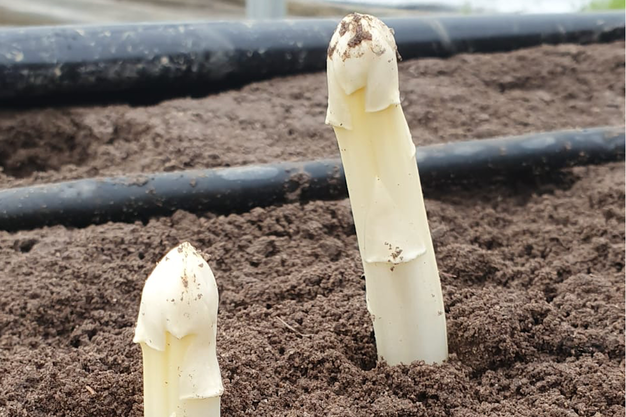
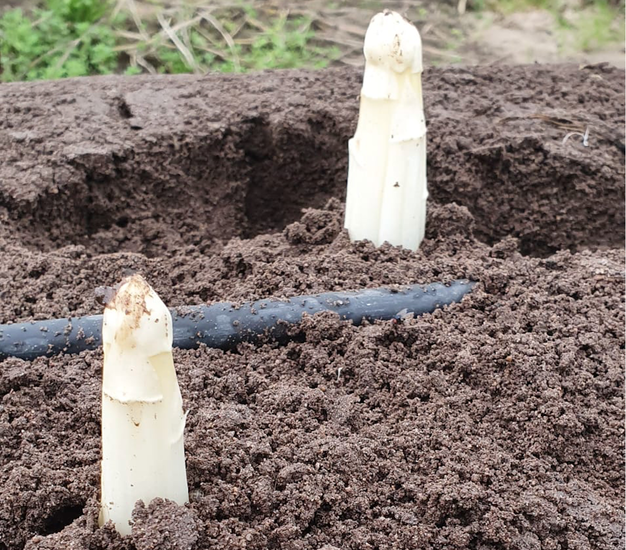
During the trip, participants visited Le’an county to observe its specialized asparagus industry. Following six years of development, the local asparagus cultivation area has expanded from 30 mu (approximately 2 hectares) to 2,500 mu, with greenhouse coverage reaching 1,500 mu, making it the largest single asparagus planting base in China, said a local official surnamed Yu.
Although the industry is now thriving, the substantial initial investment and prolonged production cycle deterred local farmers six years ago, said Yu. To address this issue, the local government adopted a contract model, whereby it provided essential production elements such as greenhouses, seeds, and fertilizers, while farmers took charge of daily management.
Yu said farmers can sell their harvested asparagus to local enterprises at a price of 0.6 ($0.08) to 0.8 yuan per jin (0.5 kilograms).
David Lopez, Permanent Representative and Consultant in Human Rights of International Association for Human Rights and Social Development, told the Global Times on Wednesday that the government assumes primary responsibility for the initial investments and natural market risks, liberating farmers from the high-risk, capital-intensive predicament and enabling them to work and earn within a relatively secure environment.
In addition to sales revenue, the local government also provides farmers with a monthly minimum income of 2,700 yuan, Yu said.
David said the guaranteed income provided by the government functions as a safety net by ensuring stable and predictable cash flow for locals. “This effectively safeguards the basic living expenses of farming households and prevents the risk of seasonal poverty,” he added.
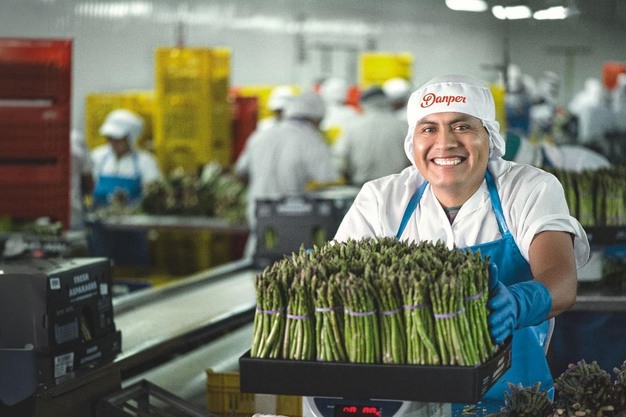
Tiny stalks of asparagus have now become a source of income for the local villagers. The county’s asparagus sales reached 6-million-yuan last year, with products mainly distributed across the country, as well as exported to Europe and Southeast Asian countries, according to local government.
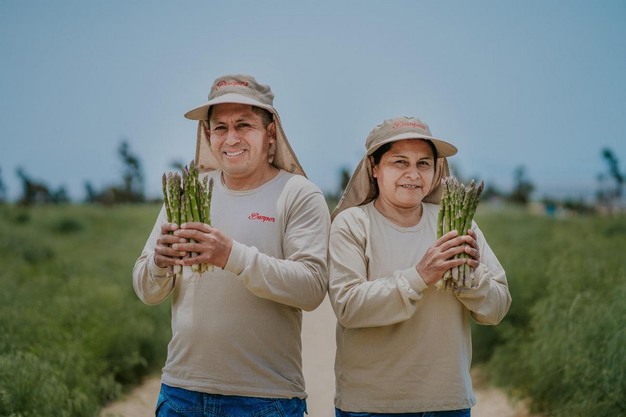
“The work is flexible, close to home, and the pay is decent,” Chen Chahua, a 64-year-old local villager, told the Global Times on Wednesday. “During the peak asparagus season this year, I earned 6,000 yuan in a single month,” she said with a smile.
“The better farmers manage the asparagus, the higher the yield, and the more income they earn,” Yu said.
Linking farmers’ income directly to their output stimulates their labor enthusiasm and creativity, and positions them as direct beneficiaries of their own work outcomes, David said.
During the visit, officials also tasted the last batch of this year’s asparagus. As he ate, David expressed his hope that the asparagus yield would continue to grow steadily next year, bringing further benefits to the local farmers. Yu responded, “This is certain. We have already figured out the methods, we are very confident about it.”
So far, the local asparagus industry has created employment for over 300 farmers, with an average annual income of approximately 40,000 to 50,000 yuan per person, effectively boosting rural household earnings.
David said instead of standing by, the local government innovated mechanisms to address the core challenges faced by farmers who were willing to engage in cultivation but hesitated due to financial constraints or lack of resource. Such effort demonstrates local authority’s efforts to safeguard human rights by resolving the most pressing and practical difficulties in people’s lives, he added.
He also noted that the model goes beyond mere subsidy-based poverty alleviation, enabling famers to achieve stable poverty eradication and long-term development through their own work. It also stands as an example of the internationally advocated principle of “promoting human rights through development,” he added.
(Web editor: Zhong Wenxing, Liang Jun)


欲了解更多信息,请联系:
Cultivated strawberry
Wild strawberry
Jose Castilla de los Santos, Debra van den Oever et Michael Aagaard de Berries Pride
Ventura et Sekoya Pop
Par ailleurs, la saison des myrtilles chiliennes arrive à grands pas. « La saison commence une semaine plus tôt et les volumes les plus importants en provenance du Chili arriveront entre les semaines 4 et 7. Nous ne nous approvisionnons plus nous-mêmes au Chili, car nous avons réussi à faire le lien entre le Pérou et le Maroc il y a quatre ans. Cette solution nous convient parfaitement en raison de la qualité et de la logistique constantes du Pérou. Compte tenu de la baisse de l’offre en provenance du Pérou, nous nous attendons à une bonne transition. Du Chili, nous prévoyons une saison similaire à celle de l’année dernière, bien que cela dépende également de la demande du marché américain. » Aux Pays-Bas, il est difficile de jouer un rôle dans l’exportation des myrtilles d’Amérique latine vers le marché chinois. « De nombreux producteurs y ont eux-mêmes des bureaux. Et avec le nouveau port de Chancay, le temps de transit Pérou-Chine a diminué de manière significative. Auparavant, cela pouvait prendre jusqu’à 40 jours avec des retards, alors qu’aujourd’hui, ce délai a été ramené à un peu plus de trois semaines. Je pense que l’unicité du marché chinois réside dans le fait qu’ils sont les plus honnêtes et les plus transparents sur ce qu’ils pensent de la valeur des baies. Ils n’apprécient pas les fruits acides et si vous leur en fournissez, vous êtes fini !. »
Pour plus d’informations :


For more information:
Pour la fraise, la saison 2025 est globalement positive pour l’AOPn, bien qu’hétérogène selon les périodes. « La dynamique commerciale a répondu aux attentes sur la majeure partie de la saison malgré certaines périodes qui ont mis les producteurs à l’épreuve ». Fin juin, l’arrivée des fruits d’été a intensifié la concurrence entre fruits en magasins, dans un contexte où la qualité des fraises pâtissait des températures élevées. Après le 15 août, un second épisode de tension est survenu : la canicule a engendré un pic de production face à une consommation en déclin. Cette difficulté à écouler les volumes et à remonter les prix a persisté jusqu’en septembre. « Sinon, les cours ont été bons ce qui a permis de maintenir des prix au même niveau que l’année précédente ». Les volumes consolidés par l’AOPn sont en légère progression par rapport à la précédente campagne (environ 30 000 tonnes) avec plus de 31 500 tonnes entre juillet 2024 et juin 2025 (soit 53% de la production nationale). Une progression qui s’explique notamment par l’augmentation des surfaces de production.