
https://www.leboncoin.fr/ad/materiel_agricole/3149714944
Archive
Tout savoir sur les asperges blanches, vertes, violettes : bienfaits (en vidéo), variétés et astuces de préparation, cuisson, conservation, astuces gustatives, antioxydant, fibres, vitamines, détoxification par la Biela Vita

a vendre d’occasion un buttoir de marque Frigoul d’une largeur de châssis de 1,60 m. Il est équipé de 2 buttoirs à double disques pour asperge ou pour la création de buttes. Facilement réglable en largeur ou en rotation à volonté permettant de faire ou défaire des buttes. Livraison possible. par le Bon Coin
A vendre butteuse rotative d’occasion Harlander pour asperges blanches ou vertes par Le Bon Coin
Granada’s asparagus season starts with 350 hectares of flooded land |by Sur in English
What impact will storms, cold, and unworkable fields have on the asparagus campaign? by FreshPlaza
What impact will storms, cold, and unworkable fields have on the asparagus campaign?
Many producers in France have been affected by storm Nils, violent gusts of wind, heavy rain, and flooding. While the extent of the damage varies from one sector and region to another, one thing is certain: the calendar has been disrupted for many crops. These include asparagus, which is particularly sensitive to soil conditions at the start of the season.
With the exception of the North, the last French region to go into production, the situation is widespread. Fields are impassable, making ridging impossible and delaying the start of the season by 2 to 3 weeks, depending on the terroir. This situation is all the more complicated for growers who are counting on the earliness of their crop, and it is a source of concern for the rest of the season, which could result in a clash between regional productions.
South-East: “We do not have any production to offer”
In the South-East, Maxime Gervasoni is one of the few farmers to have already ridged the soil. “We were able to prepare the ridges in January thanks to a favorable window of opportunity. But I think that around a quarter of the growers in the region have been able to do so,” he explains. Unfortunately, the cold and rain that followed put the brakes on the momentum. “We do not have any production to offer today, and I think we will have a 10 to 15 day delay in production.”
Each year, the farm produces around 200 tons of asparagus, making early production a strength. However, even with the land ready, the weather is still the deciding factor. “We are all in the same boat. Clients are coming, but unfortunately, they will have to wait a little longer.”
South-West: A region hit by the storm
In Gironde and Landes, Thibaut Lebourg managed to ridge around 80% of his surfaces by anticipating the bad weather. “We started very early,” he explains. But the storm wiped out some of our efforts. “We placed tarps, but with the gusts of wind that swept through the region, the tarps could not hold and blew away. We lost all the degrees we had gained to warm the soil.”
As a result, it will be “very complicated to have asparagus before the end of the month.” Although some volumes have emerged in the south of the Landes, Thibaut Lebourg estimates a delay of two to three weeks. However, he puts this into perspective. “Perhaps it is a blessing in disguise, as the market is not particularly buoyant at the moment with the school holidays. It is true that the first asparagus are selling at a good price, but they are just as expensive to produce.”
Center: Impassable fields make ridging impossible
In the Anjou region, the situation is no better. Frédéric Poupard, an asparagus grower in Longué Jumelles, has not been able to start ridging. “The fields are impassable.” Although production has not yet started, the delay is already a fact. “Usually, the harvest starts around March 1st outdoors. But this year, I do not think we can start before March 15th. After that, it all depends on the weather. Drier conditions are forecast over the next few days, so work on the plots should be able to resume more quickly.”
Brittany: Asparagus is already arriving, even without the ridging
The same applies in Brittany. “We have to wait for the soil to dry out some before ridging. In these conditions, the soil would clump together when it dries, forming hard masses that prevent the asparagus from growing straight. The quality of the asparagus will be affected, with the result being twisted asparagus. Unfortunately, a lot of rain is forecast for next week, which will cause further delays. In these conditions, I do not think that the first asparagus will arrive before March 10th,” explains Karel Kaptein, asparagus producer at La Torche.
This situation is forcing the asparagus grower to review his technical itinerary. “What is annoying is that the first asparagus is starting to come out before we have had a chance to ridge, so we will probably use them for green asparagus.”
A “winter like any other” in the north
In all production areas, the sector seems to be facing a delayed start to the season. Only the North seems to have been spared for the time being. “We are used to this kind of weather in the region. For us, it is a winter like any other,” explains Olivier Thomas of Ferme du Pont d’Achelles. “In any case, we never go into the fields to ridge before the end of March/beginning of April. And I think that by the end of March, we will be able to start work. The main cause for concern is the fact that regional production is overlapping. But if everyone is behind schedule, the impact will be less. The situation is not ideal, but it is not catastrophic either, so we remain positive.”
Frontpage photo: © Bernd Juergens | Dreamstime Publication date: Thu 19 Feb 2026
« Nous devons veiller à ce qu’il nous reste suffisamment d’asperges pour servir les supermarchés » par Goertz Asperges BV et FreshPlaza
Franc Goertz, de Groetz Asperges (Pays-Bas) :
« Nous devons veiller à ce qu’il nous reste suffisamment d’asperges pour servir les supermarchés »
Chez Goertz Asperges à Maria Hoop, les préparatifs pour la saison des asperges battent leur plein. « Les deux tiers de notre superficie sont sous un film noir. Nous prévoyons de récolter les premières asperges vers le 20 mars. Le reste de la récolte se fera en avril », explique Franc Goertz, qui cultive des asperges sur les sols sablonneux du Limbourg depuis 1987.
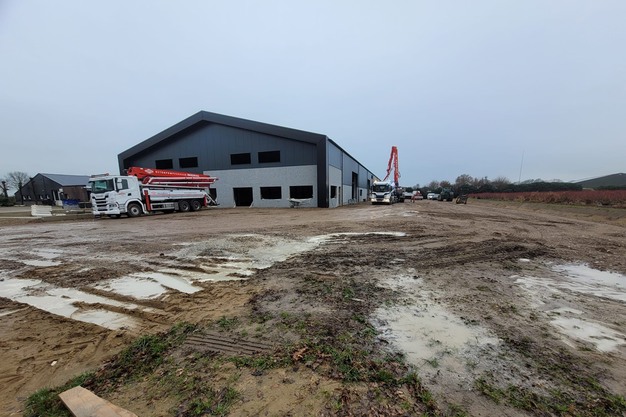 Nouveau site de triage en cours de construction
 À contre-courant de la tendance, il a choisi d’étendre la superficie consacrée aux asperges cette année encore. « L’année dernière, nous ne l’avons pas fait, mais nous allons rattraper notre retard. Nous devons veiller à ce qu’il reste suffisamment de produits pour les supermarchés et les autres clients ! » Goertz s’attend à une assez bonne récolte cette saison. « L’année dernière, les productions ont été faibles, mais l’été dernier a été clément. Nous constatons cependant que de nombreuses parcelles ne se sont pas encore remises des inondations d’il y a deux ans. »
« Il n’est pas facile de maintenir une superficie suffisante aux Pays-Bas. De nombreux petits producteurs abandonnent et les plus grands ne se développent plus aussi rapidement, de sorte que la superficie totale continue de diminuer. Une des raisons est qu’un certain nombre de producteurs n’a pas accès à de nouvelles terres. En outre, il n’est pas facile pour tous d’avoir suffisamment de personnel et il y a une catégorie de producteurs plus âgés qui n’ont pas de successeur. »

Patates douces
Cette année de nouveau, Goertz cultive la patate douce. « Nous fournissons actuellement les derniers tubercules de la saison, mais nous aimerions à terme passer à une production tout au long de l’année. La demande des supermarchés, tout comme celle des détaillants et des magasins à la ferme est suffisante. Elle augmente légèrement chaque année. La saison prochaine, nous espérons pouvoir livrer jusqu’en juillet. »
Alors que Goertz cultivait initialement les patates douces en deux rangées sur un lit, les plants sont aujourd’hui cultivés en butte. « Nous pensons que les plantes se réchauffent plus vite et donnent un meilleur rendement. Chaque année, la qualité du produit néerlandais s’améliore. Il le faut, car je veux pouvoir comparer le produit avec les patates douces américaines ; après tout, ce sont les meilleures que l’on trouve sur le marché. »
 Franc avec sa famille
Pour les myrtilles, troisième culture de l’exploitation, aucun projet d’expansion n’est prévu : « Nous conservons notre plantation, mais nous ne l’agrandissons pas. L’année dernière, la récolte et le prix des myrtilles ont été bons, mais c’est et cela reste une culture difficile parce qu’elle est très facilement délocalisable. En effet, les myrtilles peuvent être transportées sur de longues distances et à moindre coût depuis l’étranger. Notre produit de base reste donc l’asperge, alors que les patates douces sont porteuses et que les myrtilles restent stables. »
 Pour plus d’informations :
Franc Goertz
Goertz Asperges BV
info@goertzasperges.nl
www.goertzasperges.nl
« L’hiver devient un véritable défi pour le maraîchage local » par Olivier Thomas et Françoise Thomas de La Ferme du Pont d’Achelles et FreshPlaza
Olivier Thomas, la Ferme du Pont d’Achelles :
« L’hiver devient un véritable défi pour le maraîchage local »
Le commerce en direct de légumes de saison pour les maraîchers l’hiver n’a jamais représenté la période la plus dynamique. Néanmoins, il semblerait cette année que le constat soit plus marqué encore : la fréquentation ralentit, les habitudes évoluent, et le maraîchage hivernal doit redoubler d’ingéniosité pour maintenir le lien avec le consommateur. Une situation qui contraste de plus en plus avec celle des produits printaniers tant attendus.
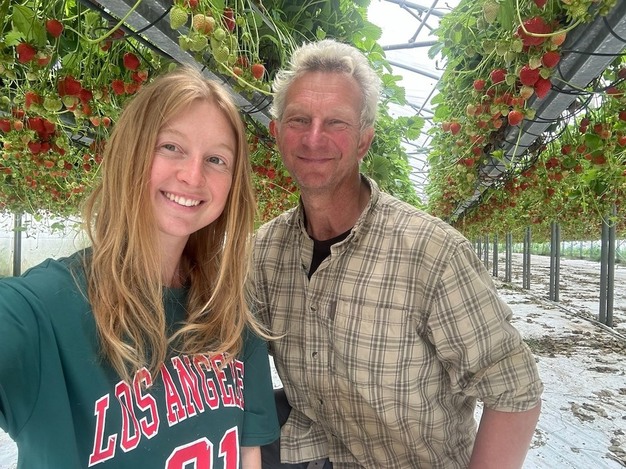 Appoline et Olivier
Une gamme complète, mais des consommateurs moins présents
Poireaux, pommes de terre, salades, navets, céleris… La Ferme du Pont d’Achelles a depuis longtemps décidé de proposer la gamme la plus étendue possible de légumes de saison : « Nous proposons une grande diversité de produits, dans les variétés, les couleurs, les références… chaque consommateur peut y trouver son bonheur ! », précise Olivier Thomas, gérant de l’exploitation. Malgré une offre très étendue et abondante, la clientèle se fait plus rare. « Les habitués sont toujours là, de janvier à décembre. Mais ce noyau vieillit et se renouvelle peu. » Le passage sur les marchés baisse également : « En été, les gens se promènent, il y a beaucoup de passage. En hiver, ils viennent moins spontanément. »
Un trio gagnant : fraise/asperge/tomate
Fort est de constater que tous les légumes de saison ne sont pas logés à la même enseigne. Si en plein hiver, malgré la qualité et la fraîcheur des produits locaux, l’élan est plus timide ; la donne change du tout au tout dès l’arrivée des légumes printaniers : « Le trio gagnant, c’est la fraise/asperge/tomate. On sent que les clients attendent ces produits-là avec impatience. Dès que les premières fraises arrivent, les gens accourent. La demande est telle les premières semaines qu’il est même parfois difficile de satisfaire tout le monde ». Ces références printanières et estivales attirent le consommateur, qui complète ensuite son panier avec d’autres légumes. Elles agissent donc comme un véritable moteur de la consommation.
Innover pour maintenir le lien
Pour s’adapter à cette demande fluctuante et capter la plus large clientèle possible, l’exploitation a multiplié les initiatives. « Nous avons été parmi les premiers à installer des distributeurs automatiques il y a quinze ans. Nous proposons également de la vente en ligne afin de diversifier au maximum les canaux de distribution. Nos serres modernes permettent de gagner légèrement en précocité, mais dans la limite du raisonnable. Tout est mis en œuvre pour rester accessible et attractif, mais le rythme des saisons reste une réalité incontournable ». Si l’hiver est devenu un des véritables tests de résilience du maraîchage local, l’enjeu reste de taille : comment susciter un engouement plus fort pour les légumes d’hiver et atténuer ainsi le contraste d’attractivité avec les incontournables du printemps ?
Pour plus d’informations :
Olivier Thomas et Françoise Thomas
La Ferme du Pont d’AchellesTél. : 03 20 48 60 43
Laferme-dupontdachelles@orange.fr
https://www.lafermedupontdachelles.fr Date de publication: ven. 20 févr. 2026
Biochar gains ground in Spain as a regenerative soil amendment with agricultural and urban uses by Livingchar and FreshPlaza
Biochar gains ground in Spain as a regenerative soil amendment with agricultural and urban uses
The need to regenerate agricultural soils and reduce the carbon footprint of production systems is driving interest in solutions that not only nourish crops but structurally transform how soils function. In this context, biochar, a plant based charcoal obtained through pyrolysis, is beginning to find its place in Spain as a regenerative amendment, with applications ranging from professional agriculture to urban arboriculture.
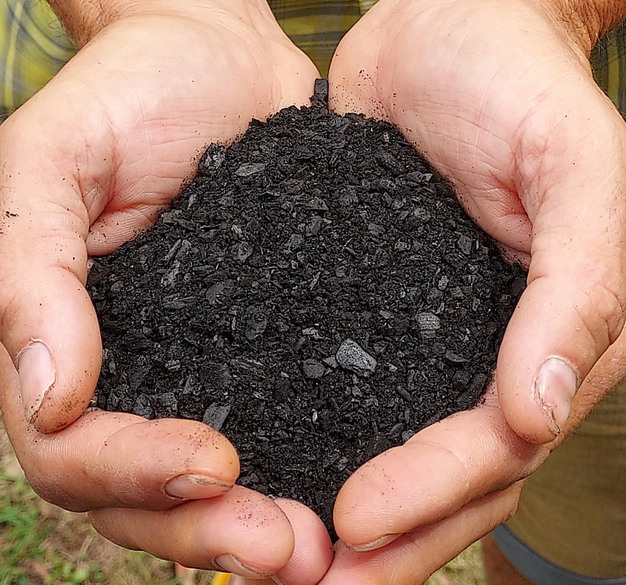
At the cooperative Carbón Vivo, promoter of the LivingChar brand, the team works with biochar produced from pine wood and certified under the European Biochar Certificate, which guarantees both process sustainability and product safety. “Biochar is an organic carbon material whose purpose is to improve the physical, chemical and biological properties of soil and act as a carbon sequestration tool,” explains Abel Zahínos, one of the project’s promoters.
More than carbon, soil infrastructure
“Our biochar contains more than 80 percent carbon and acts as a soil regenerator by restoring a key mineral, carbon, which many Spanish soils have lost due to intensive agronomic practices, high temperatures and reduced water availability. Unlike conventional fertilizers, biochar does not directly supply NPK,” he notes, “instead it improves soil structure, cation exchange capacity and the management of water and nutrients”.
“An ideal soil is made up of roughly 25 percent water, 25 percent air, and the remainder mineral fraction and organic matter. In degraded or compacted soils, those pores collapse and the capacity to store and properly manage the water and oxygen that plants need for their physiological functions is lost,” he explains. “That is why it is so important to provide soils with a structure that ensures proper circulation of water and gases, elements that are essential for crops to thrive and to be resilient to climate change”.
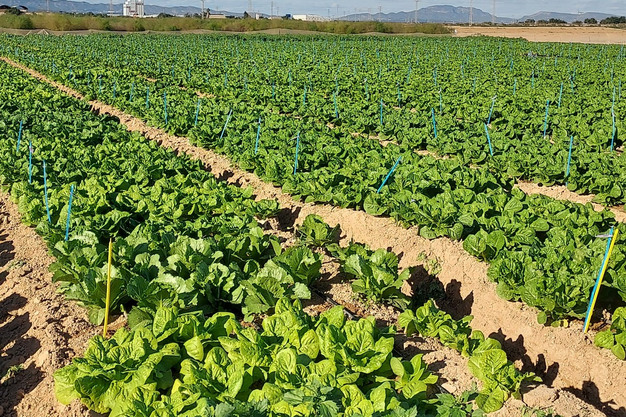
In this respect, biochar is particularly valuable because of its ability to increase plant available water in soils, the fraction of stored water that roots can extract and use for growth. “According to trials carried out with the Universidad Politécnica de Madrid, conventional compost provides around 7 percent plant available water, while biochar offers more than 50 percent. This allows for a significant improvement in soil water efficiency, a critical factor for Mediterranean crops”.
Less leaching, higher efficiency
Another key property of biochar is its high cation and anion exchange capacity. “In practical terms, it acts as a retention structure that binds nutrients and reduces losses through leaching. Nitrate losses can be reduced by up to 60 percent. This not only improves plant uptake, but also helps optimise fertiliser use and reduce the environmental impact linked to aquifer pollution”.
On this basis, LivingChar has developed solutions such as Compostchar, a regenerative fertiliser combining organic compost, biochar and rock minerals, and Arbochar, designed for woody crops and long term plantations. “The goal is to permanently improve soil conditions from the moment the crop is established”.
In addition, the biochar production process through pyrolysis allows the carbon previously captured by plants during photosynthesis to be stabilised. “Each tonne of our biochar sequesters up to 2.9 tonnes of CO₂ equivalent. Unlike natural biomass decomposition, which returns carbon to the atmosphere, biochar stabilises it in the soil for estimated periods ranging from 700 to 3,000 years”.
“In fact, the Intergovernmental Panel on Climate Change recognizes it as one of the currently available technologies with net carbon removal, adding a climate dimension to its agronomic application”.
From fields to cities
Beyond agriculture, biochar is also gaining prominence in urban gardening and arboriculture projects. “Cities such as Stockholm began incorporating biochar into their plantings after detecting mortality and disease rates of up to 80 percent in urban trees due to soil compaction. Since 2008, all new trees have been planted with biochar, achieving survival rates close to 100 percent,” Abel shares.
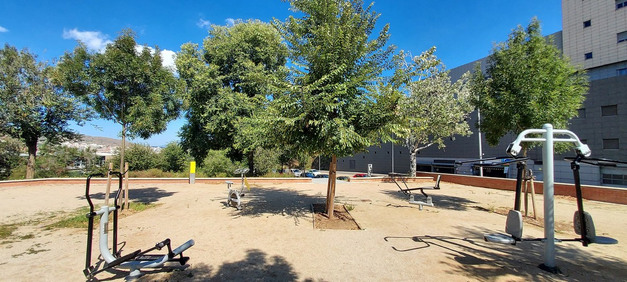
In Spain, LivingChar is working with municipalities such as Barcelona and Córdoba to improve urban soils. “The problem in cities is compaction. Soil loses its ability to properly manage the air and water that trees need, and roots cannot develop. A tree, and plants in general, can die both from lack of oxygen and from lack of water,” he points out.
An emerging market with room to grow
Although awareness of biochar has increased over the past five years, adoption in professional agriculture remains limited. “At LivingChar we recognise that there is still a strong need for outreach and for clear differentiation in quality, since raw material, production process and certification make a substantial difference to the final product”.
“At present, we are focusing on the Spanish market, with a grower focused model based on soil analysis and personalized technical advice. But we are convinced that wider use of biochar is only a matter of time”.
 For more information:
Livingchar
C/ Margarit 37
08004 Barcelona
T. (+34) 670 585 159
hola@livingchar.com
https://www.livingchar.com
Frontpage photo: © Livingchar
“Calculamos que las inundaciones mermarán entre un 5 y 10% la cosecha de espárrago en Granada” por Centro Sur, S.C.A y FreshPlaza
Antonio Zamora, director general-comercial de la Cooperativa Centro Sur:
“Calculamos que las inundaciones mermarán entre un 5 y 10% la cosecha de espárrago en Granada”
La Cooperativa Centro Sur ha realizado una primera valoración técnica del impacto provocado por la reciente borrasca en las plantaciones de espárrago del Poniente Granadino, situando las pérdidas estimadas en torno al 35-40% en la campaña 2026 en las zonas más afectadas.
“Evidentemente, hay parcelas que están completamente anegadas con un metro de tierra, donde recuperar la plantación va a ser muy difícil. En otras, que va a ser un poco más fácil recuperarla”, explica Antonio Zamora, director general-comercial de la cooperativa. “De hecho, ya están saliendo los primeros espárragos en fincas en las que el impacto ha sido menor”. En este sentido, Zamora destaca que estas lluvias ayudarán a tener una mejor cosecha a la mayoría de plantaciones que no han sufrido las inundaciones.

“El impacto global sobre el volumen total podría situarse preliminarmente entre un 5% y un 10%, inferior al previsto inicialmente, aunque aún es pronto para disponer de una evaluación definitiva de los daños, ya que muchas parcelas siguen siendo de difícil acceso y la evolución agronómica será determinante en las próximas semanas”, señala Zamora.
Centro Sur estima que entre 300 y 350 hectáreas se han visto afectadas por las inundaciones, sobre un total de 1.526 hectáreas cultivadas por la cooperativa.
Las zonas más afectadas se concentran en la ribera del río Genil y en el entorno del Arroyo Milano, especialmente en el municipio de Huétor Tájar, donde algunas plantaciones han permanecido inundadas entre diez y doce días. La bajada progresiva del nivel freático y del cauce del río está permitiendo que el agua se retire de parte de las parcelas, aunque persisten zonas donde el acceso sigue siendo complicado y dificulta una evaluación más precisa.
La campaña 2026 del espárrago acaba de comenzar, y los agricultores confían en que no se registren temperaturas elevadas, para que el exceso de agua pueda drenar correctamente y la planta comience a transpirar en condiciones óptimas. “Es un cultivo perenne y el tiempo de permanencia del agua en el suelo resulta determinante para evaluar tanto la merma productiva inmediata como el posible impacto estructural en campañas futuras”, indica Zamora.
Plan de recuperación de un sector estratégico para la economía del Poniente Granadino
La Cooperativa Centro Sur subraya que el espárrago constituye un cultivo estratégico para el Poniente Granadino y para municipios como Huétor Tájar, donde genera empleo directo en campo y en los centros de manipulado y procesado, además de actividad económica indirecta en toda la comarca. Por ello, insiste en la importancia de analizar la situación con responsabilidad, evitando alarmismos pero también reconociendo el impacto que este episodio meteorológico ha tenido sobre el sector, los agricultores y sus familias.
“En este momento, el corazón de la Cooperativa Centro Sur está con los agricultores que están sufriendo las consecuencias de las recientes inundaciones. Queremos trasladarles todo nuestro apoyo y solidaridad, y reiterar nuestra disposición para acompañarlos y respaldarlos en esta situación tan complicada”, señala Antonio Zamora.
De hecho, desde el primer día, la entidad ha activado un plan de recuperación orientado a minimizar el impacto y apoyar directamente a los agricultores. Se están llevando a cabo trabajos de limpieza de caminos rurales para restablecer accesos a las explotaciones, así como la instalación de bombas para drenar el agua acumulada en aquellas parcelas donde no se evacúa de forma natural pese al descenso del nivel del río.
Además, se están aplicando tratamientos con hongos de suelo beneficiosos, una estrategia adoptada tras consultar con expertos de distintos países, que tiene como objetivo mejorar la transpiración y oxigenación de la parte radicular de la planta y favorecer el desarrollo del sistema radicular. La cooperativa subraya que estas medidas no ofrecen una garantía absoluta, pero confía en que puedan mitigar parte del impacto negativo. “La misión de nuestra empresa es generar riqueza en el mundo rural”, recuerda Antonio Zamora.
Llamamiento a las instituciones
“Ahora bien, la ayuda no puede proceder solo del sector”, sostiene Antonio Zamora, quien reclama sensibilidad institucional ante una situación que puede afectar a puestos de trabajo directos e indirectos.
“En este sentido, solicitamos a las Administraciones que mantengan su apoyo al sector, mejoren las infraestructuras y estudien medidas que ayuden a mitigar el impacto productivo, especialmente en el caso de las organizaciones reconocidas como OPFH, Organización de Productores de Fruta y Hortaliza. Será fundamental habilitar mecanismos de ayuda para aquellos agricultores que pierdan plantaciones o sufran un fuerte deterioro en su medio de vida, así como para los trabajadores afectados”, afirma.
Por último, la Cooperativa Centro Sur quiere agradecer el interés y la implicación mostrados por el Gobierno de España, la Junta de Andalucía y la Diputación de Granada, y especialmente el trabajo diario del alcalde de Huétor Tájar, Fernando Delgado, y de todo el equipo humano del consistorio, así como la colaboración de la Unidad Militar de Emergencias, la Guardia Civil, la Policía Local y la solidaridad de todos los voluntarios que han prestado su ayuda durante los días más complicados.
“Queremos agradecer también a todo el equipo de Centro Sur su implicación en estos momentos de incertidumbre, volcados en apoyar a nuestros agricultores, así como la comprensión y el respaldo de nuestros clientes, que nos han acompañado y mostrado su apoyo desde el primer momento”, subraya Antonio Zamora.
 Para más información:
Antonio Francisco Zamora
Centro Sur, S.C.A
T: +34 958332020
azamora@centro-sur.es
centro-sur.es