Archive

“Everyone wants raspberries at the moment” by Global First GreenLand and FreshPlaza

“Everyone wants raspberries at the moment”

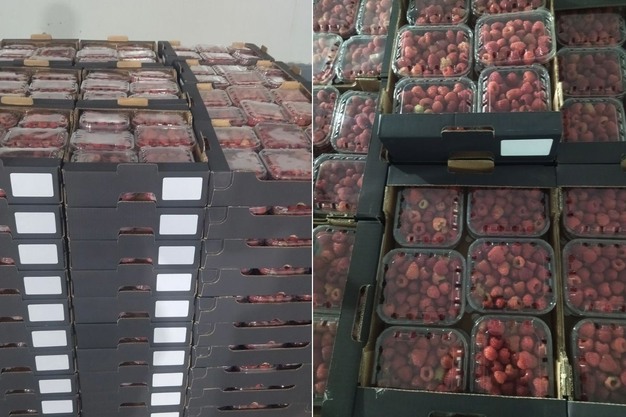
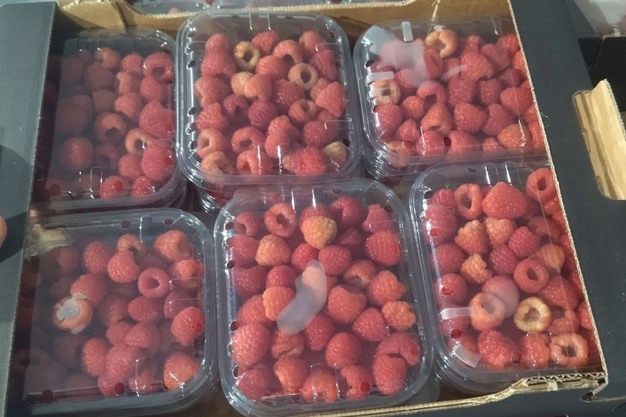
Demand for Moroccan raspberries is at its peak in several markets, and producers and exporters are delighted with the busy trade and high prices. This is according to Zouhir Disouria, a Larache-based grower.

The grower describes a marked improvement in the quality of Moroccan harvests, which coincides with shortages in several European markets. He explains: ” Two or three weeks ago, there were concerns about quality due to rain and wind in the Loukkos region in the north of the country, but harvests in other regions in central and southern Morocco were not affected by these quality issues. Thanks to improved weather conditions two weeks ago, quality is currently excellent, and this is reflected in the high demand.”

“We are seeing sustained high demand in all our markets, from the Netherlands to Spain, France, the UK, Italy, Russia, and elsewhere. This is certainly due to improved quality, but also to a shortage of raspberries caused by production issues and volume losses in Serbia,” the grower continues.

Disouria adds that the market is “very active” and exports are doing well, which is reflected in prices. “Everyone wants raspberries at the moment, and prices for fresh and frozen raspberries are high. As an example, I can share that the price of raw material for frozen raspberries we’re currently obtaining is double what it was last year.”

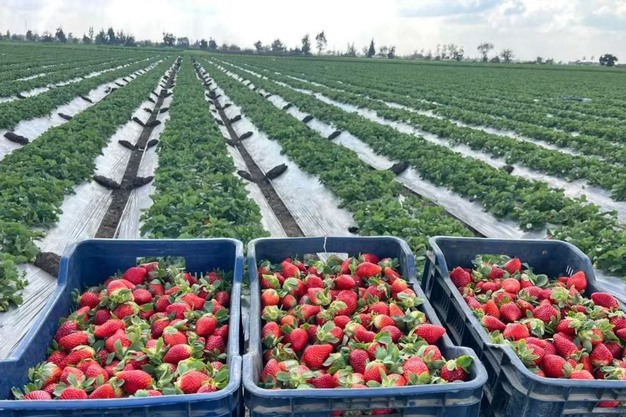
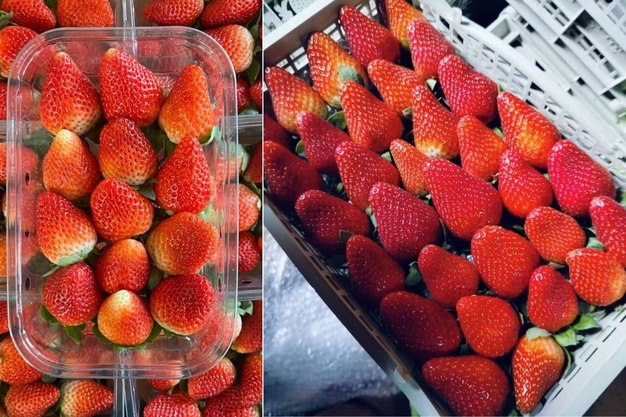
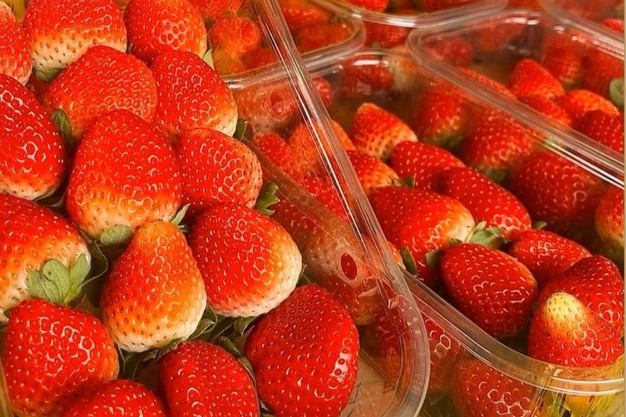
This period also marks the shy start of the fresh strawberry season in Morocco. Disouria says, “We are harvesting the first bunches of strawberries, and some colleagues have already started exporting. It is still too early to know how the strawberry season will turn out, but we hope to continue the momentum of soft fruits in general, which are enjoying good winds.”

For more information:
Zouhir Disouria
Global First GreenLand
Tel: +212661902434
Email: disouriafirstgreenland@gmail.com
www.globalfirstgreenland.com Publication date: Thu 13 Nov 2025

© FreshPlaza.com / Youness Bensaid

Blueberry category developments aim to increase consumption by Calgiant and FreshPlaza

Blueberry category developments aim to increase consumption

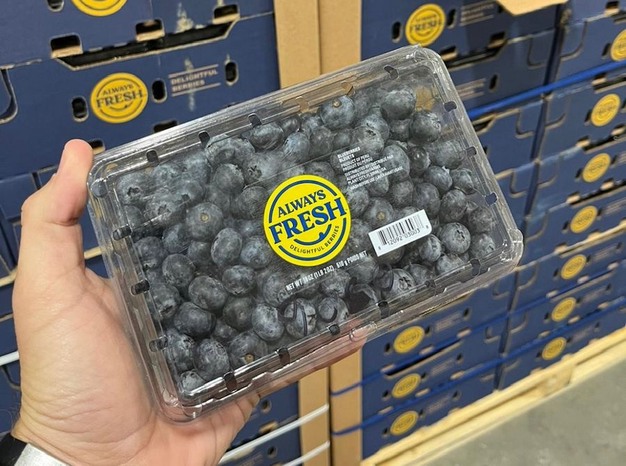
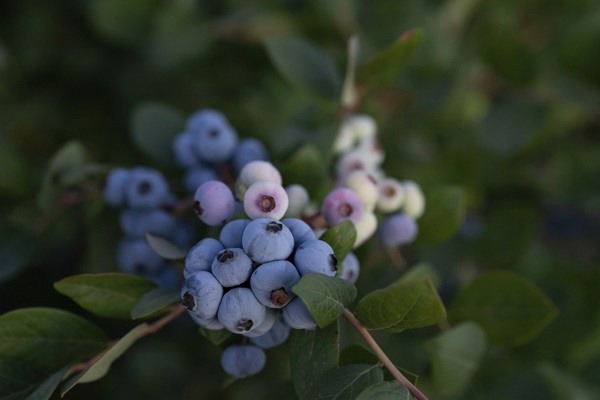
In addition to supply from Mexico, blueberries from Peru are expected to stay steady in supply throughout the remainder of 2025. “Mexico production is light but gaining momentum towards the year end,” says Kyla Oberman of California Giant Berry Farms, adding that production from Mexico will build through New Year’s with new varieties leading into spring.

Overall, the company’s 2025 production forecast is slated to be slightly higher than 2024, with large, flavorful berries.

As for demand, while the trajectory for blueberry consumption is clearly upward, this consumption success simultaneously creates a challenge: the ever-increasing volume of fruit requires proactive measures to sustain and grow market demand. In turn, aggressive promotional strategies and robust planning are essential to balance this supply surge. “Efforts spearheaded by the U.S. Highbush Blueberry Council and industry marketers, including our own organization, are actively addressing this need, but it remains a top-tier operational priority,” Oberman says.

Room for growth
Indeed, market studies confirm there is considerable room for penetration, even within mature consumer bases like the United States. “Crucially, nearly 50 percent of American households currently consume few or no blueberries, representing a vast, immediate, and addressable opportunity for market expansion,” says Oberman.

What could help consumption are products such as California Giant’s recently introduced Belli Berries. While the product launches in Spring 2026, Belli Berries are the same fresh blueberries consumers know from the company, but boosted with live probiotic cultures.

At the same time, along with the health benefits of consuming blueberries, consumers are also increasingly interested in jumbo blueberries. “Shoppers are increasingly seeking a premium eating experience. Jumbo blueberries are experiencing rapid growth within the berry category. Nielsen data shows strong, double-digit growth year-over-year in both dollar sales and pounds, demonstrating that this is a mainstream, high-demand trend,” says Oberman, noting that jumbo blueberries are increasing the overall dollar share of the entire blueberry category. “So we are positioned to meet this demand with a strong and consistent supply outlook of our Giant jumbo blueberries too.”

For more information:
Kelley Sablan
California Giant Berry Farms
Tel: +1(831) 786-7467 Ext. 267
kking@calgiant.com
www.calgiant.com

Strawberry planting in Greece completed with minimal problems by FreshPlaza and Kiriazis Fruits

Strawberry planting in Greece completed with minimal problems

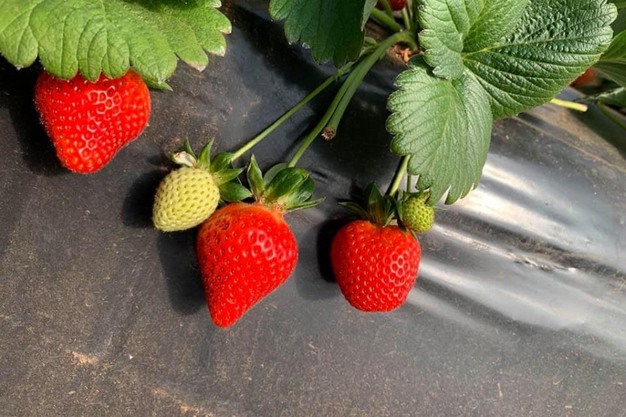
Strawberry planting work in the greenhouses of the Ilia and Achaia regions has been completed this year with minimal problems, leaving producers relieved, as in previous years, they were often forced to carry out extensive replanting around this time.

“While in the past two years, strawberry growers saw up to 20% of their plants lost due to adverse weather conditions, this year we had only half as many losses, and those occurred only in the plants that were transplanted during the last few days. The losses affected both bare-root and plug plants of all varieties, with no particular variety standing out negatively. When a plant is transplanted, it needs stable, cool temperatures for about a month. This time, at the end of October, we had warm weather, 25 degrees Celsius, with temperatures inside the greenhouses reaching up to 30 degrees, so we had to do some minor replanting,” says Mr. Odysseas Kyriazis from the company Kiriazis Fruits.

“I think that this year there was again an increase in production acreage—perhaps, cautiously estimating, by about 100 to 200 hectares,” the Greek producer notes. Growers, as always, focused most of their plantings on Victory plants, while they also planted a good number of Arwen. Fortuna is still present this year, but it has declined further and now represents only a small minority.

Kiriazis Fruits has already started harvesting its strawberries for about two weeks now. As Mr. Kyriazis explains: “Our company is already present in foreign markets, both with our own strawberries and with other strawberries from Kalavryta. Demand is good. Overall, production will keep increasing slightly every week. We still have a long way to go, and it’s too early to say exactly when the tonnage will rise significantly. The weather will be a determining factor. So far, everything is favorable for the development of the crop.”

Finally, regarding cultivation trends in Greece, he adds: “I believe we are following the movements of the Spanish growers on this matter, though with a delay of one or two years. I think strawberry cultivation is shifting toward earlier plantings, and this trend will become even stronger in the coming years.”

For more information:
Odysseas Kiriazis
Kiriazis Fruits
Tel: +30 269 303 1121
Email: info@kyriazisfruits.gr Publication date: Mon 10 Nov 2025

© FreshPlaza.com / Fotis Karabetsos

China expands blueberry production and market reach by FreshPlaza

China expands blueberry production and market reach

In less than a decade, China has evolved from an emerging player into the world’s main hub for blueberry production. This development was driven by large-scale investment, genetic research, growing domestic demand, and a vertically integrated production model that connects genetics, cultivation, and marketing.

In 2010, China had only a few experimental hectares of blueberries. Today, more than 90,000 hectares are planted, with output increasing at double-digit rates. Production spans from Yunnan and Shandong to modern greenhouse systems in Liaoning. Blueberries have become a preferred fruit among the middle class, associated with health and convenience, which has expanded local consumption alongside export capacity.

Until recently, China depended on imports from Peru, Chile, and Mexico during off-season periods. That balance has shifted as major companies such as Joy Wing Mau, Dalian Yidu, and Haisheng Group invested in a variety of licenses, genetics, and post-harvest infrastructure. Government programs promoting fruit with high nutritional value supported this expansion. Imports from Peru and Chile continue during the winter, but local production now covers nearly 80 percent of total consumption, with quality levels matching those from southern hemisphere suppliers.

One driver of this growth has been the rapid adoption of patented varieties through collaborations with Fall Creek, Ozblu, and Mountain Blue Orchards. Regional breeding centers and universities, including Zhejiang University and the Chinese Academy of Agricultural Sciences, are developing varieties adapted to local climates and using gene-editing programs to improve resilience and post-harvest quality. Greenhouse and hydroponic systems have expanded across multiple regions, allowing growers to manage temperature, light, and nutrients year-round.

Domestic consumption continues to rise. Online platforms such as Tmall and JD.com report annual berry sales growth above 30 percent, concentrated in major cities like Shanghai, Beijing, and Guangzhou. Imported blueberries, particularly from Peru and Chile, remain popular, but the gap in size and firmness is narrowing each season.

China’s logistics network supports this integrated model. Cold-chain facilities, rail corridors, and traceability platforms enable fruit harvested in Yunnan to reach Shanghai within 36 hours. Precision agriculture, artificial intelligence, and sensor-based management systems are now standard practice. The result is a digital production chain linking nurseries, farms, and retailers, allowing continuous monitoring and forecasting.

While the United States historically led the global blueberry industry, China has now surpassed it in planted area and is approaching similar consumption levels. Growth in the U.S. has slowed, while China’s combination of private innovation and policy support continues to expand domestic capacity.

Industry analysts expect China’s consumption to double by 2030. Southern Hemisphere exporters, including Peru, Chile, and Mexico, remain essential suppliers during China’s low-production months, while Morocco’s early window aligns well with southern China’s demand. Chinese companies are also investing in foreign farms, and Latin American growers are studying China’s model of digital integration and supply chain coordination.

Source: Blueberries Consulting

Frontpage photo: © Mitch Hutchinson | Dreamstime Publication date: Mon 10 Nov 2025

U.S. blueberry imports rise to meet year-round demand by FreshPlaza

U.S. blueberry imports rise to meet year-round demand

Blueberry imports to the United States have reached record levels as year-round demand continues to expand. According to the U.S. Highbush Blueberry Council (USHBC), headquartered in Folsom, California, consumption has risen sharply over the past two decades. Per capita consumption increased from 0.26 pounds in 2000 to 2.54 pounds in 2021.

In 2024, U.S. imports of fresh blueberries reached 684 million pounds, up 22% from the previous year and valued at US$2.18 billion. The USDA’s Economic Research Service (ERS) reported that blueberries ranked as the fourth most valuable fresh fruit import after avocados, bananas, and grapes.

“Consumers want blueberries year-round now,” said Marc Goldman, produce director at Morton Williams Supermarkets in New York. “During the fall, winter, and spring, the imported fruit has proven to be a strong and reliable source for national promotions, with consistency in the supply chain, quality, and flavor profile,” added Tom Linaris of Katzman, a berry buyer at Hunts Point Terminal Market.

Peru, Mexico, and Chile account for nearly 90% of U.S. blueberry imports, complementing domestic production from 38 states, led by Washington, Oregon, and Georgia. Peru’s harvest peaks between October and December, Mexico supplies from September to May, and Chile ships from December to February. Canada, Argentina, Uruguay, and Colombia also supply fruit during shorter seasonal windows.

“Roughly two-thirds of fresh blueberries sold in the U.S. now come from imports, so these windows are critical for us,” said Stevie Shandler of Shapiro-Gilman-Shandler Co. in Los Angeles. Peru and Chile remain subject to a 10% reciprocal tariff, while Mexico and Canada are exempt.

Brian Bocock, vice president of product management at Naturipe Farms, said both Chile and Mexico are “re-inventing themselves through improved genetics that are focused on firmness and flavor.” Colombia is also expanding its presence in the early-season window from February to April.

Retailers have diversified their blueberry offerings by size, packaging, and production type. “Jumbo-size blueberries jump out on the shelf and have been a game-changer that drives dollars in the category,” said Jason Kazmirski of Charlie’s Produce in Seattle. Organic blueberries now represent about 15% of total U.S. imports.

Kasey Cronquist, president of the USHBC, said imported fruit allows a continuous supply throughout the year. “These imports complement domestic production, keeping blueberries in front of consumers in the produce department.” The council’s ongoing strategy focuses on maintaining a steady supply while promoting blueberries as a year-round, flavor-forward product for global consumers.

Source: Produce Business

Frontpage photo: © Nina Osintseva | Dreamstime Publication date: Wed 5 Nov 2025

Nova Scotia drought impacts wild blueberry crop and raises prices by Wild Blueberry Producers Association of Nova Scotia and FreshPlaza

Nova Scotia drought impacts wild blueberry crop and raises prices

Nova Scotia wild blueberries are seeing strong prices following a significantly short crop this season. This comes even though there was a good start to the season.

“We had good pollination weather and a good spring–no frost events or anything like that, so there was optimism going into the summer,” says Janette McDonald, executive director of the Wild Blueberry Producers Association of Nova Scotia. However by the end of July, conditions changed quickly because Nova Scotia found itself facing a severe drought.

Difficulties ensued given that very few growers in the province have irrigation systems set up. Many of its wild blueberry fields are set up on steep slopes or hilly regions which aren’t conducive to irrigation, even if it was available, and there’s also virtually no pond access to surface draw water. “By August we were into harvest and then into September, there were a lot of really hot days and a complete lack of rain.”

The season also saw an earlier start to harvest this year. “The unfortunate part of that is, is that there’s a lot of custom work that’s done and only so many harvesters and usually you can time moving through regions. That starts at the lower end of the province and works its way up. This year, everything was just early and coming all at once,” she says. In turn, every day that fruit was left in the field, moisture was lost and further created that reduced volume.

Concerns over wild fires
The dry conditions also prompted a fire ban as well on harvesting in Nova Scotia for wild blueberries, much of which are sent to processing. “Not only did it restrict when you could harvest in the fields, but it increased fire watch so you needed to have a water source on site to ensure that if equipment or the ground caught on fire, you could extinguish it. That just added to resources that were needed during harvesting,” says McDonald.

All of this has left prices paid to the grower for wild blueberries significantly higher than last year. Globally there are also increases on wild blueberry markets, particularly so given inventory was low going into the season and fellow wild blueberry harvesting regions such as New Brunswick and Maine were also hit with drought.

Looking ahead, this year’s reduced crop also means that there will be low inventory going into the 2026 harvest. “Everything that was harvested this year is going to be needed for existing markets and contracts,” says McDonald. “For Nova Scotia, New Brunswick and Maine there’s also some worry about how the sprout fields will do. There is some damage to them from drought this year so there are worries about what the impact will be next year.”

For more information:
Janette McDonald
Wild Blueberry Producers Association of Nova Scotia
Tel: +1 (902) 890-8608 (cell)
janette@nswildblueberries.com
https://nswildblueberries.com/