Le Benelux élargit l’accès aux emballages sans plastique pour les produits frais
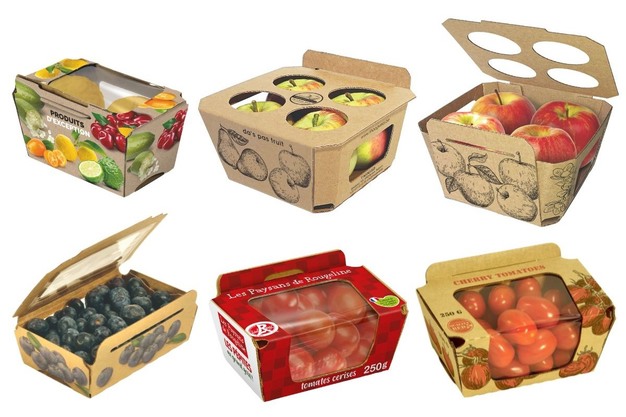
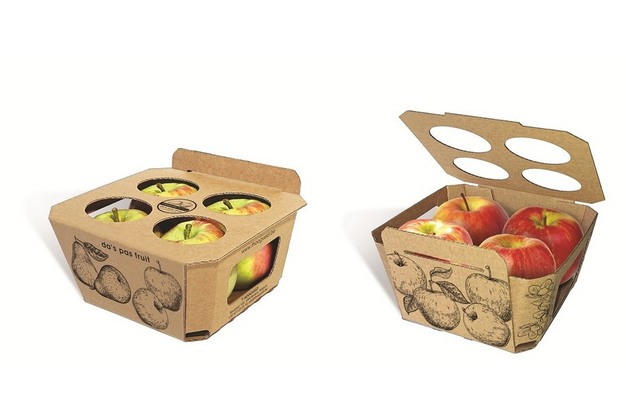
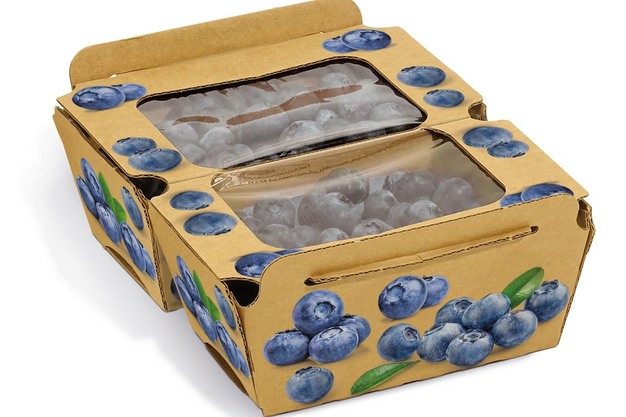
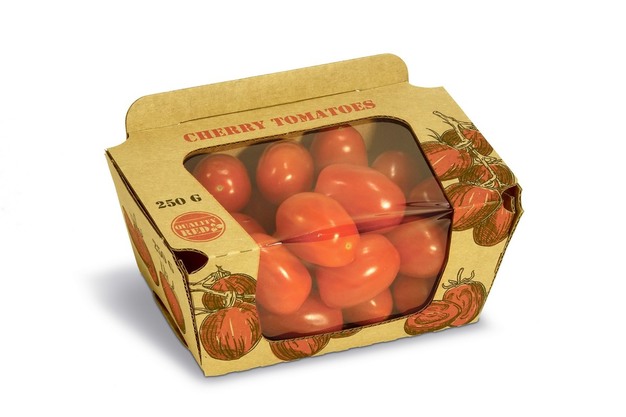
Les fournisseurs de produits frais du Benelux doivent se conformer aux nouvelles réglementations européennes en matière d’emballage tout en conservant des formats d’emballage efficaces et protecteurs. Une nouvelle collaboration entre Quality Pack et SoFruPak vise à répondre à ce problème en mettant la gamme d’emballages sans plastique de SoFruPak à la disposition des entreprises de la région.
La ligne d’emballage SoFruPak utilise du carton combiné à un film de cellulose. Ces matériaux ne contiennent pas de plastique et sont conçus pour préserver la fraîcheur des produits. L’emballage est recyclable et biodégradable en 24 semaines. Comme le carton et la pellicule de cellulose peuvent être traités ensemble, le système offre une alternative aux emballages en PET à un moment où les exigences réglementaires deviennent plus strictes.
Adam Sikorski, directeur commercial de SoFruPak, a déclaré : “Notre partenariat avec Quality Pack nous permet d’apporter des solutions d’emballage véritablement durables au marché du Benelux. Ensemble, nous permettons aux entreprises de répondre facilement aux exigences réglementaires et à la demande des consommateurs pour des emballages respectueux de l’environnement, sans compromettre la commodité ou la qualité du produit.”
Le partenariat s’aligne sur la législation européenne en cours qui devrait exiger une adoption plus large de matériaux respectueux de l’environnement dans les emballages de fruits et légumes. SoFruPak est actif dans le secteur des produits frais depuis plusieurs années et a été récompensé pour ses concepts d’emballage entre 2016 et 2023.
Cette collaboration permet aux producteurs, emballeurs et criées du Benelux d’avoir accès à des emballages conçus pour répondre aux attentes réglementaires en constante évolution, tout en offrant une option aux entreprises qui souhaitent réduire l’utilisation du plastique dans leurs chaînes d’approvisionnement.
When automation supports blueberry and asparagus growers
At the IAD-IBD trade fair held last month in the Bordeaux region, the Maf-Roda Group – platinum sponsor of the event – presented its sorting and grading solutions for red fruit and asparagus. The two installations did not go unnoticed.
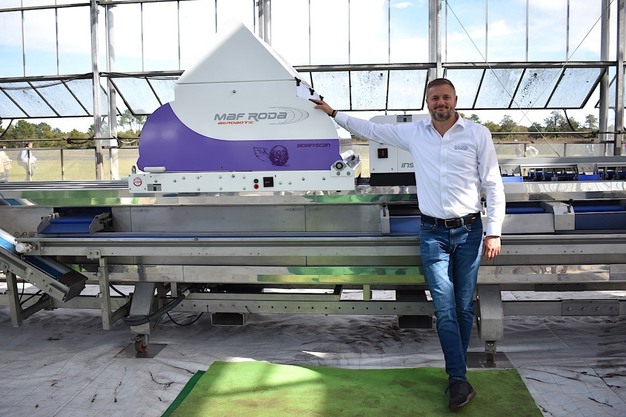
Berryway and Berryscan: Cutting-edge technology for high-precision sorting while respecting the fruit The Berryway grading machine attracted the attention of visitors, as it offers a complete solution for post-harvest blueberries, combining delicate handling with high-precision sorting. “The Berryway is designed to handle blueberries with the utmost delicacy. Each line takes care of the berries to limit shocks and guarantee the integrity of the fruit,” explains Fabrice Blanc, managing director of Maf Roda. Modular from two to eighteen lines, processing 160 to 200 kg of blueberries/hour/line at an average weight of 2g per fruit, Berryscan is equally suited to small-scale producers and industrial structures.
The Berryscan module enhances this performance with particularly accurate multispectral optical sorting. Taking 360° photos of each berry, it analyzes color, shape, and external quality, while detecting defects such as soft, dehydrated, or damaged fruit. “Thanks to Insight technology, we can measure sugar levels to guarantee a consistent, tasty product,” explains Fabrice Blanc. Based on artificial intelligence, the software makes it possible to fine-tune the sorting criteria (shape, firmness, size, Brix) and automate the entire process right through to packaging.
Already widely deployed internationally – from the United States to South Africa, via Eastern Europe – the solution is now attracting considerable interest in France. “Demand for high-performance, automated sorting lines is growing strongly,” observes Fabrice Blanc. By reducing dependence on manual sorting while maximizing final quality, Berryway and Berryscan are positioning themselves as essential tools for growers looking to improve precision, productivity, and added value.
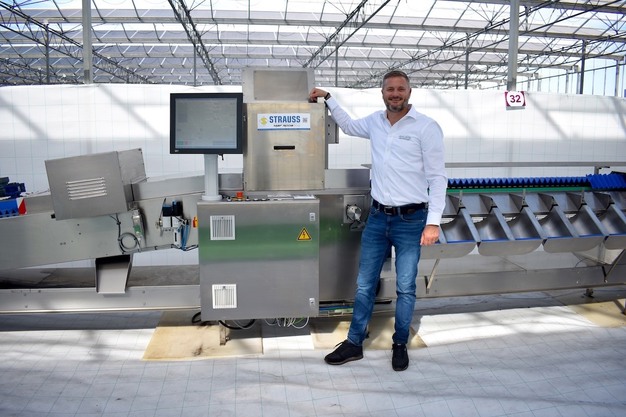
An asparagus grading machine for high-precision associativity Since acquiring the German company Strauss, Maf-Roda has also been offering a complete range of solutions for asparagus, from harvesting to packaging, including grading and weighing. At the IAD-IBD trade fair, it was the grading machine for white and green asparagus that was presented. “In this sector too, we can offer turnkey solutions that can be adapted to any type of structure,” explains Fabrice Blanc.
These solutions are all the more appreciated in this particularly labor-intensive sector, since no human intervention is required, apart from receiving the packaged product. “We were the first to automate bundling. Our grading machine enables us to achieve high associativity accuracy, to +/- 4g on the bundle. The capacity of our machines ranges from 800kg/1.2T to 2T/h.” Another special feature of the Strauss-Maf-Roda grading machines is their high-pressure washing system. This is a definite advantage for products that come straight out of the ground, such as asparagus, which is contaminated by the sand that slips into its scales.
The asparagus grading machine presented at the show can also be adapted to leeks, zucchinis, and rhubarb.
For more information: Christophe Nivet Maf-Roda Phone: +33 5 63 63 27 70 Publication date: Wed 26 Nov 2025
Researchers at CRAG have identified the FvHI gene as a key factor in regulating the compounds that shape the fresh aroma of strawberries. Their work shows that this gene modulates the balance of volatile molecules responsible for the fruit’s fragrance. By studying wild strawberry, the team demonstrated that FvHI expression controls the ratio between two important aromatic molecules, which clarifies how the fruit’s signature scent develops. This breakthrough supports the creation of strawberry varieties with better aroma and improved resilience to damage, wounds, and certain pathogens by using natural compounds tied to both flavour and plant defence.
Aroma is one of the most valued traits of strawberries, yet also one of the most complex. It depends on sugars, acidity, texture, and above all, volatile compounds that define the characteristic fragrance. Among these, green leaf volatiles stand out. They provide the fresh, slightly herbaceous notes typical of the most aromatic strawberries.
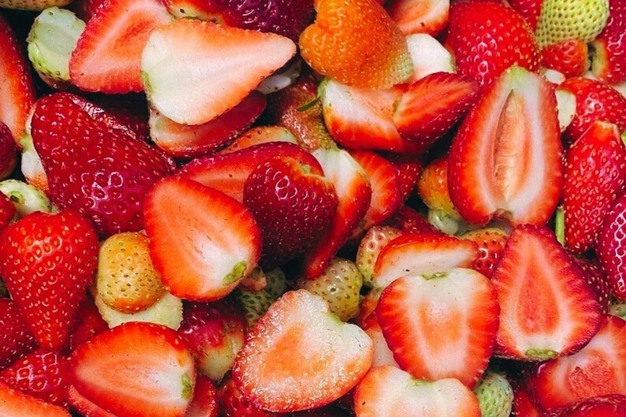
Cultivated strawberry
Two molecules are central to these qualities: (Z)-3-hexenal, which gives greener notes, and (E)-2-hexenal, which produces fresher and sweeter tones. Until now, the gene responsible for converting one molecule into the other was unknown. The study, carried out by CRAG researchers Rong Zhang, Dylan Nunnally, and Elli Koskella and led by IRTA researcher Amparo Monfort, reveals how this conversion is controlled. Their findings, published in Horticulture Research, explain the mechanism that balances these two compounds and how this knowledge can guide the development of improved strawberry varieties.
Researchers confirmed that differences in strawberry aroma are driven by how the FvHI gene is regulated rather than by changes in the protein it encodes. When FvHI expression is low, (Z)-3-hexenal rises, strengthening green notes. When expression is high, (E)-2-hexenal increases, creating a sweeter aroma. This shows that FvHI acts as a molecular switch that shapes the final smell and taste of the fruit.
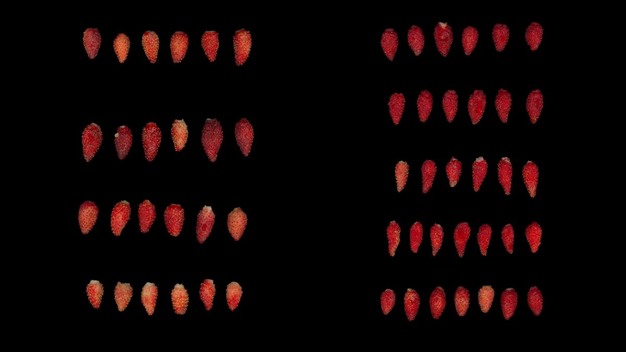
Wild strawberry
To uncover this mechanism, the team worked with nearly isogenic lines, which are genetically similar except for a specific genomic region. These lines came from a cross between diploid strawberry species. This approach made it possible to isolate the gene responsible for aroma and validate its function. According to Monfort, this strategy is especially useful because cultivated strawberry is an octoploid crop with eight sets of chromosomes, which complicates genetic studies. Its wild relative, Fragaria vesca, has a simpler diploid genome but still shares much of its architecture with commercial strawberry, making it an ideal research model.
The compounds involved in this aroma pathway also play a role in the plant’s response to damage and wounds. Understanding how these molecules are regulated not only improves fruit quality but also opens the door to enhancing natural plant defences.
The results provide new tools to guide breeding efforts toward varieties with flavours that consumers appreciate most. Aroma is a core part of taste, along with the balance of sugars and acids, and this research lays the groundwork for strawberries with fresher and more balanced profiles. Beyond flavour, the green leaf volatiles studied here are essential to a plant’s natural defence system. This discovery supports the development of fruit with improved aroma and the creation of crops that are more resilient and less reliant on chemical treatments, helping move agriculture toward more sustainable practices.
Quand l’automatisation vient soutenir les producteurs de myrtilles et d’asperges avec le groupe Maf-Roda lors des International Asparagus & Berries Days par FreshPlaza
Berryway et Optisort de Maf Roda :
Quand l’automatisation vient soutenir les producteurs de myrtilles et d’asperges
A l’occasion du salon IAD – IBD qui s’est tenu le mois dernier dans la région bordelaise, le Groupe Maf-Roda – sponsor Platinium de l’évènement – est venu présenter ses solutions de tri et calibrage destinées aux fruits rouges et aux asperges. Deux installations qui ne sont pas passées inaperçu.
Berryway et Berryscan : une technologie à la pointe qui permet une grande précision dans le tri tout en respectant le fruit Ainsi, la calibreuse Berryway a attiré l’attention des visiteurs, puisqu’elle constitue une solution complète pour le post‑récolte des myrtilles, alliant délicatesse dans la manipulation et grande précision dans le tri. « La Berryway est conçue pour traiter les myrtilles avec le maximum de délicatesse. Chaque ligne prend soin des fruits pour limiter les chocs et garantir leur intégrité », explique Fabrice Blanc, directeur général de Maf Roda. Modulable de deux à dix-huit lignes, chacune traitant 160 à 200 kg de myrtilles/heure/ligne pour un poids moyen de 2g par fruit, Berryscan s’adapte aussi bien aux petits producteurs qu’aux structures industrielles.
Le module Berryscan vient renforcer cette performance grâce à un tri optique multispectral particulièrement précis. Photographiant chaque baie sur 360°, il analyse couleur, forme et qualité externe, tout en détectant les défauts comme les fruits mous, déshydratés ou abîmés. « Grâce à la technologie Insight, nous pouvons mesurer le taux de sucre pour garantir un produit constant et savoureux », précise Fabrice Blanc. Basé sur l’intelligence artificielle, le logiciel permet d’ajuster finement les critères de tri (forme, fermeté, taille, Brix) et d’automatiser l’ensemble du processus jusqu’au conditionnement.
Déjà largement déployée à l’international – des États-Unis à l’Afrique du Sud en passant par l’Europe de l’Est – la solution suscite désormais un intérêt marqué en France. « La demande pour des lignes de tri performantes et automatisées progresse fortement », observe Fabrice Blanc. En réduisant la dépendance au tri manuel tout en maximisant la qualité finale, Berryway et Berryscan se positionnent comme des outils indispensables pour les producteurs cherchant à gagner en précision, en productivité et en valeur ajoutée.
Une calibreuse à asperges permettant une grande précision dans l’associativité Côté asperges, Maf-Roda propose également depuis l’acquisition de la société allemande Strauss, une gamme de solutions complète, allant de l’aide à la récolte au conditionnement en passant par le calibrage et le pesage. Au salon, ce fut la calibreuse pour asperges blanches et vertes qui fut présentée : « Dans cette filière aussi, nous pouvons proposer des solutions clé-en-main qui s’adaptent à tout type de structure », précise Fabrice Blanc.
Des solutions d’autant plus appréciées dans un secteur particulièrement gourmand en main d’œuvre, puisqu’aucune intervention humaine n’est requise, si ce n’est la réception du produit une fois conditionné. « Nous sommes les premiers à faire de l’automatisation en bottes. Notre calibreuse permet d’avoir une grande précision dans l’associativité, à +/- 4g sur la botte. La capacité de nos machines s’étend de 800kg/ 1,2T à 2T/h ». Une autre particularité des calibreuses Strauss – Maf-Roda, réside dans l’efficacité du lavage qui se fait à haute-pression. Un atout certain pour des produits sortant directement du sol tels que les asperges, souillées par le sable qui se glisse dans leurs écailles.
A noter que la calibreuse à asperges présentée à l’occasion du salon peut également être adaptée à la production de poireaux, de courgettes mais aussi de rhubarbe.
Pour plus d’informations : Christophe Nivet Maf-Roda Tél. : +33 5 63 63 27 70
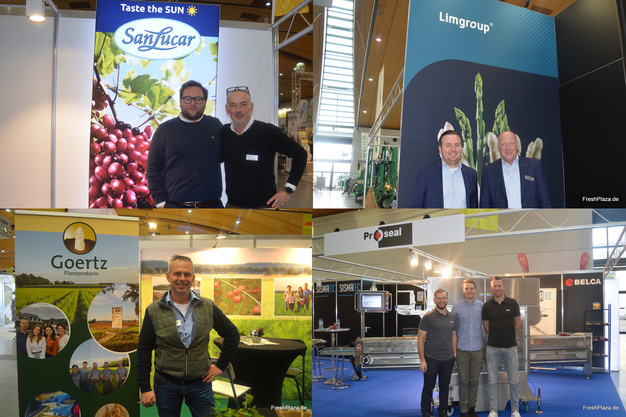
Cette année encore, l’ensemble du secteur des asperges et des fraises s’est retrouvé à Karlsruhe. Sur deux jours, les deux halls d’exposition ont accueilli 426 exposants venus de 16 pays qui ont présenté leurs nouveautés et leurs produits. La plupart des exposants sont originaires d’Allemagne et des Pays-Bas, mais des Français, des Polonais, des Italiens, des Espagnols et quelques Européens de l’Est ont également participé au salon. Au fil des ans, l’offre de la foire s’est considérablement élargie et aujourd’hui, un fournisseur international peut se trouver à côté d’un magasin à la ferme. « C’est vraiment ce qui fait le charme de cet événement », a déclaré un participant en soulignant le caractère unique de l’expoSE/expoDirekt.
Nouveaux exposants positifs Bien qu’après presque 30 ans, le salon soit devenu un rendez-vous incontournable pour de nombreux fournisseurs du secteur des asperges et des petits fruits, il y a eu cette année encore plus de 60 nouveaux exposants, dont Looije Agro Technics. « Nous constatons, surtout ici en Allemagne, une vraie tendance à passer de la culture de fraises en plein champ à la culture sous abri. C’est la principale raison de notre participation, car de nombreux producteurs de petits fruits viennent traditionnellement à Karlsruhe. » Parallèlement, certains exposants reviennent après plusieurs années, notamment le fournisseur de machines Top Control du Tyrol du Sud. « Pour nous, cela fait peut-être dix ans que nous n’avons pas eu notre propre stand. À l’époque, nous n’avions qu’un portefeuille limité, ce qui faisait que nous n’avions pas notre place ici. Entre-temps, nous nous sommes développés rapidement et ce salon est la plateforme idéale pour nous. Nous reviendrons donc sans aucun doute l’année prochaine. »
Petits fruits couverts en hausse, asperges en transition Comme le soulignent certains participants, la culture sous abri est en constante augmentation, en particulier en Allemagne, mais aussi dans d’autres pays d’Europe occidentale et centrale. En raison de la disparition des cultures traditionnelles en plein air et de l’augmentation des cultures, plus petites mais plus efficaces, sur des gouttières et sous des tunnels, la superficie totale cultivée diminue. Les experts et les fournisseurs prévoient que les producteurs qui ne suivent pas finiront par disparaître. »
Le secteur des asperges connaît une évolution similaire. « Avant, on voyait encore des producteurs laisser fleurir des parcelles plus anciennes, au sens propre comme au sens figuré. Aujourd’hui, ces parcelles sont arrachées plus tôt et replantées, la plupart du temps avec des variétés plus modernes », rapporte un fournisseur de matériel de plantation. En termes d’innovation variétale, cependant, le secteur ne suit pas encore. Limgroup a toutefois profité de l’occasion pour présenter sa nouveauté Ruralim et Enza Zaden travaille sur une nouvelle variété destinée à la culture en Europe du Nord-Ouest. Celle-sera commercialisée à partir de la saison prochaine et n’a pas encore de nom officiel.
Besoin d’alternatives durables en matière d’emballage Un sujet brûlant dans le secteur en ce moment est la redoutable loi PPWR sur les emballages, qui entrera en vigueur à partir de 2030 dans l’ensemble de l’UE. Les fournisseurs réagissent, après plusieurs années sans vraiment d’innovations en matière d’emballage durable et appellent massivement le secteur à passer à temps à des emballages conformes à la loi PPWR. Cette évolution nécessaire doit se poursuivre dans les années à venir jusqu’à l’introduction officielle, bien que l’urgence ne semble pas encore avoir été perçue par tous les acteurs de la filière.
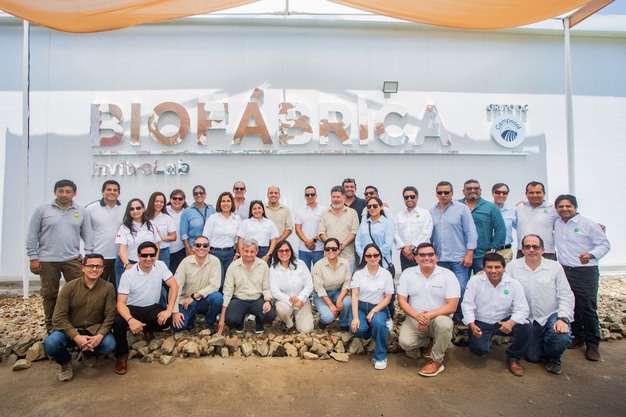
Camposol has inaugurated a new biofactory in Chao, Virú (Trujillo), describing it as part of its broader strategy for genetic development and expansion into new crop areas. The facility covers 2,000 square meters and has an annual production capacity of up to 5 million blueberry plants.
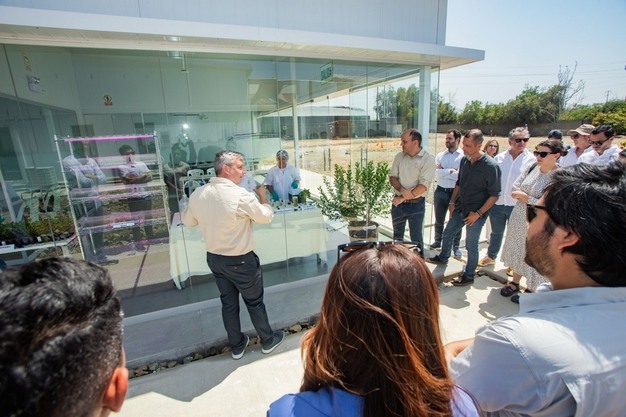
The biofactory integrates in vitro and ex vitro propagation processes within one site. In vitro work includes the establishment and multiplication phases, using conventional methods alongside bioreactors to increase propagation efficiency and reduce production time. All methods follow traditional, non-GMO breeding techniques.
The ex vitro area uses European growth-chamber systems that allow precise control of temperature, humidity, CO₂, and lighting. These conditions are used to manage seedling acclimatization, including rooting, growth, and hardening, before plants move to the main nursery and then to production fields.
The facility is operated by a team with experience in tissue culture and plant biotechnology.
Camposol CEO Ricardo Naranjo said the biofactory will support the company’s capacity to develop and multiply its own plant material. He said the facility is intended to speed up the rollout of proprietary blueberry varieties that reflect market requirements.
According to the company, the increased production capacity will support plans to plant additional hectares using internal genetics and to replant certain existing areas with newer varieties. Camposol said its breeding program is ongoing and is expected to generate new varieties adapted to local growing conditions.
Naranjo said the biofactory gives the company more control over plant availability for its expansion plans and supports long-term operational consistency.
Peru expects a 10% growth in agro-exports by 202 by FreshPlaza
Peru expects a 10% growth in agro-exports by 2025
Over the past two decades, Peru has firmly established itself as a major player in global agriculture. It now ranks among the world’s top exporters of products like asparagus, blueberries, avocados, and table grapes. This rapid growth has made agricultural exports the country’s second-largest source of income, after mining, and has significantly boosted employment, directly or indirectly involving nearly a quarter of the population.
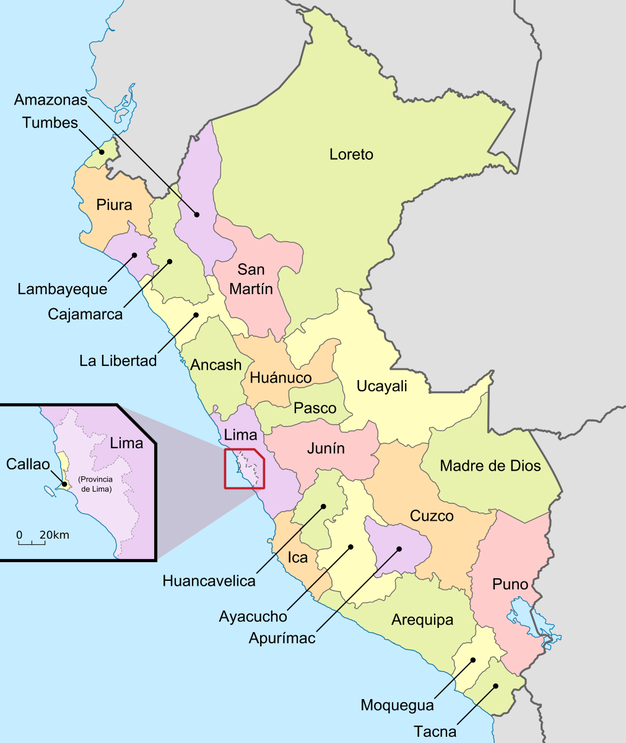
Peru’s natural advantage: geographic and climatic diversity One of Peru’s greatest strengths lies in its natural diversity. With up to 38 different climate types across its territory, Peru can grow crops year-round. This gives it a clear edge over other countries with more rigid seasonal cycles.
Geographically, Peru is divided into three regions: the Coast, the Highlands (Sierra), and the Jungle (Selva). The Coast, although mostly desert, is home to around 60% of the population—mainly in urban areas. Thanks to the large-scale use of modern irrigation systems, this region has developed a high-value agricultural sector. Here, export-oriented crops are grown, such as table grapes, avocados, mangoes, blueberries, asparagus, artichokes, onions, and peppers. However, northern and, to a lesser extent, central coastal areas are vulnerable to the El Niño coastal phenomenon, which periodically brings intense, and sometimes destructive, rains.
The Sierra, home to about 26% of Peruvians, is dominated by small-scale farmers who typically work plots smaller than five hectares. Their focus is mainly on the domestic market, growing traditional crops like potatoes, corn, quinoa, cabbage, carrots, and tomatoes. That said, more commercial crops such as avocados are also emerging in some Andean areas, along with pilot projects involving cherries.
The Selva (Jungle) makes up 60% of Peru’s land area but holds just 14% of its population. Subsistence farming is still common here, though in recent years, commercial production of coffee, cacao, bananas, ginger, and turmeric has expanded.
Farm structure and the challenges facing small growers Many of Peru’s key export crops, avocados, mangoes, bananas, citrus fruits, asparagus, peppers, artichokes, onions, ginger, and turmeric, are to some extent grown by smallholders. This structure is partly the result of the agrarian reform of the 1970s and later land fragmentation through inheritance. As a result, minifundios (small plots) are common, especially in the Sierra and Selva, and in some parts of the Coast.
This fragmented landscape creates major challenges for efficient marketing: lack of organization, poor infrastructure, inconsistent standards, and limited access to technology. To overcome these barriers, various export companies are working to integrate small producers by providing training, supplying inputs, and coordinating production volumes.
In contrast, crops like table grapes and blueberries are mostly grown on large estates managed by agro-industrial firms. These operations benefit from economies of scale, meet international phytosanitary standards more easily, and can connect directly to global markets.
Growth in numbers: agro-exports aiming for $14 billion According to Peru’s Minister of Foreign Trade and Tourism, Teresa Mera, the country’s agricultural exports are projected to exceed $14 billion in 2025—a 10% increase over the previous year. This surge is largely driven by coastal regions, with Ica, La Libertad, Piura, and Lambayeque accounting for more than 80% of total exports.
Peru’s top 5 agricultural exports in 2024
1. Blueberries With more than 20,000 hectares under cultivation, Peru is the world’s leading blueberry exporter, far ahead of the U.S. and Morocco, whose exports are six times smaller. In 2024, Peru exported 325,846 tons worth $2.27 billion. Over 75% of production comes from La Libertad and Lambayeque. Harvest begins in June, peaks in September and October, and wraps up in March. The U.S. is the main market, absorbing 57% of exports, followed by the EU (22%), China, and Hong Kong.
2. Table grapes Peru also tops the global ranking for table grape exports, sending out 558,063 tons in 2024, valued at $1.70 billion. It outpaced Chile (529,470 tons) and China (483,373 tons in 2023). The harvest season starts in September and runs through April, with the largest export volumes in December and January. Ica and Piura produce over 80% of the national output. Key markets include the U.S. (47%), the EU (17%), and Asia (13%). The total cultivated area exceeds 22,000 hectares.
3. Avocados With nearly 35,000 hectares of avocado groves across Lambayeque, La Libertad, Lima, and Ica, Peru exported 570,457 tons in 2024, generating $1.25 billion. It ranks second globally, after Mexico (1,120,918 tons) and ahead of Israel (151,374 tons in 2023). While exports happen year-round, the bulk occurs from March to September. The EU is the main buyer (51.8%), followed by the U.S. (13.9%).
4. Asparagus Peru enjoys the rare ability to produce asparagus all year. In 2024, the country exported 96,731 tons, earning $406 million. It’s the world’s second-largest exporter after Mexico (129,837 tons) and ahead of the U.S. (42,873 tons in 2023). La Libertad is the top-producing region, accounting for 50% of national output. The total cultivated area is around 28,000 hectares.
5. Mangoes Mango production is largely concentrated in Piura, which accounts for 65% of Peru’s output. The export season runs from October to April. In 2024, the country exported 177,903 tons worth $317 million, ranking fourth globally behind Mexico (461,766 tons), Thailand (377,351 tons), and Brazil (266,575 tons in 2023). Total cultivated area reaches 42,000 hectares.
Additional key exports are citrus fruits (195,032 tons; $255 million), dried paprika (34,400 tons; $130 million), fresh or chilled onions (308,368 tons; $127 million), processed artichokes (43,445 tons; $120 million), bananas (mostly organic – 150,760 tons; $115 million) and ginger (47,793 tons; $104 million, despite a recent drop in volume). These 11 products alone account for 53% of Peru’s total agricultural exports. In addition, coffee (8.6%) and cacao (5.8%) remain vital components of Peru’s agricultural export portfolio.
Export destinations and port logistics Peru’s main export destinations in 2024 were the United States (34.7%), the Netherlands (14.8%), Spain (6.4%), the UK (3.7%), Chile and Mexico (3.5% each), Ecuador (3.1%), Germany, China, and Canada (between 2.4% and 2.6%). By region: the U.S. and Canada received 37.1% of exports, Europe 33.2%, Latin America 17.2%, and Asia 10.1%.
Key export ports included Callao (39%), Paita in Piura (19.4%), Salaverry in La Libertad (14.1%), Pisco in Ica (11.6%), and Chiclayo in Lambayeque (4.7%). Special mention goes to the port of Chancay, which, although handling just 0.5% of exports in 2024, is emerging as a strategic gateway to the Asian market, where demand for Peruvian fruit is growing rapidly.
Investment and new agricultural projects Peru’s investment agency, Proinversión, sees great potential for expanding modern agriculture. Through Public-Private Partnerships (PPPs), up to 250,000 hectares of new farmland could be added, requiring investments of over $4.3 billion. This would double the current export-oriented agricultural area, now at roughly 250,000 hectares. These new projects are expected to be managed by large agro-industrial companies.
Key initiatives include: Chavimochic Stage III (La Libertad; ~111,000 ha), Majes Siguas Stage II (Arequipa; ~38,500 ha), Chinecas (Áncash; ~83,000 ha) and Chancay–Lambayeque (Lambayeque; ~20,000 ha). Additionally, 168,000 hectares are being evaluated for inclusion through other projects like Olmos II (Lambayeque), Pampas Verdes (Ayacucho), and Alto Piura and Chira (Piura).
*The data provided in this article comes from the Peruvian Ministry of Agrarian Development and Irrigation (Midagri), the Ministry of Foreign Trade and Tourism (Mincetur), the National Superintendence of Customs and Tax Administration (Sunat), the National Institute of Statistics and Informatics (Inei), and Faostat.
Sylektis: Transformer la récolte agricole avec le tout premier robot de récolte autonome polyvalent. Pour accentuer notre croissance, nous proposons à notre communauté l’opportunité de devenir actionnaire de Sylektis et de contribuer au changement dans l’agriculture durable. Sylektis a une excellente expérience dans la récolte des asperges blanches et vertes.
Sylektis: Transformer la récolte agricole avec l’AsperCut, le tout premier robot de récolte d’asperges blanches et d’asperges vertes. Vidéo de l’AsperCut en action:https://youtu.be/jO_I0FiE2Ds?si=bEw4fxVoiMPxpkLy Pour lancer notre croissance, nous vous proposons l’opportunité de devenir actionnaire de Sylektis et de contribuer au changement dans l’agriculture durable. Les défis du marché agricole :Dépendance aux importations pour plus de 50% des fruits et légumes en France, entraînant des conséquences sur la qualité et l’environnement. Manque chronique de personnel agricole, avec un besoin annuel de 270 000 saisonniers. Accroissement de l’agriculture robotisée: marché estimé à 27,7 milliards USD d’ici 2029, avec un TCAM de 13,1%. La réponse de Sylektis :Sylektis s’attaque à ces problématiques avec un robot de récolte polyvalent novateur, conçu pour les fruits et légumes, qui : – Diminue de 88% les besoins en personnel, un opérateur contrôlant plusieurs robots de récoltes. – Augmente la précision de la récolte grâce à une vision 3D et une IA sophistiquée, réduisant les gaspillages. – Réduit de 50% l’empreinte carbone, promouvant la production locale et durable. Nos réalisations et perspectives :Validation solide du marché : Potentiel de ventes de 147 millions d’euros. Levée de 1M€ pour soutenir la R&D, avec un retour sur investissement prévu sur 4 ans. Vente de 8 robots dès 2027 puis montée à 100 robots par an dès 2029.Projection d’un chiffre d’affaires supérieur à 4 M€ dès 2027-28. Modalités d’investissement :Les investissements sont réservés aux 30premiers investisseurs retenus. Pour plus d’informations, contactez directement par email ou téléphone Wilfried Garrigue, président de Sylektis. Notre équipe est prête à discuter avec vous et à répondre à toutes vos questions. Avec Sylektis, le futur s’est maintenant, alors n’hésitez pas à nous rejoindre!
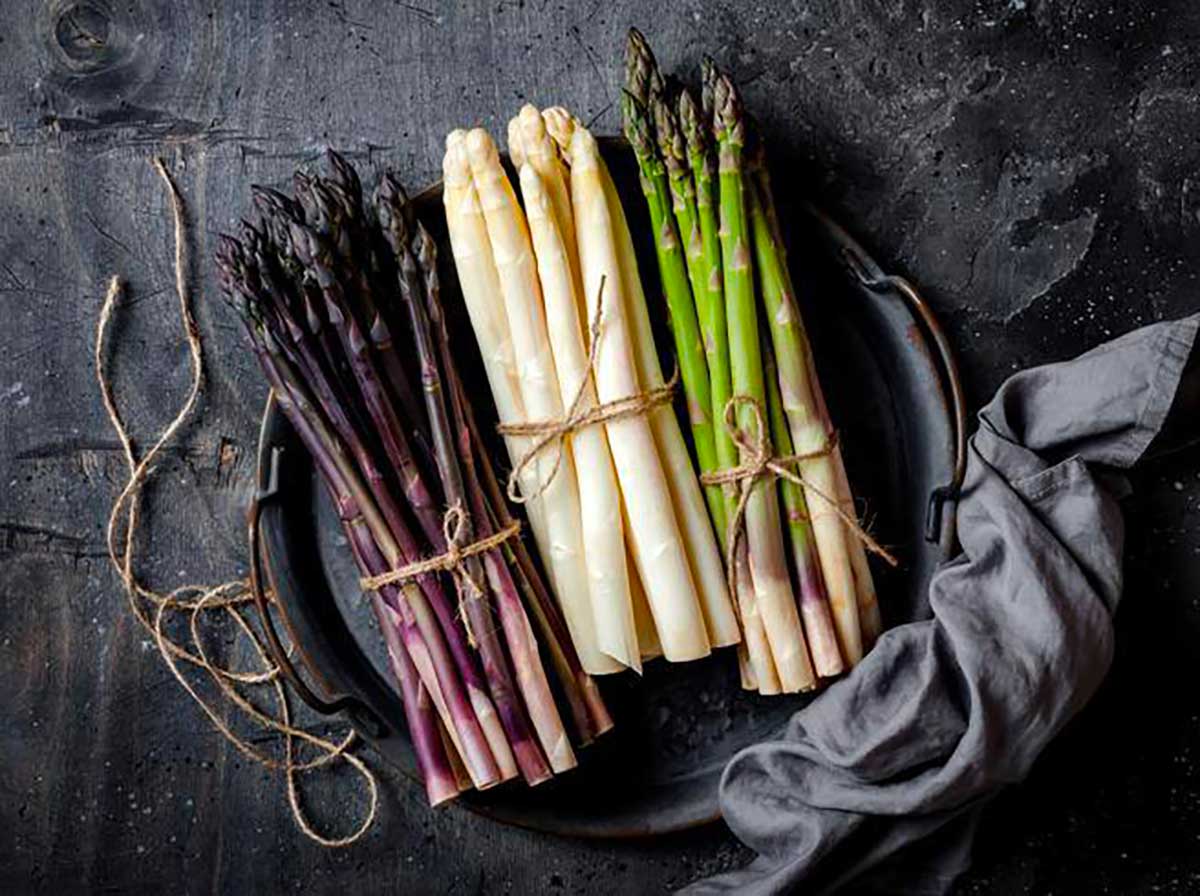
Asparagus are delicious vegetables that can be enjoyed in many ways and offer numerous health benefits. Discover some key benefits and a simple asparagus recipe:
They are low in calories and fat, but rich in nutrients. Asparagus are a good source of vitamins A, C, E, and K, as well as minerals like iron, calcium, and magnesium, and dietary fiber.
They may help prevent heart disease. Asparagus contain folate, which can reduce elevated homocysteine levels in the blood—a risk factor for heart problems.
They can help reduce inflammation. Asparagus are a good source of quercetin, an antioxidant known to lower inflammation in the body.
They may improve digestion. Their high fiber content supports digestive health and helps prevent constipation.
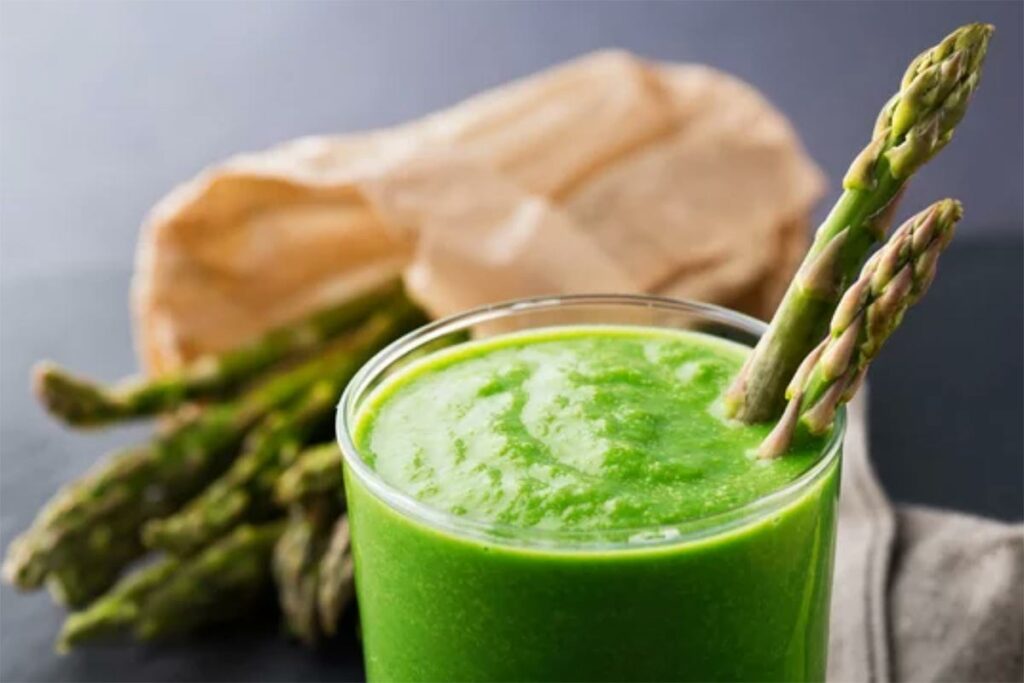
Asparagus juice is a great way to enjoy the vegetable’s health benefits. Here are some of its potential effects:
May help reduce inflammation, thanks to its quercetin content. May support digestion — especially helpful for those who struggle to eat enough vegetables. May help regulate blood pressure, as asparagus are a good source of potassium. May benefit skin health, thanks to vitamins A and C.
Freshly pressed asparagus juice is best, as it contains more nutrients than bottled juice. You can make it at home using a juicer or blender—just blend the asparagus and strain to extract the juice. Add other vegetables or fruits to improve taste and boost nutritional value.
Manage consent
To provide the best experiences, we use technologies such as cookies to store and/or access device information. Consenting to these technologies will allow us to process data such as browsing behavior or unique IDs on this site. Failure to consent or withdrawing consent may adversely affect certain features and functions.
Functional
Always active
Technical access or storage is strictly necessary for the legitimate interest purpose of enabling the use of a specific service explicitly requested by the subscriber or user, or for the sole purpose of carrying out the transmission of a communication over an electronic communications network.
Preferences
Technical access or storage is necessary for the legitimate interest purpose of storing preferences that are not requested by the subscriber or Internet user.
Statistics
Technical storage or access that is used exclusively for statistical purposes.Technical storage or access that is used exclusively for anonymous statistical purposes. Absent a subpoena, voluntary compliance from your internet service provider, or additional records from a third party, information stored or retrieved for this sole purpose generally cannot be used to identify you.
Marketing
Technical access or storage is necessary to create user profiles in order to send advertisements, or to track the user on a website or across websites with similar marketing purposes.

 Cultivated strawberry
 Wild strawberry
 For more information: