
| Réussir Fruits et Légumes : valoriser les petits calibres d’asperges grâce à l’éplucheuse Agrivaloire |
Archive
Genius : La prochaine génération d’asperges blanches par Bejo
“Instead of functioning purely as individual packs, the trays form part of a geometric structure” AVI Global Plast and Smart Packaging Industries collaborate on new packaging design by FreshPlaza
AVI Global Plast and Smart Packaging Industries collaborate on new packaging design
“Instead of functioning purely as individual packs, the trays form part of a geometric structure”
Blueberry harvests are subject to one of the most demanding supply chains in fresh produce, says Sukhdeep Sethi, managing director of packaging manufacturer AVI Global Plast: “After harvesting, berries must be kept cool, packaged, and shipped using temperature-controlled logistics for optimal distribution. Packaging therefore needs to protect delicate fruit while also using transport space as efficiently as possible. Yet once conventional, clamshell rPET-punnets are filled and stacked into cartons, significant gaps remain between packs. Industry estimates suggest that in many palletized shipments close to half of the available transport space can consist of empty air rather than fruit.”
“This inefficiency largely stems from the design of traditional containers,” Sethi continues. “Most punnets are tapered, so that empty packs can nest together when transported from packaging factories to packhouses. Once fruit is packed inside them, the same geometry leaves voids between containers when cartons are stacked on pallets. For exporters moving blueberries across long distances, these gaps reduce pallet efficiency and increase the total volume that must be transported and stored in refrigerated logistics systems.”
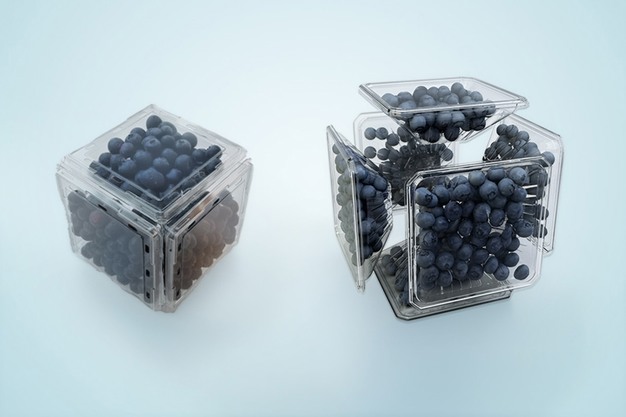
To solve this problem, AVI now introduces a new space-saving packaging system in India, Sethi explains: “The Q-Bic packaging concept, developed by Smart Packaging Industries, addresses the issue by rethinking how containers combine once they are filled and prepared for shipment. Instead of functioning purely as individual packs, the trays form part of a geometric structure, in which multiple units combine into compact cube formations. These cube units can then be stacked tightly inside cartons, reducing the empty space normally seen between conventional punnets.”
The impact becomes clearer when pallet density is considered, Sethi states. “Trials in commercial blueberry packing programs indicate that cube-based palletization can allow for approximately double the number of packs per pallet compared with conventional clamshell formats. In practical export logistics, this means that a large share of the ‘shipping of air’ typically present in conventional punnet pallets can be eliminated, often reducing pallet movements and refrigerated logistics volume by around 50%.”
Sethi adds that in addition to logistics efficiency, the cube-based structure also enables reductions in packaging materials across the supply chain: “The improved structural geometry allows optimization of the consumer pack (C-pack) in rPET, while the tighter pallet configuration reduces the amount of corrugated cardboard required for secondary packaging and distribution cases, with reductions of up to 59% in corrugated board usage observed in 125g blueberry formats.”
“The rPET clamshell punnets incorporate ventilation channels that allow airflow through palletized packs, supporting cooling performance during storage and shipment,” Sethi goes on. “Structural stability is another factor influencing fruit protection. Standard plastic punnets often take stacking stress on their top lid or rim. As a result, they can be damaged by compression due to uneven loads during transport. Combining rPET clamshell punnets together in cube formations distributes loads across a larger structural framework. The cube geometry transfers forces across three axes and six directions within the structure, rather than concentrating compression on the lid or rim of individual packs. This helps stabilize pallet stacks while decreasing the likelihood of damaged berries.”
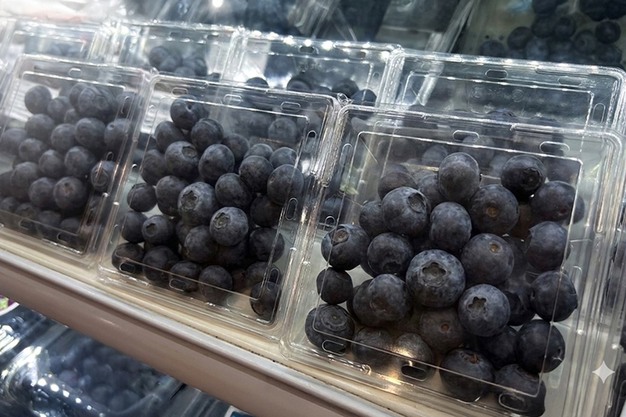
According to Sethi, higher packing densities also affect how products move through the distribution chain. “Each pallet holds more product than before; therefore, fewer pallets travel through packing plants, cold storage facilities, and distribution centers. This reduces the number of loading and unloading processes necessary in the supply chain. In large blueberry export programs, improvements in pallet utilization have been associated with logistics and storage reductions of around 50%, reflecting the more efficient movement of fruit through refrigerated distribution systems.”
Transport efficiency is closely linked to the environmental footprint of fresh produce distribution, Sethi emphasizes. “Refrigerated transport and cold storage account for a substantial share of emissions in global produce supply chains. By combining higher pallet density with lower material consumption in both rPET consumer packs and corrugated distribution cases, the overall packaging and logistics system becomes significantly more resource efficient. Industry assessments suggest that improvements in packing efficiency and material reduction at this scale can contribute to emission reductions exceeding 40% in packaging and transport operations.”
For more information:
Sukhdeep Sethi
AVI Global Plast
sethi@avigloplast.com
https://avigloplast.com Publication date: Wed 11 Mar 2026
Club innovation d’Interfel : continuer de valoriser et stimuler en 2026 ! par Vegetable
Club innovation d’Interfel : continuer de valoriser et stimuler en 2026 !
Par
5 mars 2026
36
https://www.facebook.com/plugins/like.php?href=https://www.vegetable.fr/club-innovation-dinterfel-continuer-de-valoriser-et-stimuler-en-2026/&layout=button_count&show_faces=false&width=105&action=like&colorscheme=light&height=21
Partager
À l’occasion du SIA 2026, le Club innovation d’Interfel confirme ses ambitions pour une 3e année consécutive, celle d’accélérer l’innovation en fruits et légumes.

Autour d’un café, Pierre Compère, directeur conseil-innovation indépendant, et Olivier Aycaguer, responsable du service économie et compétitivité filière chez Interfel, ont animé un temps d’échanges autour du programme 2026 du Club innovation d’Interfel. Créé en 2024 et coprésidé par George Daniel et Jean-Louis Moulon, celui-ci s’inspire de la pensée de Gaston Bachelard : « Le réel n’est jamais ce qu’on pourrait croire, mais il est toujours ce qu’on aurait dû penser. »
Sa vocation est donc bien d’accélérer l’innovation au service de la consommation des fruits et légumes, en mobilisant tous les maillons de la filière et son écosystème (comme le CTIFL, l’Aprifel ou les comités régionaux). Les animateurs ont rappelé l’ambition affichée de cette initiative : rendre l’innovation « visible, lisible et désirable dans et au-delà de la filière ». Pour y parvenir, le club s’appuie sur deux piliers complémentaires : le trophée des « Remarquables » pour valoriser et les cahiers d’inspiration « Reflex » pour stimuler.
Trophée « Les Remarquables » : 3e édition pour 2026 !
Avec ce concours, le Club innovation entend mettre en lumière des solutions déjà déployées sur le terrain, mais encore perçues comme nouvelles. L’objectif est double : faire connaître des innovations pertinentes contribuant à développer la consommation de fruits et légumes et accompagner leur diffusion au sein de la filière.
Les projets sont évalués selon trois critères : la création de valeur pour le consommateur, l’impact économique, environnemental et social, et le degré de nouveauté. L’édition 2025 a confirmé l’intérêt de la démarche, avec une bonne représentativité de la filière et de ses débouchés. La session 2026 sera officiellement lancée au Medfel, avec une ouverture des candidatures début mai.
La remise des prix est d’ores et déjà programmée le 19 octobre 2026 à 16 h3 0 au Sial, salon biennal de l’agroalimentaire, offrant une vitrine stratégique aux lauréats.
Prochains numéros des cahiers d’inspiration « Reflex »
Lancés en 2025, les cahiers d’inspiration « Reflex » analysent les grandes tendances de la food en croisant les regards d’experts et de chercheurs issus de tous horizons, puis les traduisent en concepts appliqués aux fruits et légumes. Destinés aux professionnels, ces supports, accessibles en ligne aux cotisants d’Interfel, ambitionnent de nourrir la réflexion stratégique et opérationnelle de la filière, à raison d’un à deux numéros par an.
Le premier, « Les sens de l’expérience : stimuler les sens pour créer le désir », proposait notamment le concept de « la canopée », imaginé par des étudiants en design : un rayon théâtralisé en arche végétale, évoquant la cueillette. Un 2e numéro, « L’expérience des sens : nourrir l’imaginaire et la pratique », est attendu dans l’année, tandis que deux autres éditions sont déjà en préparation. De quoi confirmer, en 2026, la volonté du Club innovation d’inspirer et de renforcer la dynamique de la filière des fruits et légumes.

« Notre diversité variétale permet de répondre aux besoins de chaque producteur de fraise et d’asperge » par Frédéric Angier, Angier International et FreshPlaza
Frédéric Angier, Angier International :
« Notre diversité variétale permet de répondre aux besoins de chaque producteur de fraise et d’asperge »
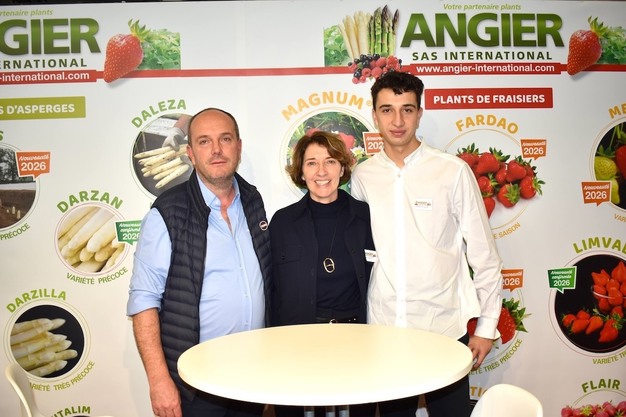
Depuis 55 ans, l’entreprise familiale Angier International s’emploie à apporter une réponse adaptée à chaque producteur, à chaque terroir, à chaque marché.
Spécialisée dans la production de plants de fraisiers et de griffes d’asperges, l’entreprise s’est forgé une identité singulière dans le paysage français : celle d’un pépiniériste indépendant, non obtenteur, capable d’offrir une gamme variétale particulièrement large.
« Notre marque de fabrique, c’est cette diversification variétale. Nous sommes aussi bien capables d’apporter une solution adaptée à un producteur niçois qu’à un producteur lillois, et ce à toutes les exploitations quelles que soient leurs tailles.
Chez nous, un producteur est un producteur », résume Frédéric Angier, directeur de la société éponyme.
Une indépendance revendiquée au service du choix variétal
Contrairement à d’autres acteurs intégrés à un programme génétique unique, la société Angier a fait le choix de ne plus être obtenteur. « Nous l’avons été dans le passé, mais nous avons arrêté la création variétale pour travailler aujourd’hui avec différents programmes de sélection, français et étrangers ».
Un positionnement qui lui permet de proposer une diversité génétique issue de programmes français, italiens, anglais et hollandais. « A nous de savoir ensuite développer et proposer les variétés les plus pertinentes en fonction des besoins de nos clients. »
En fraise, cette diversité est particulièrement marquée. Elle permet de répondre à des créneaux commerciaux variés – précocité, rendement, qualité gustative, adaptation au hors-sol – mais aussi à des contextes pédoclimatiques très différents. « Nous mettons à disposition une offre qui peut correspondre à des environnements très contrastés. C’est ce qui fait notre force. »
En asperge, la situation est plus homogène. « En Europe, nous travaillons avec des programmes où la génétique est assez similaire.
La culture d’asperge est une culture qui répond à des cycles beaucoup plus longs que la fraise. Le producteur ne peut pas changer de variété chaque année. Il y a donc moins de diversité qu’en fraise, même si les hybrides ont beaucoup évolué et que la valeur des griffes a fortement augmenté. »
Une entreprise familiale tournée vers l’export
Si l’entreprise reste à taille humaine et très attachée à répondre aux besoins du marché national, son horizon dépasse largement les frontières françaises.
Sur les 50 millions de plants de fraisiers et les 6 millions de griffes d’asperges commercialisés chaque année, 25 % sont destinés à l’export. « C’est une spécificité de notre entreprise. Peu d’acteurs français exportent à ce niveau-là », souligne Frédéric Angier.
L’Europe constitue le principal débouché, mais l’entreprise travaille également avec certains pays d’Afrique centrale, les DOM-TOM ou encore la Corée du Sud, de manière régulière ou ponctuelle selon les opportunités.
La production s’appuie sur 80 hectares dédiés aux fraisiers, en pleine terre et en hors-sol, et 35 hectares pour les griffes d’asperges. Un outil dimensionné pour répondre à des marchés variés, tout en conservant une gestion familiale. « Nous portons notre nom.
Nous ne sommes pas une multinationale et tenons à continuer de faire de la relation avec nos clients un point de différentiation par rapport à d’autres très grosses sociétés qui rayonnent sur le marché mondial ».
L’évolution du fraisier : du plant racines nues au plant à potentiel intégré
Le marché du fraisier a profondément muté en trois décennies. « Il y a 30 ans, nous travaillions principalement pour des cultures de pleine terre avec des plants racines nues. Aujourd’hui, la réduction voire l’abandon des surfaces plein champ et le développement du hors-sol ont complètement changé la donne. » La culture hors-sol exige des plants mottés, avec un potentiel déjà construit en pépinière. « Avant, le producteur finissait en quelque sorte le travail. Aujourd’hui, le potentiel du plant se fait chez nous. L’exigence qualitative est beaucoup plus forte ».
Productivité, homogénéité, qualité sanitaire, respect des calendriers de livraison : les attentes se sont intensifiées. « De la prise de commande à la livraison, tout doit être maîtrisé. Il faut que nous réussissions à proposer des plants qui répondent à la fois à des contraintes phytosanitaires de plus en plus présentes et aux attentes des producteurs en termes de productivité et qualité ».
Parallèlement, le nombre d’acteurs s’est considérablement réduit. « Les capitaux engagés ne sont par ailleurs plus du tout les mêmes qu’il y a 30 ans. Aujourd’hui, il y a un vrai risque à faire notre métier, risque que certains ne sont plus prêts à prendre. En plants de fraisiers, on comptait 25 à 30 entreprises et aujourd’hui, nous sommes moins d’une dizaine. Même tendance en asperge, nous sommes passés de huit à deux acteurs français en 25 ans. »
Un contexte phytosanitaire sous tension
À ces mutations structurelles s’ajoutent les contraintes réglementaires. « La gamme des produits homologués se réduit d’année en année. L’interdiction récente du Movento par exemple pour lutter contre le puceron est un vrai sujet. Si des dérogations pour un autre produit alternatif ont pu être accordées en production de fraises, elles ne concernent pas les pépinières. « Nous n’avons à ce jour pas d’alternative en pépinière, et donc pas de solution. L’État a répondu sur la partie production, mais sans inclure dans sa réflexion l’amont de la filière ».
Frédéric Angier plaide pour une harmonisation européenne. « Un plant produit dans un autre pays d’Europe peut bénéficier de solutions que nous n’avons pas le droit d’utiliser. Il y a une vraie distorsion de concurrence qui met à mal notre filière française. Il y a une véritable nécessité d’adopter une réglementation commune pour l’ensemble des pays européens ».
Il semblerait donc que le métier de pépiniériste s’est profondément transformé ce dernier demi-siècle, confronté à la réduction des solutions phytosanitaires et aux aléas climatiques de plus en plus marqués. Plus technique, plus encadré, plus exposé, il exige encore plus aujourd’hui anticipation et capacité d’adaptation. Un équilibre délicat que des entreprises comme la société Angier International s’efforcent de maintenir pour sécuriser l’amont de toute la filière.
Pour plus d’informations :
Frédéric Angier
Angier International
Email : frederic@angier-international.com
Getade Environnement : soluciones naturales con efectos secundarios para asegurar el potencial de los cultivos
Getade Environnement : soluciones naturales con efectos secundarios para asegurar el potencial de los cultivos
“Personalmangel im Gastgewerbe sorgt weiterhin für hohen Bedarf an verarbeiteten Produkten” Belgisches Atelier Claessens feiert 5-jähriges Jubiläum FreshPlaza
Belgisches Atelier Claessens feiert 5-jähriges Jubiläum
“Personalmangel im Gastgewerbe sorgt weiterhin für hohen Bedarf an verarbeiteten Produkten”
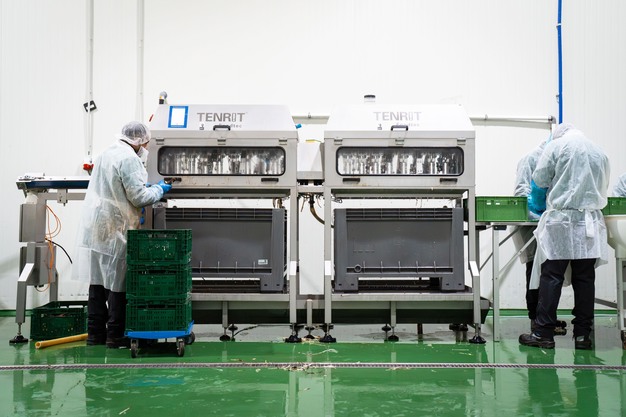
Am 1. März feiert das Atelier Claessens sein fünfjähriges Bestehen als gezielte Erweiterung von Groothandel Claessens. Das Atelier, das sich ganz auf das Waschen von Salaten und das Schneiden und Verarbeiten von Obst und Gemüse konzentriert, sollte als eine Unterstützungsinitiative für Köche dienen. “Wir wollen den Köchen bei ihrer täglichen Arbeit helfen und ihnen vor allem ermöglichen, Zeit zu sparen, ohne dass die Qualität darunter leidet”, erklärt Brent Peeters von Groothandel Claessens.
“Effizienz und fachmännisches Können müssen Hand in Hand gehen. Gerade in einer Zeit, in der es für viele Gastronomiebetriebe schwierig ist, genügend Personal zu finden, erweist sich diese Unterstützung als kein überflüssiger Luxus. Mit dem Einkauf von geschnittenem Gemüse können wir Köchen viele Vorteile bieten, wie Zeitersparnis, geringerer Bedarf an kompetentem Personal, einfache Preisberechnung, weniger Abfall/Verschwendung, HACCP-Konformität, konstante Qualität und Schnitt. Dass dies geschätzt wird, merken wir auch an dem anhaltenden Wachstum, das wir Jahr für Jahr erzielen”, erklärt er. In dieser Hinsicht konzentriert sich das Atelier Claessens ausschließlich auf den belgischen Markt.
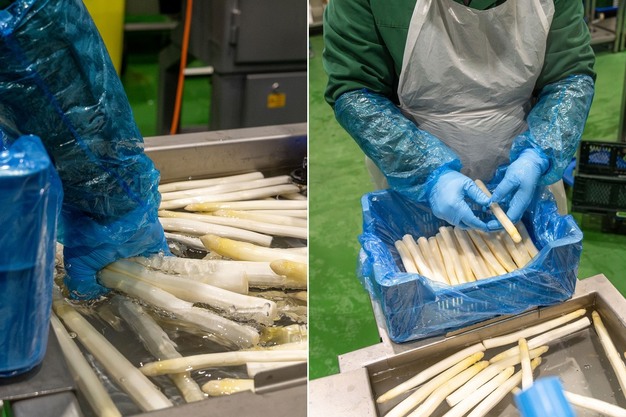
“Wir arbeiten mit zwei Systemen. Einerseits haben wir feste Lagerartikel. Produkte, die standardmäßig geschnitten und verfügbar sind. Andererseits bieten wir Artikel auf Bestellung an. Köche können bestimmte Produkte oder bestimmte Schnittarten anfordern. Wenn etwas nicht standardmäßig in unserem Sortiment enthalten ist, prüfen wir, was möglich ist, und machen uns konkret daran, es zu realisieren. Diese Flexibilität ist für uns sehr wichtig.”
Spargel schälen
Das Angebot passt sich den Jahreszeiten an. Mit dem nahenden Frühling beginnt das Atelier Claessens zum Beispiel wieder mit dem Schälen von Spargel, einem ausgesprochenen Saisonprodukt, das jedes Jahr sehr gefragt ist. “Früher haben wir zum Beispiel auch Schwarzwurzeln geschält. Einige Produkte, wie beispielsweise Karotten, verarbeiten wir das ganze Jahr über, aber andere sind wirklich saisonal. Wir passen unser Angebot bewusst an das Marktgeschehen an und gehen immer von den Bedürfnissen der Kunden aus.”
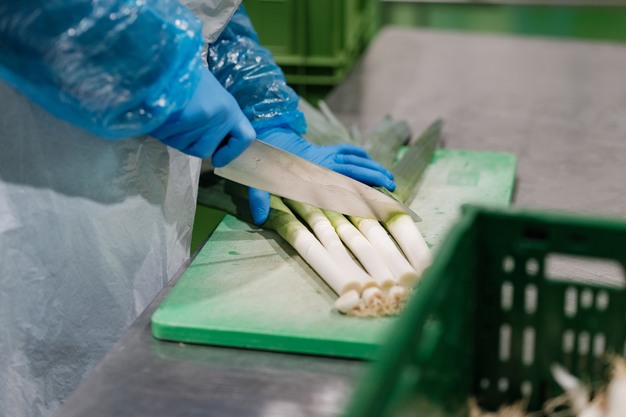
Das Wachstum der vergangenen fünf Jahre lässt sich auch in Zahlen ausdrücken. Heute arbeiten 25 Mitarbeiter in der Produktion. “Aufgrund der anhaltenden Nachfrage prüfen wir derzeit den Aufbau eines Teams, das Tag und Nacht arbeitet. Wir werden diese Nachtschicht im Jahr 2026 einführen, damit wir kontinuierlich schneiden und verarbeiten können. Das wäre ein großer Schritt nach vorn und zeigt vor allem, dass der Bedarf auf dem Markt nach wie vor hoch ist.”
Qualität
Mit dem fünften Jahrestag wird das Hauptaugenmerk in den kommenden Jahren auf der Optimierung und Qualitätskontrolle liegen. Größere strukturelle Veränderungen sind nicht sofort geplant, aber die Verfeinerung und Verbesserung bleibt ein ständiges Ziel. “Das fünfte Jubiläum ist für uns in erster Linie ein Anlass, den eingeschlagenen Weg zu reflektieren. Gleichzeitig blicken wir nach vorn und überlegen, wie wir unseren Betrieb noch effizienter gestalten können.”
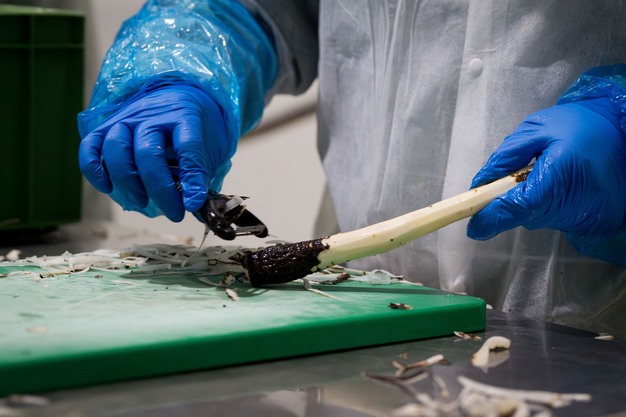
Laut Brent zeichnet sich Atelier Claessens vor allem durch die Kombination von Qualität und einer breiten Produktpalette aus. “Wir bieten eine breite Palette von Produkten an, und das ist gleichzeitig unsere größte Herausforderung. Bei einem so umfangreichen Sortiment muss jeder im Team die verschiedenen Produkte und Schneidemethoden genau kennen. Wir sorgen dafür, dass alles richtig gemacht wird und dass die Qualität gleich bleibt. Mit unserem jetzigen Team schaffen wir es, diesem breiten Leistungsangebot gerecht zu werden und gleichzeitig flexibel auf die Wünsche unserer Kunden einzugehen.”
Der Großhandel Claessens ist während der Tavola 2026 vom 15. bis 17. März am Stand 1304 zu finden.
Weitere Informationen:
Brent Peeters
Groothandel Claessens
Kielsbroek 23
2020 Antwerpen, Belgien
Tel: +32 (0) 3 237 44 29
contact@groothandelclaessens.be
www.groothandelclaessens.be
Asperges : quand l’intelligence artificielle redéfinit les standards du calibrage par Besnard Père & Fils et FreshPlaza
Antoine Besnard, Besnard Père & Fils :
Asperges : quand l’intelligence artificielle redéfinit les standards du calibrage
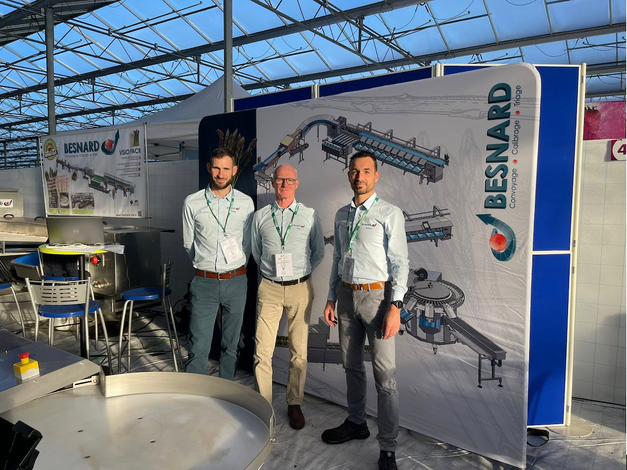
Dans l’univers exigeant de l’asparagiculture, où la précision du tri et la régularité des calibres conditionnent directement la valorisation des lots, la fiabilité des outils industriels est déterminante. Depuis 1965, Besnard Père & Fils accompagne les producteurs avec des solutions de convoyage, calibrage et triage développées en interne. Implantée à Bazouges-Cré-sur-Loir, dans la Sarthe, l’entreprise familiale revendique près de 60 ans d’expérience et poursuit aujourd’hui un travail de modernisation technologique centré sur l’intégration de l’intelligence artificielle.
Un savoir-faire historique construit au plus près du terrain
Depuis sa création, Besnard Père & Fils conçoit, fabrique et installe des équipements dédiés aux produits agricoles, avec une spécialisation marquée dans l’asperge.
« Nous avons toujours travaillé en lien étroit avec les producteurs pour proposer des machines adaptées à leurs contraintes réelles », explique Antoine Besnard.
« Notre ancrage historique s’est construit autour d’une ingénierie robuste et d’une maîtrise complète de la chaîne de conception. Le développement mécanique et électronique est réalisé en interne, ce qui permet des ajustements précis en fonction des spécificités des exploitations et des cahiers des charges commerciaux ».
Être un constructeur français constitue également un atout dans un contexte où la proximité, la réactivité du service technique et la compréhension des normes locales jouent un rôle clé.
Cette implantation nationale facilite les échanges avec les producteurs et l’adaptation des équipements aux évolutions réglementaires et structurelles du marché européen.
L’innovation comme moteur de développement
Si l’entreprise s’inscrit dans la durée, elle affirme ne pas se reposer sur son héritage.
Une part significative de son activité est consacrée à la recherche et développement, avec un objectif clair : améliorer la performance du tri tout en répondant aux enjeux de main-d’œuvre et de compétitivité.
« Le tri de l’asperge devient de plus en plus exigeant. Les critères qualitatifs se multiplient et les attentes des marchés se précisent », souligne Antoine Besnard. « Cette évolution pousse à développer des outils capables d’aller au-delà des seuls paramètres de de couleurs, diamètres, longueurs ».
L’intelligence artificielle au service du tri des asperges
Depuis deux ans, Besnard Père & Fils travaille à l’intégration de modules d’intelligence artificielle dans ses calibreuses électroniques. Une évolution technologique qui pourrait modifier en profondeur les standards du tri.
L’objectif est d’affiner l’analyse des asperges traitées : « Nous cherchons à détecter davantage de critères qualitatifs et à automatiser des décisions qui, jusqu’à présent, reposaient en partie sur l’appréciation humaine. »
Grâce à l’IA, les machines pourraient identifier plus finement certains défauts, analyser des textures ou encore adapter les paramètres de tri en temps réel en fonction des lots. Cette approche vise à améliorer l’homogénéité des colis, à limiter les pertes et à optimiser le rendement global des lignes.
Pour la filière, les perspectives sont multiples : qualité de tri renforcée, meilleure valorisation commerciale et réduction de la variabilité entre opérateurs.
Vers une nouvelle génération de calibreuses
Si tous les développements ne sont pas encore dévoilés par l’entreprise, des prototypes sont actuellement testés. Ils laissent entrevoir des calibreuses électroniques plus rapides et dotées d’une capacité d’analyse accrue. « Les enjeux de productivité et de disponibilité de la main-d’œuvre nous obligent à repenser certains standards », indique Antoine Besnard. L’automatisation avancée apparaît comme une réponse aux contraintes structurelles du secteur, tout en maintenant un niveau d’exigence élevé sur la qualité finale.
À l’heure où la modernisation des outils de conditionnement devient stratégique pour les producteurs d’asperges, Besnard Père & Fils poursuit son évolution en combinant expérience industrielle et technologies émergentes. L’entreprise entend ainsi accompagner la filière dans ses transformations, en proposant des solutions adaptées aux réalités du terrain et aux attentes des marchés.
Pour plus d’informations :Antoine Besnard
Besnard Père & Fils
Bazouges-Cré-sur-Loir
Tél. : 02 43 94 09 82
a.besnard@besnard-ste.fr Date de publication: mar. 3 mars 2026