
https://www.leboncoin.fr/ad/materiel_agricole/2881544701
Archive
a vendre d’occasion Calibreuse asperge blanche ou verte espaso S 12 Année 2011 par le Leboncoin Leboncoin Révisée chaque année Couroies du premier tapis neuves Extracteur de déchets Aiguillage neuf
https://www.leboncoin.fr/ad/materiel_agricole/2880015954
New Zealand’s wonky asparagus initiative tackles food waste, supports growers
Wonky Box, a food box company, addresses this issue by purchasing these ‘wonky’ asparagus at a reduced price, benefiting both Kiwi consumers and growers. ‘Wonky’ asparagus might have minor imperfections such as damaged tips or unusual shapes but retains the same taste and nutritional value as its perfect counterparts.
Angus Simms, co-founder of Wonky Box, emphasizes the freshness and nutritional value of their product, highlighting the efficiency of sourcing directly from growers. The company collaborates with three growers across New Zealand: Boyd’s Asparagus in Waikato, Tendertips in Levin, and LeaderBrand in Chertsey, Ashburton. LeaderBrand, for instance, produces over 2500 tonnes of asparagus, with some spears not reaching consumers due to minor flaws. Mike Arnold, South Island general manager for LeaderBrand, supports the initiative to reduce food waste and introduce more Kiwis to asparagus.
Wonky Box’s model ensures rapid delivery from farm to plate, minimizing food mile emissions and maintaining product freshness. This approach aligns with their commitment to sustainability and strong relationships with local growers. Simms also notes the challenge asparagus growers face competing in a market with an oversupply of cheaper produce but remains optimistic about providing affordable asparagus to consumers through Wonky Box.
Source: Stuff
Asparagus and avocado prices drop, cucumber prices surge This report provides a trend analysis of the volume and prices of Seasonal Perishable commodities. by USDA
Seasonal commodities trend:
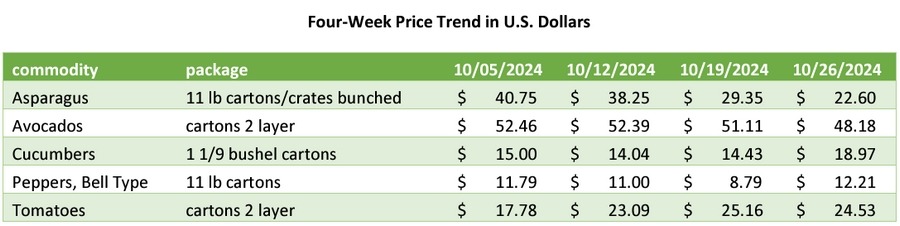
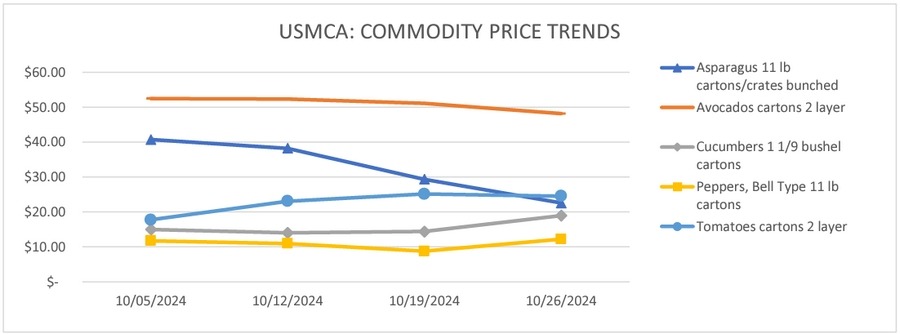
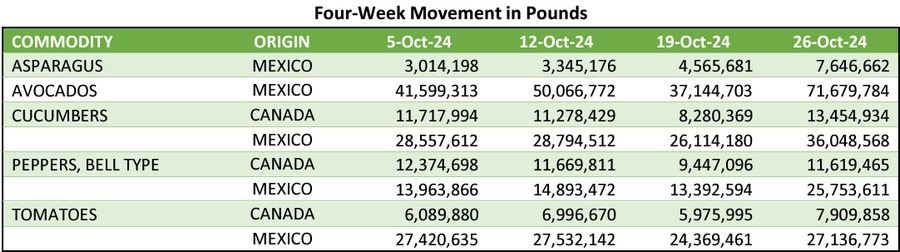
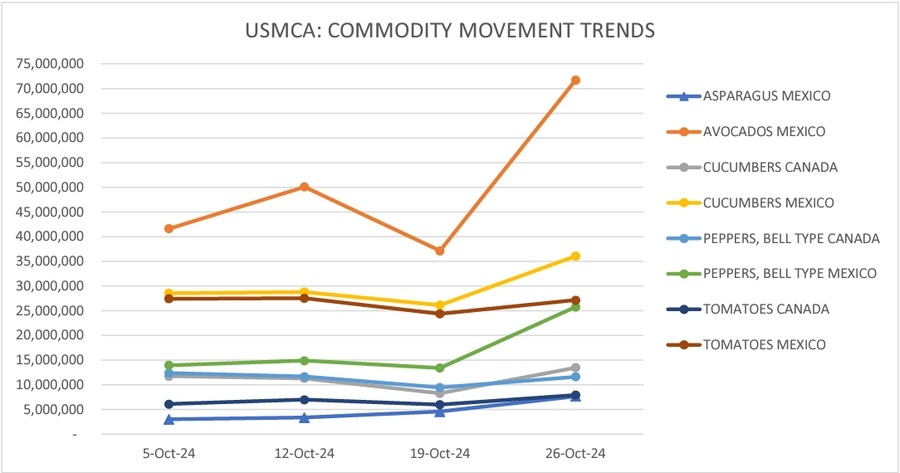
Asparagus and avocado prices drop, cucumber prices surge
Click to enlarge
Asparagus
Movement from Mexico crossings through Arizona, California and Texas is expected to increase. Trading is fairly slow. Prices are lower. Supplies are light, with an estimated 80% of production standard size. 11-pound cartons/crates bunched green standard is 18.75. Extra services are included. Prices represent few spot market sales. The movement of Peru imports through South Florida ports of entry is expected to decrease slightly. Trading is moderate. Prices are slightly lower. 11-pound cartons bunched green jumbo are mostly 25.85-30.75, extra-large are mostly 25.8528.75, large are mostly 22.75-23.75, standard are mostly 20.75-22.75. Quality is generally good.
Avocado
Movement from Mexico crossing through Texas is expected to increase. Trading of 32-40s is fairly active, others are fairly slow. Prices of 32-36s are higher, 40s are generally unchanged, others are lower. Heavy supplies of small-sized fruit, 60-84s, contributed to unstable and weakened prices. Supplies of 32-36s remain very light. Cartons of 2layers Hass 32-36s are mostly 70.25-72.25, 40s are mostly 62.25-64.25, 48s are mostly 53.25-55.25, 60s are mostly 32.25-34.25, 70s are mostly 21.25-23.25, and 84s are mostly 17.25-18.25; organic 48s are mostly 65.25-68.25, 60s are mostly 44.25-48.25, and 70s are mostly 36.25-38.25. Extra services are included.
Cucumber
Movement from Mexico crossings through Nogales, Arizona is expected to increase. Supplies of large are light. Trading early was fairly active, late is active. Prices are much higher. 1 1/9-bushel cartons medium are mostly 20.95-21.95, fair quality are mostly 16.95-18.95, ordinary quality are mostly 12.95-14.95; small are mostly 14.95-15.95; large are mostly 21.95-22.95. Cartons 24s are 9.95- 10.95, 36s are mostly 12.95. Quality is generally good. Most present shipments are from prior bookings and/or previous commitments. Movement from Mexico crossings through Texas is expected to increase slightly. Trading early was fairly active, late is active. Prices are much higher. 1 1/9-bushel cartons medium are mostly 28.95-30.95, fair quality are mostly 17.95-19.95, ordinary quality are mostly 13.95-14.95, large are mostly 30.95-34.95. Quality and condition are variable. Movement from Mexico crossings through Otay Mesa, California is expected to remain about the same.
To read the full report, click here.
For more information:
USDA
Tel: +1 (202) 720-2791
Email: press@usda.gov
www.usda.gov
A vendre d’occasion une butteuse rotative pour asperges blanches ou vertes par le Bon Coin
Butteuse type charpail hyper robuste environ 800 kgs largeur 2,50 m 1,50 m d’un rotor à l’autre attention 12 pales de travail
Namibia exports 70% of locally-grown asparagus by FreshPlaza
Namibia exports 70% of locally-grown asparagus
Despite initial resistance from locals concerned about potential environmental impacts, Otjimbele Agriculture has expanded its workforce to between 110 and 140, scaling up during the harvest period. Beyond asparagus, the company has diversified into maize, watermelon, and sweet potato cultivation, primarily targeting the South African market. Amidst efforts to bolster local market ties and support regional farmers’ access to broader markets, Otjimbele is engaging with the Etunda community and nearby areas to facilitate their entry into the market, leveraging the company’s northern facilities.
Source: the Namibian
Dernière mise à jour des normes européennes commerciales pour les asperges blanches, vertes, violettes
U.S. Mexico Canada agreement: A focus on the specialty crops market by FreshPlaza
U.S. Mexico Canada agreement: A focus on the specialty crops market

Asparagus
Movement from Peru imports through South Florida ports of entry is expected to remain about the same. Trading is fairly slow. Prices of small are slightly lower, others are lower. 11-pound cartons bunched green jumbo are mostly 26.75-34.75, extra-large are 24.75-31.75, large are mostly 23.75-25.00, standard are mostly 22.00-23.00, small are 20.00-21.00. Quality is generally good. Movement from Mexico crossings through Arizona, California and Texas is expected to increase. Trading is fairly slow. Prices are lower. 11-pound cartons/crates bunched large are 26.75-27.75, standard are 24.75-26.75. Extra services are included. Prices represent few spot market sales.

Avocado
Movement from Mexico crossings through Texas is expected to remain about the same. Available supplies of 32-36s are light, however heavy supplies of 60-84s caused prices to fall. Trading 32-48s are active, while others are fairly slow. Prices 32-36s and 48s are generally unchanged, 40s are higher, others are lower. Cartons 2 layers Hass 32-36s are mostly 68.25-70.25, 40s are mostly 62.25-64.25, 48s are mostly 52.25-54.25, 60s are mostly 36.25-38.25, 70s are mostly 26.25-28.25, and 84s are mostly 20.25-22.25; organic 48s are mostly 66.25-69.25, 60s are mostly 49.25-52.25, and 70s are mostly 46.25-43.25. Extra services are included.
Cucumber
Movement from Mexico crossings through Texas is expected to decrease. Trading early was moderate, late is fairly active. Demand for large sizes is good. Prices are slightly higher. 1 1/9-bushel cartons medium are mostly 21.9522.95, fair quality are mostly 16.95-18.95, ordinary quality are mostly 12.95, large are mostly 24.95-26.95. Quality and condition are variable. Movement from Mexico crossings through Otay Mesa, California is expected to decrease seasonally. Supplies of large are light. Trading of large is active, others are moderate.
To read the full report, click here.
For more information:
USDA
Tel: +1 (202) 720-2791
Email: press@usda.gov
www.usda.gov
La exportación de espárrago de Perú superó las 71.000 t a la semana 41, beneficio por FreshPlaza
La exportación de espárrago de Perú superó las 71.000 t a la semana 41
Respecto a la modalidad de envío, el 60% de las exportaciones se realizó por vía marítima, mientras que el 40% restante se efectuó a través de transporte aéreo.
Fuente: agraria.pe
Mexico overtakes Peru in asparagus shipments to the UK by FreshPlaza
Mexico overtakes Peru in asparagus shipments to the UK
The US continued to be the main market for Peru’s fresh asparagus, followed by Spain and the United Kingdom. Exports to the United States decreased and exports to Spain increased. Despite the decrease in volume, exports to the UK increased in value, thanks to a higher average price.
Source: agraria.pe