
«Los espárragos verdes gozan de menos publicidad, pero tiene éxito entre los jóvenes»
Un cultivo más sencillo y la conveniencia para el consumidor hace de este un producto muy apreciado», cuenta Katrien De Backer, cuyos padres y su tío Jos Amelinckx dirigen la empresa frutícola Amelinckx, y que trabaja también en el comercio de frutas y hortalizas.
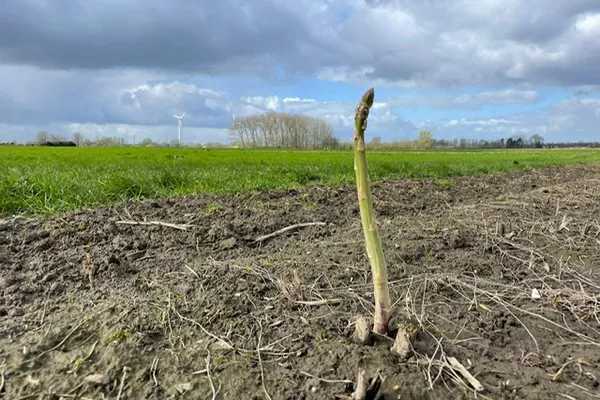
«Para recolectar los espárragos verdes no hay que cavar hoyos», continúa.
«Lo único que hay que hacer es cortarlos, tras lo cual están listos para venderse bastante rápido. Por otro lado, también es un producto atractivo para el consumidor, ya que no hace falta pelarlo y además tiene una textura más suave.
Esto permite cocinarlos de más maneras, y no estar limitado a cocerlos o hacerlos al vapor. Por ejemplo, son ideales para asar a la parrilla o para saltear en el wok, y eso te permite tener un plato saludable en la mesa en muy poco tiempo.
Creemos que esa conveniencia explica su éxito, sobre todo entre los jóvenes. Para nosotros, se trata de un cultivo que encaja perfectamente en las operaciones de la empresa».
La temporada de espárragos verdes también coincide prácticamente con la de los blancos, explica Katrien. «Solo llegan un poco más tarde.
Los espárragos blancos se pueden adelantar usando calefacción bajo plástico o cubiertas. La variante verde, sin embargo, crece por sus propios medios, pero también termina el 24 de junio, que es la fecha tradicional para ello. Esto implica una temporada más corta y también algo menos de volumen, ya que la variedad verde es más fina y los tallos gruesos son algo a evitar. La producción es menor, pero el precio compensa. Los espárragos verdes normalmente alcanzan un precio medio más alto que los blancos. Tampoco importa, porque los verdes a menudo se consumen como acompañamiento, mientras que los espárragos blancos tienden a ser un ingrediente principal y, por lo tanto, se consumen más a la hora de cenar».

«Además, se trata de un cultivo que depende menos de las condiciones meteorológicas. Cultivamos en suelo de arena/arcilla. La arena drena el agua de lluvia, pero la arcilla asegura que se retenga suficiente agua para cubrir las necesidades de los espárragos. Por lo tanto, casi nunca tienes problemas de exceso de agua, pero aun así hay suficiente humedad como para garantizar que los espárragos tengan una textura suave. Una gran diferencia en comparación con su hermano blanco».
Buenos precios, pero volúmenes limitados de espárragos blancos
Katrien cuenta que, por esta razón, el espárrago blanco se ha visto mucho más afectado por el tiempo lluvioso de primavera. «Hasta ahora hemos tenido una temporada muy tranquila para los espárragos blancos. Tuvo un arranque muy temprano que nos permitió empezar antes de Semana Santa; sin embargo, las temperaturas han sido bajas durante toda la primavera. Creo que solo hemos tenido 3 días con buen tiempo en los que aumentó un poco la producción. Luego volvimos a tener problemas durante una semana porque los precios se desplomaron. Sin embargo, la situación se enderezó bastante rápido. Lo limitado de los volúmenes, por otro lado, ha garantizado unos precios aceptables».
«Ahora mismo se están pagando entre 6 y 8 euros por el producto de buena calidad, mientras que el año pasado trabajábamos con precios de alrededor de 3 a 4 euros. Hablamos de casi el doble. Por otro lado, la calidad no está siendo tan buena. Debido al exceso de agua, un cierto porcentaje de productores ni siquiera se ha puesto manos a la obra, porque en sus terrenos había demasiada humedad y eso impidió prepararlos. Además, algunos productores con parcelas más antiguas terminaron antes porque el porcentaje de producto de segunda categoría era demasiado alto. El resultado ha sido una oferta cada vez más limitada durante las últimas semanas, por lo que los precios, sin duda, no bajarán. Si tuviéramos buen tiempo, lo cual daría un impulso al consumo, creo que podríamos acabar registrando precios incluso más elevados».
 «Esperemos que así sea», continúa Katrien. «No mucha gente ha podido disfrutar aún de unos deliciosos espárragos al aire libre. Si al final mejora el tiempo, muchos probablemente encenderán las barbacoas y despegará el consumo de todo tipo de hortalizas y frutos rojos. Es algo que se nota también con los tomates o la lechuga. El consumo es bajo debido al mal tiempo y los precios, por lo tanto, permanecen bajos. Para que mejoren los precios, el consumo y la calidad del producto hace falta sol».
Cerezas y albaricoques
Es una esperanza que muchos comparten, dado que el sol y el calor son necesarios para muchos productos. «Las cerezas también se beneficiarían. Comenzamos con la cosecha el Día de la Madre, mucho antes que el año pasado, por lo que estamos trabajando con buenos precios. Los volúmenes son aún bastante limitados y los precios se mantienen bastante altos tanto para las cerezas de España como para las de Francia. Por ahora, hay que estar dispuesto a pagar un poco más por ellas. Y el tiempo tampoco está siendo lo bastante seco».
«Para este cultivo, lo mejor son unas condiciones secas por la mañana con un poco de sol. Sin embargo, el tiempo sigue siendo demasiado lluvioso, y los daños se pueden multiplicar rápidamente. En el invernadero, la situación ahora mismo es relativamente manejable. Sin embargo, para las variedades tempranas que están al aire libre hay mucha incertidumbre. Las raíces de los árboles absorben incluso la lluvia que cae junto a los árboles y esto podría provocar el agrietamiento de las cerezas. Habrá que esperar y ver lo que sucede. La naturaleza es difícil de engañar. Por otro lado, nos satisface mucho poder empezar a trabajar de nuevo con un producto tan bonito».

Katrien concluye con una nota positiva. «Todo el producto belga está volviendo al mercado y cada vez hay más. La semana pasada empezamos ya con la primera cosecha de nuestros albaricoques. Se trata de unos albaricoques con la piel rosa en lugar de naranja, y que se han convertido en todo un éxito. El año pasado tuvimos la primera cosecha, pero este año los árboles están realmente llenos por primera vez. Nos alegra mucho verlos así, y creo que momentos así te hacen consciente de que disponer de un producto delicioso es algo que no se puede dar por sentado. A veces parece que las cosas llegan a las tiendas con mucha facilidad, pero los consumidores deben darse cuenta de que, en realidad, que haya productos tan buenos disponibles es todo un milagro», concluye Katrien.
Para más información:
Amelinckx Asperges & Fruit
Koningin Astridlaan 171
2880 Hingene (Bélgica)
Tel.: +32(0)475 26 99 15
info@topasperges.com
www.topasperges.com


 », poursuit De Backer. « En fait, peu de gens ont encore pu déguster de délicieuses asperges en terrasse ! Lorsque le temps s’y mettra enfin, les barbecues se multiplieront et la consommation de légumes et de fruits rouges pourra enfin décoller. On le constate avec les tomates et salades : la consommation est faible en raison du mauvais temps et les prix restent bas. Pour les prix, la consommation et la qualité des produits, il est plus que temps que le soleil se mette à briller. »
 Pour plus d’informations :
 For more information:
 Pour plus d’informations :