Archive

In Germany, «Initial forecasts vary» In many federal states, this year’s asparagus season has now officially begun, including in Lower Saxony and North Rhine-Westphalia. However, the initial forecasts vary greatly. by FreshPlaza

«Initial forecasts vary»

In many federal states, this year’s asparagus season has now officially begun, including in Lower Saxony and North Rhine-Westphalia. However, the initial forecasts vary greatly.
Lower Saxony:
Lower Saxony is the number one asparagus region, with every fifth asparagus stalk coming from Lower Saxony. «The rainy autumn and winter with little sunshine, but still very warm temperatures at the beginning of the year, allowed some farms to harvest their first fresh asparagus by Easter. Now we are hoping for more sunshine and less rain so that farms in all regions can start harvesting and asparagus can be offered at all sales points,» said Fred Eickhorst from the Association of Asparagus and Berry Growers e. V. at the official season opening in Lower Saxony.

«Our motivated seasonal workers, who return to the farms every year, perform the optimized workflows in well-coordinated teams. This ensures that the price of asparagus in our farm shops and sales booths remains at about last year’s level, despite significantly increased production costs, which we have tried to manage with further rationalizations.»

NRW:
«We have even been marketing the first asparagus from heated regional cultivation in the west of Germany in small quantities since the beginning of March,» says Alexander Scheufen, Sales Manager Vegetables at Landgard West Obst & Gemüse. «The asparagus harvest in unheated open fields started in most of our member farms in the west in calendar week 12. Traditionally, the first open-field asparagus is initially available at farm shops and weekly markets due to the lower yields. With increasing quantities, we were able to add marketing via Landgard to retailers for open-field produce after Easter.»

Thorsten Clemens and his team grow early, mid, and late asparagus varieties under various foil coverings on around 45 hectares in the family-run horticultural business in Nettetal-Leuth. So far, he is very satisfied with the start of the asparagus season in open fields. «Due to the comparatively high soil temperature, we have had larger harvest volumes right from the start this year. Unlike regions with heavier soils, we were fortunate here in Nettetal not to have any problems with too much water and were able to navigate the fields well. How the season will develop, naturally primarily depends on the weather. If the good yields continue, there could be somewhat lower quantities available on the market at the end of the season than in 2023.»


Landgard producer Thorsten Clemens.

Schleswig-Holstein:
With the official start of the asparagus season in Worth (Herzogtum Lauenburg district), the season has begun. According to the Schleswig-Holstein Chamber of Agriculture, customers will have to pay as much as they did last year.

Saxony-Anhalt:
In Saxony-Anhalt, there are fewer and fewer asparagus farmers – only 32 this year – and less and less land for cultivating the royal vegetable. However, Gemüsehof Schönberg in the Altmark is defying this trend: They have even expanded their cultivation area. «When agricultural cooperative Seehausen stopped three years ago, we decided to cultivate a bit more land to cover the demand in the Seehausen region with local asparagus. We also don’t go into areas where there are other asparagus farmers. Why competitors would want to set up shop right under our noses is beyond me.»

Bavaria:
«Expectations for the upcoming season could not be higher.» Miriam Adel, the chairwoman of the Franconian Asparagus Producers Association, was optimistic about the coming weeks at the season opening in Franconia and is hoping for mild and sunny weather for the optimal asparagus enjoyment. «After sufficient rainfall in winter, we look forward to the future with confidence,» said Adel. «Our local sandy soils are ideal for Franconian asparagus cultivation and promise an outstanding quality.»

Austria:
Since mid-March, the big business with asparagus has already started in Austria: About five percent of the goods have already been sold to haute cuisine, retail, and others, but the labor-intensive harvest puts many farms to the test, which in turn is due to the shortage of harvest workers.
 

Publication date:

Après Pâques, l’intérêt pour les asperges s’est considérablement réduit en Allemagne par FreshPlaza

Rapport BLE, semaine14 (Allemagne)

« Après Pâques, l’intérêt pour les asperges s’est considérablement réduit »

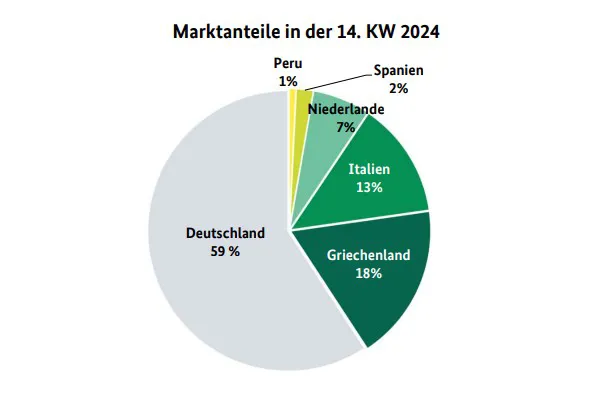
La présence des offres nationales dominantes d’asperges s’est étendue. Pour les blanches et violettes, il a été possible de recourir principalement à des arrivages grecs, néerlandais et italiens. Pour les vertes, outre les lots nationaux, on trouvait principalement des produits espagnols, italiens et néerlandais. Les asperges récoltées tôt ont souvent été commercialisées par le marché de Bruchsal. Selon le BLE, les importations en provenance du Mexique et du Pérou n’ont joué qu’un rôle secondaire, ayant perdu de leur importance.

Au cours de la semaine suivant Pâques, l’intérêt s’était sensiblement réduit. Le temps pluvieux a également restreint les possibilités de conservation. Mercredi en particulier, le business a été extrêmement calme. Ce n’est qu’en fin de semaine que la demande a repris un peu de vigueur. Les cotations se sont adaptées : elles baissent le mardi pour parfois remonter à partir du jeudi. Mais en général, elles se sont maintenues au même niveau jusqu’au week-end, car un renchérissement aurait entraîné des excédents plus importants. On s’attend à une nouvelle augmentation des volumes dans les semaines à venir, car les récoltes de plein champ seront alors disponibles.

Cliquez ici pour accéder directement au rapport complet sur le marché et les prix.

Pommes
Pas de changements importants par rapport à la semaine passée : les produits allemands continuent de dominer, suivis de loin par les apports italiens. Les flux en provenance de France, des Pays-Bas, de Pologne et de Belgique restent annexes.

Poires
Les cotations sont plutôt orientées à la baisse. Pour les arrivages d’outre-mer, cela s’explique par des quantités trop importantes, et pour les autres offres, par une qualité faiblissante.

Raisins de table
Les chargements en provenance d’Afrique du Sud ont visiblement dominé la scène. Les arrivages indiens ont certes augmenté, mais les Thompson Seedless ont été trop faibles, sucitant peu d’intérêt.

Fraises
Les fruits grecs ont supplanté les espagnols en tête de l’offre : les pluies qui se sont abattues sur les régions de production ont sensiblement réduit les arrivages d’Espagne à plusieurs reprises.

Citrons
Les Primofiori espagnols ont visiblement dominé la scène, avec des affaires se déroulant par ailleurs de manière assez calme.

Bananes
La disponibilité s’est suffisamment harmonisée avec les capacités d’entreposage. Les commerçants n’ont donc que très rarement dû modifier leurs demandes antérieures.

Choux-fleurs
Les besoins ont pu être satisfaits sans difficulté, bien que les arrivages français notamment se soient restreints. Les cotations ont été presque systématiquement orientées à la hausse.

Salades
Pour l’iceberg, les arrivages espagnols, habituellement monopolisés, se sont manifestement imposé. Les commerçants ont essayé d’éviter les stocks, car la saison allemande est dans les starting-blocks, les premiers lots étant attendus dans les prochaines semaines.

Concombres
L’assortiment de concombres était composé d’offres néerlandaises, belges et locales. Après des réductions initiales, les cotations ont augmenté sur presque tous les marchés en fin de semaine.

Tomates
En fin de saison, les fruits marocains ne sont plus toujours qualitatifs et sont même retirés des magasins à certains endroits. Les importations turques étaient par ailleurs trop peu colorées.

Poivrons
Les arrivages espagnols se sont sensiblement réduits, parfois même de façon massive. La demande n’a donc pas toujours été totalement satisfaite. Les cotations ont augmenté de manière significative.

Source : BLE

Buenas expectativas para la campaña del espárrago en Guadalajara en Espana pese a los robos por FreshPlaza

Buenas expectativas para la campaña del espárrago en Guadalajara pese a los robos

La campaña del espárrago en Guadalajara presenta este año unas condiciones óptimas gracias a las abundantes lluvias invernales que han dejado el campo «cargado de humedad», favoreciendo así el crecimiento de esta hortaliza. Juan José Laso, presidente de la Asociación de Agricultores y Ganaderos de Guadalajara (APAG), ha destacado en declaraciones a los medios la favorable situación climática para la aparición de los espárragos, aunque no sin mencionar algunos «pequeños indicios» de robos en las plantaciones.
A pesar de estos incidentes, la campaña se considera «positiva» y muestra una notable mejora respecto al año anterior. Laso ha subrayado que el buen desarrollo de la temporada se debe en gran medida a las lluvias invernales y a las condiciones meteorológicas que han permitido el brote de los espárragos, que prosperan con temperaturas estables y templadas. El año pasado, la colaboración de la Guardia Civil fue fundamental para mitigar el impacto de los robos, una medida que podría ser necesaria nuevamente para asegurar el éxito de la campaña actual.

Fuente: europapress.es


Fecha de publicación:

For Asparagus, the PGI label really makes a difference during campaigns like this one! by FreshPlaza

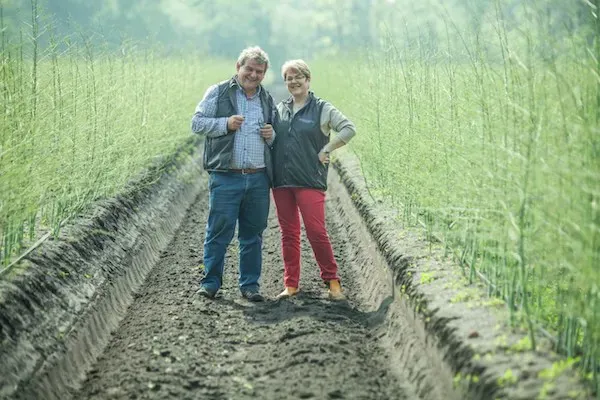
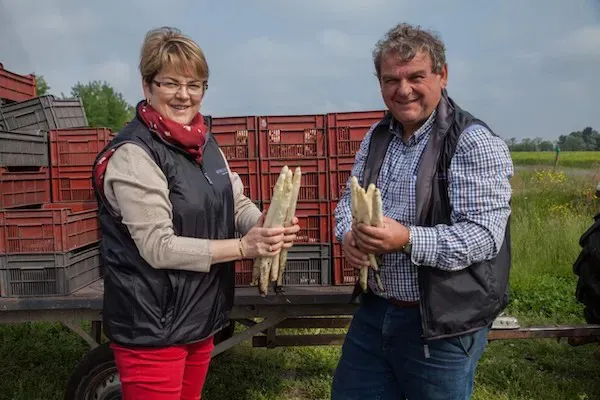
Danielle Chambaraud, Asperges du Blayais

“The PGI label really makes a difference during campaigns like this one!”

North of the Gironde, the current asparagus campaign is similar to the situation in the south of France. The campaign is described as early and homogeneous, with reasonable volumes and no great variation in production. The market is balanced and prices are firm. «The campaign began at the end of February. The few days of warm weather stimulated the growth of the asparagus, which came out very early this year. However, this was followed by a long period of rain and colder temperatures, which slowed down production again. As a result, the harvest is rather limited and I doubt there will be any large shoots this year,» explains Danielle Chambaraud, president of the Asparagus du Blayais association.

Prices struggle to hold up
The demand for asparagus increased at Easter, but there was a noticeable drop in the volumes sold compared to previous years. «There was no particular pressure at Easter time. Volumes were not very high, so supply adapted to the demand, and it was difficult to maintain prices. Sales were lower at Easter than in previous years, maybe due to the higher prices. Easter also came early this year, while it is usually celebrated at the heart of the asparagus season, so we were not able to offer the same prices as if Easter fell a couple weeks later.»

Consumers want the PGI label
It is precisely in this rather limited context of production that the PGI can make the difference. «In the past, with or without PGI, we have had to lower our prices when the market was saturated and volumes were considerable in all basins. But in the current context, the PGI can make all the difference. It reassures consumers and helps maintain prices. People are willing to pay the price as long as they get a quality product. Asparagus are now produced almost everywhere in France, so the PGI label is fundamental to the trade and to the promotion of asparagus. It is a guarantee of a particular identity and an asparagus with very little bitterness and a slightly sweeter taste.»

Expansion in line with the market
The asparagus from the Blayais region appeals to consumers thanks to its taste qualities, but it is also attracting growing interest from producers. «Our region is a wine-growing area. It is the region’s core business. Today, the wine industry is in crisis, especially in the Bordeaux region. And with over 70% of sand in the soil, asparagus has become the crop of choice for diversification in northern Gironde. As a result, over the last 3-4 years, we have been integrating more and more producers, although the volumes produced have not increased significantly, given the fragmented nature of our geographical area.»

Production growth must nevertheless be in line with the market situation. «We must not fall into the same trap as the wine industry. In other words, we must not over-plant and over-produce without taking into account the market’s capacity to absorb these volumes. We need to be reasonable and consistent with marketing. It is imperative that we respect all the rules of production and quality, to pay attention to the distribution circuit, to pricing and, of course, we must work together and stay united.»

For more information:
Danielle Chambaraud
Association IGP Asperges du Blayais
Danielle.chambaraud@asperges-blandine.fr


Publication date: