Autonomous robot harvester makes the cut with asparagus
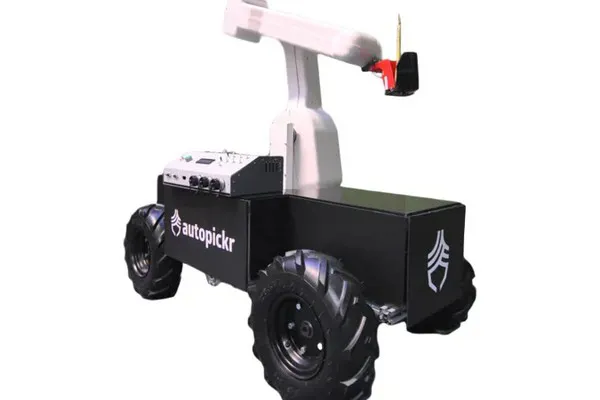
autopickr.
This differs from its Cartesian competitors that can experience lateral drift and occasionally miss or drop the asparagus spears they were meant to harvest.
Several innovations are key Gus’ success so far, including its arm and end effector.
« The way the robotic arm works is…really similar to the human hand, so for handpicked crops it makes way more sense, » said Kyle-James Keen, COO of autopickr, a spin-out from robot arm specialists ST Robotics.
« Most of us worked there [ST Robotics] for years before and we’ll keep using the arm we have the license for, » said Keen. « It’s not complicated at all, it’s belts and pulleys with motors driving them. »
Keen continued: « When we go on to make our own arm, we will stick by that same ethos and same kind of design. »
Keen explained that the arm’s passive end effector cuts and captures the asparagus without gripping it, thereby avoiding damage to the crop. In use, Gus’ onboard containers can hold 20kg of asparagus spears.
« [Gus] uses robotic motion to cut through and it closes a door around it to be able to make sure it falls in, » said Keen.
More from robotics & UAVs
To get to the cutting stage, Gus uses ultra-wide band (UWB) to triangulate its position, so it knows where it is and within its world frame, Keen explained, adding that GPS would have been unsuitable as Gus has to work in greenhouses as well as fields.
The platform’s AI-enabled computer vision is made possible with an Intel RealSense camera (for depth and tracking) working with a Nvidia Jeston Orin Nano developed for entry level edge-AI and robotics.
One challenge for Gus is determining whether asparagus is growing in clusters.
« Essentially, we detect the spear’s coordinates by using feature detection and…creating a bounding box around that to be able to also detect where clusters are so we can determine [Gus’] optimal path, » said Keen. « The vision system then tells the robot arm the coordinates for the optimal kicking point for the first spear and so on. »
Keen added: « Where we’ve got clusters, it also tells us the angle of the where the end effector needs to orientate itself around to be able to cut. »
Company co-founder and CEO Robyn Sands added that a minimum viable product will be ready by the end of 2024, after which Gus will be ready for alpha trials. Sands added that Gus’ modularity makes it suitable for a range of agricultural and horticultural applications, including daffodil harvesting and vineyard management.
For more information: autopickr.com
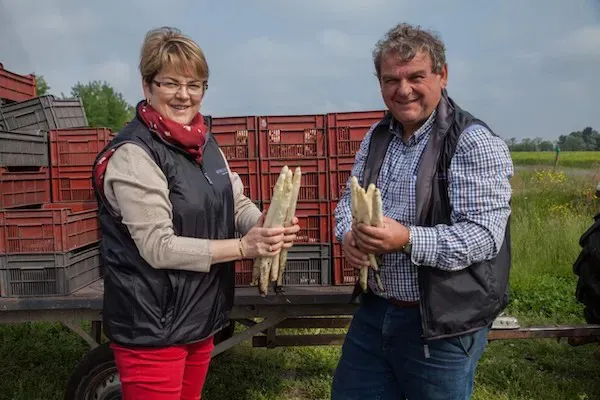

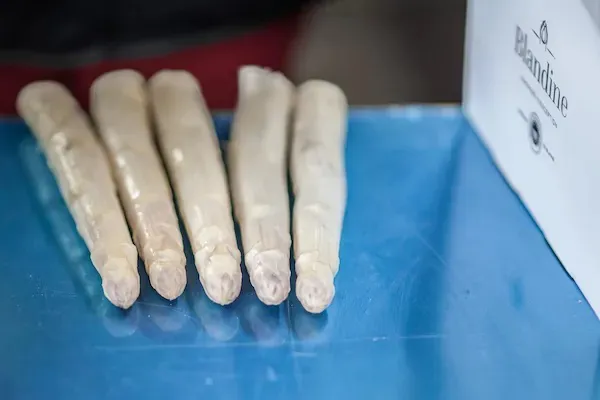
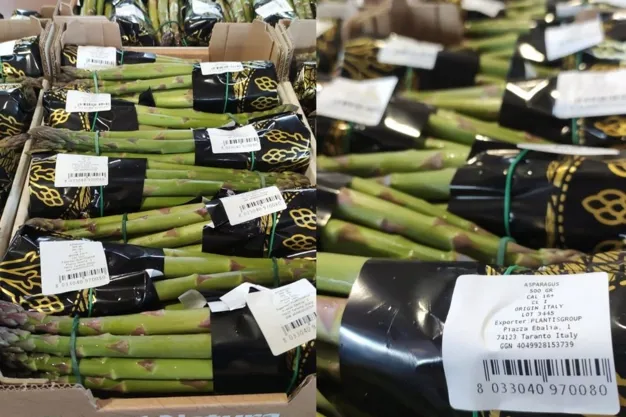
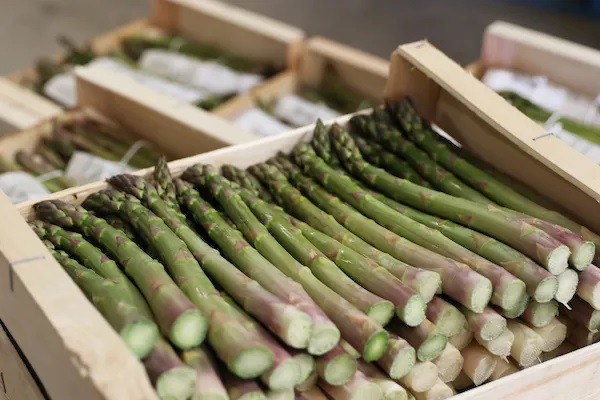
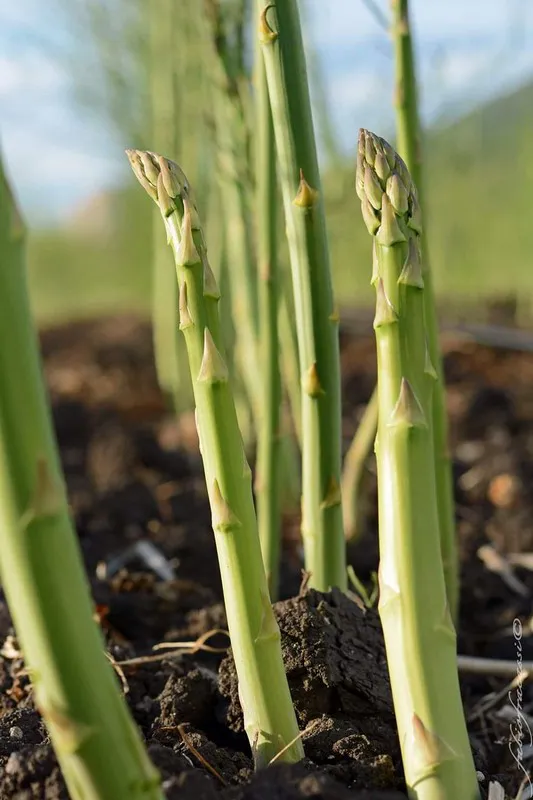 une culture saisonnière importante que le groupe Plantis vend en grandes quantités, généralement entre les dix premiers jours d’avril et la fin du mois de mai, conditionnée en bottes de 250 g et 500 g dans des cagettes de bois ou de carton.
 Pour plus d’informations :
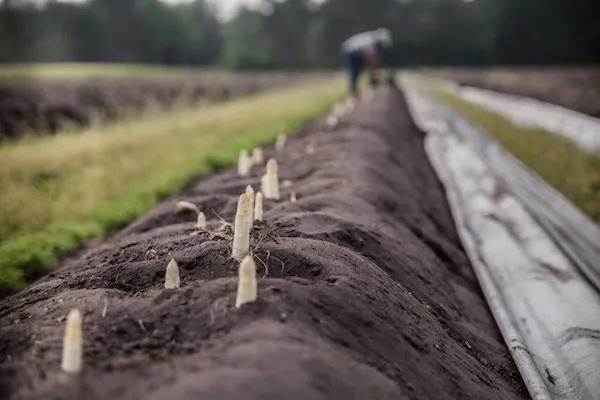
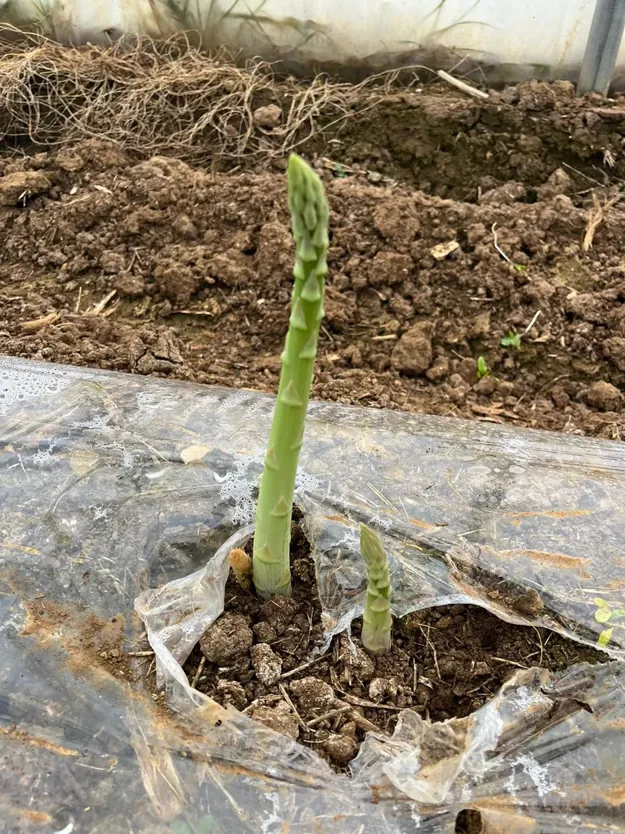 Deux mois après le début de la saison d’asperges vertes, Philippe Jean fait un point sur la campagne en cours : « Nous avons démarré début février sur des volumes assez faibles. Comme nous n’avons pas eu de gros pics de chaleur, il n’y a pas eu de pics de production. Nous avons atteint un plateau en termes de production et je ne pense pas que nous verrons arriver soudainement de gros volumes ». Une campagne qui s’avère donc bien plus homogène que celle de l’an passé : « L’année dernière, nous avions commencé un peu plus tôt, mais avions eu des vagues de froids qui avaient freiné la récolte. Le démarrage de campagne avait été relativement hétérogène et s’était stabilisé par la suite. Pour cette saison, la production est beaucoup plus régulière. A date, nous avons même vendu davantage de volumes que sur la même période l’an passé ».