“Any farm or packhouse operation will tell you that labour availability is a problem”
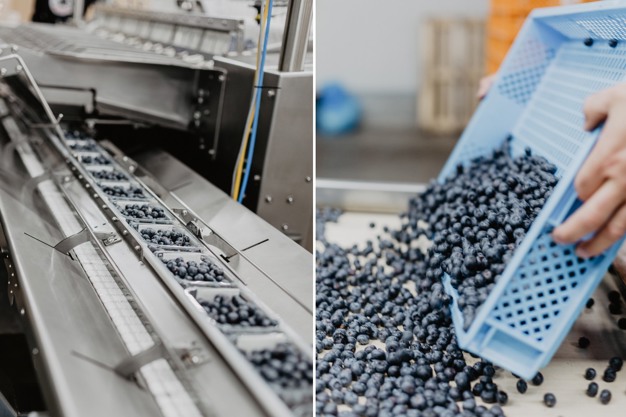
Berry packhouses have automated optical grading and high-speed packing in recent years, but the job of loading punnets into trays at the end of the line has remained largely manual.
Punchbowl Automation is targeting that final step with its new SpeedStacker robotic case packer, with demand growing as growers look to increase packhouse efficiency. Punchbowl’s Joshua Miers-Jones says the problem the SpeedStacker solves emerged as packhouses became faster upstream.
“Companies have created solutions for optical grading and for high-speed packing, and that’s automated that side of the packhouse, but it’s pushed the manual components of the packhouse downstream,” Miers-Jones says. “So now the packhouse is automated for grading and packing, but you’ve still got a lot of manual operations, manual labour, downstream.”
The company began from a New Zealand kiwifruit packhouse called Punchbowl, where its automation arm was developed to solve the packhouse’s own operational challenges. The SpeedStacker itself began after a berry grower approached the company looking to automate the manual packing table.
“A blueberry grower actually came to us wanting to automate his manual tray packing, which was 4 to 5 people manually packing punnets of fruit into trays, with something robotic,” he says. “This is the one part of the packhouse that isn’t automated at high speeds for a berry grower.”
The company has since sold three machines in New Zealand, including to the country’s largest blueberry packer, and six into Australia.
“That was about as fast as we could run for the past six months, so we’ve been increasing our engineering team and manufacturing capacity to scale up for the demand,” Miers-Jones says.
Speed was one of the major engineering challenges, with some berry lines running at up to 200 punnets a minute. The machine also needs to cope with the variety of formats used across blueberry, raspberry and strawberry operations.
“They’ll pack various SKUs, different punnet sizes, different punnet shapes, different tray sizes, different formations in the tray, and that varies from customer to customer and market to market,” he says.
The SpeedStacker therefore needs to change between formats quickly while remaining simple enough to operate without a highly skilled worker. Punchbowl is also developing a wider automated system around the case packer, including an auto-feed system that supplies empty trays to the machine and further downstream equipment.
“At the end of the day it’s not just about reducing labour costs, it’s also about reducing reliance on labour, reducing operational complexity, and reducing downtime.”
The company targets a return on investment of less than three years, with larger customers getting closer to two years. Miers-Jones says labour availability is becoming an increasingly important part of the calculation.
“If you look at any farm or packhouse operation in almost any market, they’ll tell you at the moment that labour availability is a problem,” he says. “It’s hard to get the people, and the cost pressures are going up.”
Reliability is particularly important for seasonal packhouses, where equipment has to perform during a relatively short window.
“We pride ourselves on exceptional service; we’ve got an incredible service team that looks after our customers, but we also offer comprehensive spare parts packages, so that if anything did go down, you can get the machine back up and running with minimal downtime.
The company is now expanding its presence in the global berry industry, with grower days planned in Australia throughout September and early sales activity beginning in the U.S. market. Punchbowl will also exhibit at the Blueberry Convention in Monterey, California, from September 22-24.
For seasonal operations, Miers-Jones says automation can provide another way to increase capacity without continually expanding the physical size of the packhouse.
“By automating the process all the way through, and we’ve got a very heavily automated kiwifruit packhouse here in New Zealand, it allows you to pack for more hours in the day, so you can put on two shifts or three shifts instead of increasing the size of your operation,” he says.
Les expéditions de myrtilles péruviennes nettement en avance sur la saison dernière
La campagne péruvienne de myrtilles est en avance sur le calendrier habituel. Des températures plus élevées que la normale ont accéléré le développement des cultures. Ce phénomène devrait également provoquer un pic de production plus précoce que d’ordinaire, une tendance qui semble s’inscrire dans une dynamique plus large à l’échelle de la filière péruvienne cette saison. « En plus de ce développement accéléré, nous observons également un calibre moyen légèrement inférieur à celui d’une saison normale », indique Luciano Fiszman de Gourmet Trading Company. Combiné au fait que certaines variétés tendent à produire moins sous l’effet de températures élevées, ce contexte devrait se traduire par une réduction des volumes globaux.
Des incertitudes pour la suite de la saison Les perspectives à plus long terme restent très incertaines. À ce stade, il est impossible de savoir jusqu’où les températures pourraient monter, ni quelle sera l’intensité des précipitations en fin de campagne, lorsque les effets les plus marqués d’El Niño pourraient se manifester. « Il est tout simplement trop tôt pour que quiconque puisse prédire l’impact total avec certitude », a déclaré Luciano Fiszman. « Pour l’heure, nous nous concentrons sur ce que nous observons dans les champs et nous nous adapterons au fil de la saison. »
Inspection des champs de myrtilles au Pérou.
Projections à l’export Selon les dernières projections publiées par Proarándanos, le Pérou devrait exporter environ 404 000 tonnes métriques au cours de la campagne 2026-27, soit une hausse d’environ 5,6 % par rapport à la saison précédente. « Il est toutefois important de replacer cette croissance dans son contexte », souligne Luciano Fiszman. D’après les estimations de Proarándanos, les exportations péruviennes auraient pu progresser jusqu’à 20 % en l’absence de l’impact d’El Niño. Cette dynamique est portée par quelque 3 500 hectares de nouvelles surfaces de production arrivant sur le marché. « Autrement dit, les nouvelles surfaces contribuent à compenser la baisse de productivité liée aux conditions climatiques plus chaudes. »
Le segment biologique présente quant à lui un profil différent. Proarándanos prévoit actuellement des expéditions d’environ 31 000 tonnes métriques de myrtilles biologiques, contre près de 35 000 tonnes métriques la saison dernière. « Nous estimons qu’il est important de se référer aux projections officielles de la filière plutôt que de spéculer de notre côté, en particulier lors d’une saison où les conditions peuvent encore évoluer de manière significative », a expliqué Luciano Fiszman.
Une courbe de production avancée En raison du démarrage précoce de la campagne, les volumes arrivant sur le marché américain ont été nettement supérieurs à ceux enregistrés à la même période l’an dernier. Selon les dernières données publiées par Proarándanos, sur la base des informations du SENASA, le Pérou avait exporté 35 679 tonnes métriques de myrtilles vers les États-Unis jusqu’à la semaine 34. Le total des exportations cumulées jusqu’à cette même semaine s’élevait à 80 585 tonnes métriques, soit une hausse de 56 % par rapport à la même période l’année précédente.
Si la projection officielle de la filière continue d’indiquer une croissance d’une année sur l’autre, Luciano Fiszman adopte une position plus prudente. « Sur la base de ce que nous observons actuellement dans les champs — températures élevées, calibre moyen légèrement inférieur et productivité réduite sur certaines variétés —, je pense que le volume final exporté par le Pérou pourrait en définitive se situer en deçà de la saison dernière. » Il souligne néanmoins qu’il est encore trop tôt pour anticiper le résultat final avec certitude, compte tenu notamment des incertitudes climatiques qui pèsent sur la fin de campagne. La courbe de production s’est décalée vers l’avant cette année, avec un démarrage et une montée en charge des volumes plus précoces. « C’est pourquoi il ne faut pas extrapoler la progression actuelle d’une année sur l’autre et supposer que le Pérou terminera la saison proportionnellement au-dessus de l’an dernier. »
L’évolution de la seconde partie de la campagne dépendra dans une large mesure des conditions météorologiques et de l’évolution d’El Niño. « Nous savons déjà que les températures affectent la production, mais nous ignorons comment les conditions évolueront en fin de saison. »
La transition vers les fruits d’importation Le démarrage précoce de la saison péruvienne a également engendré un chevauchement plus important avec la saison domestique américaine. Le Pacifique Nord-Ouest a pu prolonger sa campagne grâce au recours à la conservation en atmosphère contrôlée, tandis que le Pérou démarrait plus tôt que prévu, créant ainsi une période de transition quelque peu délicate pour le marché. « La transition a nécessité davantage de coordination cette année, car les fruits domestiques étaient encore disponibles au moment où le Pérou démarrait plus tôt que d’habitude », explique Adriana Fortune de Gourmet Trading Company. « Les clients ont effectué leur transition à des moments différents selon leurs programmes et leurs positions de stock, mais nous constatons désormais que le marché s’oriente plus résolument vers les fruits d’importation. Nous nous attendons à ce que cette transition soit largement achevée aux alentours de la fête du Travail », a-t-elle ajouté.
Bien qu’il y ait eu une période durant laquelle l’offre prolongée du Pacifique Nord-Ouest a coïncidé avec un démarrage inhabituellement précoce du Pérou, le marché a finalement absorbé les volumes disponibles. La transition n’a pas été totalement fluide — la disponibilité simultanée de fruits des deux origines a par moments exercé une certaine pression — mais la demande est restée suffisamment soutenue pour traverser cette période de chevauchement. La filière s’oriente désormais vers une transition plus naturelle en faveur de l’approvisionnement importé.
Scott Hulsey de Gourmet Trading Company se déclare satisfait de la qualité des fruits issus de l’opération péruvienne de la société, malgré les conditions climatiques difficiles. « L’équipe a fait un excellent travail pour s’adapter aux conditions rencontrées jusqu’ici cette saison. Nous avons apporté les ajustements opérationnels nécessaires, notamment en raccourcissant les intervalles de récolte et en acheminant les fruits du champ vers la station de conditionnement plus rapidement. Notre priorité est de préserver l’état des fruits et leur durée de conservation tout au long du processus, afin de livrer à nos clients la meilleure qualité possible. »
Pour plus d’informations : Luciano Fiszman Gourmet Trading Co. Tél. : +1 310 216 7575 poste 1888 Luciano@gourmettrading.net
“AVA Monet is producing large berries averaging around 9g with a Brix level of 12”
Angus Soft Fruit is now through the bulk of their British strawberry season, but production remains strong as they continue to supply strawberries through their glasshouse production programme until November. The season initially started slightly behind last year due to cooler night-time temperatures, but favourable growing conditions throughout the summer have helped the crop catch up.
“Overall, fruit quality has been excellent, with good flavour, colour and shelf life, allowing us to maintain a consistent supply of high-quality berries for retailers and consumers,” explains Jill Whitheyman, Head of Marketing at ASF.
“Our AVA breeding programme continues to perform strongly. The focus across all AVA strawberry varieties is on delivering exceptional flavour, appearance, shelf life, yield and sustainability. The programme includes varieties such as AVA™ Dalicia and AVA Catalina for Mediterranean production, alongside our UK breeding pipeline.”
Demand for strawberries in the UK has remained strong. Berry household penetration increased to 62.3%, value sales were up 11.9% year on year, and volumes were up 6.0%, driven by shoppers purchasing berries more frequently. Strong weather has undoubtedly helped support consumer demand for fresh berries.
Raspberries The Scottish raspberry harvest began in early June, and the crop moved into peak production during July. Early production has now peaked, with later-planted crops helping to maintain continuity of supply through the remainder of the season.”
“The season has progressed broadly in line with expectations. The transition between early and later crops has been smooth, delivering a stable crop profile and reliable supply.
“Fruit quality has been excellent this season. AVA Monet is producing large berries averaging around 9g with a Brix level of 12, while AVA Dali is averaging around 8g with a Brix level of 12. Overall berry size, flavour and sweetness have been particularly strong.
“AVA Monet has exceeded expectations, producing large, sweet berries with excellent shelf life of around nine days from harvest. It has become highly sought after by growers due to its yield and picking efficiency, with demand so strong that AVA Monet plants sold out for both the 2025 and 2026 seasons. Alongside this, our new varieties AVA Matisse and AVA Picasso, currently in advanced trials, are performing exceptionally, giving us a very strong future pipeline for premium raspberry production.”
Blueberries The Scottish blueberry season got underway in July and is now in full swing. As one of the later berry crops, blueberries have benefited from the warm summer weather, with growers now harvesting good volumes of quality fruit. The Scottish season will continue through the autumn, providing consumers with locally grown blueberries for several months.
“Fruit quality has been very encouraging this season. The combination of good light levels and warm temperatures has helped deliver berries with excellent colour, flavour and bloom. Berry size has been strong, and growers are reporting good quality fruit across the crop.
“Our UK blueberry programme is centred around great-tasting varieties including Liberty and Last Call, which are selected for their flavour, appearance and eating quality. These varieties help deliver the consistent quality consumers expect from premium blueberries.
“Demand for blueberries continues to be strong as consumers increasingly look for healthy, convenient snacks. Blueberries remain one of the fastest-growing berry categories, supported by their nutritional credentials and versatility, whether eaten fresh, at breakfast or used in recipes.”
Nominations Good Natured Berries, the consumer berry brand from Angus Soft Fruits, has been shortlisted in two of the food and fresh produce industry’s most respected awards programmes. The brand has been named a finalist in the Best Marketing Campaign category at the FPC Fresh Awards 2026 and the Food & Drink Campaign of the Year category at the Scotland Food & Drink Excellence Awards 2026, recognising the remarkable growth and evolution of the brand over the past year.
Hannes Badenhop on the recent German blueberry season:
“Advertising was quite intense right up until the last week of sales”
The German blueberry season has now largely come to an end. “After a somewhat early end to the season in the last few years, we were able to wrap up our marketing season as planned in week 34,” reports Hannes Badenhop, managing director of Blaubeergarten GmbH, based in Grethem, Lower Saxony, when asked. Despite the lingering heat, the blueberry grower can look back on a fairly successful campaign.
The first loads of the tried-and-true Duke variety were already harvested and shipped in mid-June. Later in the season, Badenhop offered his customers—primarily grocery retailers—varieties such as Draper, Topshelf, Liberty, and Bluecrop, among others. “The drought itself wasn’t really that much of a problem, since we can irrigate our fields as needed. What is challenging, however, especially in blueberry cultivation, is the falling groundwater level. Nevertheless, we are quite satisfied with this year’s yields and quality across all varieties,” he sums up. The hailstorms in July also did not affect the company in the Lüneburg Heath.
Up to 60% of the total yield is ultimately sold as organic produce. In addition to food retailers, Blaubeergarten GmbH’s customers include a few large farmers’ market vendors as well as export clients in Denmark and Switzerland.
Mechanization and the two-shift system Badenhop also points to the investments in mechanization (as reported by FreshPlaza.de), which are paying off, especially during this year’s heatwave. “90% of our total yield is now harvested by machine. Furthermore, we’ve been operating a two-shift system with day and night shifts for several years now. If it’s too hot during the day, we ramp up the night shift accordingly, and vice versa. This has worked particularly well this year.”
Meanwhile, marketing the local berries proved challenging. Badenhop: “There were abundant quantities everywhere. In mid- to late July, for example, Romanian imports were still widely available in local stores, whereas Polish products were not as heavily represented this year. At the same time, we received an extremely high number of promotional inquiries from food retailers right up until the last week of sales, although we did eventually hold back a bit. Thanks to good quality and shelf life, we were able to store our Draper variety harvest in particular. In the end, some of this produce was also used in the frozen food sector.”
Blueberries on the bush
Plans to expand Draper acreage Despite the challenging conditions, the team at Blaubeergarten GmbH is looking to the future with confidence. “Regarding the PPWR Packaging Ordinance, our operation is already well-prepared. We invested in packaging and processing technology several years ago (as reported by FreshPlaza.de), so today we can supply any type of packaging—whether cardboard or plastic trays, open or top-sealed—as required.”
According to Badenhop, the biggest challenge lies primarily in staying on top of cultivation techniques. “The past year has once again shown how important climate- and heat-resistant varieties are. Based on the key parameters of fruit size, firmness, and shelf life, we’ve determined that the Draper variety, in particular, performs very well under prolonged heat. Accordingly, we plan to expand our cultivation capacity somewhat with an eye toward the coming season,” he concluded.
Les marchés de la framboise présentent des situations contrastées dans les principales régions productrices et consommatrices, sous l’effet de la météo, du développement des cultures et de la disponibilité de l’offre. En France et dans une partie de l’Europe du Nord, les vagues de chaleur et la faiblesse des volumes soutiennent les cours, tandis qu’en Italie et en Suisse, les rendements sont jugés globalement satisfaisants. En Amérique du Nord, la hausse des approvisionnements en provenance du Mexique et de Californie exerce une pression à la baisse sur les prix.
Parallèlement, les conditions de production et d’exportation évoluent dans plusieurs grandes origines internationales. Le Maroc a clôturé sa campagne 2025-2026 plus tôt que prévu, avec un recul des expéditions de frais au profit du surgelé, tandis que l’Afrique du Sud se prépare à entamer une nouvelle saison après un débourrement précoce. À l’échelle mondiale, les conditions climatiques, la disponibilité de la main-d’œuvre, la logistique et l’évolution de l’offre des origines concurrentes continuent d’influencer la disponibilité et les prix de la framboise.
France : la production progresse légèrement Le marché français de la framboise reste marqué par une offre limitée, après plusieurs semaines de fortes températures qui ont pesé sur la production. Dans le Sud-Ouest de la France, la chaleur affectait encore fortement les framboisiers à la mi-août, entraînant une baisse des volumes et de fortes tensions sur le marché. Face au manque de disponibilités, les opérateurs ont relevé leurs prix : au 12 août, la framboise standard cultivée sous abri dans le Sud-Ouest s’établissait en moyenne à 17,20 €/kg au stade expédition, soit une hausse de 0,80 €/kg.
La situation commence toutefois à évoluer avec la fin des fortes chaleurs. Au 19 août, le RNM (Réseau des nouvelles des marchés) faisait état d’une légère hausse de la production dans le Sud-Ouest. Les volumes continuent de s’écouler facilement, même si la demande est moins soutenue que la semaine précédente, lorsque le marché était particulièrement tendu en raison du manque de marchandise. Dans ce contexte, les prix restent fermes.
En Auvergne-Rhône-Alpes, l’offre est également orientée à la hausse. Au 20 août, les volumes continuaient de se redresser très progressivement, sans difficulté d’écoulement signalée par les opérateurs. Les prix restent là aussi fermes.
Cette évolution intervient après plusieurs épisodes de fortes chaleurs et de sécheresse qui ont affecté la production française ces derniers mois. De nombreuses cultures ont été touchées, avec des baisses de rendement et des problèmes de qualité signalés dans plusieurs bassins de production.
Au stade de gros, les framboises françaises conditionnées en barquettes de 125 grammes se négocient généralement entre 2,50 et 3,00 € la barquette, selon les marchés, tandis que les framboises portugaises restent disponibles à des niveaux de prix comparables. En grande distribution, le RNM faisait état, au 13 août, d’un prix moyen au détail de 25,94 €/kg pour la framboise française, contre 23,42 €/kg pour la framboise importée.
Pays-Bas : une longue période de faible disponibilité « La framboise reste un produit difficile sur le marché. En juin et début juillet, les volumes en provenance du Portugal étaient à un bon niveau. Au fil du mois de juillet, ces volumes ont cependant diminué, entraînant une hausse des prix. C’était cohérent avec ce que nous observions localement : des températures élevées et une disponibilité très faible », témoigne un importateur néerlandais.
« Lorsque les températures atteignent 30 °C ou plus, les plantes sont stressées, ce qui provoque une chute significative de l’offre. Cela s’est traduit par des pénuries nettes sur le marché ces dernières semaines. La disponibilité en provenance de Pologne était également limitée en raison de l’évolution des conditions météorologiques et de la transition entre la première et la deuxième cueillette. »
« Entre-temps, les conditions climatiques sont devenues un peu plus clémentes et, heureusement, il pleut davantage au moment où nous écrivons ces lignes. Nous espérons que les volumes des différentes origines vont reprendre dans les prochaines semaines. À partir de ce week-end, nous attendons que nos producteurs au Maroc démarrent les premières expéditions à l’export. »
Italie : bonne qualité et prix satisfaisants En Italie, les rendements en framboise varient selon la région de production et, par conséquent, selon le climat. Un producteur important d’Émilie-Romagne indique que les fortes températures de cette saison ont entraîné des rendements légèrement inférieurs à la normale. La qualité reste toutefois bonne et les prix sont également satisfaisants. La météo a modifié le cycle végétatif des plantes, si bien que la deuxième récolte a débuté nettement plus tôt que les années précédentes.
Plus au nord, en Tyrol du Sud, la récolte de framboises se poursuivra jusqu’en octobre. Selon le coordinateur d’une organisation de mise en marché, le prix de vente moyen au départ entrepôt vers les clients est d’environ 15 € le kilo durant ces semaines d’août. Les rendements ont été très bons jusqu’à présent cette année, et les producteurs atteignent un rendement brut commercialisable satisfaisant.
Allemagne : de bonnes ventes en début de saison, puis une offre du Sud très limitée Les framboises nationales proposaient également une qualité attrayante en début de saison, ce qui a généré des ventes en conséquence. « Le niveau des promotions en grande distribution a été régulièrement élevé et, dans l’ensemble, l’écoulement des produits a été bon », a indiqué Frutania GmbH à la mi-juillet. La framboise étant moins sensible à la chaleur que d’autres petits fruits, les volumes et la qualité sont restés relativement stables même pendant la canicule.
Cependant, avec la persistance des fortes chaleurs, l’approvisionnement en petits fruits du sud de l’Allemagne est resté très limité. Certains jours, aucune livraison de framboises n’était disponible dans cette région. Les prix sont par conséquent orientés à la hausse.
Espagne : Huelva maintient son approvisionnement tout au long de l’année malgré la chaleur estivale Huelva représente environ 90 % de la production totale de framboises en Espagne. Bien que la production à Huelva ralentisse considérablement en juillet et août en raison de la chaleur estivale intense, l’introduction de variétés remontantes (à fructification continue) permet à la région de maintenir un approvisionnement de base continu en framboises tout au long de l’année. À Ségovie, dans des localités telles que Chañe, Coca et Nava de la Asunción, l’accent est principalement mis sur les fraises d’été, bien que quelques exploitations cultivent également des framboises pendant les mois les plus chauds.
La campagne de commercialisation des framboises 2026 en Espagne a été marquée par des conditions météorologiques défavorables. Une succession de tempêtes hivernales a ralenti la maturation précoce en serre et provoqué des pénuries d’approvisionnement ponctuelles. Cependant, l’introduction de nouvelles variétés à tiges de l’année (remontantes) et une superficie cultivée stable d’environ 2 000 à 2 300 hectares à Huelva ont permis une reprise régulière à l’approche du printemps, se traduisant par une augmentation de 5 % du volume, qui a atteint environ 39 545 tonnes à Huelva.
Bien que la pénurie initiale de fruits ait fait grimper les prix et atténué l’impact, la valeur totale a légèrement diminué de 3 % pour s’établir à 222,7 millions d’euros. Malgré un bilan positif en termes de volume, les marges bénéficiaires sont restées sous pression en raison de facteurs tels que la concurrence des pays tiers. Les importations en provenance du Maroc ont continué à gagner du terrain lors des premières périodes de commercialisation dans la grande distribution d’Europe centrale, portées par des coûts d’exploitation plus faibles. En revanche, le manque chronique d’approvisionnement en eau réglementé et l’absence de solutions définitives pour la désinfection des sols limitent les perspectives d’investissement futures pour de nouvelles variétés.
Suisse : la surface cultivée progresse d’environ 3 % L’Association suisse des producteurs de fruits (SOV) se montre optimiste quant à la récolte de petits fruits cette année, avec une production totale de framboises attendue à 2 411 tonnes. Cette estimation est supérieure à celle de l’année dernière, notamment en raison de l’extension des surfaces cultivées. Pour la framboise, cette progression représente une hausse d’environ 3 %.
Autriche : les produits locaux écoulés principalement en grande distribution En Autriche, les framboises marocaines et polonaises sont encore disponibles dans les circuits de gros et les commerces spécialisés, tandis que la production locale se retrouve principalement en grande distribution. Les prix s’établissent actuellement aux alentours de 29,52 € le kg.
Finlande : des prix en légère baisse alors que les producteurs se tournent vers des variétés plus sucrées « Le prix d’achat des framboises finlandaises a été légèrement inférieur cette saison par rapport à l’année dernière. Heureusement, de plus en plus de producteurs optent pour des variétés véritablement sucrées et délaissent progressivement la variété Glen Ample. C’est une bonne chose pour le marché, car cela permet de vendre sans cesse des framboises délicieusement sucrées. Il arrive même que la barquette soit déjà vide avant même que les clients n’aient rejoint leur voiture », explique un négociant finlandais spécialisé dans les fraises.
Amérique du Nord : une offre abondante pèse sur les prix Les framboises sont actuellement disponibles en abondance sur le marché. Ce n’était pas le cas à la même période la saison dernière, et cette année, la hausse des disponibilités exerce une pression sur les prix.
L’offre de framboises en provenance du Mexique a connu une progression substantielle depuis plus d’un an, la majorité des volumes provenant actuellement de Basse-Californie et une partie du centre du pays. Cette évolution s’explique en partie par l’extension des surfaces cultivées en Basse-Californie, ainsi que par de nouvelles variétés offrant de meilleurs rendements.
La Californie enregistre également une offre soutenue en framboises. Sa saison a démarré plus tôt que d’habitude, des températures hivernales plus douces ayant accéléré le développement des cultures dans plusieurs zones de production. Il en a résulté un chevauchement des fenêtres de récolte et des volumes record par rapport à l’année précédente. Malgré des aléas climatiques, l’approvisionnement a pu se redresser à temps pour le pic de la saison.
Afrique du Sud : un débourrement précoce annonce le début de la nouvelle saison Les framboisiers sud-africains sortent de leur dormance, avec un débourrement déjà perceptible. La récolte reprendra en novembre.
Les framboises sud-africaines destinées à l’export sont principalement expédiées vers l’UE et le Royaume-Uni, avec quelques volumes à destination du Moyen-Orient. Leur durée de conservation est parmi les plus courtes des fruits d’exportation, et toutes les framboises sont transportées par voie aérienne. Les exportations de framboises ont légèrement progressé au cours des trois dernières années, atteignant 1 181 tonnes lors de la campagne 2025/2026. Durant la saison 2019/2020, l’Afrique du Sud avait exporté plus de 2 tonnes de framboises.
Au cours de la campagne 2024/2025, 75 % des framboises sud-africaines ont été expédiées vers le Moyen-Orient, le Royaume-Uni représentant les 25 % restants, avec de plus petits volumes à destination de l’Europe et de l’Afrique.
Maroc : les exportations reculent de 7 % sur une campagne clôturée prématurément La filière framboise marocaine a bouclé la campagne 2025-2026 en deçà des attentes, le deuxième cycle de récolte ayant subi de plein fouet les contrecoups d’une saison marquée par des aléas climatiques, des difficultés de main-d’œuvre et des tensions commerciales. Les tempêtes et inondations qui ont touché le nord du Maroc entre janvier et mars ont causé davantage de dégâts qu’initialement estimé. La saison s’est terminée prématurément, de nombreux producteurs n’ayant pas pu reprendre la cueillette après les congés de l’Aïd en raison d’une pénurie persistante de main-d’œuvre.
L’accès aux marchés a constitué une pression supplémentaire : les coûts de transport élevés ont rendu le marché du Golfe largement inaccessible dans le contexte du conflit au Moyen-Orient, réorientant les exportations vers l’Europe. Les difficultés logistiques ont aggravé la situation, les opérations ralenties au port d’Algésiras ayant entraîné des retards de livraison et des pertes de qualité. Les exportateurs se sont montrés réticents à expédier, poussant les producteurs à privilégier la congélation.
Selon un représentant des producteurs, les prix de la framboise sont restés stables malgré la baisse de l’offre. Les exportations de framboises fraîches ont reculé de 7 %, passant de 63 554 à 59 149 tonnes, la région Rabat-Salé-Kénitra enregistrant le plus fort recul régional, à hauteur de 22 %. Les exportations de framboises surgelées ont en revanche progressé de 19 %, passant de 12 950 à 15 452 tonnes.
La première phase de la campagne, clôturée le 31 mars, a enregistré une demande satisfaisante. Les exportations de framboises fraîches ont atteint 44 319 tonnes, contre 45 321 tonnes lors de la même période la saison précédente, soit un recul de 2 %. Les exportations de framboises surgelées ont atteint 10 084 tonnes, contre 7 952 tonnes lors de la même période la saison précédente, soit une hausse de 27 %.
UK soft fruit grower shortlisted for two industry awards
UK soft fruit grower shortlisted for two industry awards
Selling the story as well as the strawberry
UK soft-fruit grower Vicarage Nurseries has been shortlisted for two industry awards, recognising both its multi-generational family business structure and its approach to marketing and consumer engagement. The Worcestershire-based grower is a finalist for Family Farming Business of the Year at the 2026 British Farming Awards and for Best Marketing Campaign at the FPC Fresh Awards. The latter shortlist confirms Vicarage Nurseries among the finalists in the UK Best Marketing Campaign category.
For Bal Padda of Vicarage Nurseries, the family farming nomination reflects the involvement of several generations across the business. “We’ve got generational farming as well. My dad’s still involved, my brother’s involved, I’ve got my two daughters involved, my nephews involved and my son as well.”
He says responsibilities are distributed across the family, including finance, marketing, social media, farm operations and packing. The next generation is being introduced to different aspects of the business and bringing fresh ideas, while the older generation remains involved.
FruPro CEO Ollie Morley-Fletcher, who nominated Vicarage for the British Farming Awards, says the range of roles provides younger family members with practical experience across the operation.
“You’ve got from five years old, your youngest daughter, who’s showing people around on tours and helping put the tabletops up, through to the middle-aged children who are doing the marketing.”
Ollie says that FruPro is a technology platform that helps growers access a more efficient, independent route to market, providing commercial services and support to meet their needs so growers can focus on farming.
Marketing the people behind the fruit The second nomination recognises Vicarage’s work to communicate the people and production processes behind its soft fruit. The campaign includes filmed content featuring employees and farm activities, with the aim of providing consumers with greater visibility of agricultural production.
Ollie notes that the approach addresses a gap between consumers and the people producing their food. “You want to tell the story of the people on the farms to the consumers and try and bridge that gap between consumers and growers.”
Bal shares that the initiative developed further following positive feedback on earlier filmed content. Vicarage has continued working with production company LA Productions and is developing a six-part series for YouTube.
The business has also used packaging and QR codes to connect individual products with the farm where they were grown.
“You can scan the QR code wherever you are and you can see the Vicarage farm where it’s being grown.”
According to Ollie, the strategy is intended to build recognition for the grower rather than leave soft fruit positioned solely as a commodity. “We want to have a brand that people look for because of the quality of the product but also because of the story it tells and because of the people.”
Introducing consumers to production Vicarage’s consumer engagement extends to schools. Bal describes an initiative in which approximately 200 children were shown how to plant strawberries and were given growing kits to take home.
The objective is to give children practical experience of growing food and develop an understanding of fresh produce before they become regular consumers.
He also wants to establish a National Plant a Strawberry Day, positioning it as an educational initiative that could introduce more children to strawberry production earlier in the year.
Family, workforce and community According to Bal, the concept of family at Vicarage extends beyond blood relatives to the wider workforce and community around the farm.
“A family isn’t about just blood. It’s connection of everybody.” The business employs a substantial seasonal workforce, with Ollie estimating around 200 pickers working on the farm during the season. He said the relationships between the business and its workforce form an important part of Vicarage’s identity.
Bal also sees the business as representing a broader diversity within British agriculture. “There are more people like me out there. There are opportunities out there. It’s not a closed door.”
Production resilience remains a priority Alongside its marketing and family-business development, Vicarage continues to address practical production challenges. Bal identifies water availability as an immediate concern following exceptionally dry conditions.
“The concentration now is on increasing our water flow. Rain harvesting is mostly the focus now.”
Ollie notes that growers are increasingly considering reservoirs, rainwater capture from protected structures and water-reuse systems. “Recirculation can require careful disease management where irrigation water is reused across crops.”
Vicarage has also expanded its variety trials, packing capability and production capacity in recent years, while achieving BRC accreditation.
For more information: UK soft fruit grower shortlisted for two industry awards
New blueberry varieties will play an increasingly important role in Oregon
Within the past five years, the development of new blueberry varietals has shown exponential growth. “These new varieties really have the consumer in mind,” says Jeff Malensky with Oregon Berry Packing. “They are firm, have an excellent flavor profile, and have a larger size.”
New varieties Growers in Oregon heavily rely on northern highbush varieties that require a higher number of chill hours. However, development of these varieties takes longer compared to low chill varieties that don’t require the chill hours. It takes more time to develop northern highbush varieties and once brought to market, they take years to reach full production. “However, we feel lucky that Oregon headquartered Fall Creek is very advanced in the development of northern highbush varieties.” In addition, the collaboration between Oregon Berry Packing and Twin River Berries provides more opportunities to develop varieties together. “It has definitely given us access to a wider range of new varieties, including LoretoBlue™, Sekoya Crunch, ArabellaBlue®, PeachyBlue™, and Everlast,” shared Malensky.
ArabellaBlue variety.
Overseas program In Oregon, Duke, Draper and Calypso are still the main varieties, but this is expected to gradually change in the coming years as the new varieties have a firmness component that is favored by consumers domestically as well as internationally. The overseas market remains an important part of the company’s blueberry program. “For Asia, quality is very important and we want to be able to continue our export programs to this part of the world.” For that, firm, high-flavor fruit is required and that’s what Oregon is able to grow thanks to its dry summer climate, low humidity, as well as warm days and cool nights.
Heat stretches Oregon’s blueberry harvest is basically finished for the season. It started early, about 10 to 14 days ahead of the normal start date but also ended about two weeks early. “The bulk of the crop was harvested by the end of July,” said Malensky. Overall, the season turned out very positive, but after a challenging start. At the beginning of harvest, in the month of June, Oregon was faced with two heat stretches. The first one happened during the initial harvest, and the second one came about ten days later. These periods of hot weather really impacted the sizing of Duke, the prominent variety. “The pounds of that early fruit just didn’t come in.”
Thankfully, the end of June was much cooler than usual and the weather continued to be beneficial going into July. After the initial heat wave, temperatures pretty much stayed below 85°F for the remainder of the season. “Those lower temperatures turned things around and had a very positive impact on the quality of the crop, resulting in some of the best quality blueberries ever.” Total production volume for the state is expected to be around 155 million pounds, which is similar to last year’s near-record volume. “If it wasn’t for the heat stretch, we could have had a record volume this season,” Malensky shared.
Demand for processed blueberries While the majority of harvest finished by the end of July, small volumes of some later varieties are still in the field. In addition, some growers have put high-quality fruit in storage to extend the season. As a result, fresh Oregon blueberries will still be available in stores for a few more weeks. In addition to the fresh segment, the processed blueberry industry is also doing well. Demand for Individually Quickly Frozen blueberries, as well as juices, powders, and extracts is showing steady growth and Oregon Berry Packing is growing that part of the business, too.
Berry shelves in India evolve with year-round production and premium branding
India’s berry market is undergoing rapid transformation. Local growers are expanding protected cultivation, introducing advanced genetics, and extending production windows. On the consumer side, premium retail, quick commerce, and strong branding are helping berries shed their earlier image of costly exotics and establishing them as accessible, aspirational products.
Konnect Agro entered India’s berry industry in 2021, when blueberries were largely imported, raspberries were unavailable in the domestic market, and strawberries were mostly seasonal. “At that time, berries, specifically blueberries, were considered a niche product. Since then, the market has evolved significantly with rising urban middle-class consumption, health-conscious buyers, premium retail chains and the advent of quick commerce leading to an uptick in demand,” says Saurabh Vinayak, Konnect Agro Pvt. Ltd.
Protected cultivation expands Protected cultivation has become central to the expansion of India’s commercial berry production. While open-field cultivation exists at higher altitudes for mid- and high-chill varieties, Saurabh says most commercial low-chill berry production is now taking place in polyhouses, tunnels and net houses.
“Berries are highly sensitive to temperature, humidity, and rainfall, which is why protected cultivation matters particularly in India, given its climatic diversity and extreme weather fluctuations,” he says. The company grows blueberries, raspberries and strawberries, with Blueberries being the core portfolio that includes varieties such as Sekoya Pop from Fall Creek and Demba & Dana from Fruit Vision.
Longer windows, fresher supply The different genetics allow Konnect Agro to target a longer production cycle. “Sekoya Pop offers us a market-leading variety known for its high quality and yield while Fruit Vision offers early, high-yielding genetics, which gives us an extended harvest window,” Saurabh explains.
Raspberries offer another interesting development, with Konnect Agro harvesting the crop year-round. The ability to extend the domestic production calendar could become increasingly relevant as Indian consumers gain better access to berries throughout the year.
“Compared with imported fruit, locally grown berries benefit from a shorter supply chain, allowing them to reach consumers quickly and efficiently. India also offers relatively low production costs; however, the industry remains in its early stages. Growers are still working to identify optimal locations and genetics suited to diverse climatic zones,” Saurabh notes.
He adds that not all regions are conducive to berry cultivation. India’s varied climate makes commercial production challenging without rigorous R&D and trial plots. “Also, the currently identified regions for growing berries pose a challenge in terms of land acquisition and consolidation.”
Access to proprietary genetics and skilled manpower resources remains a significant challenge, alongside limited expertise in implementing advanced agronomy practices. High capital requirements for protected cultivation and substrate farming further constrain growth. While India’s cold-chain infrastructure via road transport has improved considerably, Saurabh shares that last-mile logistics still requires greater attention to ensure efficient handling of highly perishable fruit.
Building a berry brand As production grows, branding is also becoming a more important part of the market. Konnect Agro markets its berries under the CIROLA brand, focusing on freshness, uniformity and consistency. The company says its production strategy supports an extended harvest window from December to July for blueberries, while raspberries and strawberries are harvested year-round, giving the brand a consistent presence on retail shelves.
Saurabh believes the next phase of growth will be supported by the expansion of quick commerce and modern retail beyond India’s largest cities, as well as rising health awareness and demand for berries as premium, health-focused foods. “Further, as output increases in the coming years through multiple growers, prices will get rationalised, thereby making the berries more accessible to a larger consumer segment.”
“For local production to scale, India needs better access to advanced genetics through breeder partnerships, specialized nurseries and stronger domestic R&D to identify the most suitable varieties for different growing regions. Equally important are investments in workforce development, post-harvest systems and cold-chain infrastructure to preserve fruit quality from farm to consumer. At the same time, building trusted brands and increasing consumer awareness will be essential to drive demand and establish Indian-grown berries,” he concludes.
Peru has secured access to Egypt’s market for fresh blueberry exports, following more than a year of coordinated technical negotiations between the National Agricultural Health Service (SENASA) and Egypt’s Central Plant Quarantine Authority. With this new market access, Peruvian blueberries are now available in 76 international markets and are accessible to more than 120 million potential consumers in Egypt.
Marco Vinelli, Minister for Agricultural Development and Irrigation, highlights that this market access results from technical efforts to open new markets for Peruvian agricultural exports. Vilma Gutarra, head of SENASA, adds that Egypt’s approval is part of the growing list of destinations that recognize Peruvian products’ compliance with phytosanitary standards.
The sector has expanded significantly: in 2016, Peru had about 2,000 hectares of blueberries, which increased to over 20,000 hectares certified for export by 2025. In that year, fresh blueberry exports surpassed 370,000 tons, reaching 50 markets and establishing blueberries as Peru’s top agricultural export.
The United States is the main destination, followed by the Netherlands, China, the United Kingdom, and Hong Kong. These five markets account for more than 90% of national exports. At the regional level, La Libertad accounts for 53% of shipments, followed by Lambayeque at 22% and Ica at 10%. Lima, Áncash, and Piura account for the remaining 15%.
To provide the best experiences, we use technologies such as cookies to store and/or access device information. Consenting to these technologies will allow us to process data such as browsing behavior or unique IDs on this site. Failure to consent or withdrawing consent may adversely affect certain features and functions.
Functional
Always active
Technical access or storage is strictly necessary for the legitimate interest purpose of enabling the use of a specific service explicitly requested by the subscriber or user, or for the sole purpose of carrying out the transmission of a communication over an electronic communications network.
Preferences
Technical access or storage is necessary for the legitimate interest purpose of storing preferences that are not requested by the subscriber or Internet user.
Statistics
Technical storage or access that is used exclusively for statistical purposes.Technical storage or access that is used exclusively for anonymous statistical purposes. Absent a subpoena, voluntary compliance from your internet service provider, or additional records from a third party, information stored or retrieved for this sole purpose generally cannot be used to identify you.
Marketing
Technical access or storage is necessary to create user profiles in order to send advertisements, or to track the user on a website or across websites with similar marketing purposes.



 Inspection des champs de myrtilles au Pérou.


 Pour plus d’informations :

 Up to 60% of the total yield is ultimately sold as organic produce. In addition to food retailers, Blaubeergarten GmbH’s customers include a few large farmers’ market vendors as well as export clients in Denmark and Switzerland.
 Blueberries on the bush



 ArabellaBlue variety.

 For more information: