
https://italianberry.it/en/news/duke-blueberry-soilless-balanced-nutrition-yield
Archive
Analysis of strawberry varietal distribution in Huelva: trends and outlook for the 2025/2026 season by Italian Berry
Genius : La prochaine génération d’asperges blanches par Bejo
Asparagus growers from Mexico, California and Washington see lack of dormancy by FreshPlaza and Greg Paul Produce Sales, Inc.
Asparagus growers from Mexico, California and Washington see lack of dormancy
The California asparagus crop is underway though supply is lighter. While one factor could be that overall acreage in regions such as Firebaugh are down this season, there has been an issue with dormancy in multiple growing regions.
“In northern Mexico, there was a lack of dormancy which is leading to very light yields and low production and it’s the same for California growers and Washington growers,” says James Paul of Greg Paul Produce Sales Inc., which ships product as part of a program with The Giumarra Companies. “A lack of dormancy typically leads to weak yields for the season. The crown never really develops and it can also lead to an impact on sizing.”
The California asparagus season is expected to end as per usual around May 15-31, weather-dependent.
That said, the timing of the season is normal though Paul said he would have liked to start about 10 days earlier. However, a sizable rainstorm made it a challenge getting in and out of the fields. The season is expected to end as per usual around May 15-31, weather-dependent.
As for demand for California asparagus, it is strong. “The imported product lines–whether it’s from Peru or Mexico–the overall sizing profile has decreased and consumers look forward to locally grown product because they’re larger in diameter. That’s what I hear more than anything,” he says. “Importers are doing the entire industry a disservice by not maintaining the quality and standards of product being delivered. If the consumers are not happy with asparagus quality and asparagus eating experiences, they’re going to stop putting it on menus and it’s going to have a negative impact on the industry.”
Markets strong on asparagus
On pricing, that lack of dormancy will continue to keep markets on the higher end. However, while pricing back to growers is good, there are still concerns. “There are so many costs and regulations continuing in California and it is driving the cost of asparagus production up to where the farmer just doesn’t make much money,” he says.
The other development that he is increasingly seeing in today’s farmers is they prefer to farm commodities that require tractor work. “They don’t want to farm things that require labor–maybe they don’t want the liability of having labor on their property, or they don’t want to have the labor costs. Farmers today are just not interested in having that level of labor,” says Paul.
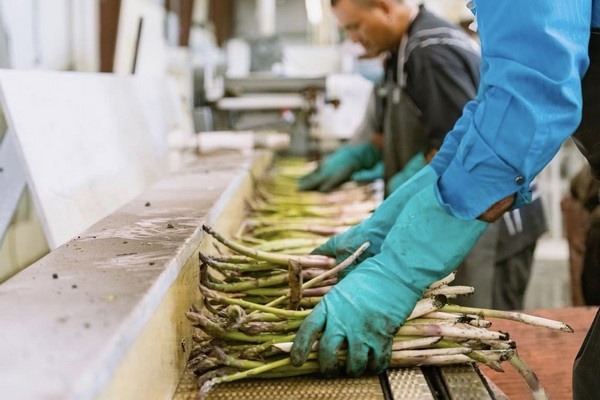 The California asparagus crop is underway though supply is lighter.
That’s an issue that would particularly impact asparagus, an item that’s still hand harvested and relies on labor in every step of the production cycle. “There’s no automation of any sort that is designed to replace what’s required by the human hand. It’s an extremely fragile product and machines would just destroy it,” he says.
Looking ahead, volume will pick up significantly in California which to date, is only about 10 percent harvested. “So over the next few weeks we’ll see it get into full stride and that timing is good with the holidays coming. I think demand is going to continue to be really, really strong,” says Paul.
 For more information:
James Paul
Greg Paul Produce Sales, Inc.
Tel: +1 (209) 952-0580
www.gregpaulproduce.com Publication date: Mon 16 Mar 2026
Storms devastate berry crops in Portugal, Spain and Morocco as production collapses by Italian Berry
“High early-season asparagus prices start to decline, but enthusiasts are undeterred” by Bossuyt and FreshPlaza
Second Asperges Bossuyt shop to open on 1 April
“High early-season asparagus prices start to decline, but enthusiasts are undeterred”
The asparagus season has started again at Asperges Bossuyt. On Friday, the grower opened his pop-up shop in Knokke-Heist for the second year in a row. Although volumes are still limited at this early stage of the season, grower Kris Bossuyt says the first enthusiasts are already finding their way there. “The real asparagus lovers are really waiting for this. They come in with a smile and say, ‘Ah, they’re here again.’ In the end, that’s what you do it for.”
The pop-up opened last Friday at the same location as last year. According to the grower from Oostrozebeke, it was a logical choice. “It actually went very well last year. That’s why we decided to continue in the same way. The beginning of the season is always a bit quieter because volumes are still small, but every day you can start earlier is a nice bonus.”
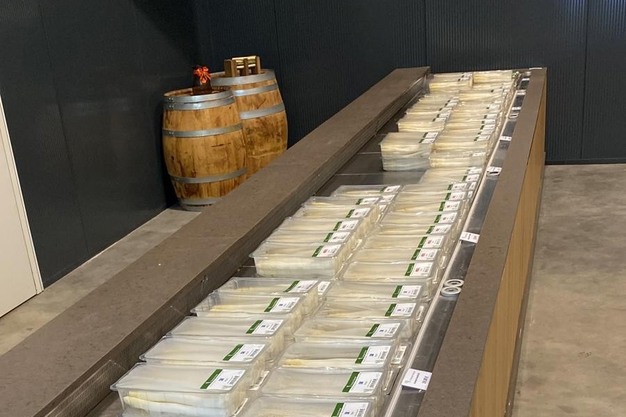
For Kris, direct sales have been an important part of the business for many years. “I try to sell as much as possible myself. The direct contact with customers gives me energy. I sometimes jokingly call it ‘playing shop.’ People come in, are surprised, and leave happy with a nice product. That personal contact is very important to me.”
Croquettes, soups, etc.
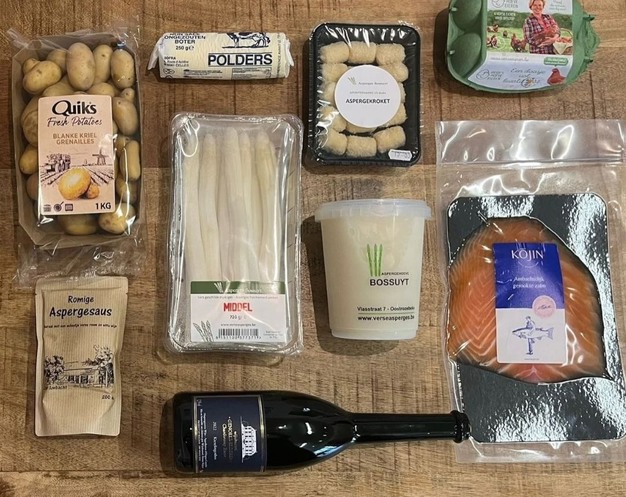
In addition to selling fresh asparagus, the company also focuses heavily on products developed around the seasonal crop. “For example, we make asparagus soup, asparagus croquettes, and other preparations. By now, about 50 per cent of my business actually comes from those activities around asparagus. My idea is that people can buy a full meal centered around asparagus from us. They can walk in, get everything they need, add a glass of wine, and have a nice evening,” Kris laughs.
According to the grower, this is precisely why it is important to start early in the season. “The earlier we are open, the sooner we can also start those side products. Asparagus naturally has a limited shelf life. By also making other products from them, you can do a lot more with them.”
Prices fall slightly
The first weeks of the season are traditionally characterized by limited volumes and higher prices, but Kris says this does not pose a problem for the target market. “For the average consumer, it might still be a bit early, but the real lovers don’t care what they cost. They just want to taste the first asparagus. And you notice that in the shop as well. By the way, we are already seeing that volumes are increasing rapidly, so prices are already falling slightly, but for the really big volumes we will have to wait until mid-April, just after Easter.”
Kris has now been active in the business for about 25 years and says asparagus seasons often follow the same pattern. “One year you have higher prices but less volume, and another year you have more volume but lower prices. In the end, it usually balances out. It is actually rare for a season to be completely disappointing.” He does note that it is becoming increasingly important to keep control over sales. “If you produce purely for the auction, a season can sometimes disappoint. That is why I am trying to sell more and more myself. I still mostly market green asparagus through the auctions, but with white, we prefer to keep the reins ourselves. That gives a completely different feeling, and you also have direct contact with the people who buy your product.”
New shop in Kuurne
For that reason, Kris is also looking to further expand the pop-up concept. From 1 April, he will open an additional location in a busy shopping center. “That will be a pop-up in a shopping center in Kuurne. I am curious to see how that will run. It is always a bit of a wait-and-see situation, but we would like to give it a try.” It may not stop there. “I am still looking at whether there might be an additional location in mid-April. That is not confirmed yet, but I am trying to focus more and more on initiatives like that.”

Seasonal product
In the coming weeks, the grower expects the season to really gain momentum. “Right now, we are operating at about 20 per cent of what it will soon be. Around April, and certainly toward Easter, the larger volumes will come.” Still, according to Kris, the strongly seasonal nature of asparagus remains an important part of the product. “Asparagus is still a true seasonal product, and we need to keep it that way. People look forward to them every year. You notice that as soon as they return.”
And although asparagus is often a bit more expensive early in the season, demand remains strong. “People sometimes say it might be a bit expensive, but they buy it anyway. In the end, it is about perspective. You can get unhealthy food cheaply anywhere, but fresh and healthy food simply costs a bit more. Unjustified, by the way, but fortunately, there are still many people willing to pay for a good product.”
For more information:
Kris Bossuyt
Asperges Bossuyt
Lippenslaan 218, Knokke-Heist, Belgium
Tel: +32 472 80 11 40
info@verseasperges.be
www.verseasperges.be Publication date: Fri 13 Mar 2026
A vendre d’occasion une laveuse, calibreuse rotative Besnard pour asperges blanches ou vertes par le Bon Coin
Digestion, reins, odeur de l’urine : voici ce qui arrive vraiment à votre organisme quand vous mangez des asperges. par TOPSANTE
« Production normale et forte demande pour les asperges blanches grecques » La récolte s’intensifiera à la fin du mois de mars par Schotman S.A. et FreshPlaza
La récolte s’intensifiera à la fin du mois de mars
« Production normale et forte demande pour les asperges blanches grecques »
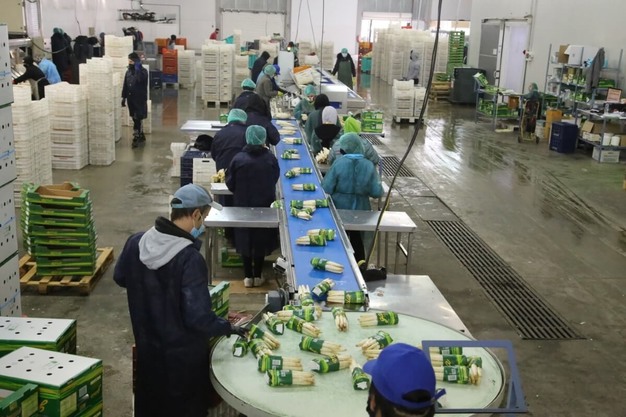
À Kavala, l’une des principales zones de production d’asperges en Grèce, les rendements à l’hectare d’asperges blanches sont désormais revenus à des niveaux habituels pour cette période de l’année.
« Les producteurs de Kavala qui ont pu couvrir leurs asperges à temps, c’est-à-dire dès le mois de décembre, ont commencé la récolte en février », explique Aris Schotman, propriétaire de la société Schotman S.A. « En revanche, environ 25 % des producteurs n’ont pas pu intervenir à temps en raison de pluies répétées. Les derniers n’ont pu couvrir leurs cultures qu’au début du mois de mars. Ce groupe devrait donc commencer la récolte autour du 20 mars. Des retards similaires ont d’ailleurs été observés dans d’autres zones de production d’asperges du pays. »
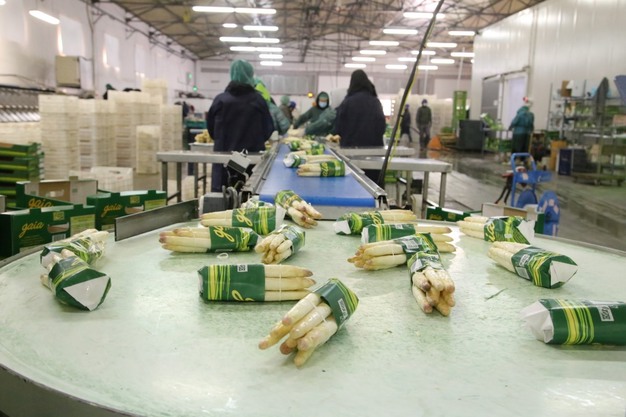
Sur les marchés d’exportation, la campagne a démarré sous de bons auspices, confirmant la dynamique positive observée lors du salon Fruit Logistica. « Nous sommes satisfaits à la fois de la demande et des prix », indique Aris Schotman. « Les prix à la production pour l’asperge blanche se situent actuellement autour de 6 euros le kilo. Le produit grec suscite un intérêt marqué, notamment parce que les asperges allemandes et néerlandaises ne sont pas encore disponibles sur le marché. »
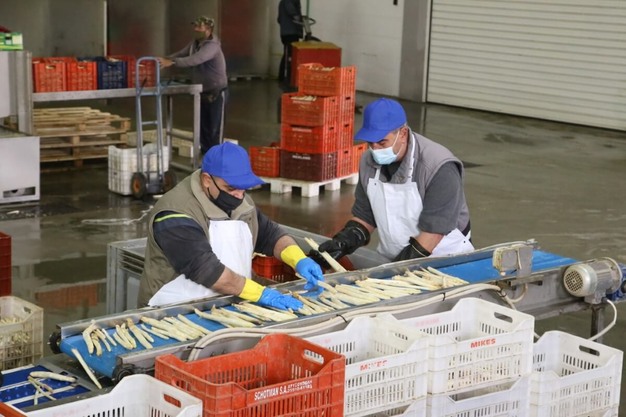
L’opérateur rappelle toutefois que la situation pourrait évoluer avec l’arrivée prochaine des productions d’Europe du Nord. « La saison dernière, nous avions bénéficié du retard de la récolte en Europe du Nord », précise Aris Schotman. « Cette année, celle-ci devrait commencer plus tôt. Nous restons néanmoins optimistes et pensons que cela n’aura pas d’impact significatif sur la demande pour les asperges grecques. »
Concernant l’asperge verte, moins répandue en Grèce que l’asperge blanche, la situation diffère selon les régions. « L’asperge verte grecque est actuellement récoltée uniquement dans le sud du pays », explique Aris Schotman. « À Kavala, dans le nord de la Grèce, la technique de couverture utilisée étant différente de celle des asperges blanches, la récolte ne débutera qu’à la fin du mois de mars. »
Enfin, le producteur observe un regain d’intérêt pour la culture de l’asperge dans la région de Kavala. « Ces dernières années, de nombreux producteurs avaient arraché leurs aspergeraies pour planter des kiwis », conclut Aris Schotman. « Aujourd’hui, nous constatons un mouvement inverse : certains retirent désormais le coton ou les céréales pour replanter des asperges. »
Pour plus d’informations :
Aris Schotman
Schotman S.A.
Tél. : +30 259 106 1185
info@schotman.gr
https://schotman.gr/ Date de publication: lun. 16 mars 2026