Archive

« La fenêtre d’approvisionnement est l’avantage concurrentiel de l’Argentine dans le paysage mondial des myrtilles » par Citromax Group et FreshPlaza

« La fenêtre d’approvisionnement est l’avantage concurrentiel de l’Argentine dans le paysage mondial des myrtilles »

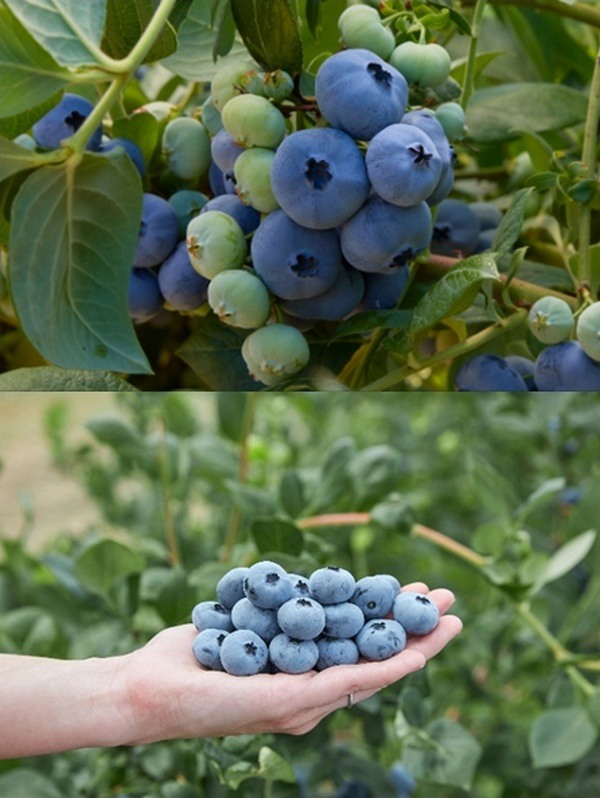
La récolte de la saison 2025 des myrtilles fraîches en Argentine a commencé en août et s’est terminée début octobre. Cependant, la fenêtre commerciale était centrée sur le mois de septembre. “Nous avons transporté environ 90 % de notre volume de myrtilles fraîches par voie aérienne au cours du mois de septembre”, explique Bernabé Padilla, directeur commercial de la division frais chez Citromax. “Nous avons pu bénéficier d’une fenêtre favorable en atteignant tôt les principaux marchés de l’hémisphère nord. Au cours du mois de septembre, la demande en Europe a été très forte et le positionnement précoce de Citromax a permis de desservir efficacement des programmes clés. Cette fenêtre précoce est l’un des avantages concurrentiels de l’Argentine dans le paysage mondial des myrtilles.

LEurope en tête de la demande
Avec une part de 60 % du volume des exportations, les myrtilles fraîches de Citromax étaient principalement destinées à l’Europe, suivie des États-Unis et du Canada. “Les États-Unis ont acheté environ 30 % de notre volume et les 10 % restants sont allés au Canada. La forte demande du marché européen en septembre a soutenu un environnement de prix dynamique tout au long du mois.

Les exportations de cette saison ont également été stimulées par de solides indicateurs de qualité pour les myrtilles fraîches. “Des conditions météorologiques stables et l’absence de précipitations importantes pendant la période d’exportation ont été déterminantes”, a commenté M. Padilla. Cela a vraiment aidé à garantir la fermeté, la taille et le goût des fruits – des attributs clés pour les myrtilles expédiées par avion.

L’IQF est la catégorie la plus importante
Outre la catégorie des produits frais, l’entreprise enregistre également de solides résultats dans le domaine de l’IQF, la récolte pour le segment de la transformation devant se poursuivre jusqu’à la fin du mois de décembre. Sur un volume de production total estimé à 1 700 tonnes, environ 1 450 tonnes sont destinées à l’IQF, qui représente la majorité du programme de Citromax pour les myrtilles. Les 250 tonnes restantes ont été allouées au segment frais. “Ensemble, les catégories frais et IQF réaffirment notre rôle de principal fournisseur de myrtilles biologiques d’Argentine”, a déclaré M. Padilla.

Bien que la production totale ait été robuste, elle a été légèrement inférieure aux attentes en raison d’une gelée survenue à la fin du mois d’août. L’impact a été limité et n’a pas perturbé les engagements commerciaux de l’entreprise.

Concurrence du Pérou
Malgré une fenêtre d’approvisionnement favorable, l’Argentine continue de faire face à une concurrence intense de la part du Pérou. “Le Pérou est l’exportateur dominant de cette fenêtre et les fournisseurs d’Afrique du Sud et du Zimbabwe deviennent également de plus en plus importants, en particulier en Europe. Leur présence ajoute de nouvelles couches de concurrence pour les fruits de début de saison.

Globalement, l’objectif de Citromax est de fournir en permanence des fruits de haute qualité et d’excellente saveur aux marchés de l’hémisphère nord dès le début de la saison. “Nous attribuons notre différenciation à la combinaison d’un approvisionnement précoce, d’une certification biologique et de variétés aromatiques qui conviennent bien au transport aérien.

Pour plus d’informations :
Estefania Scuka
Citromax
escuka@citromax.com.ar
www.citromax.com

« Les fraises égyptiennes au chocolat sont le snack favoris sur les marchés de Noël allemands » avec Lucien de Wit, deLuBa Fresh (Pays-Bas) par FreshPlaza:

« Les fraises égyptiennes au chocolat sont le snack favoris sur les marchés de Noël allemands »

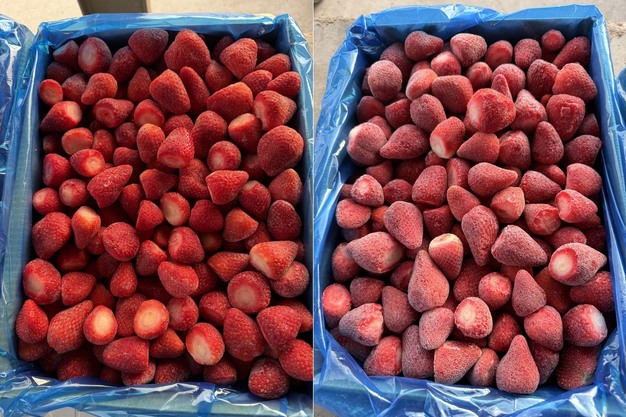
La saison des fraises égyptiennes bat son plein chez LuBa Fresh. « Nous avons démarré deux semaines plus tôt que d’habitude. Normalement, la saison commence avec des prix élevés, mais ce n’était pas le cas cette année. Entre-temps, ils ont heureusement augmenté. La semaine dernière, ils étaient même très élevés, puis ont de nouveau baissé », explique Lucien de Wit.

« Comme les autres années, le grand défi de cette année est la disponibilité du fret aérien. Dès qu’il y a une opportunité, la vente est assurée, mais c’est vraiment un facteur limitant. Une grande partie du fret aérien se concentre sur l’Asie alors que la capacité vers l’Europe est minime. Cette année, davantage de fraises ont été plantées en Égypte, mais en raison de la réalité logistique, de nombreuses fraises se retrouvent sur le marché intérieur ou dans l’industrie. »


Luuk de Wit

« De nos jours, les fraises sont aussi transportées par camion depuis l’Égypte, mais cela prend plus d’une semaine. Nous n’y participons pas, pourtant nous voyons ces fraises arriver sur le marché et des importateurs les vendre comme fraises de fret aérien. Nous continuons à nous spécialiser dans un produit qualitatif, avec des arrivées quotidiennes aux aéroports de Francfort, Cologne, Maastricht et Amsterdam. »

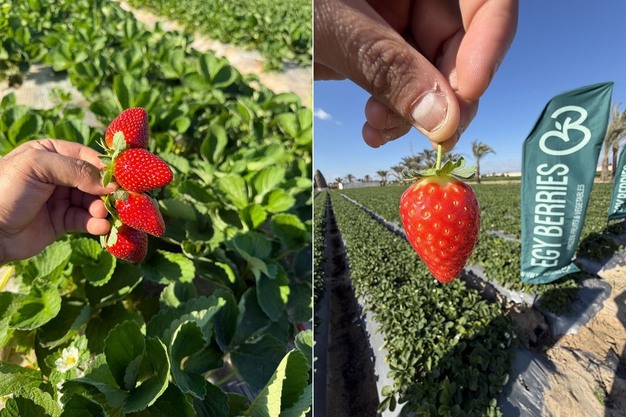
Les fraises égyptiennes sont surtout livrées aux marché de Noël allemands, où elles sont trempées dans du chocolat. « Les variétés un peu plus dures comme Fortuna, Festival et Sensation s’y prêtent bien. Le produit néerlandais est trop mou pour cette application. Traditionnellement, la saison égyptienne est de courte durée : à la nouvelle année, il n’y a plus de demande. En ce sens, cette fraise reste un produit très spécial ! »

Pour plus d’informations :
Luciën de Wit
LuBa Fresh
Tél. : +31 777777715 / +31 641273443
l.deWit@lubafresh.com
www.lubafresh.com

Photo de la première page: © Luba Fresh Date de publication: mar. 9 déc. 2025

© FreshPlaza.fr / Izak Heijboer

Patras port clear of blockades. Strawberries depart smoothly for European markets by FreshPlaza and Taktikos SA

December sees more Greek strawberries thanks to increased early plantings and favorable weather

The harvest of the first Greek strawberries in the Ilia region is currently proceeding exceptionally well, while exports are not being hindered by the tractor blockades that have spread across Greece or at the customs on the country’s northern borders, as shipments are, as always, departing from other points.

“We have no issues with distribution. Not yet, at least. Strawberry shipments to Germany and the rest of Europe do not pass through the roads currently blocked by tractors, nor through the customs at the northern borders. They leave, as always, by ship from the port of Patras and reach various markets via Italy,” notes Dimitris Taktikos, owner of Taktikos SA.

Regarding production, he adds: “We are in a good phase; the plants are in really excellent condition because the ‘incubator’, as we call the conditions of the location and the weather at the time of planting, was ideal. Last year, it was very hot, which caused the plants to burn. This year, the rainfall during that period was extremely favorable.”

“These conditions have caused the early ripening of all varieties. The appearance and growth of the plants we see now would have only been visible in February last year. This development, combined with the significant increase in potted plantings, perhaps 100% more than last year, has already brought an early start to our harvest. However, we cannot yet estimate the exact difference in current productivity compared to last year. We are talking about Fortuna, Arwen, and other varieties. Producers have paid great attention to their early varieties,” Taktikos adds.

Early ripening is also expected for Victory, which continues to be the predominant variety in Greek strawberry greenhouses: “As for Victory, it will start giving us very small quantities around Christmas, slightly before or after. Going forward, if there are no complications from very cold weather in January and February, we can expect good quantities of this variety from February 15–20, whereas last year, we received them from March 15–20.”

Finally, the rosy picture is somewhat clouded by competition from Egypt. “We see Egypt ahead, which increases its strawberry cultivation every year, but we are talking about outdoor crops, and their products reach the markets in poor quality. Nevertheless, they put pressure on us and our prices. The prices we are receiving in the first ten days of December are 15–20% lower compared to the same period last year,” notes the Greek exporter.

For more information:
Dimitris Taktikos
Taktikos SA
Tel: +30 262 307 3124
Email: info@taktikos.com.gr
https://taktikos.com.gr/

Patras port clear of blockades. Strawberries depart smoothly for European markets

December sees more Greek strawberries thanks to increased early plantings and favorable weather

The harvest of the first Greek strawberries in the Ilia region is currently proceeding exceptionally well, while exports are not being hindered by the tractor blockades that have spread across Greece or at the customs on the country’s northern borders, as shipments are, as always, departing from other points.

“We have no issues with distribution. Not yet, at least. Strawberry shipments to Germany and the rest of Europe do not pass through the roads currently blocked by tractors, nor through the customs at the northern borders. They leave, as always, by ship from the port of Patras and reach various markets via Italy,” notes Dimitris Taktikos, owner of Taktikos SA.

Regarding production, he adds: “We are in a good phase; the plants are in really excellent condition because the ‘incubator’, as we call the conditions of the location and the weather at the time of planting, was ideal. Last year, it was very hot, which caused the plants to burn. This year, the rainfall during that period was extremely favorable.”

“These conditions have caused the early ripening of all varieties. The appearance and growth of the plants we see now would have only been visible in February last year. This development, combined with the significant increase in potted plantings, perhaps 100% more than last year, has already brought an early start to our harvest. However, we cannot yet estimate the exact difference in current productivity compared to last year. We are talking about Fortuna, Arwen, and other varieties. Producers have paid great attention to their early varieties,” Taktikos adds.

Early ripening is also expected for Victory, which continues to be the predominant variety in Greek strawberry greenhouses: “As for Victory, it will start giving us very small quantities around Christmas, slightly before or after. Going forward, if there are no complications from very cold weather in January and February, we can expect good quantities of this variety from February 15–20, whereas last year, we received them from March 15–20.”

Finally, the rosy picture is somewhat clouded by competition from Egypt. “We see Egypt ahead, which increases its strawberry cultivation every year, but we are talking about outdoor crops, and their products reach the markets in poor quality. Nevertheless, they put pressure on us and our prices. The prices we are receiving in the first ten days of December are 15–20% lower compared to the same period last year,” notes the Greek exporter.

For more information:
Dimitris Taktikos
Taktikos SA
Tel: +30 262 307 3124
Email: info@taktikos.com.gr
https://taktikos.com.gr/

Health benefits of berries: antioxidants, brain and heart protection, metabolism and gut health by ItalianBerry
Berries offer powerful antioxidant, metabolic and neuroprotective properties for heart, brain and gut wellness, proven by scientific research.
https://italianberry.it/en/news/health-benefits-berries-antioxidants-brain-heart-metabolism-gut

Supply window is Argentina’s competitive advantage in global blueberry landscape with Citromax by FreshPlaza

Supply window is Argentina’s competitive advantage in global blueberry landscape

Harvest of Argentina’s 2025 fresh blueberry season started in August and wrapped up early October. However, the commercial window was centered in September. “We moved about 90 percent of our fresh blueberry volume by air during the month of September,” says Bernabé Padilla, Fresh Division Commercial Manager at Citromax. “We were able to benefit from a favorable window as we reached key northern hemisphere markets early.” During the month of September, demand in Europe was very strong and Citromax’s early positioning helped in serving key programs effectively. This early window is one of Argentina’s competitive advantages in the global blueberry landscape.

Europe leads demand
With a share of 60 percent in export volume, Citromax’s fresh blueberries were primarily destined for Europe, followed by the U.S. and Canada. “The U.S purchased about 30 percent of our volume and the remaining 10 percent went to Canada.” Strong demand from the European market in September supported a dynamic pricing environment throughout the month.

Also driving exports this season were strong quality indicators for fresh blueberries. “Stable weather conditions and the absence of significant rainfall during the export period were critical,” commented Padilla. This really helped in securing good fruit firmness, size, and taste – key attributes for air-shipped blueberries.

IQF is largest category
In addition to the fresh category, the company is also reporting solid results in IQF with harvest for the processing segment expected to continue through the end of December. Out of an estimated total production volume of 1,700 tons, about 1,450 tons are channeled into IQF, which makes up the majority of Citromax’s blueberry program. The remaining 250 tons were allocated to the fresh segment. “Together, the fresh and IQF categories reaffirm our role as a leading supplier of organic blueberries from Argentina,” said Padilla.

While total output was robust, it was slightly below expectations due to a late August frost. On a positive note, the impact was contained and did not disrupt the company’s commercial commitments.

Competition from Peru
Despite a favorable supply window, Argentina continues to face intense competition from Peru. “Peru is the dominant exporter during this window and suppliers from South Africa and Zimbabwe are also becoming increasingly relevant, especially in Europe.” Their presence adds new layers of competition for early-season fruit.

Overall, it is Citromax’s goal to continuously deliver high-quality fruit with excellent flavor profiles to premium northern hemisphere markets at the very start of the season. “We attribute our differentiation to a combination of early supply, organic certification, and flavor-driven varieties that are well suited for air transport.”

For more information:
Estefania Scuka
Citromax
escuka@citromax.com.ar
www.citrom